41 Most Popular Houseplants for Every Kind of Home
Compare 41 popular houseplants by light, watering, size, difficulty, and pet safety so you can choose an indoor plant that fits your home.
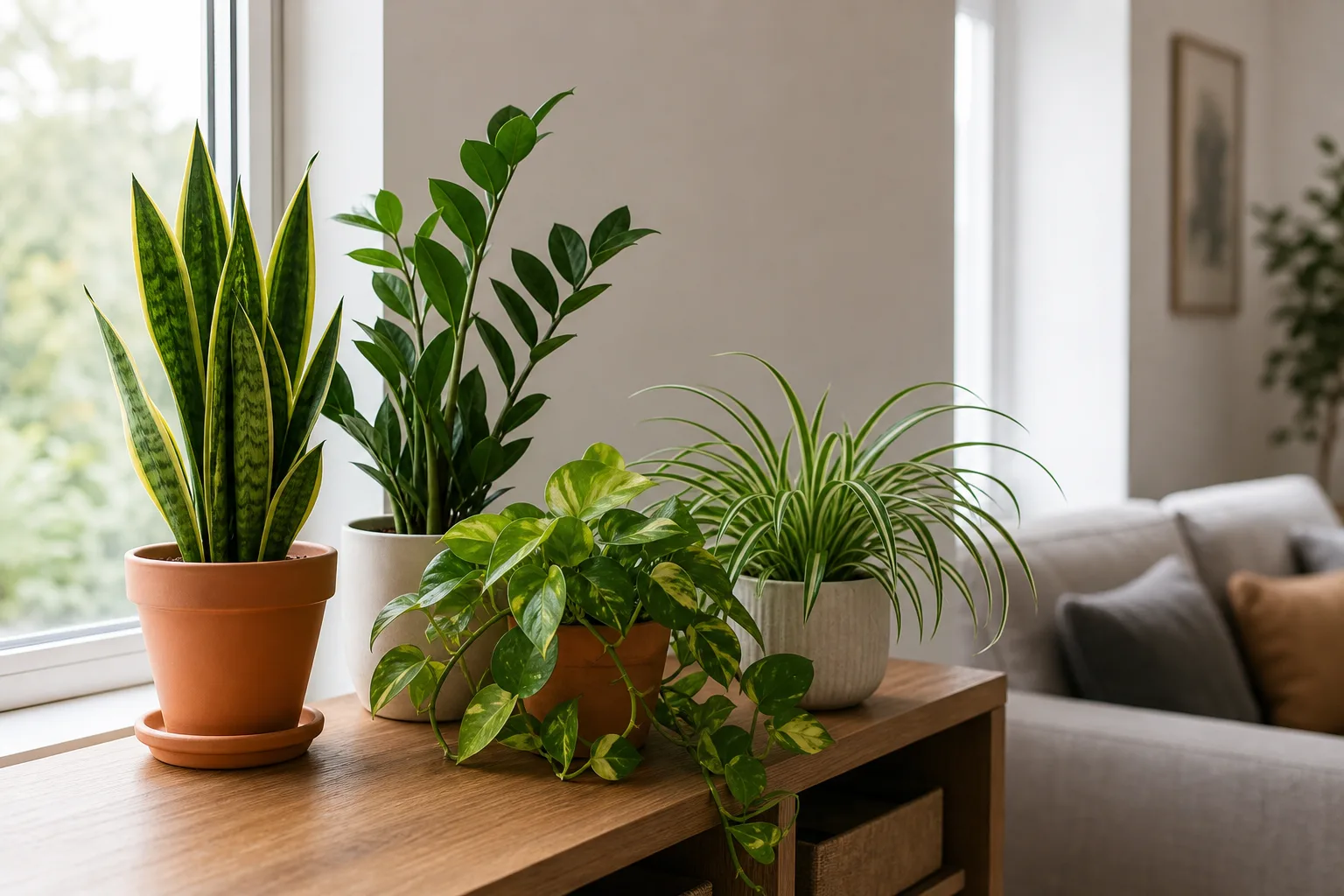
The best-known houseplant is not automatically the best one for your home. A pothos can forgive an occasional missed watering, a calathea wants steadier moisture and humidity, and an aloe that looks effortless in a sunny shop window can stretch and weaken in a dim apartment.
This list groups 41 popular houseplants by the job people usually want them to do: survive beginner mistakes, trail from a shelf, fill a bright corner, stay compact, or provide flowers and colorful foliage. Each entry gives you the plant’s strongest use case and the care mistake most likely to undo it.
The quick way to choose a popular houseplant
Choose the location before the plant. Note the direction and distance of the nearest unobstructed window, how warm or drafty the spot becomes, how much floor or shelf space the mature plant can occupy, and whether pets or children can reach it. The RHS houseplant growing guide makes the same practical point: placing a living plant purely for decoration can fail when light, temperature, water, and humidity do not match its needs.
Popularity is still useful information. Widely sold plants are usually easier to find in several sizes, and common species have more established care guidance. It does not mean every popular plant is low maintenance; fiddle leaf figs, calatheas, rex begonias, and string of pearls all punish a poor match more quickly than pothos or ZZ plants.
Start with light, then choose a watering style
All plants need light for photosynthesis. The University of Minnesota Extension guide to indoor lighting explains that without adequate light, a plant consumes its stored energy and eventually declines. “Low-light tolerant” therefore means a plant can persist and grow slowly in weaker usable light, not that it can live indefinitely in a windowless corner.
Next, be honest about watering. If you routinely forget, choose thick-leaved or water-storing plants such as ZZ plant, snake plant, aloe, jade, or hoya. If you enjoy checking plants often, peace lily, calathea, basil, and rex begonia can reward that attention. Whatever the plant, a drainage hole and a moisture check are more reliable than “water every Sunday.”
Do not buy a plant for air purification alone
Houseplants add living color and can make indoor spaces feel calmer, but a few pots are not substitutes for ventilation or filtration. A review summarized by Drexel University found that natural or mechanical air exchange removes volatile organic compounds much faster than ordinary numbers of passive potted plants in real buildings.
Buy the plant because you enjoy its form, growth, flowers, or care ritual. Treat any air-quality improvement as an interesting laboratory effect rather than the deciding reason to bring a particular species home.
41 popular houseplants, grouped by how you will use them
The numbers below make it easy to confirm that the list contains 41 distinct choices. Plants within each group are not ranked; a plant near the end may fit your room far better than the first entry.
Forgiving favorites for beginners
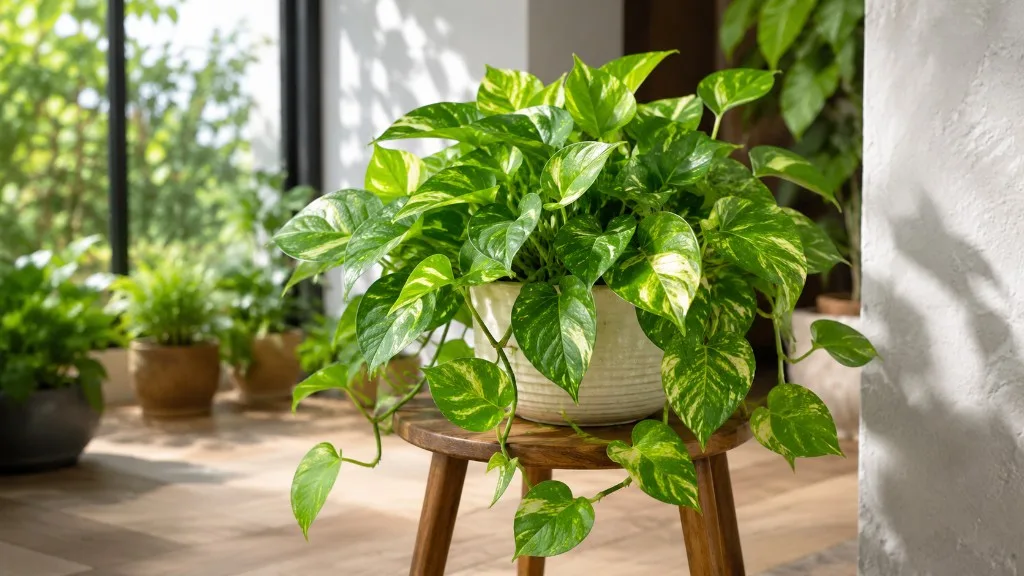
1. Golden pothos (Epipremnum aureum). Pothos is the classic trailing beginner plant because it handles average indoor conditions and tells you a lot through its growth. Brighter indirect light produces fuller vines and stronger variegation, while lower light means slower, greener growth. Let part of the mix dry before watering, and remember that this plant contains irritating calcium oxalates if chewed.
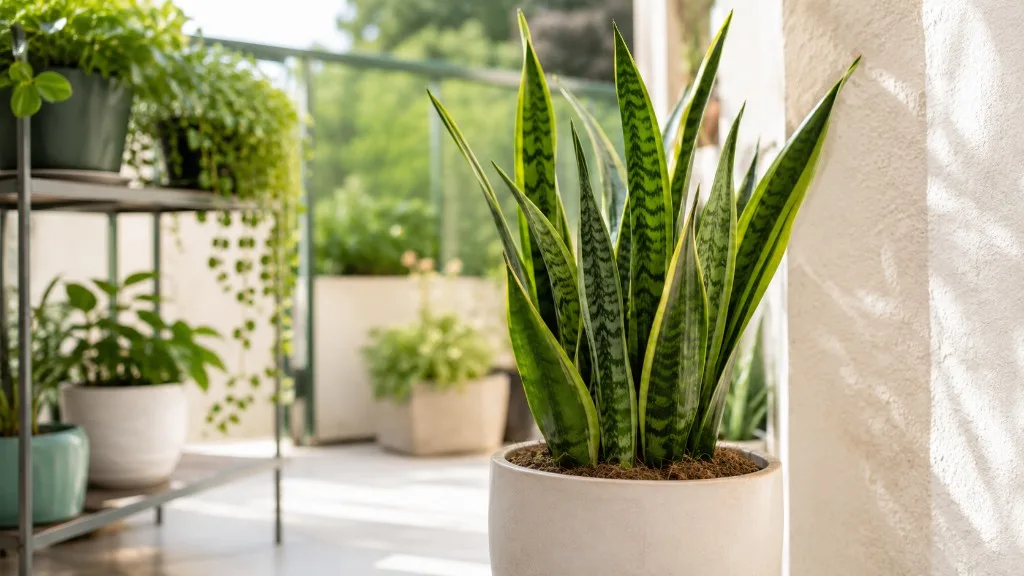
2. Snake plant (Dracaena trifasciata). Upright leaves, a small footprint, and drought tolerance make snake plants useful in bedrooms and offices. They survive lower light but grow better in brighter indirect light. The main danger is wet soil around roots that are adapted to dry down; use a fast-draining mix and wait until it is substantially dry.
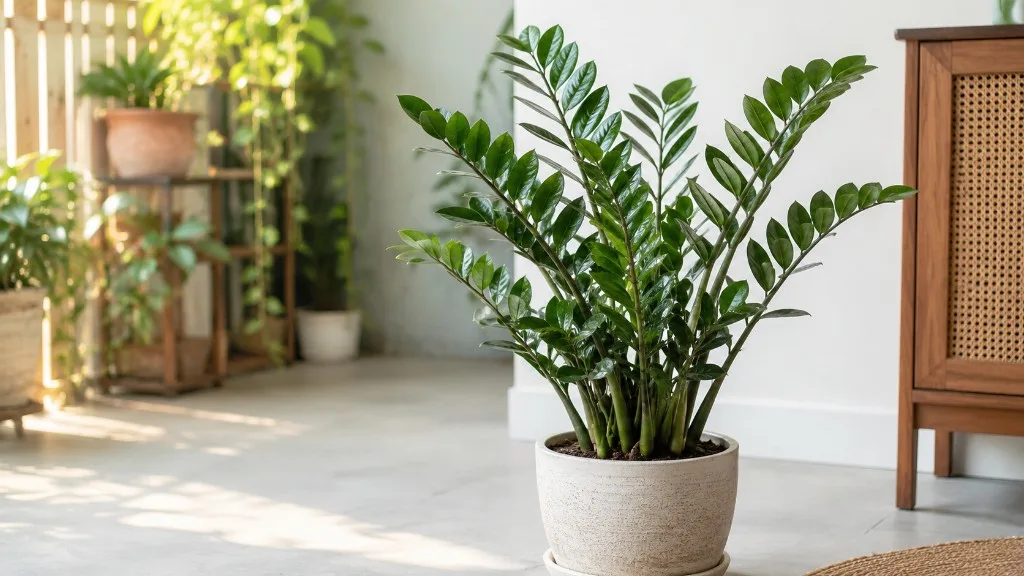
3. ZZ plant (Zamioculcas zamiifolia). A ZZ plant stores water in thick underground rhizomes, so missed waterings are less dangerous than frequent ones. The North Carolina Extension Gardener Plant Toolbox notes that it tolerates very low light but does best in bright indirect light and does not tolerate wet feet. Its glossy leaflets suit modern rooms, but all parts should be kept away from chewers.
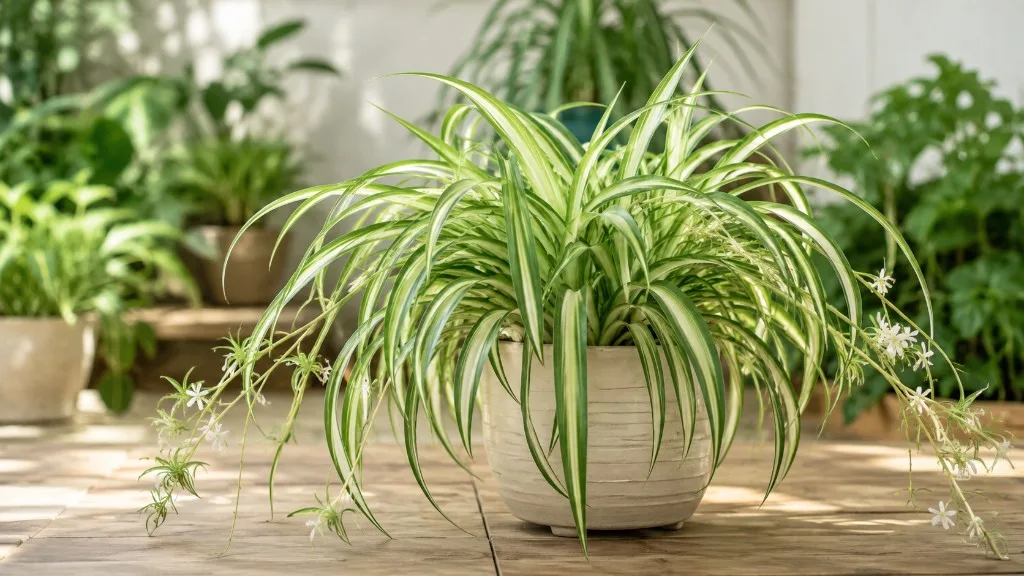
4. Spider plant (Chlorophytum comosum). Arching striped leaves and dangling plantlets make spider plants ideal for hanging baskets. Bright indirect light and a partial dry-down produce reliable growth, while harsh sun can bleach leaves. Spider plants are commonly listed as non-toxic to cats and dogs, though chewing any plant can still cause stomach upset.
5. Heartleaf philodendron (Philodendron hederaceum). This vine adapts to medium light, roots easily from node cuttings, and can trail or climb. Give it a support if you want larger leaves and a more upright display. Low light stretches the gaps between leaves, and the foliage is not suitable for pets or children to chew.
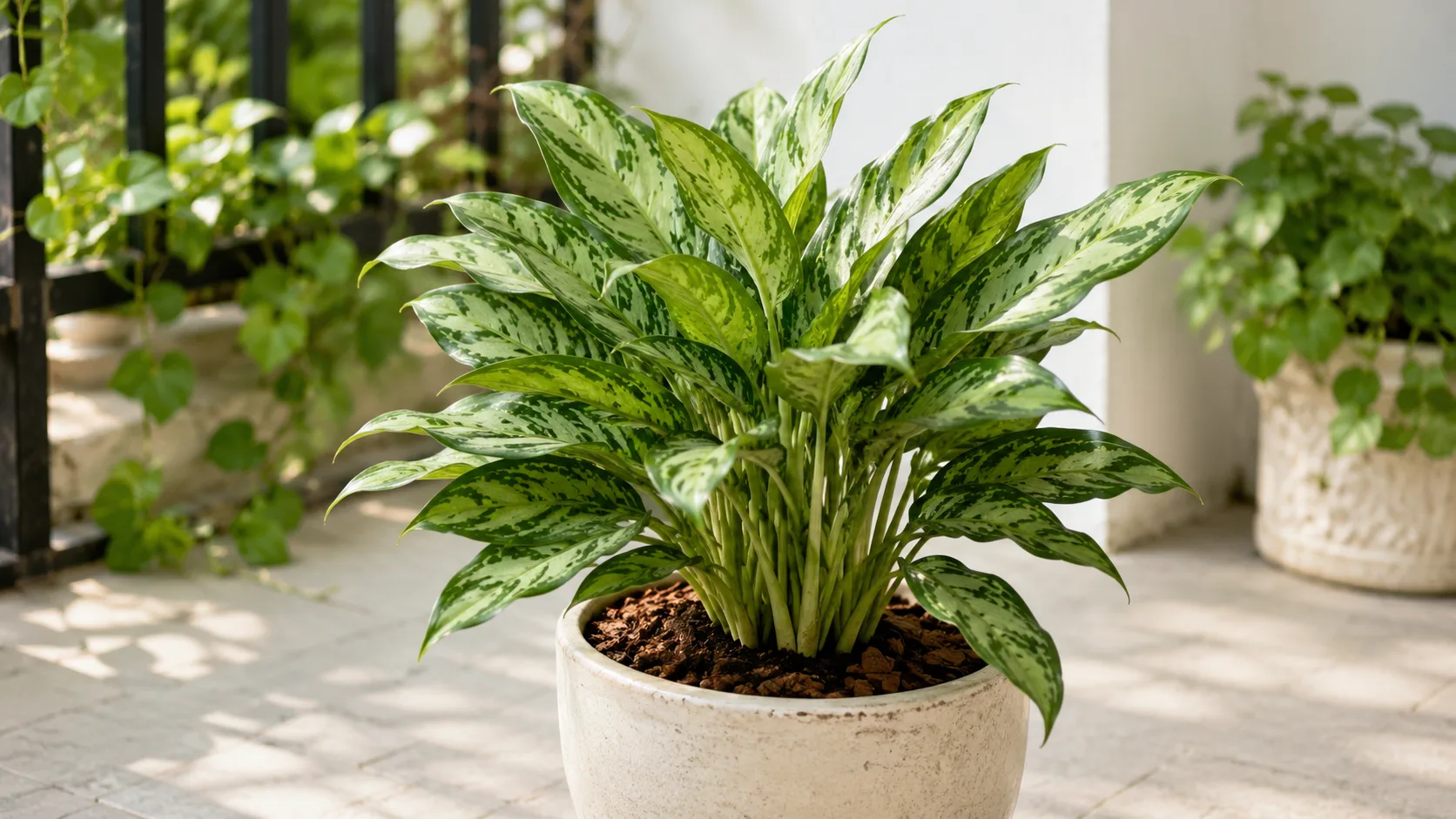
6. Chinese evergreen (Aglaonema spp.). Green cultivars tolerate moderate to lower light, while pink, red, or heavily variegated forms hold their color better with brighter indirect light. Keep the plant warm and let the surface dry slightly rather than maintaining swampy soil. It is forgiving, but its calcium-oxalate-containing tissues make it a poor floor plant around curious pets.
7. Cast iron plant (Aspidistra elatior). Cast iron plant is slow, steady, and especially useful where direct sun would be too strong for broad dark leaves. It tolerates lower light and imperfect watering better than many tropical foliage plants. Expect restrained growth rather than a fast transformation, and do not mistake its toughness for a need to keep the pot wet.
Trailing and climbing plants for shelves and baskets
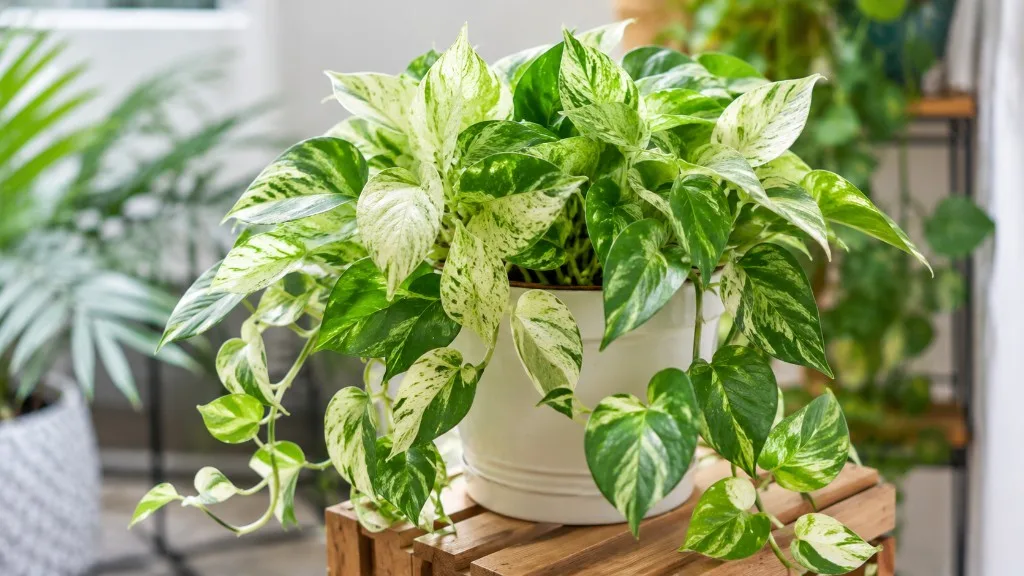
8. Marble Queen pothos (Epipremnum aureum ‘Marble Queen’). Cream-and-green marbling makes this cultivar brighter-looking than golden pothos, but the pale tissue also means it needs more usable light. Place it near a bright window out of harsh midday sun and let the mix partly dry. In weak light, growth slows and new leaves may carry less variegation.
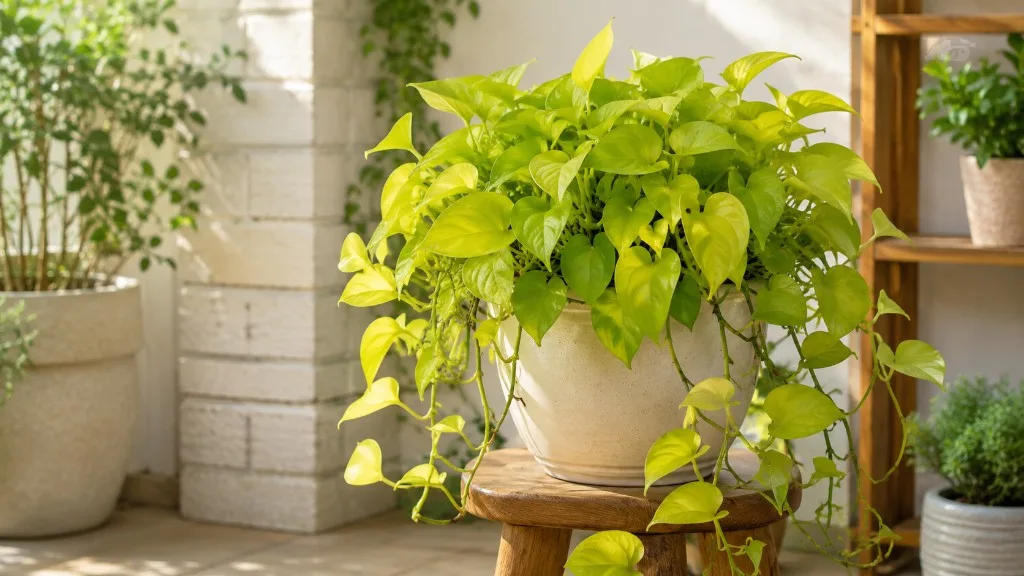
9. Neon pothos (Epipremnum aureum ‘Neon’). Neon pothos offers chartreuse leaves without the fussy humidity needs of many colorful tropicals. Bright indirect light keeps the color vivid; intense sun can scorch it, and deep shade can produce darker leaves. Water after a partial dry-down and prune long bare vines to a node to restart fuller growth.
10. N’Joy pothos (Epipremnum aureum ‘N’Joy’). N’Joy has smaller leaves with crisp green-and-white blocks, making it a good shelf plant for tight spaces. It grows more slowly than greener pothos and needs brighter indirect light to maintain the white pattern. Avoid keeping the roots constantly damp, especially in winter or low light.
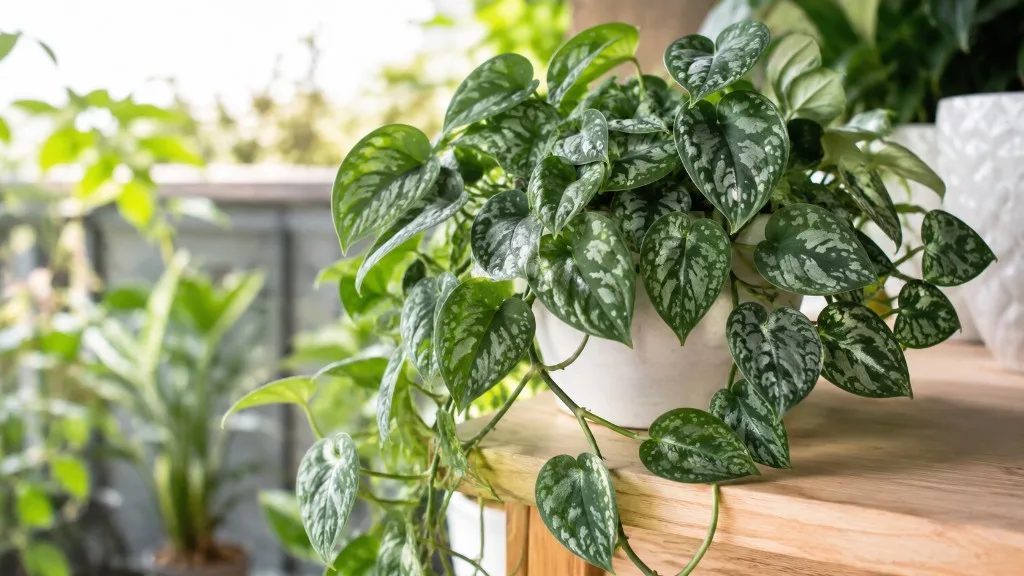
11. Satin pothos (Scindapsus pictus). Although not a true pothos, satin pothos fills the same trailing niche with velvety leaves and silver markings. It prefers bright indirect light and a chunky mix that can breathe between waterings. Give it a plank or pole to encourage climbing, and keep it away from pets that chew foliage.
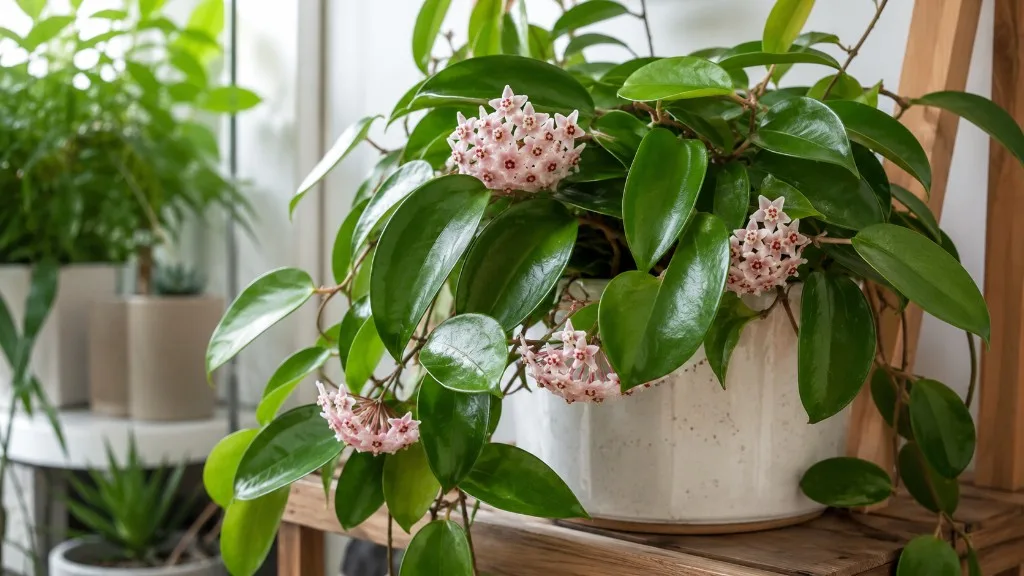
12. Hoya (Hoya carnosa). Waxy leaves help hoya tolerate a longer dry-down, while bright indirect light supports stronger growth and eventual flower clusters. Do not cut off old flower spurs after blooming because many hoyas rebloom from them. A large pot that stays wet is a more common problem than being slightly root-bound.
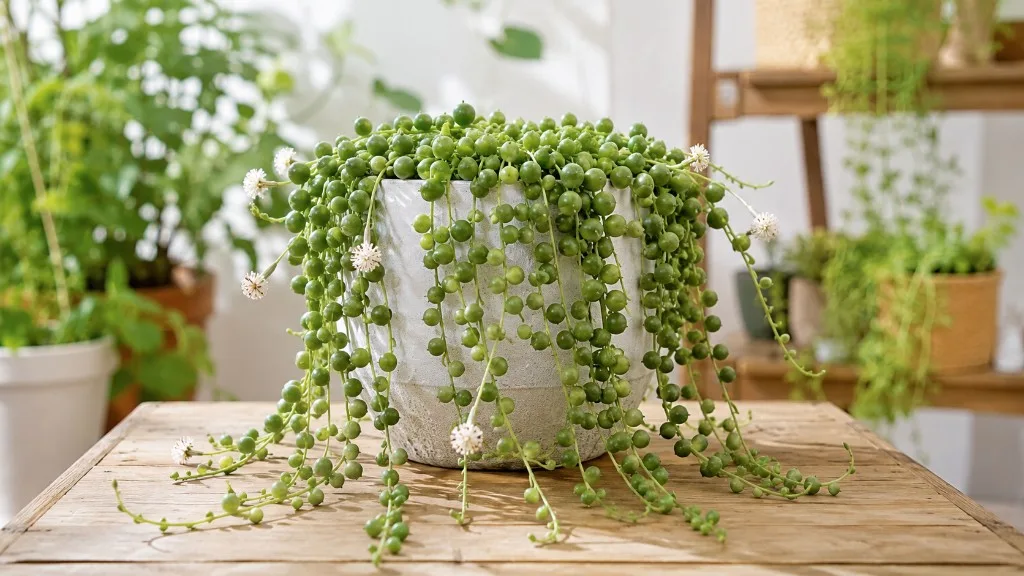
13. String of pearls (Curio rowleyanus). This trailing succulent looks dramatic in a hanging pot, but it is less forgiving than its popularity suggests. It needs strong light reaching the crown and a very free-draining mix; weak light plus frequent water quickly thins or rots the strands. The bead-like leaves are also unsafe for pets to ingest.
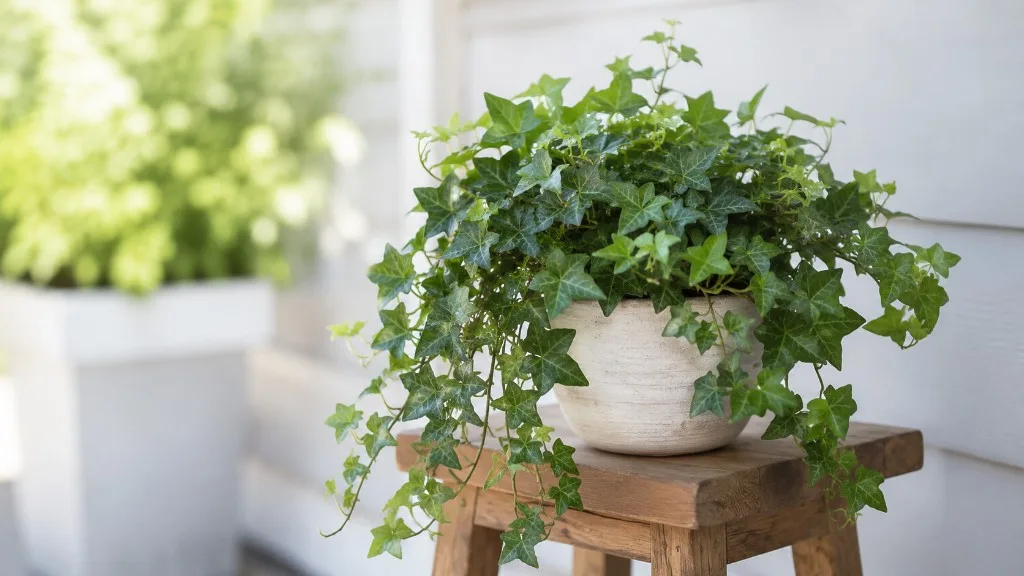
14. English ivy (Hedera helix). English ivy works best in a bright, cooler room with airflow rather than beside a heater. Its dense vines are attractive in baskets but can hide spider mites, so inspect leaf undersides regularly. It is toxic if eaten and can become invasive outdoors in many regions, so keep trimmings contained and follow local guidance.
Large statement plants for bright rooms
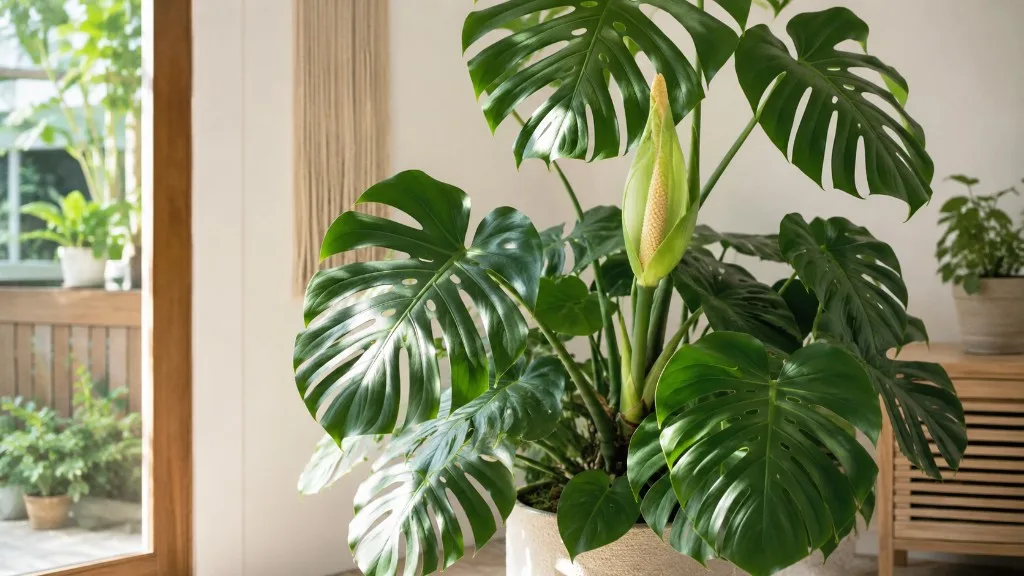
15. Swiss cheese plant (Monstera deliciosa). Monstera is one of the most recognizable indoor plants because mature leaves develop splits and holes. Give it bright indirect light, an airy mix, and a sturdy support; juvenile plants may remain unsplit until they mature under good conditions. Plan for width as well as height, and keep the foliage away from chewers.
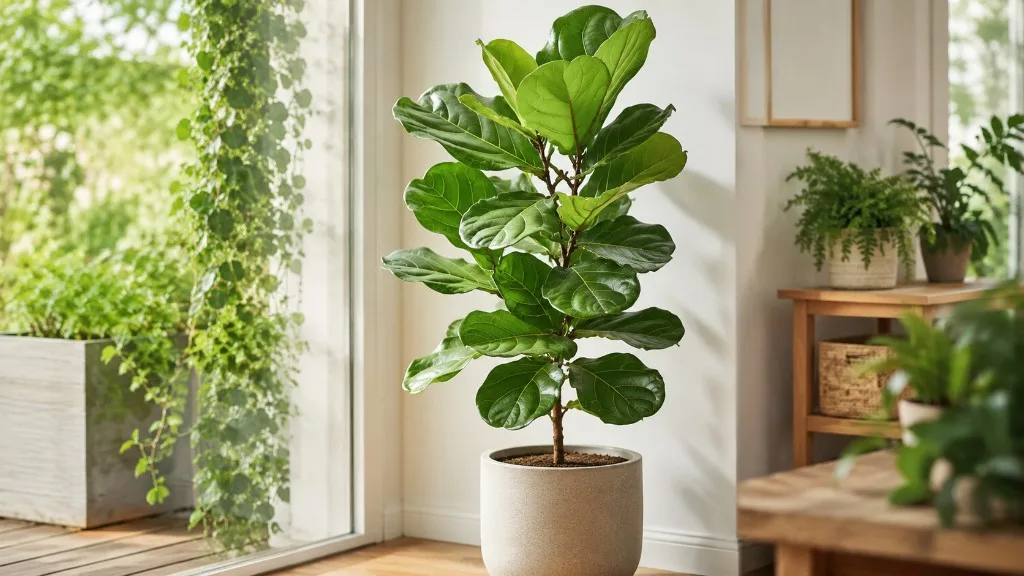
16. Fiddle leaf fig (Ficus lyrata). Large violin-shaped leaves make this fig a strong visual anchor, but it dislikes abrupt changes. Place it in bright filtered light, water after the upper mix dries, and then avoid shuttling it between rooms. Leaf drop can follow low light, root stress, drafts, or sudden relocation, so it is a better choice for a stable bright home than for a first dim apartment.
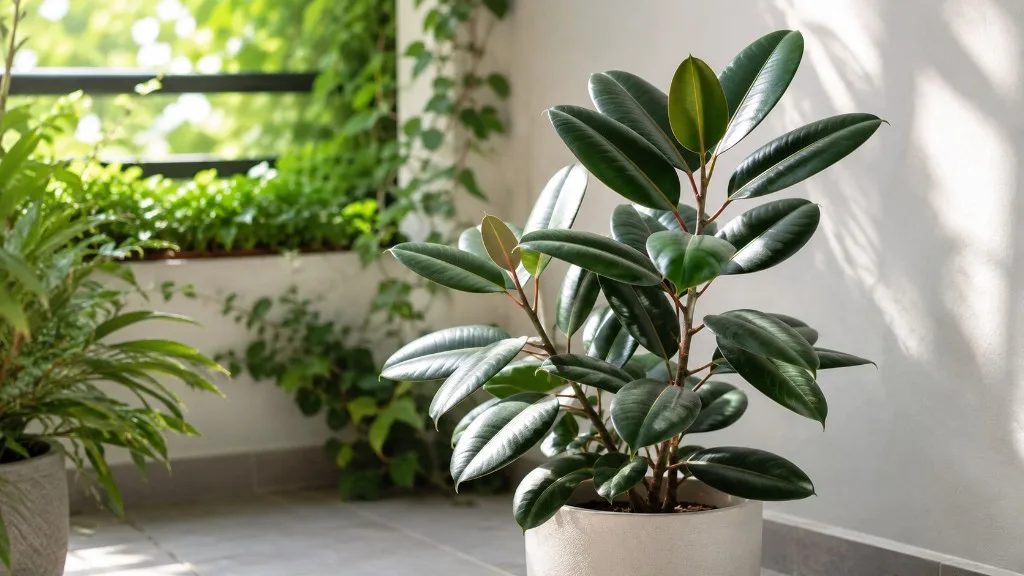
17. Rubber plant (Ficus elastica). Rubber plants offer broad glossy leaves and a more forgiving temperament than fiddle leaf figs. They still need bright indirect light for dense growth and can drop leaves after a cold draft or major move. Wipe dust from mature leaves, let the upper mix dry, and allow enough ceiling space for an indoor tree.
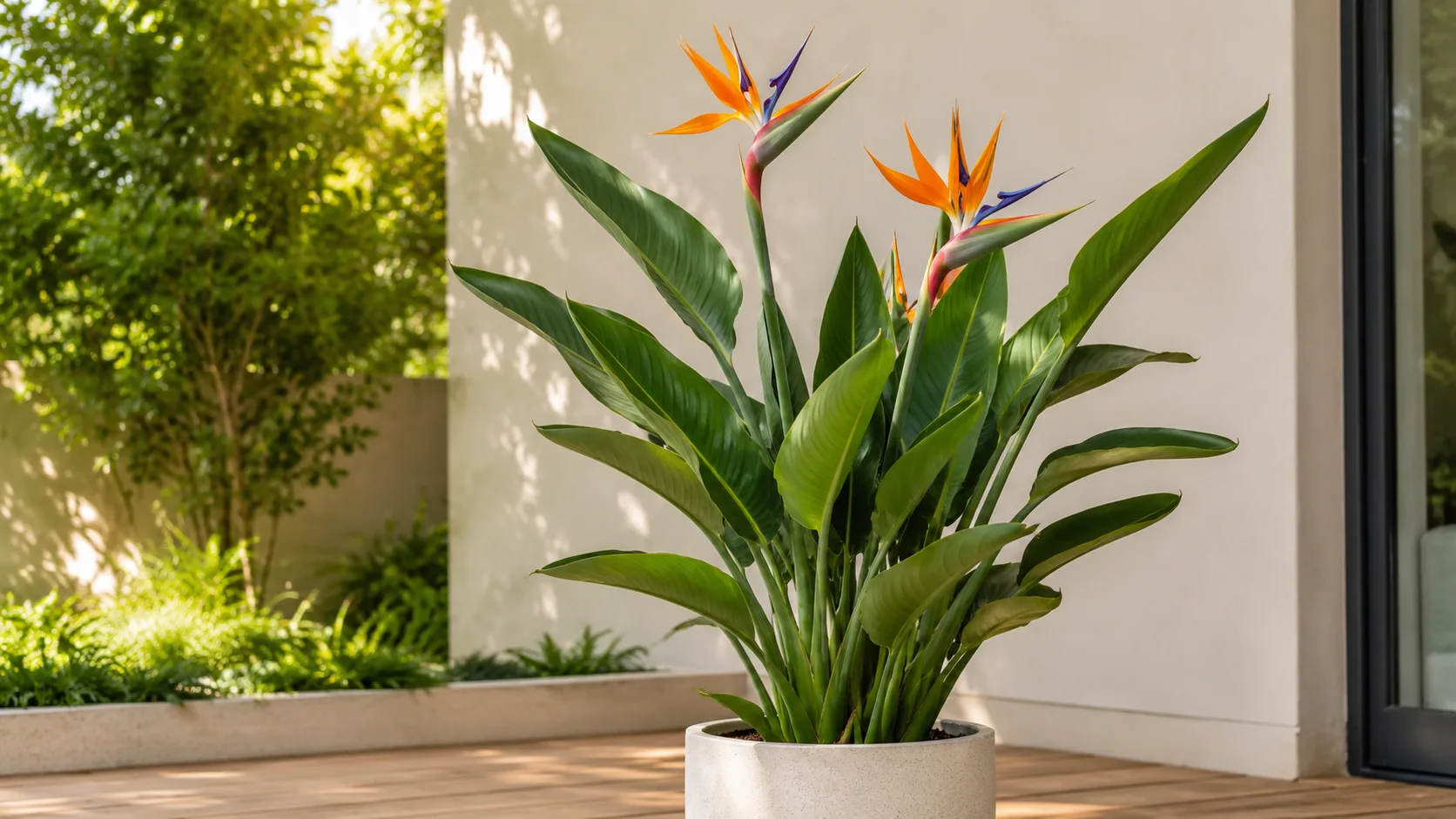
18. Bird of paradise (Strelitzia spp.). Bird of paradise brings a bold, upright tropical shape but demands more light than most foliage plants on this list. Put it close to a bright window, rotate it for even growth, and expect a mature plant to occupy substantial floor space. Indoor flowering is uncommon unless light and maturity are exceptional, so buy it primarily for the leaves.
19. Weeping fig (Ficus benjamina). Fine branches and small glossy leaves give weeping fig the look of an indoor tree. It prefers bright filtered light and consistency; moving it or changing temperature can trigger dramatic but sometimes temporary leaf drop. Scale insects can hide along twigs and leaf joints, making regular inspection important.
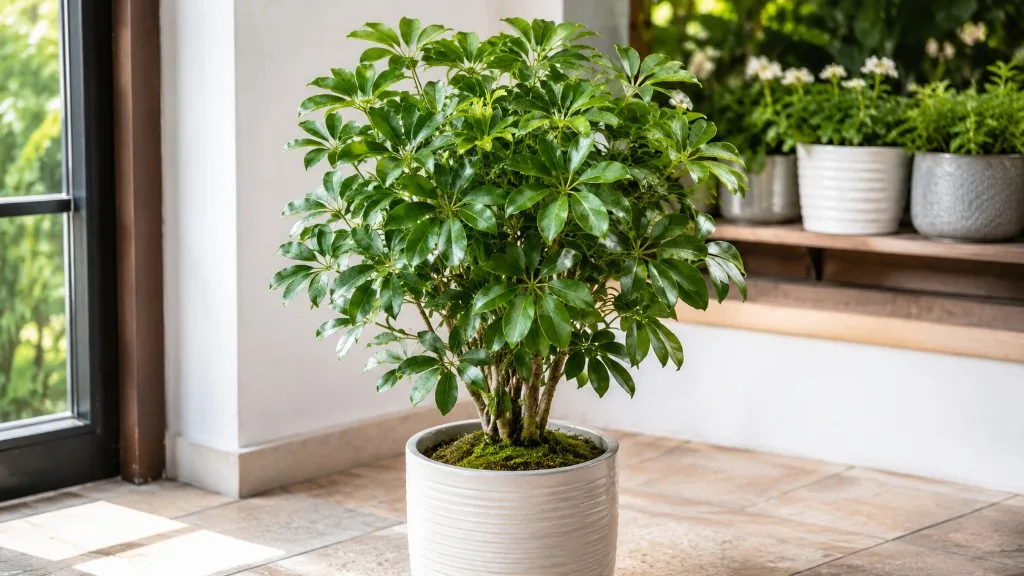
20. Dwarf umbrella tree (Schefflera arboricola). The spoke-like leaflets of umbrella tree create dense vertical foliage without the giant leaves of monstera. Bright indirect light keeps growth compact, while pruning controls height and encourages branching. Let the upper soil dry before watering and treat the plant as unsafe for chewing pets.
21. Chinese fan palm (Livistona chinensis). Fan-shaped fronds make this slow-growing palm a sculptural floor plant. It needs bright light, room around the leaf tips, and more even moisture than a snake plant, but it should never sit in runoff. Dry air and mineral buildup can brown the tips, and sharp leaf stalks make placement part of the decision.
Compact plants for desks and windowsills
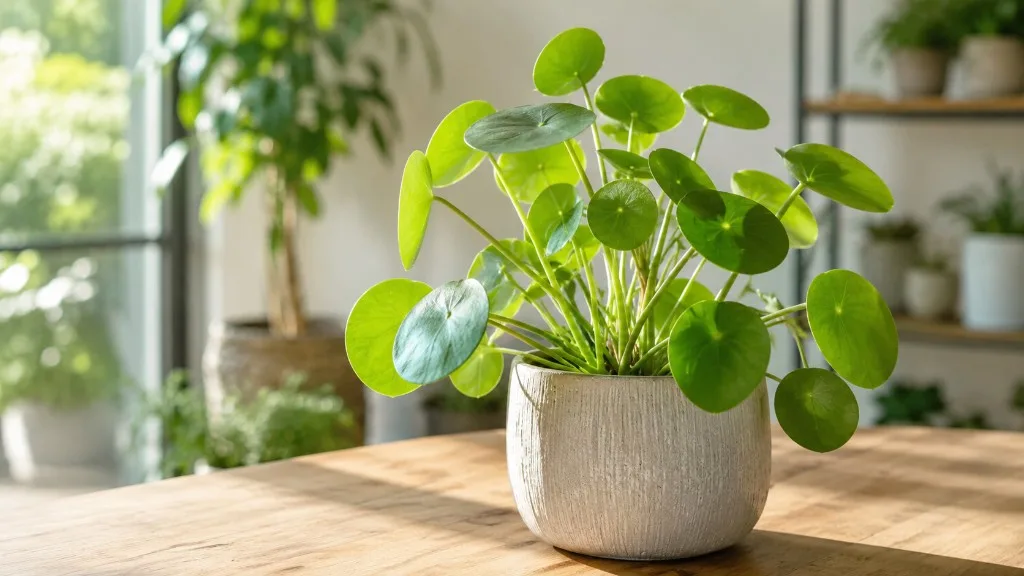
22. Chinese money plant (Pilea peperomioides). Round leaves on long petioles give pilea a graphic shape that suits small tables. Bright indirect light and regular rotation prevent a strongly one-sided plant, while a partial dry-down reduces root stress. Mature plants often produce offsets that can be separated once they have their own roots.
23. Baby rubber plant (Peperomia obtusifolia). This peperomia stays compact and stores some water in its fleshy leaves. Use a small draining pot, bright indirect light, and an airy mix, then let much of the mix dry before watering. Despite the name, it is unrelated to rubber plant and is generally considered a more pet-compatible choice.
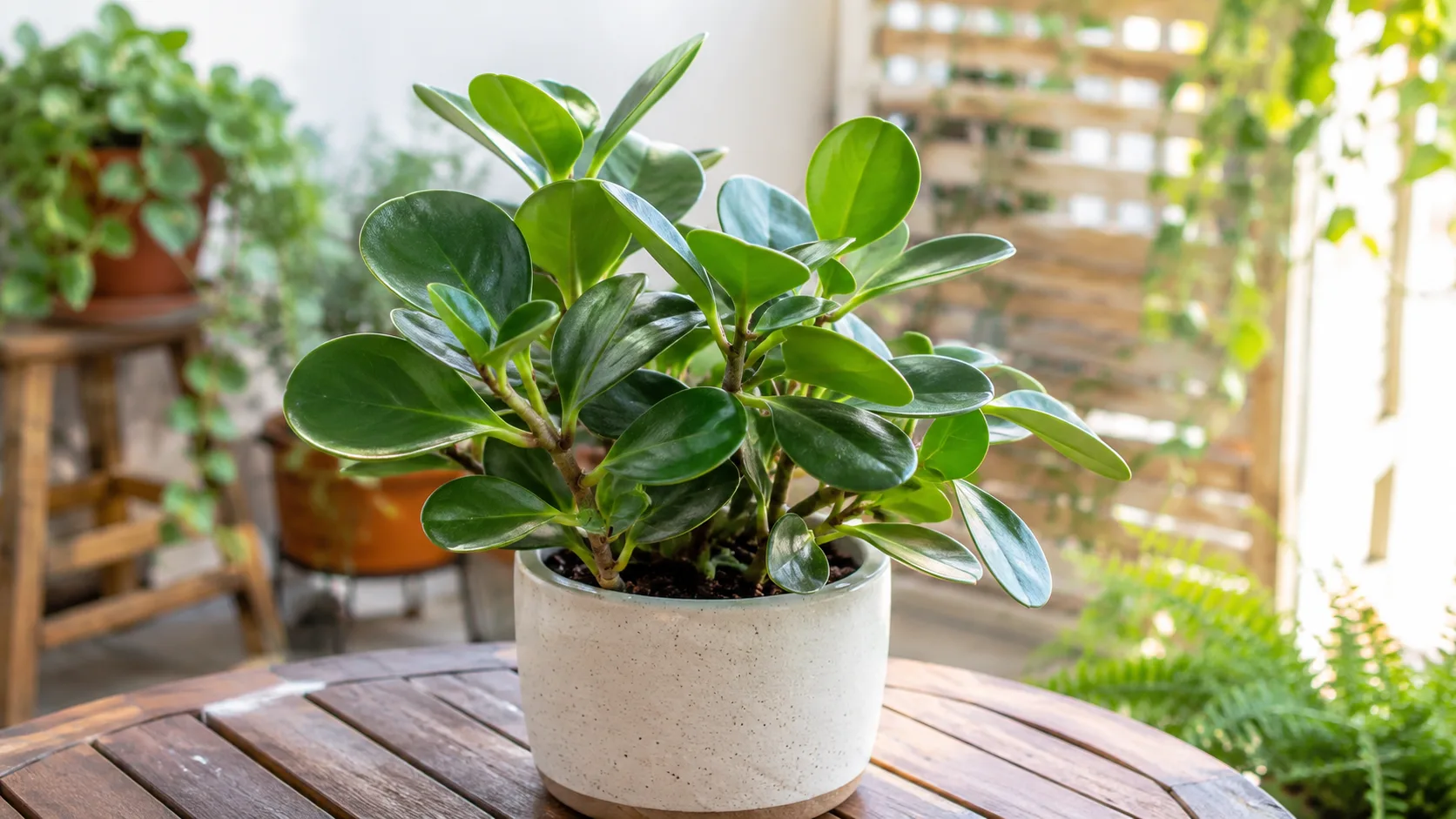
24. Pixie lime peperomia (Peperomia orba). Fine stems and lime-green leaves make this species a softer, smaller alternative to baby rubber plant. It likes bright indirect light and careful watering after the pot has partly dried. Dense growth can trap moisture, so good airflow and a restrained pot size help prevent rot.
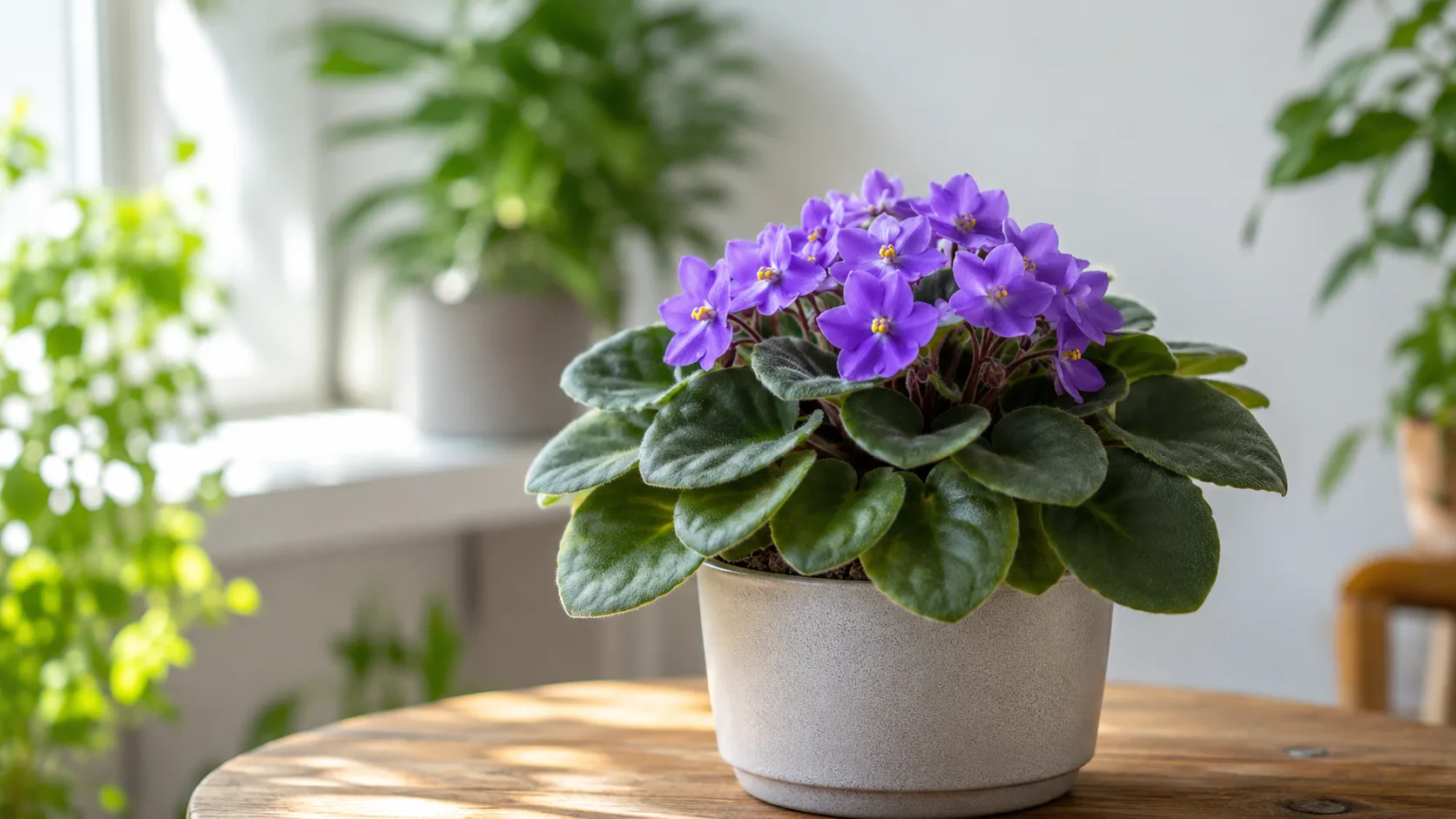
25. African violet (Streptocarpus ionanthus). African violets provide repeat flowers in a very small footprint when they receive bright indirect light and even warmth. Water the mix rather than leaving cold water on fuzzy leaves, and use a loose medium in a modest pot. They are a strong choice for pet-conscious homes, but flowering still depends on adequate light.
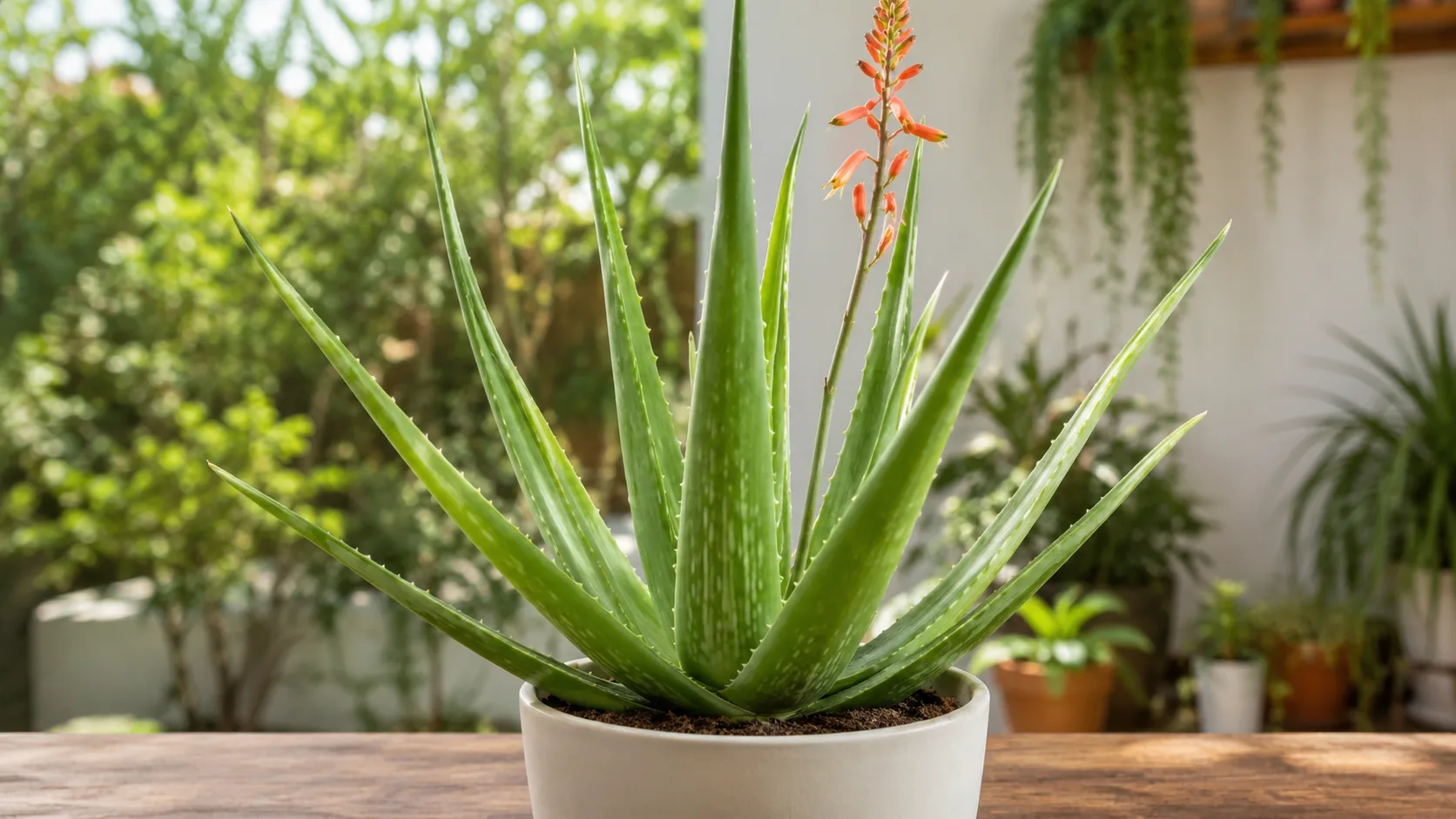
26. Aloe vera (Aloe vera). Aloe needs a genuinely bright window and a gritty mix, not a dark bathroom chosen because the leaves contain gel. Water deeply, let the mix dry thoroughly, and increase direct sun gradually after a shaded shop display. The plant is toxic to cats and dogs if ingested, despite its familiar topical uses for people.
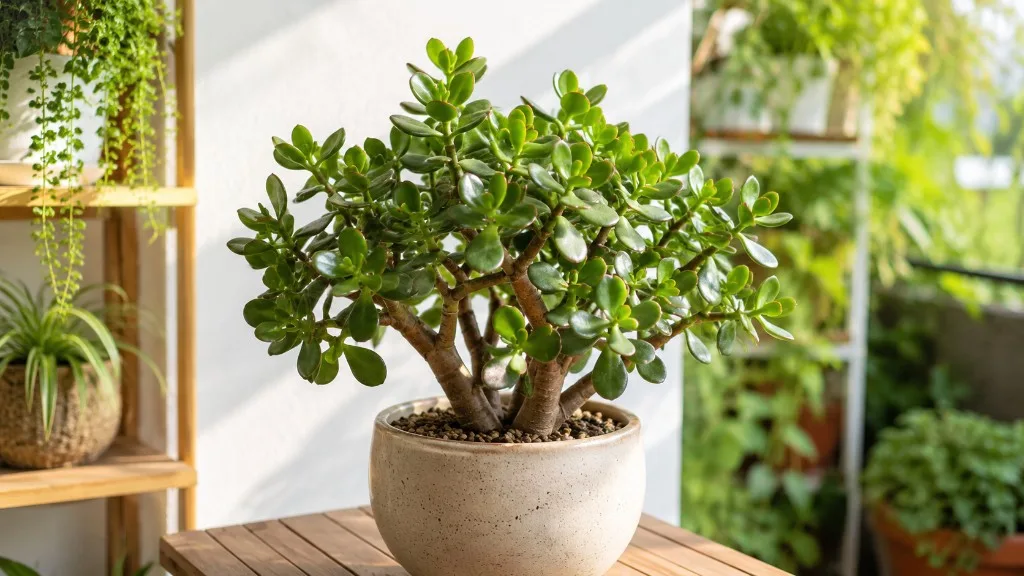
27. Jade plant (Crassula ovata). A jade plant can become a miniature-looking tree over many years. Strong light keeps stems sturdy and leaf spacing compact; weak light produces stretched growth that no amount of fertilizer can correct. Let the pot dry deeply between waterings, and place it away from pets because ingestion can cause illness.
28. Air plant (Tillandsia spp.). Air plants do not need potting mix, but they still need bright filtered light, thorough wetting, and fast drying. After soaking or rinsing, let water drain from the leaf bases in moving air rather than returning a wet plant to a closed ornament. Species vary, so use the seller’s botanical name and care notes instead of one universal weekly misting rule.
Flowering and colorful foliage plants
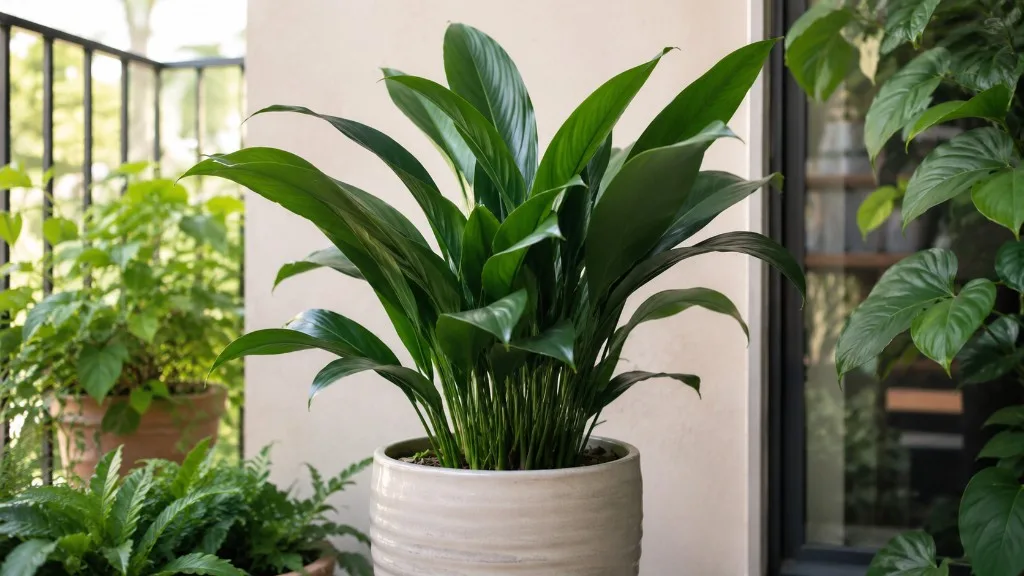
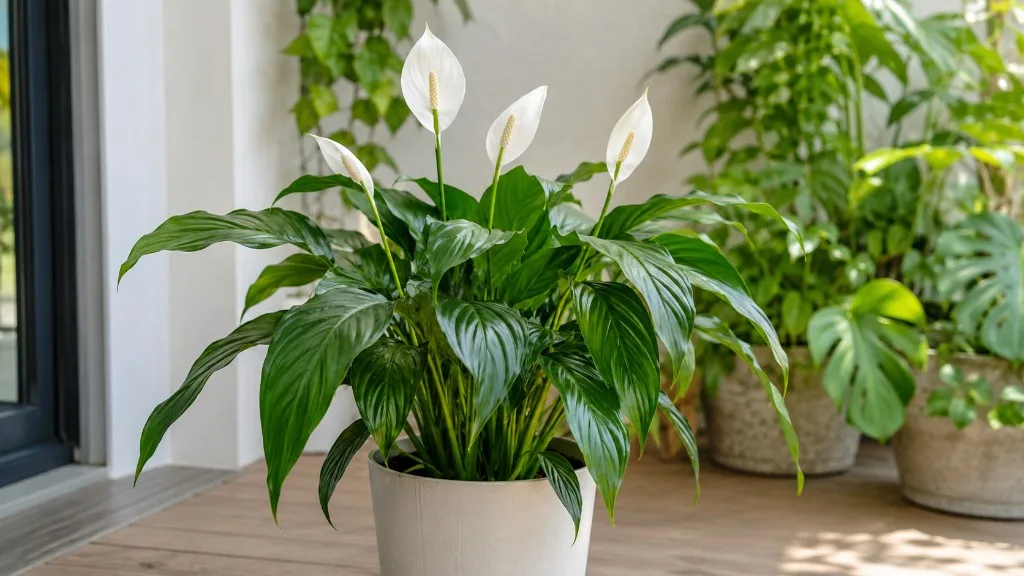
29. Peace lily (Spathiphyllum spp.). Peace lilies tolerate lower light but bloom better in bright indirect light. They prefer more even moisture than pothos and visibly droop when too dry, though repeated wilting stresses roots and leaves. ASPCA identifies insoluble calcium oxalates as the toxic principle, so this is not a pet-safe lily substitute even though it is not a true lily.
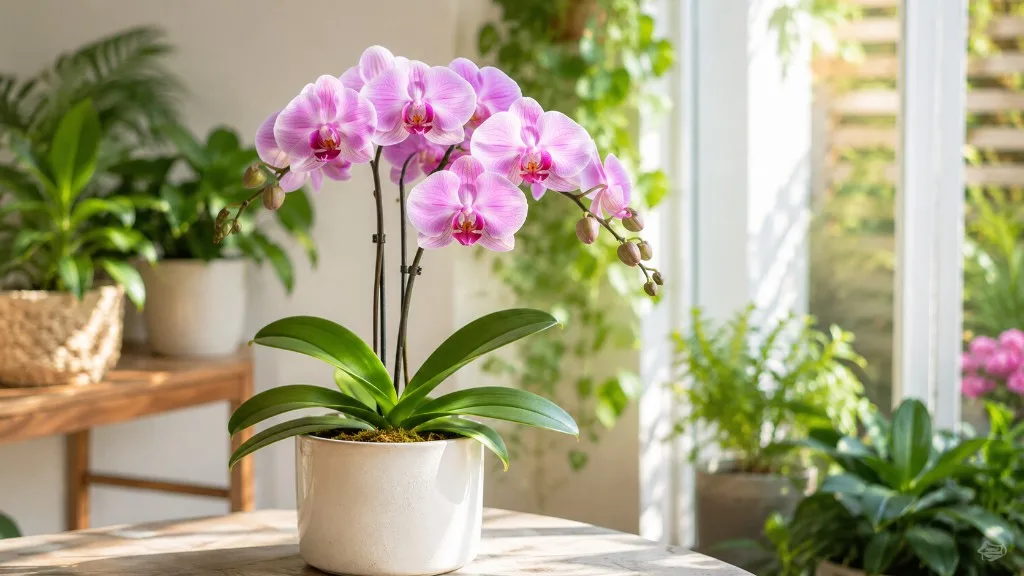
30. Moth orchid (Phalaenopsis hybrids). Moth orchids can hold flowers for weeks and rebloom when given bright indirect light, an airy orchid medium, and correct watering. Water when the roots turn silvery and the medium approaches dry, then drain completely; do not leave the crown full of water. Skip plants potted in dense decorative moss if you cannot monitor how slowly the center dries.
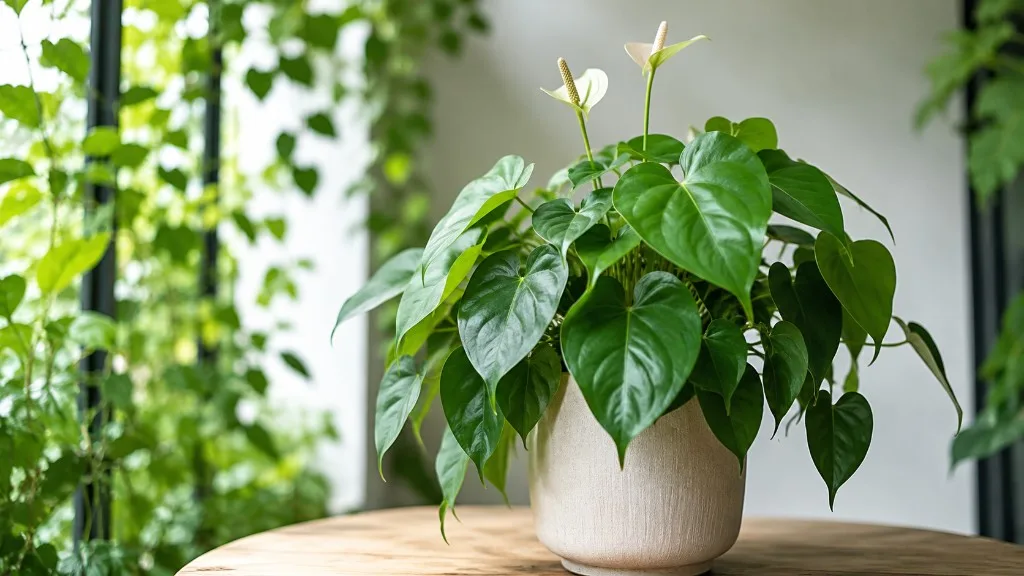
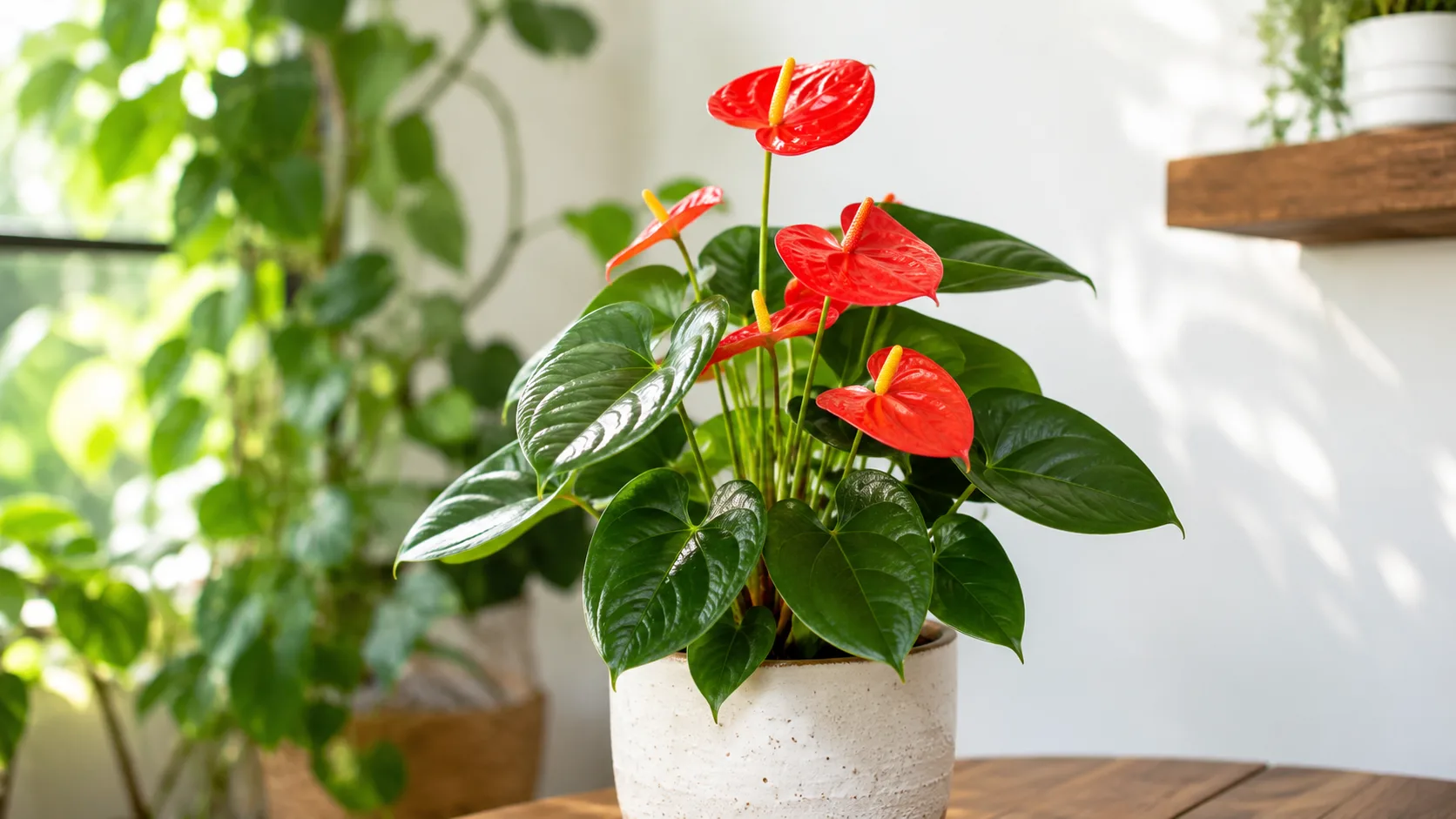
31. Anthurium (Anthurium spp.). Glossy leaves and colorful spathes make anthuriums reliable bright-room accents. They prefer warmth, humidity, and a chunky, well-aerated medium rather than dense wet soil. More usable light usually means better flowering, while direct hot sun can scorch; their calcium oxalates also require careful placement around pets and children.
32. Bromeliad (Bromeliaceae). Many common bromeliads form a rosette around a long-lasting colorful central bract. Care varies across this large family, but most retail types want bright filtered light, airy roots, and warmth. Confirm whether your plant is a tank-forming species before keeping water in its central cup, and expect the mother rosette to decline naturally after flowering while offsets continue the plant.
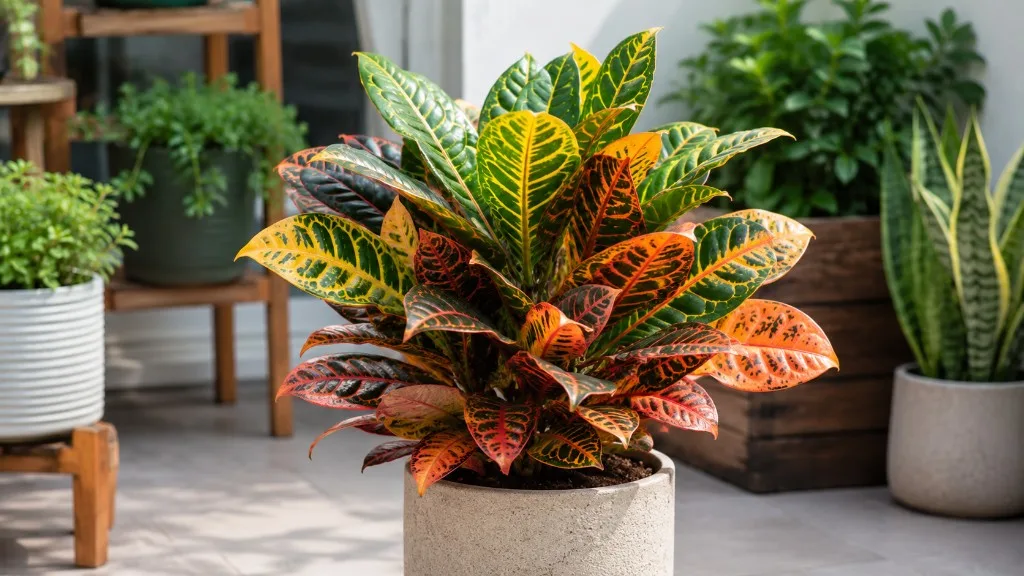
33. Croton (Codiaeum variegatum). Croton produces yellow, orange, red, and green patterns only when it receives abundant light. It dislikes cold drafts, sudden moves, and prolonged dryness, so it is colorful rather than carefree. Check for spider mites in dry rooms, and keep the irritating sap and foliage away from pets and children.
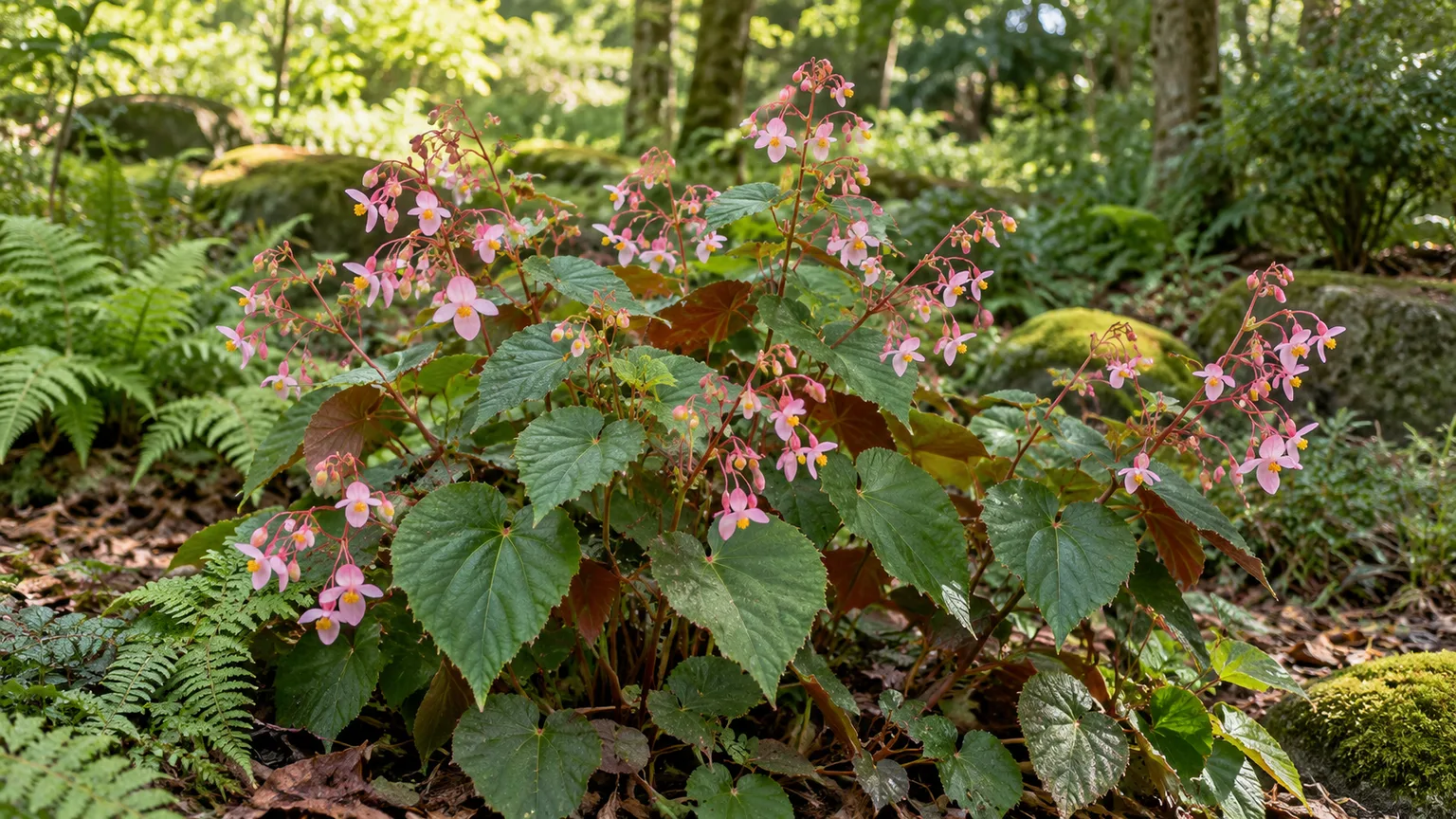
34. Rex begonia (Begonia rex cultivars). Metallic silver, burgundy, pink, and green leaves make rex begonias living color displays even without flowers. They prefer bright indirect light, humidity with airflow, and a mix that stays lightly moist but never saturated. Wet leaves, cold drafts, and stagnant conditions can cause rapid decline, making this a better plant for attentive growers.
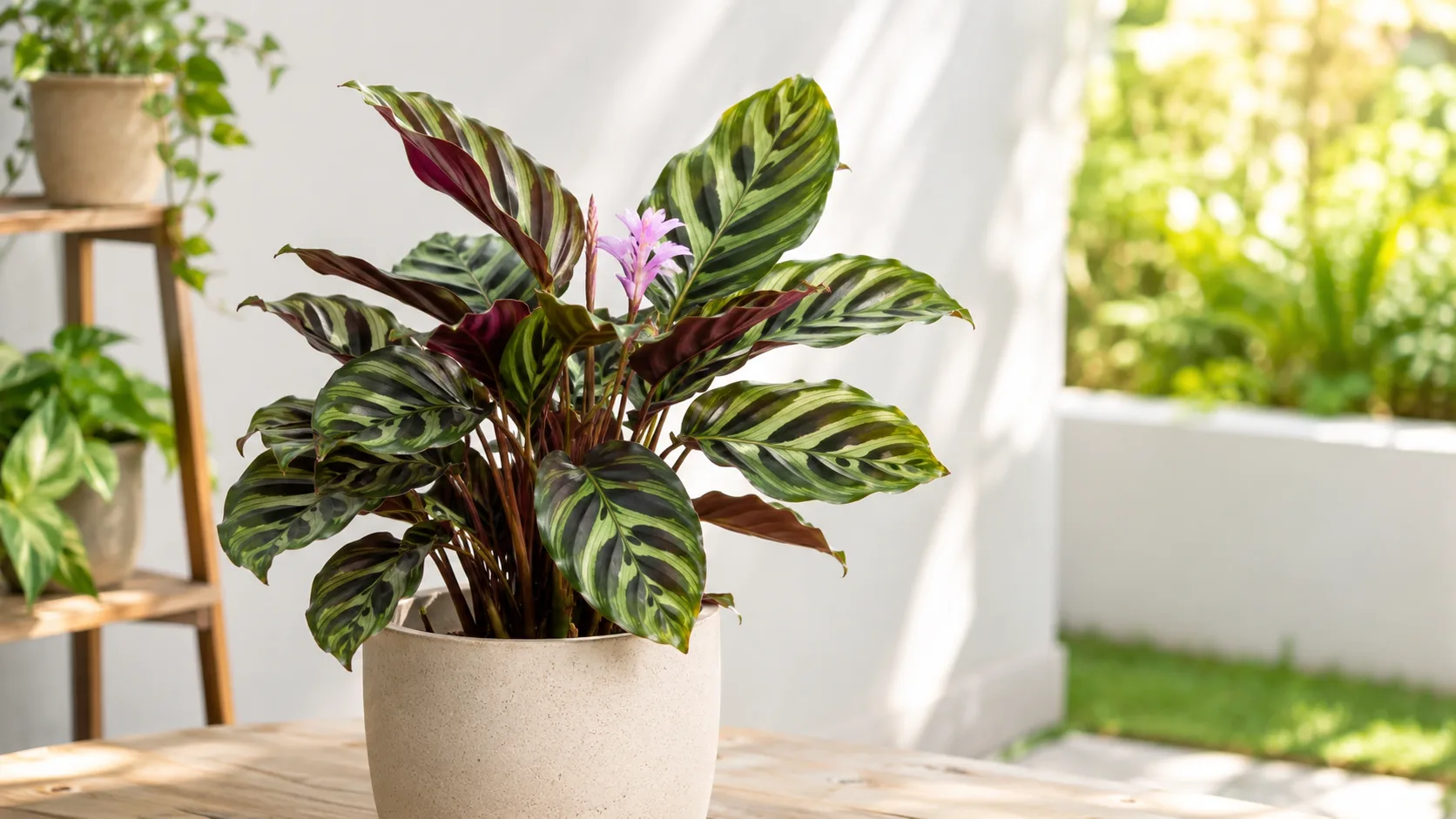
35. Calathea and Goeppertia. These patterned prayer-plant relatives fold or reposition leaves through the day and thrive in warm, humid conditions. Give bright indirect light and more consistent moisture than you would a pothos, while still preserving oxygen around the roots. Crispy margins may reflect dry air, salt buildup, irregular watering, or damaged roots; indiscriminate extra watering can make the problem worse.
Distinctive plants with one important trade-off
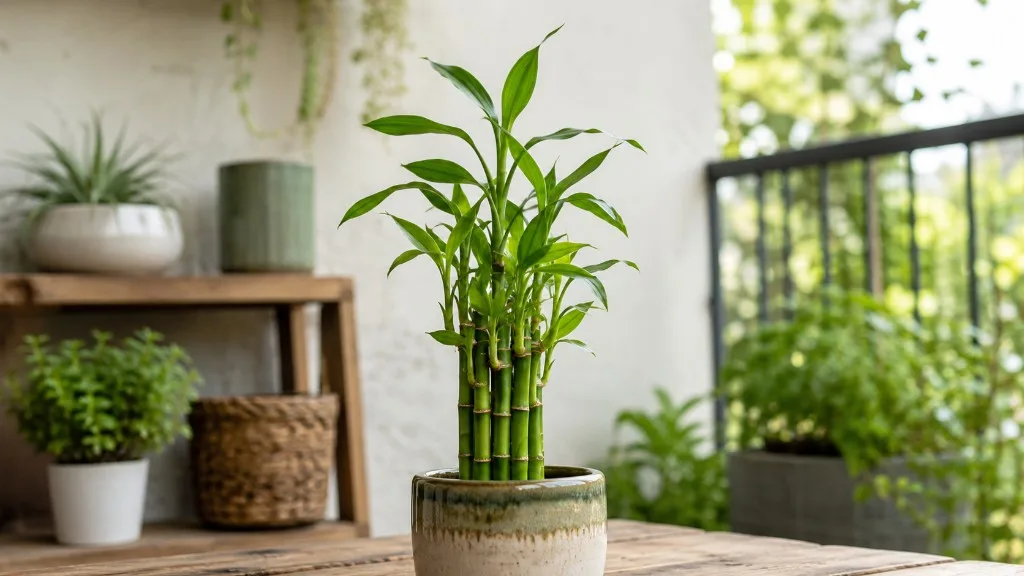
36. Lucky bamboo (Dracaena sanderiana). Lucky bamboo is a dracaena, not true bamboo. It can grow in clean water or potting mix, but water-grown canes still need bright indirect light, regular water changes, and roots that are not smothered by decay. Its easy sculptural form comes with the same pet-toxicity concern as other dracaenas.
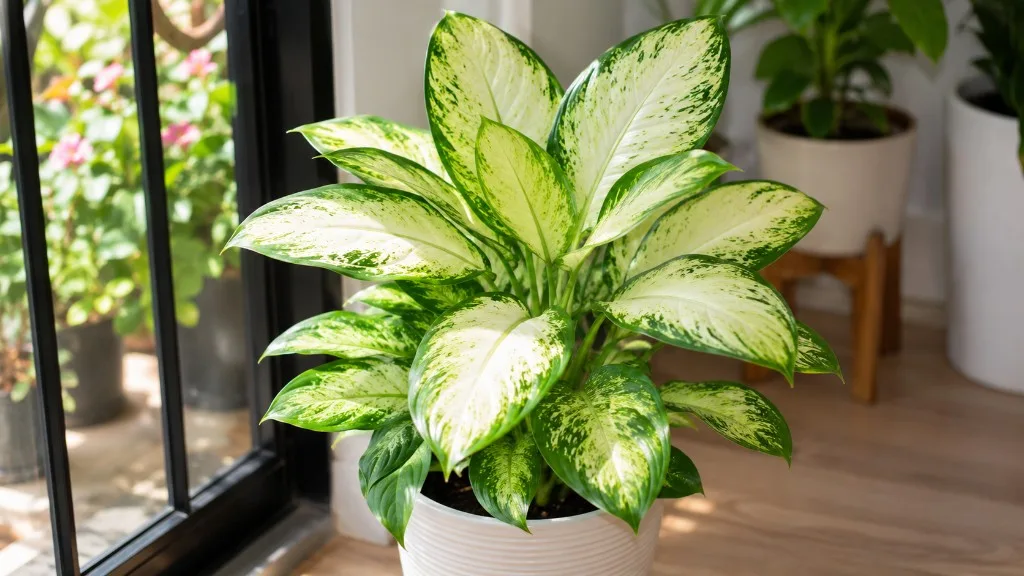
37. Dieffenbachia (Dieffenbachia spp.). Large patterned leaves grow quickly in warmth and bright indirect light. Let the upper mix dry slightly, protect the plant from cold, and wear gloves or wash hands after pruning because the sap can irritate skin. Calcium oxalates make it unsuitable where children or pets may bite stems or leaves.
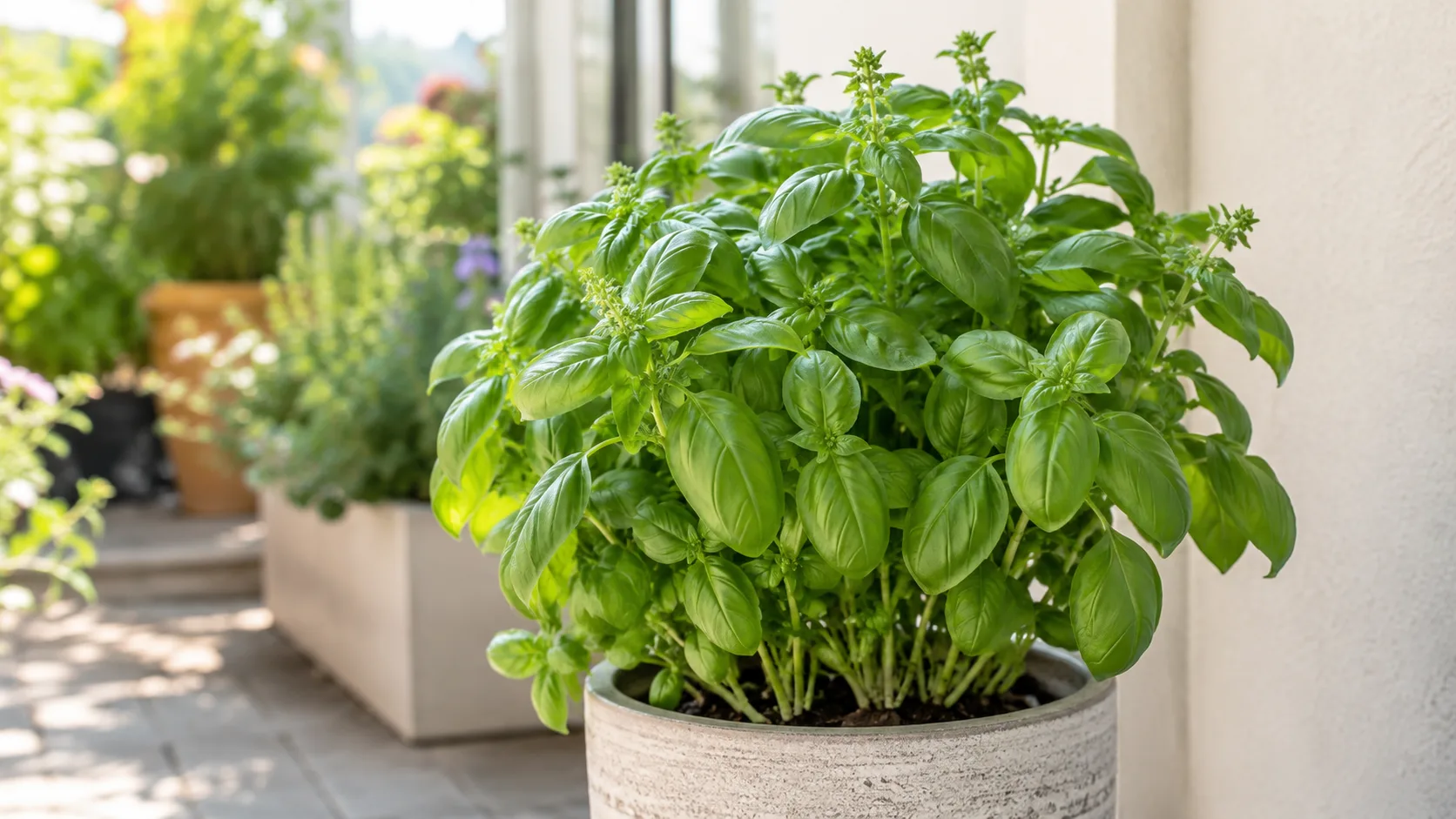
38. Basil (Ocimum basilicum). Basil can be grown indoors, but it behaves more like a high-light crop than a tolerant foliage plant. Give it several hours of strong light or a capable grow light, keep the mix evenly moist, and harvest stem tips often to delay flowering. A supermarket pot is usually crowded with seedlings, so thinning or dividing it can extend useful growth.
39. Parlor palm (Chamaedorea elegans). Parlor palm offers fine tropical fronds while staying manageable indoors. It tolerates medium to somewhat lower light, prefers a partial dry-down, and is commonly listed as non-toxic to cats and dogs. Spider mites become the main concern in hot dry air, so inspect frond undersides rather than responding to every brown tip with more water.
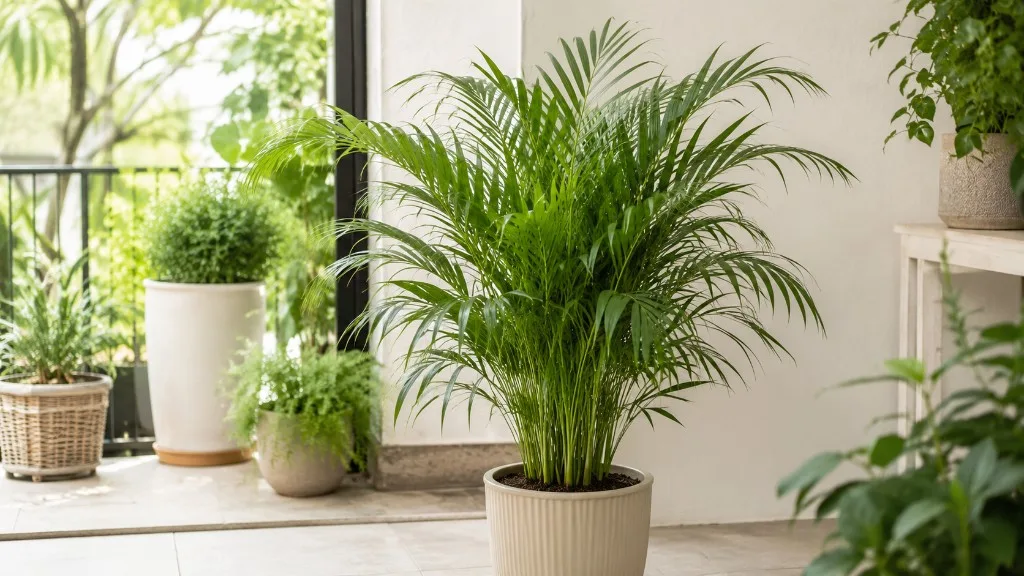
40. Cat palm (Chamaedorea cataractarum). Cat palm forms a fuller clump than parlor palm and needs brighter indirect light, steadier moisture, and more humidity. It is a pet-compatible choice for a larger space, but it is not as neglect-tolerant as its common name and popularity may imply. Give the pot drainage and never let the root ball remain waterlogged.
41. Ti plant (Cordyline fruticosa). Pink, burgundy, cream, and green foliage makes ti plant a striking alternative to croton. It needs bright filtered light, warmth, and protection from cold drafts; weak light dulls color and prolonged dryness browns margins. It is toxic to pets, and spider mites can become a problem when indoor air is hot and dry.
The breadth of this list reflects why houseplants stay popular: there is a form for almost every usable indoor growing condition. Trusted editorial lists such as BBC Gardeners’ World’s houseplant guide similarly span shade-tolerant foliage, bright-window succulents, climbers, palms, and flowering plants rather than treating every indoor space as interchangeable.
Match the plant to your home before you buy
A label can summarize care, but it cannot measure your room. Take a phone photo of the intended spot at midday, note how far it is from the glass, and estimate the plant’s mature width. A small nursery monstera, bird of paradise, rubber plant, or palm may become furniture-sized long before it reaches its botanical maximum.
Also consider your habits. Frequent travelers should favor plants that store water; enthusiastic waterers may do better with plants that prefer steadier moisture, provided the pots drain. If you are unwilling to use a grow light, remove basil, aloe, jade, string of pearls, bird of paradise, and heavily variegated cultivars from a dim-room shortlist.
Low light is tolerance, not darkness
For a lower-light room, begin with ZZ plant, snake plant, cast iron plant, green Chinese evergreen, heartleaf philodendron, pothos, or parlor palm. Place them where they can see an unobstructed window, not in an interior hallway with only ceiling lights. Expect slower growth, less variegation, and slower soil drying than the same plant would show near brighter glass.
Move a plant gradually when increasing light. A foliage plant adapted to a shaded shop can scorch when placed immediately against hot afternoon glass, even if the species eventually tolerates stronger light. Sheer curtains, a small change in distance, or staged exposure over a week or two can make the transition safer.
Pet and child safety can change the shortlist
Popular does not mean edible. Pothos, philodendron, monstera, peace lily, anthurium, dieffenbachia, Chinese evergreen, ZZ plant, snake plant, dracaena, ficus, croton, ivy, aloe, jade, and string of pearls all warrant restrictive placement around pets or young children. Hanging a toxic vine is only effective if fallen leaves and trailing stems remain unreachable.
For a more conservative pet-friendly shortlist, investigate spider plant, parlor palm, cat palm, African violet, moth orchid, and correctly identified peperomias. Verify the exact scientific name in the ASPCA toxic and non-toxic plant database, because common names are reused and the database is not a promise that chewing a “non-toxic” plant will never cause stomach upset. If an animal eats a questionable plant or develops symptoms, contact a veterinarian or animal poison service rather than waiting for an online diagnosis.
Inspect the plant, pot, and soil at the shop
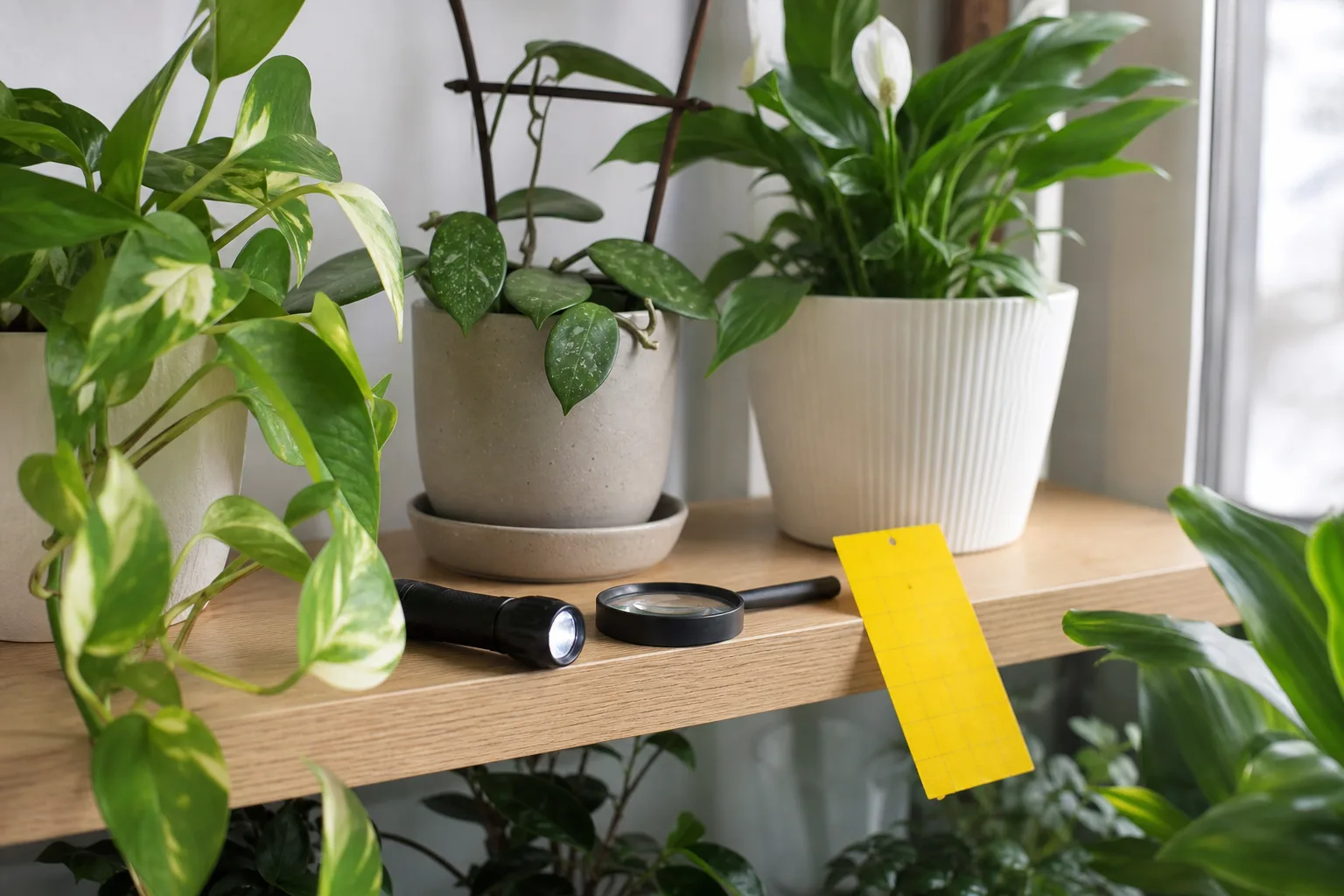
Choose a plant with firm new growth, a readable identity label, and no unexplained spots, sticky residue, webbing, cottony clusters, scale-like bumps, or clouds of tiny flies. Check stem joints and leaf undersides, then look at the potting mix. Wilt in bone-dry mix may recover; wilt in wet, sour-smelling mix can indicate damaged roots.
The RHS recommends avoiding plants with browning foliage, leaf spots, or wilting in wet compost and checking purchases for pests before bringing them home. Penn State Extension’s indoor plant pest guidance likewise emphasizes choosing healthy, pest-free plants and monitoring them. Keep a new purchase separate from an established collection at first, because one unnoticed infestation can turn a bargain into months of treatment.
A simple first-month care routine
For the first week, give the plant stable light and temperature and resist unnecessary repotting, feeding, or pruning. Learn how quickly its nursery mix dries in your home. A tropical plant moved from a humid greenhouse may shed a leaf or pause growth while acclimating, and changing every variable at once makes the cause impossible to identify.
During weeks two through four, inspect the foliage weekly, rotate the pot if growth leans, and empty any runoff trapped in a decorative outer pot. Repot only if roots are severely crowded, the medium is failing to drain, pests live in the mix, or the container has no workable drainage. Choose a replacement only modestly wider than the root ball so excess soil does not remain wet for days.
Water from evidence, not a calendar
Check moisture at the depth appropriate to the plant, then lift smaller pots to learn their dry and wet weights. Succulents, hoyas, ZZ plants, and snake plants should dry much more deeply than peace lilies, calatheas, basil, and rex begonias. Cooler temperatures, weak winter light, and large pots slow drying; bright warm conditions and active roots speed it up.
When watering is due, wet the entire root ball until excess drains, then empty the saucer or cachepot. The RHS advises checking whether a pot needs water rather than watering routinely, and notes that cool rooms need less frequent watering. That evidence-based habit prevents the most common mismatch in indoor gardening: giving a low-light plant the same water schedule it needed in a bright greenhouse.
Conclusion
The most popular houseplants remain popular because they cover very different needs. Pothos, snake plant, ZZ plant, spider plant, and heartleaf philodendron give beginners a wide margin for error; monstera, rubber plant, and bird of paradise fill bright rooms; peperomias and African violets suit small spaces; orchids, anthuriums, bromeliads, crotons, and begonias provide lasting color.
Make the final choice with four filters: usable light, your watering habits, mature size, and household safety. Once those fit, popularity becomes an advantage rather than a trap—you get a plant you genuinely like, established care information, and a realistic chance of keeping it healthy.