How to Reuse Grapefruit Peels Around the House
Turn leftover grapefruit peels into a fridge deodorizer, microwave steam helper, and citrus-vinegar cleaner—with pet and surface-safety limits.
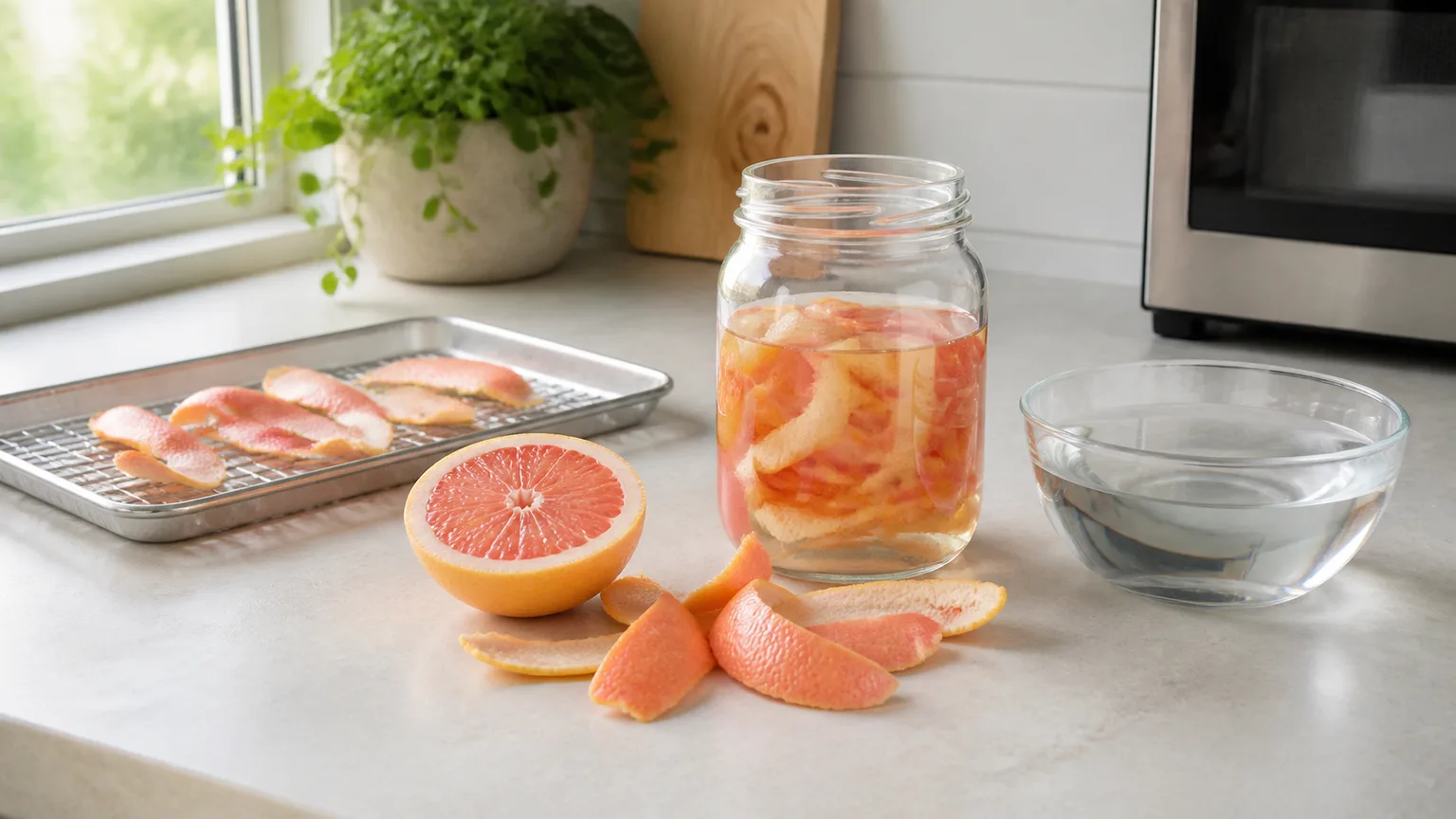
Leftover grapefruit peels are useful, but they are not a universal cleaner. The peel’s aroma, natural oils, acidity, and water content make it handy for short-term deodorizing, loosening kitchen grime, freshening a disposal, and scenting a room. The safest approach is to match the peel’s form to the job: dry pieces for a refrigerator, an infused vinegar for compatible hard surfaces, peel and water for microwave steam, small pieces for a disposal, and fresh peel for a supervised simmer pot.
There is one important boundary before you start. Grapefruit fruit is edible, but the ASPCA lists the skins and plant material as potentially toxic to dogs, cats, and horses because of essential oils and psoralens. Keep peels, jars, spray bottles, and simmer-pot liquid away from pets, wipe up drips, and do not let an animal lick a freshly treated surface.
Start with safe peel preparation
Treat the peel as a food scrap first and a cleaning ingredient second. Utah State University Extension recommends washing the outside of grapefruit thoroughly and patting it dry before cutting or peeling. That simple step matters because the outer surface can carry soil, wax, handling residue, or other material you do not want to concentrate in a jar of vinegar or a bowl in the fridge.
After eating the fruit, scrape away loose pulp, seeds, and as much sticky juice as you can. A thin layer of white pith is fine for a simmer pot or disposal, but a jar packed with wet pulp is more likely to become cloudy, smelly, or difficult to strain. If you are not going to use the peels within a day or two, refrigerate them in a covered container or freeze them in a flat layer until you have enough for one small batch.
Choose fresh, dried, infused, or simmered peel for the job
The four forms are not interchangeable. Fresh peel is best when you want aroma immediately, as with a simmer pot or a small disposal refresh. Dried peel is better for a refrigerator because it adds less moisture, while vinegar-infused peel is useful for mineral film and greasy residue on acid-safe, washable surfaces. Peel-and-water steam is the right idea for softening microwave splatters; the water vapor does most of the work.
Do not save every scrap automatically. If the peel is slimy, moldy, heavily coated with food, or has been sitting warm for several days, compost it or discard it. A questionable peel will not become safer because it is placed in vinegar, heated in a pot, or hidden behind the refrigerator door.
Know what grapefruit peels can and cannot do
Grapefruit is most useful as a cleaning aid and deodorizer, not a germ-killing shortcut. Its scent can make a space smell fresher, its oils can help with greasy residue, and its acids can help loosen some mineral deposits. Those benefits are practical but limited: they do not make every surface compatible, and they do not turn a homemade spray into a disinfectant.
Cleaning is not the same as disinfecting
The U.S. Environmental Protection Agency explains that cleaning removes dirt and organic matter, while sanitizing and disinfecting are regulated antimicrobial claims. A grapefruit-peel vinegar mixture can be a useful cleaner, but do not label it or treat it as a disinfectant. If you are cleaning up after illness, raw meat, bodily fluids, or another situation where disinfection is specifically needed, use an appropriate product according to its label and surface directions.
That distinction also prevents a common mistake with the microwave. Steam can soften dried food, and wiping removes the loosened residue. It is not proof that the inside of the oven has been disinfected. In ordinary situations, CDC guidance notes that cleaning with soap and water removes most germs from surfaces; when a stronger step is required, use a tested product rather than relying on a fragrant peel.
Freshen the refrigerator without hiding a spill
A small dish of dry grapefruit peel can give a refrigerator a bright citrus smell for a short period. Think of it as a scenting step after cleaning, not an odor absorber that can fix spoiled food, a leaking container, or a dirty gasket. If the smell returns quickly, inspect the shelves, drawers, drip areas, and the underside of containers before adding more peel.
Dry and replace the peels on a schedule
Start with clean peel cut into thin strips. Spread it in a single layer on a rack or parchment and let it air-dry until it feels firm and no longer damp inside. For a faster method, use a dehydrator or your oven’s lowest setting, checking often and turning the pieces so they dry rather than brown. UC Agriculture and Natural Resources also describes dehydrating citrus peels and drying them in an oven; the exact time depends on the thickness and the appliance.
Cool the peel completely before putting it in a shallow, open glass or ceramic dish. Set the dish where it cannot tip into food, and check it every few days. Replace the pieces about once a week, or immediately if they soften, feel tacky, or show any mold. A dry peel that has lost most of its aroma is simply finished; do not keep it indefinitely because it looks harmless.
If you need dependable odor control, use a method designed for that job and still remove the source. Even practical cleaning reporting recommends treating citrus peels as a quick refresh and replacing them frequently because fresh peel can mold. Trusted guidance on citrus cleaning also cautions that the peel is better for deodorizing than for killing germs.
Make a grapefruit-peel vinegar cleaner
This is the most versatile peel reuse, provided you keep the word compatible in mind. Vinegar can help dissolve mineral film and cut some greasy residue; grapefruit peel adds scent and some peel oils. It is appropriate for routine cleaning on many sealed, washable, acid-tolerant surfaces, but it is not a no-thought “spray everywhere” formula.
Use the jar, strain, dilute, and label method
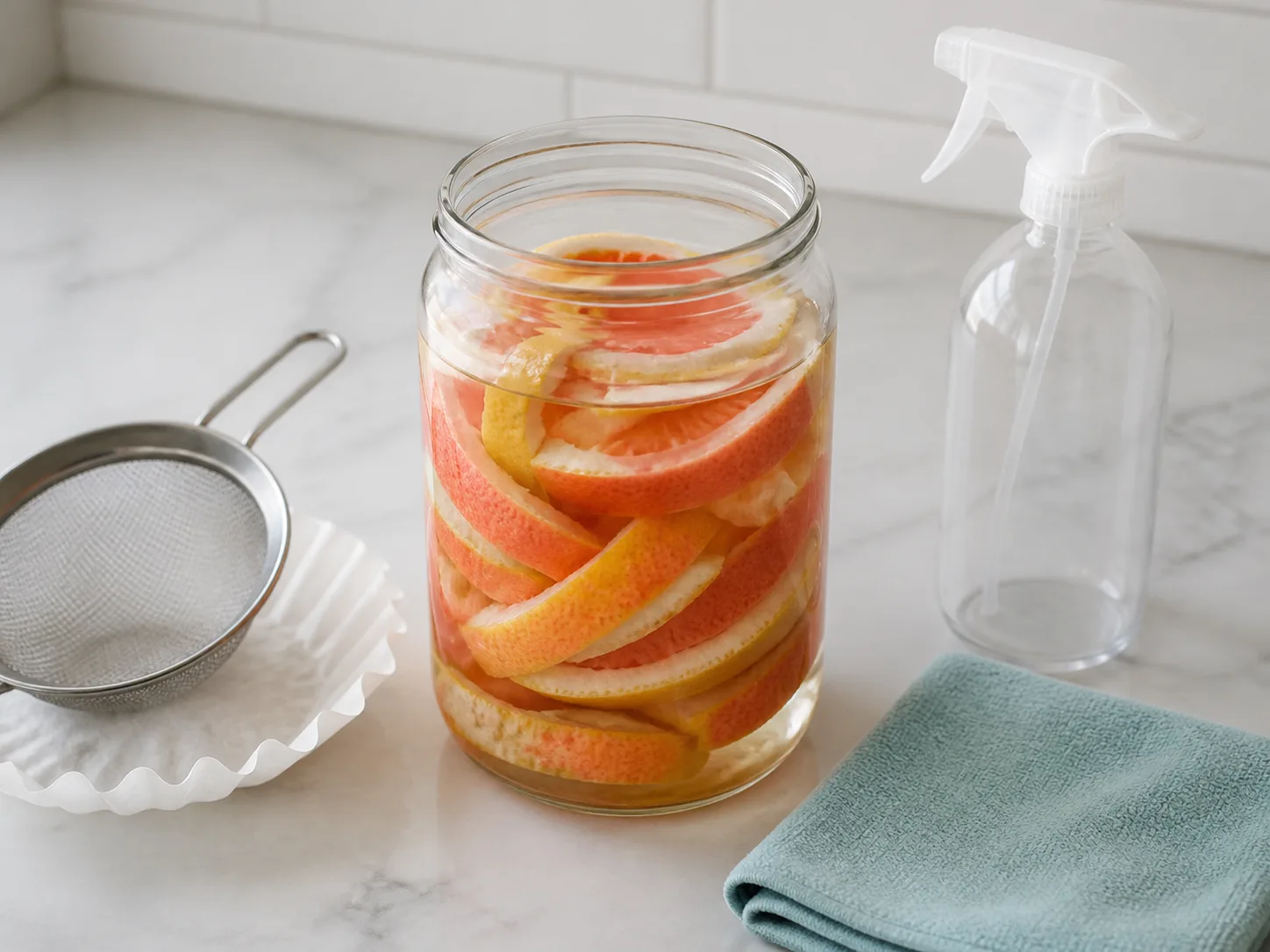
Use a clean glass jar with a nonreactive lid. Add grapefruit peel loosely until the jar is about half to two-thirds full, then pour in plain white distilled vinegar until every piece is submerged. Keep the peels below the liquid; exposed pieces are the part most likely to dry, discolor, or grow mold.
Close the jar and store it in a cool, dark place. Let it infuse for one to two weeks, turning or checking the jar occasionally. UF/IFAS Extension gives a one-week citrus-peel-and-vinegar method, while UC Agriculture and Natural Resources recommends two to three weeks for its homemade citrus cleaner. The practical takeaway is that you do not need to wait a month: a small batch is ready when the vinegar has a noticeable citrus aroma and no sign of spoilage.
Strain through a fine mesh strainer, then filter again through a coffee filter if bits of pith remain. Pulp is not extra cleaning power; it can clog a spray nozzle and shorten the life of the batch. Mix equal parts infused vinegar and water as a starting dilution, pour it into a clean, clearly labeled spray bottle, and shake before use because peel oils can separate.
Spray the cloth rather than flooding a surface. Wipe a small hidden area first, allow it to dry, and look for haze, dullness, swelling, color change, or a softened finish. On a food-contact surface, remove food and visible soil first, then wipe with the cleaner and rinse with clean water afterward. That rinse step matters because a homemade cleaner is not formulated or tested as a food-service sanitizer.
Keep the mixture away from acid-sensitive surfaces
Do not use grapefruit vinegar on marble, limestone, travertine, or other acid-sensitive natural stone. UCANR specifically warns that vinegar and citrus can weaken or etch granite, marble, and their sealants. The American Cleaning Institute also advises avoiding acid-based products on granite countertops.
Skip unfinished or waxed wood, delicate painted finishes, cast iron, electronic screens, leather, and any surface whose care guide says to avoid acids. Use the manufacturer’s cleaning instructions for appliances and flooring. If a surface becomes cloudy or tacky, stop spraying, wipe with clean water, and switch to a material-appropriate cleaner rather than adding more vinegar.
Never mix the infused spray with bleach, chlorine products, ammonia, or another cleaner. CDC says never to mix bleach or disinfectants with other cleaners, and Poison Control specifically warns that vinegar and chlorine bleach can release irritating chlorine gas. Store the bottle out of reach of children and pets, even if the ingredients came from the kitchen.
Steam-clean microwave splatters with peel and water
Grapefruit peels can make the microwave smell fresher while steam loosens dried splatters. The peel is not the important safety feature here: water vapor is. USDA Food Safety and Inspection Service recommends heating water with lemon juice in a microwave-safe glass measure, then letting the steam loosen residue before wiping. Using grapefruit peel is a reasonable scent-focused variation on that method, not a separate disinfecting treatment.
Use a microwave-safe bowl and let steam do the work
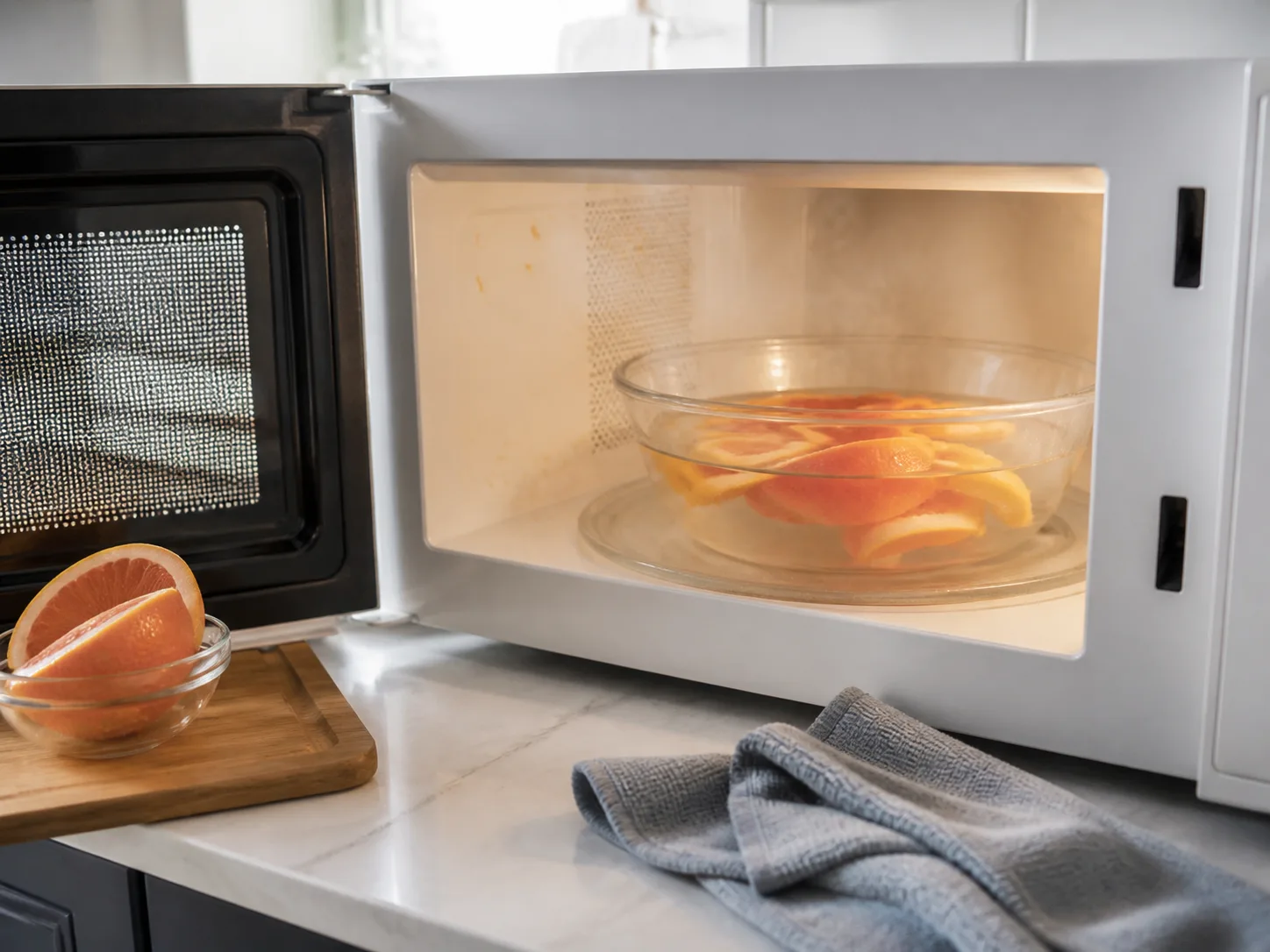
Put a few clean grapefruit peel strips in a microwave-safe glass bowl or measuring cup with about one cup of water. Do not heat dry peel, and do not use a container with metallic trim. Microwave until the water is steaming, usually about two to three minutes depending on the oven, then leave the door closed for another five minutes so the vapor can soften the film.
Open the door away from your face, remove the hot bowl with care, and wipe the ceiling, walls, door, and turntable with a soft cloth. If the splatter is still stuck, repeat the steam step or use a small amount of mild dish soap on the cloth. Do not scrub the interior with abrasive pads, and do not keep heating until the bowl boils dry.
This method works best for fresh or lightly baked-on food. It will not repair a chipped interior, remove burnt plastic, or replace an approved disinfecting procedure when one is required. Rinse the cloth between passes so you lift residue instead of spreading a thin grapefruit-and-food film over the oven.
Freshen a garbage disposal carefully
If you have a garbage disposal and its owner’s manual allows citrus peels, a few small pieces can freshen the grinding chamber. It is a scent and light-maintenance step, not a cure for a slow drain, a leaking seal, or a heavy grease buildup. If the disposal smells because food is trapped under the splash guard, clean that part according to the appliance instructions instead of feeding it more peel.
Use small pieces, cold water, and a full flush
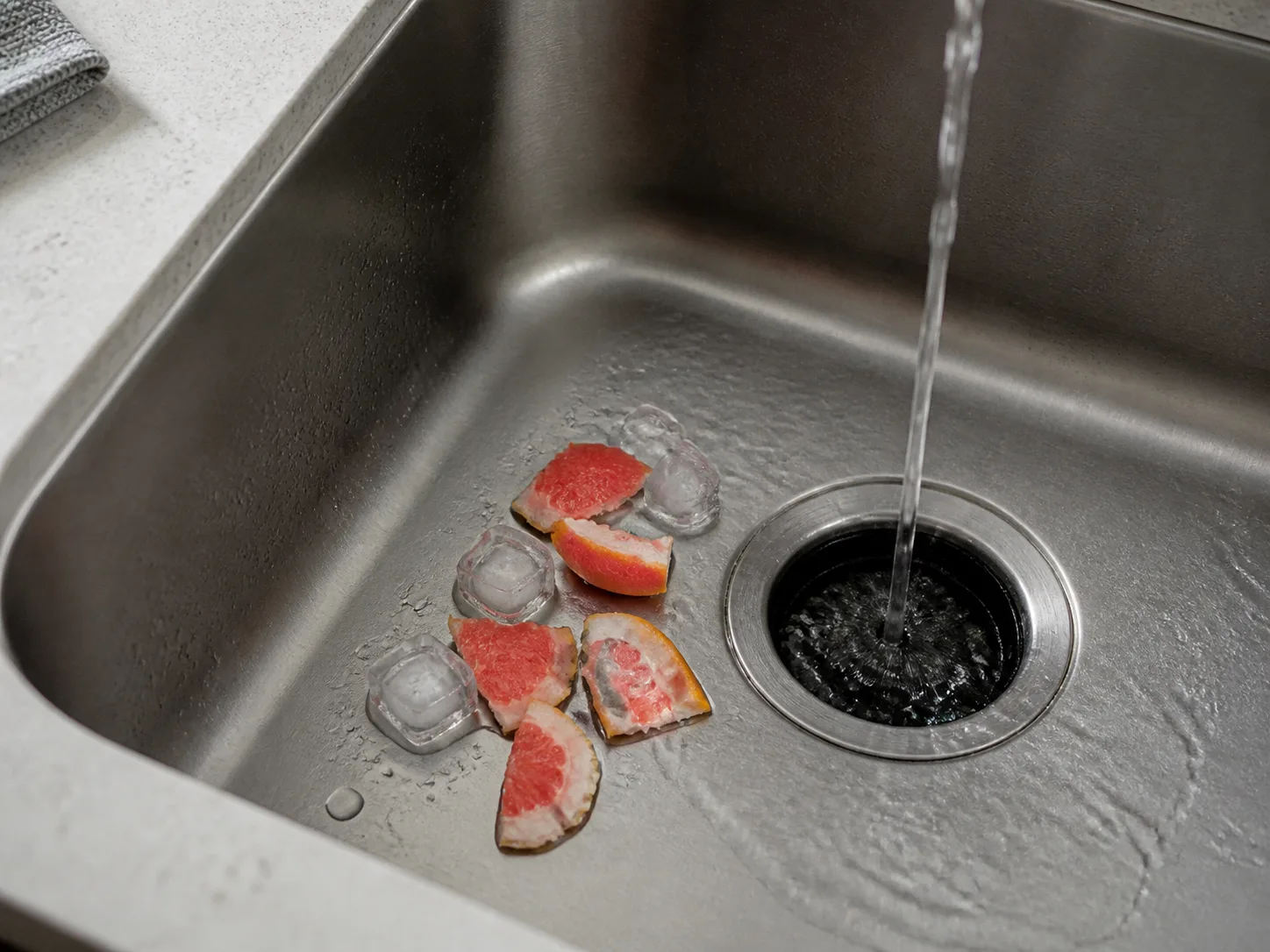
Cut the peel into small pieces and remove any stickers, twist ties, or non-food material. Turn on a strong stream of cold water before starting the disposal, add only a few pieces gradually, and let the water continue for at least 15 seconds after grinding. KitchenAid’s appliance guidance says citrus peels can freshen the chamber, recommends cold water during operation, and advises a post-grind flush.
Do not stuff an entire grapefruit half or a bowl of rinds into the opening. Large loads can overwhelm the unit, and homes on septic systems should be especially conservative with food scraps. Never put your hand into the opening, never use hot water while the disposal is grinding, and stop if the motor hums, the sink drains slowly, or the unit repeatedly resets. Those are signals to follow the model manual or call for service, not to add ice, more peel, or chemical drain cleaner.
If you do not have a disposal, do not improvise by pushing peels down a regular drain. Compost the scraps where permitted, freeze them for a later batch, or put them in the trash. A small amount of peel has a useful life; it is not worth a clogged trap.
Simmer grapefruit peels for room fragrance
A simmer pot is the simplest reuse: add grapefruit peel to a pot of water with a cinnamon stick, rosemary, cardamom, or another pleasant herb, then keep it at a gentle simmer. The result is a temporary fragrance that can make a room feel fresher, but it only masks odors. If there is a damp towel, spoiled food, litter-box issue, or drain buildup causing the smell, fix that source first.
Stay nearby and keep pets away
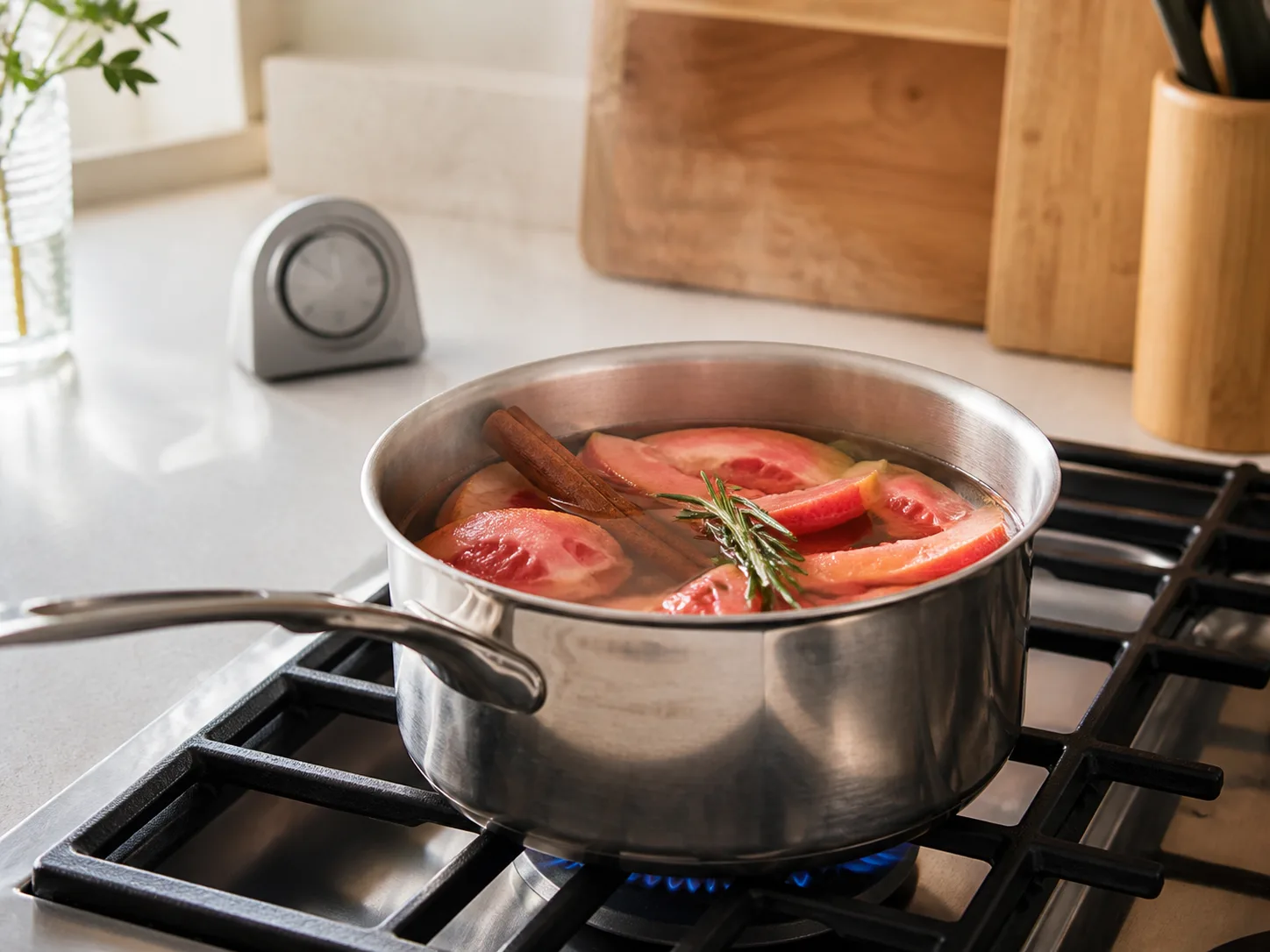
Use a stable pot, plenty of water, low heat, and a timer. The U.S. Fire Administration reports that unattended equipment is a leading factor in nonconfined home cooking fires and advises staying with the pan and turning the burner off before leaving the kitchen. A simmer pot is still a pan on a heat source, even though it looks harmless.
Top up the water before the pot gets low, turn off the burner when you leave, and let the liquid cool before disposing of it. Keep the pot, peel, spices, and cooled liquid away from pets and children. ASPCA’s grapefruit guidance identifies essential oils and psoralens in the plant material and reports potential problems from the skins. If you have a pet that is likely to drink from a pot, knock over a bowl, or chew peel, choose a different way to reuse the scraps.
Ventilate if the fragrance becomes intense, and skip the simmer pot if anyone in the home is sensitive to strong scents. A clean-smelling room is not worth eye, airway, or pet irritation.
Store, label, and know when to toss the batch
The safest homemade cleaner is a small batch you can identify. Write the ingredients, dilution, and date on the jar or spray bottle. Keep it in a cool, dark place away from children, pets, food, and direct heat, and use a dedicated bottle rather than one that still contains traces of a commercial chemical.
There is no universal tested shelf life for every kitchen-made grapefruit-peel cleaner. Discard a batch if you see mold, stringy growth, pressure, bubbling that was not present when you made it, a rotten or fermented odor, or a change that makes you unsure. Do not taste it, sniff it closely, or try to rescue moldy liquid by straining or adding more vinegar. If a clean batch separates into an oily layer, shake it; if it leaves a sticky film, use less spray and follow with a water-damp cloth.
Use the same decision rule for the peels themselves: dry for the fridge, infuse for compatible hard-surface cleaning, steam with water for the microwave, use a few small pieces for a disposal, and simmer only while supervised. When none of those jobs fits your home, composting or discarding the peel is the better reuse choice.
Conclusion
Grapefruit peels earn a second life when you give them a narrow, realistic job. Dry strips can freshen a refrigerator for a few days, a strained vinegar infusion can cut mineral film on acid-safe surfaces, peel and water can loosen microwave splatters, a few pieces can refresh a compatible disposal, and a supervised simmer pot can scent the room.
The limits are just as useful as the ideas. These are cleaning and fragrance methods, not guaranteed disinfectants. Keep acid away from stone and delicate finishes, rinse food-contact surfaces, never mix vinegar with bleach, operate disposals with cold water and small amounts, do not let a simmer pot run unattended, and keep every form of grapefruit peel away from pets. Used that way, a leftover rind becomes a practical household resource instead of another cleaning hack that creates a new problem.