How to Stop Fruit Flies in a Kitchen Drain
Learn why fruit flies gather in kitchen drains, how to test and scrub the source, what not to pour down pipes, and when to call a pro.
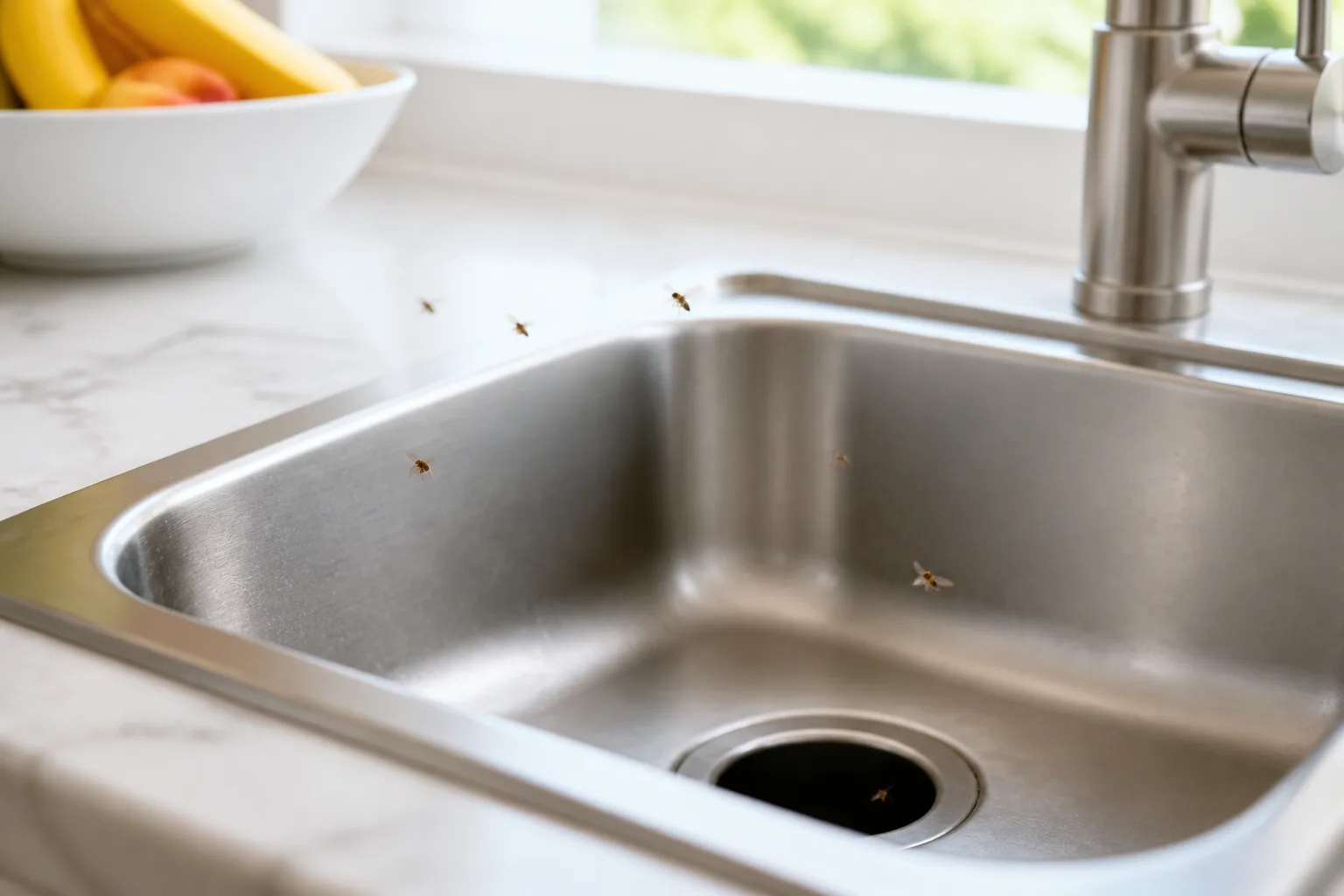
Fruit flies near a kitchen sink do not always mean a bowl of bananas is the culprit. The overlooked source is often the drain opening, garbage disposal, or sink overflow channel, where a thin layer of fermenting food residue can stay damp and out of sight. University of Wisconsin–Madison Extension lists garbage disposals, broken drain traps, and drains with fermenting organic matter among the places to investigate, along with the more obvious produce and trash. (University of Wisconsin–Madison Extension)
Start by treating the drain as a possibility to test, not a fact to assume. A few tiny tan flies hovering over a sink may be fruit flies, fuzzy moth-like insects may be drain flies, and dark insects rising from a plant pot may be fungus gnats. The right first action depends on that distinction.
The Fast Answer: Check the Drain, Disposal, and Overflow
If fruit flies are concentrated around the sink, remove the visible attractants first, then inspect the hidden wet surfaces in this order: the garbage disposal splash guard, drain opening, stopper underside, sink overflow, and pipe connections beneath the basin. Look for sour odor, sticky residue, slow drainage, or a dark film that stays wet after the sink is dry.
The most useful sequence is test, remove, scrub, trap, and reassess. Put a temporary cover over each suspect drain overnight to see whether flies emerge from it, mechanically remove the residue you can reach, and set a small vinegar trap nearby to catch adults while you work. A trap may make the kitchen look better quickly, but source removal is what stops the next generation.
Fruit flies are small—about 1/16 to 1/8 inch long—and often tan with red eyes. They are attracted to fermenting fruits and vegetables, beer, wine, soft-drink containers, and trash, so the sink may be a convenient landmark rather than the breeding site. The University of Minnesota Extension identifies those food and waste locations as common indoor settings. (University of Minnesota Extension)
Why a Kitchen Drain Can Attract Fruit Flies
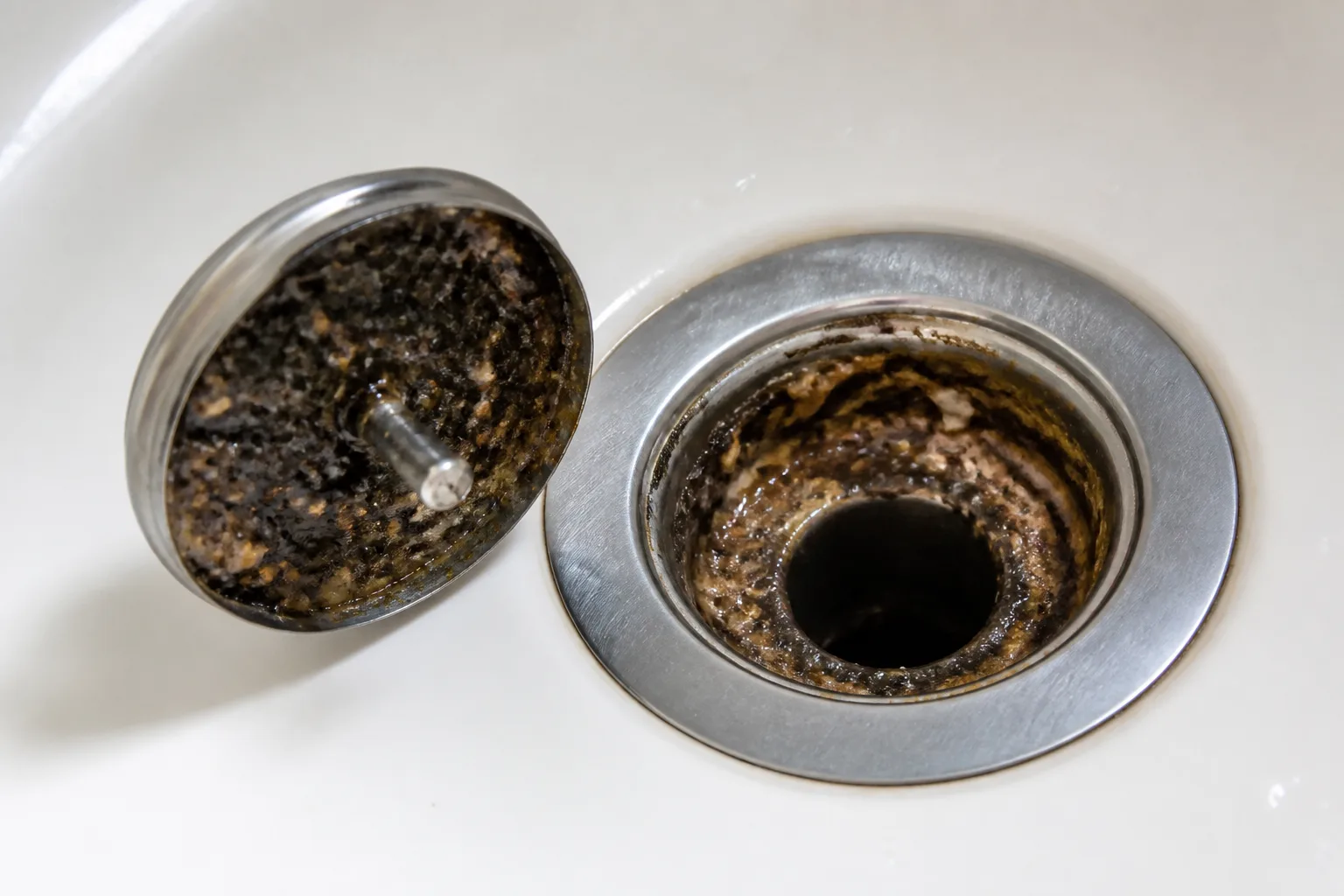
A drain can collect exactly what fruit flies need: a little moisture and a little organic material. Juice, pulp, starch, sugar, or a fragment of onion can cling beneath a stopper or disposal guard, then begin fermenting in a warm, protected space. The amount may be too small to notice during normal rinsing but still large enough to produce odor and support larvae.
Fruit flies lay eggs near fermenting or rotting material, and the larvae feed on yeast associated with that decay. Wisconsin Extension says the full life cycle can take about eight to 10 days, which explains why adults can seem to reappear after a successful-looking cleanup. Removing only the visible flies leaves the material that supports the next generation. (University of Wisconsin–Madison Extension)
The sink also has hidden surfaces that are easy to skip. The underside of a stopper, the pivot rod behind a drain plug, the inside of an overflow passage, and the first section of pipe can remain wet even when the basin looks spotless. If the disposal sprays water and food beneath its rubber guard, the residue may be tucked below the rim rather than sitting in the bowl.
Humidity alone is not enough to prove a fruit-fly source. Moisture makes the area attractive, but fruit flies still need suitable food or fermenting residue. That is why wiping the counter without cleaning the drain may fail—and why cleaning a perfectly clean drain will not help if a leaking recycling container or forgotten potato is producing the adults elsewhere.
Fruit Flies, Drain Flies, and Fungus Gnats Need Different Fixes
Small flying insects are easy to lump together, but their appearance and breeding material give you a useful first diagnosis. Use this comparison before choosing a trap or pouring anything into a pipe.
| Clue | Fruit flies | Drain flies | Fungus gnats |
|---|---|---|---|
| Appearance | Tiny tan or brown flies; red eyes may be visible | Gray or brown, fuzzy, moth-like body and wings | Dark, slender insects with long legs and antennae |
| Flight | Short hovering flights around food and waste | Weak, erratic hops or short flights near plumbing | Weak flights around plant pots and windows |
| Common location | Produce, drinks, recycling, trash, disposal | Sink, shower, overflow, floor drain, damp plumbing | Damp potting mix and plant shelves |
| Breeding material | Fermenting fruit, vegetables, liquids, or organic residue | Sludgy drain biofilm and wet organic film | Moist organic potting media |
| First action | Find and remove the fermenting source | Mechanically remove drain slime and repair moisture | Let the soil surface dry and correct plant-care conditions |
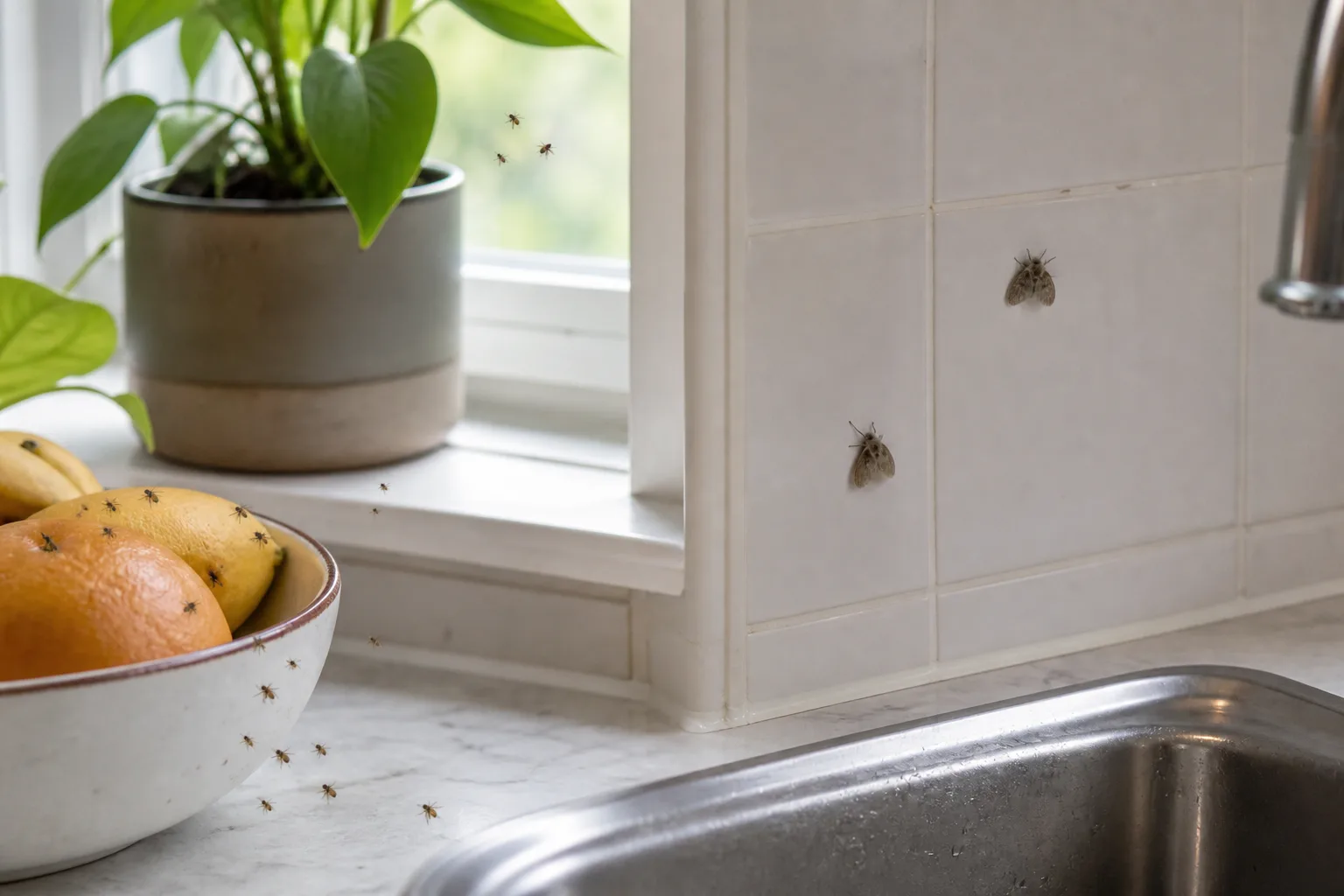
University of Minnesota Extension describes fruit flies as tan, 1/16 to 1/8 inch long, and associated with fermenting food and trash. Virginia Tech describes drain flies as fuzzy, moth-like insects that rest near kitchens and breed in sludgy material inside drains. (Virginia Tech Cooperative Extension)
The distinction matters because a vinegar bowl may catch adults from more than one small-fly group without fixing either breeding site. If the insects are fuzzy and you see them resting on the wall above the sink, prioritize the drain-biofilm cleanup. If they rise when you disturb a houseplant, move your inspection to the potting mix instead of repeatedly washing the kitchen.
Test the Drain Before You Clean It
Testing takes one night and prevents a common mistake: spending an hour scrubbing the wrong drain. Choose the kitchen sink drain, disposal opening, and—if present—the overflow opening as separate suspects. Clean the surrounding counter first so you can interpret what appears later.
For a simple test, place a strip of clear tape sticky-side down over most of the drain opening, leaving enough space for normal air movement. Do this only when the sink will not be used, and remove the tape before running water. Adult flies that emerge can become stuck to the tape, giving you evidence that the opening is involved.
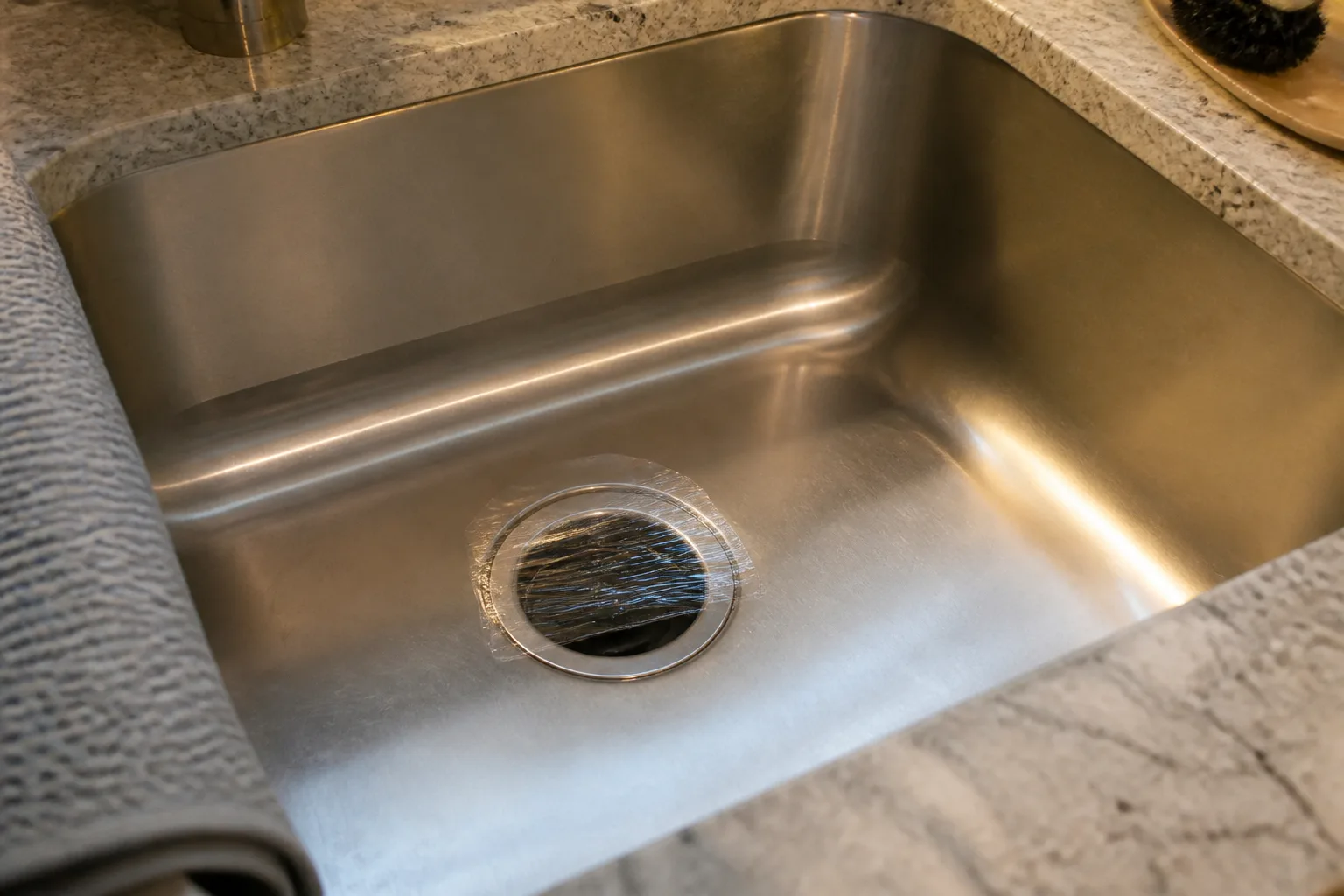
You can also invert a clear cup or jar over the drain after coating the inside rim with a thin film of petroleum jelly. Leave it overnight, then check the surface in the morning. Penn State Extension recommends covering a suspect outlet and watching for adult moth flies; Virginia Tech gives tape and inverted-cup methods for locating a drain-fly source. (Penn State Extension) (Virginia Tech Cooperative Extension)
Treat a negative test as useful but not absolute. A drain with no trapped flies may still connect to a deeper source, or adults may be emerging from the overflow, P-trap, disposal, or another room. Test the kitchen drain and disposal on different nights if the first result is unclear, and check the bathroom or laundry drains if activity is not limited to the kitchen.
Clean a Garbage Disposal Without Reaching Into It
Turn off the disposal at the wall switch before cleaning. If you can safely access the electrical plug, disconnect it as well; never put your fingers into the opening, even when the appliance appears off. Use the manufacturer’s instructions for removing or lifting the splash guard, and use a long-handled disposal brush or cloth tool rather than reaching into the grinding chamber.
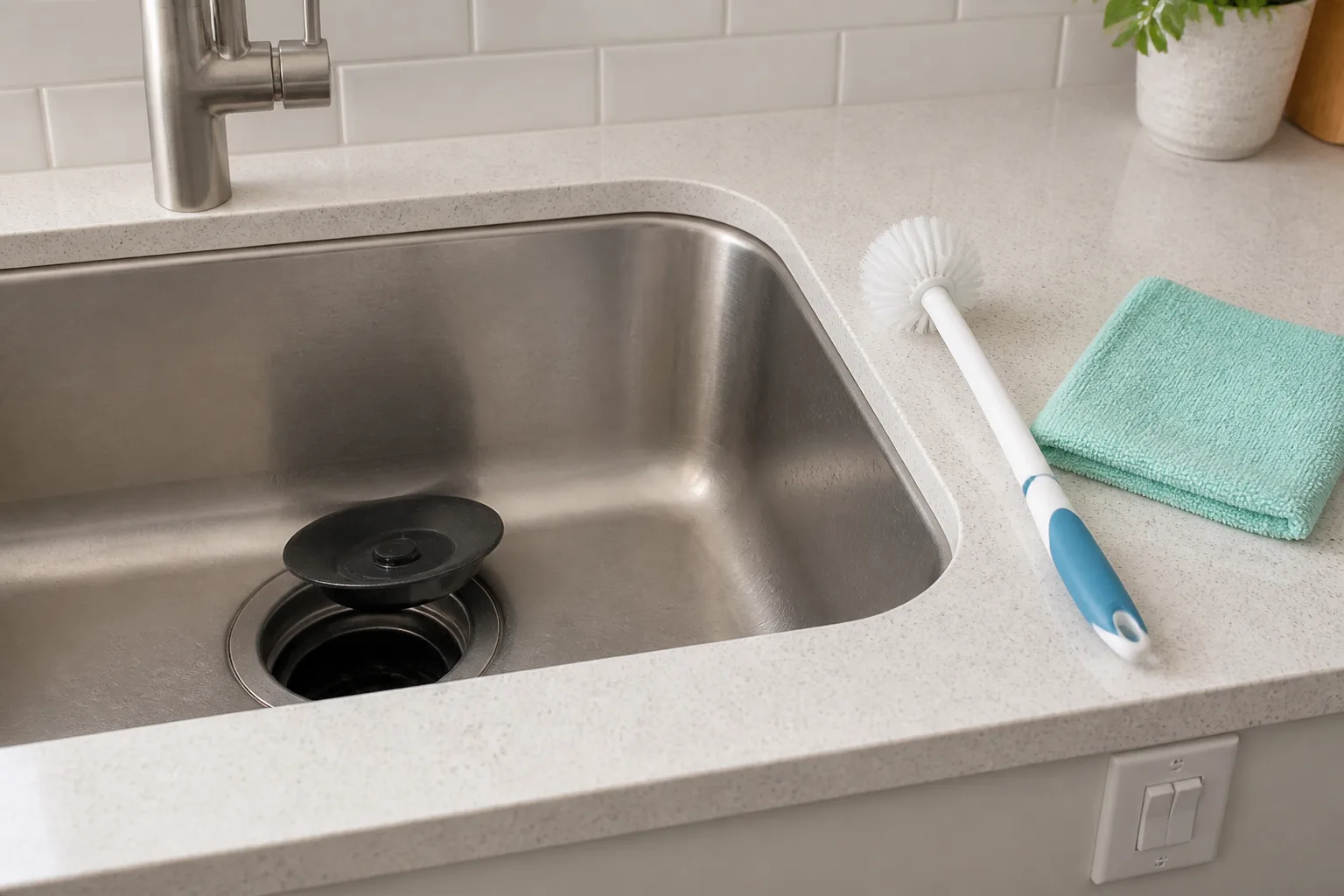
The rubber splash guard deserves special attention. Food residue can cling to its underside and the groove around its edge, where a quick rinse does not create enough friction to remove it. Clean the removable parts according to the manufacturer’s directions, scrub the rim and accessible surfaces, and rinse only when the power is safely off and the plumbing can drain normally.
Do not treat citrus peels, ice, or a strong fragrance as a substitute for cleaning. A scent may temporarily make the disposal smell fresher while residue remains below the guard. The practical question is whether you removed the film that can ferment, not whether the sink smells pleasant for an hour.
If the disposal drains slowly, backs up, or makes an unfamiliar sound, stop experimenting with household mixtures. A mechanical issue can leave water and food trapped in the line, and repeated flushing can push the problem deeper. A plumber can clear the obstruction without turning a pest problem into a leak or appliance repair.
Scrub the Drain Opening, Stopper, and Overflow
Remove the stopper or strainer if it is designed to come out, then scrub both sides and the drain rim with a stiff brush and hot soapy water. Pay attention to the underside, grooves, and the part that sits just below the basin. Rinse the brush between passes so you are lifting residue away rather than smearing it around the opening.
Next, inspect the overflow opening near the top of the sink basin. That channel can hold water and food particles even though it is rarely cleaned. A narrow bottle brush or flexible drain brush can reach farther than a sponge; use a tool suitable for the sink material and follow the fixture manufacturer’s care instructions.
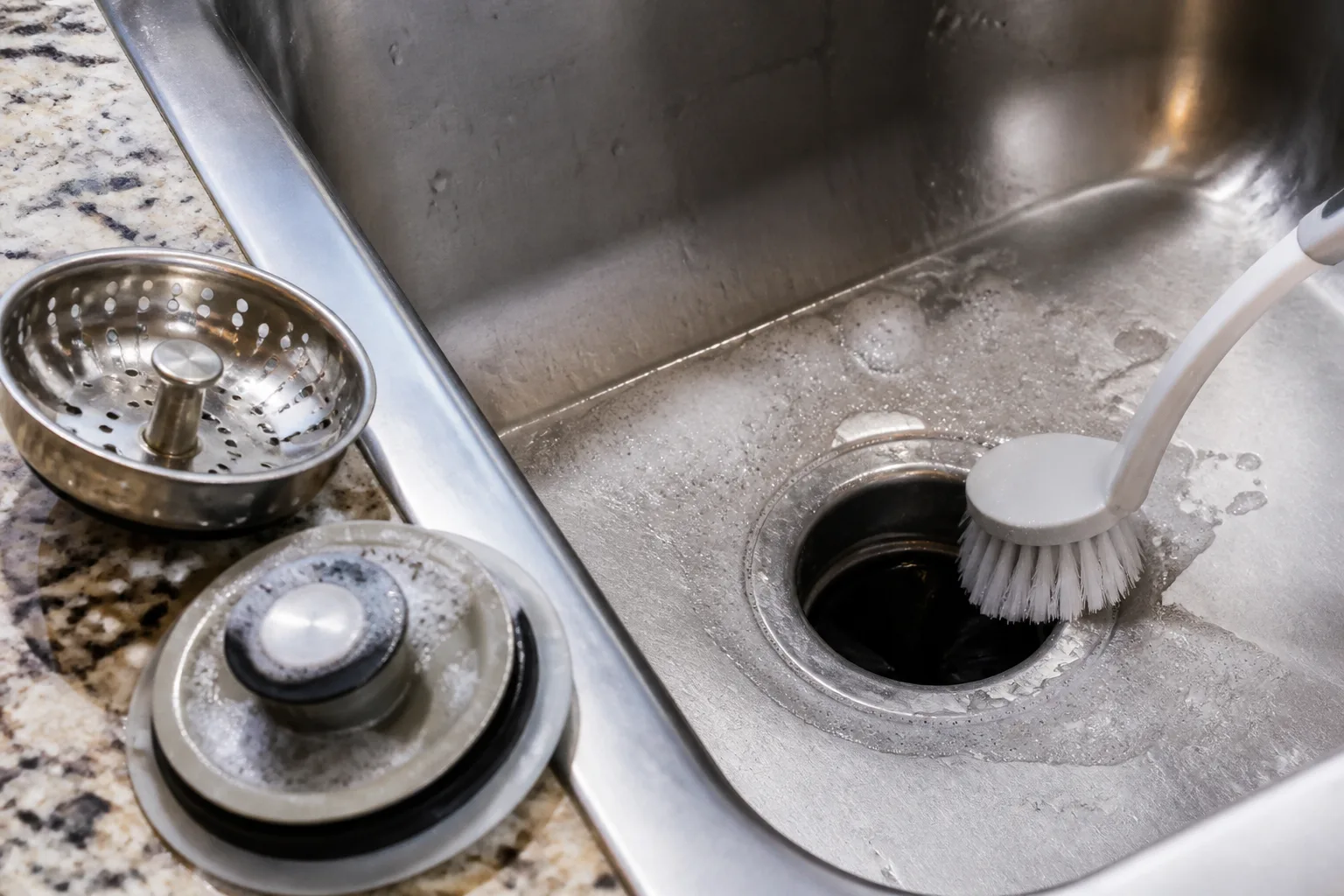
Mechanical removal is the key distinction. Virginia Tech notes that adult drain flies can be reduced by removing the organic material where they breed and that thick accumulated material may require physical scrubbing; a liquid treatment alone may not penetrate the film. (Virginia Tech Cooperative Extension)
Once the accessible parts are clean, rinse the drain in the way your plumbing and cleaner label allow. A labeled enzyme or foaming drain-maintenance product may help break down remaining organic material, but it is not a reason to skip brushing and it is not a license to combine cleaners. If there is a heavy clog or the smell returns immediately, stop at the accessible surfaces and move to the inspection below.
Inspect the Trap, Leaks, and Appliance Drip Pans
Look under the sink with a flashlight. Check the P-trap, slip-joint connections, cabinet floor, and the wall where the drain line disappears. A damp patch, slow drip, warped cabinet base, or sour odor points to a moisture problem that surface cleaning cannot solve.
Also check nearby sources that share the same plumbing area: the dishwasher filter and drain connection, refrigerator or ice-maker drip pan, condensate pan, and any floor drain. Alabama Cooperative Extension System lists sink drains and traps, overflow pipes, leaking pipes, damp mop heads, garbage containers, appliance drip pans, and potted-plant saucers among potential drain-fly breeding sites. (Alabama Cooperative Extension System)
Do not dismantle a trap if you are not comfortable reassembling and checking it for leaks. Put a dry paper towel beneath the connection instead, run the fixture briefly when appropriate, and look for fresh moisture. A hidden leak inside a wall or beneath a floor is a plumbing job; insect traps cannot remove the wet organic habitat it creates.
If the sink has been unused for a long time, run water through it according to normal household practice after the source has been cleaned. Water in a trap can help maintain the plumbing seal, but flooding a drain does not scrub away established film. The goal is regular maintenance, not a one-time deluge.
Search the Rest of the Kitchen for a Second Source
A drain can be involved without being the only source. When flies remain after a careful drain cleanup, search outward from the sink instead of repeating the same rinse. Fruit flies often gather near the source, but airflow and light can carry them to a nearby window, fruit bowl, or cabinet.
Check produce one piece at a time, including potatoes, onions, squash, tomatoes, bananas, and anything stored in a dark cabinet. Look under the fruit bowl, beneath appliances, and in the seam where a countertop meets a backsplash. One split tomato or forgotten onion can support a surprising number of flies.
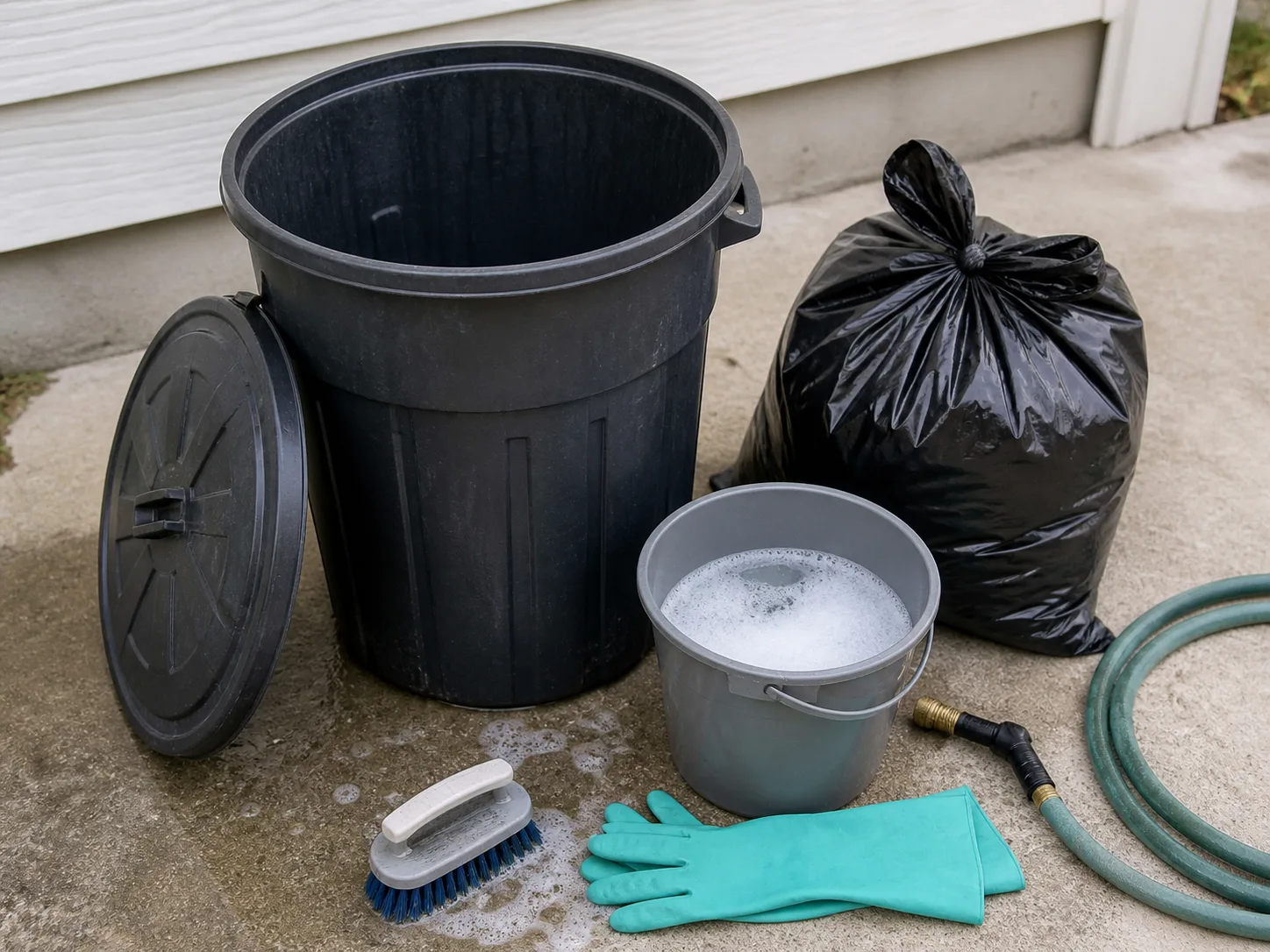
Inspect bottles and cans waiting for recycling. Rinse sticky soda, beer, wine, juice, and sauce residue before storing the containers, and wash the recycling bin if liquid has pooled inside it. The University of Wisconsin–Madison Extension specifically identifies recycling containers, drain pans, garbage cans, and sour-smelling mops or rags as places that may need detective work. (University of Wisconsin–Madison Extension)
Finally, check the compost caddy, trash-can rim and bottom, pet-food dish, damp cleaning cloths, mop head, and bucket. Gardening Know How also recommends removing rotting produce, keeping counters and drains clean, taking out trash, and not allowing compost scraps to pile up indoors. (Gardening Know How)
Follow a 48-Hour Reset Plan
The first goal is a downward trend, not an empty kitchen five minutes after cleaning. Adult flies already present can continue to hover or enter from another room, so pair source removal with monitoring for two days.
During the first hour, remove overripe produce and tie off wet trash. Rinse sticky recycling, wash the counter and sink basin, clean the disposal splash guard and drain parts, and dry the area. Take a quick photo of any leak or residue before removing it if you may need to explain the problem to a plumber.
That evening, place one vinegar trap near—but not directly on— the suspected source. Keep it away from food preparation and label or supervise it if children or pets can reach the area. Close the trash lid, refrigerate susceptible produce, and leave the tested drain unused until you check the cover in the morning.
The next day, inspect the trap and repeat the source hunt if catches remain high. Recheck the overflow, stopper, recycling bin, and under-sink cabinet before scrubbing the same visible basin again. If the drain test was positive, continue the mechanical cleanup; if it was negative, test another drain or move to produce, trash, and recycling.
By the end of 48 hours, you should see fewer adults if the source has been removed. You may still see a few because fruit-fly development is fast and adults already emerged before the cleanup can be trapped. Wisconsin Extension and UConn Extension both describe an egg-to-adult cycle of roughly eight days under favorable conditions, so continue monitoring through at least one full cycle rather than declaring failure after one quiet evening. (UConn Extension)
Use a Vinegar Trap to Catch Adults While You Clean
An apple cider vinegar trap is useful for adult knockdown and monitoring. Pour a shallow layer—about half an inch to an inch—into a small bowl or jar, then add a few drops of dish soap. The vinegar provides a fermentation scent; the soap reduces surface tension so flies are less likely to stand on the liquid and escape.
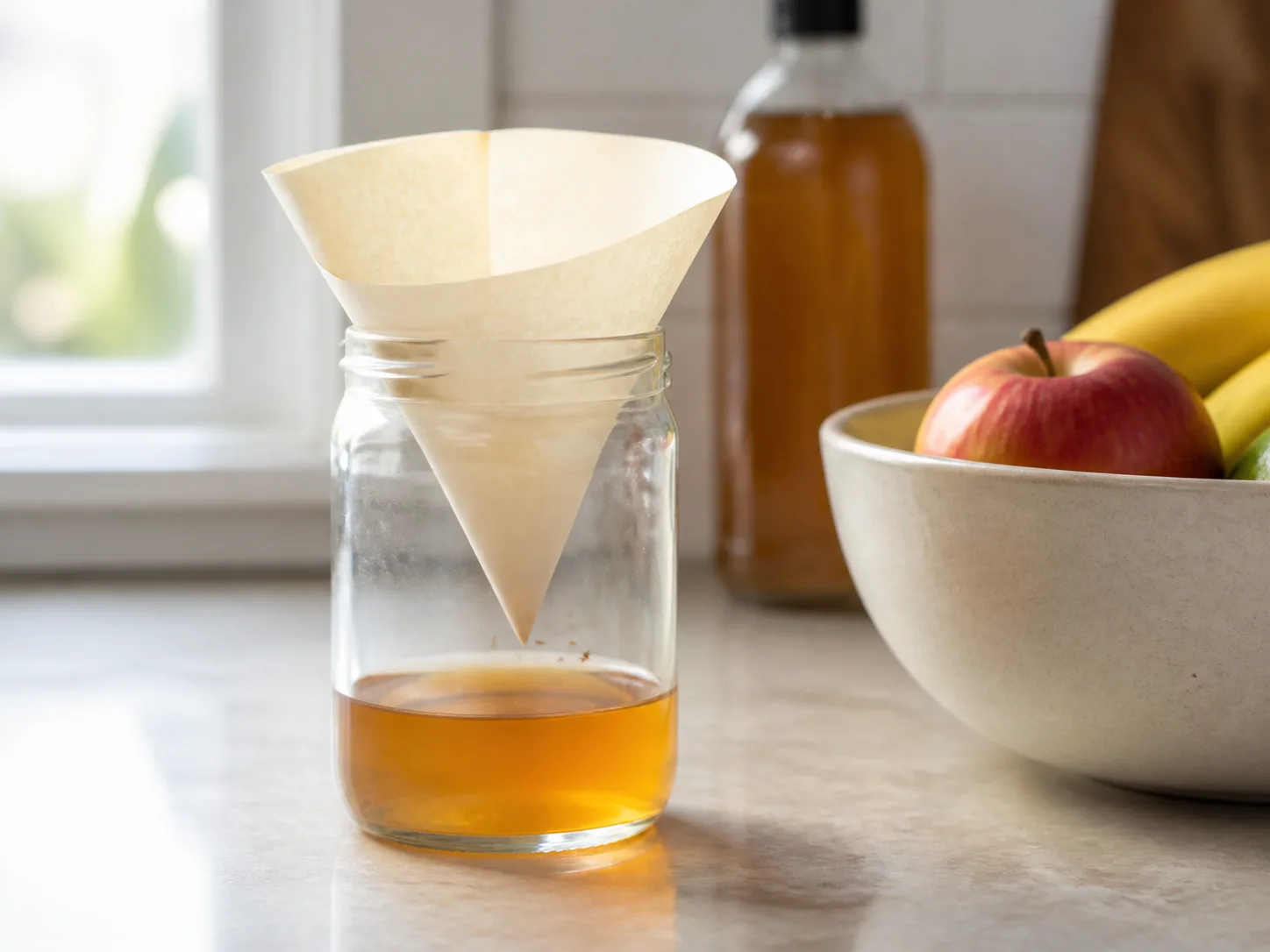
You can cover the bowl tightly with plastic wrap and poke several small holes, or use a paper funnel that narrows toward the bait. UConn Extension describes the plastic-wrap method, while Epic Gardening and Gardening Know How describe vinegar or fermenting liquid traps as a way to catch adults while sanitation removes the breeding material. (UConn Extension) (Epic Gardening)
Place the trap where flies are active but not beside a cutting board, uncovered food, or a child’s usual reach. Refresh it when the liquid becomes cloudy, full of insects, or loses its sharp fermented smell. A trap that catches nothing is also information: it may be too far from the source, the bait may be stale, or the insects may be drain flies rather than fruit flies.
Do not mistake trap catches for proof that the drain is clean. The bowl targets adults outside the breeding material; it does not remove eggs in residue beneath a stopper, inside a disposal, or in a leaking pipe. Keep it in the plan while you finish the source inspection, then remove it after catches stay low.
What Not to Pour Down the Drain
Do not pour insecticide into a kitchen drain. It can create an unnecessary exposure risk, damage plumbing, and leave the organic film that supports larvae in place. Virginia Tech specifically advises against pouring insecticides down drains for drain-fly control. (Virginia Tech Cooperative Extension)
Bleach, vinegar, baking soda, and boiling water are also poor substitutes for scrubbing an established film. Virginia Tech explains that bleach or vinegar may affect a few organisms at the surface but do not reliably penetrate the material; hot water offers short-term effects rather than source removal. (Virginia Tech Cooperative Extension)
Never mix bleach with ammonia, acids, or an unknown drain product. Hazardous gases or heat can result, and a kitchen drain is not a safe place to test combinations. Use one labeled product at a time, ventilate as directed, keep children and pets away, and follow the label for disposal and rinsing.
The safer rule is simple: remove the residue first, use labeled maintenance products only when appropriate, and repair the moisture source. If a drain is clogged or inaccessible, call a plumber rather than escalating the chemical strength.
Why the Flies May Continue After Cleaning
The most common reason is a second breeding site. A clean sink can coexist with a sour recycling bin, a leaking trash liner, a hidden produce item, damp mop fibers, or a disposal guard that was never lifted and scrubbed. UC Integrated Pest Management describes eliminating larval habitat as the preferred way to suppress nuisance flies; adult sprays and traps are supplements, not replacements. (UC Integrated Pest Management)
The second possibility is misidentification. Fuzzy moth-like insects near the sink point toward drain flies, which breed in plumbing biofilm and need a different source-removal job. Tiny dark flies that scatter from potting mix suggest fungus gnats. A vinegar trap can catch an occasional adult without telling you which habitat is producing the population.
The third possibility is continued entry. Warm weather, open doors, torn screens, nearby waste, or an outdoor compost source can add adults after the indoor source is cleaned. This is especially plausible when the number of flies falls indoors but rises again after doors or windows stay open.
Give the cleanup enough time to show a trend, but do not use time as a reason to ignore a leak. If adults remain numerous after two clean inspections, test adjacent drains and appliances, inspect the trash and recycling, and compare the insects with the identification table again. A simple written checklist prevents you from cleaning only the most visible spot repeatedly.
Prevent the Drain From Becoming Attractive Again
Prevention is mostly about keeping food residue and moisture from meeting in a hidden place. Scrape plates into the trash or compost before rinsing, run the disposal according to its instructions, and clean the splash guard and drain strainer on a regular schedule. Wipe the sink dry when practical, especially after handling fruit juice or fermenting foods.
Use a strainer to catch food particles and empty it promptly. Keep the stopper, overflow opening, and removable sink parts from developing a slippery film. If the sink or dishwasher drains slowly, address the plumbing problem early; a slow line gives organic residue more time to collect.
Keep wet waste sealed and take it out before liquid accumulates. Rinse recycling, wash a bin after a spill, and store produce in a way that lets you see what is ripening. Refrigeration can slow fruit-fly activity and development, but it does not make spoiled food safe to keep; discard rotten items and clean any juice that leaked into a drawer or shelf.
Store cleaning tools so they can dry between uses. A sour mop head, rag, or bucket is not just an odor problem—it can be a small damp organic habitat. Gardening Know How recommends clean counters, sinks, and drains, prompt removal of rotting produce, and better compost management as part of fruit-fly prevention. (Gardening Know How)
If you regularly leave the home, run water in seldom-used drains when appropriate and check under-sink connections before and after a trip. The goal is not sterile plumbing. It is a dry, flowing, inspectable system with no persistent food film or leak.
When to Call a Plumber or Pest Professional
Call a plumber when the sink is slow or blocked, the P-trap leaks, water appears inside the cabinet or wall, an overflow channel cannot be reached, or cleaning produces a temporary improvement followed by a sour odor. A recurring plumbing defect can keep recreating the habitat no matter how many adult flies you trap.
Contact a pest professional when fly numbers remain high after a thorough source audit and cleaning, the insects appear to come from a wall or floor void, or you suspect a sewer, septic, or inaccessible drain problem. Penn State Extension notes that professional pest-management companies may treat drain sources, while Alabama Extension advises professional help when breeding sites are inaccessible or tied to leaks and sewage systems. (Penn State Extension) (Alabama Cooperative Extension System)
If you operate a food business, have a persistent infestation around food-preparation areas, or cannot safely use cleaning tools because of mobility or exposure concerns, get help sooner. Avoid fogging or broad indoor pesticide use as a shortcut; it may reduce visible adults without solving the source and can create a new safety problem in a kitchen.
Conclusion
The most overlooked fruit-fly spot in a kitchen is often not the fruit bowl but the drain system around it: the disposal splash guard, stopper underside, overflow channel, P-trap, or a nearby leak. Test that source, scrub away organic film, and search the rest of the kitchen for a second wet or fermenting material before blaming the trap.
Use an apple cider vinegar trap to reduce and monitor adults while you clean, but measure success by fewer flies over the next several days—not by how many land in one bowl tonight. When the source is inaccessible, plumbing is leaking, or the population refuses to decline after a careful reset, a plumber or pest professional can find the part of the system a countertop cleanup cannot reach.