4 Overrated Perennials to Skip This Spring
These four overrated perennials are not bad plants. Compare bloom time, spread, site needs, winter return, and better alternatives before planting this spring.
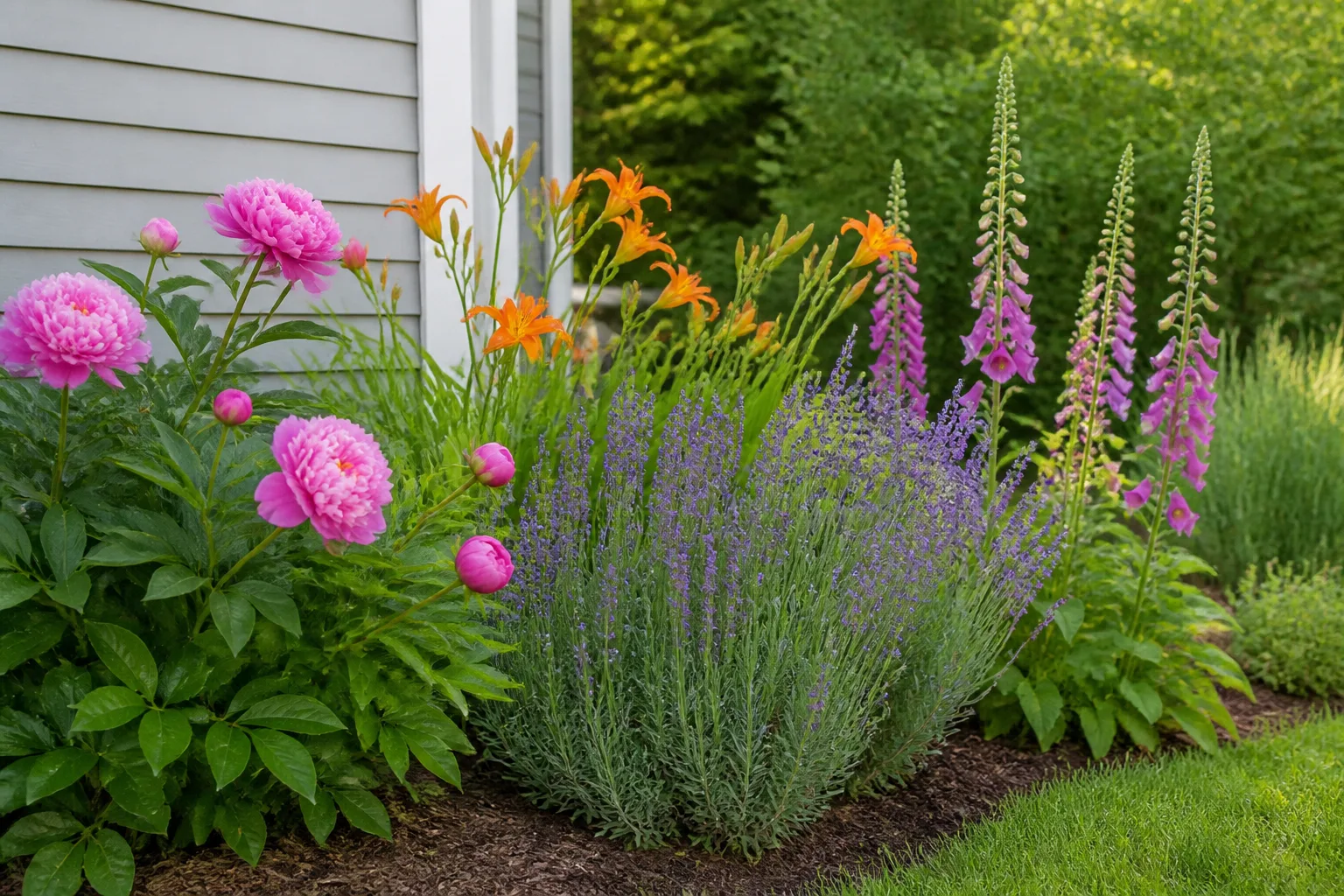
“Overrated” is a garden-design judgment, not a botanical diagnosis. A plant can be beautiful, hardy, and worth growing for one person while being a frustrating use of space for someone who wants months of color, a tidy small border, or a reliable return after winter.
That distinction matters with four familiar spring purchases: peonies, daylilies, lavender, and foxgloves. None is universally bad. Each becomes a poor choice when its biggest trade-off conflicts with the job you need the plant to do.
The quick version is simple: skip peonies if a two-week display feels too brief, daylilies if you dislike dividing spreading clumps, lavender if your site is wet or poorly drained, and foxgloves if you need a dependable long-lived perennial or garden around pets and young children. Keep any of them when the site and your expectations match the plant.
What “Overrated” Really Means in a Perennial Garden
A perennial earns a place in a bed by doing more than producing a pretty first bloom. It should suit the available light, tolerate the soil you actually have, occupy the space you can spare, and offer enough interest after the flowers fade to justify its footprint and maintenance.
The four plants below are often judged harshly because their marketing image hides a specific limitation. Peonies are famous for flowers but bloom briefly. Daylilies are called easy-care but can spread and crowd. Lavender is sold as a drought-tolerant favorite but fails in heavy, wet ground. Foxgloves make dramatic towers but may behave more like biennials, and the classic species is toxic to pets.
Use the Three-Filter Test Before You Buy
Run a plant through three questions at the garden center. First, how long will it contribute something you want—flowers, foliage, structure, seedheads, or fragrance? Second, what maintenance does it require at maturity, not just during planting? Third, what happens when conditions are imperfect—a wet winter, a crowded clump, a hot summer, or a missed week of watering?
If the answer to two of those questions is disappointing, skip the plant for that location. If only one answer is a concern, change the design: place a short-blooming perennial beside later flowers, give a spreading plant a boundary, raise a wet-site plant, or choose a hardier type.
Quick Decision Guide: Which Plants Are a Bad Match?
| Perennial | Skip it when… | Keep it when… |
|---|---|---|
| Peony | You want continuous summer bloom or dislike support rings after rain | You have suitable winter chill, patience, and room for a long-lived specimen |
| Daylily | Your border is small, formal, or you will not divide crowded clumps | You want a forgiving mass planting and can control its spread |
| Lavender | Soil stays damp, winter rain is constant, or you will not prune it | You can provide full sun, fast drainage, and the right type for your climate |
| Foxglove | You need guaranteed perennial return or pets/children can reach the plants | You want vertical early-summer color and accept self-seeding, short life, and safety precautions |
This table is a screening tool, not a ban list. Your USDA hardiness zone, microclimate, soil, cultivar, and design goals can change the answer. A plant that fails in a low spot may thrive three feet away on a raised mound.
Peonies: A Short Show With a Long Payoff—Sometimes
Peonies are easy to call overrated if you judge them by flower duration alone. Herbaceous peonies usually put on their main show for about two weeks in late spring or early summer, then spend the rest of the season as a leafy mound. A hard rain can shorten the most spectacular part of that window, especially on heavy double flowers.
That is the real complaint: not that peonies are unattractive, but that a large plant and a long wait can produce a relatively brief floral event. NC State Extension describes the trade-off clearly: peonies can take a year or two to flower after transplanting, while established plants may live for decades. (NC State Extension)
Skip Peonies When You Want Nonstop Summer Color
Skip peonies for a small bed where every plant must carry color across the season. They are also a weak choice for a warm site that cannot provide the winter chill they prefer, for a spot shaded by tree roots, or for a gardener who does not want to stake or cage large, rain-heavy blooms.
Do not solve the short bloom period by planting a dozen of the same cultivar. They will still flower in roughly the same window, creating a dramatic peak followed by a quiet bed. If you already have peonies, underplant or interplant them with plants that take over after flowering rather than pulling up a healthy, established crown.
Keep Peonies When You Value Longevity and Cut Flowers
Keep peonies if you want a permanent anchor, fragrant cut flowers, or foliage that remains useful after the petals fall. In a suitable site, their longevity is the feature that makes the early wait worthwhile. Choose a location with full sun to light shade, fertile but well-drained soil, good air circulation, and enough room that the plant will not compete with tree roots.
Cultivar choice also changes the experience. Older double forms can have weak stems and flop when wet; newer cultivars selected for stronger floral carriage may need less intervention. A support ring installed while stems are still short is more effective and less visible than trying to prop a full plant after a storm. Our guide to keeping peonies from falling over covers that support decision in more detail.
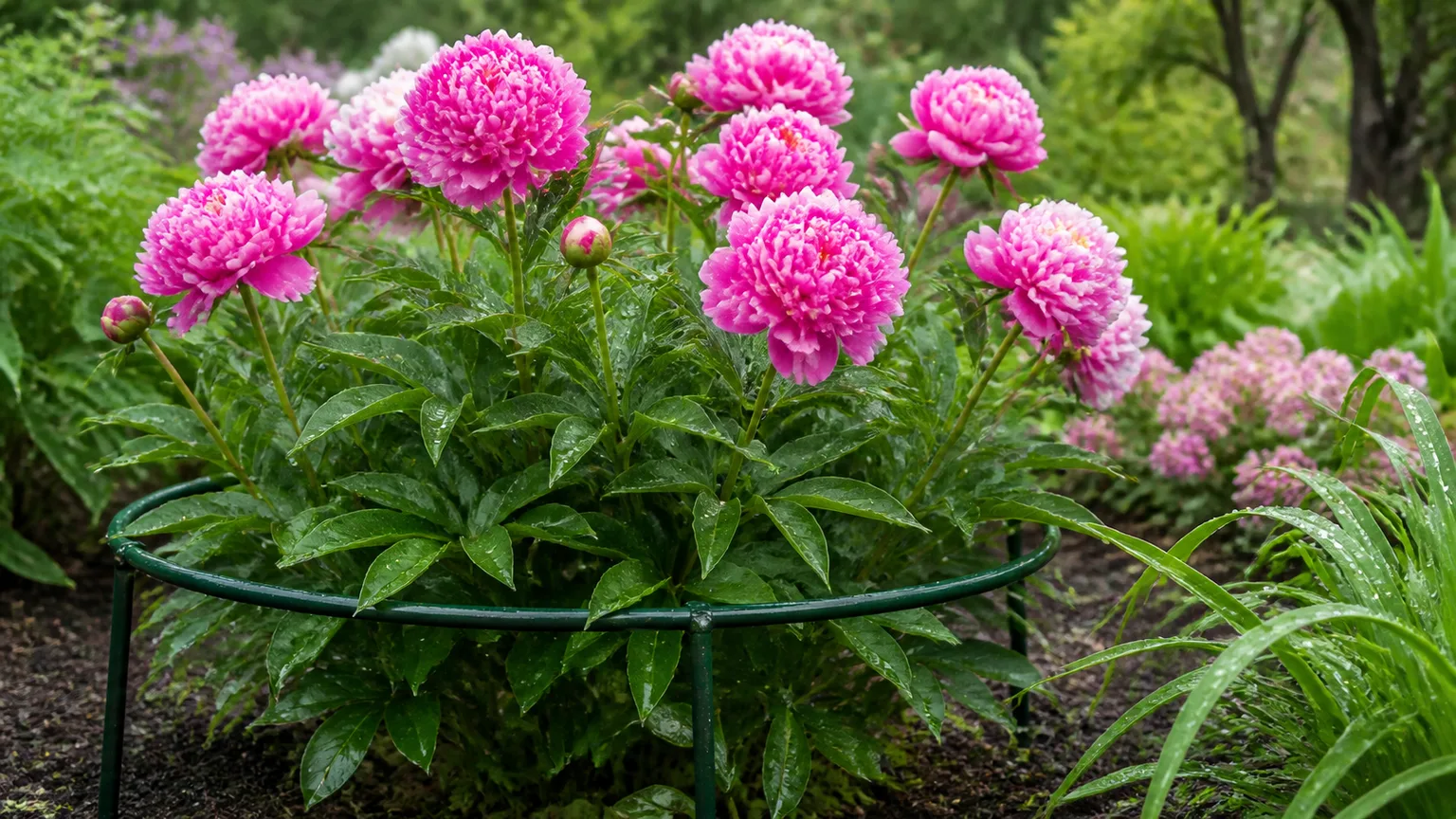
There is another misconception to discard: ants on peony buds are not a reason to skip the plant. They are attracted to nectar on the outside of the buds and are generally harmless to the peony. If you cut flowers for a vase, shake or inspect the stems outdoors before bringing them inside.
Daylilies: Low-Care Plants That Can Outgrow Their Space
Daylilies solve several garden problems at once: they tolerate a range of soils, handle sun to partial shade, and create a strong clump of arching foliage even when not in bloom. That makes them genuinely useful in a large border, slope, or naturalized planting.
They are less satisfying in a small, carefully edited bed. The common orange daylily, Hemerocallis fulva, spreads rapidly by rhizomes and naturalizes readily, according to NC State Extension. Each individual flower lasts about one day, although a healthy scape carries multiple buds that open in sequence. (NC State Extension)
The Real Issue Is Spread and Clump Crowding
Daylilies rarely become a problem overnight. A clump expands gradually, then starts to shade itself. Flowering becomes less impressive, the center can look congested, and neighboring plants lose room. At that point, “low maintenance” turns into a division job.
The solution is not to water or fertilize harder. Divide an overcrowded clump when conditions are mild, replant vigorous sections, and discard exhausted or diseased material. If you want repeat color, choose a named reblooming cultivar and deadhead for tidiness, but do not assume deadheading can make every daylily rebloom. Ohio State University Extension and Penn State Extension both frame deadheading primarily as an appearance and cleanup practice, with the biggest rebloom gains coming from types already capable of reblooming. (Ohio State University Extension)
Make Daylilies Work With the Right Boundary
Keep daylilies when you need a durable mass, erosion-holding roots, or a forgiving plant for a space where a little spread is useful. Give them a defined edge and leave enough room for the mature clump rather than planting them into a narrow strip between a path and a foundation.
For a formal border, avoid treating the orange ditch lily as a precise accent. Use a labeled hybrid with a known mature size, repeat bloom habit, and color that supports the surrounding planting. Even then, check the clump every few years. A neat row at the nursery can become a broad, interlocking colony in the garden.
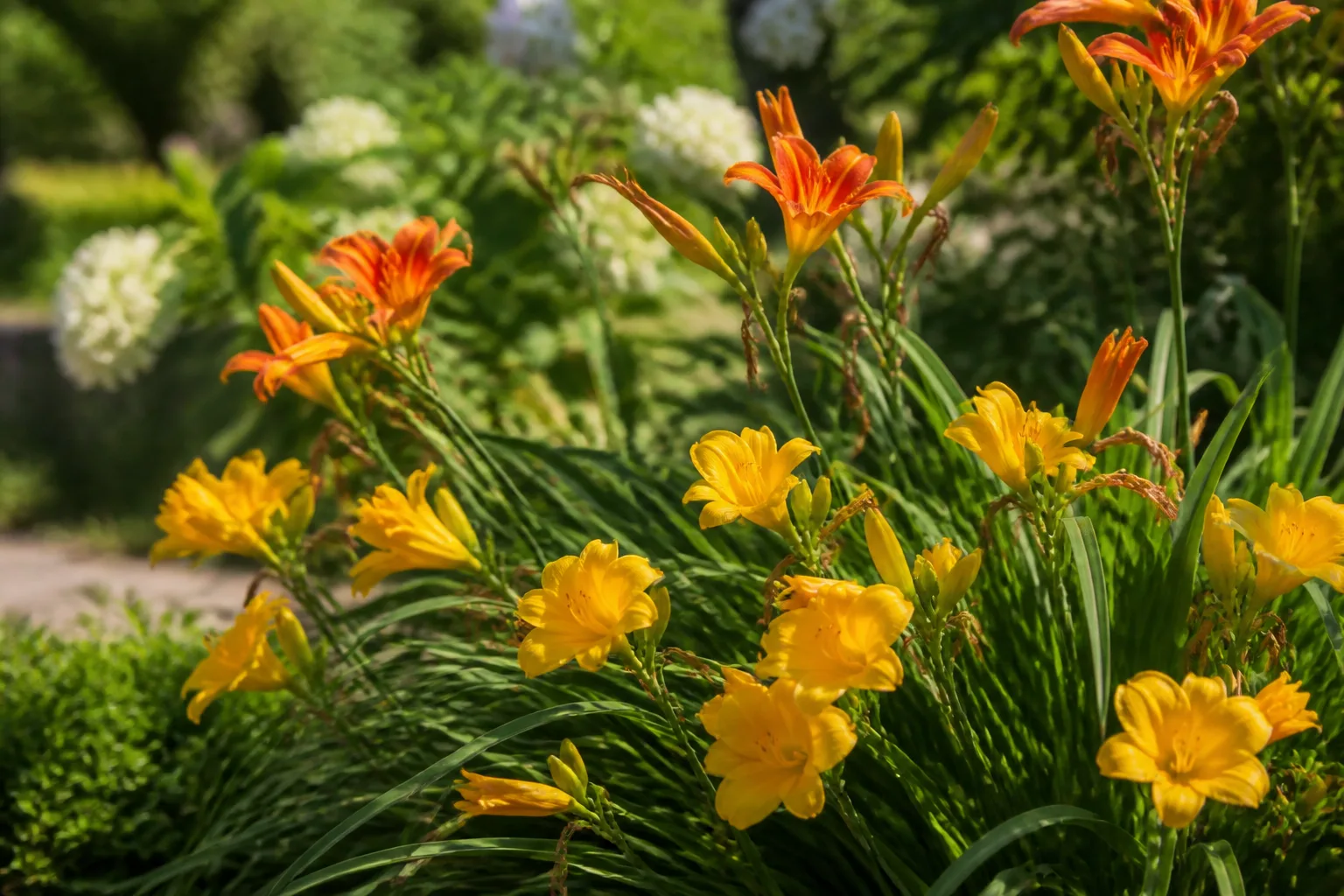
Leave healthy daylily foliage intact after the flowers finish. Those leaves continue to recharge the roots, and cutting the whole fan back simply because the bloom period is over can reduce the plant’s ability to perform the following year. Remove spent flowers or bare scapes, then divide when crowding—not impatience—is the reason for intervention.
Lavender: A Great Plant in the Wrong Site
Lavender is not overrated; it is frequently mis-sited. The fragrance, silvery foliage, and drought tolerance are real, but they belong to a plant adapted to bright light and air-filled soil. Put it in a damp bed, heavy clay, or a container that drains into a cachepot, and the crown can decline while the top still looks appealing.
The Royal Horticultural Society recommends lavender for a sunny spot in free-draining soil or a container and warns that many types struggle in cold, damp conditions. It also notes that English lavender and its hybrids are hardier than French and other tender types. (RHS)
Drainage and Type Matter More Than Fragrance
Skip lavender when the proposed planting site stays wet after rain, receives less than full sun, or is difficult to improve without burying the crown. A sunny window does not compensate for a waterlogged outdoor bed, and a gravel mulch on top does not fix compacted soil below.
If you have heavy soil, plant on a mound or use a raised bed so water moves away from the crown. In a container, use large drainage holes, a fast-draining mix, and a pot that can dry between deep waterings. Newly planted lavender needs regular water while roots establish; mature in-ground plants need much less unless drought is prolonged. Containers are different because their limited soil volume dries faster in summer and stays vulnerable to cold, wet winter conditions.
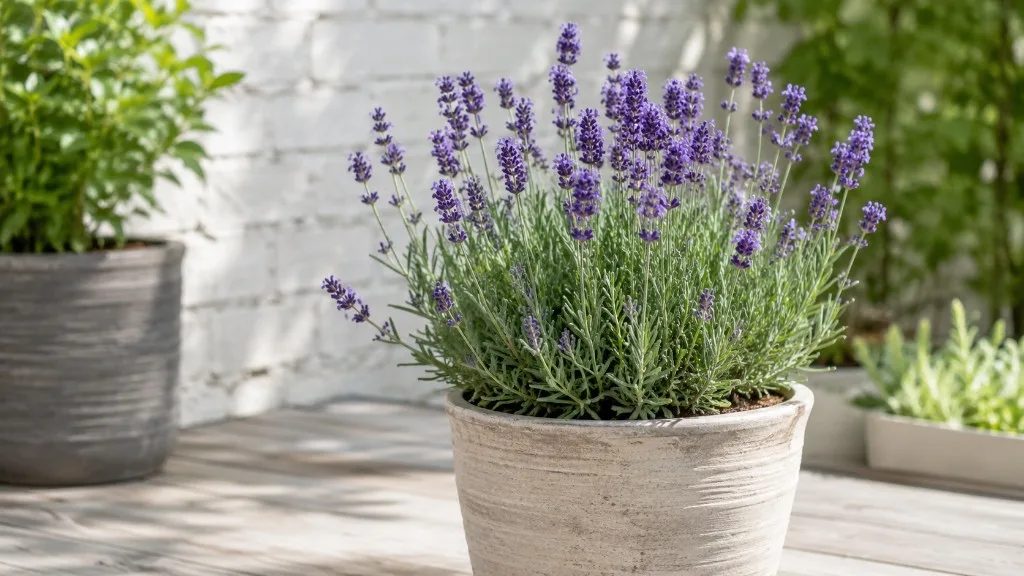
Type matters just as much. English lavender, Lavandula angustifolia, and its hybrids are the safer starting point for many cold-winter gardens. French or Spanish types can be excellent container plants, but their lower hardiness means they may need shelter or replacement rather than an expectation of permanent return.
Annual pruning is another part of the bargain. Trim spent stems and a little soft green growth after flowering to keep lavender compact, but do not cut deeply into old, bare wood because lavender may not resprout from it. If you will not provide the sun, drainage, type selection, and light pruning the plant needs, skip it and choose a perennial that naturally fits the site.
Foxgloves: Beautiful Spires With Unreliable Return
Foxgloves are often sold by the photograph: tall spires, spotted bells, and a woodland-garden atmosphere. The problem is that the photograph does not tell you whether the plant will return as a stable perennial, flower once and set seed, or disappear after a short run.
The classic common foxglove, Digitalis purpurea, is commonly treated as a biennial or short-lived perennial, while other foxglove species and hybrids are genuinely perennial. RHS describes perennial foxgloves as slightly longer lived than biennial types, happiest in light shade with moist soil, and vulnerable to prolonged dryness, permanently wet ground, or hot sun that scorches soft foliage. (RHS)
Treat Biennial Behavior and Seed as Part of the Deal
Skip foxgloves if your planting plan depends on the same plant occupying the same space every year. A foxglove rosette may spend its first season building leaves, flower the next, and then decline. In a friendly site, seedlings can replace the parent, but self-seeding is not the same thing as a reliable clump: seedlings may appear in paths, among slower perennials, or in colors you did not plan for.
Keep foxgloves when you want vertical structure in dappled shade and are comfortable letting the bed change from year to year. Letting some seed mature can help maintain a colony, while removing spent spikes can reduce volunteers and keep the planting tidier. The choice is design-dependent: a naturalized woodland edge can welcome that movement, while a small front border may not.
Safety is the non-negotiable filter. RHS warns that foxgloves contain chemicals used in heart medicine but are extremely toxic, and the ASPCA lists Digitalis purpurea as toxic to dogs, cats, and horses because of cardiac glycosides. (ASPCA) Do not plant foxglove where pets or children can chew it, wear gloves when handling plants and seed, and seek veterinary help promptly if an animal may have ingested it.
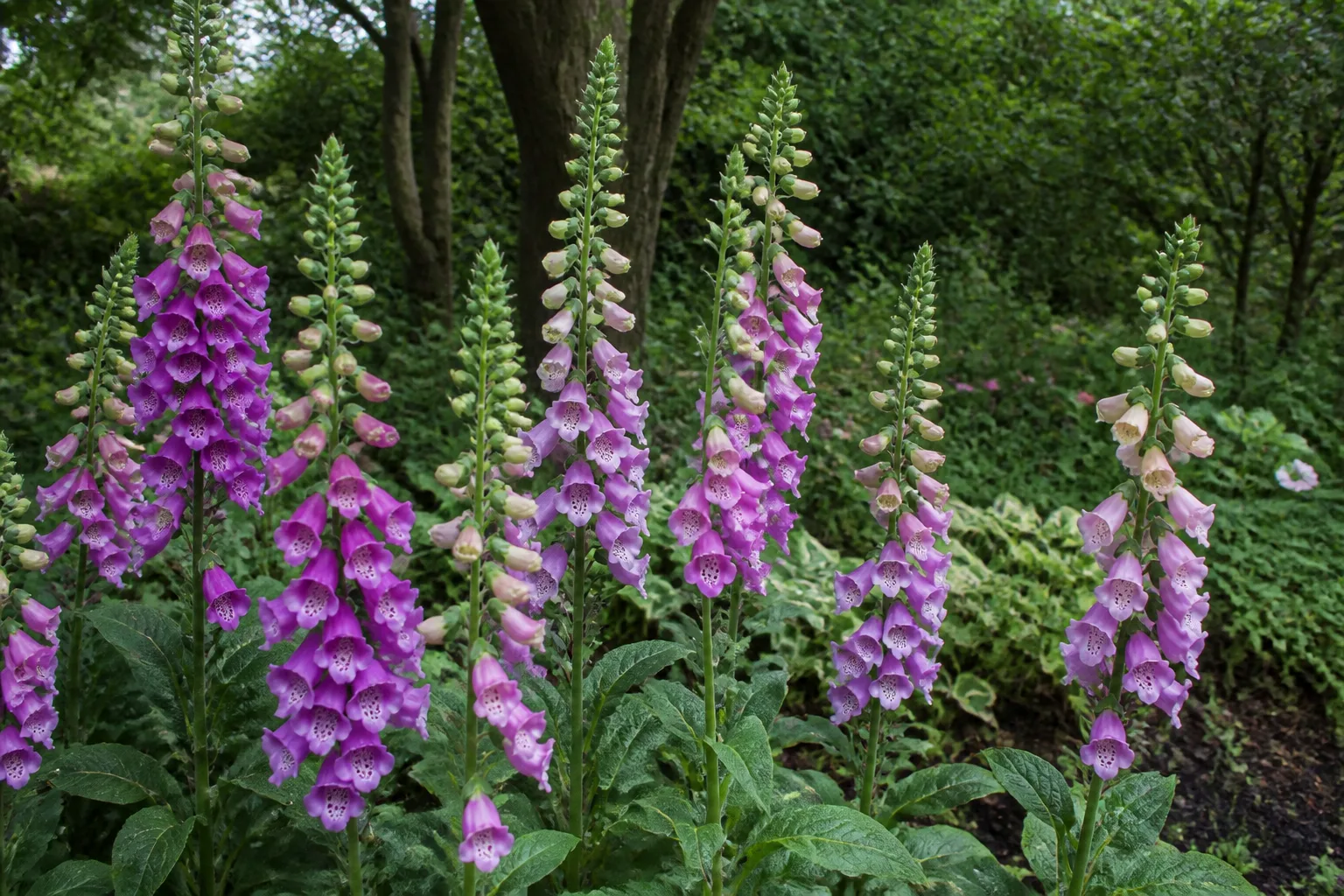
Foxglove is therefore a reasonable skip even when the site is perfect if household access makes the risk unacceptable. There is no design benefit that outweighs a preventable toxicity concern.
Better Perennial Swaps for a Longer, Easier Season
The best alternative depends on what you hoped the original plant would do. Replacing peonies with another showy flower will not solve a short bloom season if the replacement also flowers for only a few weeks. Replacing daylilies with another vigorous spreader simply moves the division problem.
For a longer sequence in a sunny border, combine plants with different peak seasons instead of demanding that one perennial bloom continuously. Purple coneflower can flower from early summer into mid-fall once established, threadleaf coreopsis offers a long season in sunny, lean soil, and black-eyed Susan can continue into mid-fall with deadheading. NC State Extension profiles describe these plants as adaptable, pollinator-friendly choices with their own limits around moisture, self-seeding, or mature size. (NC State Extension)
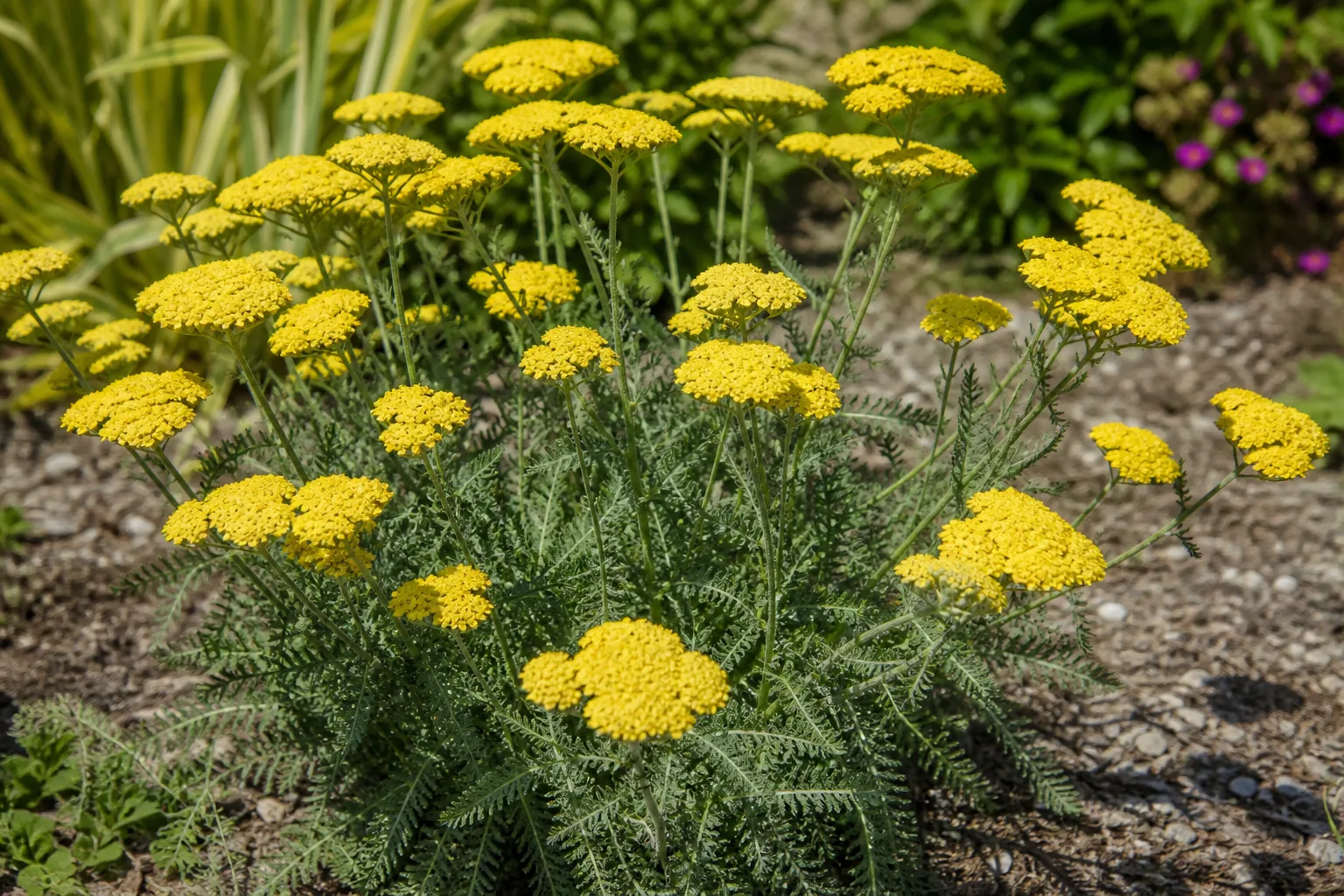
Yarrow is another useful dry-site alternative when you want flat flower clusters and long-lasting structure, but it is not a polite substitute for a tiny formal bed. Common yarrow spreads by rhizomes and seed, so choose it for a place where naturalizing is acceptable or use a better-behaved cultivar and stay on top of deadheading. (NC State Extension)
Match the Swap to the Job
| If you wanted… | Consider… | Watch for… |
|---|---|---|
| Color after a brief peony bloom | Purple coneflower or black-eyed Susan | Self-seeding and the need for full sun |
| A dry, fragrant-looking border | Catmint or stonecrop | Wet soil, cultivar spread, and different mature heights |
| A long-blooming low accent | Threadleaf coreopsis | Rhizome spread and floppy growth in rich, wet soil |
| A vertical woodland effect | Ferns, hardy geraniums, or a non-toxic shade perennial matched to your region | Shade, moisture, and the mature height of neighboring plants |
| A forgiving mass planting | A labeled daylily hybrid or a clumping perennial | Mature width and whether division is part of the plan |
For more options, browse long-blooming perennials and easy-care drought-tolerant perennials, but use those lists as a starting point rather than a shopping cart. Every “easy” plant becomes difficult when it is placed in the wrong soil or asked to perform outside its hardiness range.
How to Plan a Spring Bed That Does Not Disappoint
Start with the site, not the plant tag. Watch the bed on a clear day and record whether it receives full sun, morning sun with afternoon shade, or bright shade. Dig into the proposed root zone after rain: if water remains pooled, correct the drainage or choose moisture-tolerant plants before buying anything labeled drought tolerant.
Next, sketch mature widths on paper. Leave room for a peony mound, the eventual radius of a daylily clump, the airy spread of lavender, or the height of foxglove spikes. The empty gaps in a new spring bed are not invitations to overplant; they are the space roots and crowns need to mature without constant division.
Build bloom succession in layers. Pair an early or short-window plant with a later anchor, then add foliage that still looks intentional after flowering. A peony can sit behind catmint or coreopsis, daylilies can share a broad edge with lower clumping plants, and foxgloves can be used as occasional vertical accents rather than the entire structure of a shade bed.
Plan the first season honestly. Newly planted perennials need regular checks while roots expand, even when the mature plant is drought tolerant. Water deeply when the root zone begins to dry, keep mulch off crowns, and do not fertilize heavily to force flowers from a plant still settling in. The first year is establishment; the second year is a fairer test of the plant’s long-term performance.
Finally, write down the maintenance you are willing to do. If the answer is “almost none,” do not buy a plant that needs annual pruning, division, support, or safety supervision just because it looks good in May. A simpler plant in the right place will make the entire border feel more successful than a famous plant that repeatedly asks you to compensate for a bad match.
Conclusion
Peonies, daylilies, lavender, and foxgloves are not failures. They are plants with visible trade-offs: peonies give a short, spectacular display in exchange for patience; daylilies forgive neglect but can spread; lavender rewards full sun and sharp drainage but sulks in wet ground; foxgloves offer height and atmosphere while giving up dependable return and, in the classic species, household safety.
Skip the plant whose trade-off conflicts with your garden’s job. Keep the one whose needs you can meet, then design around its limits with succession planting, mature-size spacing, and a realistic maintenance plan. That is how a spring shopping list becomes a perennial garden you will still enjoy after the first flush of flowers is over.



