6 Best Fruit Fly Traps for Kitchens and Drains
The best fruit fly trap depends on the pest and its breeding site. Compare six options, setup advice, drain limits, refill costs, and safer use.
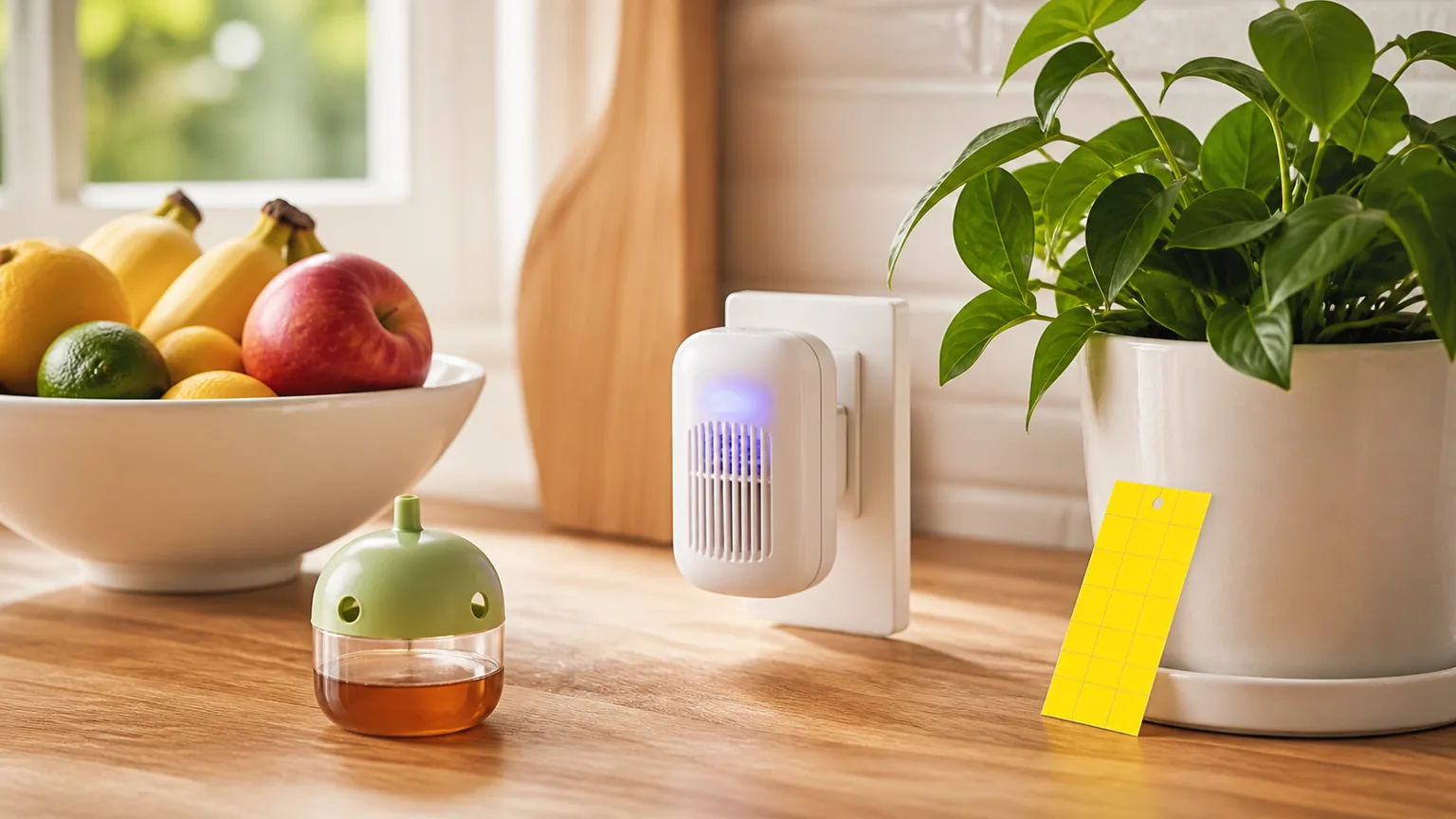
The best fruit fly trap is the one that matches where the flies are breeding. A liquid lure beside a fruit bowl, a plug-in adhesive trap near a busy kitchen, a sticky card in a plant pot, and a drain gel may all be useful—but they are not interchangeable.
This guide compares six practical options by target location, mechanism, maintenance, visibility, and limitation. Use the quick table to narrow the choice, then read the setup section before you place a trap. A trap can remove adult flies, but it cannot clean the fermenting food or drain film that produced them.
The Quick Recommendation: Match the Trap to the Breeding Site
| If you see flies… | Start with… | Why it fits | Important limit |
|---|---|---|---|
| Around fruit, recycling, or a kitchen counter | TERRO Fruit Fly Trap | Liquid lure is made for fruit flies and is easy to leave near food-prep areas | Bait needs periodic replacement and the source still needs cleaning |
| Around a kitchen or adjacent room | Zevo Flying Insect Trap | Blue and UV light draw flying insects to a disposable adhesive cartridge | It needs an accessible outlet and replacement cartridges |
| In a small room and you want a lower-cost plug-in | Safer Home Indoor Fly Trap | Compact light trap with replaceable glue cards | The small card can fill quickly during a heavy outbreak |
| Coming from a sink, disposal, or floor drain | Green Gobbler Fruit Fly Killer+ | Thick gel is designed to coat the inside of a drain | It will not catch flies flying around fruit or windows |
| Around plant soil, windows, or a patio door | Garsum Houseplant Sticky Traps | Yellow adhesive cards give you a simple monitor in a pot or sheltered outdoor spot | A card catches insects; it does not identify or eliminate the breeding source |
| You want several mechanisms in one countertop device | Katchy Duo | Combines light, fan, scent, and adhesive capture | More parts and a higher price do not guarantee better results |
If you want one starting point for a typical kitchen with small flying insects, choose Zevo for low-maintenance plug-in coverage or TERRO for a discreet liquid lure beside produce. If the insects are visibly emerging from a drain, skip both and address the drain itself.
Identify the Fly Before You Buy a Trap
Household “gnats” are often three different pests. Common fruit flies belong to the genus Drosophila, are usually about 1/16 to 1/8 inch long, and may have red eyes. University of Wisconsin–Madison Extension notes that they hover around ripe fruit, open drinks, bread, garbage disposals, and waste cans; their eggs and larvae develop in fermenting or rotting material, and the full life cycle can take only eight to 10 days.
That short cycle explains why a trap can seem to work for one night and then appear to fail. Adults may still be emerging from a missed source, so the trap must be paired with a cleanup that removes the nursery. Guidance from Iowa State University Extension and Outreach is consistent on this point: trapping helps with adult control, but eliminating breeding sites is what stops the problem.
Fruit Flies vs. Drain Flies vs. Fungus Gnats
| Clue | Fruit flies | Drain flies | Fungus gnats |
|---|---|---|---|
| Appearance | Tiny tan or brown flies; red eyes are common | Fuzzy, moth-like wings; often gray or dark | Slender, dark flies with long legs |
| Where they cluster | Fruit bowl, wine or vinegar, recycling, compost, trash | Sink, shower, floor drain, overflow, or damp plumbing | Potting mix, saucers, windows near plants |
| What supports them | Fermenting fruit, juice, beer, wine, or food residue | Wet organic film inside plumbing | Damp, algae-rich or organic potting mix |
| First treatment | Remove food sources and trap adults | Scrub and dry the drain; then use a label-approved treatment if needed | Correct overwatering and use a plant-appropriate sticky monitor |
If a fly rises when you disturb a houseplant, a kitchen trap may catch a few but will not fix the soil. If the insects look fuzzy and rest on the wall near a sink, a countertop lure is the wrong first purchase. Identification is not a technical extra; it is the step that prevents you from spending money on the wrong mechanism.
How These Six Traps Were Evaluated
I ranked these options by the household job they are designed to do, not by a single claim of “most effective.” The useful questions are: Does the trap target the insect you have? Can it sit close to the source? Will you remember to refresh or replace it? Can you monitor the catch without creating a new food or safety problem?
The selection also separates adult capture from source control. A light or adhesive trap is valuable when you need quiet, ongoing removal of adult flies. A liquid lure is better when flies are concentrated around food and you want a discreet counter setup. A drain gel is a different category because it is applied inside plumbing, while yellow cards are better as low-cost monitors around plants and entry points. Practical guidance from Gardener’s Supply likewise emphasizes removing fermenting food and keeping a trap close to the active area.
Current product guidance matters for setup. Zevo’s product guidance says its blue-and-UV light works with a disposable adhesive cartridge and recommends placing the device where flying insects can reach it rather than behind furniture or beside competing screens. Green Gobbler’s directions call for 8 ounces per problem drain on the initial application, followed by repeat applications until the desired result is reached. Those instructions are product-specific; always follow the label on the package you own.
The 6 Best Fruit Fly Traps
Zevo Flying Insect Trap: Best Overall Plug-In Pick
The Zevo Flying Insect Trap is the easiest choice when you want an always-on device near a kitchen, pantry, or adjoining room. Its blue and UV light attracts flying insects to a disposable adhesive cartridge; the captured insects remain on the side facing the wall rather than in a visible zapper tray. The official product guidance describes it as a quiet, no-spray, no-odor system for fruit flies, gnats, and house flies.
Its strength is low-touch maintenance. Plug in the base, expose the adhesive cartridge, and inspect the card periodically instead of mixing bait or emptying a liquid cup. The current product page also says its light blinks as a six-week reminder to check the cartridge, but treat that as a prompt to inspect—not a promise that every cartridge lasts the same amount of time.
Place it in an outlet near the activity, with a clear line of sight to the room. Do not tuck it behind a door, curtain, appliance, or furniture. Avoid uncovered outdoor locations and wet areas. The drawback is recurring cartridge cost, and a light trap will not solve a hidden potato, sticky recycling bottle, wet sponge, or drain film that continues producing flies.
TERRO Fruit Fly Trap: Best for a Kitchen Counter
The TERRO Fruit Fly Trap is the most natural fit for a classic fruit-bowl problem. It uses a liquid lure in a small, discreet container, so it can sit near produce, a compost pail, or the recycling area without adding a bright light to the counter. This is the type of trap to choose when the flies are clearly fruit flies and you want the attractant close to the place where they feed.
The liquid format also makes the result easy to interpret: if adults are entering the viewing area, the lure is reaching the right pest and the placement is plausible. Keep the trap beside the source, not beside the cleanest part of the kitchen. A counter trap works better when you first refrigerate or cover ripe produce, rinse bottles and cans, and wipe the residue that is competing with the lure.
The trade-off is maintenance. The bait eventually needs replacing, and an open or refillable liquid system is less forgiving around curious pets and children than a covered adhesive cartridge. It is also not a drain treatment; if the activity is coming from a pipe, use a drain-specific plan instead.
Safer Home Indoor Fly Trap: Best Value for Small Spaces
The Safer Home Indoor Fly Trap is a sensible value pick when you want a compact plug-in device and replacement glue cards included in the starter setup. Its light attracts small flying insects to a sticky card, making it useful in kitchens, home offices, and rooms where you do not want a bowl of bait on the counter.
The small footprint is its advantage and its weakness. It keeps the device unobtrusive, but the adhesive surface has less capacity than a larger cartridge. During an outbreak, inspect the card instead of waiting for a fixed calendar interval; a full card cannot catch more insects, and a card hidden behind a cabinet is unlikely to perform well.
Use it for everyday adult control rather than as a stand-in for a major cleanup. If the card catches moths or other insects while fruit flies continue around a drain, the trap is giving you useful information: the location may be wrong, the target may be different, or the breeding source may be elsewhere. Dispose of used cards without touching the adhesive and keep the device out of wet locations.
Green Gobbler Fruit Fly Killer+: Best for Drain-Related Activity
The Green Gobbler Fruit Fly Killer+ fills a different job from every airborne trap on this list. Its thick gel is designed to cling to the inside of drain pipes and is marketed for fruit, drain, and sewer flies. The manufacturer directs users to apply 8 ounces to each problem drain at the end of the day, aim for the pipe walls, and repeat daily until the activity is controlled; it lists 4 to 8 ounces weekly for future maintenance.
That makes it the right category when flies are concentrated at a garbage disposal, sink, shower, floor drain, or other wet plumbing area. It is not the right choice for adults hovering around bananas or an open window. If the source is a drain, clean accessible residue and correct leaks as well; gel without source diagnosis can become a recurring expense.
Use only the product’s current label and safety directions. Never combine it with bleach, vinegar, ammonia, another drain cleaner, or a homemade chemical mixture. Keep the bottle capped, ventilate the space as directed, and use a plumber or licensed pest professional when activity points to a broken trap, sewage problem, wall void, or inaccessible pipe.
Katchy Duo: Best Multi-Method Design
The Katchy Duo is for shoppers who prefer a single appliance that combines several attraction and capture steps. Its design uses a light, fan, adhesive pad, scent pod, and optional bait approach. That layered system can be appealing when you want to experiment with a countertop device rather than choose between a liquid lure and a simple glue card.
The important caveat is that more mechanisms mean more variables. The light can be outcompeted by a bright window or screen, the fan and collection area need cleaning, the adhesive pad needs replacing, and a scent pod can add recurring cost. A device with many features is not automatically better for a small fruit fly cluster, especially if a cheaper liquid lure is already beside the breeding source.
Choose it when you value a contained, designed appliance and are willing to maintain it. Place it where air can reach the intake, keep the light visible to the room, and clean the collection area according to the instructions. If the catch stays low, move the device closer to the source before concluding that the design does not work.
Garsum Houseplant Sticky Traps: Best for Plants and Outdoor Monitoring
The Garsum Houseplant Sticky Traps are simple yellow adhesive cards mounted on stakes. They make the most sense when small flying insects are hovering around a houseplant, windowsill, greenhouse shelf, or sheltered patio—not when the main activity is in a fruit bowl. The card gives you immediate visual evidence of insect activity and can reduce adults around the plant while you address the soil or entry point.
These traps are inexpensive to distribute across several pots, which is useful when you are trying to find which plant is involved. Place one card near the soil line without touching leaves, stems, or watering streams. Check it daily for a few days; the pattern of catches can tell you which pot deserves inspection, but a yellow card cannot tell you whether the catch is a fungus gnat, fruit fly, whitefly, or another small insect.
The adhesive is messy to handle and can catch non-target insects. Keep cards away from children and pets, use them where you can remove them safely, and replace them when the surface is covered with dust or insects. Outdoors, protect them from rain and strong wind. If the plant soil stays wet, change the watering conditions instead of adding more cards indefinitely.
Set Up a Fruit Fly Trap So It Actually Works
Start with the source, then place the trap where adult flies are already traveling. University of Wisconsin–Madison Extension lists forgotten produce, trash-can residue, recycling bottles, sour mops and rags, drain traps, and refrigerator drain pans among the places that can support fruit flies. A tidy fruit bowl does not prove that the bowl is the source.
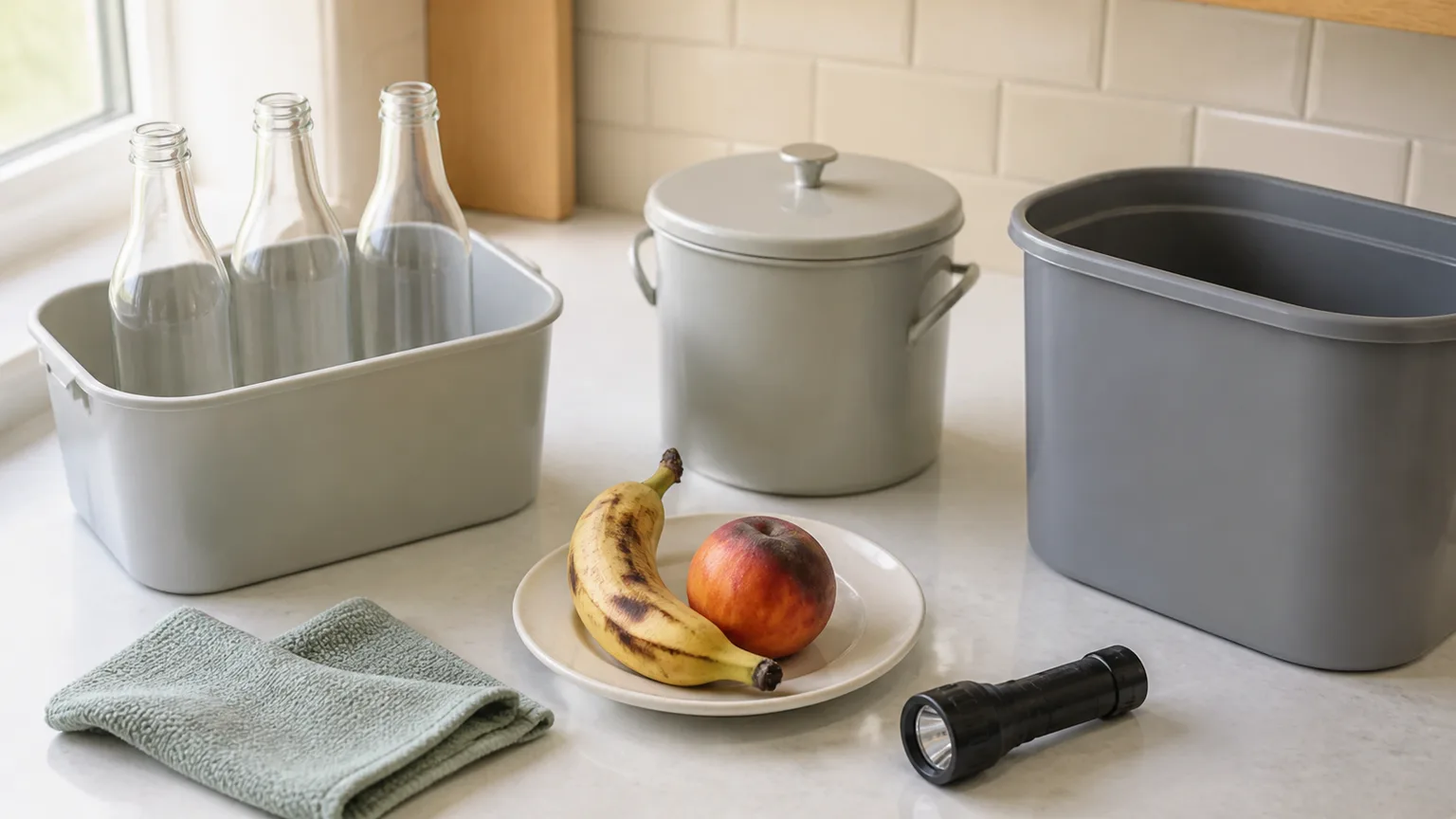
Remove or refrigerate ripe produce, empty and wash compost, take out wet trash, rinse beverage containers, and wipe under appliances. Do not leave dishes or food in the sink overnight during an outbreak. Then place the product close to the strongest activity: beside the former source for a liquid lure, in a clear outlet near the kitchen traffic path for a light trap, beside the affected pot for a sticky card, or inside the problem drain for a drain gel.
Pair Countertop Traps With Source Removal
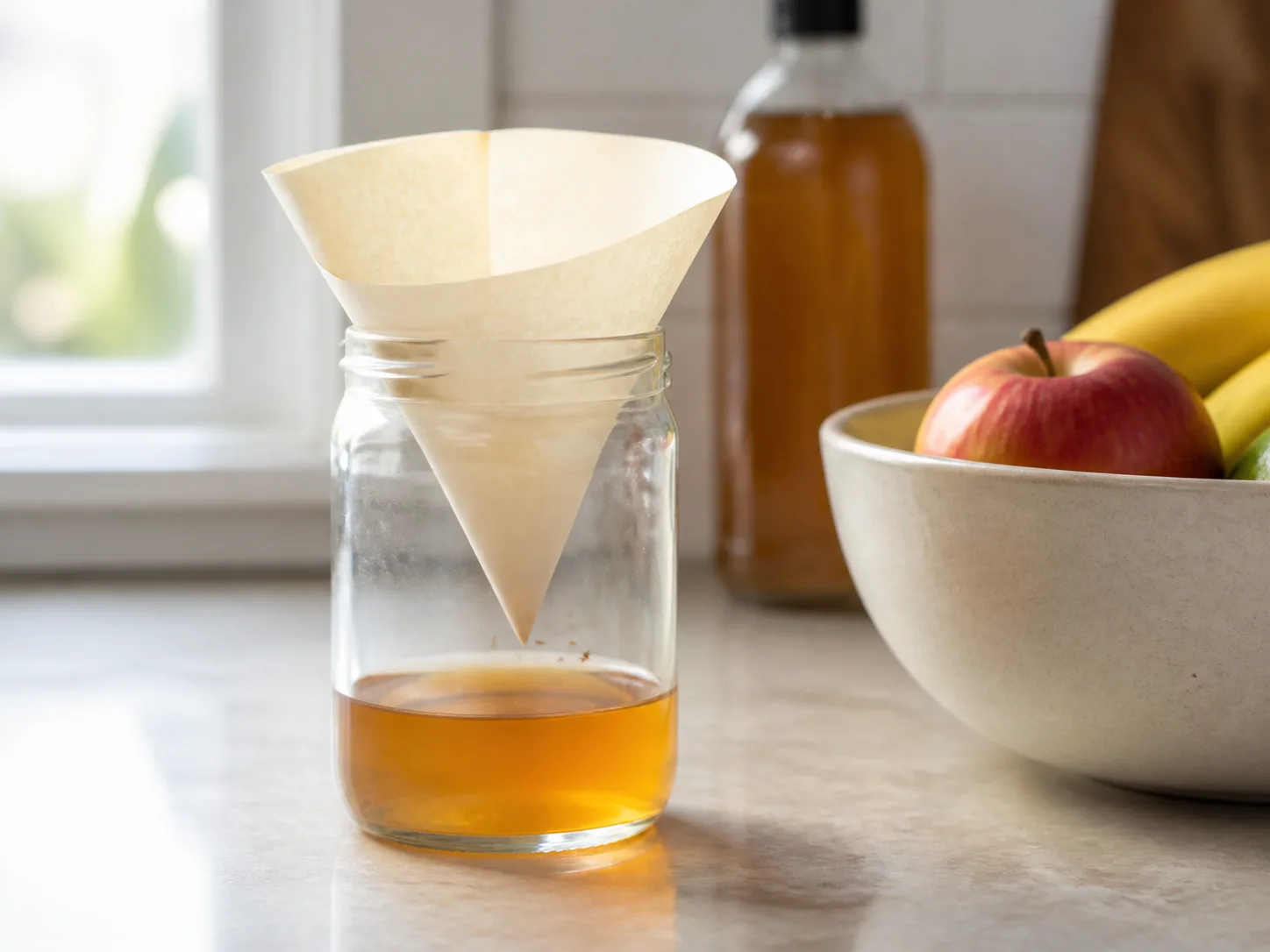
For fruit flies, use the trap as a population reducer and monitor. A homemade vinegar trap is a useful comparison point: Farmers’ Almanac describes apple cider vinegar with dish soap, a paper cone, or a covered jar as practical ways to attract and hold adults. The University of Wisconsin likewise describes a baited jar with a funnel as short-term adult control, while warning that breeding-site removal is the complete fix.
Set one or two identical traps in likely zones for one night if you cannot find the source. Keep the bait volume and location consistent so the catch is comparable. The higher catch points to the area that deserves a closer inspection, but do not leave fresh fruit beside the trap or allow the bait to become a new spill risk.
Keep Drain Treatments Separate From Airborne Traps
A drain treatment is not a substitute for a kitchen trap, and a plug-in trap is not a drain cleaner. If you see fruit flies on the counter and drain flies in the bathroom, treat those as separate problems until evidence shows otherwise. Clean the accessible drain film, inspect the overflow and disposal splash guard, and follow the product label for any gel you apply.
Never pour multiple cleaners into the same drain. If the drain stays wet because of a leak, the pipe trap is broken, or flies continue after a careful cleaning and label-directed treatment, stop escalating household chemistry and call a plumber or pest professional.
Why Fruit Fly Traps Fail After a Few Days
The most common failure is not a defective trap. It is a live breeding source, a wrong placement, or a different small fly. University of Wisconsin–Madison Extension notes that sprays can affect adults present at the time of application but do not provide residual control; the same logic applies to a trap that removes adults without changing the place where new adults develop.
Check the Source, the Species, and the Placement
If a trap has no catch, work through this sequence:
- Confirm the insect. A drain fly or fungus gnat may ignore a fruit-fly lure.
- Move the trap close to activity. A light behind a curtain or a lure across the room is competing with the source.
- Remove competing food. Refrigerate fruit, rinse bottles, empty compost, and wipe sticky residue.
- Check the trap itself. Refresh liquid bait, remove a full glue card, clear the Katchy intake, or verify that the plug-in base is powered.
- Give the reset time. Adults may still emerge after cleanup. Look for a declining count over several days, not one empty hour.
If numbers do not trend downward after a thorough cleanup and a week of correctly placed traps, look beyond the fruit bowl. Check under appliances, refrigerator drain pans, trash-can seams, pet-food areas, mop heads, and drains. Persistent activity from a wall, floor drain, sewage odor, or inaccessible plumbing is a reason to get professional help rather than buying a stronger scent.
Safety and Maintenance Rules That Matter
Keep liquid lures, used glue cards, drain products, and electrical devices out of reach of children and pets. “Natural” on a label does not mean harmless, and a sticky card can trap a curious paw or bird. Read the current product instructions before use, especially if the trap will sit near food-preparation areas.
Do not put a plug-in trap where it can get wet, in an uncovered outdoor location, behind a curtain, or against a heat source. Do not spray household cleaners or essential oils into a trap. Do not touch adhesive surfaces unnecessarily, and wash your hands after handling used cards or drain products.
The simplest maintenance schedule is visual: check a liquid lure before it becomes empty or contaminated, inspect adhesive cards before they are full, check a light trap when its reminder activates, and refresh a drain treatment only as its label directs. Empty or discard traps responsibly, wipe any spill immediately, and keep a clean record of where you placed each trap if you are diagnosing a stubborn outbreak.
Conclusion
Choose Zevo for quiet plug-in coverage, TERRO for a discreet counter lure, Safer Home for a compact value setup, Green Gobbler for activity tied to a drain, Katchy Duo for a multi-method appliance, or Garsum for monitoring around houseplants and sheltered outdoor spots.
The more important decision is not which trap has the most features. It is whether the trap is sitting beside the right source and whether you removed the food, moisture, or plant-soil condition that lets the next generation develop. Identify the fly, clean the breeding site, place the matching trap, and judge success by a steady drop in activity over the next several days.