How to Grow and Care for Verbena Plants
A complete verbena care guide for beds and pots, including watering, feeding, deadheading, cuttings, seed starting, disease prevention, and bloom troubleshooting.
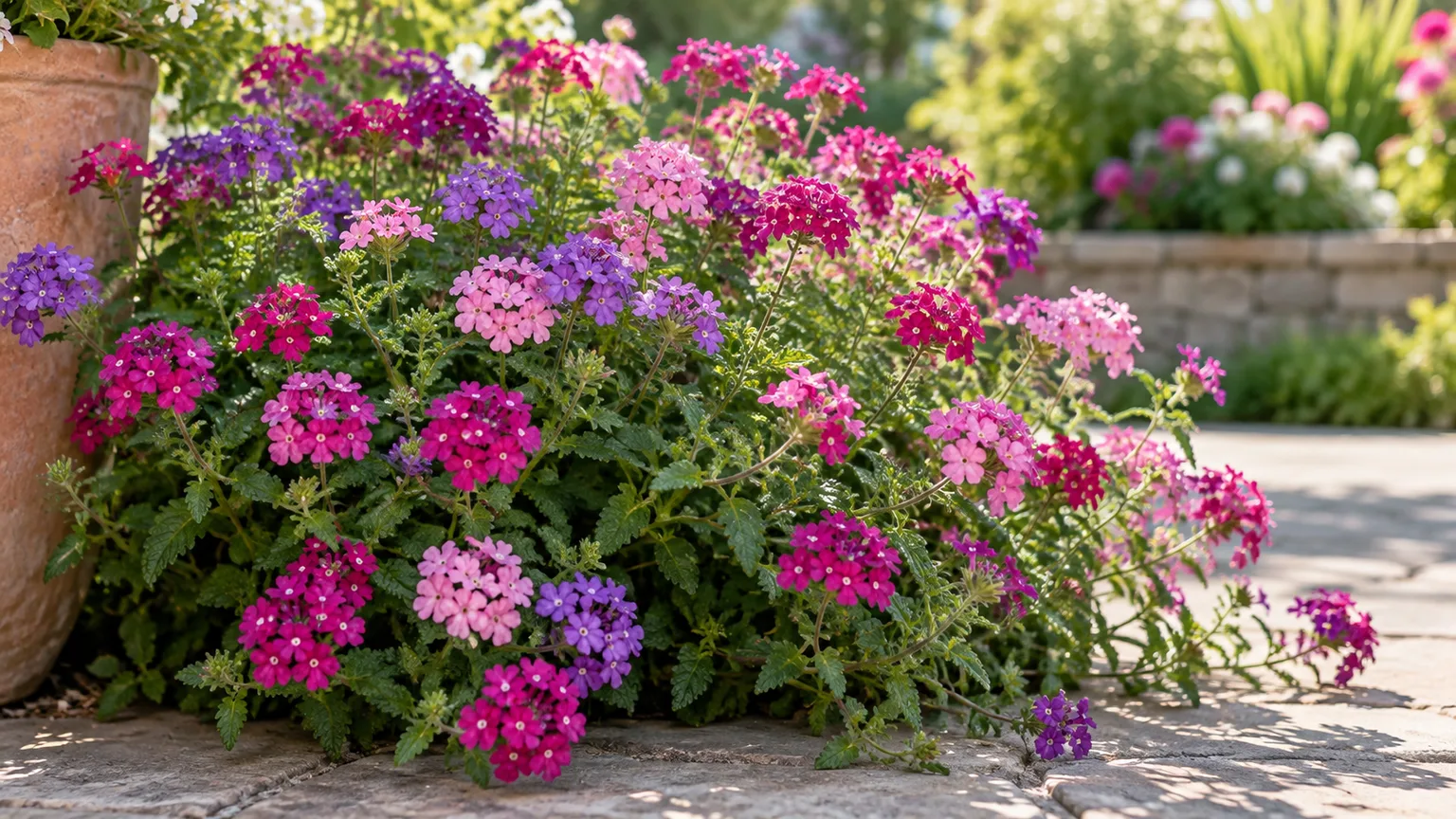
Verbena is at its best when you give it a bright, open site and let the root zone dry slightly between thorough waterings. That simple combination produces a plant that can spill from a basket, edge a sunny bed, or rise above a pollinator border with flowers for much of the warm season. The common failure is not neglect; it is treating every verbena as the same plant and watering every pot on the same schedule.
This guide separates hybrid garden verbena from taller species and lemon verbena, then shows how to adjust care for beds, containers, hot weather, and winter. The goal is a practical diagnosis: look at the plant, the soil, and the weather before you reach for fertilizer or a spray.
Know Which Verbena You Have Before You Plant
“Verbena” covers several very different garden subjects. Hybrid bedding types, often sold as Verbena x hybrida or under related Glandularia names, are usually low, spreading plants with clustered flowers. They are excellent annuals in cold-winter climates and may persist as short-lived perennials where winter is mild. Lemon verbena, Aloysia citrodora, is an upright, woody herb grown mainly for its strongly scented leaves, while species such as purpletop vervain and blue vervain have taller, more architectural habits.
The label changes the care plan. A trailing hybrid may finish at roughly 12 to 18 inches wide and needs room to drape without being buried by a neighboring plant. Verbena bonariensis can rise several feet and belongs toward the middle or back of a border. Lemon verbena needs a larger shrub-like footprint and is often best brought into shelter before frost. Check the botanical name and mature height before choosing a pot or planting distance; otherwise, a perfectly healthy plant can look “wrong” simply because it was placed in the wrong role.
Choose a Site With Sun and Moving Air
Give most flowering verbenas at least six hours of direct sun. More light generally means tighter growth and more flowers, provided the roots are not being baked in a tiny dry pot. Morning sun with bright afternoon light can work in very hot climates, but deep shade produces the familiar combination of long stems, sparse leaves, and few flower clusters.
Air movement is the second half of the site decision. Leave enough space for leaves to dry after rain and for you to reach the inner stems. A sunny plant pressed against a wall or packed into a humid corner can still develop mildew because sunlight on the top leaves does not equal airflow through the canopy. In a container, keep the pot where a breeze can pass around it, but protect a newly planted cutting from harsh, drying wind until roots are established.
Build Fast-Draining Soil That Still Holds Moisture
Verbena wants drainage, not desert-dry soil. In a garden bed, improve compacted ground with finished compost and organic matter, then check whether water infiltrates instead of sitting in a puddle. Do not make a heavy clay bed “drain” by adding a thin layer of gravel beneath the planting hole; that can leave a perched wet zone. Improve the whole root area or choose a raised bed when the underlying soil is persistently saturated.
For pots, use a quality potting mix amended with perlite, pumice, or another coarse aeration material. The container must have an open drainage hole, and the saucer should not hold runoff for hours. A large pot is not automatically better: an oversized volume stays wet around a small root ball, while a root-bound plant in a tiny dark container dries too quickly. Choose a pot only a little larger than the current root mass and size up as roots fill the mix.
Water by Root-Zone Dryness, Not by Calendar
Water newly planted verbena deeply enough to settle the root zone, then check the soil before watering again. Once established, it can tolerate a short dry spell, but drought tolerance does not mean it should be allowed to collapse repeatedly. Insert a finger a couple of inches into the mix or lift the container; if the surface is dry but the pot is still heavy and cool, wait.
When watering is needed, soak the soil thoroughly and let excess drain. In a bed, water at the soil line so the foliage dries quickly. In a pot, apply water slowly enough that the mix absorbs it rather than channeling down the sides. Heat, pot material, root density, wind, and plant size can move a container from a weekly rhythm to every other day, so a fixed schedule is less reliable than observation.
The useful middle ground is evenly moist roots with a little air returning between waterings. Constantly wet mix deprives roots of oxygen and encourages rot; repeated severe wilting sheds leaves, reduces flowering, and invites spider mites. Mulch can stabilize a garden bed, but keep it a few inches away from stems and use a thinner layer in a container so the crown does not stay damp.
Feed Lightly During Active Growth
Verbena is not a heavy feeder. Before planting, mix a modest amount of finished compost into the bed, then use a balanced, slow-release fertilizer according to the label if growth is pale or the soil is poor. Container plants lose nutrients through frequent watering, so a diluted liquid feed during active growth can help, but more fertilizer is not a substitute for sun.
Avoid feeding a wilted plant until you know why it is wilted. Fertilizer salts can worsen stress in a dry pot, while lush nitrogen-fed growth can produce leaves at the expense of flowers and create a dense canopy that dries slowly. Water first when the root ball is dry, correct the light or drainage problem, and feed only after the plant resumes growth.
Plant Verbena in Beds and Containers
Plant after the risk of hard frost has passed, or protect a new transplant during an unexpected cold night. Set the crown at the same depth it occupied in its nursery pot. Burying the stem or leaving the root ball perched above the surrounding soil both create avoidable stress.
Use spacing based on mature width, not the size of the starter plant. Trailing hybrids need room to spread, and a little extra space is worthwhile in humid weather because it improves inspection and airflow. In a mixed container, place verbena near the edge as a spiller and pair it with plants that accept similar sun and watering. Do not hide it behind a vigorous plant that will shade the crown by midsummer.
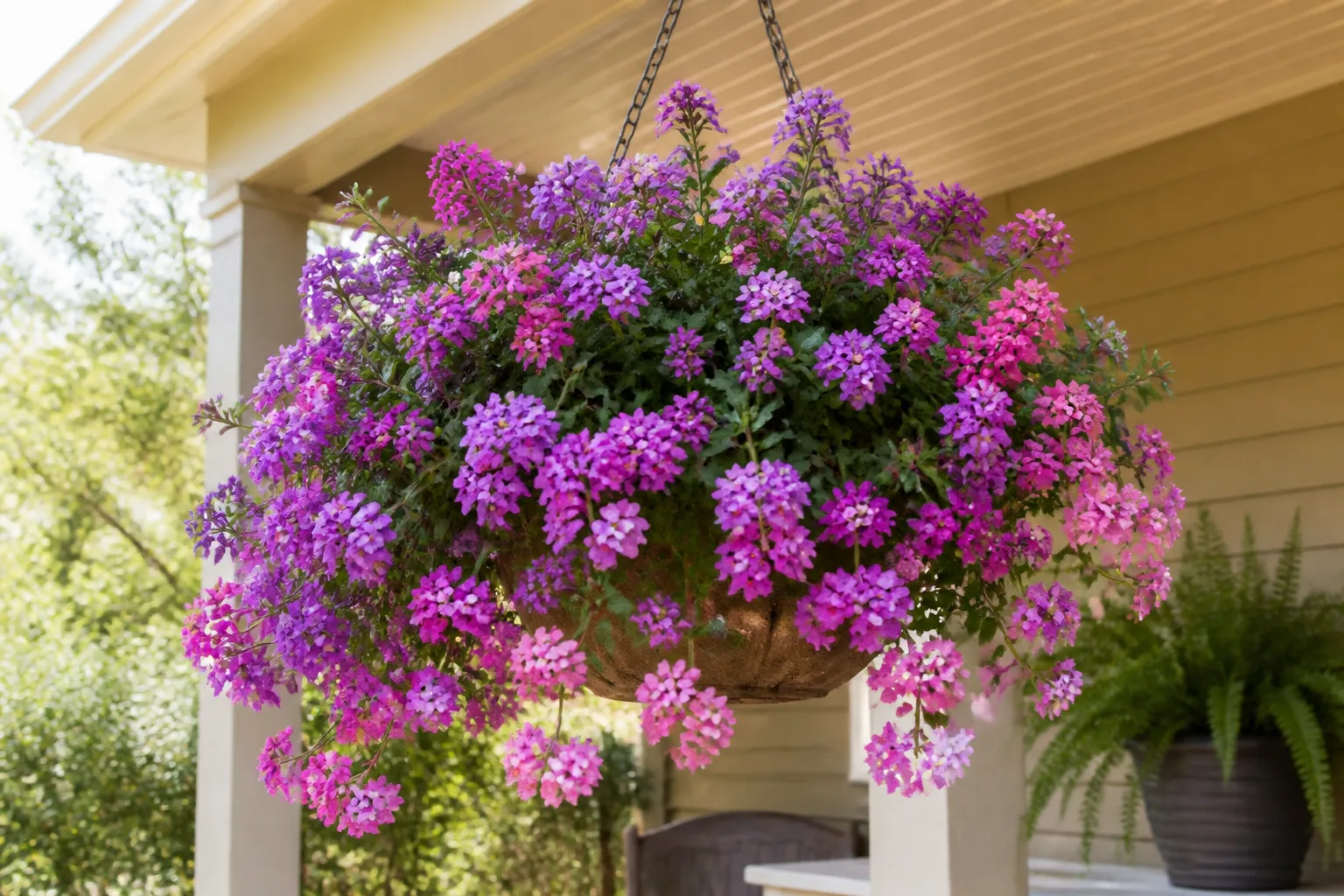
Containers dry faster on warm paving and in dark plastic. Check them more often during heat waves, but do not respond to every midday droop with water. Some plants wilt temporarily when leaf demand exceeds root uptake in intense heat and recover in the evening; feel the soil before soaking a pot that is already moist.
Prune for a Fuller Plant and More Flowers
Pruning is the reset button for a stretched verbena. If stems are long, bare at the base, or spilling beyond the space you planned, shear back the outer growth by about one-quarter to one-third, cutting just above a leafy joint. Water normally afterward and give strong light; new shoots need energy and light to remain compact.
Deadheading is optional for many modern hybrids, but it can tidy the plant and redirect energy from seed formation. Rather than picking individual tiny flowers for hours, trim the faded cluster and a little of the stem beneath it. If flowering slows across the plant, a broader cut-back followed by light feeding is usually more effective than removing only brown flower heads.
Do not cut woody lemon verbena back to bare old stems late in the season. Remove damaged or crowded growth while the plant is actively growing, and make larger structural cuts in early spring when you can see which stems survived winter. Clean pruners between plants when disease is present.
Grow Verbena From Cuttings
Stem cuttings are the most dependable way to preserve a favorite hybrid. Seeds from hybrids may germinate unevenly or produce plants unlike the parent, while a cutting is a genetic copy. Take a 4- to 6-inch tip from healthy, nonflowering growth, remove leaves from the lower section, and place it in a moist, airy medium such as potting mix with perlite.
Keep the cutting bright but out of harsh direct sun. A loose clear cover can reduce water loss, but it must be vented so condensation does not keep leaves wet. Check the medium with a finger and keep it lightly moist, never waterlogged. After a few weeks, gentle resistance when you tug the stem and visible new growth suggest roots are forming. Pot up gradually rather than moving a fragile cutting straight into a large container.
Cuttings are also a useful insurance policy before winter. Take several, because not every cutting roots and a single overwintered mother plant may suffer from low indoor light. Label the cultivar, especially if you grow several colors that look similar before flowering.
Start Verbena From Seed
Seed is worthwhile when you want many plants or a species that comes true from seed. Start slowly: verbena seed can be erratic, and some types benefit from a period of cool, moist treatment. Press seeds onto a moist seed-starting mix, cover only lightly unless the packet specifies otherwise, and keep the tray warm and evenly moist.
Use bright light as soon as seedlings emerge. A windowsill that feels sunny to you may not provide enough intensity for compact seedlings, so a grow light close to the tray can prevent weak stems. Transplant once seedlings have several true leaves, then harden them off over about a week by increasing outdoor exposure gradually. A sudden move from protected indoor air to full sun and wind can scorch even a healthy seedling.
If you want a named hybrid’s exact flower color and trailing habit, buy a young plant or use a cutting instead. Seed packets are not interchangeable with vegetative propagation, and an unexpected seedling is not necessarily a care failure.
Overwinter Verbena Without Guessing
Whether verbena returns depends on the plant type and the winter, not just the word “perennial” on a label. Many hybrid verbenas are treated as annuals in freezing climates and can return in mild regions. Taller species may be hardier, while lemon verbena often needs protection from frost even where a hybrid survives.
To overwinter a container plant, inspect it for pests, cut back tired growth, and move it before frost. Give it the brightest available light and reduce watering as growth slows. The goal is to keep the root ball from becoming bone dry while avoiding wet soil in a cool room. Prune more decisively in late winter as new growth begins, then acclimate the plant outdoors in spring.
You can lift an in-ground plant, but the shock may be greater than the value of saving a short-lived hybrid. Take cuttings instead when the plant is vigorous. In cold climates, a new spring plant often blooms better than a stressed, leggy specimen carried through a dim winter.
Diagnose Pests, Mildew, and Root Problems
Aphids cluster on tender tips, thrips scar flowers and young leaves, and spider mites favor hot, dry conditions. Inspect leaf undersides before treating. A firm spray of water can dislodge some pests; if an approved insecticidal soap is needed, follow the product label, test a small area, and avoid spraying during intense sun or when pollinators are actively visiting.
Powdery mildew appears as a pale, dusty coating and is more likely when nights are humid, foliage stays crowded, or roots alternate between drought and excess water. Remove badly affected leaves, improve spacing, water the soil rather than the canopy, and avoid late-day overhead irrigation. A resistant cultivar helps, but no cultivar can overcome a stagnant, overcrowded site.
Brown, collapsing stems and a sour or persistently wet root ball point toward root trouble. Stop watering on schedule, check drainage, and unpot a container plant if the decline continues. Healthy roots are firm and light-colored; trim mushy tissue with clean tools and repot into fresh, airy mix only if enough healthy roots remain. A fungicide cannot repair a pot that stays saturated.
White leaves, wilt, and dry dieback
White dust on otherwise firm leaves suggests mildew; fine stippling and webbing suggest mites; bleaching on the sunny side after a sudden move outdoors suggests scorch. Wilt in wet soil is a different emergency from wilt in dry soil. Match the symptom to the root-zone condition before applying a remedy.
Fix Leggy Growth and Poor Flowering
Leggy verbena usually needs more light before it needs more fertilizer. Move a container gradually into brighter sun, or thin nearby plants in a bed. Once the plant has adequate light, cut it back above healthy leaf joints so new shoots develop from several points instead of leaving one long bare runner.
If foliage is abundant but flowers are scarce, check three things in order: light, root moisture, and nitrogen. A shaded plant will not be rescued by bloom booster. A waterlogged plant may have damaged roots that cannot support flowering. A heavily nitrogen-fed plant may be lush and soft. Correct the limiting factor, then wait for new growth rather than repeating several changes in the same week.
Heat can also pause flowering. In a hot spell, provide consistent deep watering, protect the container from reflected heat, and delay severe pruning until the plant is hydrated. Once nights moderate, a light trim often encourages a fresh flush of buds.
Use Verbena in a Pollinator-Friendly Design
Verbena’s small clustered flowers are valuable in a mixed planting because they offer repeated landing points and a long season of color. Low hybrids work along a sunny edge, in a hanging basket, or over a wall. Taller species create see-through structure that can sit behind lower flowers without forming a solid visual barrier.
Combine verbena with other plants that tolerate the same light and drainage rather than forcing a thirsty companion into a dry bed. Leave access paths so you can inspect stems and deadhead without brushing through every plant. If you want self-sown seedlings, allow a few seed heads to mature, but remove volunteers from places where they would crowd the parent plant.
Avoid the Most Common Care Mistakes
The first mistake is buying a lemon verbena when the goal is a low carpet of flowers, or buying a trailing hybrid when the design needs a tall border plant. The second is spacing young plugs by their current size. Verbena expands quickly in good light, and crowded plants become harder to water correctly and more vulnerable to mildew.
The third mistake is alternating between drought and saturation. Check the root zone, water deeply, and let excess drain. Finally, do not assume winter survival is proof that a plant is truly perennial in your garden; compare the cultivar, local minimum temperatures, and the cost of replacing it with the effort of overwintering a stressed plant.
Conclusion
Grow verbena in the brightest practical location, give it fast-draining soil, and water when the root zone has begun to dry rather than following a calendar. Choose the plant for its real habit, leave room for airflow, prune stretched growth above leafy joints, and treat containers as a separate watering environment. When winter arrives, preserve a favorite hybrid with cuttings or move a valuable plant under shelter, but let the climate and the plant’s identity guide the decision. Those few choices do more for long flowering and healthy roots than a complicated feeding routine.