6 Rare-Looking Costco Plants and How to Care for Them
Found a rare-looking plant at Costco? Use this six-plant guide to identify it, inspect it, quarantine it, and give it the right light and water.
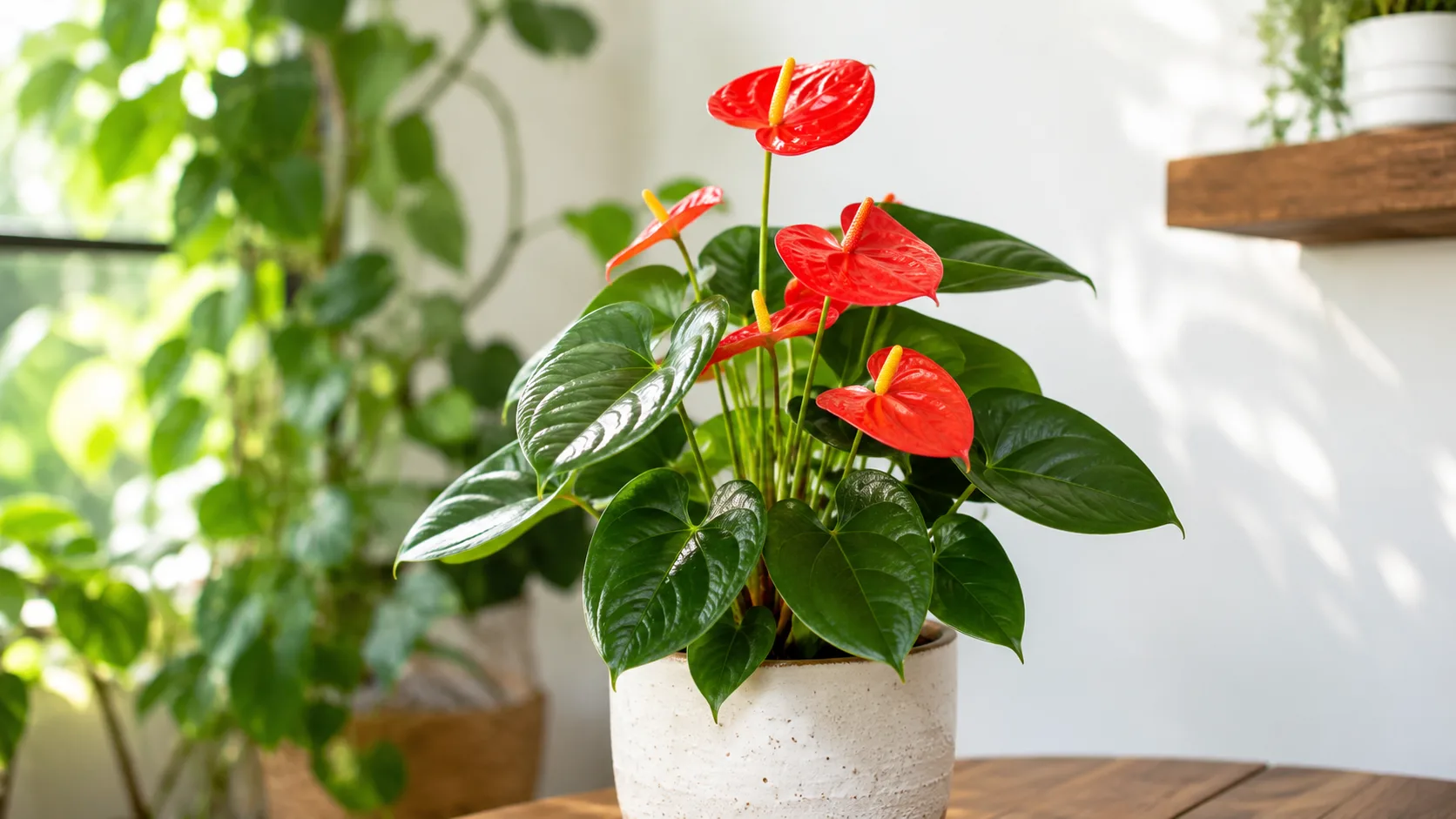
Costco’s plant tables can be a surprisingly good place to find plants that look more specialized than their price tags suggest. Shoppers have reported water-grown tropicals, bonsai, prayer plants, unusual ZZ plants, variegated philodendrons, and colorful ti plants—but a Reddit sighting is evidence that one warehouse received a plant, not a promise that your local store will have it.
The best way to shop this list is to treat each plant as both a find and a responsibility. Check the roots, stems, leaves, soil, label, and temperature exposure before buying. Then give the plant a short quarantine and a gradual transition instead of placing it immediately beside your established collection.
What makes a Costco plant find worth bringing home
The value is not simply that a plant is inexpensive or unusual. A good purchase is one that is correctly identified enough to guide its care, free of a serious pest or disease problem, suited to the light you actually have, and packaged in a way that lets you inspect the root zone. A dramatic plant that will live in a dim hallway is usually a worse choice than an ordinary ZZ plant that matches your room.
The six types below are best understood as categories that shoppers may encounter, not a guaranteed Costco catalog. Cultivars, prices, pot sizes, and availability change with suppliers and seasons. Labels can also be broad—“prayer plant” might mean a Maranta or a related Ctenanthe—so compare the plant’s shape with a reliable botanical reference before changing its care.
Availability is local, seasonal, and never guaranteed
Warehouse plants arrive in waves. A store near a large metro area may receive a different shipment from a warehouse several states away, and a plant that appears during a spring indoor-gardening push may disappear by the next visit. Cold weather, transport time, and the supplier’s crop schedule also affect what is on the table.
That uncertainty is part of the fun, but it changes how you should use reports from other shoppers. Use them as a watch list: an unusual name to recognize, a photo to compare, and a reason to inspect your local display. Do not buy three plants simply because one internet post called the cultivar rare.
A five-minute inspection before you pay
Start with the plant’s growing point and the undersides of leaves. Look for cottony clusters, tiny shells, fine webbing, distorted new leaves, sticky residue, or a sudden yellowing pattern. A few cosmetic marks are not automatically a deal-breaker, but active pests are a reason to choose another specimen or isolate the plant immediately.
Next, check the pot. It should not smell sour, feel waterlogged, or wobble because the stem has rotted at the soil line. If the container has a sleeve or decorative cachepot, lift it and make sure water is not pooled underneath. For water-culture plants, look for firm pale roots rather than mushy brown sections, and ask whether the plant is intended to stay in water or is simply being displayed that way.
Finally, consider the trip home. Tropical plants can be damaged by a cold car, an open trunk, or a long stop in winter. Wrap the plant, keep it upright, and avoid leaving it in a hot or freezing vehicle. The first problem you solve is often transport, not watering.
Water-culture anthurium, bird of paradise, and ctenanthe
Water-culture displays are among the most eye-catching Costco finds because you can see roots through a glass or clear container. Anthurium, Strelitzia (bird of paradise), and Ctenanthe have all appeared in this kind of conversation. Their appeal is real, but “only water” is an incomplete care plan.
Water culture is not the same as “no care”
Roots need both moisture and oxygen. Keep the water level high enough to cover the intended roots, but do not assume every centimeter of the stem should sit underwater. Refresh stagnant water, rinse the container when algae or residue builds up, and use a clean vessel. If the plant has a water-culture label, follow it; do not add fertilizer at random concentration.
Place these tropicals in bright, filtered light. NC State Extension’s anthurium guidance supports warm conditions and careful attention to moisture, while anthurium can still scorch in harsh afternoon sun. Bird of paradise needs substantially brighter light and room to grow than a small tabletop plant suggests. Ctenanthe prefers steady moisture, humidity, and protection from hot direct rays; crispy edges can reflect dry air, inconsistent watering, salt buildup, or several stresses at once.
If you want to move a water-culture plant into potting mix, do it gradually. Wash away loose debris, trim only clearly dead roots, use a small pot with drainage, and keep the mix evenly but not constantly saturated while new soil roots form. A plant that was grown hydroponically may pause after the change. That pause is not a signal to keep adding water.
Ginseng ficus bonsai
The swollen trunk of a ginseng ficus, usually sold under the species name Ficus microcarpa, makes it look like a miniature old tree. It is a real woody plant, not a permanently tiny houseplant. With enough light and pruning it can remain a compact indoor specimen, but it may shed leaves after a move or a sharp change in light.
Give it the brightest window available, filtered through a sheer curtain if the glass receives intense summer afternoon sun. Water thoroughly when the upper layer of mix has dried, then empty the saucer. A fixed weekly schedule is less reliable than checking the mix because indoor heat, pot size, and light change the drying rate.
Do not immediately repot or hard-prune a newly purchased bonsai. Let it adjust for several weeks, remove dead or clearly damaged growth, and learn where it is producing new leaves. When you do prune, make small cuts with clean tools and keep the silhouette intentional. A bonsai’s attractive shape depends on repeated light pruning, not one dramatic haircut.
Prayer plant
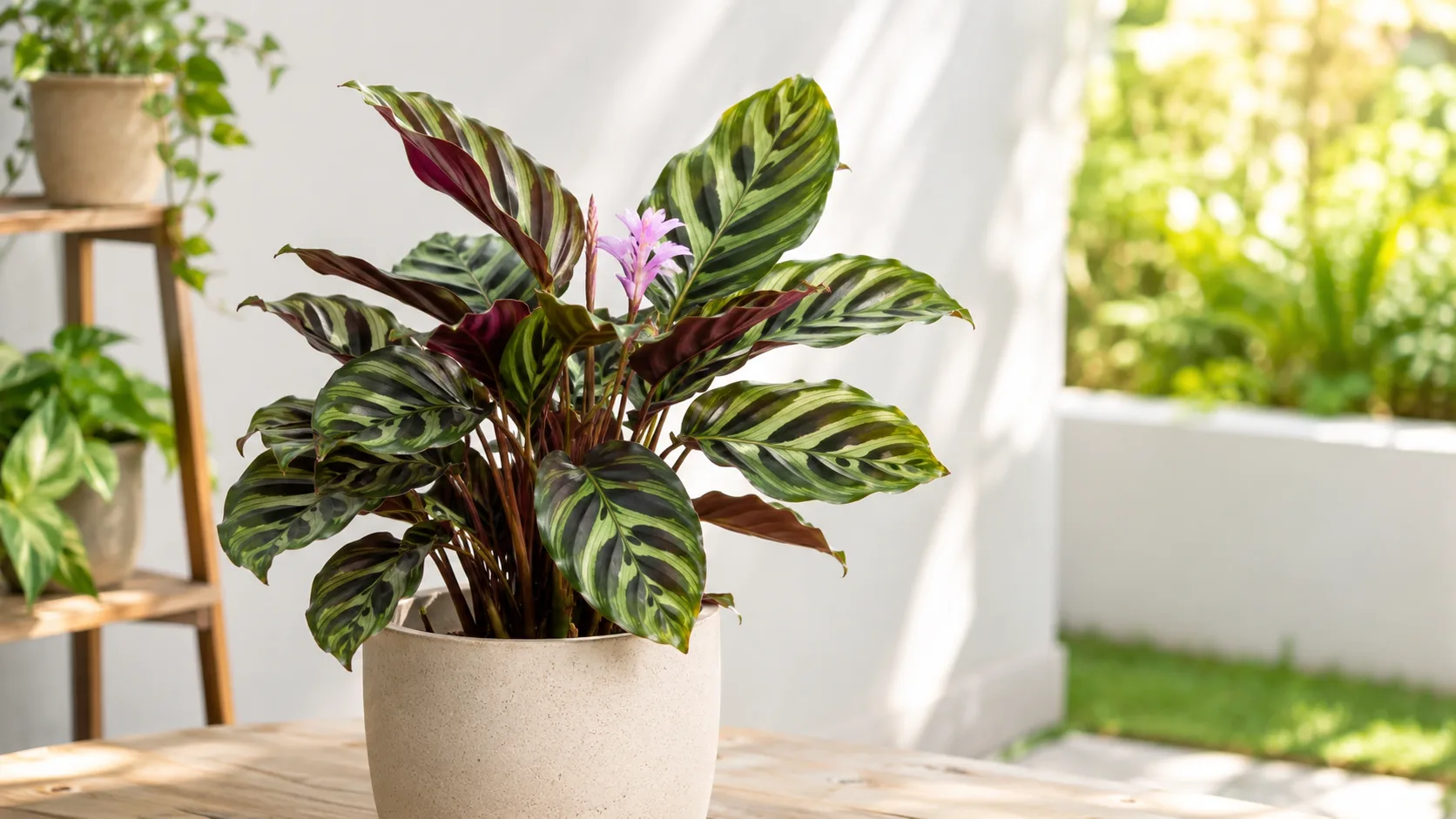
Prayer plant is a common name used for Maranta and sometimes for closely related plants in the prayer-plant group. Their leaves may fold or lift at night as part of a normal daily movement, so a different evening posture is not automatically wilting. The movement is one reason these plants feel unusually lively in a room.
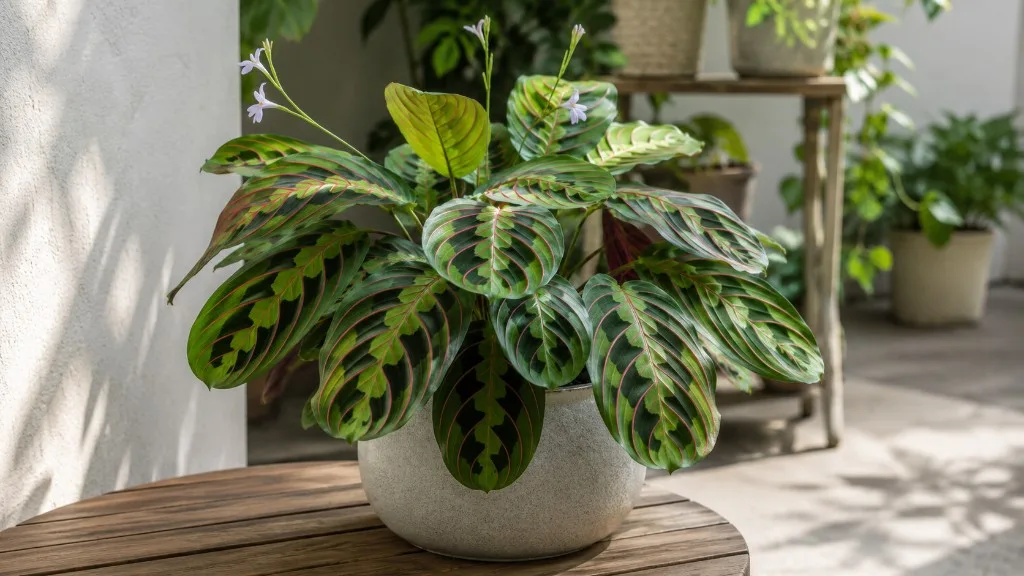
Give a prayer plant medium to bright indirect light, warm temperatures, and a pot that drains freely. Keep the mix lightly and consistently moist while allowing excess water to escape. Letting it swing from bone-dry to soaked is more stressful than watering when the top layer has just begun to dry.
Brown edges are a clue, not a diagnosis. Low humidity, dry roots, direct sun, fertilizer salts, cold drafts, or damaged roots can all contribute. Increase consistency first: move it away from a vent, check drainage, water deeply when needed, and avoid placing it against cold glass. A humidifier can help a dry room, but air movement and sensible watering still matter.
Chameleon ZZ plant
The chameleon ZZ is a color form of the familiar ZZ plant. New leaves can emerge pale yellow-green and deepen as they mature, creating a gradient that looks almost variegated even when it is not a stable white-variegated cultivar. The color is part of its attraction, but the plant still follows the ZZ’s basic preference for drying between waterings.
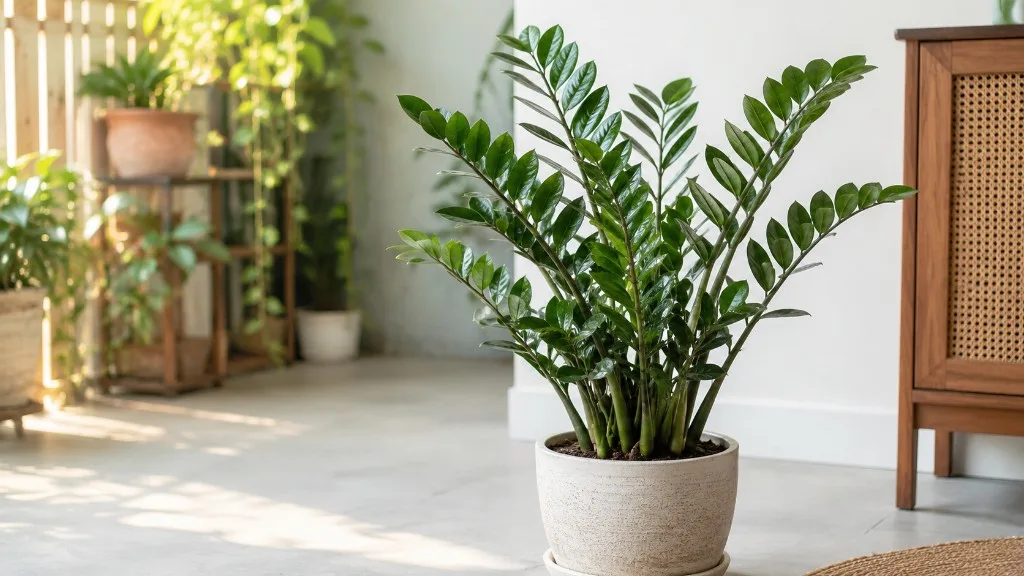
Place it in bright indirect light for stronger growth and better color development, while avoiding a sudden jump from warehouse lighting to unfiltered hot sun. It tolerates lower light, but growth is slower and the plant may stretch toward a window. Water only after the mix has dried substantially; thick underground rhizomes store water, so frequent small sips are a common route to rot. Gardeners’ World’s ZZ guidance makes the same dry-down principle central to routine care.
Inspect the base of the stems before buying. A firm plant with dry-to-the-touch mix is preferable to one sitting in a sealed wet sleeve. After purchase, use a draining pot and never let the container stand in water. ZZ plants are forgiving once established, but “easy” does not mean immune to an overwatered root system.
Ring of Fire philodendron
Philodendron ‘Ring of Fire’ is prized for serrated leaves that may emerge in cream, orange, yellow, green, or blended patterns. The exact look varies with the plant’s age and growing conditions. A colorful leaf is not a guarantee that every future leaf will match it, and a low-light room can make the plant produce less dramatic growth. Compare the plant with a recognized botanical description rather than relying on a retailer’s cultivar label alone.
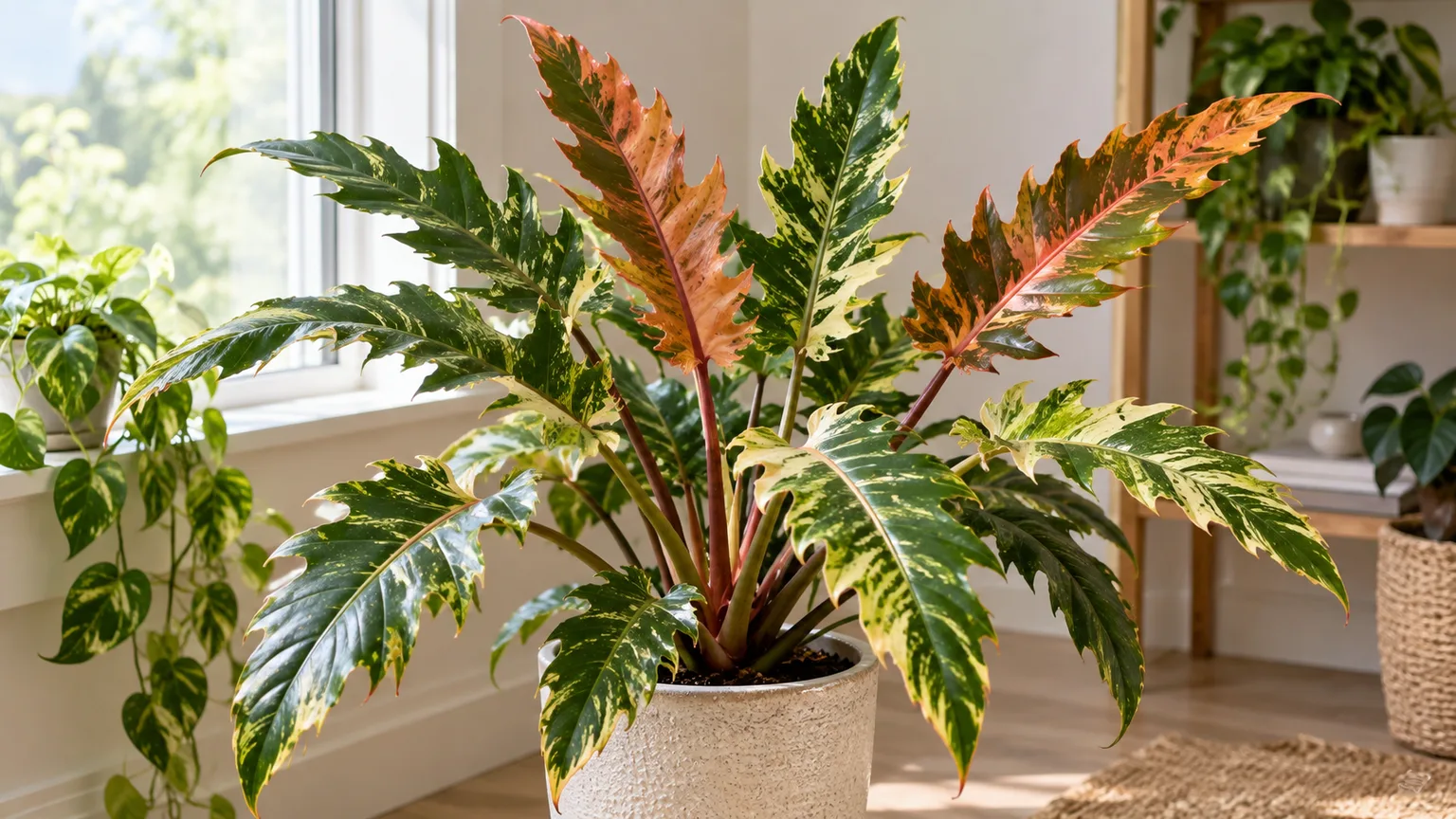
Give it bright indirect light with some gentle morning sun if the plant has been acclimated. More light generally supports compact growth and helps the plant maintain its color, but intense unfiltered afternoon sun can scorch pale sections. Rotate the pot periodically so new growth does not lean hard toward one window.
Use an airy, well-draining mix and water when the upper portion has dried, then let the pot drain fully. Do not compensate for low light by watering more often. Philodendrons can develop root problems in dense, wet mix, and a stressed plant may show yellow leaves even when the soil appears damp.
Ti plant, or good-luck plant
Ti plants, commonly associated with Cordyline fruticosa, bring pink, red, green, or cream foliage to a plant table. They are tropical plants, not cold-hardy seasonal color. A warm-climate gardener may grow one outdoors in a protected position, while many shoppers will need to keep it indoors once temperatures fall.
Give a ti plant bright filtered light, warmth, and good drainage. Strong light helps preserve color, but a sudden move from a shaded store display to direct sun can scorch the leaves. Water when the top of the mix begins to dry and reduce watering in dim winter conditions rather than following the summer routine.
If the label suggests an outdoor planting, check your local frost pattern before committing. Move it outside only after nights are reliably warm, acclimate it over several days, and bring it in before cold damage is likely. Pink foliage can become more intense under certain conditions, but color is not a reason to expose a tropical plant to cold.
How to quarantine and acclimate a warehouse plant
Keep a new plant separate from your established collection for about two weeks, longer if you see pests or the plant is recovering from transport. A bright room is useful, but do not force a sudden change from dim warehouse light to full sun. Place it near the light it will ultimately receive, filtered at first, and adjust over several days.

During quarantine, inspect leaf undersides, stems, pot rims, and the soil surface every few days. Wipe dusty leaves with clean water when the species tolerates it, remove dead foliage, and keep tools from moving between the new plant and old plants without cleaning. Do not apply a pesticide just because a plant is new; identify the pest and follow the product label if treatment becomes necessary.
Avoid the tempting first-day makeover. Repotting, fertilizing, propagating, moving, and changing light all at once makes it hard to tell what caused a setback. First learn whether the root ball is staying wet, whether leaves are acclimating, and whether the plant is producing healthy new growth. Repot only when the existing mix is failing, the pot lacks drainage, roots are severely compromised, or the plant is clearly unstable.
Choose the right plant for your room and routine
Use this quick comparison before you buy:
| Find | Best match | Main risk | First priority |
|---|---|---|---|
| Water-culture tropical | Bright, warm room and a careful observer | Stagnant water or a difficult transition to soil | Confirm roots and water-culture instructions |
| Ginseng ficus bonsai | Bright window and someone who enjoys pruning | Leaf drop after moving or inconsistent watering | Give steady light before shaping |
| Prayer plant | Humid, draft-free room and consistent watering | Crispy edges from several overlapping stresses | Protect from drafts and drying swings |
| Chameleon ZZ | Bright or moderate indirect light and infrequent watering | Rhizome/root rot from wet mix | Let the mix dry substantially |
| Ring of Fire philodendron | Bright indirect light and airy mix | Lost color, scorch, or wet roots | Acclimate to light gradually |
| Ti plant | Warm room or frost-free outdoor climate | Cold damage and sun scorch | Keep warm and filter intense sun |
If your room is dim, start with the ZZ rather than trying to force a colorful philodendron or a bird of paradise to survive. If you travel often, avoid the prayer plant and water-culture tropical unless someone can check them. If you have a bright window and enjoy observation, the more demanding choices can be rewarding.
Common Costco plant mistakes to avoid
The first mistake is treating the warehouse label as a complete care guide. A label may identify a genus while leaving out the cultivar, mature size, pet risk, or whether the display method is temporary. Photograph the label and plant, then verify the name before making a major change.
The second is watering on arrival. Transport stress does not tell you whether the plant is thirsty. Check the mix or water vessel first. A waterlogged plant needs air and drainage, not another drink; a dry, tropical plant may need a thorough watering, but only after you know the pot can drain.
The third is skipping quarantine because the plant looks clean. Pests can hide in new growth, leaf axils, or the soil surface. Isolation is cheap insurance, especially when a bargain plant joins a collection that took years to build.
The fourth is paying a premium for a name without checking the actual plant. Variegation, a cultivar label, or a swollen bonsai trunk can be appealing, but compare the plant’s health with its price. A discounted plant with active scale is not a bargain if treatment, replacement soil, and lost collection time outweigh the saving.
Are these plants safe around pets?
Do not assume that a plant sold indoors is safe to chew. Philodendrons, ZZ plants, anthuriums, bird of paradise, prayer-plant relatives, and ti plants have different safety profiles, and common names can be confusing. The ASPCA toxic and non-toxic plant database is a useful starting point, but a veterinarian or poison-control service is the right source after a real ingestion.
Place unknown plants where pets and children cannot reach them until the botanical identity is confirmed. Keep fertilizer, pest products, and water-culture additives secured as well. “Pet-safe” also does not mean a plant should be eaten; even non-toxic foliage may cause stomach upset or become a choking hazard.
Conclusion
The most unusual plants at Costco are worth noticing because they can make specialty-looking houseplants more accessible. The smart purchase is not the plant with the rarest-sounding name. It is the healthy specimen that matches your light, your watering habits, your available space, and the amount of follow-up care you are willing to provide.
Use the six finds as a recognition guide, not a stocking forecast. Inspect before paying, protect the plant during the ride home, quarantine it, and make one change at a time. With that simple process, a warehouse surprise can become a long-term plant rather than an impulse purchase that fails in the first month.