4 Ways to Protect Your Garden From Heavy Winds
Protect your garden from heavy winds with a porous windbreak, anchored row covers, flexible plant ties, and a pre-storm plan that avoids common damage.
Wind protection works best when it reduces the force reaching plants instead of trying to hold every leaf still. Start with the part of the garden that takes the prevailing gusts, then match the response to the forecast: a permanent windbreak for a chronically exposed bed, a secured cover for vulnerable crops, flexible support for tall stems, and planned maintenance for trees and structures overhead. No backyard barrier can guarantee that a garden will escape storm damage, but a few well-placed measures can limit avoidable breakage, drying, and soil loss.
Wind can injure plants in more than one way. It can tear leaves and snap stems, rock shallow-rooted plants until their roots loosen, and dry foliage faster than roots can replace the lost water. The RHS describes windbreaks as semi-permeable barriers that slow wind, while Gardening Know How notes that persistent wind can leave leaves wilted or brown-edged through desiccation. The practical goal is to reduce exposure while preserving airflow and light, not to seal a bed inside a wall. (RHS windbreak guidance; Gardening Know How on wind injury)
Start by reading the wind in your yard
Before you buy screening or drive stakes into a bed, identify where the damaging gusts come from and how they move through the property. Watch flags, tree crowns, or a lightweight ribbon on several breezy days; note whether the wind arrives across an open field, funnels between buildings, or curls around a fence. A nearby wall may shelter one bed and accelerate gusts around its end, so the most exposed area is not always the one that looks most open.
Separate recurring exposure from an approaching storm. If a bed dries or leans whenever the same seasonal wind blows, a permanent porous screen or a change in layout may be worth the space and maintenance. If a strong-wind advisory is for tomorrow, focus on reversible tasks: bring lightweight containers together in a sheltered spot, secure loose equipment, support already vulnerable stems, and remove or anchor covers while it is still safe to work outside.
Look at what is actually at risk. Fresh transplants, seedlings, top-heavy flowering stems, climbing crops, shallow-rooted shrubs, and pots with a small footprint usually need attention before established low plants do. Check the soil too: loose, dry surface soil and newly disturbed beds can blow or crust more readily than a settled, mulched bed. This quick inventory keeps you from spending time tying sturdy plants that can flex while overlooking a lightweight cover or a pot that can topple.
1. Build a windbreak that slows gusts instead of stopping them
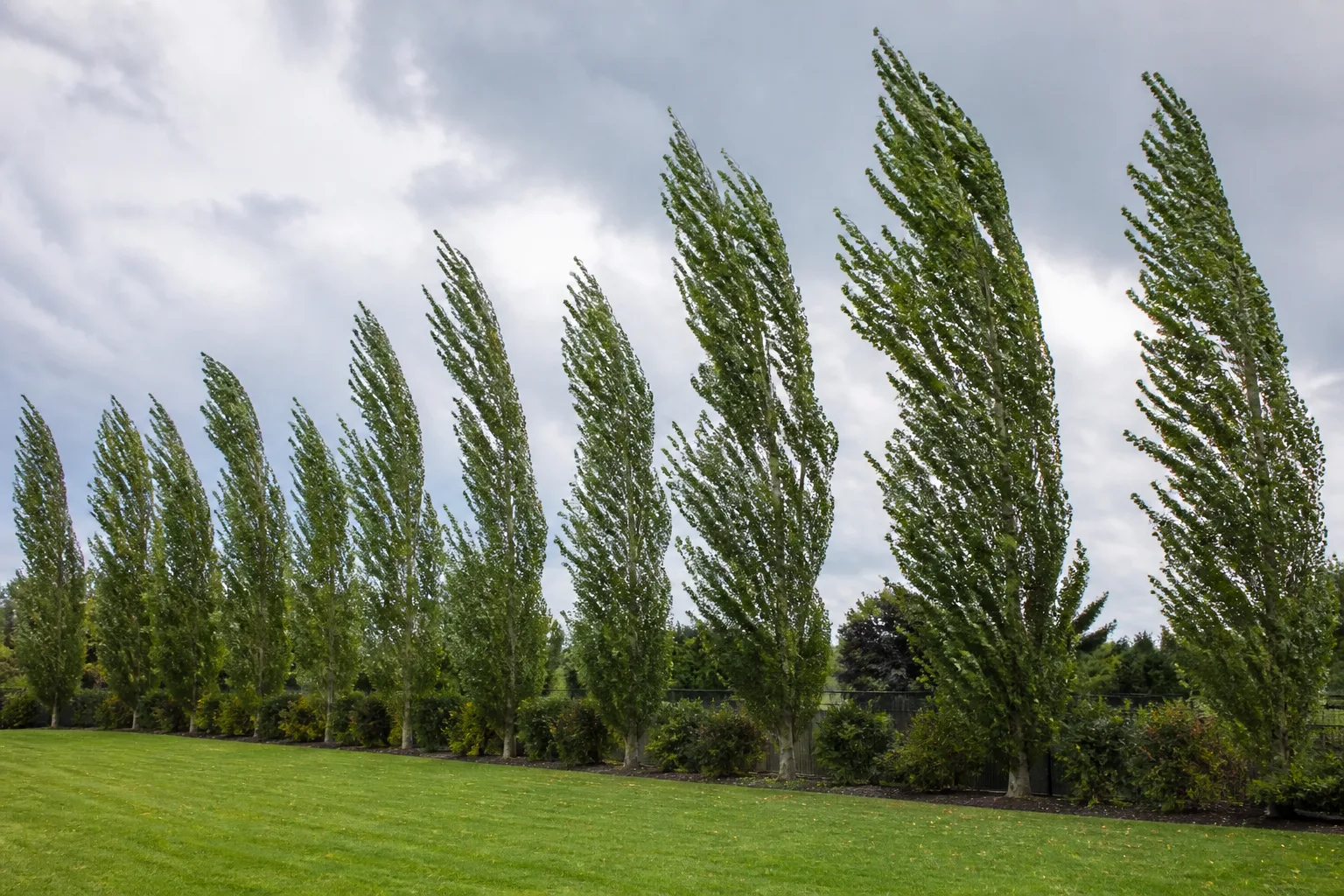
A windbreak is a porous screen placed on the windward side of the area to be protected. It can be a hedge, a mixed row of shrubs, woven fencing, or windbreak netting held on a sturdy frame. The useful distinction is porosity: a screen should interrupt and slow moving air while allowing some air to pass through.
The RHS recommends a semi-permeable barrier and describes roughly 50–60 percent porosity as a useful target for a fence or screen. A solid fence may seem stronger, but air hitting an unbroken wall can curl over and around it, creating turbulent pockets near the structure. For a small bed, choose a trellis-like or woven screen with open space; for a large exposed property, a mixed planting may provide broader, longer-lived shelter. These are design starting points rather than a wind rating for every yard, since gust strength, topography, screen condition, and wind direction all matter. (RHS windbreak guidance)
Choose a living or temporary screen
A living windbreak makes sense when the exposure repeats and you have room for mature roots and crowns. Use regionally suitable shrubs or small trees with a naturally layered structure rather than planting a single dense wall simply because it grows quickly. Mixed species can reduce the risk that one pest, disease, or weather stress leaves the whole screen bare; they also tend to look more like a garden edge than a barricade.
The trade-off is time and space. Young plants need establishment care and will not protect crops like a mature screen on day one. A hedge can shade beds, compete for water, take up a narrow property line, and need regular pruning. Check the mature height and width, overhead wires, underground utilities, local invasive-plant guidance, and property boundaries before planting. If the goal is only to shelter seedlings for a few weeks, planting trees is the wrong short-term fix.
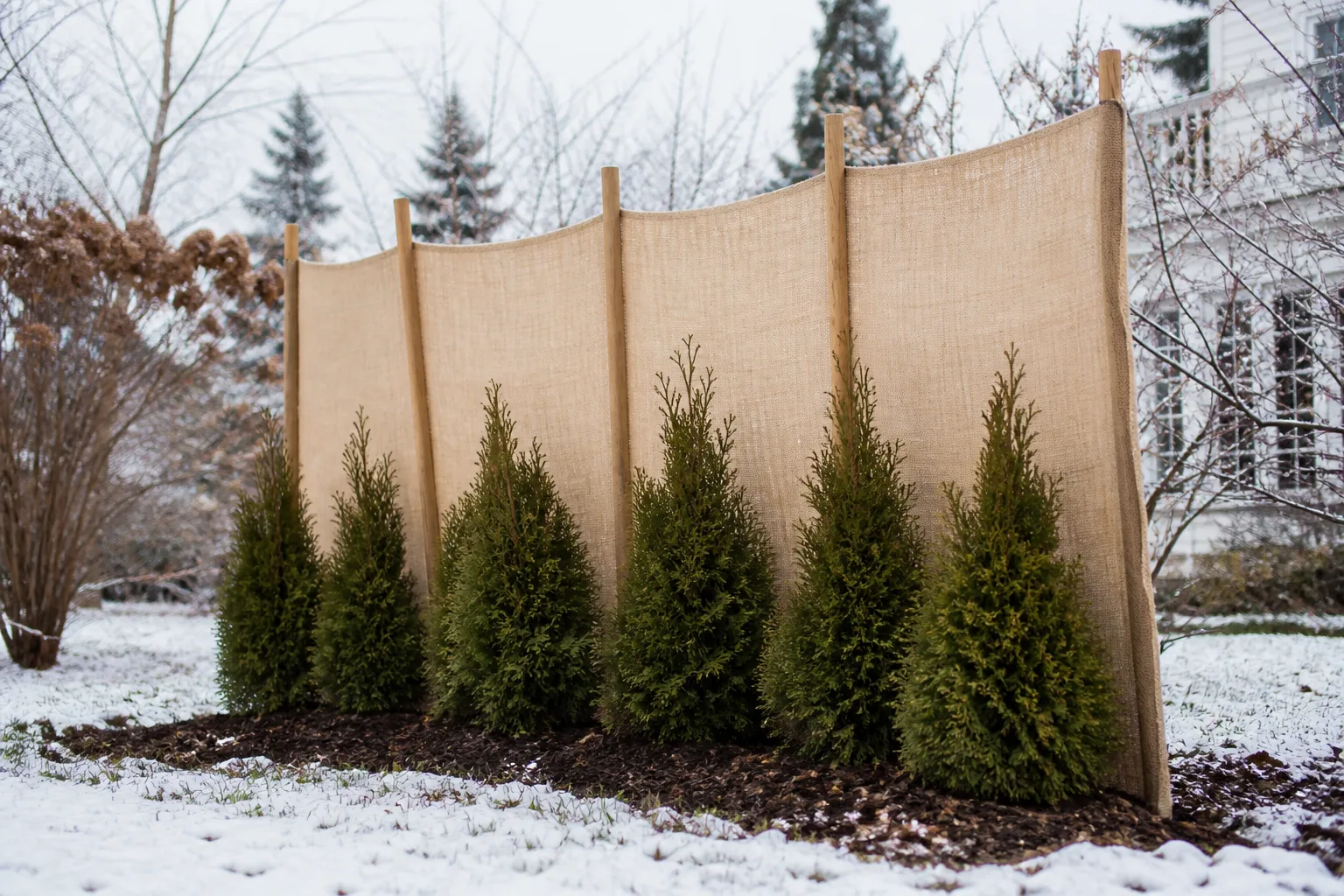
For immediate protection, use a purpose-made porous screen or a temporary frame with woven material. Burlap is sometimes used around exposed plants, but a wrap tight against foliage is not the same as a freestanding windbreak. Give the screen a gap from the crop, attach it to posts that are firmly set, and inspect the fastenings before the season’s windy period. If the frame flexes, the fabric tears, or the posts begin to lean, take it down or repair it on a calm day rather than waiting for a gust to test it.
Place it for the garden you have, not a generic compass direction
Put the barrier between the exposed wind and the plants, on the windward edge of the bed. Do not assume a single compass direction works everywhere: local seasonal winds, nearby structures, slopes, and gaps between buildings can change the pattern. If gusts wrap around the ends, extending the screen beyond the bed or returning it partway along the sides may help more than making the center taller.
Height and distance work together. The RHS notes that a windbreak can significantly reduce wind on its leeward side for a distance up to about ten times the screen’s height. Treat that as a planning guide, not a promise that every point in that area will be calm; protection fades and varies with terrain and wind angle. A low screen close to a seedling bed can be more useful than a tall feature far away.
Keep enough sunlight and ventilation for the crops. A screen that shades the whole vegetable garden or traps humid air against foliage may exchange wind stress for slow growth or disease pressure. If you are deciding between a fixed fence and a living barrier, compare the shade pattern in summer and winter, the likely maintenance, and whether the garden needs protection on one edge or from several directions.
2. Protect soil, seedlings, and low crops before a gust
Seedlings and recently planted crops have little time to anchor themselves. Wind can bend them, abrade leaves against soil or neighboring plants, and dry the shallow root zone. Their first defense is a settled bed with moisture at root level and a cover or screen that is secured independently of the plants.
Mulch and water strategically
A layer of suitable mulch shields bare soil from direct wind and slows surface drying. Use a material that will stay put in your conditions: coarse compost, leaf mold, or bark pieces are less likely to scatter than very light, dry straw in an exposed bed. Keep mulch pulled back from crowns and stems, and do not bury small seedlings. Mulch reduces exposure; it does not anchor an entire bed against severe gusts, especially if the soil beneath is loose or the material is lightweight.
Check moisture before watering. Wind can increase water loss from foliage, but a wilted plant on a hot, windy afternoon is not proof that the root zone is dry. Feel the soil a little below the surface; water deeply if it is dry where roots are active, then recheck after the weather changes. Overwatering saturated soil will not make stems sturdier and can leave roots short of oxygen.
For a bed that is exposed every season, living groundcover or a temporary wind screen can protect bare soil between crops. Keep paths clear and avoid leaving sheets, plastic, or loose fabric spread flat where wind can lift the edge. If soil is already blowing, dampen it gently while you arrange a more durable cover; do not rely on a heavy watering as a substitute for a barrier.
Cover rows with a low, anchored structure
Row covers can protect tender crops from wind, but only when the fabric and supports are suited to the exposure. Lay the fabric over low hoops rather than directly across delicate foliage, pull it evenly without making it drum-tight, and secure every edge with purpose-made clips, buried edges, or weights that will not roll away. Check the ends as carefully as the long sides: wind often gets under an open end first.
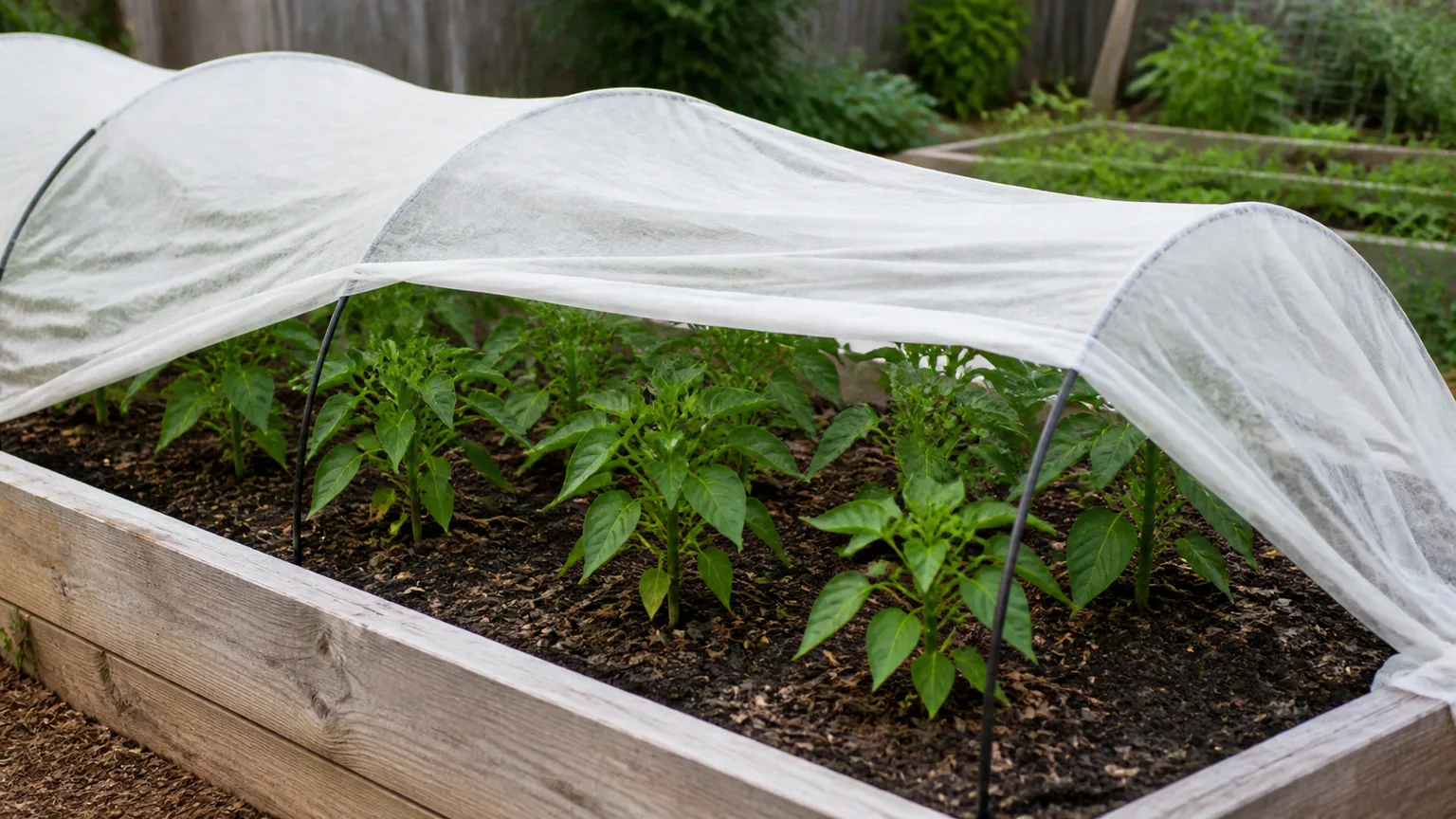
A floating cover that is merely draped over leaves may rub, tear, or lift like a sail. If you cannot anchor the frame and fabric reliably, remove the cover before the storm while conditions are calm and use a porous wind screen farther from the plants instead. Do not go out during dangerous gusts to rescue a loose sheet. After installation, look for sharp hoop ends, fabric touching tender shoots, and any gap where wind can enter and inflate the cover.
Account for the cover’s other effects. Row covers can trap heat on sunny days and limit pollinator access while they remain in place. Open or remove them when the weather and crop needs allow; for crops that need insect pollination, plan the cover schedule around flowering. A protective measure should be easy to inspect and remove, not something left unattended because it was difficult to fit.
3. Support tall plants selectively and flexibly
Staking is useful for tall, top-heavy plants that are already leaning, newly transplanted trees or shrubs that rock in their root zones, and crops whose stems carry heavy fruit or flower heads. It is not a reason to immobilize every plant in the garden. Many stems can sway without harm, and forcing them rigid can concentrate strain at the tie or where the stem meets the soil.
Decide what needs a stake, cage, or trellis
Prioritize plants that have a high canopy relative to their root support, soft new growth, a heavy flower or fruit load, or a history of falling over in that particular spot. Young trees and recently transplanted shrubs may move at the root ball before they have anchored; established shrubs usually benefit more from a well-placed windbreak than from improvised ties around several branches.
Use the support that fits the growth habit. A cage can distribute support around a sprawling tomato, a trellis can carry a climbing crop, and a single stake can steady one upright stem. Install supports early in the season where possible, before roots fill the bed and before branches become heavy. If you must add a stake later, place it far enough from the stem to avoid driving through the main root area and check that it is stable before tying anything to it.

Tie stems without strangling them
Use a soft, broad tie and make a loose loop that supports the stem without cutting into it. For a woody stem, a figure-eight tie separates the plant from the stake and reduces rubbing; leave room for growth and inspect the tie as the stem thickens. Avoid wire, narrow twine, zip ties, or a knot pulled tight against bark. A support that is comfortable today can girdle a stem later if it is forgotten.
For flexible annuals, one low tie may be enough to keep the base upright while the upper stem moves. A plant that needs several tight ties along its full height may be in the wrong exposed position, overloaded with growth, or better supported by a cage or wind screen. Do not tie leaves or flower heads into a rigid bundle; the trapped foliage can rub, snap, and retain moisture.
Newly planted trees are a special case. The RHS describes windrock as movement that can loosen roots and recommends firming the plant and providing shelter; it also links to guidance on staking newly planted trees. If a tree needs a stake, use a method designed for that tree’s size and root-ball condition, check it periodically, and remove the support when it is no longer needed. A stake should stabilize the root area while allowing appropriate trunk movement, not serve as a permanent tether.
4. Reduce overhead risks from trees and garden structures
Look above the bed as well as at the plants. Dead branches, split limbs, leaning trunks, damaged fences, loose greenhouse panels, and trellises with a large sail of foliage can all turn a garden into a more hazardous place during a storm. A quick walk-through before windy weather can reveal a loose panel or top-heavy pot that is easier to secure than a damaged plant is to replace.
Handle tree work before severe weather
Make tree care part of routine maintenance, not a last-minute reaction to a forecast. The RHS advises removing dead, diseased, or damaged branches as part of a considered pruning plan, while warning that pruning choices depend on the tree. Gardening Know How likewise recommends professional help for larger storm-damaged trees, especially where limbs are high or the damage is extensive. (RHS tree-pruning guidance; Gardening Know How on storm-damaged trees)
Do not top a tree, strip out healthy branches, or make large cuts because a storm is predicted. Heavy pruning can weaken a tree’s structure, remove too much foliage, and create new hazards; the correct work depends on species, structure, season, and the specific defect. If you see a hanging limb, a split trunk, a newly leaning tree, or a branch near electrical wires, keep people away and contact a qualified arborist or the utility responsible for the line. Do not climb a ladder or use a chainsaw in storm conditions.
Inspect garden structures too. Tighten loose bolts and check that trellis feet, greenhouse clips, and fence posts are secure on a calm day. A dense vine can catch more wind than the bare support beneath it, so do not assume a trellis that survived last spring will remain stable after it fills out. For lightweight sheds, greenhouses, or pergolas, follow the maker’s anchoring instructions and the local wind exposure; if a structure is already shifting, keep clear until it can be safely repaired.
Use a forecast-driven 24-hour checklist
When strong gusts are forecast, work in order of what can cause damage quickly. Check the latest local weather advisory and wind timing, then use the last calm window to secure or move objects. Do not wait until branches are bending hard; the most useful preparation happens before the wind arrives.
Move containers and secure loose items
Bring small, top-heavy pots into a garage, porch, or sheltered corner. Grouping containers can reduce the chance that one tips, but do not stack them or block an exit. If a pot is too large to move, lower its profile where practical, check that it sits level, and move it away from edges where a fall could injure someone or break glass.
Put away lightweight tools, empty trays, plastic pots, plant labels, cushions, and anything else that can blow into a plant or window. Secure greenhouse doors and vents according to the manufacturer’s instructions. Take down umbrellas and shade sails if their instructions call for removal in high winds; tightening a loose canopy does not make it safe to leave in a storm.
Cover only what you can anchor safely
Cover newly planted rows only if the hoop frame is stable and every edge can be secured. Check the forecast again if timing changes; a cover that is appropriate for a breezy night may be a liability in a severe wind warning. Secure tall stems with the loose ties described above, but avoid tying branches to a fence or structure that itself may fail.
Stop outdoor work when local authorities issue a warning that makes it unsafe to remain outside, when debris begins moving, or when you cannot keep your footing. Do not attempt to install posts, lift panels, or reach into trees during active high winds. The safest garden task during dangerous weather may be to stay indoors and wait.
After the wind: inspect, triage, and recover
Wait for the all-clear and choose a calm period for inspection. Look for downed wires, hanging limbs, leaning trees, damaged fences, torn covers, and broken glass before walking into the garden. If a tree is touching a power line or a structure looks unstable, keep people away and call the relevant utility or a qualified professional.
For plants, start with the root zone. A young plant that has tipped but remains intact may be set upright, firmed gently at the base, and watered if the soil is dry. If it is already sitting in saturated soil, do not add water just because the leaves look wilted. Reinstall a temporary support only after checking that the stake is stable and that the stem is not crushed or split.
Remove cleanly broken, ragged stems with a sharp tool when the plant can be handled safely, cutting back to healthy tissue or a suitable side branch rather than leaving a torn strip. Gardening Know How recommends prompt attention to broken stems and damaged foliage; for trees and large woody shrubs, do not improvise large cuts. Leave high, heavy, or uncertain damage to a professional. Avoid fertilizer as an emergency response: first restore stable soil, remove hazards, and let the plant show where it can resume growth.
Inspect the windbreak and its anchors before the next gust. A leaning post, frayed fabric, loosened tie, or screen gap is useful information about how the wind moved through the yard. Repair or redesign the weak point on a calm day, and keep a note of which bed, crop, or container needs earlier attention next time.
Common wind-protection mistakes to avoid
The most common mistake is building a solid wall and assuming that more material means more protection. An unbroken barrier can redirect wind around its top and sides; a semi-permeable screen is usually a better starting point. The next is placing a screen too close to plants, where shade, root competition, or poor airflow may create a different problem.
Other avoidable problems include tying every stem tight, using lightweight fabric without anchoring the frame, leaving a row cover over an open end, and installing a support after the soil is packed with roots. Avoid adding more mulch than the bed needs or piling it against crowns. Do not make severe cuts to a tree right before a storm or attempt emergency tree work yourself.
Finally, do not confuse a temporary fix with a permanent design. A quick burlap screen may protect a newly planted shrub through a short exposed season, but it needs regular checks and may not suit a large vegetable plot. Conversely, a hedge takes time and room; it will not solve tomorrow’s forecast. Match the measure to the time available, inspect it after use, and replace it when the site or plant changes.
Conclusion
To protect a garden from heavy winds, slow gusts with a porous screen, keep bare soil and young crops covered by a stable setup, support only the plants that need help, and address tree and structure hazards before storm season. Read the wind pattern in your yard so the barrier sits where it can shelter the bed without blocking needed light or airflow.
For an approaching storm, prioritize the reversible work: move vulnerable containers, secure loose equipment, check ties and anchors, and remove any cover you cannot trust. When the wind has passed, inspect for hazards before tending plants and leave large-tree work to a qualified arborist. These steps will not make a garden storm-proof, but they give plants a better chance and make the next decision clearer.