11 Best Strawberry Companion Plants for Your Garden
Find 11 strawberry companion plants, where to place them, which pairings are folklore, and what crops to avoid when Verticillium wilt is a risk in your soil.
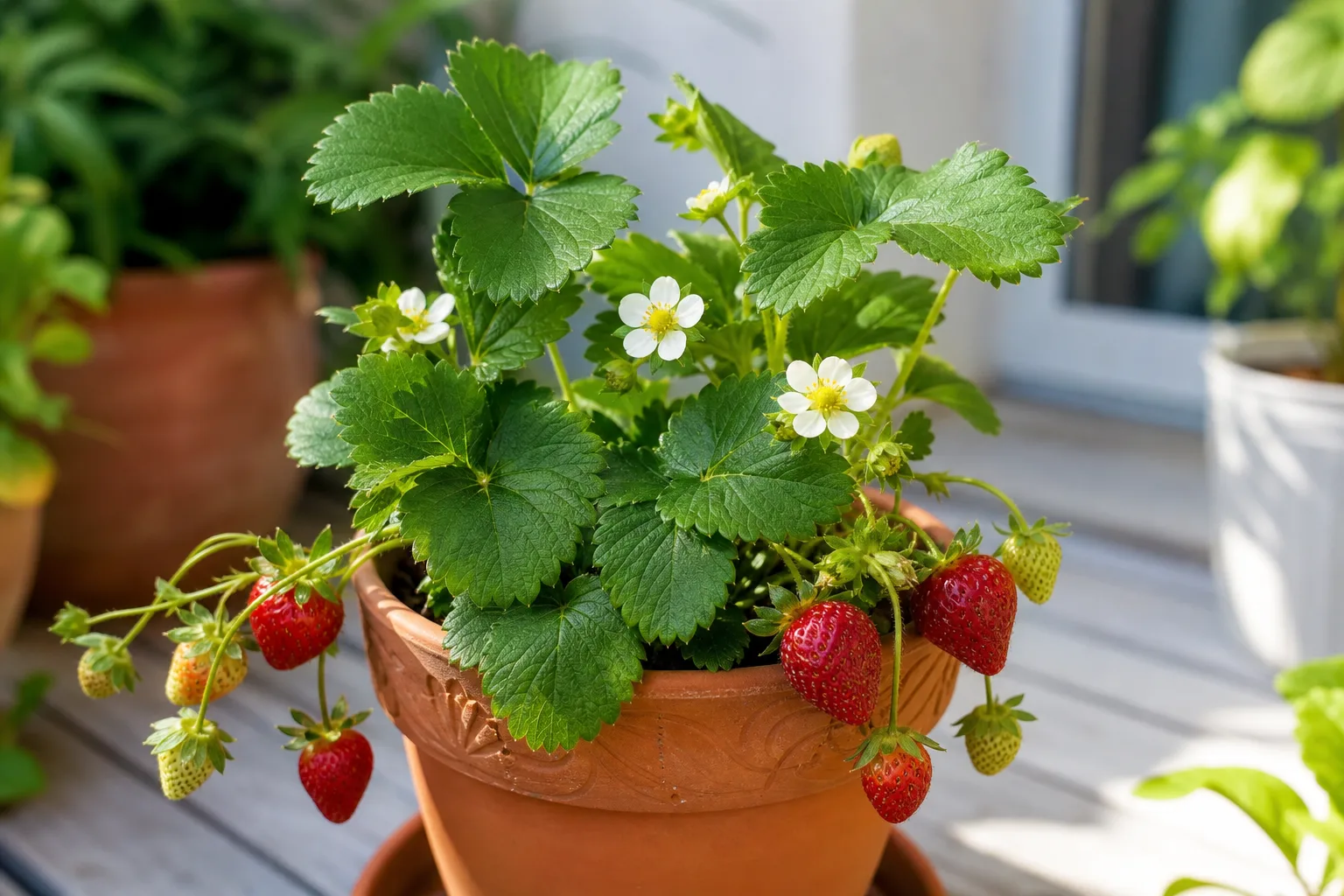
Strawberry companion plants are most useful when they solve a specific problem without crowding the berry plants. A few flowering plants can bring more pollinators through the bed, and short-season greens can use open ground before strawberry leaves and runners fill it. Aromatic herbs are not reliable pest shields, though, and no companion can compensate for poor drainage, weak sunlight, crowded crowns, or a bed with a serious soilborne disease history.
The most practical choices are lettuce, spinach, chives and other compact alliums, dill, borage, thyme, sage, catnip, yarrow, marigolds, and—where a wide layout makes sense—asparagus. Think of that as a menu rather than a recipe. Choose two or three that fit your garden’s goal, place larger plants at the edge, and leave the strawberry crowns open to light and airflow.
What companion planting can—and cannot—do for strawberries
“Companion planting” can mean several different things: putting a second crop in unused space, growing flowers that attract pollinators, or choosing neighbors thought to confuse pests. Those are not equally well supported. Space sharing is easy to observe, while claims that a particular herb’s scent repels slugs or aphids are often repeated without showing that the effect holds in a real mixed garden.
Strawberries are self-fertile, so they do not need a second plant to make fruit. Insects still matter: strawberry flowers receive many small visits, and more complete pollination can help berries develop evenly. A 2020 study in Ecological Entomology tested borage as a companion and reported an average 35 percent increase in fruit number and 32 percent greater yield by weight in the borage treatment; that is a meaningful strawberry-specific result, but it is not a guaranteed increase for every cultivar, garden, or year. The study is available through the journal record.
Use that distinction to make decisions. A low lettuce row may be worthwhile because you can harvest it before it competes with the strawberries, even if it does not deter a pest. Borage may earn a spot because one study found a yield benefit and its flowers attract pollinators, but it still needs enough room not to shade the bed. A companion is successful when the benefit is visible and the strawberries keep their light, water, and access.
11 companion plants that earn their space
The plants below are organized around practical jobs: make use of early-season space, create flowering habitat, or add a manageable perennial edge. Not every choice belongs directly among strawberry crowns. If your bed is narrow, treat “companion” as “nearby,” not necessarily “interplanted.”
Lettuce: a cool-season filler, not a pest shield
Leaf lettuce grows quickly and stays relatively low, which makes it a useful temporary crop beside newly planted strawberries or along a bed edge. Sow or transplant it in early spring, when the strawberry canopy is still open, and harvest whole plants or outer leaves before the lettuce begins shading the crowns. Its value is mainly efficient use of space and an extra harvest, not camouflage for berries or dependable pest control.
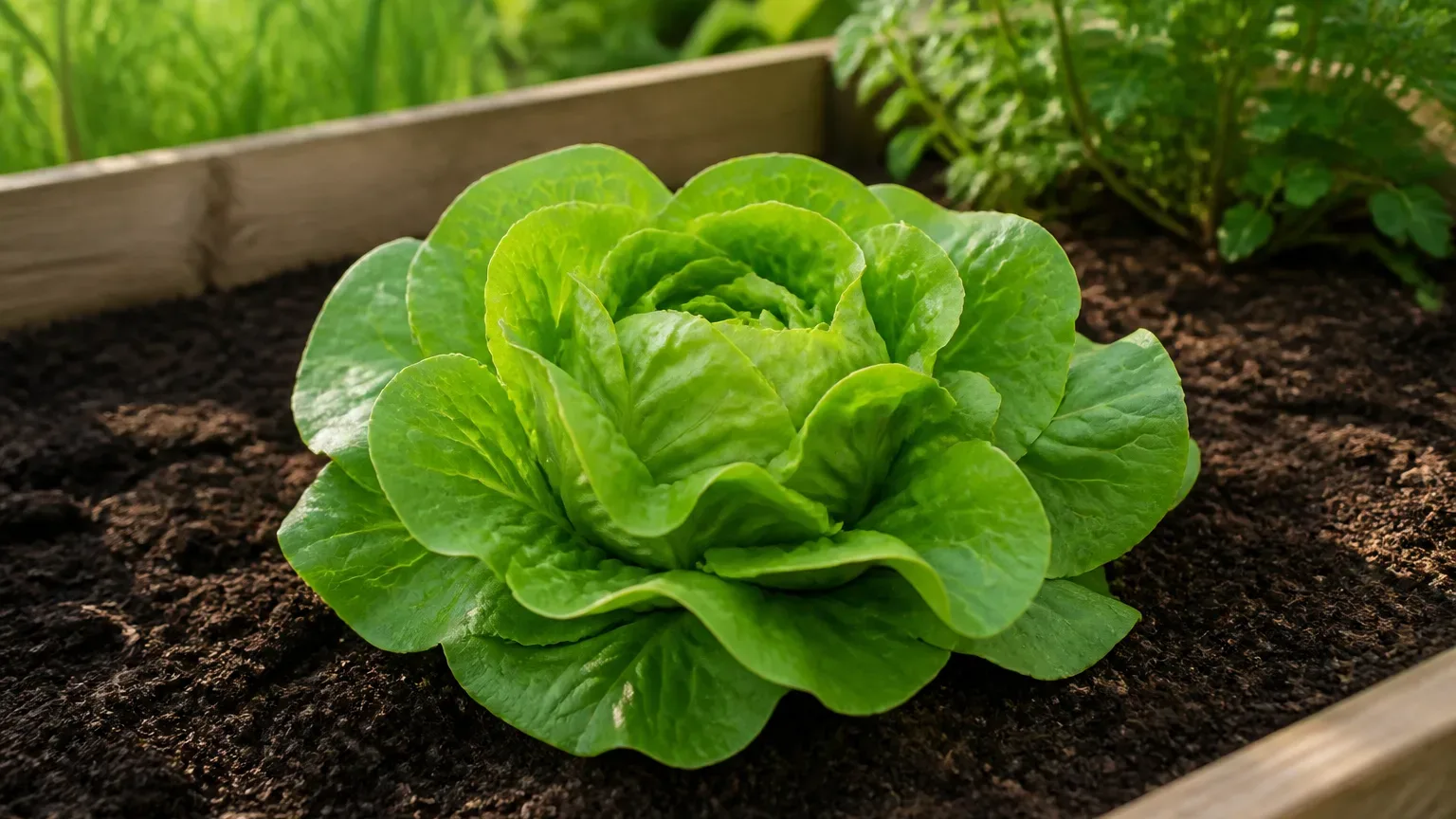
There is an important disease caveat: UC’s strawberry IPM guidance identifies lettuce as a crop that can increase Verticillium inoculum in some field situations. That does not mean a lettuce plant beside a healthy backyard strawberry will automatically infect it, but it does mean lettuce is not a universally safe “helper.” If the garden has a known Verticillium history or wilt-susceptible crops have recently occupied the same soil, prioritize the local disease guidance over a companion chart. Harvest greens early and do not keep them in the patch once they block light or airflow.
Alliums: compact edges and flowers, not a force field
Chives, bunching onions, garlic, and leeks can provide a narrow, upright border without taking the same footprint as a sprawling squash vine. Chives are the easiest fit in many small beds: divide a mature clump, keep it at a corner or outer edge, and let a few flower stalks open if you want another source of nectar and pollen. Bulb onions and garlic are better as an outside row than tucked between strawberries that need room for runners and picking.
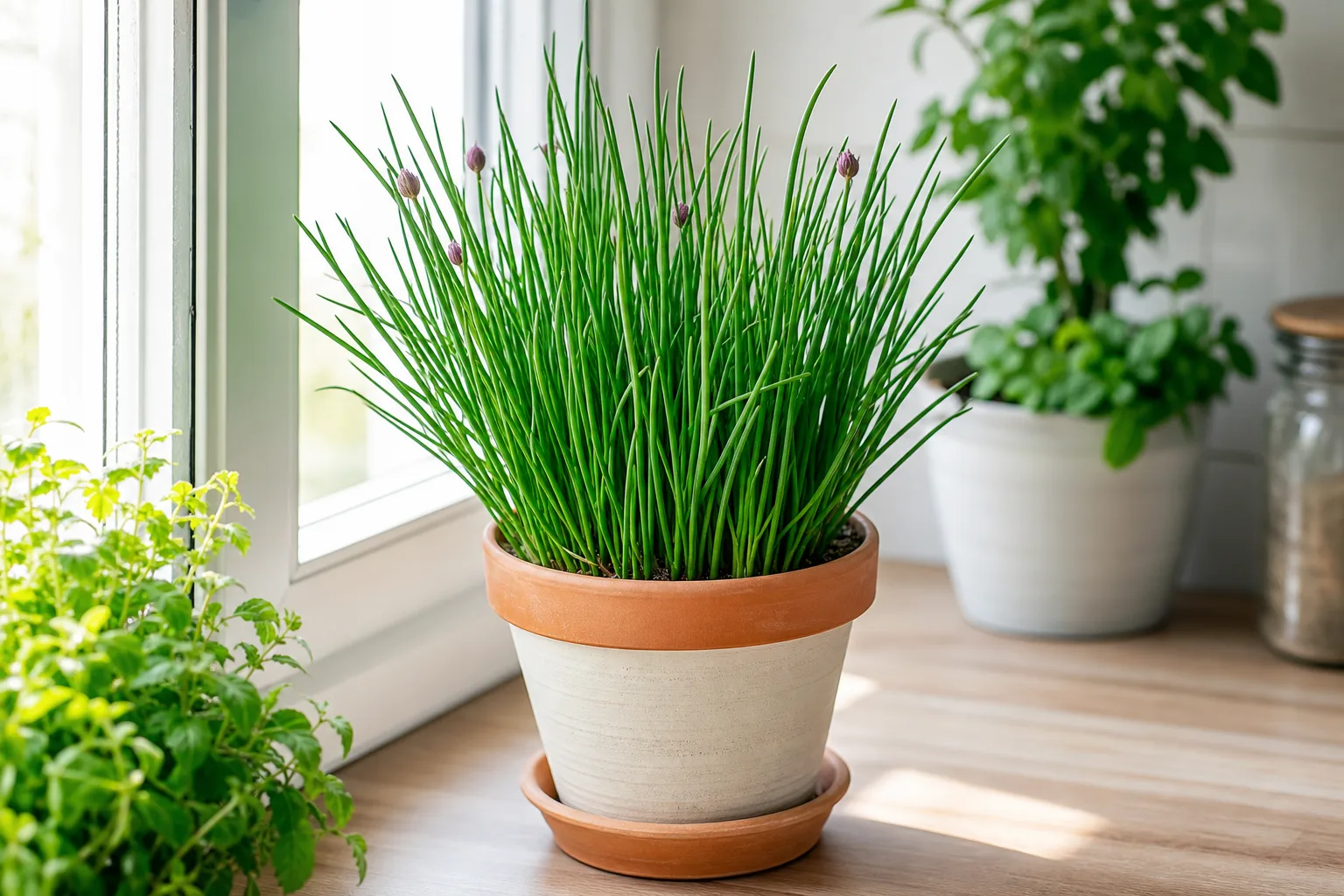
Alliums are frequently described as repelling slugs and aphids by smell. Treat that as a possibility, not a control plan: scent does not form a protective barrier around berries, and a slug can still cross the bed. Do not plant so densely that you cannot inspect the strawberry leaves or harvest fruit cleanly. For a small patch, one chive clump near an end is more manageable than a full row of permanent bulbs.
Spinach: an early crop with a clear exit date
Spinach is another cool-season crop that can share open soil in spring. It grows low, matures before summer heat in many regions, and can be removed as the strawberry canopy expands. Set it along the outside of the row rather than between every plant, then use the harvest date as a decision point: if the leaves touch strawberry foliage, hold moisture against the crown, or make ripe berries hard to find, clear the spinach.
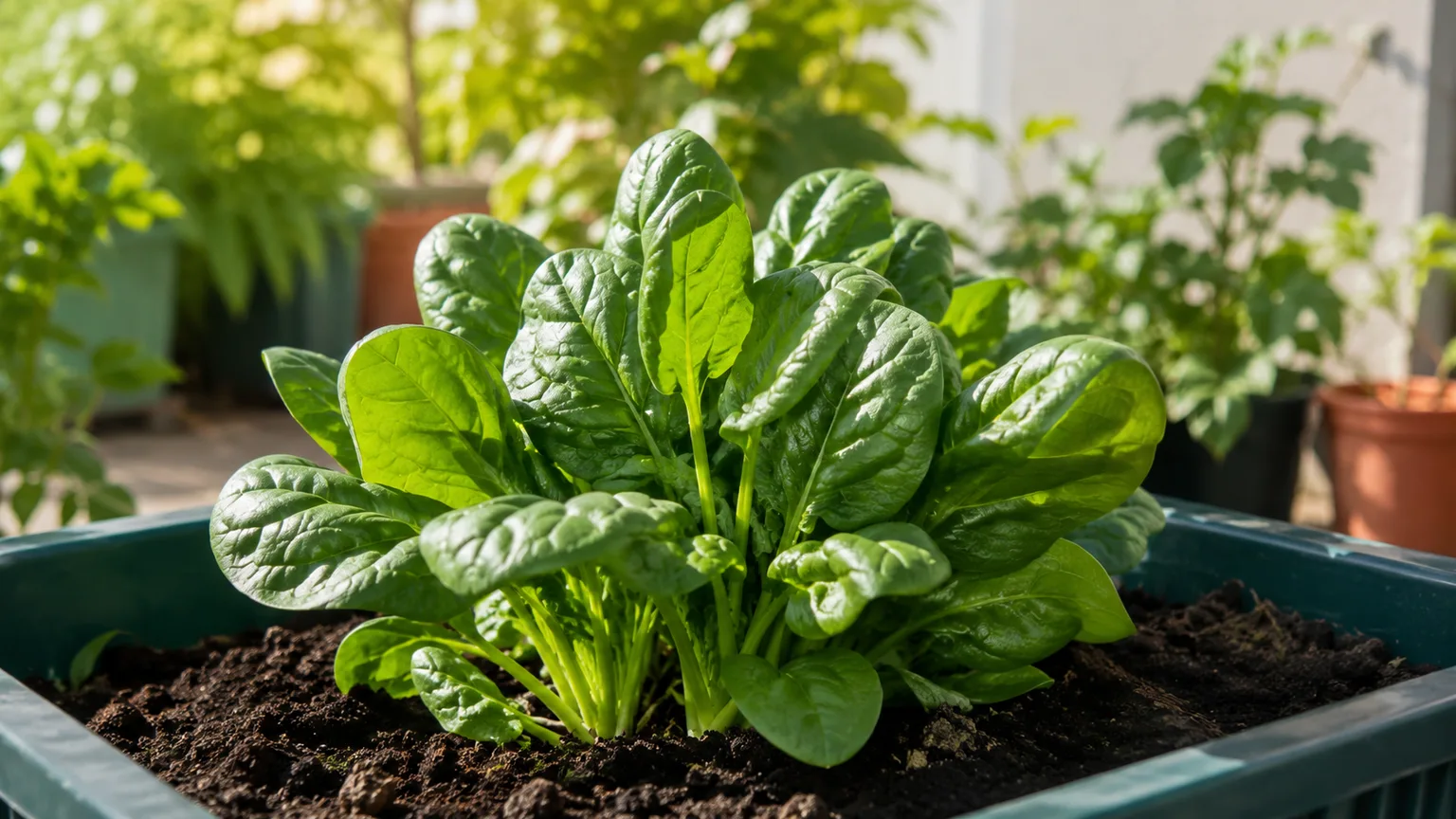
A temporary crop is different from a permanent groundcover. Strawberries already send runners to make daughter plants; spinach that is left to bolt or crowd those runners makes bed renewal harder. Sow only as much as you can harvest, and leave bare access for weeding and picking. This pairing is especially useful in a newly planted bed, when rows still have open soil, and less useful once a mature matted row has filled its allotted space.
Asparagus: a perennial neighbor that needs its own row
Asparagus and strawberries are both perennial edibles, so they can occupy neighboring parts of a garden for years. That does not make them ideal candidates for sharing one narrow bed. Asparagus spears are harvested in spring, then the plants grow tall fern-like foliage for the rest of the season; that foliage can shade strawberries, while runners can make it difficult to reach and maintain either crop.
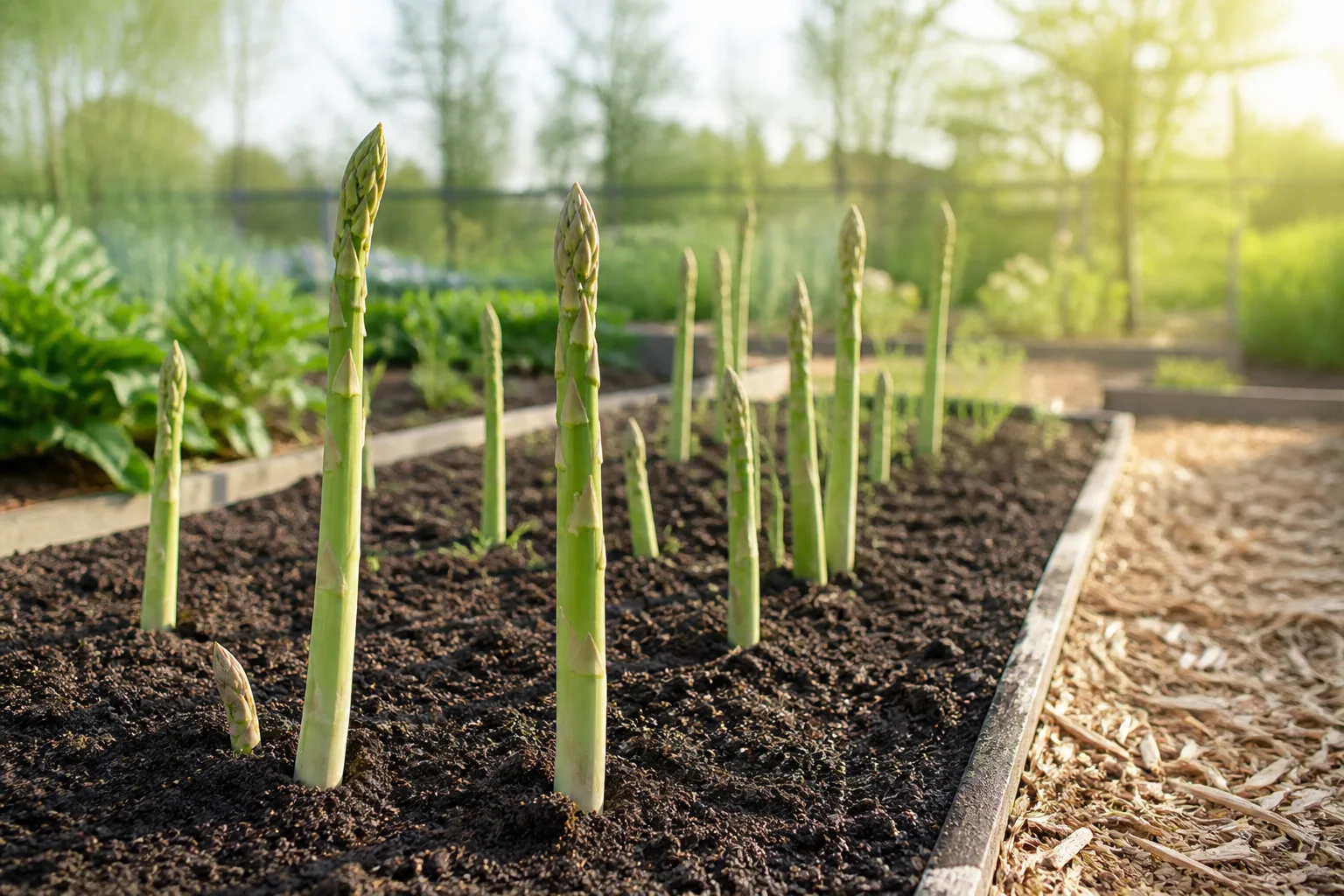
If you want both crops, give the asparagus its own row or bed edge where mature foliage will not fall over the strawberries. Keep a clear walkway between them so you can cut spears without stepping on strawberry crowns. Their similar perennial timelines are convenient, but the harvest and canopy habits are different. In a compact raised bed, a nearby asparagus bed is usually a better neighbor than mixed planting.
Dill: useful when it flowers, easier at a bed end
Dill’s fine leaves take little room while young, but the plant becomes taller and broader as it flowers. Its umbrella-shaped flower heads can attract small beneficial insects, including hoverflies whose larvae feed on aphids. Dill therefore makes the most sense at a strawberry bed’s outer end, where its flowers are visible to insects but the mature stems cannot lean over the berry row.
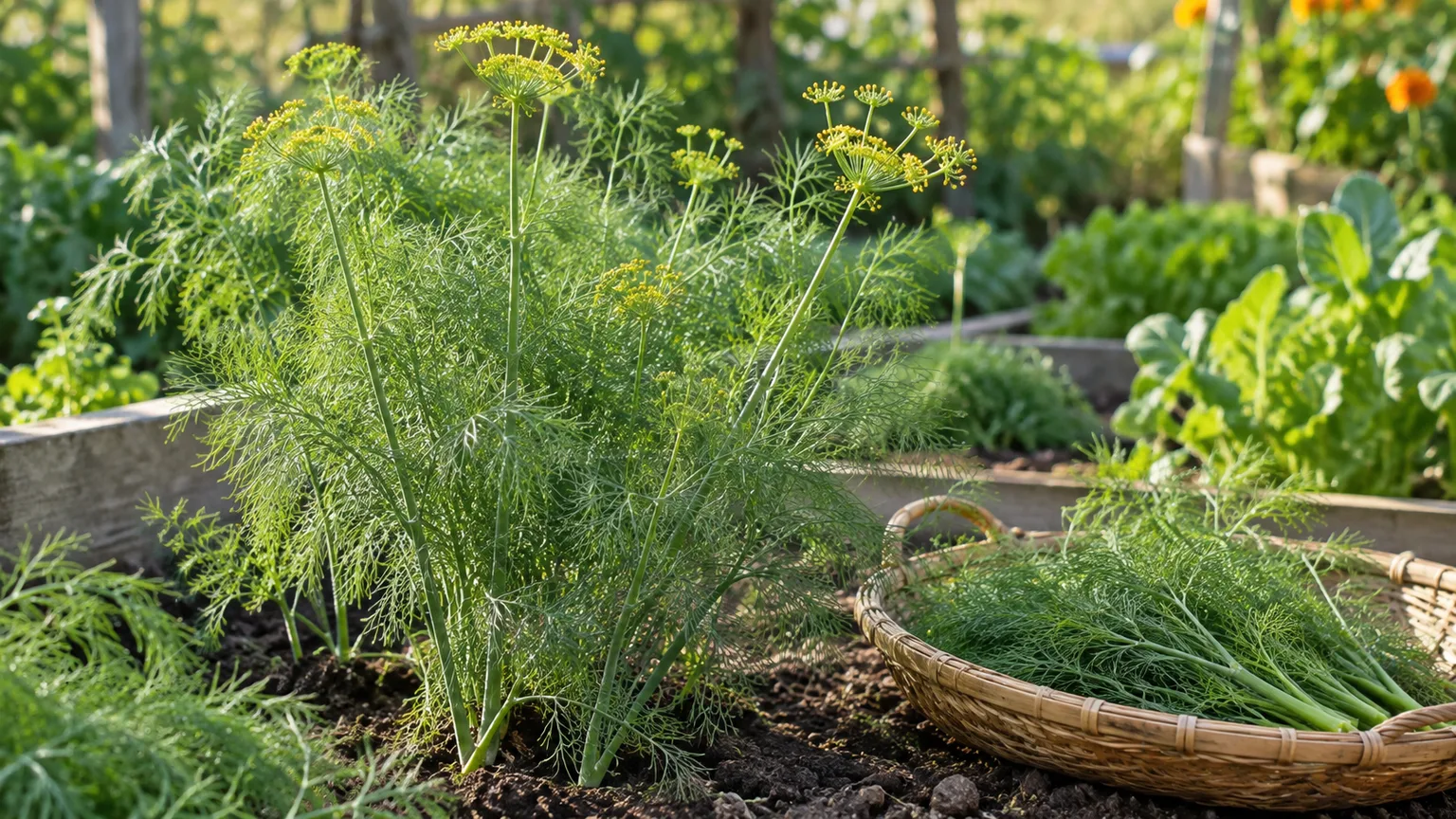
You can sow a small succession rather than keeping a large dill stand beside the strawberries all season. Let one or two plants flower, then remove them if they self-seed or start shading nearby leaves. If you grow dill primarily for foliage, harvest leaves before flowering and do not expect a strong beneficial-insect effect from a plant that never blooms. Flower timing matters more than the word “companion.”
Sage: a dry-side border plant
Culinary sage is a woody perennial that prefers a sunny position and soil that drains freely. That can be a poor match for a strawberry crown in a bed kept evenly moist, particularly in a heavy or humid climate. Sage is more useful as a nearby border plant or in a separate pot where its mature size and drier watering rhythm do not interfere with strawberries.
Allowing sage to bloom can add flowers for visiting insects, but its aromatic leaves do not guarantee that insects will leave strawberries alone. The useful design feature is its persistent, upright shape: it can mark the sunny edge of a mixed edible bed while the strawberry row remains open. Trim it so it does not cast afternoon shade over fruiting plants, and avoid planting it where frequent strawberry irrigation keeps the sage’s root zone wet.
Borage: the best-supported pollinator pairing, with caveats
Borage has the strongest strawberry-specific companion evidence in this list. The 2020 field study in Ecological Entomology reported more fruits and greater total fruit weight when strawberries grew with borage, with researchers linking the result to increased insect pollination. It is a better-supported reason to try borage than the broad claim that its scent drives away pests. Still, a study average is not a forecast for a home bed; weather, cultivar, pollinator activity, soil, and spacing all change the outcome.
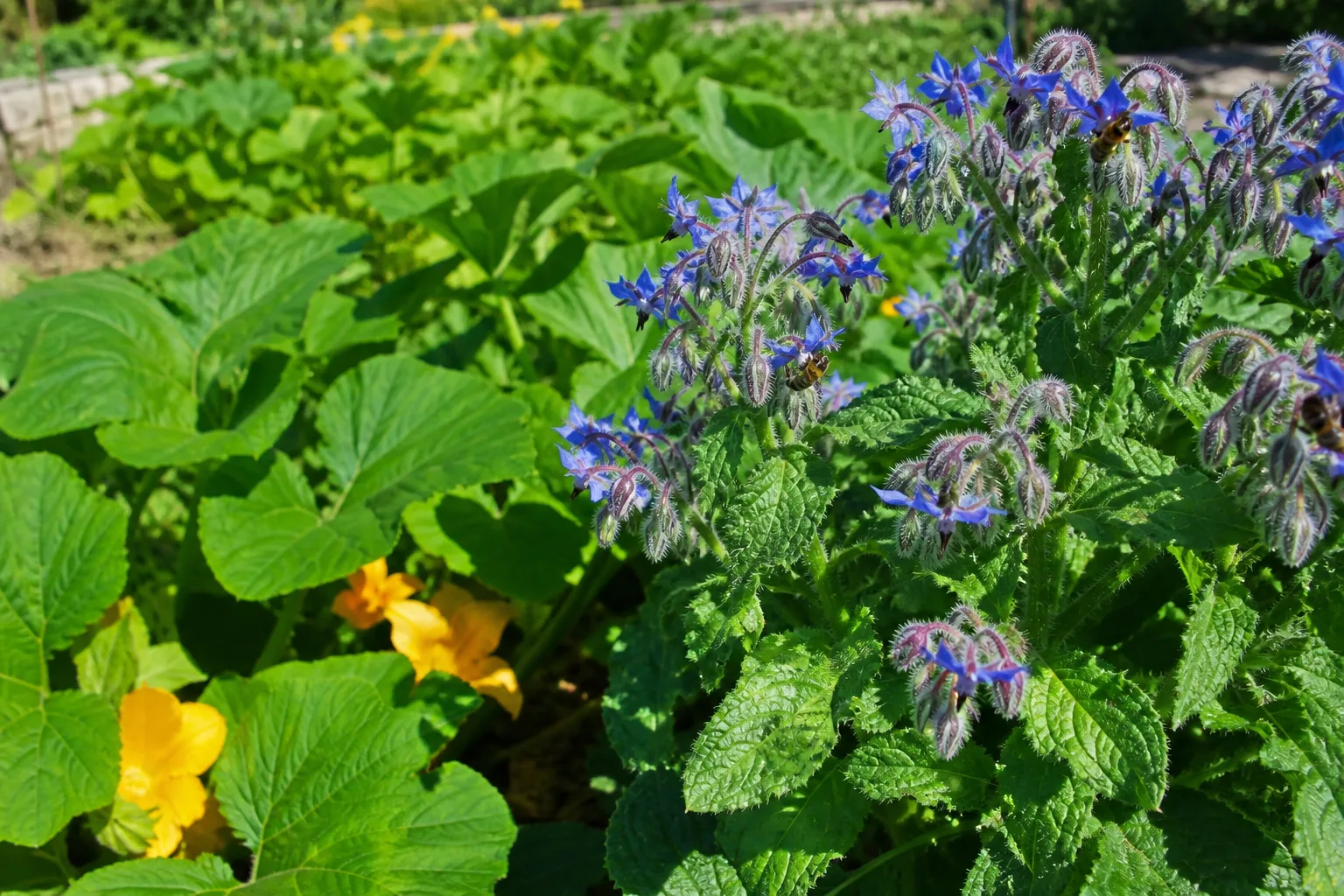
The plant itself is broad and can crowd low-growing strawberries, so place it at a bed corner, row end, or in a separate nearby pot rather than among crowns. GrowVeg’s practical borage guide also notes that it can take up substantial space and self-seed heavily, so remove unwanted seedlings while they are small. The useful arrangement is close enough for flowers and pollinators to overlap, with enough separation that strawberry leaves still receive sun and dry after rain.
Thyme: a low flowering edge for a sunny, dry margin
Thyme stays compact compared with borage or dill, and a flowering clump can work along the sunny outside of a strawberry bed or around the rim of a large container. It provides a defined edge and flowers for insects without creating a tall canopy. Use upright culinary thyme if you want to pick sprigs; creeping forms can spread into a path or strawberry row if they are not trimmed.
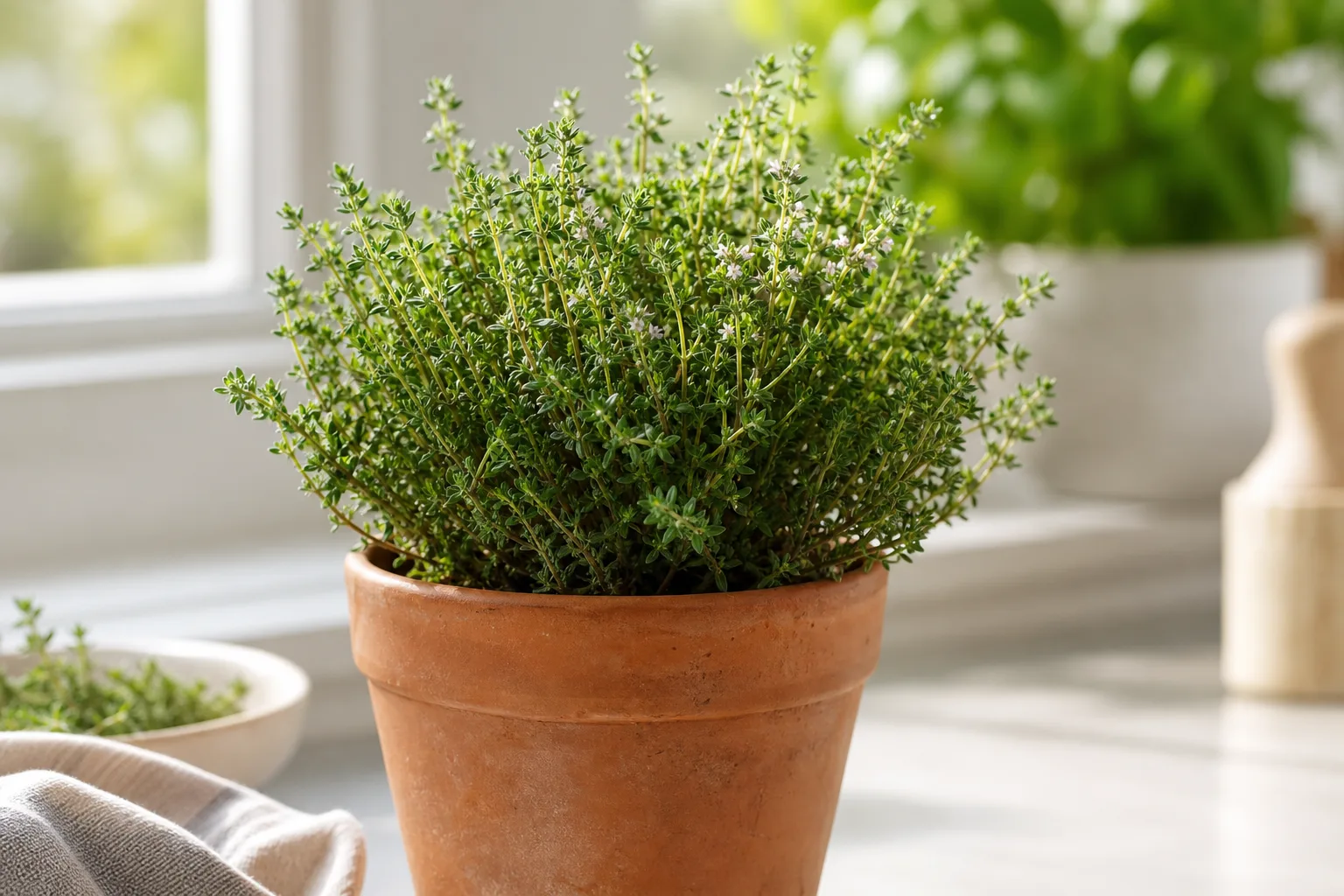
Thyme generally wants sharper drainage than strawberries, so the pair may need distinct watering zones. Do not mound soil or mulch over strawberry crowns to accommodate the herb, and do not let a thyme mat close over fruit or runners. If the bed stays wet, grow thyme in a nearby pot instead. Claims that thyme’s smell keeps pests away are much less useful than its low form, flowers, and easy-to-control edge placement.
Catnip: keep it contained and judge results locally
Catnip is a flowering herb with aromatic foliage, but it can become a sprawling perennial and self-seed. Some gardeners plant it for the volatile compounds in its leaves, which have been studied for insect-repellent effects; that is not the same as proof that catnip protects a strawberry patch outdoors. Use it only if you have a reason to grow it, and keep it in a pot or a controlled border rather than letting it occupy runner space.
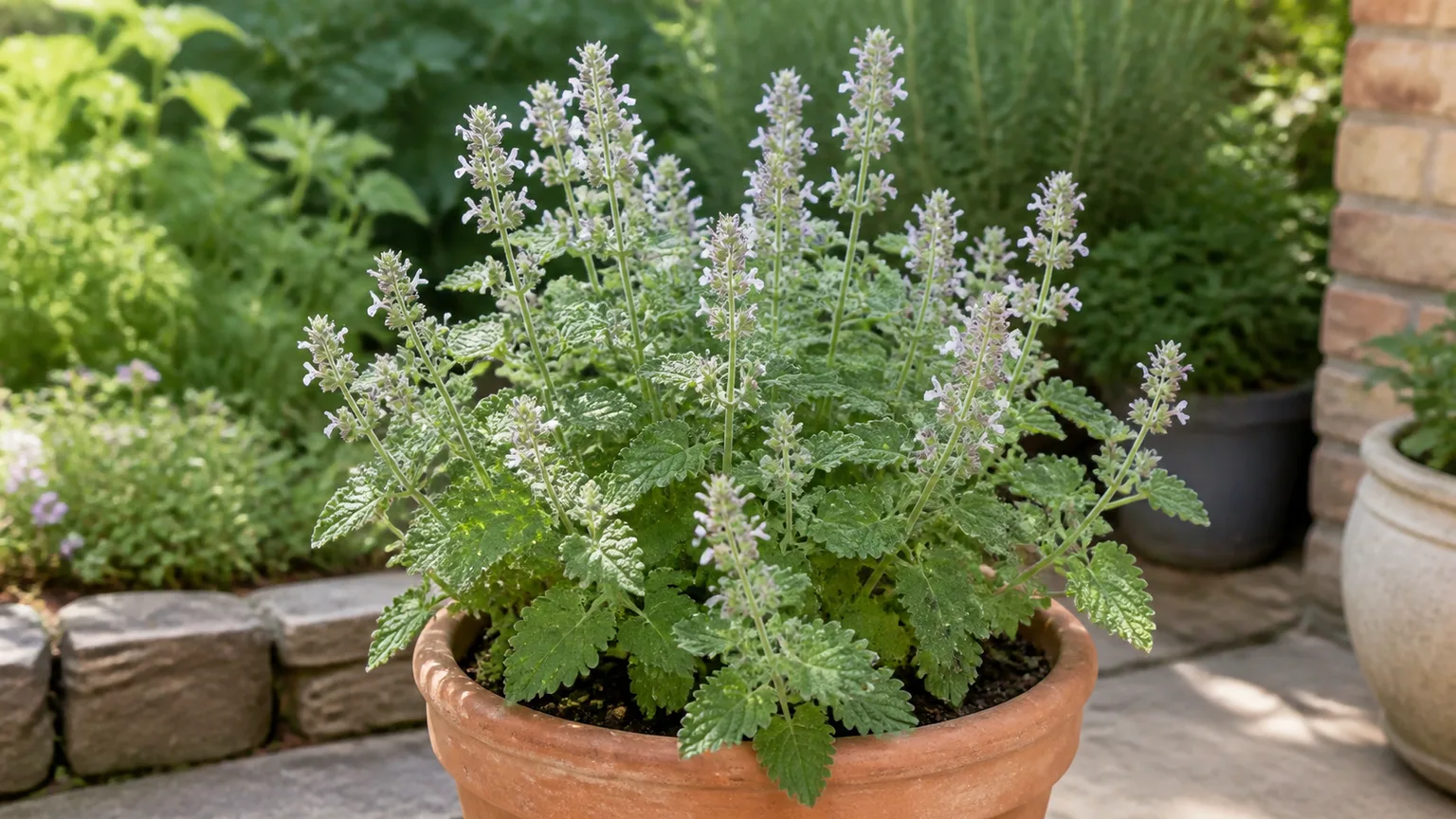
A container also makes it easier to manage the plant if neighborhood cats are attracted to it. Put the pot near the bed, not in the middle of the strawberry row, and watch whether it changes pest pressure in your own garden. If you see no practical benefit, move it; the strawberry plants need reliable air movement and easy picking more than they need a scented neighbor. Catnip should never replace inspection or a targeted response to a confirmed pest.
Yarrow: insect habitat that belongs outside the crowns
Yarrow produces flat flower clusters that can draw a range of small insects, and its fern-like foliage offers a different texture from strawberry leaves. It is a perennial, however, and some varieties spread by rhizomes or self-seeding. Put it in a separate pollinator strip, at the end of a wide bed, or beside a path where it can flower without filling the berry row.
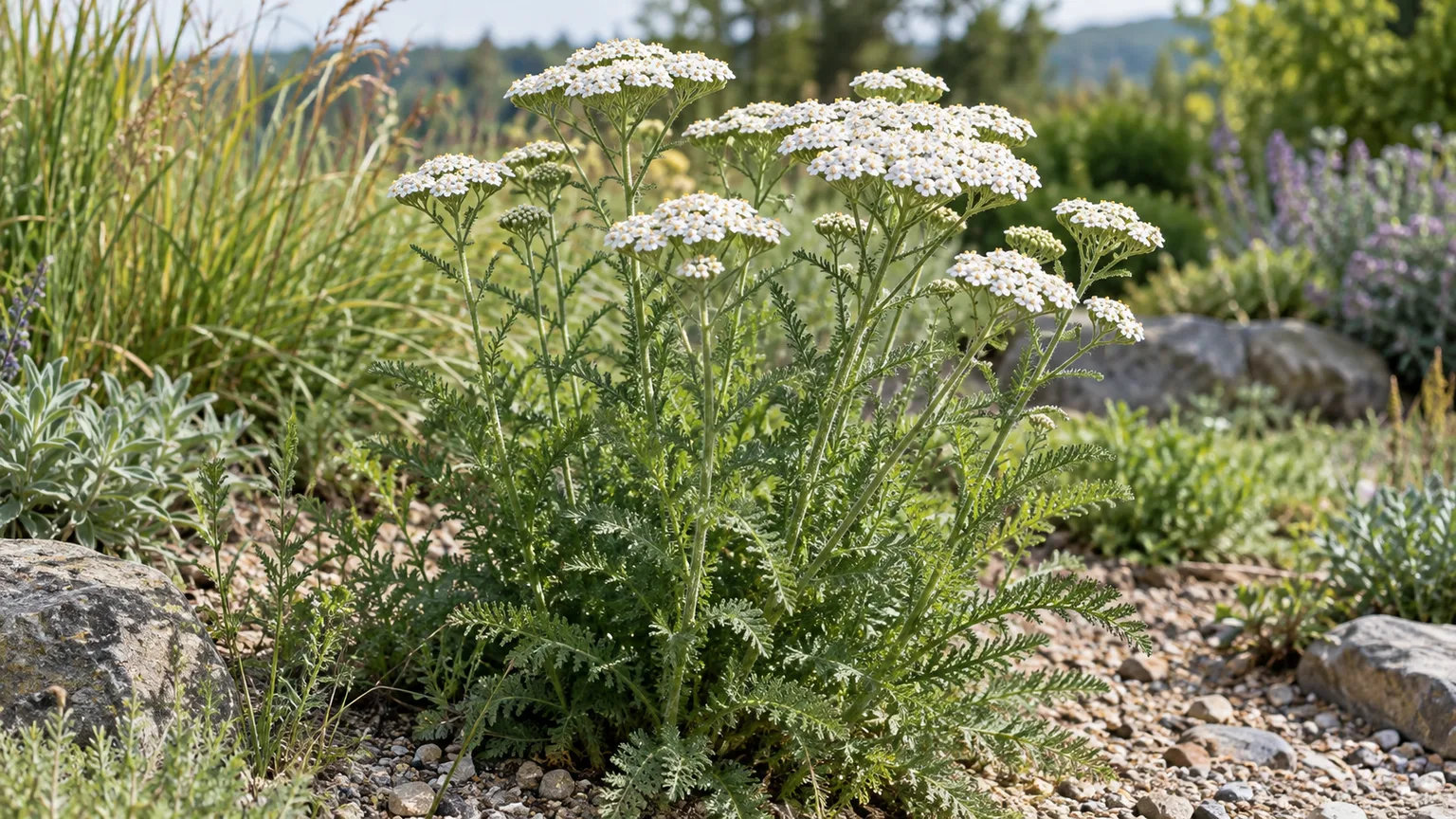
The goal is to add flowering habitat nearby, not to make the strawberry patch so dense that ripe berries stay hidden or leaves remain damp. A nearby yarrow plant may support beneficial insects, but it cannot guarantee fewer strawberry pests. Choose a compact cultivar for a small garden, remove flower heads before seed dispersal if volunteers would be a problem, and leave enough access to cut old strawberry leaves and runners after harvest.
Marigolds: bloom first; pest claims need a narrower reading
Marigolds are easy annual flowers for the sunny edge of a bed, and a flowering border can diversify the resources available to visiting insects. They are not a universal insect repellent. Different Tagetes species and cultivars vary, and a marigold planted as a decorative neighbor is not the same thing as a dense, deliberately managed cover crop aimed at a particular nematode.
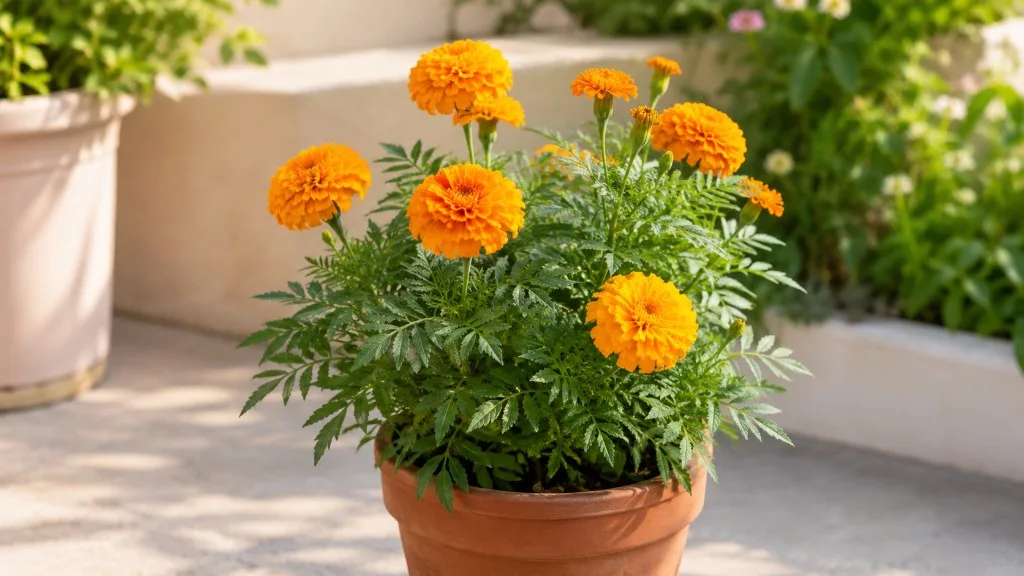
Use compact French marigolds where they will not cover strawberry leaves or block a picking path. If you are planting them for color, judge success by the flowers and the manageable footprint. If you are trying to solve a nematode problem, first identify the pest and follow local extension guidance on species, duration, and planting density; a few marigolds beside strawberries are not a reliable treatment. Avoid claims that their scent will keep deer, rabbits, slugs, or every insect away.
Plants to keep out of a strawberry bed
A plant can be a poor neighbor because it shares a damaging soilborne pathogen, or simply because it takes the sun and space strawberries need. Keep those reasons separate: the first affects where you plant over multiple seasons, while the second is a layout problem you can often solve with a different bed, border, or container.
Avoid disease-prone hosts when Verticillium is a concern
Tomatoes, potatoes, eggplant, and peppers are all hosts associated with Verticillium wilt, a persistent soilborne disease that also affects strawberries. Penn State Extension advises against establishing a new strawberry bed after these crops and recommends a three-to-five-year rotation; UConn Extension also lists strawberries alongside these solanaceous hosts. The important risk is a shared soil history and pathogen, not a mysterious reaction that occurs whenever a tomato leaf touches a strawberry leaf.
Where Verticillium has been confirmed or the garden has a history of wilt, avoid rotating these crops through the same soil and consult local extension advice about susceptible crops and an appropriate nonhost rotation. UC’s strawberry IPM guidance emphasizes that the fungus has a broad host range and identifies lettuce as a possible contributor to inoculum, so even a familiar cool-season companion may need reconsideration on a problem site. A general “bad neighbors” list cannot diagnose contaminated soil or replace crop rotation.
Keep shade-makers and aggressive spreaders at a distance
Mint is a poor in-bed choice because it spreads rapidly and is difficult to remove without disturbing strawberry crowns and shallow surface roots. Grow it in a container if you want the herb nearby. Large squash and melon vines, tall corn, and vigorous indeterminate tomatoes can smother or shade strawberries even when disease is not a concern; give them a separate area where you can manage their canopy.
Do not treat every plant family as inherently incompatible. A brassica crop, for example, is not automatically a strawberry enemy simply because a companion chart says the two stunt each other. What matters is whether the chosen crop shades the berries, competes for irrigation, blocks picking, or creates an actual pest or disease problem in your region. When a claim sounds categorical, look for the named organism or mechanism before giving up bed space.
A simple layout for beds and containers
Start with the strawberries, not the companions. Give them the sun and spacing required by their cultivar and growing system, keep each crown visible at the soil surface, and maintain an open picking path. A June-bearing cultivar that sends many runners needs more room to make daughter plants than a compact alpine strawberry. Day-neutral plants that flower over a longer season benefit from clear access to blossoms and berries throughout the summer.
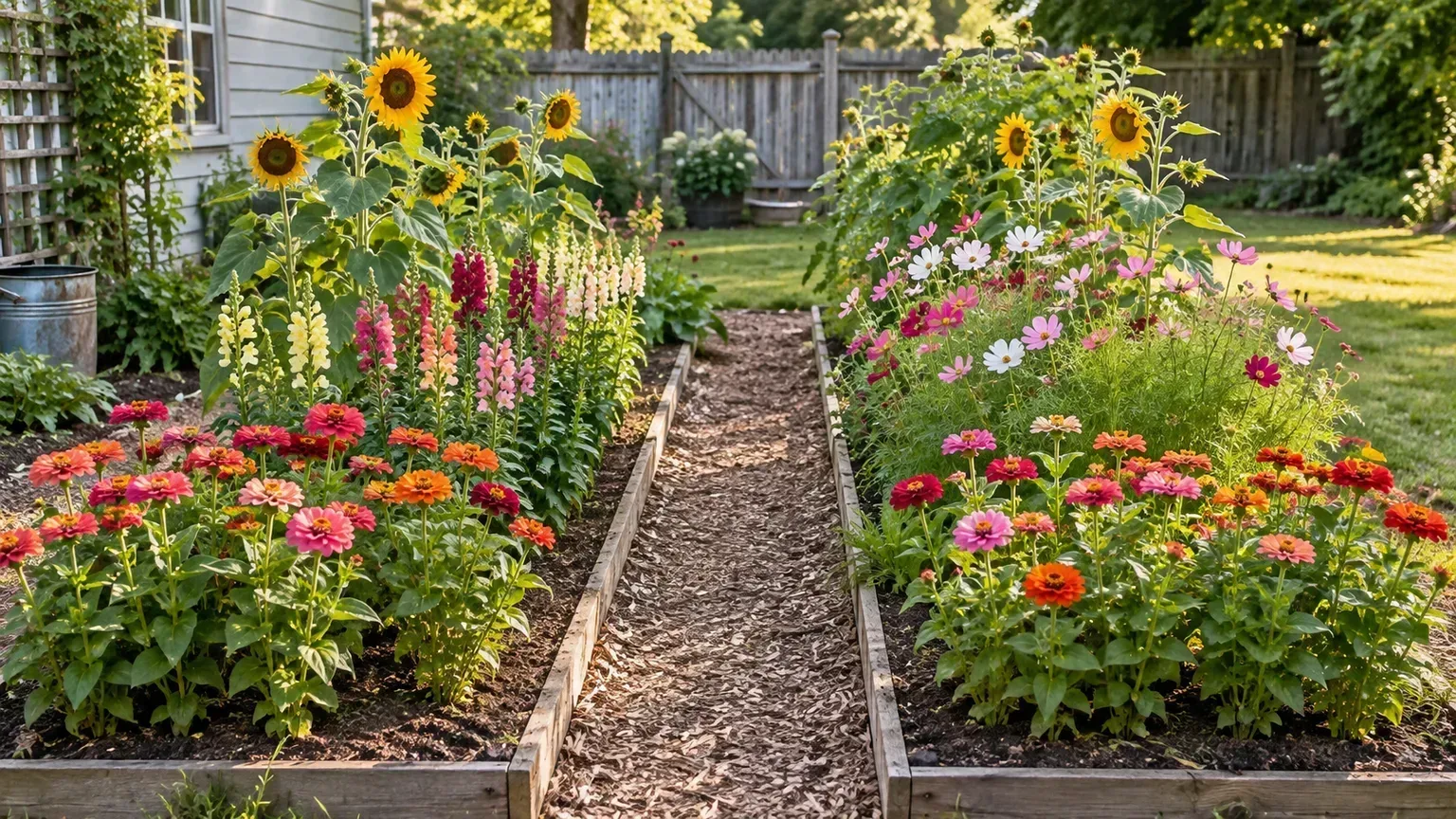
For an in-ground bed, put one or two permanent herbs or flowers at the ends, then use lettuce or spinach as temporary spring crops only while the rows are open. Set borage, dill, yarrow, and taller flowers beyond the strawberry canopy rather than between plants. If pollination is your goal, overlap bloom periods: a flower that opens only after the strawberries finish flowering cannot help with that season’s fruit set. Leave paths wide enough to pick berries without stepping on crowns or brushing wet leaves.
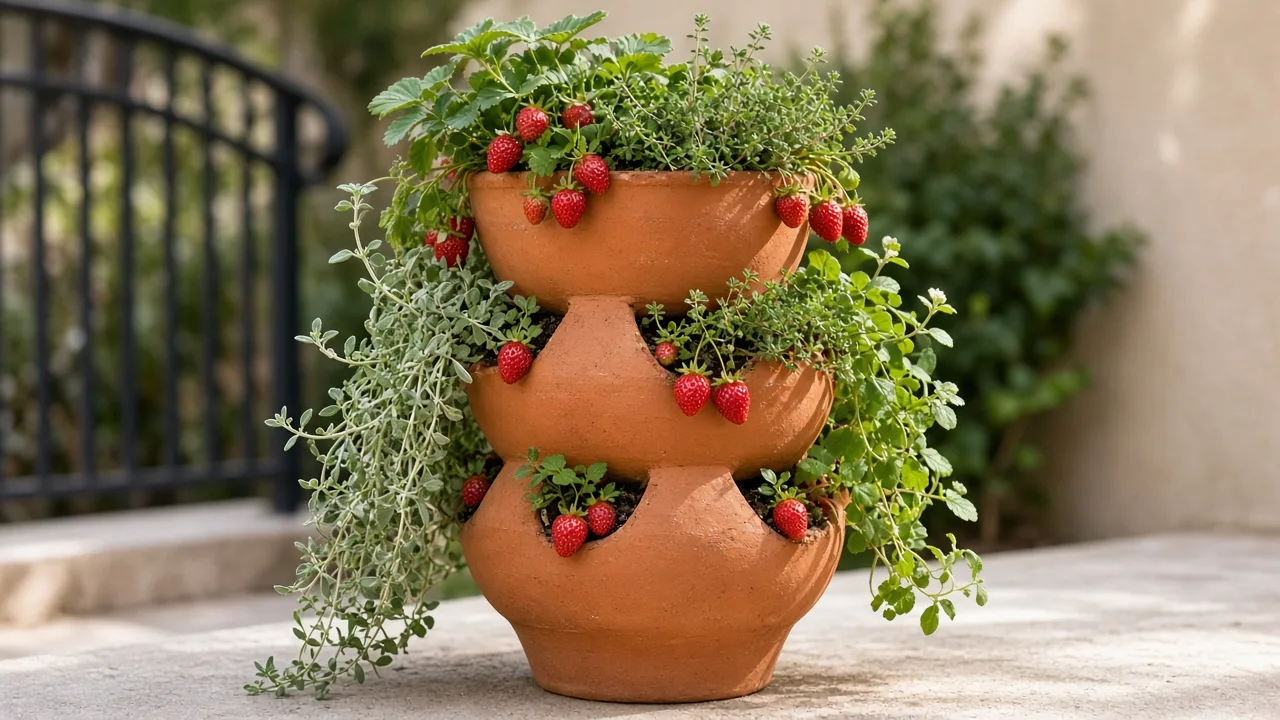
For containers, root volume and drying rate become the main limits. Chives or a small thyme plant can fit around a large container’s rim, but borage, yarrow, asparagus, and mint are too large or persistent for most strawberry pots. Lovely Greens’ strawberry-pot guidance emphasizes sunlight, water, compost, and protection from soil loss; companions should not make those basics harder to maintain. Check moisture in each pocket rather than assuming one watering reaches every plant, and remove companions that begin to shade fruit or dry out the container too quickly.
A small trial will tell you more than a universal chart. Leave one short section of the bed without a flower companion, put borage or another pollinator plant at an end, and compare fruit shape, harvest, and visible insect visits during the same flowering period. Keep notes for one season, including weather and cultivar. If the companion makes harvesting awkward or the strawberries perform worse, move it; the purpose is a more productive, manageable bed, not to keep a pairing simply because it appears on a list.
Conclusion
The best strawberry companions are the ones that fit the way your bed works. Lettuce and spinach can make use of open spring soil; chives and thyme offer manageable edges; flowering plants such as borage, dill, yarrow, and marigolds can add pollinator resources when placed where they will not shade berries. Borage has the clearest strawberry-specific evidence here, but even that result should be treated as a trial to test, not a promise.
Keep tomatoes, potatoes, peppers, and eggplant out of a strawberry rotation where Verticillium is a concern, contain mint, and give tall or spreading crops their own space. Protect the basics first: sun, an exposed crown, consistent moisture, airflow, and room to pick. A few well-placed companions can support those conditions; a crowded bed cannot.