How Often Should You Water a Peace Lily? A Care Guide
Learn how often to water a peace lily, how much to give, and how to check soil, pot weight, and leaf cues to avoid drought stress or soggy roots at home.
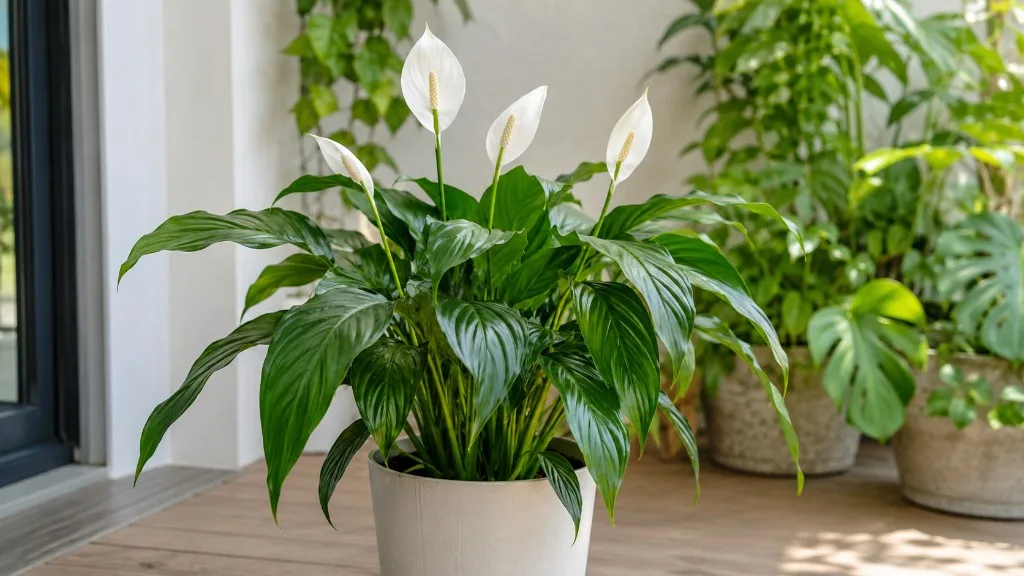
For a potted peace lily, water when the top inch or two of potting mix has dried slightly, while the deeper root zone still feels faintly moist. Then water slowly until the whole root ball is wet and excess drains from the bottom. In many homes that means checking about once a week, but the plant’s light, season, pot, and mix decide when it actually needs water. The useful habit is a regular check, not watering automatically on the same weekday.
The quick rule: water by soil condition
Peace lilies like steady moisture, not permanently wet soil. North Carolina State Extension advises keeping the mix moist but not soggy and allowing it to dry between waterings; the Royal Horticultural Society recommends watering during active growth after the top few centimeters of compost have become dry. Together, those directions point to a practical middle ground: let the surface lose its damp sheen, but do not leave the entire root ball parched for days. (NC State Extension; RHS)
You do not need to keep the soil wet to the touch all the time, and you do not need to wait for the leaves to collapse before watering. Check the mix first; if the upper layer is dry and the root ball is beginning to feel lighter, water thoroughly. If the mix is still cool and damp, wait and check again in a day or two, even if a leaf looks a little limp.
Build a watering frequency from your conditions
Think of frequency as the result of how quickly the pot loses water. In a bright, warm room, the plant and the potting mix usually use or lose moisture faster than they do in a cool, dim corner. A small pot, a pot crowded with roots, or a porous terracotta container also tends to dry sooner than a large plastic nursery pot filled with fresh, moisture-retentive mix.
As a starting routine, inspect the soil once a week and note how it feels. If it is still evenly damp every time you check, lengthen the interval between checks; if it is already dry near the surface after only a few days, check more often. This is more reliable than trying to translate “once a week” into a rule for every home. Fine Gardening’s peace lily care guidance similarly uses the soil’s upper few inches as the cue, rather than naming a guaranteed number of days. (Fine Gardening)
Expect a seasonal shift
In spring and summer, longer days and active leaf growth can make the mix dry faster, so your peace lily may need water more often. In fall and winter, indoor light is usually weaker and growth slows; the same plant may take longer to reach the “slightly dry” point. The RHS recommends reducing watering slightly in winter, while still using compost condition to decide when to water. (RHS)
Do not switch to a strict winter interval if the plant is in a heated room or under strong grow lights. Heating can dry the air and warm the root zone, while a cold windowsill can slow water use. Keep checking the soil and adjust to what the pot does in that location.
Account for light, temperature, and pot type
Light influences water use indirectly as well as directly: brighter conditions support more growth and transpiration, while deep shade tends to slow growth and lengthen the time between waterings. Warmth speeds drying; cool conditions slow it. A fan, heat vent, or very dry room may also change how quickly the plant loses moisture, even though a dry leaf edge by itself does not prove that the soil needs water.
Container details matter. Terracotta pulls moisture toward its porous sides and dries faster; plastic and glazed ceramic hold it longer. A nursery pot inside a decorative cachepot can hide runoff, so lift it out to water and drain it rather than allowing water to collect unseen at the bottom.
Check the soil before reaching for water
Use two checks together: soil feel and pot weight. The upper surface can look pale and dry while the lower mix remains wet, especially in a deep container. Conversely, a dry crust can hide a root ball that has become water-repellent and is no longer absorbing a quick pour evenly.
Start by checking near the outer edge of the plant, where you can reach the soil without damaging the crown or roots. If the mix is dry about an inch below the surface but still has a trace of coolness deeper down, it is generally a good time to water. If it feels damp and clings to your finger, wait; avoid repeatedly probing the same place and compacting the mix.
Use your finger or a wooden skewer
Push a clean finger into the potting mix about an inch, or use a plain wooden skewer if the pot is too small or the soil surface is hard to reach. A skewer that comes out dark, cool, or with damp mix attached means there is still moisture below the surface. If it comes out nearly clean and the upper layer feels dry, check the pot’s weight and water if it has become noticeably light.
The target is not a bone-dry root ball. Peace lily guidance varies slightly in how deep to let the surface dry: some sources use about an inch, while the RHS says the top few centimeters. That difference reflects pot and mix conditions, so use the depth as a cue, not a laboratory threshold. In a shallow nursery pot, a dry upper inch may represent much of the root zone; in a tall pot, it may not.
Learn the pot-weight baseline
After a thorough watering and full drainage, lift the pot or gently tip it enough to learn its “wet” weight. Check it again as the mix dries. A pot that feels markedly lighter, combined with a dry upper layer, gives you a useful signal that a finger test alone can miss.
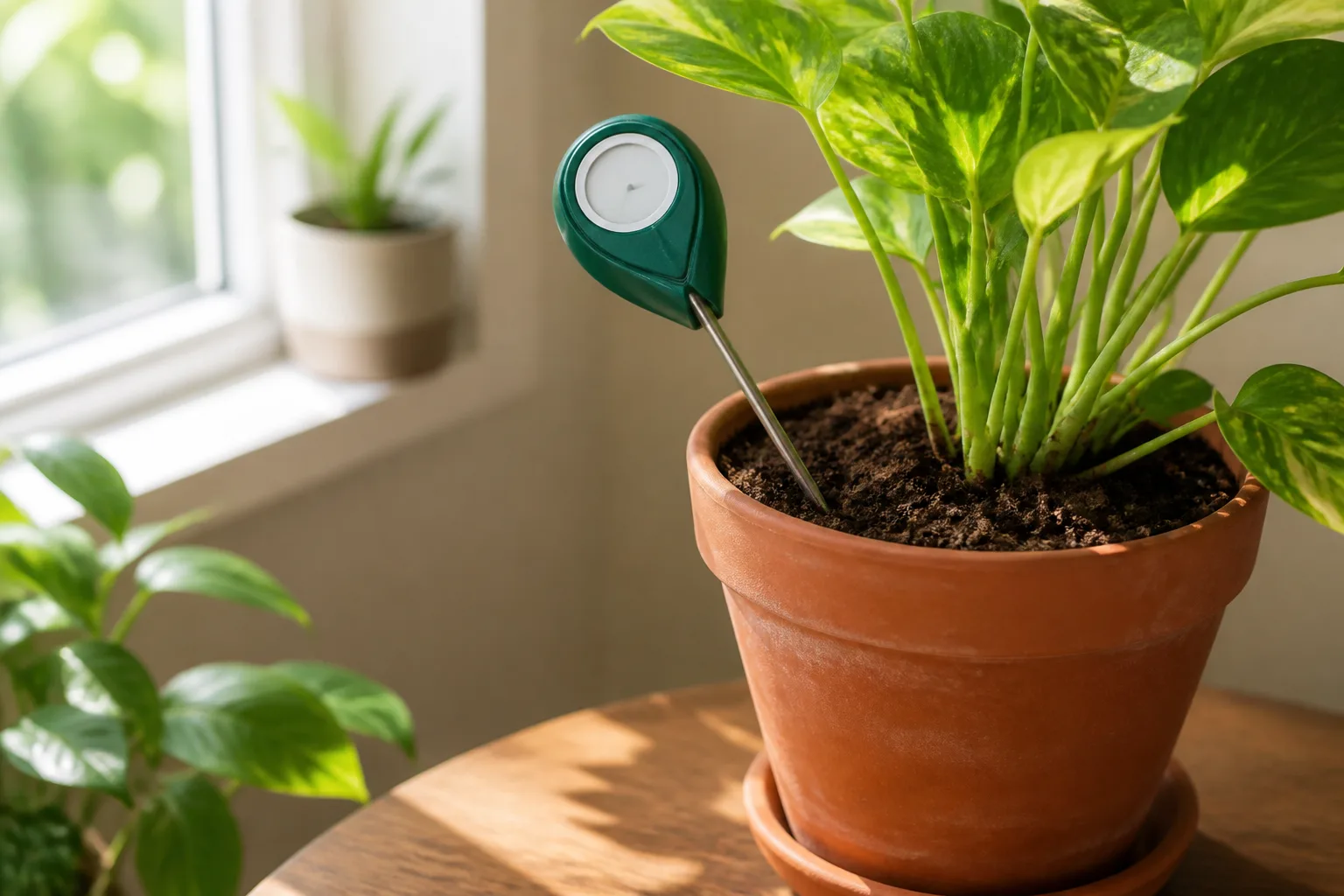
This method becomes especially helpful for large peace lilies where a finger cannot reach far into the root zone. A moisture meter can supplement the check, but it is not a verdict: readings vary with probe placement, soil density, salts, and meter quality. Take readings in more than one spot and compare the trend from the same pot rather than treating a particular number as a universal watering threshold.
How much water to give a peace lily
Give enough water to moisten the full root ball, not just the top crust. For most pots with drainage holes, pour slowly over the soil surface until water begins to leave the drainage holes, then allow the pot to finish draining. This runoff is a practical sign that water moved through the container; it is more useful than a fixed number of cups because pot sizes, root volume, and mixes differ.
If water immediately races through while the center stays dry, pause for a few minutes and water again in a slower pass. Very dry peat-based mix can pull away from the pot wall or resist rewetting, so one fast pour may run down the gap and out without soaking the roots. Once the root ball is evenly damp, stop and empty the saucer; the goal is a hydrated mix with air pockets, not a plant standing in runoff.
There is no benefit to giving tiny splashes every day to keep only the surface dark. Frequent shallow watering can leave lower roots dry, while the top remains continuously wet and attractive to fungus gnats. A full, slow watering followed by a measured dry-down gives the plant moisture and gives the root zone time to regain air.
Top-water or bottom-water?
Top-watering is the simplest default because it wets the mix from above and produces runoff you can see. Pour around the soil rather than onto the plant’s central crown, pause if the mix is very dry, and continue until water drains. Do not let that water remain in an outer pot or saucer. NC State Extension notes that bottom watering also works well for peace lilies, so it is a useful option rather than a requirement. (NC State Extension)
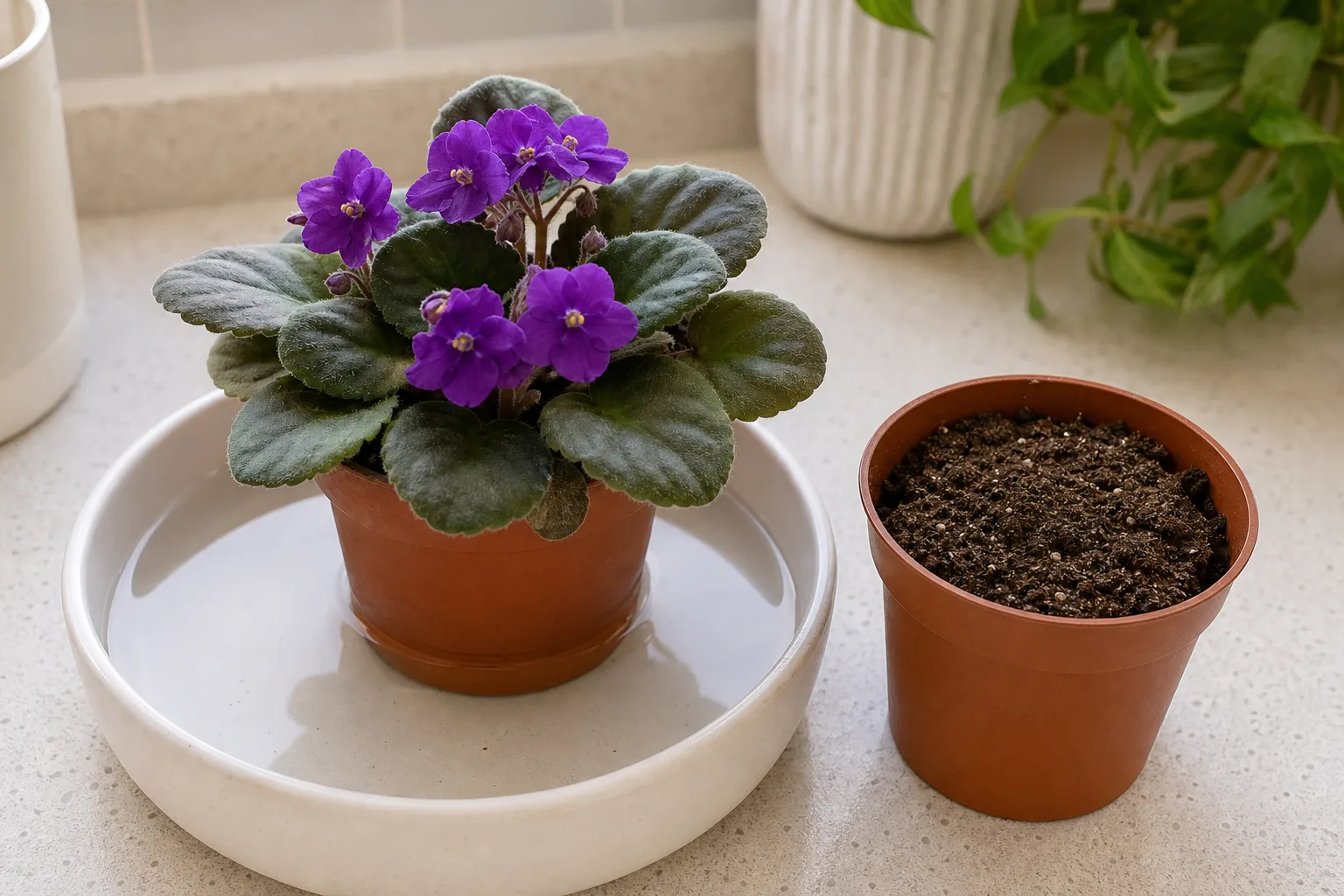
Bottom-water when the mix has become so dry that top water runs down the sides, or when the foliage is dense enough to make watering the soil awkward. Set the pot with open drainage holes in a shallow tray of water and let the mix wick moisture upward. Check after about 10 to 15 minutes; once the surface feels slightly damp, lift the pot and let it drain fully. If the soil remains dry, add a little time, then drain it again rather than leaving the plant in water for hours.
Bottom watering is not a cure for poor drainage or chronically wet soil. It also does not wash accumulated fertilizer salts from the mix as effectively as occasional top watering with runoff can. LivelyRoot’s peace lily watering guidance likewise recommends removing excess tray water once the soil has absorbed enough moisture. Alternate methods if needed, but always remove standing water and let the soil reach its next slight dry-down before repeating. (LivelyRoot)
Choose water without chasing myths
Room-temperature water is a comfortable default; there is no need to heat it or leave it standing as a ritual. Rainwater is a good option when it is clean and safely collected. The RHS notes that fluoride in tap water can damage peace lily foliage and recommends rainwater or filtered water when possible. (RHS)
That does not mean every brown tip is caused by tap water. NC State lists several possible causes, including excessive direct sun, underwatering, and low humidity; root damage and accumulated fertilizer salts can also create leaf-tip problems. (NC State Extension) If several new leaves develop similar tip burn despite steady soil moisture, adequate drainage, and indirect light, try rainwater or distilled water for a few weeks and compare new growth. Check what a household filter actually removes before relying on it for fluoride; not every pitcher or faucet filter is designed for that purpose.
Do not pour softened water from a household water softener onto a houseplant as a workaround. Many softeners exchange minerals for sodium, which can accumulate in potting mix. If rainwater is unavailable and tap water seems to be a consistent problem, use a known low-mineral source or distilled water, and flush the potting mix occasionally during a normal top-watering session.
What underwatering looks like
A thirsty peace lily often droops dramatically, and dry soil plus a light pot supports that diagnosis. Leaves may look limp, curl slightly, or develop dry brown edges if the root ball has been allowed to dry too far. A brief droop can be an early warning, but use the soil check to confirm before you water.
When the mix is dry, water slowly and thoroughly until the root ball is damp throughout and excess drains. If the soil has pulled away from the pot wall, use two or three small pours separated by a few minutes, or briefly bottom-water so the mix has time to absorb moisture. Keep the plant in its usual indirect light while it recovers; do not add fertilizer to a stressed, dehydrated root system.
After watering, leaves may regain firmness over the next several hours, though severe or repeated drought can leave some foliage permanently damaged. Trim only leaves that are fully yellow or brown, using clean scissors at the base. If the plant remains limp while the soil is wet, stop treating it as thirsty and move to the wet-soil diagnosis below.
When the leaves droop but the soil is damp
Drooping is a response to water stress, not proof of thirst. When roots are damaged by prolonged saturation, they cannot take up water effectively, so the leaves can wilt even though the pot is wet. Watering again because the plant looks thirsty can make that problem worse.
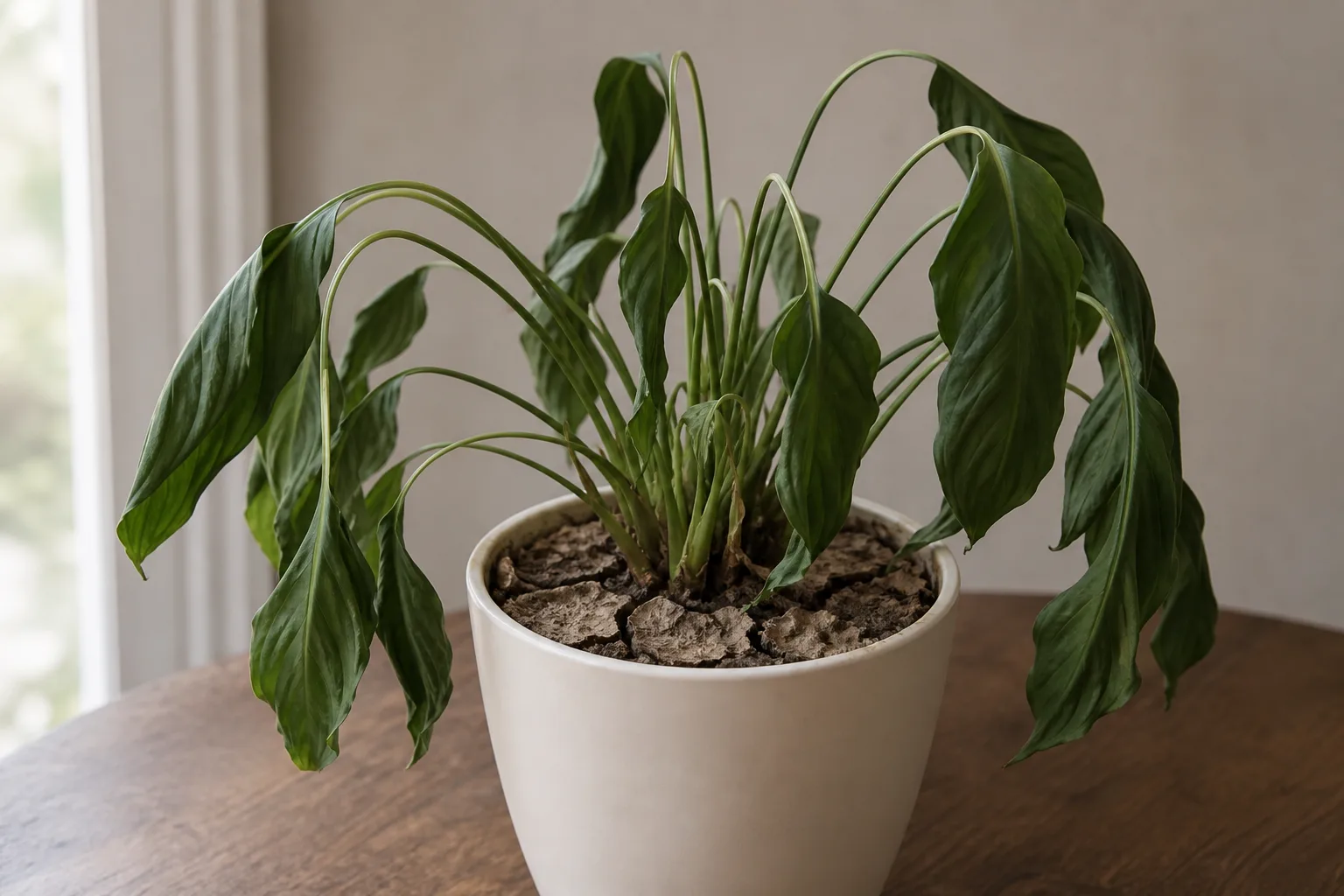
Use this quick triage before you act:
| Soil and pot condition | More likely explanation | First response |
|---|---|---|
| Dry upper layer, light pot, dry mix below | Underwatering | Water slowly until the root ball is evenly damp; drain the pot. |
| Damp or soggy mix, heavy pot, drooping leaves | Overwatering, poor drainage, or root stress | Do not add water; empty standing water and inspect drainage. |
| Dry surface but heavy pot or damp skewer | Moisture remains deeper in the container | Wait and check again instead of topping up. |
If the mix is damp, check the pot’s drainage holes and remove water from the saucer or cachepot. If the potting mix stays wet for many days and the plant continues to decline, examine the roots rather than increasing watering frequency. The RHS also cautions that compost kept too wet for long periods can lead to root rot. (RHS)
How overwatering harms the roots
Overwatering usually means watering too often or leaving the pot saturated, not simply using a generous amount once. Roots need oxygen as well as moisture. When fine pores in the mix stay waterlogged, air becomes scarce and roots can weaken or decay; damaged roots then absorb less water, creating the confusing combination of wet soil and wilted foliage.
Yellowing leaves can accompany excess moisture, but one older yellow leaf is not enough to diagnose root rot. Check whether the mix remains wet long after watering, whether the pot has open drainage, and whether the stems or roots feel soft. A persistent sour or musty smell is another reason to inspect, though absence of odor does not guarantee healthy roots.
If you find firm, pale roots, correct the drainage issue and let the mix dry slightly before watering again. If roots are dark, mushy, or hollow, trim the damaged parts with clean tools and repot into a clean container with drainage and fresh, airy houseplant mix. Do not put gravel at the bottom as a substitute for drainage holes; the water still needs an open way out of the pot.
Pot, soil, and drainage change the interval
The same watering routine behaves differently in different containers. A peace lily in a porous terracotta pot may need more frequent checks than one in plastic, while an oversized pot can hold wet mix around a comparatively small root system for too long. Choose a container only modestly larger than the root ball and make sure it has drainage holes; keep decorative outer pots for display, not as reservoirs.
Potting mix should retain some moisture while allowing excess to drain and air to reach roots. A dense, compacted or broken-down mix can remain soggy; a very coarse mix may dry too fast for the plant’s conditions. Fine Gardening recommends a porous, well-draining mix and describes adding perlite or orchid bark to improve aeration. Any amendment should fit the starting mix and local conditions rather than being added in a fixed recipe without considering how quickly your particular pot dries. (Fine Gardening)
When the mix dries unusually fast
If a recently watered pot becomes light and dry again unusually quickly, do not immediately assume the room is hot. Check whether roots have filled the container, whether the mix has shrunk away from the sides, and whether water is running through channels instead of soaking in. The RHS identifies rapid drying after watering as a possible sign that the peace lily is rootbound. (RHS)
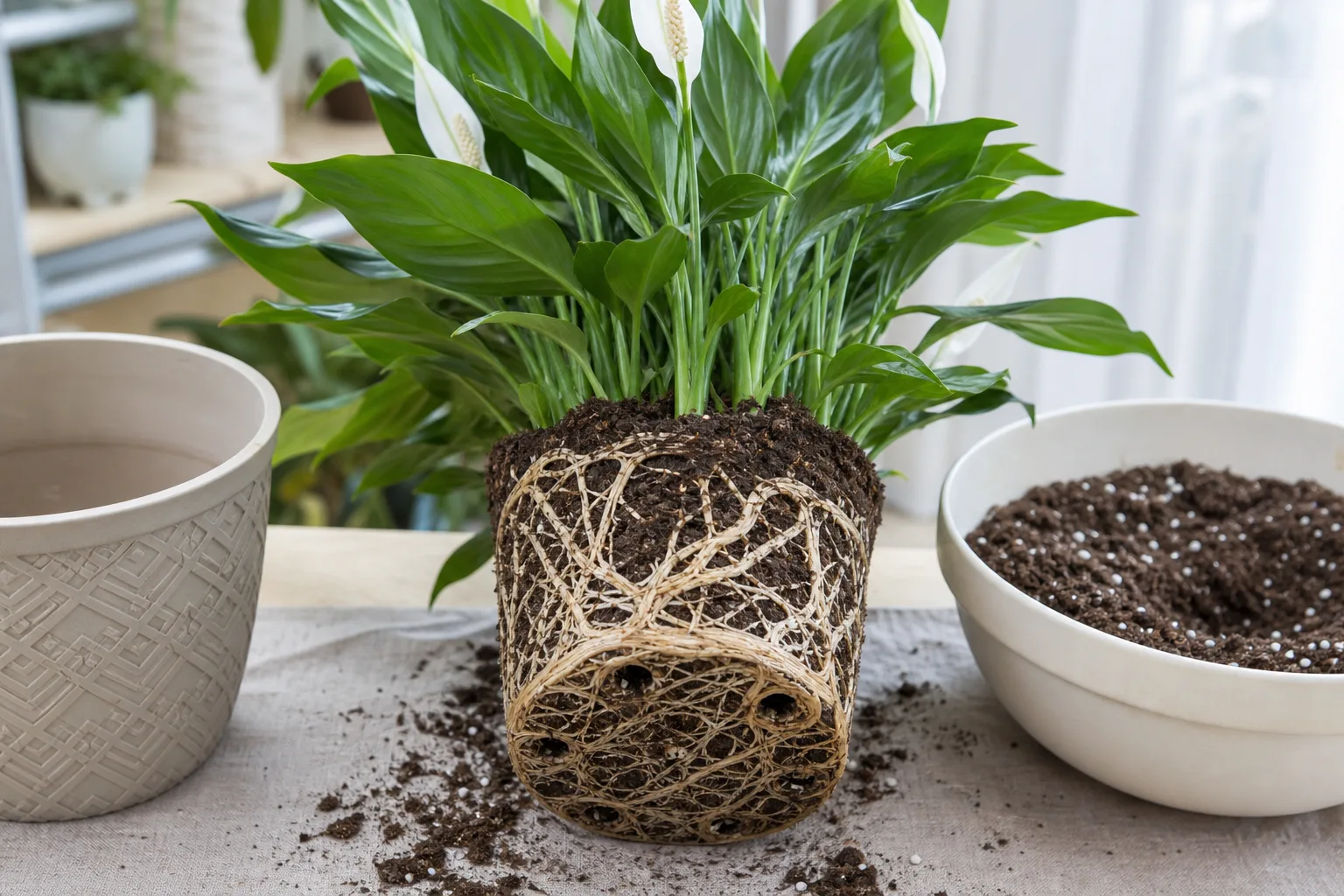
Slide the root ball out gently if the signs persist. A dense coil of roots around the outside, roots emerging from drainage holes, and very little visible mix suggest it is time to repot in spring into a pot only one size larger. Water before and after repotting, then return to the soil-check method; do not compensate for root crowding by keeping the old pot constantly wet.
Watering a peace lily outdoors
Most peace lilies are grown as houseplants, but in very warm, frost-free climates they can be grown outside in protected shade. An outdoor container can dry much faster from heat, wind, and brighter light than the same plant indoors, so inspect it more often and water based on the root zone rather than the weather forecast alone. After rain, check beneath the surface before adding more water; dense foliage can shelter the potting mix from a light shower.
For a peace lily planted in the ground, use a different test from a container schedule. Check the soil around the root zone and consider recent rainfall, drainage, and heat; keep it evenly moist without allowing water to pool. If temperatures approach the plant’s cold limits, bring container plants indoors before the soil is cold and wet for an extended period. Outdoor timing depends strongly on local climate, so indoor “weekly” guidance should not be carried over unchanged.
Conclusion
Check your peace lily’s potting mix before you water. When the upper inch or two has dried slightly and the pot is lighter, soak the root ball slowly until water drains, then empty the saucer and let the mix dry a little before the next watering.
Use a weekly inspection as a starting habit, not a weekly command. More light, warmth, terracotta, or a crowded root ball can shorten the interval; winter shade, cool rooms, large pots, and dense soil can lengthen it. If the plant droops, confirm whether the mix is dry or wet before reaching for the can—that one check helps you give a thirsty peace lily water without making a struggling root system wetter.