How Long Do Cucumber Plants Keep Fruiting?
Learn how long one cucumber plant keeps producing fruit, how many cucumbers to expect per season, and four clear signs it is time to pull the vine and start fresh.
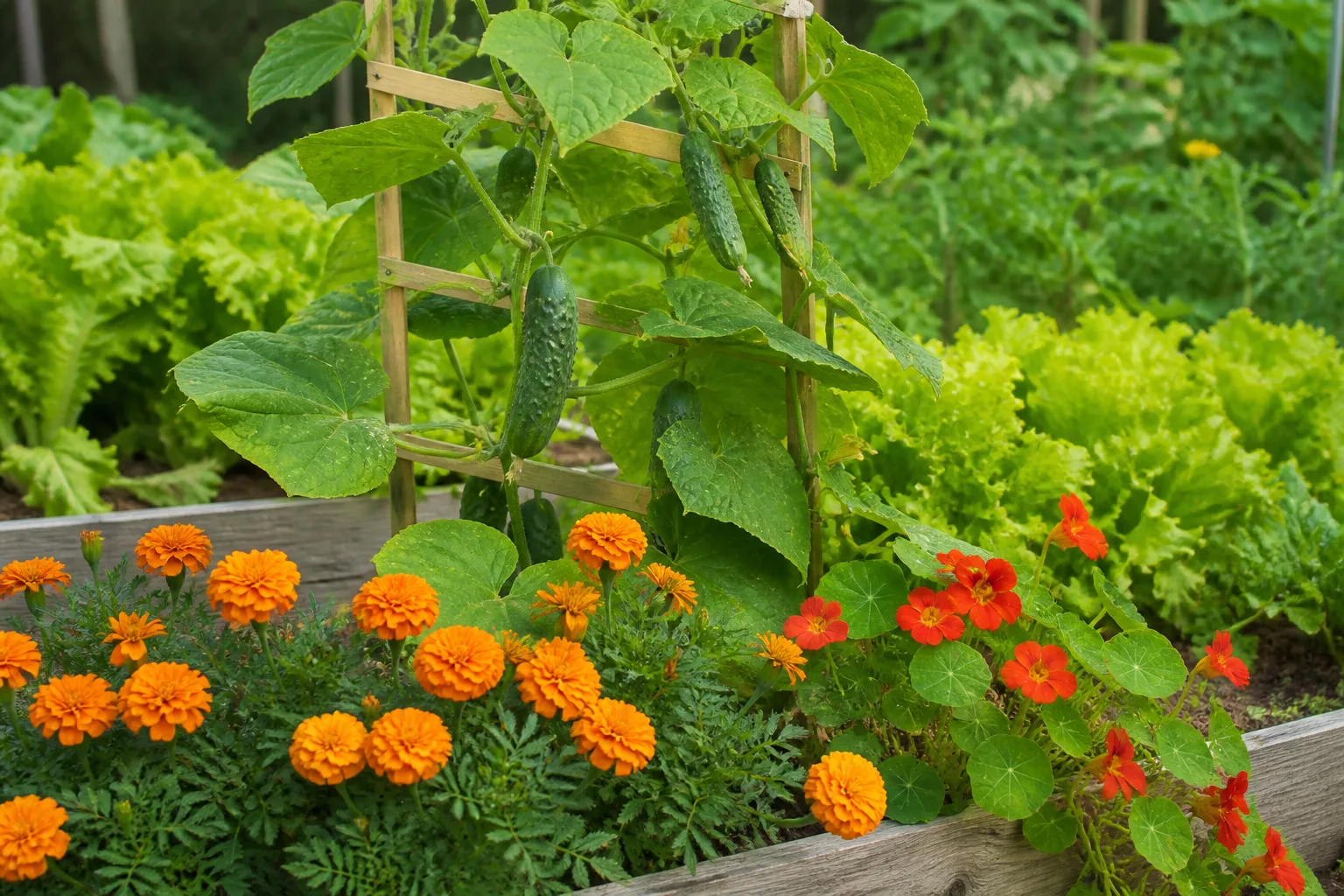
A healthy cucumber vine (Cucumis sativus) does not produce for a fixed number of weeks—it produces for as long as warm weather, pollination, and plant health allow. In most temperate gardens that means from the first mature pick until your area’s first frost, often six to ten weeks of active harvest after the initial 50–70 day startup period. The question is not only how long fruiting lasts, but whether your specific vine is still in that productive window—or showing one of four clear signs that replacement (or a clean end to the season) makes more sense than waiting.
Cucumber Plants Are One-Season Vines—Here Is the Real Timeline
Cucumbers are warm-season annuals in USDA hardiness zones where winter freezes kill the vine. Oklahoma State Extension notes they are susceptible to cold and frost damage and grow best after soil reaches at least 60°F, with 75°F to 90°F preferred for germination and early growth (Oklahoma State cucumber production guide). They do not overwinter outdoors like a perennial shrub; each spring starts a new plant, a new root system, and a new fruiting clock.
Understanding that clock prevents two common mistakes: pulling a vine that is simply between flushes of flowers, and nursing a vine that will never recover enough to justify the space.
From Seed to First Pick: the 50–70 Day Window
Most slicing and pickling varieties need 50 to 70 days from planting to the first harvest-ready fruit, depending on cultivar and whether you direct-seeded or used transplants on plastic mulch. Germination alone takes roughly three to ten days in warm soil; true leaves follow within two weeks; male flowers usually open before female flowers; and tiny fruit swell at the base of pollinated female blooms within days.
Until that first pick, the plant is building roots and foliage—not yet in the continuous harvest phase readers usually mean when they ask how long fruiting lasts. UF/IFAS Gardening Solutions emphasizes steady moisture and full sun through this establishment phase because stress early reduces the flower load later. Skipping trellis setup until vines are already sprawling costs you later: plants knocked sideways by wind take days to reroute energy away from flower buds.
Direct-seeded plants sometimes look “slow” for three weeks, then explode once soil stays above 70°F. Transplants bought at a nursery may show flowers within days of planting—but those early blooms on a root-bound plug often abort if the root ball was not loosened and watered in deeply. Patience through the startup phase pays off in a longer effective harvest window on the back end.
Peak Weeks vs. the Late-Season Slowdown
After the first harvest, a well-fed trellised plant often sets one to three cucumbers per week at peak, which is why total season yield commonly lands between 10 and 30 fruits per plant depending on variety, spacing, and how often you pick. Production is front-loaded: the middle of summer is the heavy window, while late summer brings shorter days, cooler nights, powdery mildew pressure, and tired roots.
That slowdown is normal. It is not automatically a sign to replace the plant—unless disease or pests have already compromised the vascular system. Many gardeners confuse natural decline with failure, and rip out vines that would still deliver a dozen more pickles if harvested every two days.
How Long Will One Cucumber Plant Keep Bearing Fruit?
Short answer: One cucumber plant keeps bearing fruit from first mature harvest until frost, fatal disease, catastrophic pest damage, or sustained heat stress stops flower formation—not for a preset number of cucumbers. In a typical Midwest or Mid-Atlantic garden, that active picking window often runs six to ten weeks after the first fruit, sometimes longer in zones with a late first frost and consistent care.
What “All Season” Means in Your Hardiness Zone
“All season” in seed-catalog language means the frost-free portion of summer, not calendar year-round production. If you plant in late May and your first frost arrives in mid-October, the vine has one continuous run. Regions with very long frost-free periods—parts of zones 9 and 10—can harvest longer on the same planting, but even there, extreme summer heat can pause fruit quality.
Gardeners in short-season zones should plan backward from frost date: if your cultivar needs 55 days to first fruit and you want eight weeks of picking, sow so maturity arrives at least two months before expected frost. Our when to plant vegetables guide helps align warm-season crops with local frost calendars.
Temperature Ceilings and Floors That Shut Fruiting Down
Cucumbers thrive when air temperatures sit roughly 75°F to 85°F during the day. Oklahoma State Extension warns that extremely high temperatures can produce pale, bitter fruit even when vines look alive (Oklahoma State cucumber production guide). Pollination also suffers above about 90°F and below about 60°F, which means flowers open but fruit does not set—a frustrating mid-season pause that looks like the plant “quit.”
On the cold side, light frost may scar fruit and brown leaves; hard freeze kills the vine. Rutgers Cooperative Extension documents physiological cold injury on young fruit—brown, cracked patches from chill nights while fruit were still small. That damage does not always kill the plant, but it signals fragile late-season fruit quality.
How Many Cucumbers One Plant Can Produce (Realistic Ranges)
Expect 10 to 30 cucumbers per plant per season as a home-garden range, not a guarantee. Commercial yields are measured in bushels per acre; your trellis, soil, and picking habits matter more than any single number printed on a meme.
Plants that are never harvested become a bottleneck: over-mature fruit signals the vine that seed production succeeded, and flower initiation slows. Oklahoma State Extension notes that slicing cucumbers in field production require harvest every few days to maintain fruit set (Oklahoma State cucumber production guide). Home gardeners who pick twice weekly often outperform neighbors who pick twice monthly from the same cultivar.
Monoecious, Gynoecious, and Parthenocarpic Differences
Most heirlooms are monoecious—separate male and female flowers on one plant, with many more males than females. They need bee activity when female flowers open; unpollinated females yellow and drop.
Gynoecious hybrids produce mostly female flowers, so they can set fruit faster and heavier—but still need pollen from a monoecious neighbor unless labeled otherwise. Parthenocarpic types set fruit without pollination, which makes them favorites for greenhouses and high tunnels where bees are scarce (Oklahoma State cucumber production guide). They often feel like the “most productive” type in short windows, but seed cost and flavor differences matter for home beds.
If your vine flowers abundantly but fruit never appears, pollination—not lifespan—is the issue. Pairing varieties correctly and planting companion plants for cucumbers that feed pollinators without crowding roots can extend effective production more than fertilizer alone.
Why Picking Frequency Controls How Long Harvest Lasts
Cucumber fruit is mostly water and grows quickly once pollinated. Left on the vine, slicers turn yellow and seedy; picklers oversize and slow new flower buds. Regular picking tells the plant to keep trying—botanically, you are preventing seed maturation, so the vine keeps allocating energy to new flowers.
Pick slicing cucumbers when they are firm, dark green, and size-appropriate for the cultivar—often six to eight inches for standard slicers, smaller for picklers. Check every two to three days at peak; during heat waves when fruit doubles overnight, daily picking preserves both quality and future yield.
Six Practical Ways to Stretch Production Before Frost
Production length is mostly management. These six levers add calendar days and fruit count without changing the plant’s annual biology.
Trellis for airflow and cleaner fruit. Vertical growth reduces soil splash on leaves, makes harvest visible, and frees ground space for lettuce or radish companions. Better airflow delays foliar disease that otherwise ends seasons early.
Feed at flower time, not only at planting. Heavy nitrogen late pushes leaves over fruit. Shift toward balanced or slightly potassium-forward feeding once vines run and flowers appear. Over-fertilizing nitrogen delays flowering, per Oklahoma State guidance.
Water deeply at the root zone. Shallow daily sprinkles encourage shallow roots that fail in August heat. Aim for consistent moisture; drought stress aborts young fruit. During pollination windows, avoid overhead irrigation mid-morning when bees are active.
Scout early for beetles and mildew. One striped cucumber beetle can transmit bacterial wilt on a seedling; powdery mildew weakens leaves so the plant cannot photosynthesize enough to fuel new fruit. See our powdery mildew guide for early white-spore management.
Succession sow a second wave. In zones with 120+ frost-free days, sow another batch three to four weeks after the first. The younger vine peaks as the older one slows—continuous harvest without pretending one plant lasts forever. Mark sowing dates on a calendar tied to your average first frost: a July 1 sowing of a 52-day pickler still has time in zone 6b if frost holds until mid-October.
Manage heat. Shade cloth during late-afternoon heat spikes, mulch to cool roots, and increase water before extreme heat events. Our keep the garden healthy after a heatwave guide covers recovery tactics that protect remaining flower buds. Morning sun with afternoon shade is often enough to keep flowers setting when all-day exposure pushes temps past the mid-90s on dark mulch.
Rotate cucurbit beds. Oklahoma State Extension recommends avoiding cucumber, melon, squash, or pumpkin in the same ground for three years where disease pressure is high (Oklahoma State cucumber production guide). Rotation does not extend one vine’s life, but it prevents early wilt and virus that force premature replacement.
Trellising, Succession Sowing, and Heat Protection
Trellising and succession sowing work together. The first planting handles early summer; the second handles late summer when soil is already warm and germination is fast. Keep the second sowing at least 20 feet from a diseased first planting if mildew or virus hit early—better yet, rotate to a fresh bed that did not host cucurbits last year.
Heat protection is underrated for fruit quality, not just survival. Bitter, pale fruit from heat-stressed vines still counts as “production,” but many gardeners stop picking—and the vine stops flowering because fruit linger. Harvesting through heat, even if some fruit is less perfect, keeps the hormonal cycle moving.
4 Signs It Is Time to Replace Your Cucumber Plant
Replacement means removing the vine and either sowing again (if time remains) or freeing space for another crop—not merely skipping a week of water. These four signs are the clearest cut points.
Sign 1: Confirmed Disease You Cannot Outgrow
Some pathogens kill the plant’s ability to move water and nutrients; no amount of fertilizer revives it.
Bacterial wilt spread by cucumber beetles clogs vascular tissue. A single infected stem may wilt in midday sun while others look fine—then the whole vine collapses within days. Wisconsin Horticulture Extension states that bacterial wilt is typically fatal and infected plants should be removed immediately to limit spread (Wisconsin cucumber beetles guide).
Cucumber mosaic virus and other viruses cause mottled, distorted leaves and stunted, blotchy fruit. There is no cure; tolerant varieties help next year, not this vine. Pull symptomatic plants before aphids move virus to neighbors.
Advanced foliar mildew combo: When more than half the canopy is infected with powdery and downy mildew despite treatment, photosynthesis drops below the threshold needed for new fruit. Late-season replacement rarely pays off unless you have 45+ days before frost and a clean bed ready.
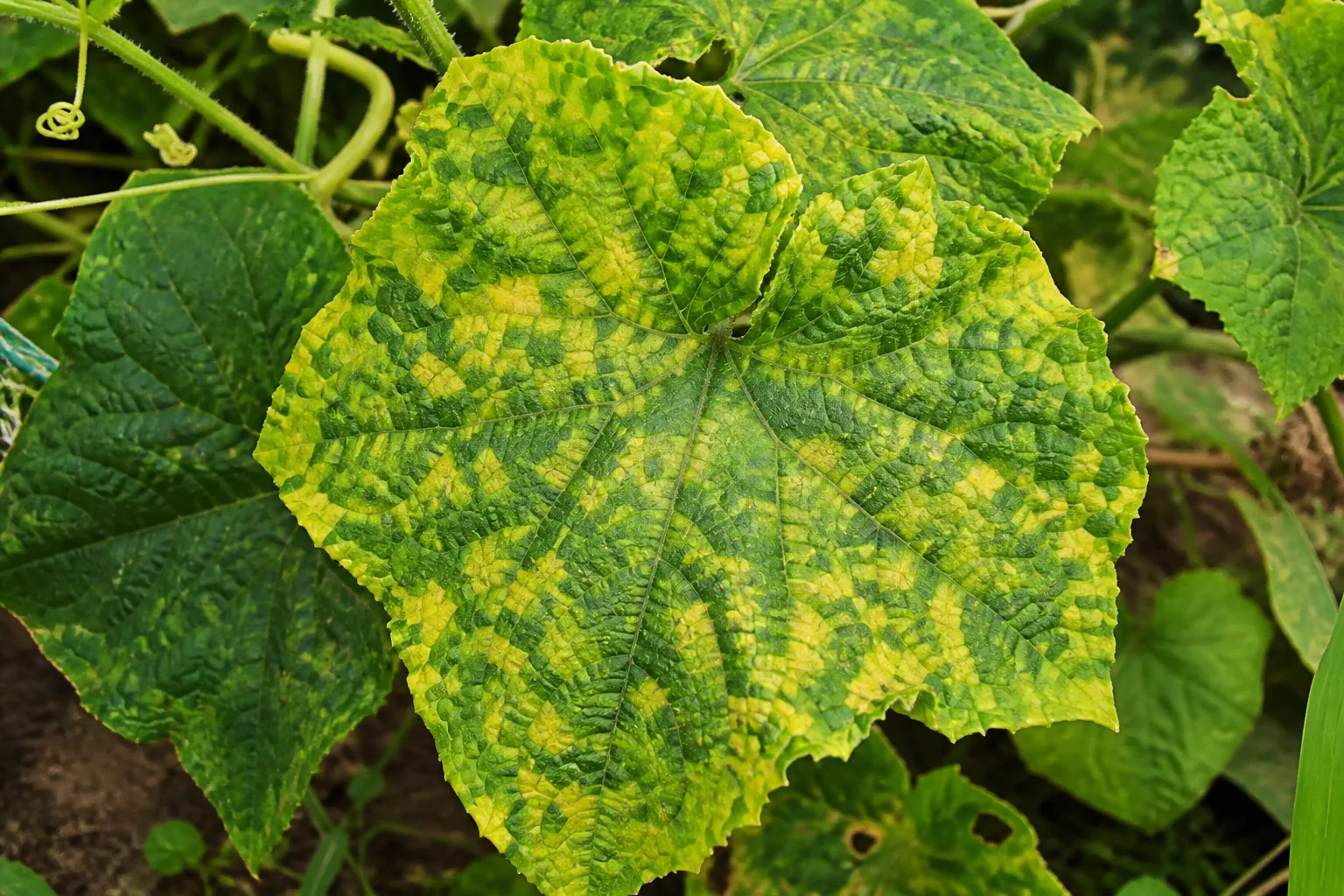
Sign 2: Beetle Pressure, Bacterial Wilt, or Severe Defoliation
Striped and spotted cucumber beetles chew seedlings to stubs, feed in flowers (disrupting pollination), and transmit wilt bacteria. Wisconsin Extension sets treatment thresholds as low as one beetle per plant on young cucumbers (Wisconsin cucumber beetles guide). If wilt appears, insecticide on that vine is too late—remove it.
Severe defoliation from squash bugs, spider mites, or unchecked beetles leaves too few leaves to support fruit. Seedlings chewed to the growing point need replanting, not patience. Mature vines stripped past roughly one-third of foliage may recover only if wilt and virus are ruled out and at least 40 days remain before frost.
Sign 3: Root Stress With Widespread Yellowing or Leaf Drop
Yellow leaves are not always a death sentence—lower leaves naturally age. Replace the plant when yellowing climbs rapidly, roots smell sour, stems soften at the base, or the vine wilts in wet soil. That pattern indicates root rot or chronic overwatering damage.
Chronic underwatering can defoliate a vine too; if stems are still green and turgid, deep watering and mulch may restore production within a week. Read the pattern before you pull: our cucumber leaves turning yellow guide separates nitrogen shortage, overwatering, and virus.
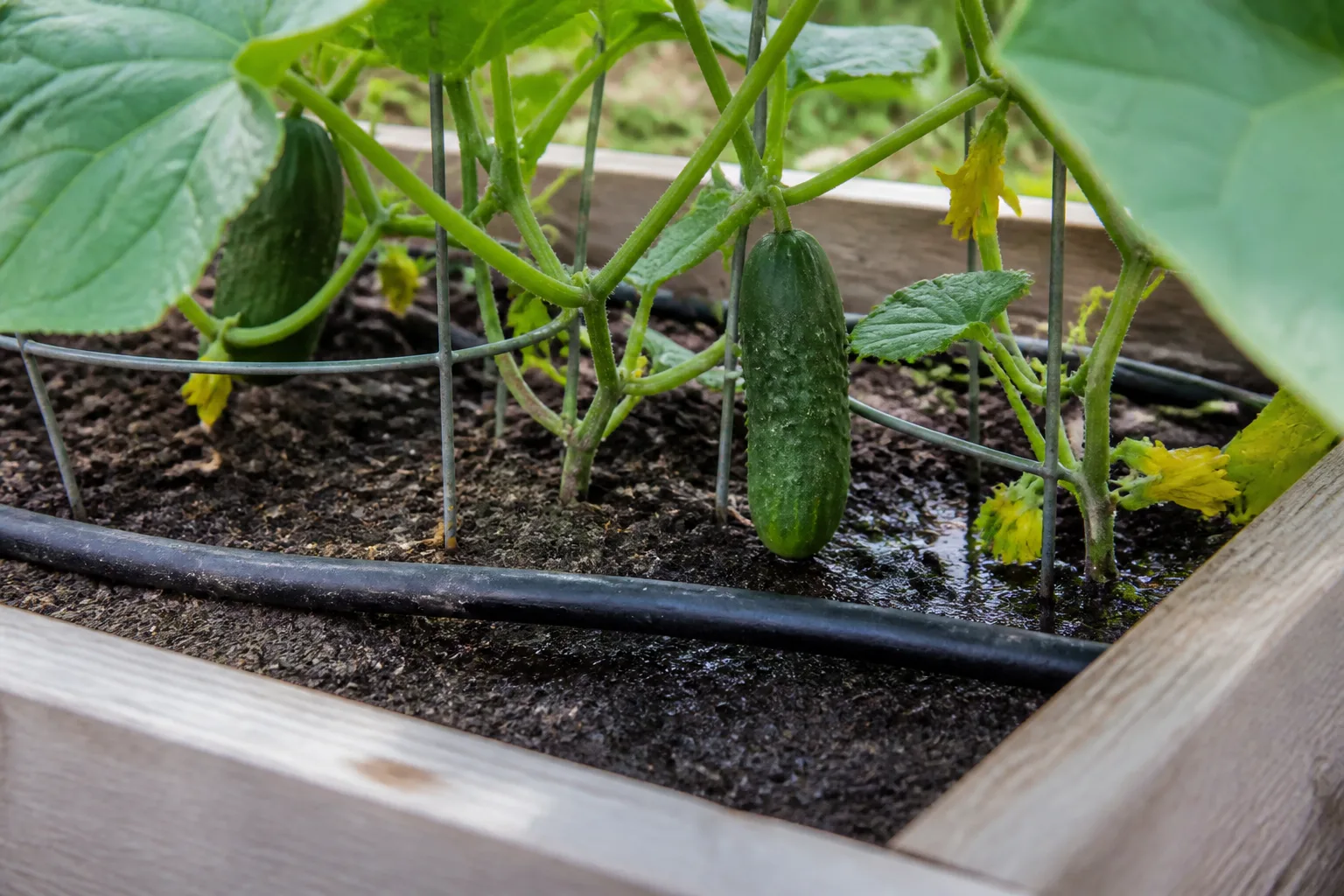
If more than one-third of leaves drop after root stress and flowers fail to reopen for ten days in warm weather, replant if season length allows. If it is already late August in a short zone, fertilizing a partial skeleton rarely beats a clean removal.
Sign 4: Frost, Hard Freeze, or Natural End-of-Season Decline
Frost ends the season—replacement is pointless unless you are starting a fall tunnel crop. Fruit with brown, water-soaked patches and collapsed leaves after freeze should be composted only if disease-free; otherwise trash them.
Natural decline looks like slowed new flower formation, smaller leaves, and fruit that takes longer to size up—even with good care. When nights drop consistently below 55°F and daily highs struggle to reach 70°F, production is finishing. You can harvest remaining fruit but should not expect another wave.
When to Keep the Plant and Fix the Problem Instead
Not every struggling vine deserves the compost pile. Keep and troubleshoot when stems are firm, new leaves are opening, pests are below threshold, and calendar time remains.
Temporary heat pause: Flowers drop during a heat spike but stems stay green. Shade, water, and wait five to seven days.
Mild nutrient stress: Uniform yellowing on oldest leaves only, no spots, soil dry-neutral. Side-dress compost or balanced fertilizer and monitor.
Early mildew on few leaves: Remove affected leaves, improve airflow, apply labeled fungicide or horticultural oil early; canopy still mostly green.
Pollination gap: Plenty of flowers, no fruit, healthy foliage. Hand-pollinate morning flowers or add pollinator habitat—see companion planting links above. Oklahoma State notes female flowers are receptive for only hours on the day they open; if rain or cold keeps bees away that day, that flower is lost unless you brush pollen yourself (Oklahoma State cucumber production guide).
Cold snap on young fruit: Brown scarred fruit from chill nights can be picked off; the vine can continue if growing points were not frozen (Rutgers cold injury on cucumber). Floating row cover on forecast sub-40°F nights protects flowers without the labor of daily picking.
Container cucumbers: Potted vines exhaust root volume faster than in-ground plants, so production may taper two to three weeks earlier even with fertilizer. That is decline from root crowding, not mystery disease—step up pot size mid-season only if you accept a brief pause, or plan a second pot sowing instead.
Replace instead when wilt or virus is confirmed, roots are rotting, seedlings are destroyed, or frost has ended the season. When replanting mid-season, choose fast-maturing picklers or bush types and plant where cucurbits have not grown for at least one year.
Conclusion
One cucumber plant keeps producing fruit for as long as warm weather, health, and consistent harvest allow—typically from the first pick until frost, with peak yields often landing between 10 and 30 cucumbers over that run. The vine is not on a timer; it responds to temperature, pollination, disease, and whether you keep picking before fruit oversize.
Replace the plant when bacterial wilt or virus confirms the vascular system is finished, when beetles or defoliation leave too little leaf area to support fruit, when root rot drives widespread collapse, or when frost and cold shut the season down. Keep and fix it when problems are environmental, nutritional, or pollination-related and the stem still pushes healthy growth.
Plan next year with trellising, succession sowing, resistant varieties, and beetle scouting from day one—and you will spend less time wondering whether the vine is resting and more time picking while it still can.



