Best Soil for Fennel: Drainage, Compost and Pots
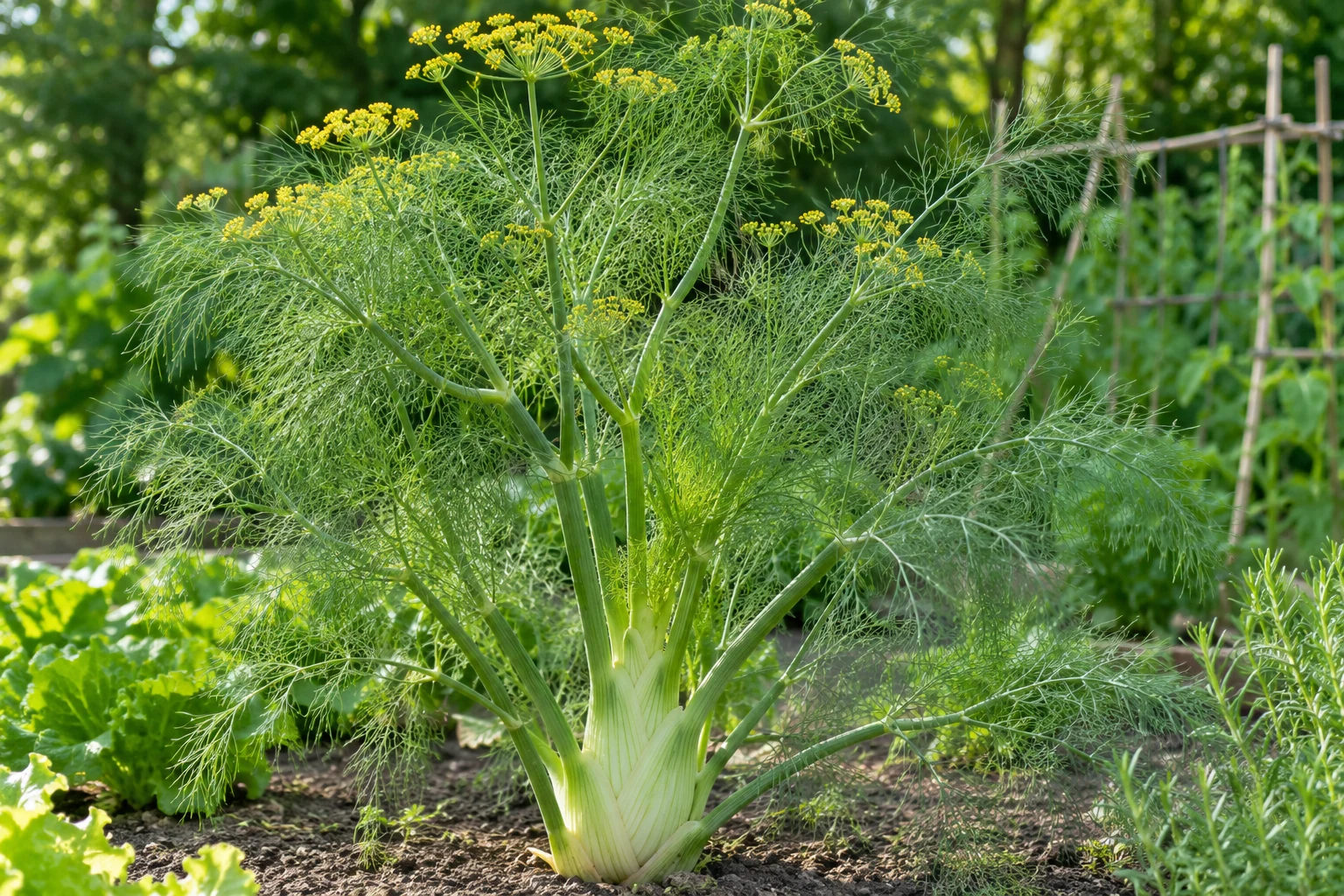
Best Soil for Fennel: Drainage, Compost and Pots
Best Soil for Fennel: Drainage, Compost and Pots
Quick answer
Plant fennel in fertile soil that retains some moisture but lets excess water drain away. A loose loam with mature compost is suitable for a garden bed; use a fresh, free-draining multipurpose potting mix in a large container. Avoid heavy, saturated ground because roots can rot, and do not amend pH without a soil test. Common fennel tolerates a broad range of garden conditions once established; Florence fennel is usually grown in fertile, evenly moist soil for a tender base. The RHS growing guide describes fennel as a plant for light, free-draining soil, while Missouri Botanical Garden recommends moist, organically rich, well-drained ground.
What fennel roots need
Fennel develops a substantial root system and a long taproot, so soil must be both deep enough and open enough for water to move through. Compacted ground forces roots into a restricted layer, while a hardpan can hold water above it. A plant may then wilt despite the soil seeming wet because oxygen-starved roots cannot function normally. Common fennel’s established roots help explain its drought tolerance, but they do not make a waterlogged bed safe. The RHS profile describes the mature scale of the plant, and Harvest-to-Table highlights the taproot when advising where to sow (Harvest to Table).
Choose a bed with free drainage
Before planting, observe the bed after heavy rain. If water remains pooled long after surrounding ground drains, move the fennel to a raised bed or a better-drained position. Well-drained does not mean sterile or bone-dry: fennel still benefits from moderate fertility and some moisture during active growth. The Missouri Botanical Garden calls for moist, organically rich, well-drained soil and notes that stem or root rot can occur in poorly drained sites (Missouri Botanical Garden). In a garden where drainage is uneven, choose a slightly raised place rather than digging a deep pocket and filling it with a sharply different mix that traps water at the boundary.
Understand moisture retention
Soil should hold enough water between irrigations to support steady growth but should not remain saturated. Clay holds water for longer and often needs improved structure; sandy soil drains quickly and may need organic matter to reduce frequent drying. Containers behave differently because a potting mix has limited volume, exposed sides, and drainage holes. Utah State Extension ties consistent moisture to Florence fennel and warns that dry-to-wet swings may split stems (USU Extension). The Fennel watering guide explains how to adjust for a bed, pot, and season rather than chasing a single soil formula.
Add compost with a purpose
Use mature compost to improve organic matter or prepare a bed that is low in fertility, not as a compulsory thick layer around every fennel plant. Work it through the planting area so roots can enter the amended soil gradually. Fresh manure can be overly strong and uneven in texture, so avoid placing it directly against seedlings or the crown. The RHS lists fennel as low maintenance and says established common fennel does not need routine feeding, while Utah State recommends a soil test before fertilizer decisions for Florence fennel (RHS grow guide, USU Extension). Compost is a soil improver, not a cure for waterlogged ground. The fertilizer guide discusses nutrient additions separately.
Interpret fennel soil pH
Fennel is not a plant for which every grower needs to chase a narrow pH figure. Utah State gives pH 6.5–8 for Florence fennel in its regional growing guidance; sources for common fennel describe a broader ability to grow across soil types. Treat the Utah range as a useful regional reference, not a universal prescription for every home bed. Test before liming or acidifying soil, and follow the lab’s recommendations for the crop and local mineral content. Changing pH without a test can create new nutrient availability problems. The RHS plant profile and Plantura guide support a fertile, well-drained growing medium without requiring a one-size-fits-all amendment.
Prepare clay or compacted ground
Do not work wet clay, which can smear and compact into hard clods. Wait until soil is friable, then loosen the planting area broadly rather than making a narrow deep hole. Add mature compost if organic matter is low, and use a raised bed where water naturally collects. A raised position also makes the root zone easier to inspect during a wet season. Do not bury the crown beneath a heavy mulch layer. If water continues to sit on the bed, growing fennel in a container may be more reliable than repeatedly adding grit or sand to a small patch of clay. The soil and watering pages can help you see whether a wet plant is suffering from poor drainage or too much irrigation.
Improve sandy soil carefully
Sandy soil can drain freely yet lose moisture and nutrients quickly. Incorporate mature compost into a broad bed before sowing, then mulch lightly after seedlings establish to reduce surface evaporation. Do not try to make a sandy bed “heavy” with a small quantity of clay; that does not create a balanced root zone. Check soil moisture more often during hot, dry weather, particularly for Florence fennel and young plants. Regular watering may be needed, but keep the surface from staying soggy. Utah State’s irrigation advice varies by soil type, which reinforces that a fixed weekly amount is not portable across different soils (USU Extension).
Make a container mix
For container fennel, start with a quality peat-free multipurpose potting compost rather than heavy garden soil. The mix should wet evenly, drain through clear holes, and remain structurally open through the growing season. If the compost shrinks from the pot edge or turns hydrophobic, rewet slowly rather than flooding once. Avoid making an elaborate homemade blend unless you can maintain even moisture and drainage. The RHS recommends peat-free multipurpose compost for outdoor containers, and Epic Gardening discusses container-grown fennel as a practical option (RHS grow guide, Epic Gardening). The repotting guide covers selecting a final pot so the taproot is not repeatedly disturbed.
Choose the right pot volume
Use a stable pot at least about 30 cm wide and deep as a starting point, with open drainage holes. A larger cultivar or a tall plant may need a heavier container so wind cannot tip it. An undersized pot dries faster and restricts root growth; a very large pot is not a substitute for a suitable mix or careful watering. Harvest-to-Table recommends a deep container for common fennel because of its taproot, while Gardener’s Path also discusses the root space required in containers (Harvest to Table, Gardener’s Path). Set the pot where it receives enough light, and monitor moisture because a container can dry faster than a bed. See the light guide for hot balcony placement.
Avoid common soil amendments
Do not add lime, sulfur, wood ash, or concentrated fertilizer simply because fennel is growing slowly. First check whether the soil is too wet, too dry, compacted, or in shade. Do not use fresh manure against a young plant, and avoid fine compost that clogs the surface and reduces air movement. A thick mulch piled against the base can keep the crown damp. Use a soil test when pH or nutrient status is uncertain, then follow recommendations intended for your region. Utah State’s specific fertility guidance is explicitly linked to soil-test results, while the RHS describes common fennel as needing little feeding (USU Extension, RHS grow guide).
Diagnose soil-related stress
Persistent wilting in soggy soil may indicate drainage or root damage rather than thirst. Pale growth can follow nutrient shortage, but it can also occur when wet roots cannot absorb nutrients normally. A potting mix that has pulled away from the pot wall may be extremely dry; water it in stages. A small Florence base may reflect the wrong fennel type, heat, or root damage, not merely “poor soil.” Compare what you see with the Fennel overview and watering guide before adding a soil amendment. The Missouri Botanical Garden identifies root or stem rot as a risk in poorly drained soil (Missouri Botanical Garden).
Maintain soil through the season
Keep the surface free of competing weeds while seedlings are small, then apply a modest mulch layer to reduce evaporation and suppress new weeds. Replenish organic matter when preparing a future crop rather than continually burying an established crown. If soil crusts, loosen only the surface away from the main stem. In pots, replace exhausted or compacted compost when the plant is no longer occupying the container; remember that fennel is best placed directly into its final pot. Gardeners’ World and Plantura both describe Florence fennel as a crop needing moisture-retentive but free-draining soil (BBC Gardeners’ World, Plantura).
When to use this page vs other Fennel guides
Use this guide for bed preparation, potting mix, drainage, and pH decisions. Use the watering guide when the issue is how often soil dries, or the fertilizer guide when you are deciding whether nutrients are needed. If a pot is too small, see repotting before moving an established plant; if you are starting seed, follow propagation. For placement, compare the light guide.
Related Fennel guides
The Fennel hub summarizes species and growing types. Use the overview, light, and watering guides to connect soil choice to the rest of the routine. Read fertilizer for test-based feeding, repotting for root-sensitive moves, and pruning for the crop’s seasonal leaf and flower management.
Conclusion
Fennel needs soil that combines moderate fertility, usable moisture, and free drainage. Start with a suitable bed or a large pot with a quality mix, then change soil only when you can identify the problem. Treat pH numbers as context-specific guidance, and use a test before applying amendments. Keep the long root in mind when preparing the growing place: the right final position can solve more problems than repeatedly repotting or enriching a struggling plant.