Pruning Fennel: Harvest Fronds, Flowers and Old Stems
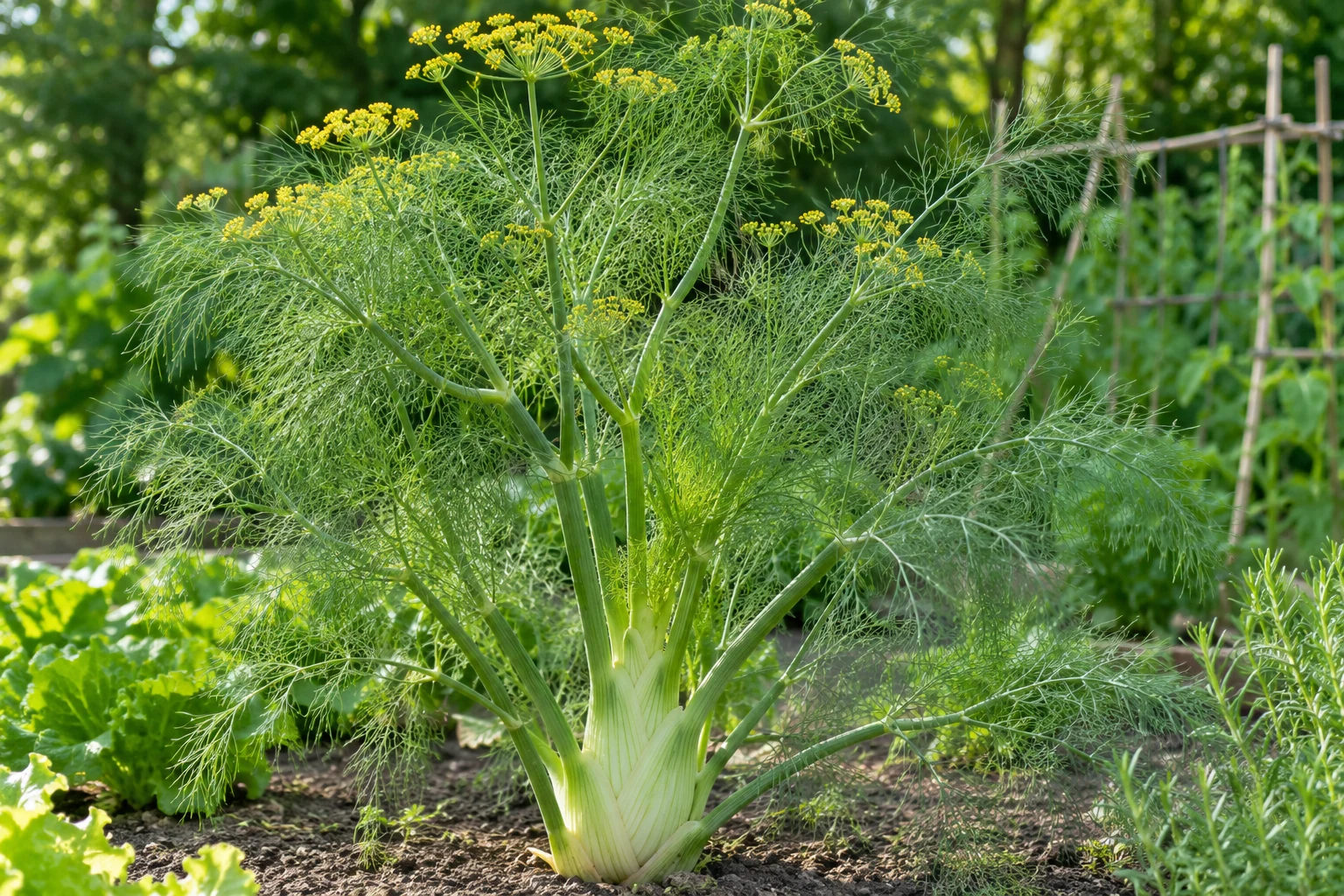
Pruning Fennel: Harvest Fronds, Flowers and Old Stems
Pruning Fennel: Harvest Fronds, Flowers and Old Stems
Quick answer
Prune fennel according to what you want to harvest. Snip a few young fronds from common fennel for cooking, cut flower stems before seed ripens if you want to limit self-sowing, and leave some umbels if you value flowers or want seed. In climates where common fennel dies back, remove the dead stems near ground level before new shoots emerge. Florence fennel is grown for its swollen base; harvest that base when it is firm and tender instead of repeatedly cutting the plant to shape it. The RHS fennel guide recommends cutting common fennel back to around 30 cm when growing it for fresh foliage, and clearing dead stems before spring growth.
Decide what the pruning should achieve
Before cutting, decide whether the goal is a kitchen harvest, fewer seedlings, a tidier border, or clearing old growth. A trim that encourages foliage may prevent flowers and seeds; deadheading stops some seed from maturing, while leaving flower heads provides a display and a seed source. Do not cut purely because fennel looks tall: common fennel naturally becomes an upright, branching herb. The RHS profile and Missouri Botanical Garden describe a plant that can become large and flower in summer (Missouri Botanical Garden). The Fennel overview can help confirm which type you have and what you intend to harvest.
Identify common or Florence fennel first
Common fennel (Foeniculum vulgare) is usually grown for feathery fronds, flowers, and seeds. Florence fennel is a selected form grown for its swollen edible base, and it is usually handled as a seasonal vegetable. Cutting away a forming bulb’s leaves or flower stalks can reduce the harvest you want; the priority is steady growth and timely harvest. Utah State Extension distinguishes the two uses and advises harvesting the Florence base while it is firm and still relatively small (USU Extension). The Fennel overview and propagation guide explain type labels and seed collection.
Snip fronds for regular use
For a modest kitchen harvest, use clean scissors to snip a few young fronds from the outer part of a healthy common fennel plant. Avoid stripping every branch or cutting the crown repeatedly; leave plenty of green growth to continue photosynthesis and replenish the plant. Take only what you can use while the foliage is tender. The RHS advises harvesting young leaves through the growing season, and Harvest-to-Table notes that leaves can be cut once common fennel is established (RHS grow guide, Harvest to Table). If the plant is newly sown or recently transplanted, prioritize establishment and take little or none. See propagation before moving young plants.
Cut flowering stems or leave them
Yellow flower umbels are part of common fennel’s normal seasonal growth. Leave some stems if you want the flowers, pollinator activity, or seed; cut developing stems if the priority is a longer supply of leafy growth. Do not expect this to keep foliage young forever: a mature plant still follows its seasonal life cycle. RHS guidance says that for foliage production, developing flower stems can be removed, and the plant can be cut to roughly 30 cm several times in a season to encourage new leaves (RHS grow guide). Choose the number of stems to remove based on plant vigor, not a rigid schedule.
Deadhead to limit seedlings
Once flowers have faded, decide whether you want seed before the heads dry. To reduce self-sowing, remove spent umbels before mature seeds fall. If you want to save seed, leave selected heads until they turn brown, then collect them into a paper bag. Missouri Botanical Garden notes that fennel self-seeds freely and can naturalize in some North American areas; the RHS also warns that seedlings may become a nuisance where the plant grows readily (Missouri Botanical Garden, RHS grow guide). This is a local management choice, not evidence that fennel is invasive in every place. The propagation guide gives seed-collection steps.
Cut common fennel back for fresh foliage
If your goal is tender foliage, a stronger cutback can encourage new leaves. The RHS recommends trimming the whole plant to about 30 cm several times during the growing season for a regular supply of young foliage (RHS grow guide). Use this approach on a healthy, established common fennel, not a small seedling or a stressed plant. Make cuts above active lower growth, leave enough green structure for recovery, and avoid cutting during extreme heat or prolonged drought. Different climates produce different flushes, so use new growth as the cue for another harvest rather than cutting to a calendar.
Remove old stems after dieback
Common fennel may naturally die back in autumn, with brown stems left standing through winter. If you want to preserve the architectural seed heads or provide overwintering habitat, leave them until late winter or early spring. Cut dead stems to ground level before new shoots appear so you do not damage fresh growth. The RHS specifically recommends this timing for old stems (RHS grow guide). In a mild climate, some foliage may persist; remove only the dead or damaged parts and leave healthy leaves in place. Do not confuse seasonal dieback with a plant that has died—check the crown and roots before digging it up.
Support tall stems before cutting
Common fennel flower stalks can become tall and top-heavy. If a plant is leaning but still healthy, support the stem with a stake or tie rather than cutting away the whole flowering structure. Use a loose tie and avoid strangling the stem. If a stem has snapped or is badly damaged, make a clean cut below the break where the remaining stem is sound. The RHS notes that tall stems in windy sites may need support, while the mature plant descriptions from RHS and Missouri Botanical Garden show why space and stability matter (RHS grow guide, RHS profile, Missouri Botanical Garden). Check the light guide for a more sheltered growing position.
Harvest Florence fennel rather than shaping it
For Florence fennel, the main harvest is the swollen base. Harvest when it feels firm and before it becomes coarse or sends up a flowering stalk. Utah State Extension suggests harvesting below about four inches across; this size is a regional practical reference, not a universal cultivar maximum (USU Extension). Cut the base at soil level with a clean knife, leaving neighboring plants undisturbed. Do not prune away healthy fronds early just to make the plant look tidy, since leaves support growth of the base. Gardeners’ World and Plantura describe Florence fennel as a bulb crop that is sensitive to temperature and moisture conditions (BBC Gardeners’ World, Plantura).
Use clean, suitable tools
Small scissors work for fronds and young flower stalks; hand pruners or a clean knife suit thicker stems or a Florence base. Use a sharp blade so cuts do not crush or tear the stem. Wipe away plant sap and debris after use, and clean tools between plants when a disease problem is suspected. Cut just above healthy growth rather than leaving long ragged stubs. Keep fingers clear of the blade and set harvested stems aside before moving to another plant. The RHS and Epic Gardening both describe harvesting with clean, controlled cuts rather than pulling foliage from the plant (RHS grow guide, Epic Gardening).
Avoid severe cuts during stress
Do not hard-cut a fennel plant while it is wilted from drought, sitting in saturated soil, or recovering from transplanting. Address the stress first: water a dry plant gradually, correct drainage for a waterlogged one, or leave a moved seedling alone while roots recover. A severe cut removes leaf area at the same time the plant has limited ability to regrow. This is particularly important for Florence fennel close to bulb harvest and for seedlings whose taproots are still establishing. The watering guide and repotting guide explain the underlying stress checks. Utah State Extension links root injury and water stress to bolting risk in Florence fennel (USU Extension).
Check regrowth after pruning
After a light cut, watch for fresh, healthy fronds rather than pruning again immediately. Water when the root zone begins to dry, keep the plant in suitable light, and do not feed unless soil conditions or a test show need. If new shoots stay weak, check for root stress, heat, or poor drainage before cutting more. A healthy common fennel can produce repeated foliage through the season, but the rate varies with climate and the plant’s flowering stage. Epic Gardening and Gardener’s Path describe fennel as a vigorous herb in favorable conditions, but local growing conditions still control its response (Epic Gardening, Gardener’s Path). See the fertilizer guide if nutrition is the confirmed issue.
When to use this page vs other Fennel guides
Use pruning guidance when you are choosing what to cut or leave. Use the propagation guide for saving seeds and controlling volunteer plants; the overview for the difference between herb and bulb fennel. If a plant is stressed before pruning, read watering or soil first. Use the light guide for wind- and heat-aware positioning, and fertilizer only when nutrients are relevant.
Related Fennel guides
Start at the Fennel hub for species and crop details. The overview explains whether you are growing common or Florence fennel; propagation covers seed collection and sowing. For aftercare, use watering, soil, and light. The fertilizer and repotting pages help prevent a pruning decision from being used to solve a root or nutrient problem.
Conclusion
Prune common fennel lightly for fronds, remove selected flower stems if you want to reduce self-sowing, and clear dead stems before spring shoots emerge. A stronger cutback to roughly 30 cm can renew foliage on a healthy established herb plant, but is not a routine rule for every fennel. Florence fennel is better managed as a bulb crop: keep leaves working and harvest its base when firm. Decide the result you want before you cut, then let healthy growth recover.