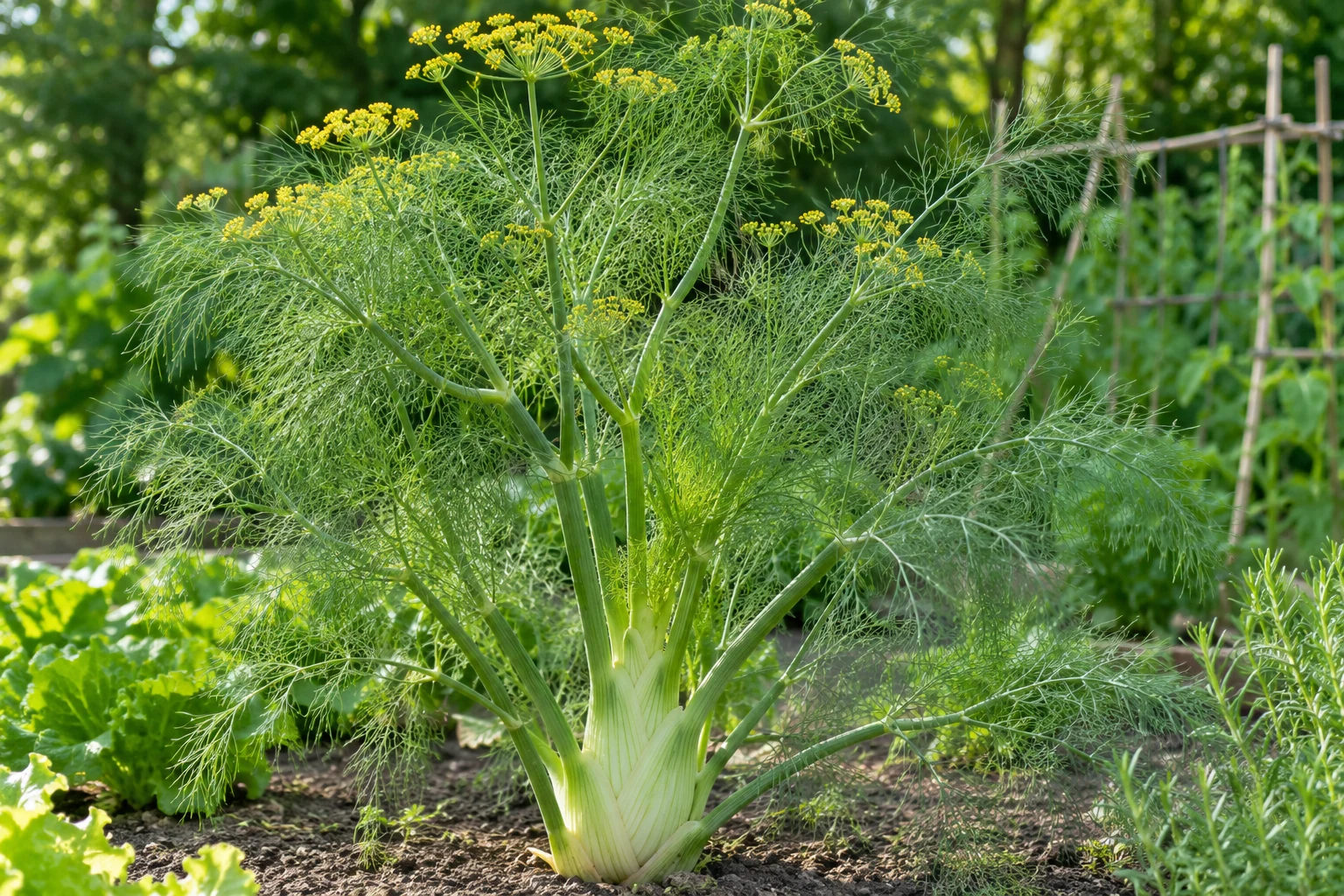
Keep the soil evenly moist but well-drained while young. Established common fennel tolerates dry spells, while container plants need regular checks and water when the compost begins to dry. In practice, water water newly planted fennel during dry spells in its first growing season. Check containers every few days in warm weather and water when the compost is beginning to dry. Check the top few centimetres of garden soil or potting mix; water when it is drying, then allow excess water to drain freely. Reduce watering for established plants during cool or rainy weather. Water young plants during dry spells and keep container compost lightly moist through the growing season.
What light does Fennel need?
Fennel needs bright, indirect light for steady indoor growth.
Is Fennel safe for cats and dogs?
Fennel is generally considered non-toxic to cats and dogs. Always monitor pets around new plants and contact your vet if unusual symptoms appear.
How do I propagate Fennel?
Propagate Fennel from healthy stem or root divisions during active growth.
What soil is best for Fennel?
Use fertile, moisture-retentive soil that drains freely; fennel grows in loam, sand, chalk, or clay when drainage is good. A good mix includes Peat-free multipurpose compost for containers, Choose a heavy, stable pot with drainage holes, at least 30 cm wide and deep. Use a free-draining bed or a container with clear drainage holes. Waterlogged ground can cause root rot. Target soil pH around Tolerates acidic, neutral, and alkaline soils; consistent moisture and good drainage matter more than a narrow pH target.
When should I repot Fennel?
Repot Fennel avoid routine repotting; sow into the final bed or container when possible because fennel dislikes root disturbance., ideally in spring, while seedlings are still very young and before a long taproot develops. Signs it needs a bigger pot: a seedling has outgrown its small module but is still young enough to move without disturbing a long taproot, the final container is smaller than the recommended 30 cm width and depth.
Written by Sai AnanthLead content writer at LeafyPixels. B.Pharmacy graduate from Andhra University with a background in pharmacognosy, turned indoor gardening writer after a long-time plant hobby became a research-led resource for home growers.View Sai Ananth's profile · Reviewed by LeafyPixels Review Board
This Fennel problems problem guide was researched and written by Sai AnanthLead content writer at LeafyPixels. B.Pharmacy graduate from Andhra University with a background in pharmacognosy, turned indoor gardening writer after a long-time plant hobby became a research-led resource for home growers.View Sai Ananth's profile. Problems symptoms on Fennel, lookalike causes, and step-by-step fixes are cross-checked against extension pest, disease, and care references before publication.
We prioritize sources that hold up under scrutiny:
University cooperative extension bulletins and fact sheets (Penn State, Clemson, UMD, NC State, and similar programs)
Botanical garden and horticultural society publications
Peer-reviewed plant science and veterinary toxicology references where pet safety matters (including ASPCA Animal Poison Control)
Established reference works on indoor plant culture
The LeafyPixels editorial team then reviews the draft for clarity, step-by-step usefulness, and fit with real apartment and home conditions-not ideal greenhouse setups. When guidance changes materially, we update the page and note the revision date.
Epic Gardening — How to Plant, Grow, and Care for Fennel (n.d.) Distinguishing common and bulb fennel, direct sowing, light, watering, soil, and harvest tips. [Online]. Available at: https://www.epicgardening.com/growing-fennel/ (Accessed: 1 March 2024).
Royal Horticultural Society — Fennel (n.d.) Sowing, root sensitivity, planting, water needs, harvesting, and self-seeding guidance. [Online]. Available at: https://www.rhs.org.uk/herbs/fennel/grow-your-own (Accessed: 1 March 2024).
Royal Horticultural Society — Foeniculum vulgare (n.d.) Common fennel identity, family, native range, mature size, sun, and soil conditions. [Online]. Available at: https://www.rhs.org.uk/plants/24472/foeniculum-vulgare/details (Accessed: 1 March 2024).