Fertilizing Fennel: Compost, Soil Tests and Light Feeding
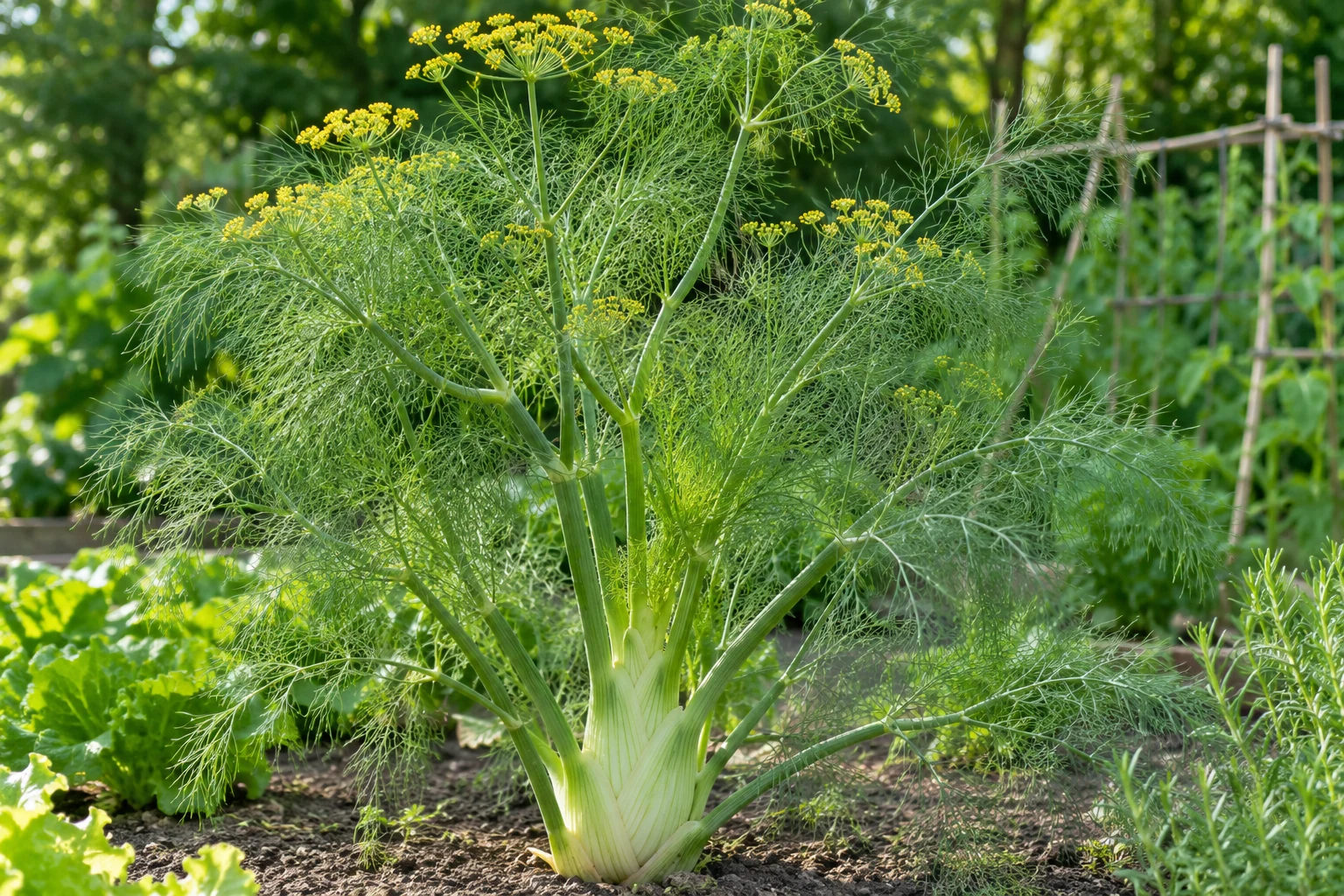
Fertilizing Fennel: Compost, Soil Tests and Light Feeding
Fertilizing Fennel: Compost, Soil Tests and Light Feeding
Quick answer
Fennel needs moderate fertility, but established common fennel often needs no routine fertilizer in a reasonably fertile bed. Florence fennel is grown for a tender swollen base and may benefit from soil-test-based feeding, especially where a vegetable bed is depleted. Start by checking light, moisture, drainage, and plant type; fertilizer will not correct shade, a waterlogged root zone, or common fennel mislabeled as a bulb variety. Add mature compost before planting if soil needs organic matter. Utah State Extension recommends testing the soil before choosing fertilizer, while the RHS fennel guide describes common fennel as needing little maintenance and no routine feed.
Identify the crop before feeding
Common fennel (Foeniculum vulgare) is generally grown for feathery leaves and seeds; Florence fennel (F. vulgare var. azoricum) is selected for its enlarged edible base. Their harvest goals differ, so feeding decisions should follow the crop rather than a generic “fennel” label. A common herb plant will not produce a vegetable bulb just because it receives more nitrogen. Utah State Extension recommends moderate nitrogen for Florence fennel and low phosphorus and potassium needs in its regional guidance; the RHS has a lower-input approach for established herb fennel (USU Extension, RHS profile). The overview guide explains the distinction.
Start with soil condition
Before adding fertilizer, inspect the plant and the bed. Does the soil drain? Is it compacted? Does the pot dry completely or stay wet for days? Are the leaves pale throughout, or is growth merely slower in cool weather? Fennel responds to its growing conditions; applying more nutrients when roots are stressed can add salts without restoring healthy uptake. Missouri Botanical Garden describes fennel as suited to moist, organically rich, well-drained soil, so basic soil structure and drainage are part of fertility management (Missouri Botanical Garden). Use the soil guide to correct the root zone before feeding.
When compost is enough
For an established common fennel plant growing in decent soil, a light annual topdressing of mature compost may be all that is needed—or no feed at all. Work compost into the bed before sowing or planting rather than piling it over the crown. In a Florence fennel bed, compost can improve structure and moisture retention, but it should not be treated as a precisely balanced fertilizer unless its nutrient analysis is known. Harvest-to-Table recommends aged compost for common fennel, whereas the RHS says established fennel needs no routine feeding (Harvest to Table, RHS grow guide). Those are compatible options: the need depends on existing soil fertility and the crop.
Use soil testing for fertilizer decisions
If a bed has a history of poor growth or repeated cropping, a soil test can show whether nitrogen, phosphorus, potassium, or pH actually need attention. Follow the lab’s rate and application advice rather than copying a recommendation from another region. Utah State’s fennel guide gives a Utah-specific nitrogen recommendation when bulbs develop and says phosphorus and potassium should follow test results; that numeric rate should not be applied automatically to a different soil or climate (USU Extension). A container mix also differs from field soil and may need a label-based feed plan. Read the Fennel soil guide for pH and amendment context.
Understand nitrogen and fennel growth
Nitrogen supports leafy growth, but more is not always better. A strong nitrogen dose can favor abundant foliage and soft growth instead of helping a Florence base swell, especially if light, spacing, heat, or moisture is limiting. Do not use a high-nitrogen feed to force a common fennel plant into a bulb crop. Utah State calls for moderate nitrogen for bulb fennel, and RHS guidance for common fennel does not call for routine fertilizer (USU Extension, RHS grow guide). If the plant is unusually dark and lush but Florence bulbs remain small, pause feeding and review variety and season. The light guide and watering guide are useful checks.
Feed Florence fennel carefully
Florence fennel needs an evenly growing, well-watered season; fertilizer cannot substitute for cool timing, healthy roots, or steady moisture. Prepare fertile ground before sowing, then wait for clear need or test guidance before applying additional nutrients. Utah State’s extension program recommends a moderate nitrogen approach and uses fertilizer as bulbs develop in its local system (USU Extension). Treat this as region-specific; in a small home bed, a soil test or package label is more appropriate than measuring an agricultural row dose by guesswork. Avoid heavy feeding late in the crop if heat has already triggered bolting. For bulb timing, consult the Fennel overview and watering guide.
Keep common fennel lightly fed
Common fennel is a vigorous perennial herb in suitable conditions and generally does not need repeated feeding in a fertile garden bed. If it grows well, leave it alone. If the soil is poor, add a small amount of mature compost before the new season begins. Missouri Botanical Garden describes organically rich soil as suitable, while RHS advises that established common fennel needs no feeding (Missouri Botanical Garden, RHS grow guide). These statements do not mean the plant must grow in rich soil or that fertilizer should be used to increase height. Common fennel can become tall naturally; use the pruning guide if you need more manageable foliage.
Fertilize container-grown fennel
A container can lose nutrients over time as water drains through, but feeding depends on the potting compost, plant age, and label directions. Use a fresh multipurpose mix at planting and avoid adding a full-strength liquid feed to dry or stressed roots. If using a packaged slow-release product, follow its dosage and duration exactly. Do not combine several fertilizer products unless their instructions support it; too much feed can leave salts in a small volume of mix. Epic Gardening and Gardener’s Path discuss growing fennel in containers, while the RHS advises a suitable peat-free compost for container culture (Epic Gardening, Gardener’s Path, RHS grow guide). The repotting guide covers refreshing the mix and pot size.
Feed seedlings and new plants
Seedlings need a gentle start, not a concentrated fertilizer dose. Seed compost is usually low in nutrients, but very young seedlings also have limited roots that can be damaged by strong feed. Once a plant has established true leaves and is growing in a prepared bed or fresh potting mix, follow that product’s directions and only supplement if needed. Avoid applying fertilizer directly against a delicate stem or root. The RHS sowing guide recommends low-nutrient seed compost for germination and moving fennel before its taproot develops; that root-sensitive stage is a poor time to apply a strong product (RHS grow guide). See the propagation guide for starting and moving seedlings.
Apply fertilizer safely
Read the product label, measure rather than estimate, and apply only to moist soil if the label says so. Keep granules off leaves and the crown, then water them in only as directed. Store fertilizer away from children and pets. Do not apply before heavy rain if runoff could carry nutrients from the bed. For organic products, “natural” does not mean unlimited; excessive compost or manure can still create imbalanced fertility or salt problems. Plantura and Harvest-to-Table offer general fennel cultivation recommendations, but fertilizer rates should still come from your local soil analysis or the product directions (Plantura, Harvest to Table).
Recognize excess fertilizer
Overfeeding can cause leaf-tip burn, unusually rapid soft growth, or a white crust of mineral salts on the surface of a container mix. These signs are not exclusive to fertilizer, so also check water quality, drainage, and whether the plant has been dry. Stop feeding while you assess. If a pot drains freely and the label allows it, flush the mix with water and let it drain completely; do not do this in a waterlogged container. Avoid trying to counteract one fertilizer with a second amendment. Check the watering guide and soil guide before resuming a regular routine.
Troubleshoot pale or slow growth
Slow growth may reflect cool or very hot weather, too little sun, root disturbance, inadequate water, or the plant’s normal seasonal cycle. Pale leaves may indicate nutrition, but the plant cannot take up nutrients well from damaged or saturated roots. First confirm whether it is common or Florence fennel, then inspect the root zone, available light, and moisture. If those conditions are sound and a bed test indicates deficiency, follow the lab’s recommendation. Utah State Extension links fertilizer needs with soil testing and crop growth stage; other growing guides describe fennel as adaptable in a range of soils (USU Extension, Missouri Botanical Garden).
When to use this page vs other Fennel guides
Use this guide when you need to decide whether to feed and how to avoid overdoing it. For drainage or pH questions, use the soil guide; for wilt or moisture swings, see watering. The light guide helps distinguish nutrient deficiency from a dim position. If a seedling is weak after a move, check repotting or propagation before adding feed. Start from the Fennel overview if you are unsure which type you are growing.
Related Fennel guides
The Fennel hub summarizes the plant and its two common growing types. Use soil for bed amendments and potting mix, watering for moisture management, and light for placement. The repotting and propagation pages address young root systems, while pruning covers foliage and flower management without relying on fertilizer to control height.
Conclusion
Feed fennel only after you have confirmed the plant type, soil condition, and growing environment. Established common fennel in decent soil often needs no routine fertilizer; Florence fennel may need moderate, test-based nutrition to support its crop. Add mature compost where it improves the bed, use local soil results for fertilizer decisions, and follow container product labels. Do not feed a plant simply because it is tall, stressed by heat, or recovering from a broken taproot.