Repotting Fennel: Move Seedlings Before the Taproot Forms
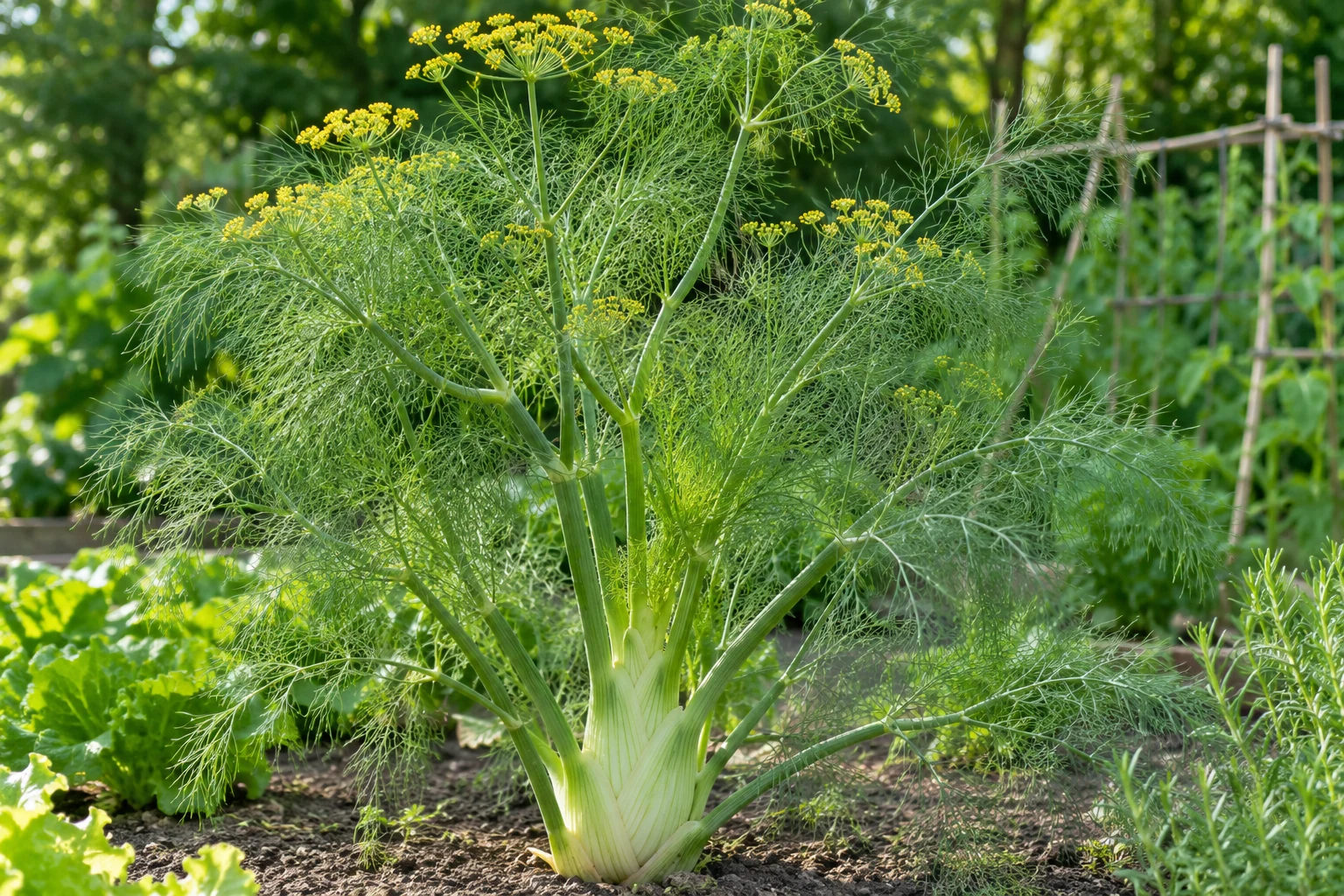
Repotting Fennel: Move Seedlings Before the Taproot Forms
Repotting Fennel: Move Seedlings Before the Taproot Forms
Quick answer
Fennel is best sown in its final bed or container because it develops a taproot and resents disturbance. If you must move it, do so while the seedling is very young, keep the root ball intact, and set it into a large final pot with free drainage. Avoid repeatedly upgrading a mature plant or trying to divide its established root. The RHS explicitly recommends sowing fennel in its final place where possible and moving indoor-started seedlings before the taproot develops (RHS fennel guide). Use the Fennel propagation guide to choose a seed-starting method that minimizes handling.
Why fennel dislikes repotting
Fennel roots extend downward as the plant establishes, and damage can slow growth or make a Florence crop more likely to bolt before a usable base forms. Moving a plant with a long root also makes it easy to bend or break the taproot. That is why transplant timing matters more than a standard annual repot calendar. Harvest-to-Table notes that fennel is best sown in place because of its taproot, and the RHS cautions against disturbing established seedlings (Harvest to Table, RHS grow guide). Florence fennel is especially sensitive to interruption because its swollen base depends on steady growth; see the watering guide for moisture management after planting.
Decide whether a move is necessary
Repot only when a young plant has outgrown its starter cell, the cell is drying too quickly, or the final pot must be upgraded before the root grows longer. A mature fennel in a suitable bed is better left in place. A container plant that is too small should ideally be moved while still young; if it is mature, weigh the risk of disturbing it against the pot’s ability to support the plant and maintain moisture. Do not move a plant solely because its top growth looks tall—common fennel naturally grows large. The RHS profile and Missouri Botanical Garden profile describe its substantial mature form.
Choose the final container first
Use a stable pot with drainage holes that is at least about 30 cm wide and deep as a starting point. Common fennel can become tall, so a heavier pot reduces tipping and a deeper mix gives roots more room. Florence fennel may be grown in a container too, but needs adequate space to develop its base and consistent moisture. Avoid planning several pot changes from a tiny cell to a medium pot and then a larger pot; sow into the final container where practical. Gardeners’ Path and Epic Gardening discuss the space and container considerations for fennel (Gardener’s Path, Epic Gardening). For a mix recipe and drainage choices, see the Fennel soil guide.
Start seed in individual modules
If outdoor conditions require starting seed under cover, sow into a deep individual module or pot rather than a crowded tray that will need root separation. The RHS recommends one seed per module and stresses that fennel should be moved while very young; Harvest-to-Table also advises individual containers if starting indoors because of the taproot (RHS grow guide, Harvest to Table). Use seed compost, keep it evenly moist, and provide bright light after emergence. Do not start in a shallow cell if you expect to hold plants for many weeks. The light guide helps choose a bright place for seedlings until hardening-off.
BBC Gardeners’ World likewise recommends sowing Florence fennel in modules because seedlings dislike root disturbance during transplanting (BBC Gardeners’ World).
Choose the right transplant stage
Move the seedling outdoors while it is still small and before the taproot has grown long. A simple cue is that it has emerged and begun to establish but is not yet tightly root-bound in its module. Avoid waiting for a large top, since roots develop below the surface and may already extend beyond the cell. Harden the plant gradually to wind, sun, and outdoor temperatures before planting; this acclimation is separate from repotting and prevents a sudden environmental shock. Utah State Extension also favors direct seeding and warns that root stress can contribute to bolting in Florence fennel (USU Extension).
Plantura also recommends moving young seedlings into a large pot or outdoor bed; its exact timing is based on a UK growing calendar and should be adapted to local conditions (Plantura).
Prepare the destination
Fill the final pot with a fresh, free-draining multipurpose compost and water it before planting if the mix is dry. Make a hole that is deep enough for the root ball to sit upright without curling the taproot. In a garden bed, loosen the planting area broadly and ensure excess water can drain away. Do not plant into a tiny pocket of amended soil surrounded by compacted, saturated ground. Have the seedling, water, and label ready so its roots spend as little time exposed as possible. The RHS recommends peat-free multipurpose compost for fennel containers and loose, light soil for outdoor sowing (RHS grow guide).
Move the root ball intact
Water the starter module in advance so its compost holds together. Hold the leaves or module, not the delicate stem; gently squeeze or tap the container until the root ball releases. Support the soil with your hand and avoid pulling on the root. If a root has grown through a drainage hole, cut the pot away rather than tugging the root free. Do not comb, tease, or rinse the roots. The goal is a single calm transfer from cell to final place, preserving the central root and surrounding compost. The RHS growing guide specifically advises planting without disturbing the roots; Epic Gardening also recommends direct sowing as a way to avoid transplant issues (Epic Gardening).
Set the seedling at its former depth
Place the root ball at the same depth it grew before. Keep the crown at the soil surface rather than burying the stem or exposing the roots. Backfill gently, firming enough to remove large air gaps without compacting the whole pot. If the root is longer than the hole, make the hole deeper instead of bending it into a J shape. Give the plant enough space for airflow and its mature form. Utah State Extension recommends spacing fennel to allow plants to develop; local spacing differs by crop type and bed, so use the packet guidance for Florence fennel (USU Extension).
Water in and let the pot drain
Water slowly around the root ball until the surrounding compost settles and excess runs from the drainage holes. Empty the saucer; do not leave the newly planted seedling in standing water. This first watering joins the new mix to the root ball but does not mean the soil should stay saturated afterward. Check the surface over the next few days and water again when the root zone starts to dry. Keep moisture even while the plant re-establishes. The Fennel watering guide explains how to read moisture in pots and beds, and Missouri Botanical Garden notes the importance of well-drained conditions for preventing root or stem rot (Missouri Botanical Garden).
Aftercare and recovery
Place the freshly moved seedling in bright light but protect it briefly from severe wind or scorching afternoon sun if it was raised indoors. Keep the mix lightly moist, not constantly wet, while new growth resumes. Do not feed immediately; fresh compost may already provide nutrients, and stressed roots are more vulnerable to a strong dose. Avoid repeated handling or turning the plant during recovery. Once it resumes growth, return it to the full-sun conditions recommended for fennel. Check the light guide to acclimate it and the fertilizer guide before deciding whether later feeding is needed.
Signs the move was too stressful
A seedling may droop briefly after a move, but persistent collapse, a bent stem, or no renewed growth can signal root damage, drying, or waterlogging. Check the soil before watering: a dry root ball needs moisture, while a saturated one needs drainage and time. A Florence seedling that bolts early may have been stressed by heat or root injury, though day length and crop timing also matter. Do not try to repair a broken taproot with a heavy fertilizer dose. Remove a failed seedling and direct-sow a replacement if the season still suits the crop. Utah State Extension lists root stress among factors that promote Florence fennel bolting (USU Extension).
When not to repot
Do not repot a healthy common fennel from the ground simply to refresh soil, divide the clump, or control its size. It dislikes root disturbance and may self-seed, so manage the plant through pruning and seed-head removal instead. Avoid moving a mature Florence plant once it has begun forming a base; harvest it when ready rather than risking late transplant shock. A plant in a pot that is already large enough for its roots and stable in wind should remain in place. The pruning guide and overview cover options that do not require root disturbance.
When to use this page vs other Fennel guides
Use this page when deciding whether and how to move a fennel plant. For sowing choices that prevent repotting, visit propagation. Use the soil guide to prepare the final medium and watering to care for a new transplant. Read the light guide for hardening off and fertilizer if growth is weak after roots have settled. Return to the Fennel overview to confirm the plant type.
Related Fennel guides
The Fennel hub identifies common and Florence fennel. Use propagation to start seed in the final place, soil to select a draining mix, and watering to establish a seedling. The light and fertilizer guides address recovery conditions; pruning explains how to manage established shoots without digging up the plant.
Conclusion
Fennel is easiest to grow when it stays in the first bed or pot where it was sown. If you need to move one, do it young, choose its final container first, and keep the taproot undisturbed. Water the root ball in, protect the seedling while it acclimates, and avoid fertilizer until growth resumes and a true need is clear. Leave mature plants in place whenever possible; direct sowing prevents most repotting problems.