How to Get Rid of Skunk Smell: Home, Pets, People
Get rid of skunk smell from your home, clothing, people, and pets. The Krebaum formula beats tomato juice—here's how to use it safely and when to call a pro.
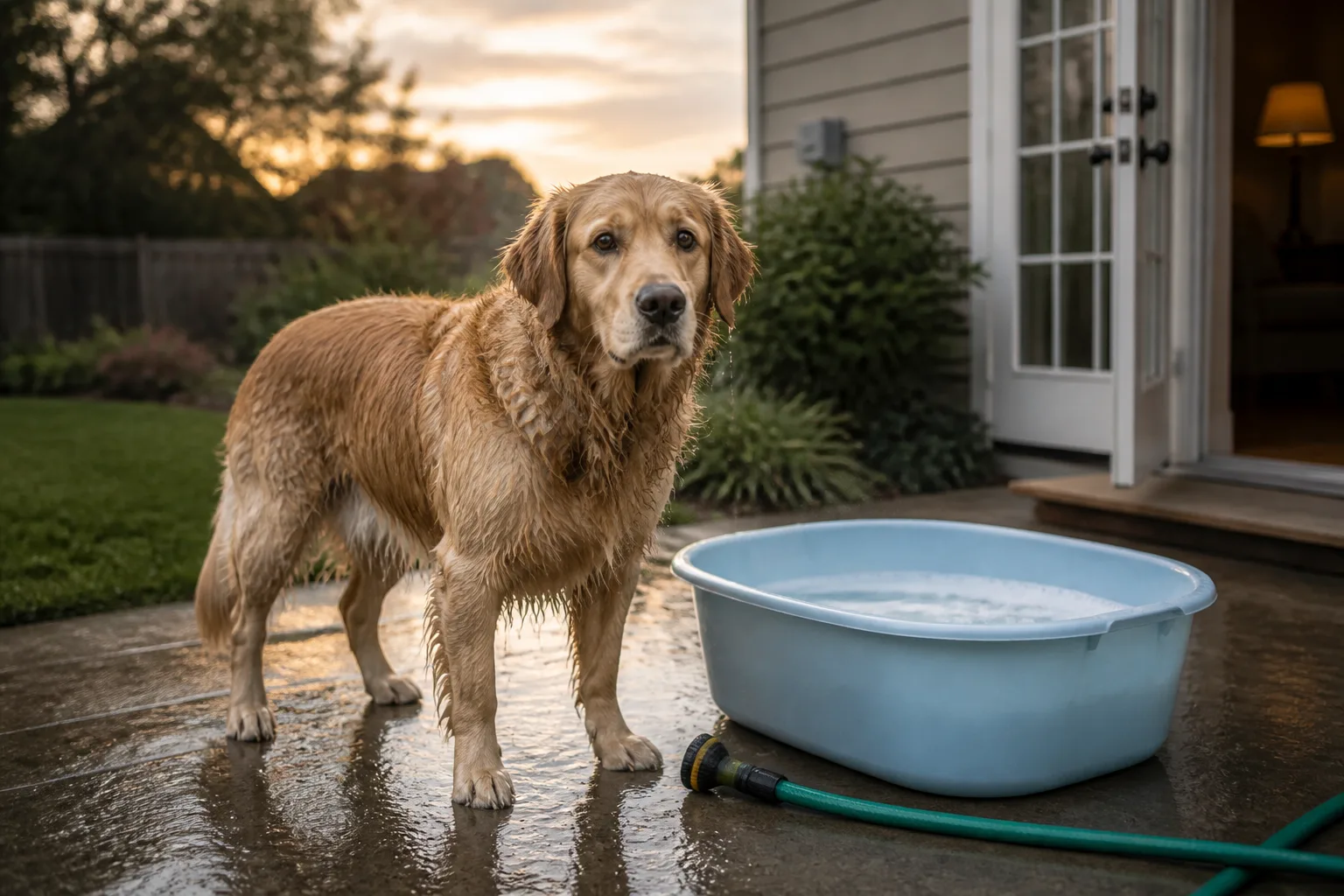
You open the back door and the smell hits before you see the dog. Rotten eggs crossed with burnt rubber—sharp, oily, and somehow already inside your sinuses. Skunk spray is not a normal bad odor you can cover with air freshener. It is a sulfur-rich oil that bonds to fur, fabric, skin, and porous wood, then reactivates every time humidity rises.
The good news: chemists and extension services have tested this problem for decades. A simple hydrogen peroxide, baking soda, and dish soap mixture chemically neutralizes the compounds that stink. The bad news: most folklore remedies—tomato juice, beer baths, a quick pond dunk—do not touch the chemistry. This guide walks you through what actually works on every surface you are likely dealing with tonight, in the order that limits spread and repeat treatments.
What Skunk Spray Actually Is (and Why It Lingers)
Striped skunks store their defensive spray in two glands beside the anus—about a teaspoon per side, enough for several shots. When threatened, a skunk can aim a fine mist or a directed stream up to 15 feet, according to University of Nebraska–Lincoln Extension. The spray is a yellow-tinted oily liquid, not an ever-present cloud like cartoons suggest.
That oil matters. Water alone does not wash skunk musk away cleanly; it spreads the oil. Dish soap is part of every serious remedy because it breaks up the lipid layer so oxidizers can reach the sulfur underneath.
Thiols, Oil, and the Humidity Problem
Skunk musk contains several sulfur-based thiols—the same chemical family that gives rotten eggs their smell. Humans can detect these compounds at concentrations as low as 10 parts per billion, per UNL Extension. Thiols are not just smelly; they are persistent. They soak into hair, carpet fibers, and unfinished wood, then slowly off-gas for days or weeks.
Here is the part that catches people off guard weeks later: humidity reactivates residual thiols. After a rainy day or a steamy shower, a couch or dog coat that seemed fine suddenly smells skunky again. That is not a new spray—it is old musk waking up when moisture hits it. Plan on multiple treatments and patience, not a single miracle rinse.
A direct facial hit can cause watering eyes, nasal burning, and temporary blindness from irritation, but skunk musk does not transmit rabies, according to UNL Extension. Still, if your pet was in a tussle with a wild skunk, call your veterinarian about rabies risk from bites or scratches—not from the smell itself.
What to Do in the First Hour After a Spray
Speed limits how far the oil travels through your house. Treat the most contaminated item outside when weather allows—especially pets and clothing—so you are not wiping musk across floors and upholstery on the way to the tub.
Contain the source. Keep the sprayed dog on a leash or in a garage or laundry room with hard flooring until de-skunked. Do not let them rub on couches, beds, or carpet. If you were sprayed, remove outer layers of clothing before walking through living spaces.
Ventilate immediately. Open windows on opposite sides of affected rooms and run exhaust fans. Fresh air will not neutralize thiols, but it lowers the concentration you are breathing while you work.
Mix the Krebaum formula fresh (recipe below) before you need a second batch. Buy a new bottle of 3% hydrogen peroxide if yours has been open for months—peroxide loses strength over time, and weak peroxide means weak results.
Replace HVAC filters if spray mist entered the return vents or the whole house smells within minutes of turning on heat or AC. A contaminated filter will keep recirculating odor until you swap it.
Skip the tomato juice. It masks nothing chemically; it only tricks a nose already overwhelmed by sulfur (more on that below).
The Krebaum Mixture: The Formula That Actually Works
In the early 1990s, chemist Paul Krebaum published a home formula that oxidizes thiols into odorless acids. Extension services and UC IPM still recommend it because it works on people, pets, and many washable surfaces when used correctly.
The standard recipe:
- 1 quart (32 oz) fresh 3% hydrogen peroxide
- ¼ cup baking soda (sodium bicarbonate)
- 1–2 teaspoons liquid dish detergent (grease-cutting, not concentrated bleach additives)
Mix in a large open container—a bucket or bowl, never a sealed bottle. Stir gently; it will fizz. Use immediately.
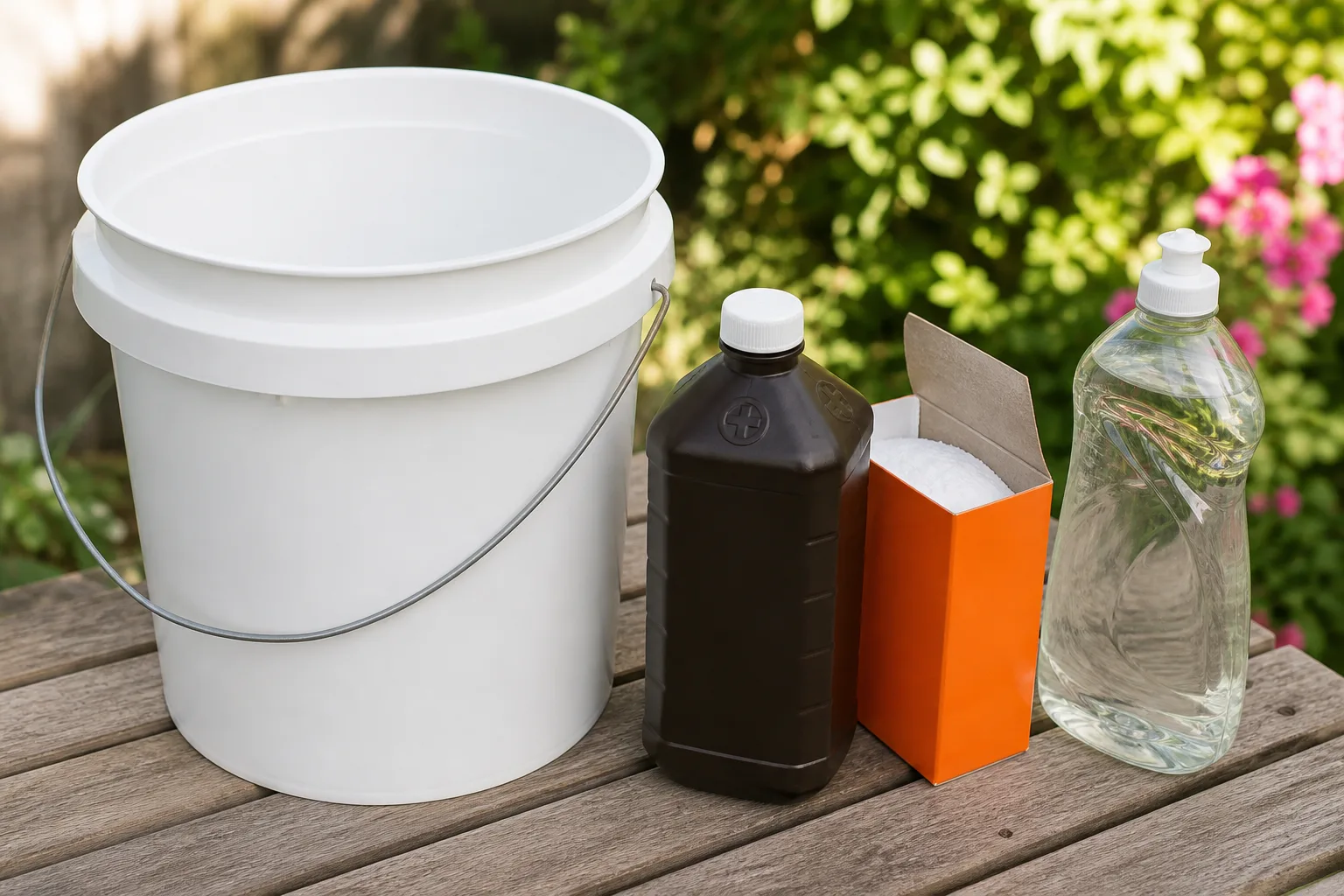
How to apply: Wet the affected area with the mixture, work it through fur or hair with your hands or a sponge, and let it sit about five minutes before rinsing thoroughly with lukewarm water. The peroxide and baking soda change the thiol chemistry; the detergent lifts the oil so those ingredients can reach it. Repeat if you still smell sulfur after the coat or skin dries—wet fur hides residual odor.
For large dogs with a chest-and-face direct hit, experienced groomers quoted by The Nature Conservancy recommend scaling up to several quarts of peroxide and saturating the worst zones until the coat dries before the final shampoo. A light misting is not enough for a point-blank spray.
Why You Cannot Bottle or Store It
The moment hydrogen peroxide meets baking soda, the mixture releases oxygen gas and becomes chemically unstable. Sealing it in a container can cause pressure buildup and explosion risk—this is not theoretical; extension bulletins warn about it explicitly. Make only what you need for one session.
Leftover mix should be diluted heavily with water and poured down the drain. Do not save it for tomorrow.
Safety Rules Before You Mix
Eyes and mouth: Keep the solution away from eyes. If spray hit the face, rinse eyes with clean water or saline first; apply the mixture only to fur and skin below the eyes unless your veterinarian directs otherwise.
Fabric bleaching: Peroxide can lighten or spot-bleach colored clothing and upholstery. Do not pour the mix directly onto your favorite jacket. For fabrics, add diluted solution during the wash cycle (see laundry section) or use commercial enzymatic skunk products labeled safe for textiles.
Never combine with vinegar or ammonia in the same space as chlorine bleach cleaners. Vinegar bowls for air freshening are fine in separate rooms; do not mix vinegar and bleach on surfaces—that creates toxic chlorine gas.
Cats: The peroxide mix is used by many owners in a pinch, but cats are more sensitive to essential oils and some detergents. Rinse thoroughly, keep product out of eyes, and call your vet if the cat was sprayed in the face or seems lethargic after treatment.
Why Tomato Juice, Beer, and Pond Dips Fail
Tomato juice persists in pop culture because it seems to work. What actually happens is olfactory fatigue: after prolonged exposure to extreme sulfur, your nose stops registering the skunk note as strongly. When you introduce a new strong smell—tomatoes, beer, oatmeal—your brain notices that scent and assumes the skunk is gone. UNL Extension is blunt: tomato juice does not neutralize musk.
Beer and oatmeal lack oxidizers at useful concentrations. A pond dunk makes things worse because water reactivates thiols without removing the oil; you spread musk across more of the coat. The only reliable approach is chemical change (peroxide mix or commercial neutralizers) plus detergent to cut grease.
Remove Skunk Smell From Your Home
Whole-house odor usually means a pet ran inside before you caught them, spray drifted through an open window, or a skunk discharged under a deck and mist carried inward. You are fighting both airborne thiols and deposited oil on surfaces.
Ventilation and HVAC Filters
Open windows and run fans for at least several hours—longer if the spray was indoors. Replace furnace and air-conditioner filters if the HVAC was running during or right after the incident. UNL Extension notes that a contaminated filter will keep pumping odor back into rooms even after you clean everything else.
If a faint smell returns only when the system kicks on, the filter is still the first suspect.
Hard Surfaces, Furniture, and Air Treatment
Vinegar bowls: Place shallow dishes of white vinegar in affected rooms for 24 hours, or simmer vinegar on the stove briefly (with ventilation) to help absorb airborne odor. Vinegar masks and absorbs some volatile compounds; it does not replace washing oily residue off surfaces.
Washable hard surfaces: Wipe non-porous furniture, baseboards, and floors with a dilute vinegar or mild bleach solution on a test patch first. UNL recommends roughly 1 cup bleach per gallon of water for spot treatment on wood or concrete where the skunk actually sprayed—bleach can stain, so test an inconspicuous area. Never mix vinegar and bleach.
Upholstery and carpet: Blot (do not rub) fresh oily residue with paper towels, then use a carpet cleaner or the peroxide mix on a hidden test spot. Steam cleaning can help lift residues once the chemistry is neutralized, but steaming raw musk without pretreatment can set the smell deeper.
Commercial room treatments: Products such as Skunk-Off, Odor-Mute, or Nature’s Miracle Skunk Odor Remover follow label directions for fabrics and air. For severe whole-house cases, professional products like Neutroleum Alpha (used by wildlife professionals, not on pets) or enzyme foggers may be warranted—see the professional section.
Skunk Odor on Clothing and Fabrics
Washable items are salvageable if you act before heat sets the smell. Do not run sprayed clothes through the dryer until odor is gone—dryer heat bonds thiols to fibers.
Standard wash method:
- Shake off outdoor debris outside; bag clothes until you can wash.
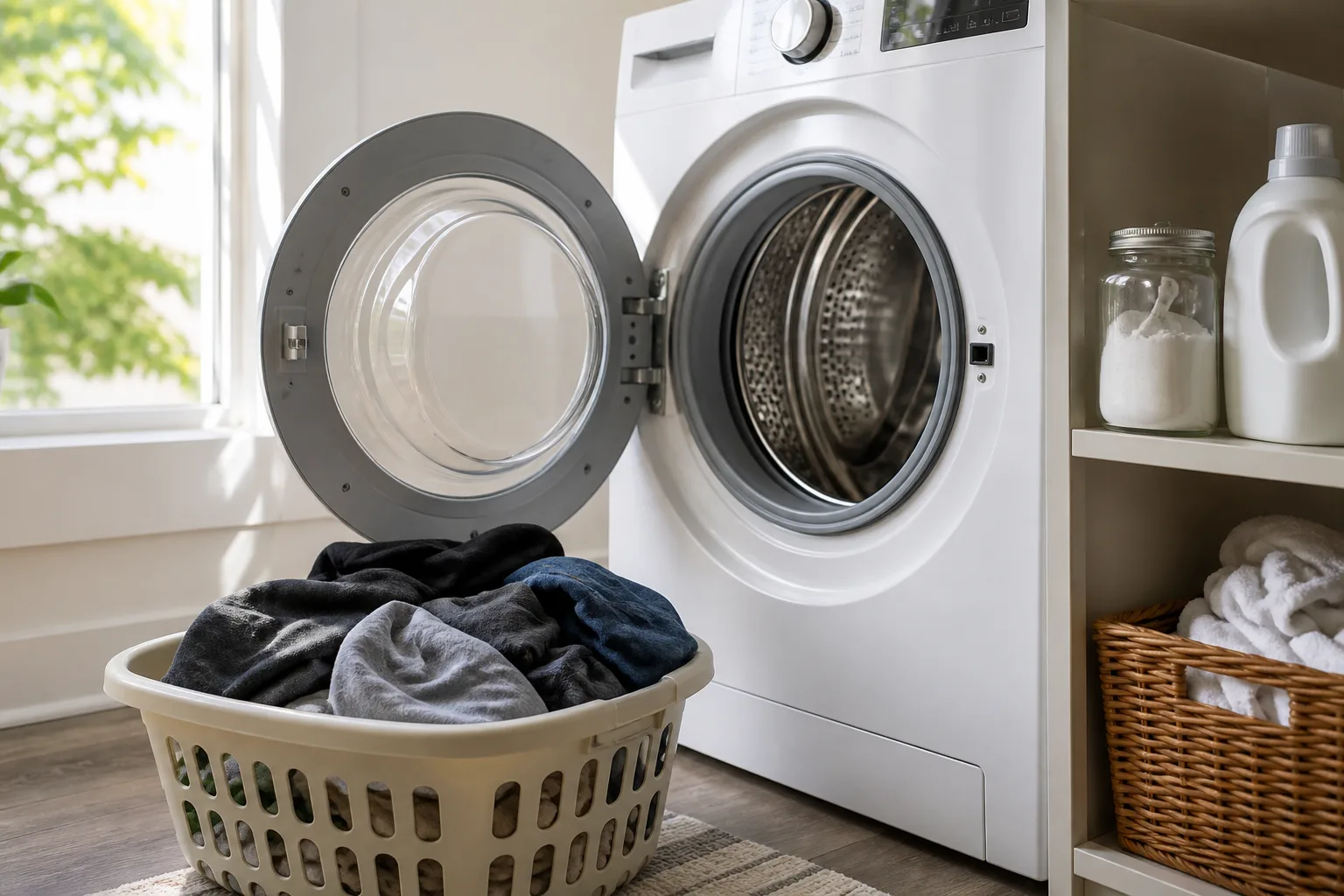
- Machine-wash with regular detergent plus ½ cup baking soda in the hottest water the fabric allows.
- Add the Krebaum mixture to the drum during the wash cycle (diluted in water) for heavy hits—or pretreat with a commercial skunk laundry product.
- Air-dry outdoors after the first cycle. Sniff when fully dry; repeat wash if sulfur returns.
- Second wash with detergent only is fine once odor is faint.
Delicates can soak 30 minutes in baking soda and detergent solution, then rinse and air-dry. Leather, suede, and dry-clean-only items need a professional cleaner—tell them it is skunk musk.
When to discard: If a coat or blanket took a direct stream and still reeks after three thorough washes, the oil may be trapped in padding or insulation layers. Keeping it often costs more frustration than replacement.
De-Skunking Cars and Outdoor Gear
For vehicle interiors, start outside: hose the exterior if spray hit the paint or wheel wells, and leave doors open to ventilate. Wipe hard surfaces with a mild solution of hydrogen peroxide, water, and a drop of baby shampoo or dish soap—test plastic and leather in a hidden spot first; peroxide can discolor some materials.
Place bowls of vinegar inside the cabin for a day or two. Replace cabin air filters if your car has them and the smell returns when the fan runs. Camping packs, boots, and nylon gear can usually tolerate a peroxide-detergent wipe followed by thorough rinsing and outdoor drying.
Porches, Decks, and Concrete
Outdoor spray spots need oxidation plus caution about stains. UNL Extension recommends 1 cup liquid bleach per gallon of water applied only where the skunk actually discharged. Scrub, let sit briefly, rinse, and retest smell after the surface dries.
Bleach will lighten untreated wood and some composite decking—always test a board end or underside first. For painted surfaces, try soap and water plus the peroxide mix on a small area before bleach.
Concrete garage floors and foundation walls tolerate dilute bleach better than cedar decks. If bleach is too risky, repeated applications of the Krebaum mix on concrete often help when the oil has not soaked in for months.
Remove Skunk Smell From People
If you were downwind of a spray cloud or your dog shook on you, treat skin and hair with the same Krebaum formula. Stand in the shower, apply the mix from a cup, work through hair with your fingers, wait five minutes, then rinse completely.
Alternatives: A baking soda bath—2 to 4 cups baking soda in a tub of warm water for 15–20 minutes—can help mild exposure, but the peroxide mix is faster for direct hits. Follow with regular shampoo and deodorant soap on a second pass.
Wash clothing you were wearing in the laundry protocol above before sitting on indoor furniture. Shower with hot water after any de-skunking session to remove residue from skin.
Remove Skunk Smell From Dogs and Cats
Outdoor dogs in skunk country seem to find trouble on schedule. Bring the pet to a wash station outside or in a garage before entering the house. Wear old clothes you can wash immediately.
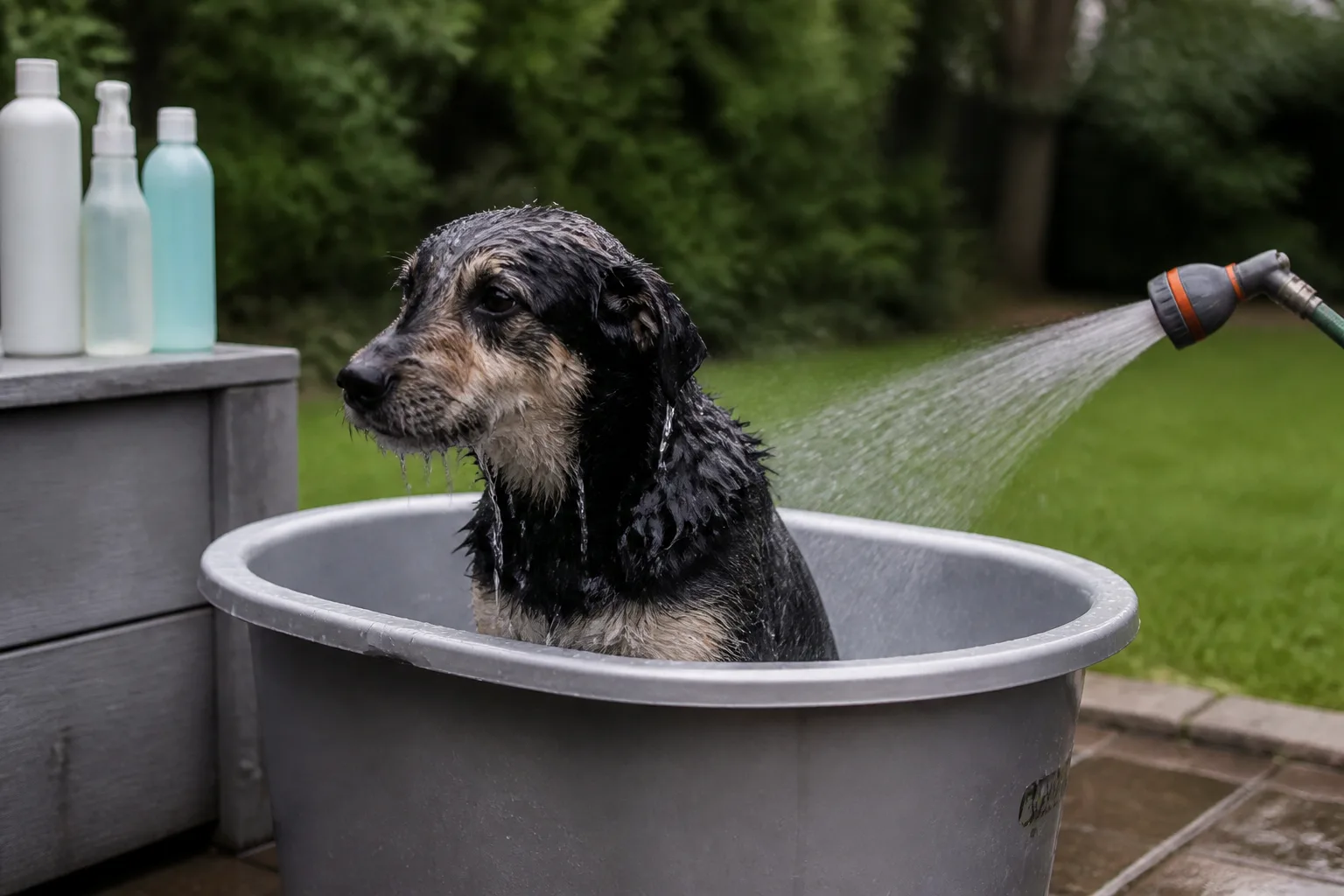
- Check eyes first. If squinting or red, flush with saline or clean water for several minutes before the peroxide bath.
- Mix a fresh batch of the Krebaum formula—double or triple the recipe for large or long-haired dogs.
- Apply generously to dry fur, especially chest, neck, muzzle, and front legs on a direct hit. Avoid eyes and inner ears.
- Wait five minutes (longer for heavy saturation if your vet agrees).
- Rinse thoroughly with lukewarm water until water runs clear.
- Shampoo with regular pet shampoo and rinse again.
- Dry the coat completely, then smell test. Repeat the peroxide wash on any zone that still smells when dry—do not wet-rinse early on missed patches or thiols will reactivate later.
Keep the pet warm between baths; peroxide baths strip oils and can chill small animals.
Face, Eyes, and Direct Hits
Facial spray is the hardest case. Rinse eyes with water or veterinary eye wash until redness improves. Use a sponge to apply peroxide mix around the muzzle, avoiding eyes and mouth. If the dog rubs its face on carpet after treatment, you may need to re-treat both pet and rug.
Temporary blindness from irritation usually clears with flushing, but call your vet if squinting persists beyond an hour or if the cornea looks cloudy.
When to Use Commercial Pet Products Instead
Over-the-counter de-skunk shampoos (Skunk-Off, Nature’s Miracle, etc.) are pre-formulated neutralizers that avoid the fizzing mix—useful if you are nervous about peroxide near eyes or you need a stable bottle on hand. UC IPM notes that wildlife professionals sometimes use Neutroleum Alpha on buildings and gear, but it is not for pets or people.
If your dog was bitten or has open wounds from the encounter, skip home chemistry and call your veterinarian for wound care and rabies guidance.
When the Smell Won’t Go Away
Odor intensity should decrease over one to two weeks and fade substantially by the third week under normal conditions, per UNL Extension. If smell strengthens instead of fading, or spikes every night without a new spray, suspect a live skunk den or a dead skunk under a deck, in a window well, crawl space, or shed.
Skunks do not usually respray the same wall repeatedly—frequent odor often means a family living on the property, especially during February–March breeding season. See our guides on how to repel skunks and whether Pine-Sol deters skunks if encounters are becoming routine.
Dead Skunks Under the Deck or in Crawl Spaces
A decaying skunk releases musk for a long time. Locate the carcass with a flashlight in voids under low decks; fiber-optic scopes help in tight gaps. Wear gloves, eye protection, and a dust mask; use a shovel to double-bag remains and dispose per local rules. Rabies virus can persist in dead wildlife until decomposition is advanced—do not handle bare-handed.
Spray the soil and surrounding area with a deodorizer, and consider a 10% bleach rinse on hard surfaces after organic material is removed. Replace any insulation or soil that absorbed fluids if odor remains extreme.
When to Call a Professional
DIY methods cover most single-incident sprays on pets, people, and washable items. Call an odor remediation specialist or auto detailer when:
- The smell permeates an entire house after repeated ventilation and filter changes
- Carpet, padding, or drywall absorbed a heavy indoor spray
- A dead skunk is in a location you cannot safely reach
- Your vehicle interior still smells after two full treatment cycles
- Anyone in the home has asthma or chemical sensitivity and cannot tolerate peroxide or bleach treatments
Professionals use commercial neutralizers (Neutroleum Alpha, Ecosorb/Freshwave, enzyme foggers) and HEPA air scrubbing that exceed what grocery-store products provide. Get a written scope: source removal first, then surface treatment, then air cleaning.
Conclusion
Skunk smell is stubborn because it is oily sulfur chemistry, not ordinary household stink. The fix is equally specific: oxidize thiols with a fresh peroxide–baking soda–dish soap mix, cut the oil with detergent, ventilate, replace contaminated HVAC filters, and repeat until dry surfaces pass a sniff test. Tomato juice and beer only fool a tired nose; they do not change the molecules.
Treat pets and clothes outside the living space, wash fabrics without dryer heat until clean, and investigate persistent odor as a possible den or carcass—not bad luck. For prevention after you have recovered, reduce attractants and close entry points under sheds and decks—our skunk repellent guide covers long-term yard strategies. Keep a fresh bottle of peroxide and an extra box of baking soda on hand if you live in skunk country; the second encounter always comes faster than you expect.



