Annual Vinca Care: Sun, Water, Soil, and Blooms
Learn how to grow annual vinca in sun, warm soil, and fast-draining beds. Get planting timing, watering, seed, container, toxicity, and troubleshooting advice.
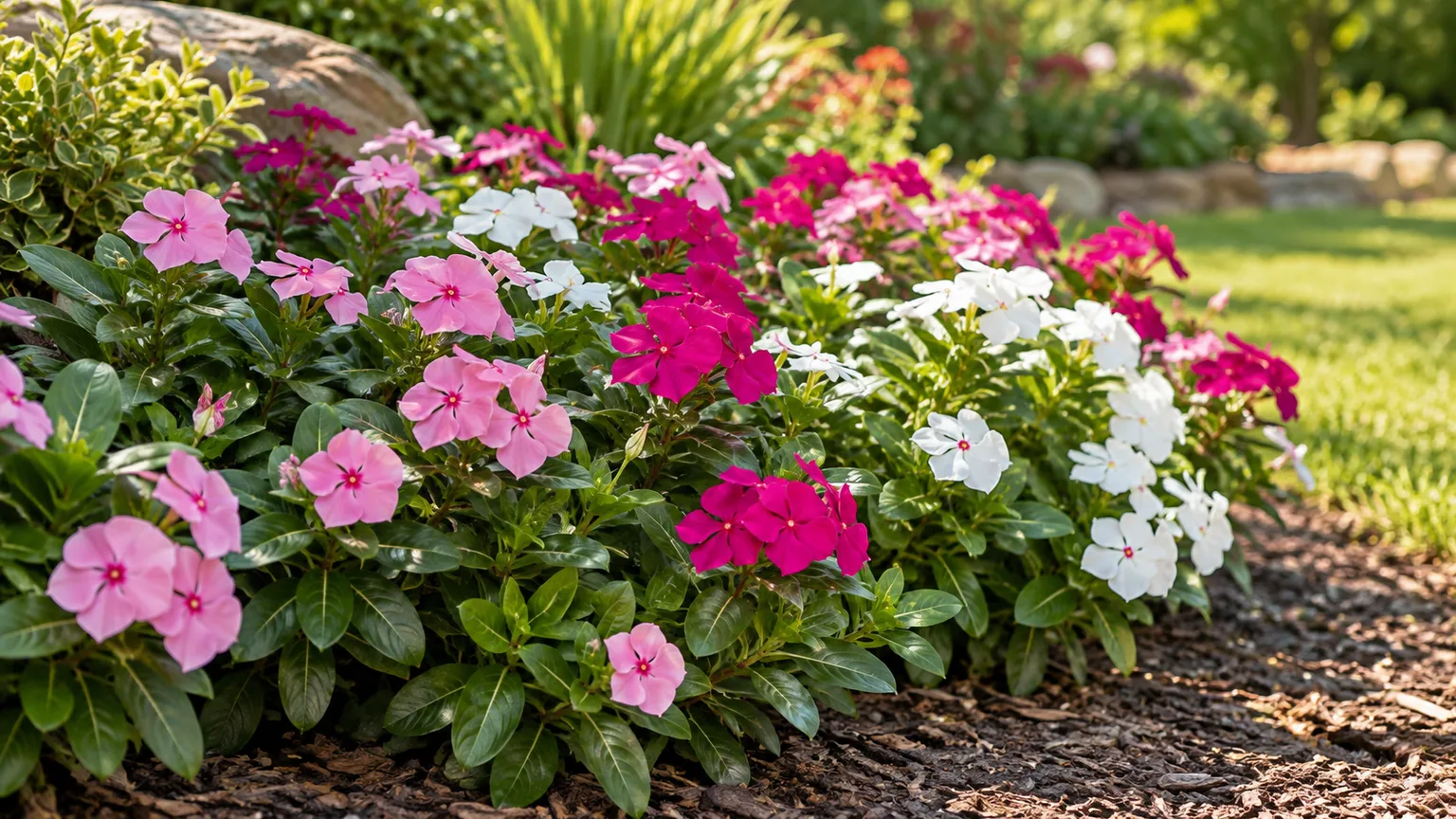
Annual vinca (Catharanthus roseus), also called Madagascar periwinkle or rosy periwinkle, is the flower to choose when a sunny bed becomes too hot and dry for many soft-stemmed annuals. Its glossy leaves, five-petaled flowers, and naturally tidy habit keep color going through summer with less fuss than many bedding plants—but only if you respect its one non-negotiable: warm roots in soil that drains quickly.
This is not the shade-loving periwinkle that creeps beneath trees. Annual vinca is a tropical perennial grown as a warm-season annual in most gardens. It dislikes frost, cold wet soil, and frequent shallow watering. Plant it after the soil has warmed, give it direct sun, and let the root zone dry slightly between thorough waterings.
Annual vinca at a glance
| Care factor | Practical target | Why it matters |
|---|---|---|
| Botanical name | Catharanthus roseus | Prevents confusion with Vinca minor |
| Light | Full sun; light afternoon shade in extreme heat | More light usually means stronger, less leggy growth |
| Soil | Loose, well-drained soil; sandy loam is ideal | Saturation is a bigger risk than brief dryness |
| Water | Deeply when the surface dries; less often in the ground than in pots | Frequent wetting encourages root and stem problems |
| Planting time | After frost danger and after cold spring soil has warmed | Roots stall in chilly, saturated beds |
| Mature habit | Commonly 6–18 inches tall and wide; trailing types spread farther | Series vary, so read the plant tag |
| Bloom season | Summer until cooling weather or frost | Heat supports flowering rather than stopping it |
| Safety | Toxic if eaten by people or pets | Place it where curious children and animals cannot chew it |
NC State Extension and the Missouri Botanical Garden both identify annual vinca as Catharanthus roseus, a warm-climate plant in the dogbane family. The name matters at the garden center: Vinca minor is a different, creeping perennial groundcover with a different light range, habit, and containment concern.
What makes Madagascar periwinkle different
Annual vinca earns its reputation for heat tolerance from its leathery foliage and ability to keep flowering when many cool-season annuals collapse. That does not mean it is indestructible. A plant can tolerate dry weather once established and still fail if it is planted into a compacted bed that holds water around the crown.
Flowers may be white, pink, rose, red, lilac, or bicolored, often with a contrasting eye. Upright series suit borders and large pots; trailing series spill from window boxes and hanging baskets. Some newer series are bred for larger flowers, branching, or disease resistance, but no cultivar can compensate for poor drainage.
Choose the right site before planting
Start with the site, not the color. Annual vinca is a good fit for a south- or west-facing border, a hot patio container, a raised bed, or a sunny strip where the soil dries after rain. It is a poor fit for a low pocket that stays damp, an unamended clay basin, or a shaded bed where stems stretch toward light.
Light, heat, and airflow
Aim for at least six hours of direct sun. Full sun produces the most compact habit and reliable flowering. In a desert or very hot inland climate, light afternoon shade can reduce leaf scorch, but it should not turn the plant into a shade annual. Too much shade creates weak, elongated stems and fewer flowers.
Leave air around each plant. Annual vinca looks sparse when first planted, but it fills in quickly. Packing plants tightly to create instant impact traps humidity between leaves and makes leaf spots or stem problems more likely. The best spacing is the one that lets you water the soil without splashing foliage and inspect the crown.
Soil and drainage
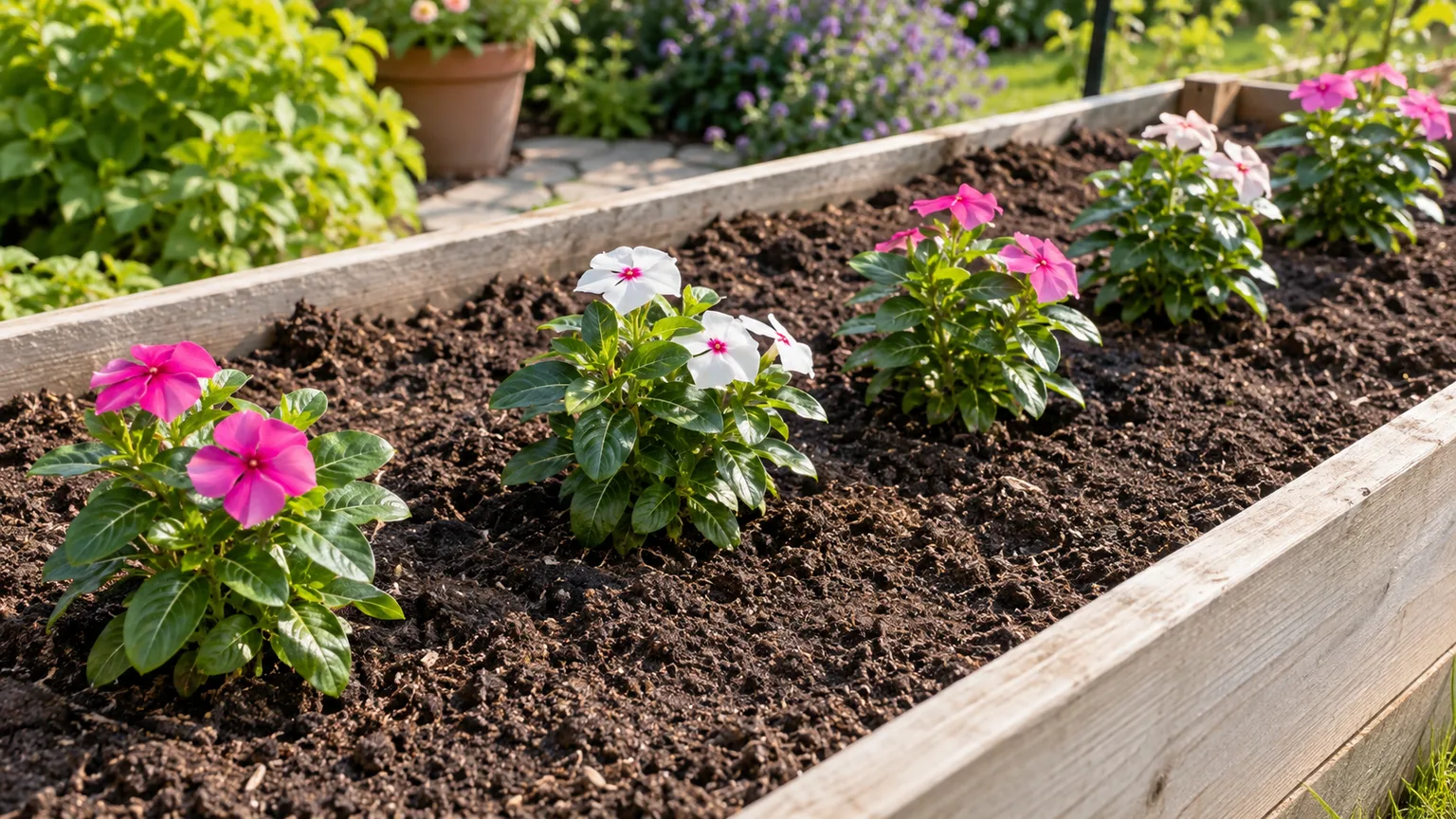
The ideal bed drains within a few hours of a thorough rain. Loam or sandy loam with modest organic matter works well. If you have heavy clay, improve the whole planting area with compost and coarse organic structure rather than digging a tiny hole and filling it with a dramatically different mix. That “pot in the ground” effect can collect water around the root ball.
Raised beds are useful when the native soil stays wet. You can also plant on a gentle mound. Do not add a thick, moisture-holding mulch against the stem; leave a small collar of bare soil around the crown.
Plant annual vinca at the right time
Wait until the last spring frost has passed and nighttime temperatures are consistently mild. A practical cue is to plant annual vinca around the time warm-season tomatoes go outdoors, once the soil is no longer cold to the touch. Calendar dates vary by climate, but the soil-temperature decision is more reliable than a fixed month.
Cold, wet spring weather is the most avoidable annual-vinca failure. A transplant can look healthy at the store, then stop growing after a week in chilled mud. If an unexpected cold snap is coming, keep containers sheltered rather than rushing them into the bed.
Bed spacing and transplanting
Water the nursery cell before planting. Slide the root ball out without pulling the stem, loosen only circling roots, and set the plant at the same depth it grew in its container. Press soil gently around it, then water at the base until the surrounding soil is evenly settled.
Space compact plants about 8–12 inches apart, widening the gap for vigorous cultivars or humid climates. Trailing types need room to spill. Use the mature width on the label as a starting point, but remember that a plant given more light and warmth may fill its space faster than a spring transplant in a cool region.
For the first month, check the root zone every few days. Water when the top inch is dry and the plant has not yet rooted beyond its original plug. After roots move into the bed, shift to deeper, less frequent watering.
Container setup
Choose a pot with drainage holes and use a commercial potting mix that drains freely. Do not use garden soil alone in a container; it compacts and stays wet around the roots. A 10- to 12-inch pot can hold one vigorous plant or a small group of compact plants, but do not crowd the container just because it looks empty on planting day.
Containers dry faster than beds, especially hanging baskets and dark pots on hot paving. Gardenia’s practical Catharanthus profile also emphasizes fast drainage and a warm, sunny position. Check with a finger or moisture meter rather than following a calendar. Water thoroughly until excess leaves the drainage holes, then empty a saucer so the pot is not standing in water.
Water and fertilize without soft, weak growth
Annual vinca wants a rhythm of thorough watering followed by a slight dry-down. In the ground, water when the upper inch or two is dry and the plant shows early signs of thirst—not after it has collapsed. In containers, check more often because the smaller soil volume loses moisture quickly.
Morning watering at the soil line is the safest default. Drip irrigation or a narrow spout keeps leaves dry and reduces splash onto lower foliage. Overwatering is not just a waste problem; oxygen-starved roots cannot support healthy top growth, so the plant can look wilted even while the soil is wet.
Mix compost into the bed before planting or use a slow-release fertilizer according to the label. Containers may need a dilute, balanced feed during active growth because repeated watering carries nutrients out of the pot. Avoid repeated high-nitrogen feeding: huge leaves and soft stems are not the same as more flowers.
Grow fuller plants and more flowers
Give annual vinca strong light, adequate spacing, and consistent root-zone moisture while it establishes. Most modern types are self-cleaning, so deadheading is optional rather than a weekly chore. Removing a damaged stem or a few old flowers can improve appearance, but the plant does not need a hard haircut to keep blooming.
If a plant is leggy, first ask whether it is shaded or crowded. More fertilizer will not solve a light problem. Move container plants to brighter light early in the season; in a bed, thin neighboring plants and improve airflow. If the plant has plenty of sun but few flowers, check for excess nitrogen, waterlogged soil, or roots that were planted too early.
Pollinators may visit the flowers, especially butterflies, but annual vinca is primarily a bedding plant rather than a high-value native habitat plant. Combine it with locally appropriate nectar plants if your goal is a broader pollinator garden.
Choose a series or cultivar
Series differ in height, spread, bloom size, flowering earliness, and tolerance of heat or disease. Compact types suit edging and pots. Upright types make a stronger block of color in borders. Trailing types are useful for window boxes, but they need a larger moisture reservoir than their small crowns suggest.
Look for labels describing branching, mature width, and resistance traits rather than choosing only by flower color. If you garden in a humid region, prioritize airflow and a disease-resistant series. If you grow from seed, confirm whether the packet is intended for an early, compact, or trailing habit; seedlings may not match a named hybrid saved from last year’s flowers.
Start annual vinca from seed
Seed starting saves money but requires patience. Begin 12–15 weeks before your average last frost because vinca seed can take 14–21 days to germinate and seedlings grow slowly at first. Sow into a sterile, soilless seed-starting mix about 1/8 inch deep, keep the mix evenly moist, and provide warmth around 75–78°F.
Once seedlings emerge, give them strong light for about 14–16 hours daily. A sunny window may be insufficient in late winter; a grow light kept close enough to prevent stretching produces sturdier plants. Water from the bottom or with a fine stream so the seedlings are not knocked over.
Before moving them outside, harden off for about 7–10 days. Start with bright shade and a protected position, then increase direct sun and wind exposure gradually. Transplant after frost danger has passed and the bed is warm. Do not judge a seedling’s final vigor by its first few weeks; vinca often accelerates when temperatures rise.
Because many garden-center vincas are hybrids, saved seed may not reproduce the parent’s flower color, size, or habit. Treat packet seed as the reliable starting point when a specific series matters.
Propagate from cuttings responsibly
Stem cuttings can preserve a desirable plant, but first check the label for plant-patent or propagation restrictions. Do not propagate a protected cultivar for sale or distribution without permission.
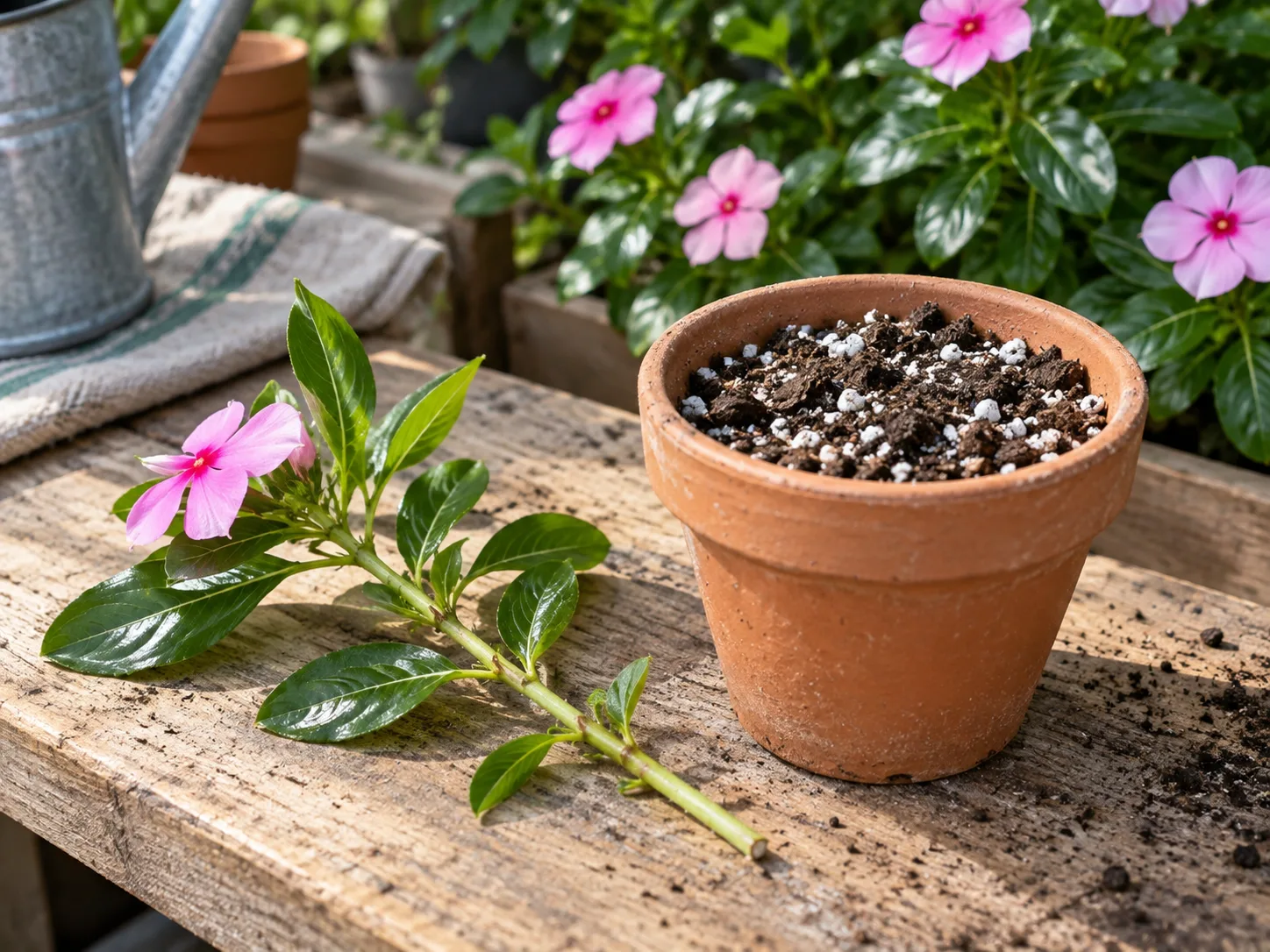
Take a 4–6-inch cutting from a healthy, nonflowering stem. Remove the lower leaves and place the cutting in clean water or a sterile, lightly moist propagation mix, keeping the leafless nodes in contact with the rooting medium. Set it in bright light out of harsh midday sun. If rooting in water, change cloudy water promptly.
Once roots are several centimeters long, pot the cutting into a well-drained mix and keep it evenly, not constantly, moist while it transitions. In cold climates, cuttings are easier to keep indoors through winter than mature plants because annual vinca is frost-sensitive.
Solve yellow leaves and wilt
Yellow, wilted leaves most often signal a root-zone problem rather than a simple need for more fertilizer. Feel the soil before you act. If it is wet several inches down, stop watering, improve drainage, and inspect the crown for soft or dark tissue. If the soil is bone dry and the plant recovers after a deep watering, increase the interval or soil volume—especially in a pot.
Uniform yellowing on older leaves can also follow nutrient depletion in a heavily watered container. Feed according to the product label only after correcting moisture. Yellow new growth with green veins can have several causes, including pH-related nutrient availability, so do not treat it with a homemade remedy without a soil test.
If a plant wilts every afternoon but the soil is moist, shade, heat, root damage, or disease may be involved. A wilted plant in saturated soil is more concerning than a plant that briefly droops in a heat wave. Remove one from its pot if necessary and inspect roots rather than watering on autopilot.
Diagnose brown spots and stem problems
Brown spots become more likely when foliage stays wet, plants are crowded, or water splashes soil onto leaves. Remove badly affected leaves with clean shears, discard them, and increase spacing and airflow. Water at the soil line and avoid working through wet plants.
Stem rot is favored by persistent moisture around the crown. Remove a collapsing plant rather than spreading contaminated debris through the bed. If symptoms progress across multiple plants, photograph the pattern and contact your local extension service for diagnosis; several leaf-spot and wilt diseases can look similar at home.
Aster yellows is a separate concern associated with phytoplasmas spread by leafhoppers. Plants may show yellow-green foliage, abnormal flower growth, or distorted shoots. There is no useful home cure for an infected plant: remove it and control weeds that can shelter vectors, while avoiding unnecessary broad-spectrum insecticide use that harms beneficial insects. The UC Statewide Integrated Pest Management Program is a useful diagnostic reference when symptoms are unclear.
Annual vinca usually has few serious insect problems, but slugs and snails can chew leaves in damp beds, and aphids or mites may appear on stressed plants. Start with inspection. Look under leaves and around the soil surface, rinse small colonies with water, and remove hiding places such as boards or dense wet mulch.
Use only a product labeled for the crop and pest if additional control is needed, and follow its label exactly. Do not spray open flowers in a way that exposes visiting bees. Healthy spacing, accurate watering, and removing badly infested tissue often solve more problems than routine spraying.
Deer and rabbits may browse less than they do some tender annuals, but resistance is not a guarantee. Protect a new planting if local wildlife pressure is high.
Annual vinca safety around people and pets
All parts of Catharanthus roseus should be treated as toxic if eaten. The plant contains vinca alkaloids, and the ASPCA toxic and non-toxic plant database lists periwinkle among plants that can harm pets. Keep pots away from animals that chew foliage, remove fallen trimmings, and teach children not to taste garden plants. Wear gloves if you are sensitive to plant sap, then wash hands after pruning.
If a child or pet may have eaten annual vinca, do not wait for symptoms or try to induce vomiting unless a poison-control professional or veterinarian instructs you. Keep the plant label or a clear photograph and contact an appropriate poison-control or veterinary service promptly. Toxicity is one reason a beautiful pot on an inaccessible patio can be a better placement than a low bed beside a pet run.
Annual vinca versus Vinca minor
The shared common name causes avoidable mistakes. Annual vinca is Catharanthus roseus: a heat-loving, upright or trailing bedding plant with large, colorful flowers. Vinca minor is a cool-hardy, creeping evergreen groundcover commonly used in shade or part shade. They are not interchangeable in care, appearance, or garden behavior.
Check the botanical name on the tag before buying. If you want summer color in a hot sunny border, choose Catharanthus. If you are considering a perennial groundcover, research Vinca minor separately and check local invasive-plant guidance before planting.
Seasonal care from planting to frost
In spring, delay planting until the soil warms. Set up drainage, transplant gently, and protect young plants from cold nights. In early summer, establish a deep watering rhythm, keep weeds from crowding the crowns, and pinch only if a specific cultivar needs shaping.
During peak heat, inspect pots daily and beds several times a week. Water at the base when the surface dries, remove diseased leaves, and avoid pushing soft growth with excess fertilizer. As nights cool, flowering slows and frost will kill the plant in climates where it is grown as an annual.
At season’s end, remove diseased material from the bed and empty containers rather than carrying problems into the next crop. In frost-free Zones 9–11, annual vinca may persist as a short-lived perennial, but cold snaps, wet winters, and local disease pressure still determine whether it is worth keeping. Treat the plant as a seasonal annual unless your climate reliably supports it.
Conclusion
The reliable way to grow annual vinca is simple but specific: wait for warm soil, provide direct sun, plant into fast-draining ground, and water deeply enough to establish roots without keeping the bed wet. Choose spacing for airflow, use containers with real drainage, start seed early if you want unusual series, and diagnose yellow leaves by checking moisture before adding fertilizer.
When you also keep the plant away from children and pets, annual vinca becomes what it is best at being—a long-flowering, heat-tolerant source of color for the part of the garden where many other annuals struggle.