Are Spider Plants Toxic to Cats? What Owners Need to Know
Learn whether spider plants are toxic to cats, what to do after a bite, which symptoms need a vet, and safer ways to keep curious cats from chewing houseplants.
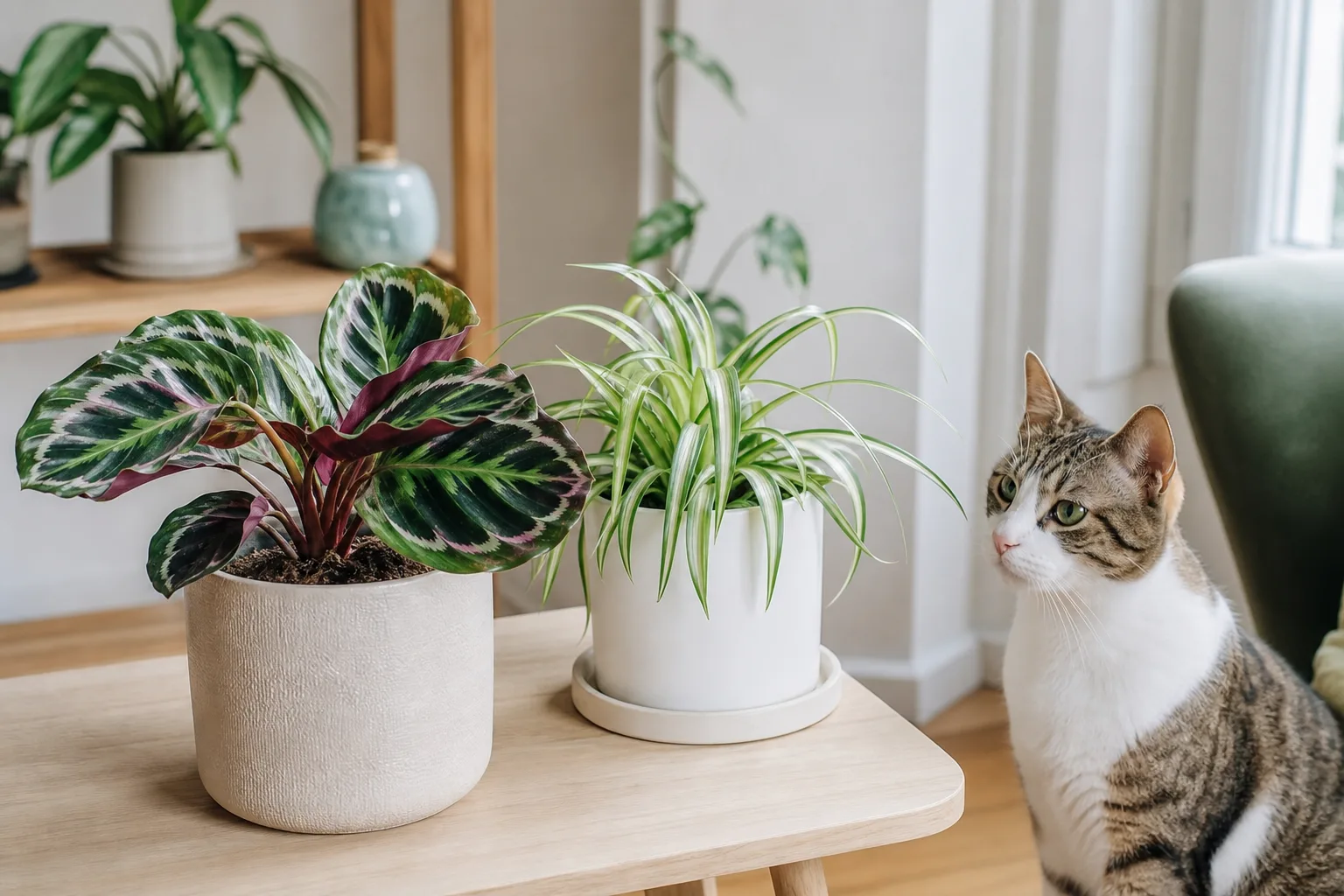
If your cat has just nibbled a spider plant, the short answer is reassuring: the ASPCA lists spider plant (Chlorophytum comosum) as non-toxic to cats. That classification means the plant is not expected to cause the kind of poisoning associated with a toxic species. It does not mean a cat should eat the leaves freely, or guarantee that an individual cat will feel fine after chewing them. The ASPCA’s plant listing confirms the species and its non-toxic classification.
Plant material can still upset a cat’s stomach, and a cat vomiting after chewing a spider plant does not by itself prove poisoning. The more important questions are whether you have identified the plant correctly, how your cat is acting, and whether any symptoms are present. If the plant could be something else—or your cat is unwell—contact a veterinarian for advice rather than relying on the common name alone.
Are spider plants poisonous to cats? The short answer
For a correctly identified spider plant, the available ASPCA classification is non-toxic to cats. The entry also lists ribbon plant and spider ivy as common names and identifies the scientific name as Chlorophytum comosum. That makes the species name useful when you are checking a plant label, asking a veterinarian, or comparing the plant with a database entry.
This is a species-specific answer, not a blanket statement about every plant with “spider” or “lily” in its name. A spider plant is not a true lily, and it should not be confused with a different plant because several common names overlap. If you are not confident about the identification, take a clear photo of the whole plant and its leaves and ask a veterinary professional or poison-control service to help assess the exposure.
What “non-toxic” means—and what it does not mean
“Non-toxic” is a useful toxicology classification, but it is easy to read more into it than the listing actually says. It does not promise that the plant is edible, nutritious, or harmless in unlimited quantities. It also does not set a universal amount that every cat can eat without a reaction. The ASPCA entry classifies the plant; it is not a feeding recommendation or a substitute for evaluating an individual cat.
There is a practical difference between poisoning and stomach upset after eating vegetation. A toxic plant contains substances that can cause a specific harmful effect. By contrast, a cat may vomit after eating a plant that is not classified as toxic because plant material is an unsuitable or irritating thing for that cat to swallow. VCA notes that dietary indiscretion, including eating plants, can cause minor intestinal upset, while vomiting can also have many other causes. (VCA’s guidance on vomiting in cats is useful when deciding whether a symptom needs attention.)
The listing also cannot account for everything around a potted plant. Soil amendments, fertilizer granules, pesticide residue, decorative materials, standing water, or a neighboring plant could create a separate problem. If your cat chewed the pot contents or may have reached a treated plant, tell the veterinarian what else was present instead of assuming the spider plant itself explains the exposure.
What happens when a cat eats a spider plant?
Many cats that take a small exploratory bite remain well. Others may drool briefly, gag, or vomit after chewing leaves; those signs can reflect irritation or swallowed plant material and do not identify the cause on their own. A cat that eats a larger amount may also swallow more fibrous material than its stomach tolerates, but the ASPCA listing does not give a dose threshold for spider plants. There is no reliable number of leaves to use as a “safe amount.”
Watch your cat’s behavior, not just the plant. If the cat is alert, breathing normally, and behaving as usual after a small bite from a plant you are sure is Chlorophytum comosum, you can remove the plant and keep an eye out for changes. If vomiting repeats, your cat seems painful or unusually quiet, or you cannot confirm the species, call your veterinarian for case-specific advice. An unrelated illness can happen at the same time as plant chewing, so avoid assuming that every symptom came from the plant.
The condition of the pot matters too. Cats sometimes dig or chew in the soil, eat bits of moss or decorative stone, or lick water that has collected in a saucer. Those exposures are not covered by a spider-plant toxicity entry. If you saw your cat swallow something besides a leaf, describe it when you call.
Which symptoms mean you should call a veterinarian?
Contact a veterinarian promptly if your cat vomits repeatedly, cannot keep water down, has diarrhea, becomes lethargic, loses its appetite, seems to have abdominal pain, shows signs of dehydration, or has blood in its vomit. VCA lists these as signs that warrant veterinary attention when a cat is vomiting. If your cat has difficulty breathing, collapses, has a seizure, or is unconscious, go to an emergency veterinary clinic immediately. (VCA’s vomiting guidance and the ASPCA’s poisoning-response steps explain when symptoms raise the urgency.)
One episode of vomiting does not tell you whether the plant was toxic. It may follow a bite of vegetation, but it may also be unrelated. The difference matters because treating all vomiting as poisoning can cause unnecessary alarm, while dismissing repeated vomiting as “just the plant” can delay care for another problem.
Call even if your cat looks normal when the exposure involves a plant you suspect is toxic or cannot identify. Some poisonings can have delayed effects, so waiting for symptoms is not a safe way to rule them out. A professional can consider the plant, amount, timing, and the cat’s age and health together.
What to do after a suspected bite
First, move your cat away from the plant and remove loose leaves or plantlets so there is no second bite. Check whether your cat is alert and breathing normally, then look at the plant and the surrounding pot for damage, missing leaves, disturbed soil, fertilizer pellets, or other material that may have been swallowed. If you have more than one cat, check each one rather than assuming only the cat you saw was exposed.
Next, confirm the plant identity. A store tag or botanical label that says Chlorophytum comosum is more useful than a vague label such as “houseplant.” If you are unsure, photograph the entire plant, its leaf pattern, and any runners or plantlets. Do not guess based on a plant’s common name; several unrelated plants have similar names.
If the plant is definitely a spider plant and your cat is acting normally after a small nibble, remove access and monitor. If your cat has symptoms, ate an unknown amount, chewed soil or a product, or may have reached another plant, call your regular veterinarian. In the United States, ASPCA Animal Poison Control is available at (888) 426-4435; a consultation fee may apply. Elsewhere, contact a local veterinarian or animal poison service. (ASPCA Poison Control explains its hotline, and its poisoning-response guide recommends sharing details about the pet and exposure.)
Do not try to make a cat vomit, and do not give hydrogen peroxide, salt, oil, milk, or medication as a home remedy unless a veterinary professional specifically directs you. The ASPCA says there is no safe at-home method to induce vomiting in cats and cautions that improvised treatments can cause additional harm. Your first step for a possible toxic exposure is to call a veterinarian or poison-control professional, who can tell you whether the cat needs to be seen.
What to have ready when you call
Write down when the chewing may have happened, what part of the plant is missing, and your best estimate of how much was eaten. Keep the plant label or a clear photo nearby. Note any vomiting, drooling, appetite change, diarrhea, or behavior change, including when each sign started. A veterinarian may also ask about your cat’s approximate weight, age, medical conditions, and current medications.
Avoid trying to identify a plant from one clipped leaf if the full plant is available to photograph. A picture of its growth habit and any plantlets can be more useful. If there is a fertilizer or pesticide product near the pot, save the packaging or take a photo of its name and ingredients; do not bring loose chemicals into a clinic without instructions.
How to identify a real spider plant
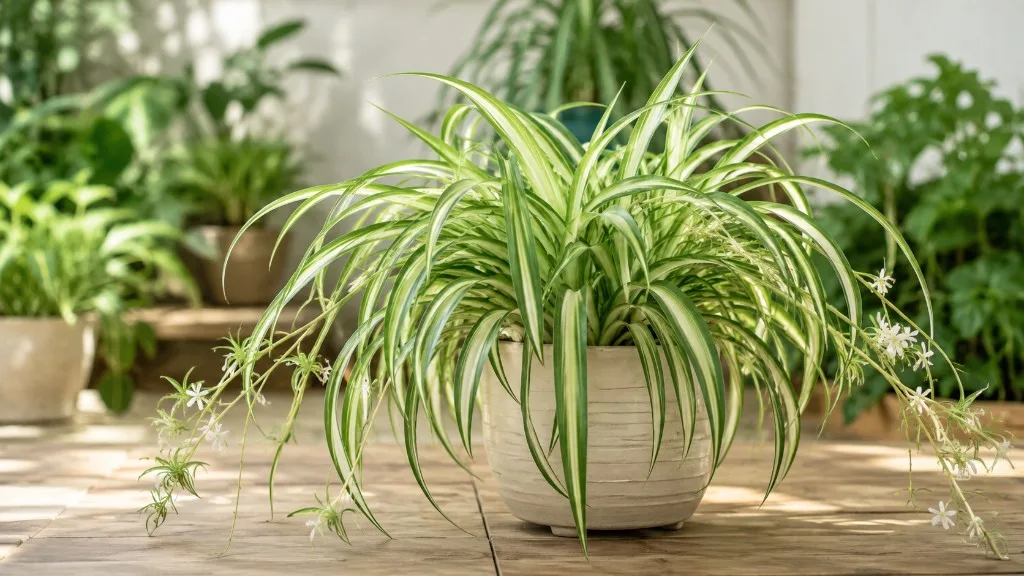
The common houseplant called a spider plant is Chlorophytum comosum, a member of the Asparagaceae family. It usually grows as a rosette of narrow, arching, grasslike leaves, often green with a white or cream stripe. Mature plants send out long runners, called stolons, that may carry small plantlets and flowers. NC State Extension’s plant profile describes these features and notes how the plantlets form.
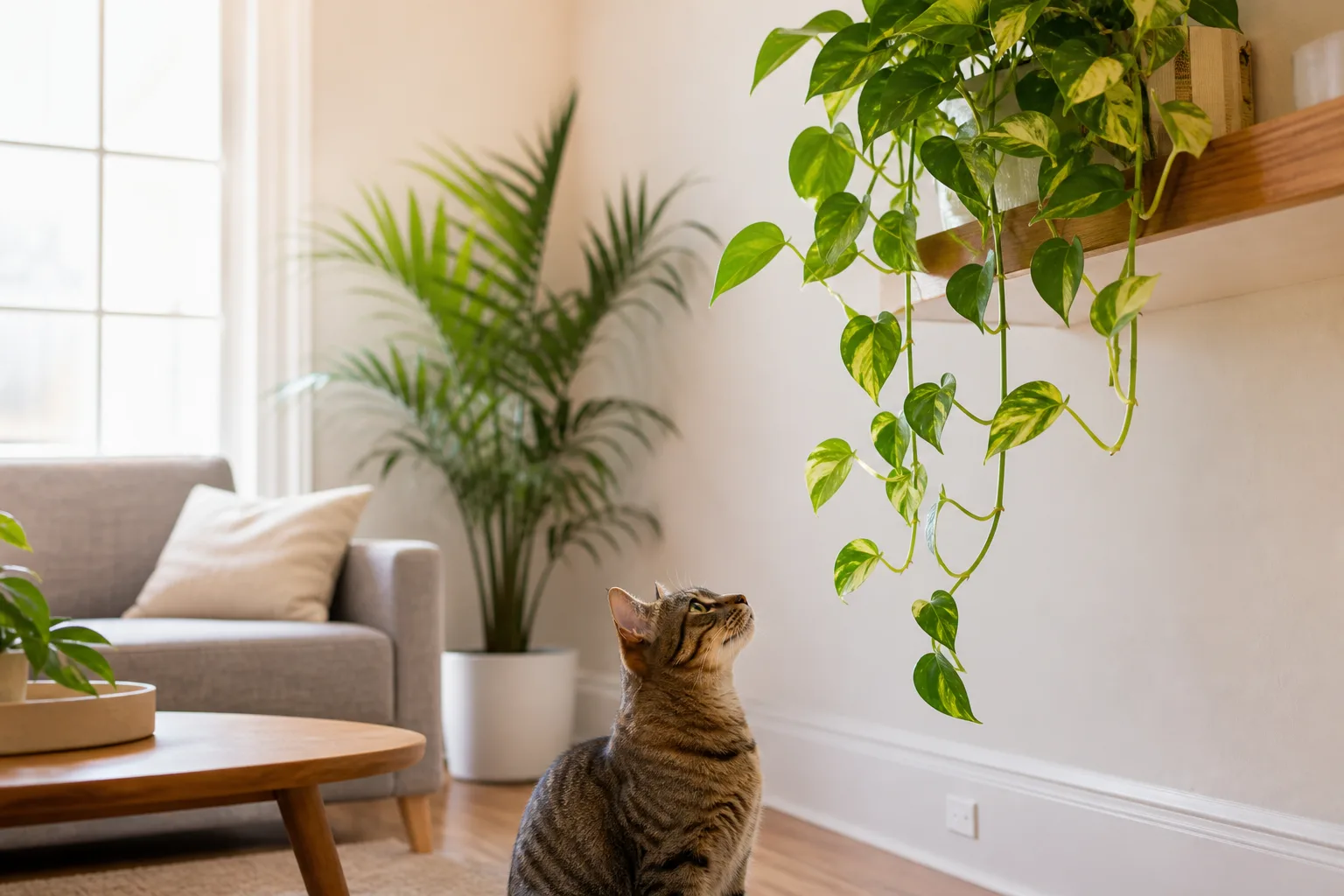
That growth habit is why a spider plant can be visually tempting to a cat: the runners sway, and the small plantlets hang below the parent plant. A plant in a hanging basket can still be reachable if it hangs over a couch, shelf, counter, or cat tree. The dangling leaves are part of the plant’s normal growth, not evidence that the plant is a different species.
If your plant has broad leaves, a different growth pattern, or a nursery label with another scientific name, pause before applying the spider-plant answer. Some plants look similar at a glance, especially to a worried owner examining a damaged pot. Use a reliable identification source or ask a veterinarian; when a toxic plant is possible, do not wait for symptoms to see whether the guess was right.
Why cats are drawn to spider plants
Spider plants offer several things that can invite investigation: long narrow leaves that move when touched, runners that dangle, and plantlets that resemble small objects to bat at. Indoor cats may also chew plants as part of normal exploration and play, or because they are seeking greenery. The Cornell Feline Health Center describes houseplant chewing among indoor cats and recommends managing access while offering appropriate alternatives. (Cornell’s feline behavior guidance discusses plant chewing as a behavior that can be redirected.)
That does not mean a cat is trying to self-medicate, and it is not a reason to leave a plant available as a snack. Nor does it prove a nutrient deficiency. A cat may simply be responding to movement, novelty, or an available texture. Look at the pattern: does your cat chew every plant, bat at hanging runners only, or go after greenery when play is limited? The answer helps you choose a prevention plan that addresses the behavior rather than relying on a warning or punishment.
Repeated chewing can damage the plant even when the species is not toxic. Nipped leaves will not grow back from the cut edge, and a cat that keeps pulling at runners can tip a pot or knock down a shelf display. Preventing access protects both the cat and the plant.
How to keep a cat from chewing the plant
If a cat has already chewed the spider plant, treat that as useful information: its current location or shape is accessible and interesting. A solution should remove the target from the cat’s path, not depend on the cat understanding a verbal warning. Start with the specific route the cat uses—jumping from a sofa, climbing a bookcase, reaching from a windowsill, or batting at a trailing runner.
The most reliable choice for a persistent plant chewer is a room the cat cannot enter, such as a closed office or spare room with suitable light and ventilation. If that is not practical, create physical separation with a sturdy, cat-proof barrier and check that the plant cannot be reached from nearby furniture. A tall shelf is only a real barrier if the cat cannot jump onto it, climb its supports, or reach leaves that hang over the edge.
Avoid punishment. Shouting or spraying a cat may frighten it without changing the plant’s appeal when you are gone. Cornell’s behavior guidance emphasizes access management and appropriate alternatives for destructive behavior. A consistent setup usually works better than repeatedly moving the plant a few inches after each bite.
Choose a location your cat cannot reach
Walk the room from the cat’s point of view. Check chairs, side tables, shelves, radiator covers, window ledges, bookcases, and cat trees that could function as steps. Clear a launch route where you can, or move the plant to a separate space. Keep fallen leaves and runners picked up, since a clipped piece on the floor remains available to chew.
Think about when no one is home, too. A location that seems inaccessible while you are watching may be easy to reach when the cat has time to explore. If your cat has repeatedly climbed toward the plant, assume that a higher perch is not enough and use a door or barrier instead.
Make a hanging basket safer for both of you
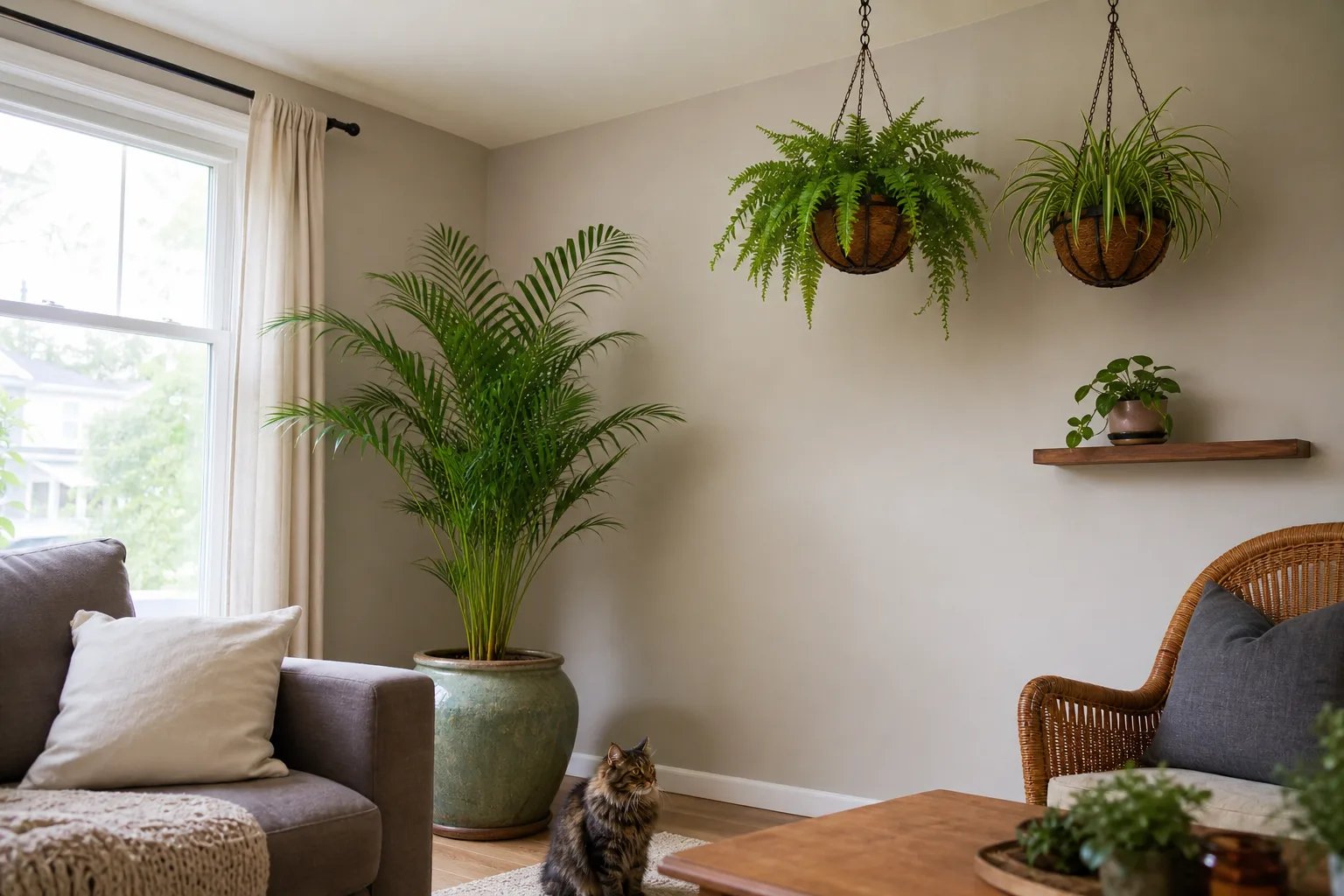
A hanging basket can place a spider plant away from floor-level traffic, but it is not automatically cat-proof. Cats can jump, climb curtains, and use nearby furniture to reach a basket; long leaves or plantlets may still swing into reach. Keep the basket away from launch points and trim or remove runners if their movement is what attracts your cat.
The fixture must also be secure and strong enough for the full pot after watering. Horticulture guidance from Epic Gardening on spider plants in hanging baskets notes that basket weight, height, window access, and ease of watering all affect placement. Choose a location you can still reach safely to water and inspect the plant. A basket mounted above a cat’s favorite chair may be both reachable and difficult to maintain.
Give a plant-chewing cat better outlets
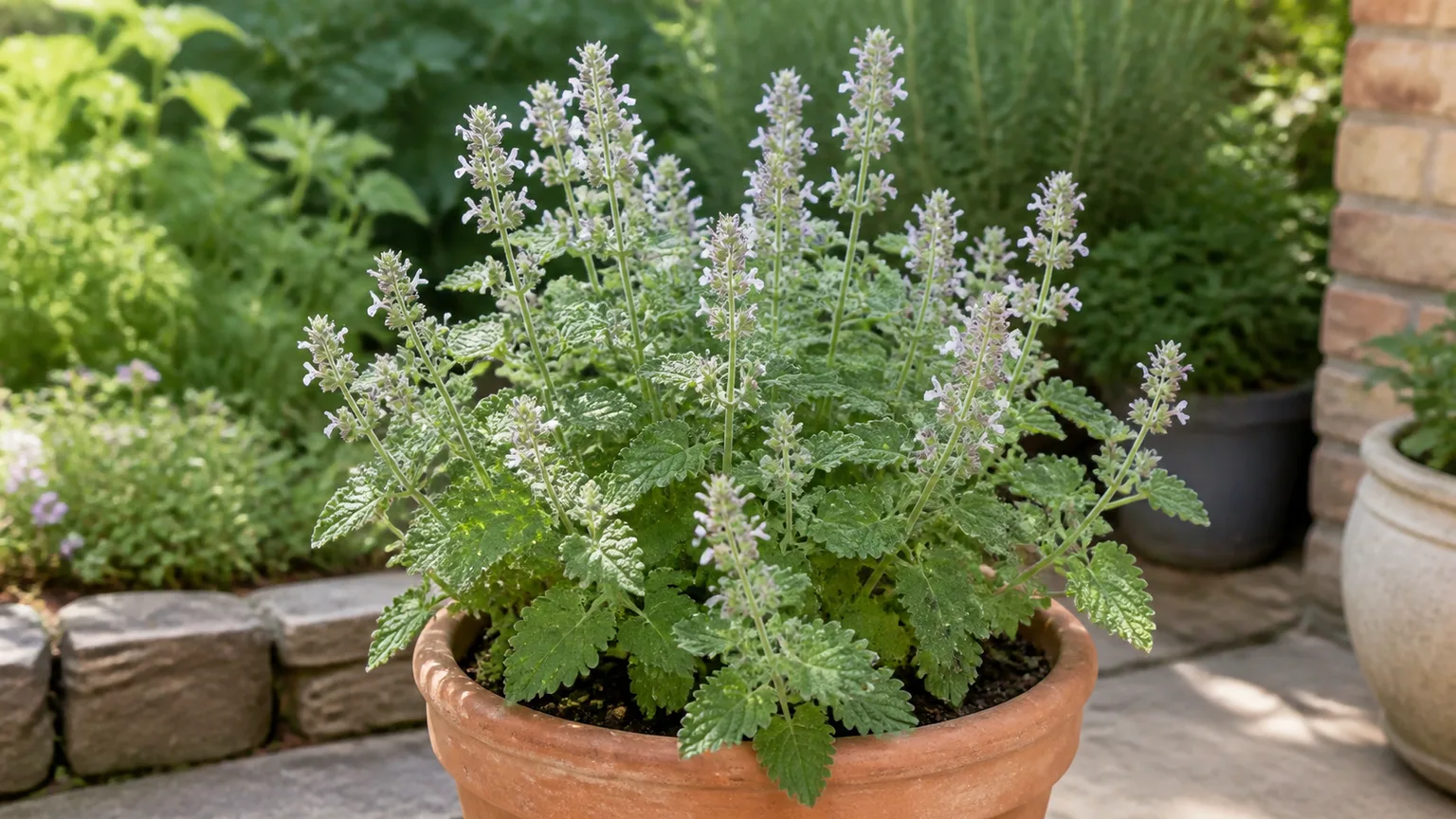
If your cat seeks greenery, offer a designated cat-grass tray or another alternative recommended by your veterinarian, such as oat grass. Cornell lists oat grass, catnip, and catmint as possible alternatives for cats that chew houseplants. These options may redirect interest, but they do not guarantee that every cat will stop chewing other plants. Keep the alternative separate from houseplants, watch how your cat responds, and remove it if eating it causes repeated vomiting or distress.
Play and exploration can also help. Provide sturdy climbing and scratching options, rotate toys, and make time for interactive play with a toy you can put away afterward. A dangling wand toy should be supervised and stored safely when play ends; loose string, ribbon, or elastic can become a separate swallowing hazard. The aim is to give the cat an appropriate way to chase and investigate, not to rely on a plant as a toy.
If your cat suddenly begins chewing many non-food items or cannot be redirected, ask your veterinarian whether a health or behavior assessment is appropriate. Do not change the cat’s diet or add supplements on the assumption that plant chewing proves a deficiency.
Could another houseplant be the real danger?
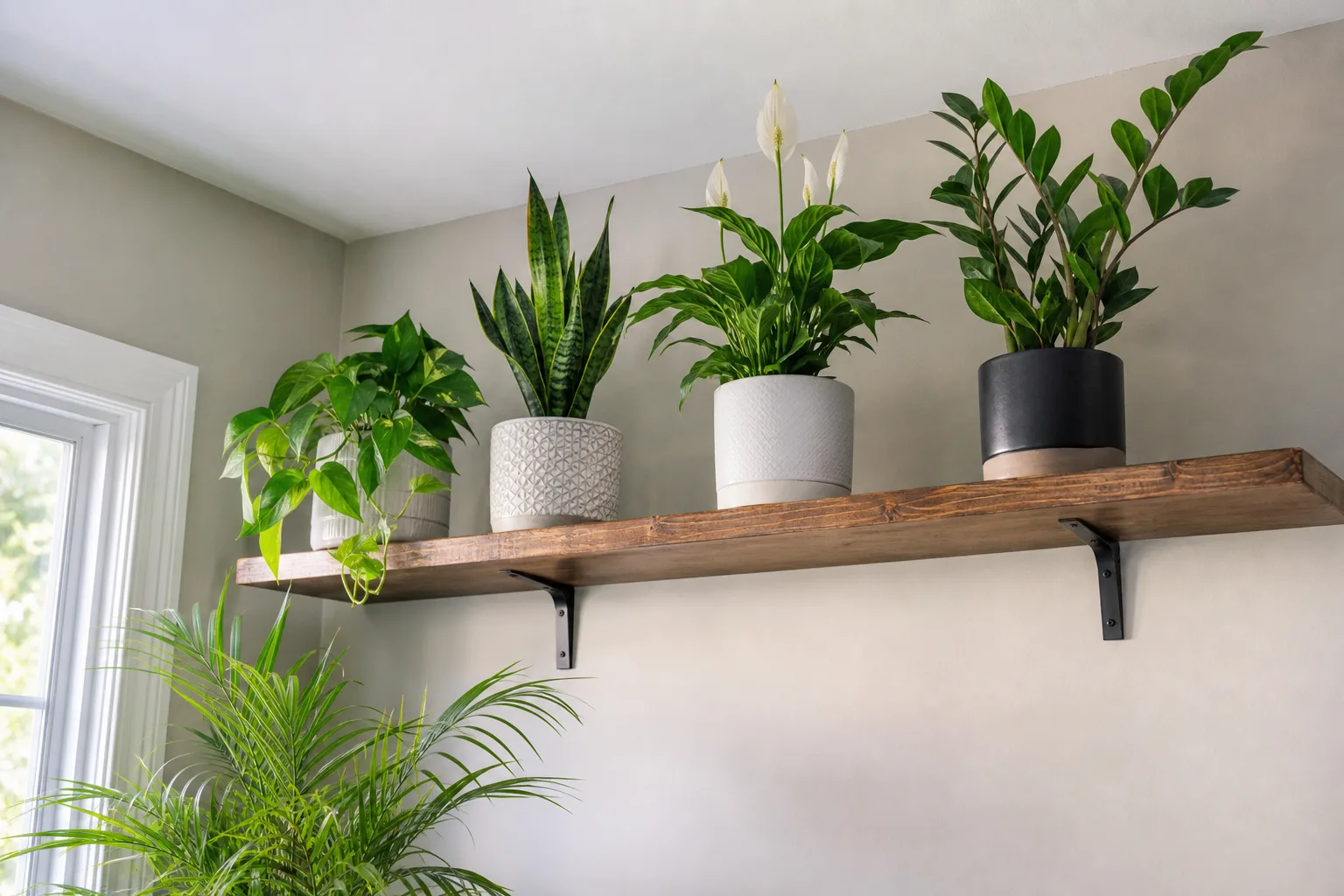
Yes. In a home with several plants, the risk is not always the plant the cat was seen near. A loose leaf may have fallen from a different pot, plant tags can be missing, and some common names are used for unrelated species. Keep a simple inventory of the scientific names of plants in rooms your cat can enter and check each species individually in a veterinary toxicology database.
The word “lily” is especially confusing. A peace lily is not the same plant as an Easter, Asiatic, or daylily, and their risks differ. A non-toxic spider-plant listing cannot be used to judge a neighboring plant, a bouquet, vase water, or pollen on fur. If you cannot identify what was chewed, tell the veterinary professional that the plant is uncertain and send photos of all likely candidates.
True lilies and daylilies need urgent attention
If your cat may have chewed an Easter, Asiatic, Oriental, or Stargazer lily (Lilium) or a daylily (Hemerocallis), contact a veterinarian or animal poison-control service immediately, even if the cat currently looks normal. The ASPCA warns that small amounts of these plants can cause severe kidney injury in cats; exposure can also occur from lily pollen on fur or water from a vase. (ASPCA’s guide to lilies and pets explains which “lilies” are the serious concern and why prompt attention matters.)
Do not confuse that emergency with a confirmed spider-plant nibble. The point is to identify the plant accurately and respond to the highest plausible risk when the identity is uncertain. For a suspected true-lily exposure, do not wait to see whether vomiting starts; call while you gather the plant name or a photo.
Does the advice change for kittens or sensitive cats?
The ASPCA classification remains about the plant species, but a veterinarian considers the animal in front of them. A kitten, a cat with an ongoing illness, a cat on medication, or one that has eaten an unknown amount may need individualized guidance. The ASPCA says its poison-control staff considers factors such as a pet’s age, weight, and health when assessing a possible poisoning.
For a kitten that has taken a small bite of a confirmed spider plant and remains completely normal, remove the plant and monitor closely. If you are unsure how much was eaten, the kitten swallowed soil or a product, or any symptom appears, call your veterinarian rather than trying to calculate risk from the plant’s size. The same cautious approach applies to a cat with a history of vomiting or another condition that can make new symptoms harder to interpret.
When should you remove the plant from your home?
A spider plant can remain in a home with a cat if you can reliably keep the cat away from it and the pot. If your cat repeatedly reaches the leaves, knocks the container over, or chews other plants despite reasonable barriers and enrichment, moving the plant to a cat-free room—or giving it to someone without pets—may be the simplest solution. Cornell notes that blocking access is the surest way to protect a cat and the houseplants it tends to chew.
Use the cat’s actual behavior as your decision rule. A cat that ignores the plant may need no special arrangement beyond normal monitoring. A cat that climbs to it when alone needs a more dependable boundary than a high shelf. A cat that swallows leaves or pot material repeatedly needs access removed, even though spider plant itself is listed as non-toxic.
Conclusion
Spider plants are listed by the ASPCA as non-toxic to cats, so a confirmed small nibble is not the same exposure as chewing a poisonous plant. Still, plant material can cause stomach upset, the database does not give a safe dose, and vomiting has causes beyond plant toxicity. Confirm the species, remove access, and contact a veterinarian if symptoms develop, the plant is uncertain, or something besides a leaf may have been swallowed.
If you suspect a toxic plant—especially a true lily or daylily—call immediately rather than waiting for symptoms. For repeat chewing, use a room or barrier your cat cannot defeat, then provide appropriate play or a supervised cat-grass alternative. The safest plan comes from matching the response to the plant you can identify and the cat you can see.