15 Succulents Safe for Cats, With Verified Plant Names
Explore 15 succulents and succulent-like plants listed as non-toxic to cats, plus identification checks, physical hazards, and what to do after a bite.
Succulents can suit small homes because many tolerate dry spells and grow in compact pots. If a cat shares your space, though, “pet-safe succulent” needs a careful definition. Here are 15 succulents or succulent-like plants with individual ASPCA profiles that classify the named plant as non-toxic to cats. Each choice below is tied to the name on its profile so you can compare it with the nursery label.
That classification is reassuring, but it is not permission to let a cat graze. The ASPCA cautions that eating any plant material may cause vomiting or gastrointestinal upset, and its plant list is not all-inclusive. A plant that is non-toxic can still cause a problem if a cat eats a large amount, chews soil or fertilizer, or gets hurt by a spine or a falling pot. Keep access controlled, and ask a veterinarian or poison-control professional about an actual exposure.
What “Cat-Safe” Means for a Succulent
“Non-toxic to cats” means a plant is not expected to cause the systemic poisoning associated with plants classified as toxic. It does not mean the plant is food, that any amount is harmless, or that every cat will have the same response. The ASPCA’s toxic and non-toxic plant guidance explicitly warns that plant material can cause gastrointestinal upset and says the list is not comprehensive. Its article about succulents and pets likewise distinguishes a non-toxic listing from a guarantee that a plant will cause no problem.
There are also risks unrelated to plant toxins. A cat can gag on a leaf, swallow potting mix, or knock a heavy planter onto itself. Cacti may have spines or hairlike glochids that injure paws, lips, or eyes even when a poison-control database classifies the plant as non-toxic. Fertilizers, insecticides, decorative gravel, and water sitting in a saucer are separate exposures. A “non-toxic” label addresses one question—poisoning potential—not every way a plant can hurt a curious animal.
This list is about specific named profiles, not blanket approval for all plants in a genus. Some names used in stores refer to more than one species, and ASPCA entries sometimes use names that differ from nursery labels. If a plant’s identity does not match the scientific name below, pause and verify it rather than assuming the profile applies.
Confirm the Plant Before You Buy
Read the botanical name on the nursery tag, not just the large-print common name. The scientific name is usually italicized and has two parts, such as Echeveria glauca. A variety or cultivar may appear after it in single quotation marks. Take a photo of the whole plant and its label; a clear image can help a veterinarian or poison-control service distinguish lookalikes if a cat later chews it.
Common names are not controlled in the way scientific names are. “Hens and chicks” can mean an Echeveria or a Sempervivum, which are different plants. The ASPCA’s detailed “Chickens and Hens” profile identifies its plant as Echeveria elegans, while its general succulent article refers to Sempervivum sp. Those are not interchangeable records. In the same way, “ghost plant” is often used by sellers for Graptopetalum paraguayense, but the ASPCA profile called “Ghost Plant” identifies Sedum weinbergii. Use the profile only when the plant’s identity matches.
One ASPCA profile also spells the Mexican firecracker’s scientific-name field “Echeveria Pulinata.” Because the spelling and classification of plants can change across labels and databases, do not silently assume that every plant sold as Mexican firecracker is identical. Ask the nursery for its botanical name and confirm the match with a veterinary professional if exposure occurs. Care instructions and safe-to-have claims are only as reliable as the identification underneath them.
15 Succulents With ASPCA Cat-Safety Listings
The selections below have their own ASPCA plant profiles marked non-toxic to cats. The profile link is the source for that specific classification; horticultural details are practical selection notes, not additional safety guarantees. A plant may need more light than your room provides, be too delicate for a cat’s favorite perch, or have a physical feature that makes placement difficult.
Rosettes and Compact Choices
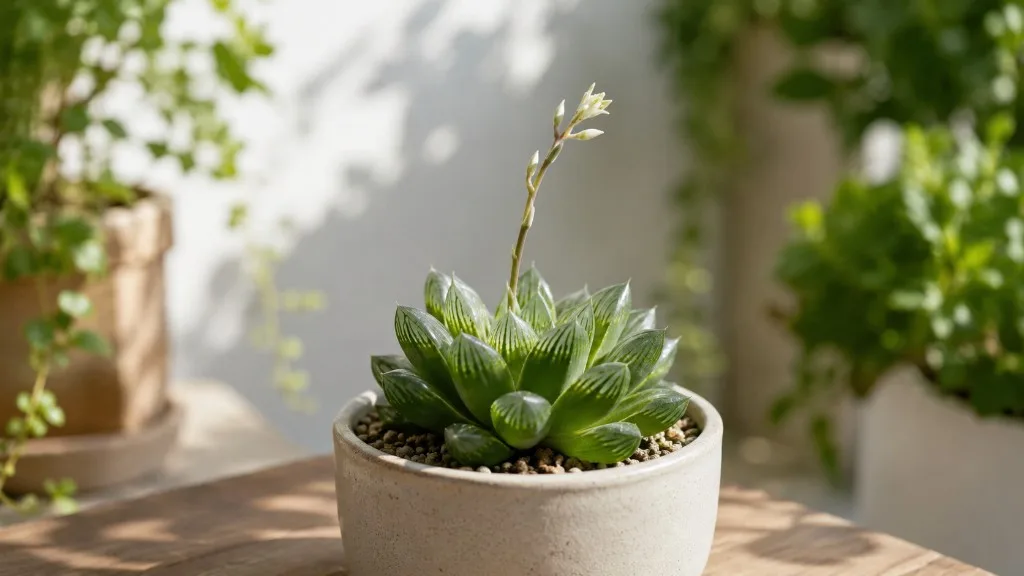
1. Haworthia (Haworthia species). Haworthias are small rosette-forming plants, often with white bands, dots, or raised markings on firm leaves. The ASPCA profile covers Haworthia species and lists them as non-toxic to cats; it does not certify every plant sold under a similar label. Many haworthias tolerate bright indirect light better than full, hot sun. Let the potting mix dry before watering and use a container with a drainage hole. Their low profile may make a pot easy for a cat to reach, so choose a stable location instead of treating compact size as protection. (ASPCA’s Haworthia profile; practical care guidance from Epic Gardening.)
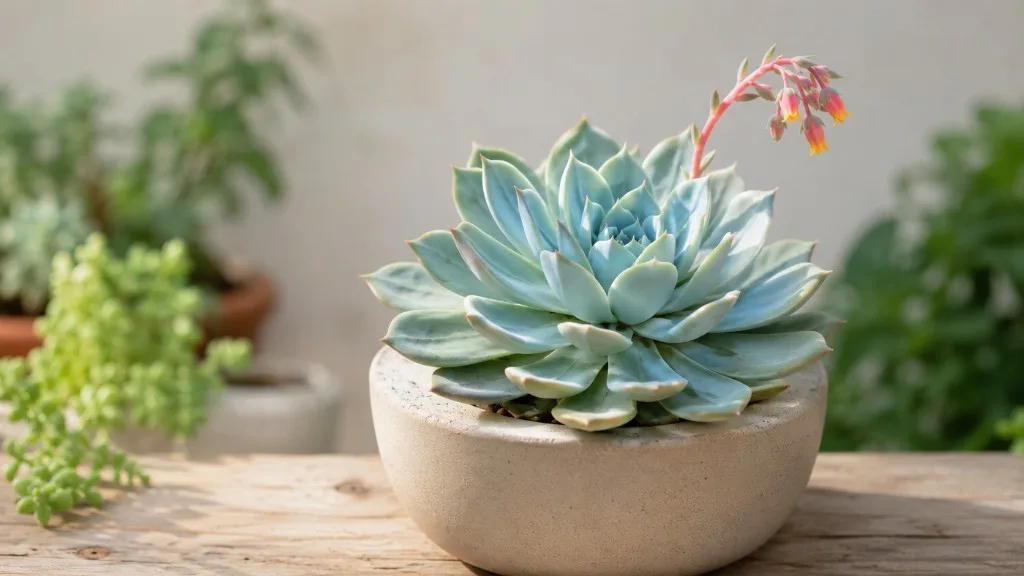
2. Blue echeveria (Echeveria glauca). This is a named rosette-forming echeveria, not a safety verdict for the entire genus. The ASPCA lists E. glauca as non-toxic to cats. It grows best with strong light and a free-draining mix; a very dim spot can lead to loose, stretched growth. The powdery coating on many echeveria leaves is easily rubbed off, so avoid handling the foliage more than necessary. Put the rosette where it will not be batted off a sill, and pick up any snapped leaves. (ASPCA’s Blue Echeveria profile.)
3. Chickens and hens, or Mexican snowball (Echeveria elegans). The ASPCA profile under “Chickens and Hens” identifies Echeveria elegans and lists it as non-toxic to cats. Its common name can be confusing because other plants, especially Sempervivum species, are also called hens and chicks. Match the label to E. elegans before relying on this entry; do not transfer its status to a different genus. Like other echeverias, it prefers abundant light and soil that drains quickly. Keep its offsets from spilling into a place where a cat can pull them out. (ASPCA’s Chickens and Hens profile.)
4. Mexican firecracker (Echeveria profile). The ASPCA’s Mexican Firecracker profile is marked non-toxic to cats and records the scientific name as “Echeveria Pulinata.” Use that exact profile carefully: common labels may write the name differently, and a common name alone does not prove a match. This echeveria is commonly chosen for its compact rosettes and softly textured foliage. Give it bright light and a gritty, fast-draining medium, and handle leaves gently. The profile supports the classification for the plant it identifies; it does not make every firecracker-labeled succulent safe to chew. (ASPCA’s Mexican Firecracker profile.)
5. Living stones (Lithops naureeniae, as listed). Living stones are small, paired-leaf succulents that sit close to the soil and resemble pebbles. The ASPCA profile for Living Stones identifies Lithops naureeniae and lists it as non-toxic to cats. “Living stones” also refers broadly to multiple Lithops species, so the profile should not be read as a genus-wide evaluation. Check the Latin name on the pot, particularly because the database’s common-name field includes unrelated-sounding names. These plants need a sunny spot and careful, seasonal watering; too much water can be more of a horticultural problem than too little. (ASPCA’s Living Stones profile; RHS Lithops growing guidance.)
6. Purple baby tears (Frithia pulchra). Despite its delicate common name, this is a compact succulent from a different family than the sedum commonly sold as baby tears. The ASPCA profile names Frithia pulchra and marks it non-toxic to cats. This small plant is usually best treated as a bright-light specimen in a shallow but well-drained container. Its diminutive size makes it easy to place on a crowded shelf, but a shelf is only out of reach if a cat cannot jump or climb to it. Verify the tag, since “baby tears” alone is not enough to identify a plant. (ASPCA’s Purple Baby Tears profile.)
Trailing and Mat-Forming Plants
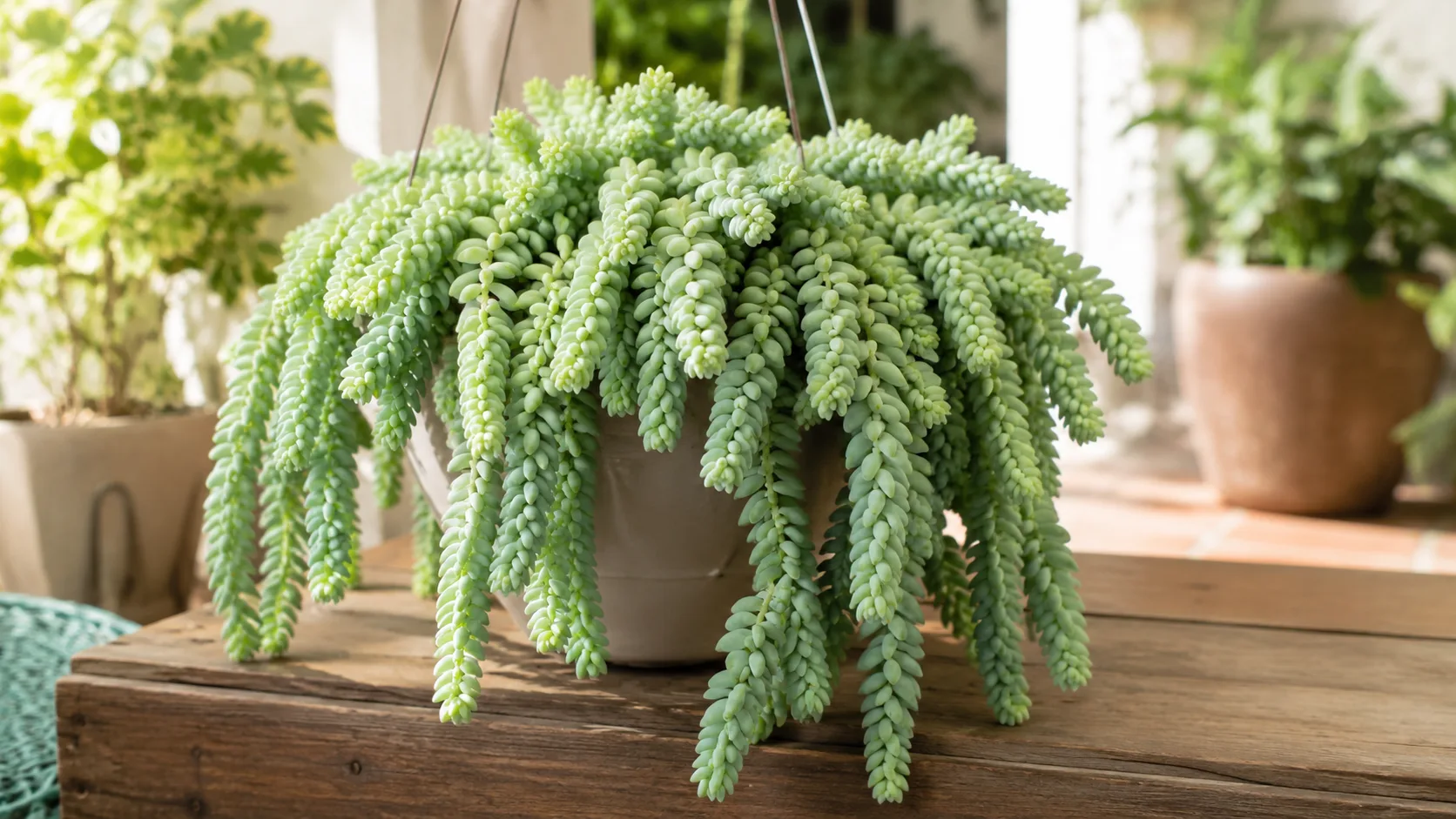
7. Burro’s tail (Sedum morganianum). Burro’s tail, also called donkey’s tail, grows long hanging stems covered in plump leaves. The ASPCA’s profile identifies Sedum morganianum and lists it as non-toxic to cats. Its leaves detach readily when the stems are bumped, which makes it a poor choice beside a cat’s preferred launch point. A hanging basket can reduce casual contact, but it is not cat-proof if a chair, shelf, curtain, or cat tree provides a route upward. Give the plant bright light and let its potting mix dry between thorough waterings. Sweep up dropped leaves promptly. (ASPCA’s Burro’s Tail profile.)
8. Hardy baby tears or stonecrop (Sedum album). This low-growing sedum is useful in a sunny container or an outdoor rock garden where it can form a small mat. The ASPCA entry identifies Sedum album and lists it as non-toxic to cats. Its common name can be confused with other groundcovers, so use the species name when checking a tag. It needs drainage and light, and it can spread beyond its pot or intended patch. For an indoor cat, the important practical issue may be access to loose stems or leaves rather than toxicity. Keep it away from windows where a cat could knock over a shallow planter. (ASPCA’s Hardy Baby Tears profile.)
9. Ghost plant / Mother of Pearl (Sedum weinbergii, per the profile). The ASPCA profile labeled “Ghost Plant” lists Sedum weinbergii and classifies it as non-toxic to cats. Nurseries frequently apply “ghost plant” to Graptopetalum paraguayense, so this is a particularly important name to verify. If the tag says Graptopetalum, do not assume it is covered by the Sedum weinbergii record; ask for an exact plant-specific assessment. For the plant named in the ASPCA profile, use bright light, gritty soil, and restrained watering. Pale, fleshy leaves can be delicate and may shed when handled or brushed by a pet. (ASPCA’s Ghost Plant profile.)
Sculptural, Upright Forms
10. Ponytail palm (Beaucarnea recurvata). Despite the word “palm,” this plant is a bulbous-stemmed succulent relative often grown as a small indoor tree. The ASPCA’s Pony Tail profile identifies Beaucarnea recurvata and lists it as non-toxic to cats. Its fountain of narrow leaves may tempt a cat to swat or chew, so a large, top-heavy specimen should be placed where it cannot be tipped. Give it bright light when possible, and do not keep the root zone continuously wet. A plant’s non-toxic listing does not remove the risk of a heavy container falling or a cat swallowing leaf pieces. (ASPCA’s Pony Tail profile.)
11. Night-blooming cereus / pitaya (Hylocereus undatus). The ASPCA profile for Night Blooming Cereus names Hylocereus undatus and lists it as non-toxic to cats. It is a climbing cactus rather than a neat tabletop rosette; mature stems may need a sturdy support and can take considerable room. Some forms have spines, so inspect the exact plant and keep stems and support out of cat traffic. The ASPCA classification concerns toxicity, not puncture risk. If you want to grow dragon fruit, confirm that the cultivar, growing space, and support are appropriate before bringing it into a room a cat explores. (ASPCA’s Night Blooming Cereus profile.)
Holiday Bloomers and Succulent-Like Hoyas
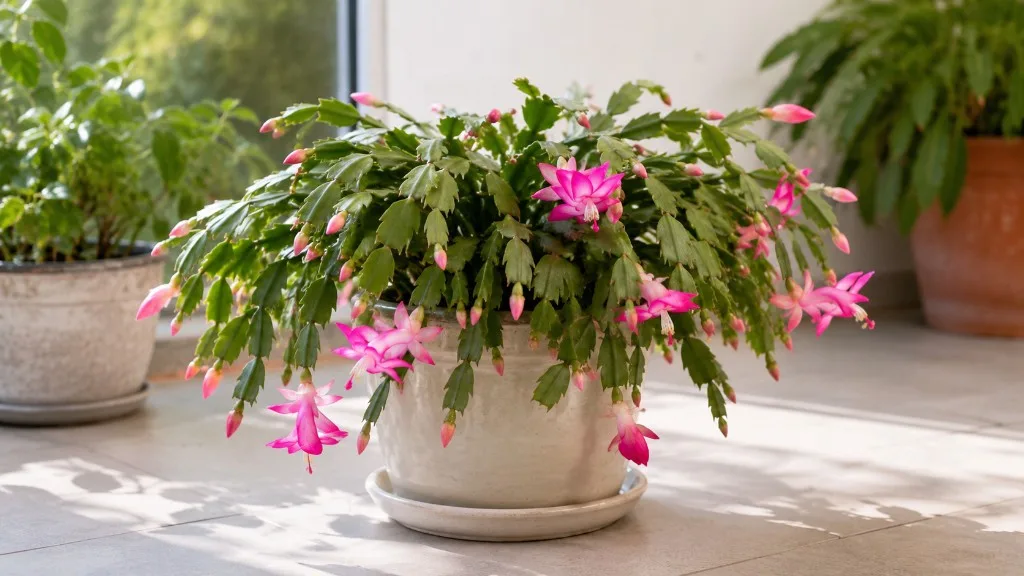
12. Christmas cactus (Schlumbergera bridgesii). This rainforest cactus has flattened, jointed stems and colorful seasonal flowers. The ASPCA lists Schlumbergera bridgesii as non-toxic to cats. Unlike many desert succulents, holiday cacti are not best treated as plants that want to dry out completely for long stretches; RHS notes that Schlumbergera and other rainforest cacti need more frequent water and tolerate conditions different from desert cacti. Keep the potting medium free-draining, provide bright indirect light, and avoid a shelf where dangling segments become a toy. (ASPCA’s Christmas Cactus profile; RHS growing guide.)
13. Shrimp cactus (Schlumbergera russelliana). This is a named holiday cactus in the same genus as Christmas cactus. Its ASPCA profile identifies Schlumbergera russelliana and lists it as non-toxic to cats. The flattened segments do not have the large spines many people picture when they hear “cactus,” but dangling stems can still be chewed, broken, or knocked from a pot. Grow it in bright, filtered light and water more consistently than a desert succulent, allowing excess water to drain. Its listing should not be extended to every plant sold as cactus or every unrelated holiday-blooming plant. (ASPCA’s Shrimp Cactus profile.)
14. Hindu rope (Hoya carnosa ‘krinkle kurl’). Hoya is a tropical vining plant with thick, waxy leaves; it is succulent-like, though its care is not identical to a desert succulent’s. The ASPCA’s Hindu Rope Plant profile specifically names Hoya carnosa ‘krinkle kurl’ and lists it as non-toxic to cats. The curly stems can trail within reach, so prune or reposition them if your cat bats at them. Give the plant bright, indirect light and a well-draining mix, then let the mix approach dryness before watering. Do not assume every hoya cultivar has a separate, identical profile; confirm the exact botanical name. (ASPCA’s Hindu Rope Plant profile; Epic Gardening’s Hoya care guide.)
15. Sweetheart hoya (Hoya kerrii). The thick, heart-shaped leaves make this hoya recognizable, but a heart-shaped leaf sold alone may not grow into a full trailing plant unless it includes viable stem tissue. The ASPCA profile identifies Hoya kerrii and lists it as non-toxic to cats. Give it bright indirect light, a draining pot, and time to dry somewhat between waterings. Keep vining growth and flower clusters out of reach; even a plant with a non-toxic classification should not become a chew toy. (ASPCA’s Sweetheart Hoya profile.)
Choose a Plant That Fits Your Light and Your Cat
Plant care and cat behavior need to be considered together. A high-light echeveria may need the sunniest window in the home, but that same sill may be a favorite cat perch. A hanging burro’s tail can stay intact only if the basket, chains, and nearby furniture prevent a cat from reaching or pulling it. Before buying, look at both the plant’s growing needs and the route your cat takes through the room.
Match the Plant to the Window
Most desert succulents need bright light and a fast-draining mix, while rainforest cacti such as Schlumbergera prefer filtered light and more regular moisture. The Royal Horticultural Society’s cacti and succulent guide explains that succulents store water in fleshy leaves or stems, and its indoor growing guide distinguishes rainforest cacti from desert types. If a plant stretches toward a window, turns pale, or drops leaves, its placement may be wrong even if the species is cat-compatible.
Check the light over a full day rather than relying on the direction of a window alone. Nearby buildings, curtains, trees, and seasons change what “bright” means. Rotate plants gradually if you want even growth, but do not put a plant on the floor or a low sill where a cat can chew it just to make light easier to reach. A plant lamp can help in some rooms, provided the fixture and cord are safely installed and inaccessible to chewing.
Place Pots for Stability and Separation
A tall shelf is not a reliable barrier if a cat can climb a bookcase, jump from a sofa, or reach trailing stems from a nearby perch. Walk the room and check the whole route: window ledges, cat trees, curtains, chairs, shelves, and any surface that acts as a step. Consider a closed room or a secure display cabinet for a persistent plant-chewer. Hanging baskets also need a sound anchor and enough clearance that a cat cannot pull the plant down.
Use heavy, stable pots for larger plants and secure shelving to the wall where appropriate. Keep the heaviest container low enough that it cannot topple from a high surface, and avoid placing plants over sleeping areas, food bowls, or narrow paths. If your cat repeatedly approaches one plant, assume the current location is accessible and change the environment rather than expecting a warning or deterrent scent to work. Remove fallen leaves and stems promptly, because a plant piece on the floor is easier to mouth than a whole plant.
Lower the Risk of Chewing, Punctures, and Potting-Mix Ingestion
Even the 15 plants listed here should be displayed with sensible boundaries. Cats may chew greenery from curiosity, play, or simple access; that behavior does not prove a nutrient deficiency or a need for plant material. Offer appropriate toys and, if your veterinarian agrees, a designated cat-grass option in a different place. Supervise how your cat responds and do not rely on a second plant to make the first one safe to chew.
Do not leave cactus spines within paw or face reach. Some cacti carry tiny hairlike glochids that can be hard to see and difficult to remove; bunny-ear cactus is a good example of why a non-toxic classification does not equal a safe plant to handle around a cat. ASPCA lists bunny-ear cactus as non-toxic, but its fine barbed glochids present a mechanical injury risk, so it is not included among the recommended choices here. Treat other spiny plants the same way: keep them physically separated, even if a toxicology listing is reassuring.
Potting materials create another route of exposure. Cats may dig, nibble at fertilizer pellets, drink runoff, or swallow decorative stones. Use products according to their labels, store them closed, and let treated foliage dry as directed before allowing access. Avoid small loose top-dressing that could be swallowed, and empty saucers so a cat cannot drink standing water that has collected fertilizer or soil. If you see repeated pot digging or chewing, move the plant behind a real barrier and ask a veterinarian about persistent ingestion behavior.
Toxic Succulents and Lookalikes to Keep Away
“Succulent” describes water-storing growth, not a safety category. Jade (Crassula ovata), pencil cactus (Euphorbia tirucalli), and snake plant are among the plants ASPCA identifies as toxic to pets; the organization also warns about string of pearls and other succulent lookalikes in its succulent safety overview. The risk differs by species, which is another reason not to infer safety from a plant’s thick leaves or desert appearance.
A jade plant should not be treated as a safer alternative to an echeveria just because the leaves look similarly plump. Nor should an “aloe” tag be assumed to mean the same thing as a species with a positive cat profile. Check each plant’s scientific name against a cat-specific poison-control source. If you discover a toxic plant in a room your cat uses, move it behind a closed door or remove it; do not rely on the cat to avoid it or on height alone.
If the plant is mislabeled, a profile match is uncertain, or your cat has chewed a possible toxic succulent, contact a veterinary professional promptly. Do not wait for symptoms to prove the identification. A plant’s common name, a nursery’s care tag, and a general “pet-friendly” label are not substitutes for a species-level assessment of a real exposure.
What to Do if Your Cat Chews a Succulent
First, calmly move your cat away from the plant and remove loose pieces. Take a photo of the whole plant, the label, and any damaged area. Note when the bite may have happened, which parts are missing, how much could have been swallowed, and whether your cat also reached the soil, fertilizer, pesticide, or another plant. The amount and timing help a professional decide what response is appropriate; there is no universal safe dose for every plant and cat.
If the plant is definitely one of the specifically identified non-toxic plants above, the bite was small, and your cat is acting normally, you can call your veterinarian for individualized advice and prevent another exposure. Contact a veterinary clinic or animal poison-control service promptly if the plant identity is uncertain, the plant could be toxic, your cat ate a large or unknown amount, or any symptoms appear. Do not assume vomiting is harmless because the plant is on a non-toxic list; symptoms can have more than one cause.
Gather the Details and Call for Advice
Have the plant’s exact scientific name, a photo or label, your cat’s approximate weight, the time of exposure, and your best estimate of the amount eaten. Keep packaging for any soil amendment, fertilizer, or pesticide involved. In the United States, the ASPCA Animal Poison Control Center can be reached at (888) 426-4435; a consultation fee may apply. Pet Poison Helpline is (855) 764-7661. If your cat is already ill, contact your veterinarian or an emergency veterinary clinic rather than waiting for an online response. (ASPCA’s plant guidance; Pet Poison Helpline emergency instructions.)
Do not induce vomiting or give hydrogen peroxide, salt, oil, milk, or medication unless a veterinary professional specifically tells you to. Pet Poison Helpline advises owners not to induce vomiting without professional direction. Home remedies can create additional harm and delay the right treatment. If you are outside the United States, contact a local veterinarian or animal poison service and follow its instructions.
Recognize Signs That Need Prompt Care
Call promptly if your cat develops repeated vomiting, diarrhea, heavy drooling, weakness, unusual behavior, tremors, or difficulty walking after a possible plant exposure. Difficulty breathing, collapse, loss of consciousness, or a seizure is an emergency; seek immediate veterinary care. These signs do not identify the plant or prove poisoning on their own, but they do mean the cat needs professional assessment. (Pet Poison Helpline’s guidance for a cat that ate something toxic.)
Also look for mechanical injury: sudden pawing at the mouth or eye, squinting, persistent rubbing, or a visible spine can point to a puncture or foreign body rather than plant toxicity. Do not probe an eye or pull out a deeply embedded spine. Keep the cat from further contact and call a veterinarian for instructions. A non-toxic listing cannot rule out an injury from the plant’s shape or texture.
Conclusion
There are 15 named succulents and succulent-like plants in this guide with ASPCA profiles that classify them as non-toxic to cats, from compact haworthia and echeveria to holiday cactus and hoya. Use the scientific name to make sure the plant in your home is the same one in the profile, especially when a common name such as “hens and chicks” or “ghost plant” covers multiple species.
Treat “non-toxic” as a useful toxicology classification, not a blanket promise that a plant is harmless to chew. Keep spines, loose leaves, soil products, and unstable pots out of reach, and contact a veterinary professional if the plant is uncertain, the amount is significant, or your cat shows symptoms. A carefully identified plant and a realistic barrier are more dependable than a broad “pet-safe” label.