Are Snake Plants Toxic to Dogs? Symptoms and Response
Are snake plants toxic to dogs? Learn the symptoms, what to do after chewing, when to call a vet, and how to keep the plant out of reach.
The short answer: ingestion can make a dog ill
Yes. Snake plants are toxic to dogs if chewed or eaten. The ASPCA lists snake plant, also called mother-in-law’s tongue, as toxic to dogs and identifies saponins as the toxic principle. The signs it names are nausea, vomiting, and diarrhea. The best next step after a suspected bite is to call your veterinarian or an animal poison-control service with the plant identity and what you know about the exposure.
That answer does not mean every dog who nibbles a leaf will have the same reaction, or that a small bite is automatically an emergency. It does mean there is no reliable reason to wait for symptoms or try a home remedy before getting case-specific guidance. The plant’s appearance, the amount swallowed, your dog’s size and health, and any other material eaten all matter.
If your dog only walked past an intact plant, being in the same room is not the exposure described in poison-control references. The concern is chewing or swallowing plant material. This guide explains what to look for, what to tell a veterinary professional, and how to make a plant display safer—or choose a verified alternative.
If you saw your dog chew a leaf but cannot tell whether it swallowed any, treat that as a possible ingestion when you call. “I only saw one bite” is useful context, but it is not enough information to calculate risk without the dog’s size, the plant identity, and the amount actually swallowed.
Why snake plant ingestion matters
Snake plants are often sold under the botanical name Dracaena trifasciata; older references and plant labels may say Sansevieria trifasciata. You may also see mother-in-law’s tongue, golden bird’s nest, or viper’s bowstring hemp. Because common names overlap and plant tags are not always precise, take a clear photo of the whole plant and its label if your dog may have chewed it.
The name change can make a quick search confusing: one reliable listing may use Dracaena while another still files the same plant under Sansevieria. Match the overall plant and, where possible, the Latin name rather than relying on a short label such as “sansevieria” or “snake plant.” A photo from several angles is more useful than a close-up of a single leaf when the plant is unfamiliar.
The ASPCA identifies saponins as the toxic principle, and North Carolina State Extension also records saponins and gastrointestinal signs for this species. Its plant profile classifies the plant’s poison severity as low, but that label is general plant information: it does not calculate a safe dose for your dog, predict whether symptoms will occur, or replace veterinary triage. The ASPCA’s snake-plant listing and NC State Extension’s plant profile are useful references for confirming identity and the reported signs.
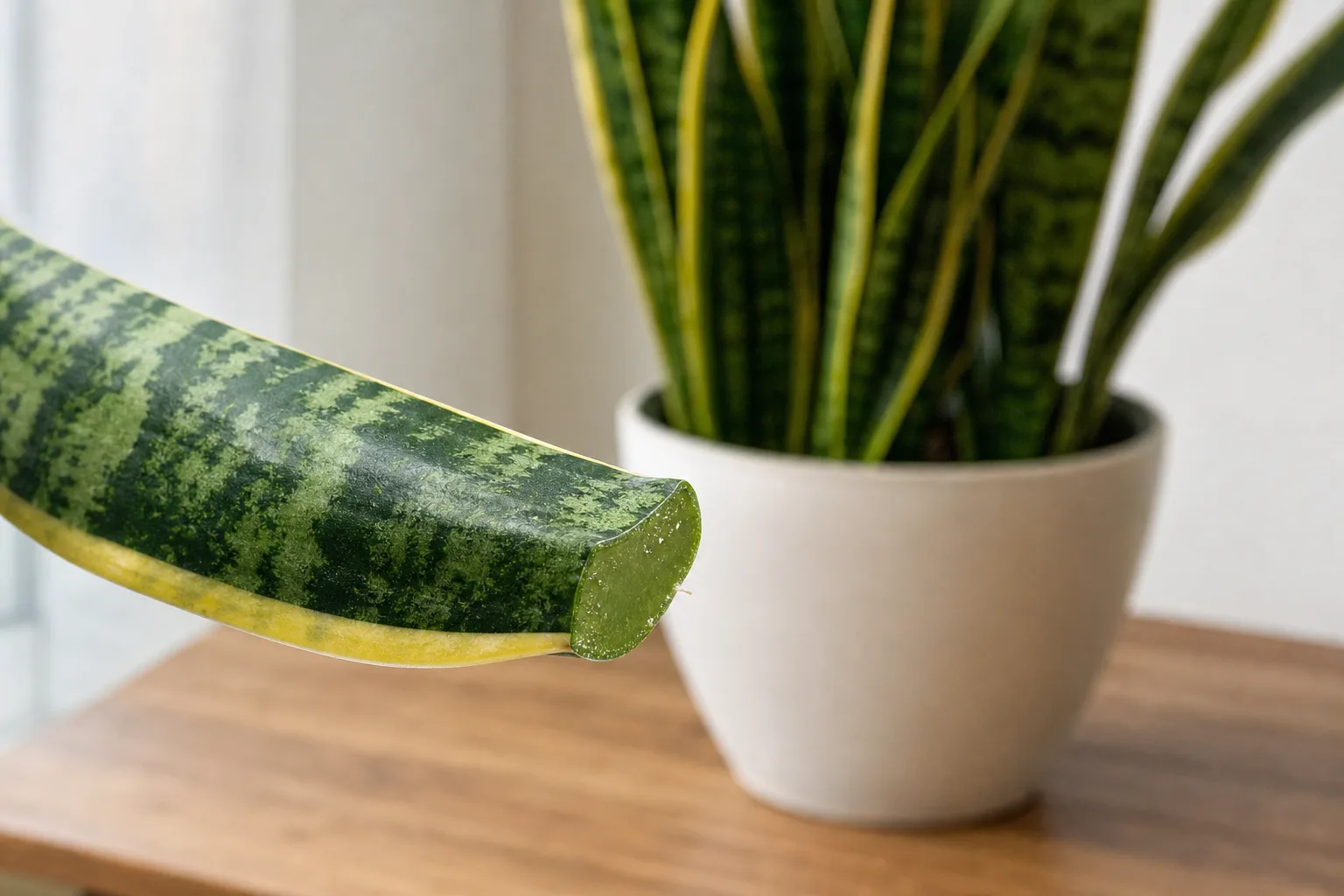
Does every part of the plant pose the same concern?
Do not assume that only the upright leaves matter. NC State lists leaves, stems, roots, sap or juice, flowers, and fruits among the plant parts associated with its poison profile; a dog that chews the base or digs into the pot still needs the same careful assessment. A cultivar’s stripe color or leaf shape does not make it a safe version.
The amount a dog actually swallowed is often hard to estimate. A torn leaf may leave fragments on the floor, saliva can hide what was swallowed, and a pot may contain more than one plant. Tell the clinic what you observed rather than trying to turn missing leaf length into a dose calculation.
Symptoms to watch for after a dog chews a snake plant
Reported signs are mainly gastrointestinal. The ASPCA lists nausea, vomiting, and diarrhea; NC State also lists depression, anorexia, and hypersalivation, and notes that vomiting may occasionally contain blood. A dog may drool, lick its lips, refuse food, seem uncomfortable, or have loose stool after chewing the plant.
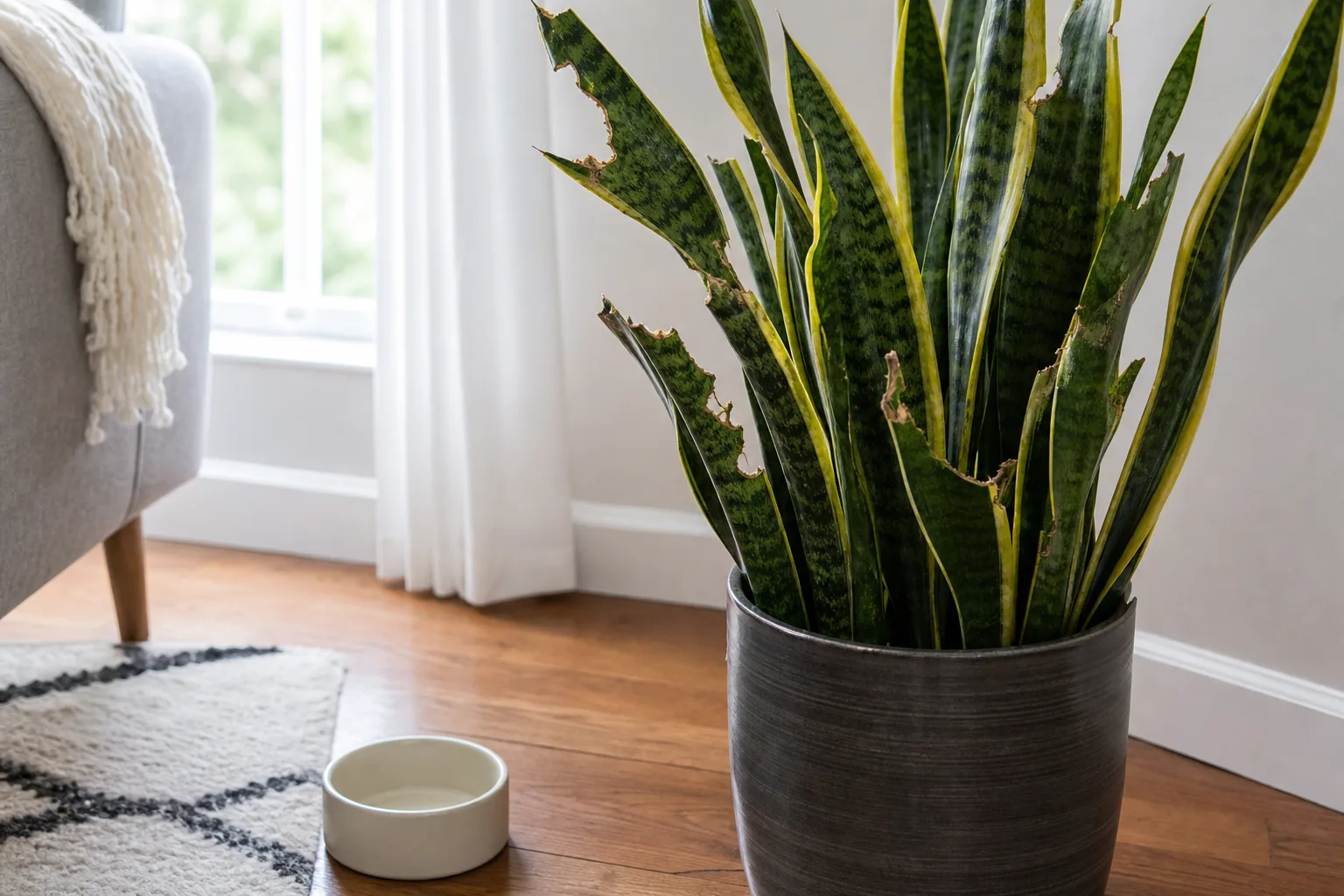
Watch your dog’s behavior and note when any sign starts, but do not use the absence of symptoms as proof that nothing was swallowed. Some dogs chew and spit out plant material; others swallow it quickly, and an owner may not see the moment it happens. A veterinarian can judge the individual situation more safely than a general symptom checklist can.
These signs are not unique to snake plants. Vomiting or diarrhea can follow many foods, plants, medicines, or household products, so the timing and surroundings matter as much as the symptom itself. If several plants are nearby, photograph the entire display and tell the clinic about every plant your dog could have reached.
How quickly can signs appear?
There is no dependable symptom clock you can use to decide that your dog is in the clear. Timing can vary with the exposure and the animal, and public plant listings do not provide a fixed onset window for snake-plant ingestion. If you suspect a bite, call while your dog is still acting normally and ask how long and what signs to monitor for that specific case.
If vomiting or diarrhea begins, report how often it has happened, whether your dog can keep water down, and whether there is blood. Changes in energy, appetite, or coordination are also useful details. If signs worsen while you are waiting for advice, call again or go to an emergency veterinary hospital.
Write down the time you first noticed the chewed leaf and the time any sign appeared. If your dog’s behavior changes between calls, a short video can communicate unusual movement or repeated drooling more clearly than trying to describe it from memory. Do this only after you have contacted a professional; collecting notes should never delay that first call.
What to do right now if a dog eats a snake plant
Start with calm, practical steps. Move your dog away from the plant and prevent another bite, then call your veterinarian, an emergency veterinary hospital, or an animal poison-control service. In the United States, the ASPCA Animal Poison Control Center lists (888) 426-4435 and notes that a consultation fee may apply.
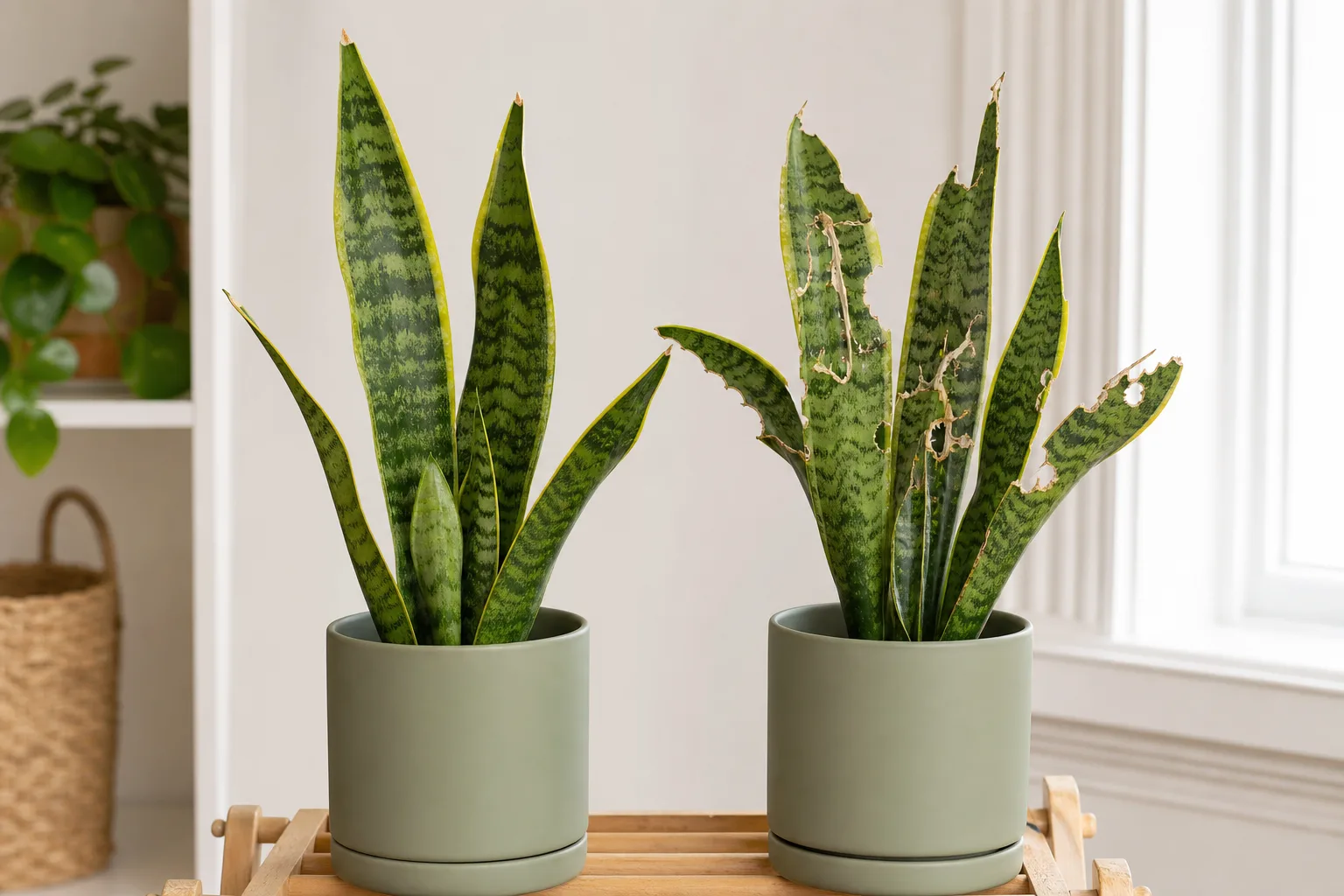
While you call:
- Secure the plant. Put it behind a closed door or somewhere the dog cannot reach, and pick up loose pieces.
- Identify it. Take photos of the whole plant, the chewed area, and any nursery tag. If identification is uncertain, say so.
- Estimate without guessing. Explain whether you saw chewing or swallowing, what part is missing, and roughly when it happened. It is fine to say you do not know the amount.
- Describe your dog. Give the dog’s weight, age, relevant health conditions, medications, and any symptoms.
- Mention the whole scene. Tell the professional if the dog could also have eaten potting mix, fertilizer, pesticide-treated leaves, a plant label, or another plant.
Do not induce vomiting, give hydrogen peroxide, salt, oil, milk, charcoal, or another home treatment unless a veterinary professional specifically instructs you. The ASPCA warns that at-home vomiting attempts can harm pets and says to contact a veterinarian or poison-control professional first; even a method sometimes used under veterinary direction is not a do-it-yourself instruction. Do not reach blindly into a dog’s mouth or throat, since that can cause injury or a bite.
Do not punish the dog or spend time trying to make the plant look untouched. The priority is preventing a second bite and getting a clear, accurate exposure history. If you are alone, make the call on speaker while you secure the plant, but keep the dog where you can watch for changes.
What information to give the veterinarian
A useful call is specific, not polished. Say: “My dog may have chewed a snake plant, Dracaena trifasciata or Sansevieria trifasciata. It happened around [time]. My dog weighs about [weight]. I saw [chewing/swallowing/unknown], and the signs so far are [none/list].”
Then answer the questions the clinic asks. A photo can help confirm whether the plant is actually a snake plant, but do not delay the call to get a perfect picture. If a plant sample would help, ask whether the clinic wants one and how to contain it safely.
Tell the professional if the plant had recently been treated, repotted, or moved, and whether the dog may have reached a fertilizer bottle, pesticide, or another item at the same time. That can change the assessment even when the snake plant itself is identified correctly. If you have the nursery tag, keep it nearby rather than bringing an unsecured plant into a clinic waiting room.
Go to emergency care for serious signs
Follow the veterinary professional’s direction about whether your dog can be monitored at home or needs an exam. Seek urgent veterinary care for repeated vomiting, blood in vomit or stool, marked weakness, collapse, severe lethargy, trouble breathing, inability to swallow, or any rapid deterioration. These signs need prompt attention whether they are caused by the plant, another substance, or a separate problem.
Do not drive while trying to manage a sick dog alone. If possible, have one person call ahead while another transports the dog, and bring the plant photos, its label, and the exposure details. If you are outside the United States, use your local veterinary poison service or emergency clinic rather than relying on a U.S.-only hotline.
A single mild episode and repeated vomiting are not the same situation, but an owner should not have to decide the boundary alone. Call with the exact pattern and follow the clinician’s threshold for coming in; if the dog becomes weak, cannot keep water down, or worsens, update the clinic promptly. When you cannot reach your regular veterinarian after hours, an emergency hospital can advise whether to travel in.
Is there a safe amount of snake plant for dogs?
There is no published amount in the ASPCA or NC State plant listings that lets an owner calculate a safe bite at home. Those sources identify the plant as a problem for dogs and describe possible signs; they do not provide a weight-based threshold or a guarantee that a particular leaf fragment will cause no harm. “A little” is not a precise measurement, especially when the dog’s size and the swallowed portion are unknown.
That uncertainty is not a reason to assume the worst. It is a reason to ask a veterinarian or poison-control professional to interpret the exposure using your dog’s details. They may decide the best course is monitoring, an examination, or another response; the answer can differ between a dog that only mouthed a leaf and one that swallowed a large section or has symptoms.
Do not compare your dog’s exposure with another dog’s story online. Two dogs can chew different amounts, have different body sizes and health histories, or have swallowed different parts of the plant. A public toxicity label is designed to flag a hazard, not to calculate an individual prognosis.
Can a dog safely live in a home with a snake plant?
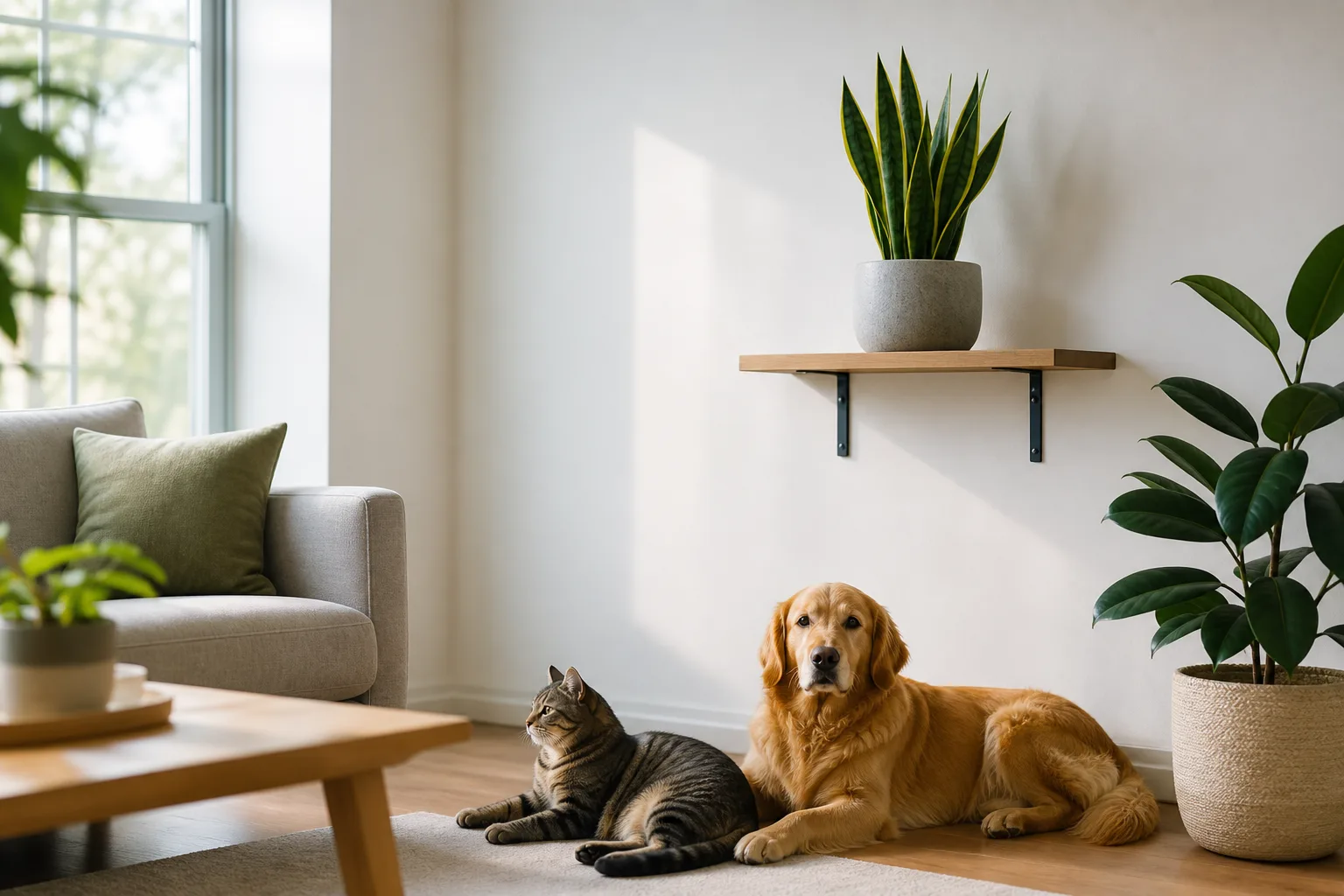
Sometimes a dog and a snake plant can share a home, but not every dog-and-room combination is safe. A dog that ignores plants and cannot reach the pot presents a different access risk from a puppy that samples leaves, a jumper that can reach a shelf, or a dog that knocks over floor pots. Reassess the setup when furniture moves, the plant grows, or the dog’s behavior changes.
The relevant test is not “Is the plant on a high shelf?” It is “Can this particular dog reach, tip, pull down, or get behind the plant?” Consider the dog’s standing height, jump, climbing habits, access to nearby furniture, and whether a hanging pot has trailing leaves within reach. A room that is reliably dog-free is more dependable than an elevated display when the dog is persistent or unsupervised.
Think through the ordinary moments that change access: a chair pushed closer to the shelf, a visitor leaving a door open, watering that puts the pot on the floor, or a fallen leaf that lands in the dog’s path. If a dog has never touched plants, the risk may be manageable with supervision and placement; if it has already chewed foliage, use a physical separation rather than assuming the next opportunity will go differently.
Build a barrier your dog cannot defeat
Choose a control that matches the behavior. A closed door works for a dog that can enter a room; a stable barrier can keep a dog out of one plant area; relocating the plant to a room the dog never enters may be simplest. A tall stand is not a barrier if the dog can jump on the sofa beside it, and a light pot may still topple if the dog rushes past.
Check the arrangement from the dog’s level. Look for a chair, table, window ledge, or radiator that creates a step; secure the plant so a tail or leash cannot snag it; and keep fallen leaves picked up. If the plant goes outdoors for warm weather, use a genuinely secure dog-free area rather than leaving it beside a patio door and hoping the dog will ignore it.
Reward a “leave it” cue around plants, but treat training as an extra layer, not the only safeguard. A sudden noise, visitor, food smell, or unsupervised moment can override a learned cue. If your dog has already chewed this plant more than once, change access now instead of waiting for training to solve the problem.
The best barrier is the one you will keep in place during normal life. A plant moved to a room with an open doorway is not separated; a lightweight screen that the dog can nudge aside is not secure; and a hanging basket can still be pulled down by a long vine or cord. Recheck the setup after rearranging furniture or moving the plant for watering, cleaning, or seasonal display.
Should you move, rehome, or keep the plant?
You do not automatically have to discard a snake plant if it can be kept behind a reliable barrier. If your dog never enters a closed plant room, moving it there may preserve both the plant and your routine. If the dog can reach it on a stand, breaks barriers, or repeatedly seeks the leaves, rehome the plant with someone who can keep it away from pets.
Use behavior, not optimism, to make the choice. A puppy may become less curious with time, but that is not a safety plan for the months in between; an older dog can also develop new chewing habits. When you are unsure whether you can prevent access whenever the dog is alone, a different plant is the simpler long-term decision.
You can also ask whether the plant’s role is replaceable. If you value the sword-shaped leaves but the plant cannot be placed safely in your layout, choosing a different silhouette may be easier than maintaining a barrier that fails whenever someone opens a door. If you keep the snake plant, make sure everyone in the home knows which room or shelf is off limits and who should pick up dropped leaves.
Dog-safe alternatives with a similar indoor feel
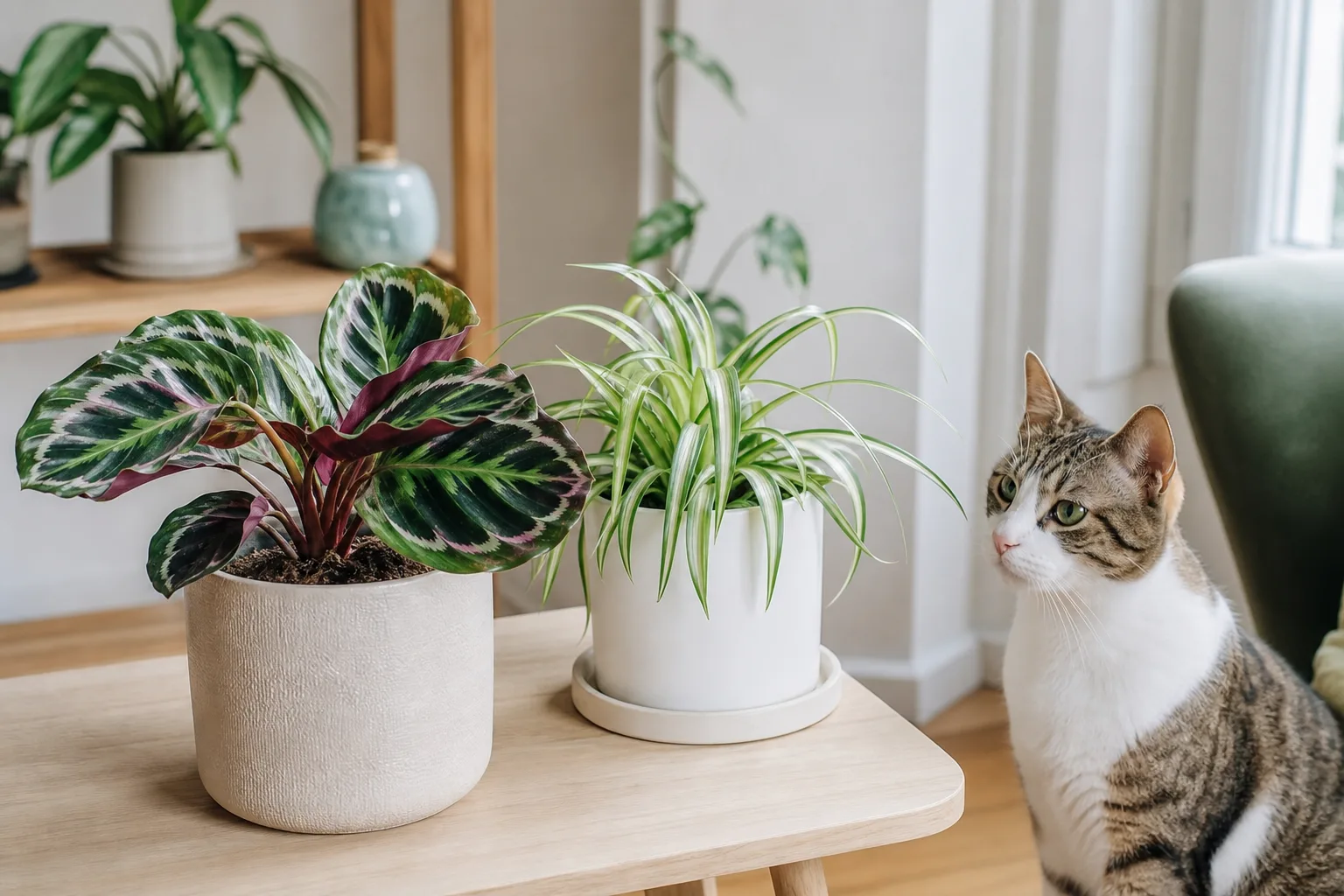
If you want greenery without this particular toxicity concern, start with a plant whose botanical name you can verify. The ASPCA classifies the spider plant (Chlorophytum comosum) as non-toxic to dogs in the ASPCA spider-plant listing and the parlor palm (Chamaedorea elegans) as non-toxic to dogs in the ASPCA parlor-palm listing. A spider plant offers arching, striped leaves and works in a secure hanging planter; a parlor palm gives a soft upright silhouette for a stable floor or table display.
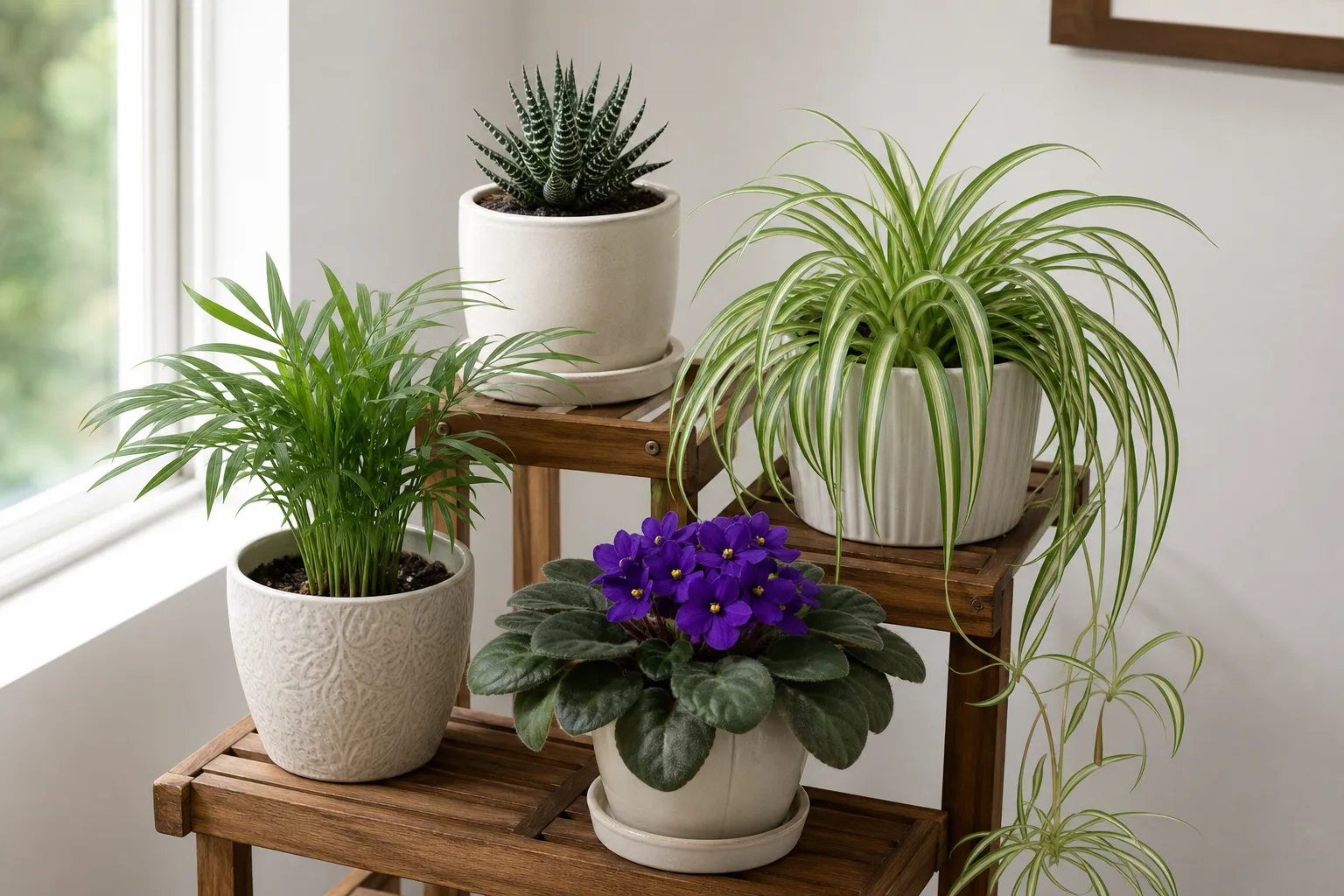
“Non-toxic” is a useful classification, not a recommendation to let a dog eat houseplants. Large amounts of any plant material can upset a dog’s stomach, and a pot can introduce other hazards. For more options and the limits of pet-safe labels, see this guide to non-toxic plants for dogs.
These alternatives are not identical in care or shape. A spider plant trails and can tempt a dog if its runners hang low; a parlor palm is upright but needs a stable place where a dog cannot knock the pot over. Pick for the room, light, and your dog’s habits, then create access rules around the new plant just as you would around any household object a dog might chew.
Verify botanical identity before buying
Check the full botanical name on the nursery label against a veterinary poison-control database before bringing a plant home. Common names can hide lookalikes or refer to unrelated plants, and a store’s “pet-friendly” tag may not tell you which species it means. The ASPCA listing for a spider plant, for example, gives Chlorophytum comosum; its parlor-palm entry gives Chamaedorea elegans.
The RHS recommends researching plant choices and enclosing plants that could be toxic to dogs; BBC Gardeners’ World likewise cautions that pet reactions vary and recommends asking a vet when uncertain. Those are sound practical rules for the garden and indoors, but neither a label nor a list replaces an individual veterinary assessment after ingestion. RHS dog-friendly garden guidance and BBC Gardeners’ World’s pet-friendly plant advice can help with broader planting choices.
Do this check for the exact species and the pet in your home, not just the plant family or a photo that looks similar. A genus can contain many species and cultivars, and some common names are used for unrelated plants. When the label is missing or ambiguous, take a photo to a knowledgeable nursery or ask a veterinarian or poison-control specialist before assuming the plant is a safe substitute.
The pot and products can create separate risks
When a dog digs in or tips a plant, the plant may not be the only concern. Potting mix, fertilizer granules, pest-control products, standing water in a cachepot, broken ceramic, and swallowed pieces of a pot can each change what the veterinary professional needs to know. Tell the clinic about anything else your dog could have reached instead of assuming all symptoms come from the leaf.
Keep fertilizers, pesticides, rooting products, and plant-care chemicals in their original labeled containers and behind a closed door or secure cabinet. Use products only as their label directs, keep dogs away for any stated interval, and dispose of spilled soil or plant debris before giving the room back to the dog. A safe plant choice cannot make an accessible chemical or unstable pot safe.
Repotting is a particularly easy time to miss a hazard because roots, leaves, old soil, and tools may be spread across the floor. Put the dog in another room before starting, collect scraps as you work, and return the plant only after the work area is clean and the pot is stable. If a dog has already eaten soil, fertilizer, or a product residue, tell the veterinarian exactly what the container says rather than describing it only as “plant food.”
Conclusion
Snake plants are toxic to dogs if chewed or eaten, and the reported signs include nausea, vomiting, diarrhea, drooling, and reduced appetite. There is no dependable home dose threshold, so call your veterinarian or an animal poison-control service after suspected ingestion, share what you know, and do not try to make your dog vomit unless a professional directs you.
For prevention, test whether your dog can actually reach or tip the plant, not just whether it sits above floor level. Keep the snake plant behind a barrier that fits your dog’s behavior, or replace it with a plant whose botanical name is verified as non-toxic to dogs.