Are Orchids Toxic to Cats? A Practical Safety Guide
Most moth orchids are listed as non-toxic to cats, but species and plant treatments still matter. Learn what to check and how to respond after a nibble.
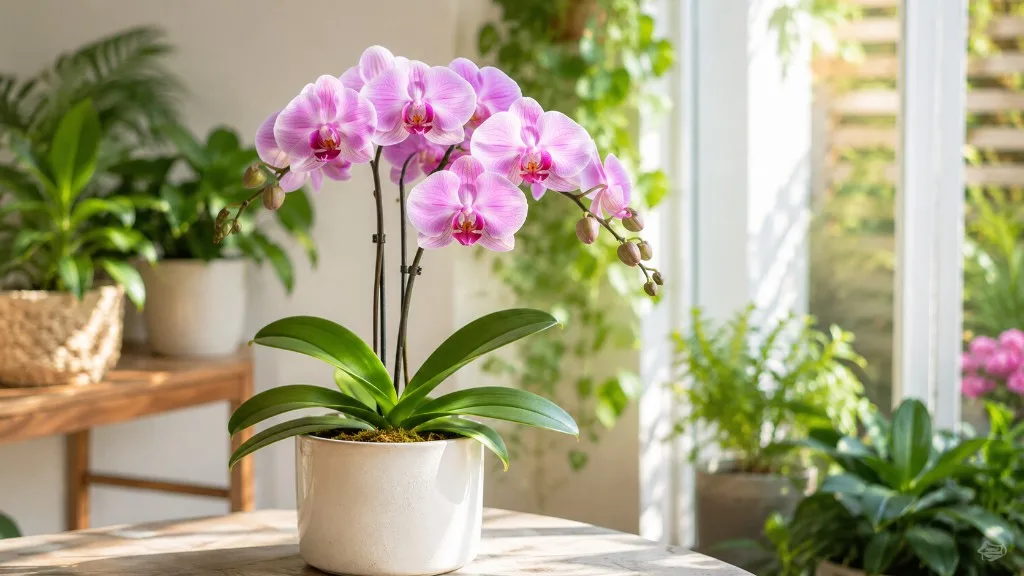
The common moth orchid, Phalaenopsis, is listed as non-toxic to cats by the ASPCA. A cat that takes a small bite from a known, untreated moth orchid is therefore in a different situation from a cat that chews a true lily, but “non-toxic” does not mean the plant is food or that every orchid species and nursery treatment has been evaluated.
If your cat has already chewed a plant, identify it before deciding what the risk is. Remove access, save the plant tag and any fertilizer or pesticide label, and contact a veterinarian or animal poison-control service if the species is uncertain, a product may have been ingested, or your cat is showing symptoms.
The short answer: most moth orchids are listed as non-toxic
The ASPCA’s plant database identifies Phalaenopsis species, also called moth orchids, as non-toxic to cats. That is useful reassurance for the familiar flowering orchid sold in many grocery stores, garden centers, and florists. Its listing is a much firmer basis for a decision than a plant’s common name or a general internet claim that “all orchids are safe.”
The scope matters. Phalaenopsis is one genus within the large orchid family, Orchidaceae. Gardenia’s orchid overview describes a family with tens of thousands of species and a large number of hybrids, so a listing for moth orchids should not be treated as a verified toxicity profile for every unusual species, hybrid, or mislabeled plant. If the tag only says “orchid,” take a clear photo and ask the seller or a veterinary poison specialist to help identify it.
For a healthy cat that sampled a small amount of a clearly identified, untreated Phalaenopsis, serious poisoning is not expected from the plant itself. If the cat ate a large amount, has a health condition, or the plant’s identity or treatment is unknown, do not use that general reassurance as a diagnosis; call your veterinary clinic and describe the exposure.
What “non-toxic” does and does not mean
A non-toxic classification means the plant is not listed as containing a recognized toxin expected to cause systemic poisoning in cats. It does not mean a cat should eat it, and it does not promise that a large mouthful will leave every animal comfortable. The ASPCA’s general plant database notes that eating any plant material can cause vomiting or gastrointestinal upset, even when the plant is classified as non-toxic.
That distinction helps explain why a cat might vomit after nibbling an orchid without the orchid being poisonous. Leaves, petals, roots, potting bark, or moss can irritate the digestive tract simply because plant material is not a normal meal. A cat may also pull down a pot or swallow pieces of medium while playing; those are separate mechanical and ingestion concerns from the plant’s toxicity classification.
Do not dismiss symptoms as harmless just because the orchid is likely a moth orchid. Repeated vomiting, diarrhea, drooling, lethargy, loss of appetite, or unusual behavior still deserves veterinary guidance, especially if you cannot rule out fertilizer or pesticide exposure. The plant name lowers one part of the risk assessment; it does not replace looking at the whole exposure.
Identify the orchid before relying on a safety label
Start with the plastic tag, sales receipt, nursery listing, or florist’s label. Look for the botanical name, not only a color or a broad label such as “tropical orchid.” If you no longer have the tag, photograph the entire plant, the flowers, leaves, roots, and pot, then ask the seller to identify it; a flower-only photo can be difficult to distinguish among related orchids.
Many homes have Phalaenopsis, which has broad, arching leaves and flower sprays that rise above them. But orchid collections also include genera with different growth habits and labels, and hybrids may be sold under cultivar names that do not tell you the parent species at a glance. When the name is unclear, treat the plant as unidentified until someone qualified confirms it rather than extending the moth-orchid listing to a whole family.
A botanical name also makes veterinary advice more useful. “My cat ate a pink flower” does not tell a clinic whether the plant was an orchid, a lily, or another flowering plant with a different risk. Even a quick phone photo of the tag can shorten the back-and-forth during a stressful call.
Why color and store names are not enough
Flower color does not establish the species. A white, purple, or novelty blue flower may still be a moth orchid, but color alone is not a safety label; dyed blooms and decorative arrangements can also have treatments or preservatives that are separate from the plant tissue. If a cat licked a visibly dyed flower or chewed a plant sold without a botanical name, include that detail when you call.
A florist may use “orchid” to describe a decorative plant without listing the genus, and plant tags can be missing or generic. Keep the tag when you bring a new plant home, and photograph it before it gets separated from the pot. That small habit is more helpful than trying to remember a flower’s color after an ingestion.
What to do if a cat chews an orchid
The first task is to establish what was eaten, not to induce vomiting or try a home remedy. Remove the orchid and any loose plant pieces from the cat’s reach, then collect the tag, purchase information, and product labels for anything applied to the plant or added to its pot. Note approximately when the chewing happened and whether you saw the cat swallow leaves, flowers, bark, fertilizer pellets, or another material.
If the plant is a confirmed moth orchid and the cat is acting normally after a small taste, the plant itself is not expected to cause systemic poisoning. If the amount was large, the cat has repeated access, the species is unknown, the pot contains fertilizer, or the cat has symptoms, call your veterinarian or a pet poison-control service for advice based on that individual exposure. In the United States, the ASPCA Animal Poison Control Center lists (888) 426-4435; a consultation fee may apply.
The first few minutes
Use this short sequence while you contact a professional if needed:
- Separate the cat from the plant. Pick up loose leaves and petals and move the pot somewhere inaccessible. Do not punish the cat; the immediate goal is to prevent more chewing.
- Identify and document. Take photos of the whole plant and its tag. Save the fertilizer, pesticide, or flower-treatment package if one may be involved, and estimate how much plant material is missing.
- Check the cat without forcing a mouth examination. Note vomiting, drooling, breathing changes, weakness, or behavior that is unusual for your cat. Do not pull at material lodged in the mouth or throat.
- Call with the facts. Tell the veterinarian the plant’s botanical name if known, the time and amount, the cat’s size and health history, and any product exposure. Follow the professional’s instructions rather than a generic symptom chart.
Do not give milk, oil, salt, peroxide, human medicine, or activated charcoal unless a veterinarian or poison-control specialist specifically directs you to do so. Cornell’s Feline Health Center warns owners not to induce vomiting unless instructed, because the right response depends on the substance and the animal. A household remedy can add a second problem or delay useful care.
If you see wet spray, powder, or sticky residue on the cat’s coat or paws, prevent grooming if you can do so safely and call the clinic with the product label in hand. Cleaning directions differ by product and exposure route; a professional can tell you whether and how to wash the area without spreading the substance or stressing the cat. Keep the cat away from the orchid’s runoff and watering tray while you make that call.
Signs that need prompt veterinary attention
Contact a veterinarian promptly if your cat has repeated vomiting, persistent diarrhea, heavy drooling, pronounced lethargy, weakness, an unsteady gait, breathing difficulty, seizures, or refuses food. Cornell lists sluggishness, unsteady movement, drooling, heavy breathing, diarrhea, seizures, and sudden vomiting among possible signs of feline poisoning and advises emergency care when such signs appear. A clinic can determine whether the signs fit a plant exposure or another problem.
Do not wait to see whether symptoms appear if you discover that the plant was a true lily or if the cat may have eaten an unknown flower from a mixed bouquet. True-lily exposure is a separate emergency because Lilium species are listed as toxic to cats and can cause kidney failure. For a known Phalaenopsis nibble with no symptoms, the picture is different, but uncertainty about the species, chemicals, amount, or the cat’s condition is a sound reason to call.
Orchids are not true lilies
The word “lily” appears in many common plant names, so it is easy to confuse plants with very different risks. An orchid is in Orchidaceae; a true lily in the genus Lilium is a different plant. The ASPCA lists Lilium species as toxic to cats, and Cornell identifies lilies as capable of causing life-threatening kidney failure after even small exposures.
That comparison is useful when a cat is near a mixed bouquet or a plant with an uncertain tag. Do not decide based on a flower’s shape or on a seller calling something “lily-like.” Keep true lilies away from cats entirely, and seek immediate veterinary help if you suspect a cat contacted or swallowed any part of a true lily, even if the cat seems fine.
Other plants with “lily” in the common name are not necessarily true lilies, and they may have different toxic principles or symptoms. If the label says peace lily, calla lily, or another unfamiliar name, use the botanical name and consult a veterinarian or poison service rather than transferring the orchid answer or the true-lily answer to it.
Chemical treatment can change the risk
A plant’s toxicity listing describes the plant; it does not certify every material that may be on or in a nursery-grown orchid. A grower may have applied an insecticide, fungicide, or fertilizer, and a pot may contain slow-release fertilizer pellets. Cornell notes that swallowed garden products such as fertilizers can cause serious gastrointestinal upset and, in some cases, an obstruction.
Risk depends on the specific product, its ingredients, the amount, and how a cat contacted it. The Merck Veterinary Manual’s discussion of herbicide exposures shows that animal risk depends on the particular compound and dose, so “organic,” “natural,” or “plant-safe” on the front of a package is not enough to assess a cat’s exposure. Do not assume that repotting, rinsing, or waiting a set number of hours makes an unknown product safe.
Check the plant and product history
Ask the nursery or florist whether the orchid was treated recently and whether the pot has fertilizer mixed into the medium. If you use any product at home, keep its full container and follow the pet re-entry or drying directions on the label exactly; do not leave diluted solution, granules, or runoff where a cat can reach them. The product name and active ingredient give a veterinarian more to work with than a guess that it was “just fertilizer.”
If the cat may have licked or swallowed potting bark, moss, or fertilizer pellets, mention that separately from the leaf or flower. A plant can be low-risk while a product in its pot creates a different question, and the veterinarian may need the packaging to judge whether an examination is warranted. Do not call missing material “just a bite” if you did not see what went into the cat’s mouth.
Avoid adding a strong-smelling organic fertilizer as a supposed pet-safe fix. “Organic” describes a product category, not a guarantee that a cat can safely eat it, and some fertilizers can attract a curious animal. If your cat chewed the plant, tell the clinic what was used instead of repotting in a hurry; a new pot does not undo an earlier exposure and may make it harder to identify what the cat encountered.
Why cats chew plants, and why it does not prove they are sick
Plant chewing is common, but seeing it does not tell you why a particular cat did it. In a 2021 study indexed by PubMed, two owner surveys found that few cats seemed ill before eating plants, while 27 to 37 percent were reported to vomit frequently afterward. The results do not prove why cats graze, and vomiting afterward is not evidence that a cat was self-medicating.
A moving flower spike, a dangling petal, or a pot placed along a favorite route can invite investigation or play. Some cats appear to enjoy plant texture; others may simply sample greenery. The useful response is to prevent repeat access and provide other activities, not to diagnose nausea, boredom, or a dietary deficiency from one bite.
A small pot of cat grass can give a plant-chewing cat a more appropriate option, but it is not a treatment or a guarantee that the orchid will be ignored. Choose seed and growing medium intended for pets, keep fertilizer and pesticides away from the cat, and put the grass in a separate spot so the orchid is not the only leafy thing available. If chewing is frequent, sudden, or paired with other behavior or health changes, talk with your veterinarian.
Keep a moth orchid out of reach and in good light
A moth orchid needs a bright location with indirect light, so moving it to a dark high shelf may protect neither the plant nor the relationship between plant and cat. Gardenia’s orchid-care overview notes that tropical orchids generally do well in bright, indirect light, often near an east-facing window. Plan a barrier around a suitable light spot instead of forcing the orchid into an unsuitable corner.
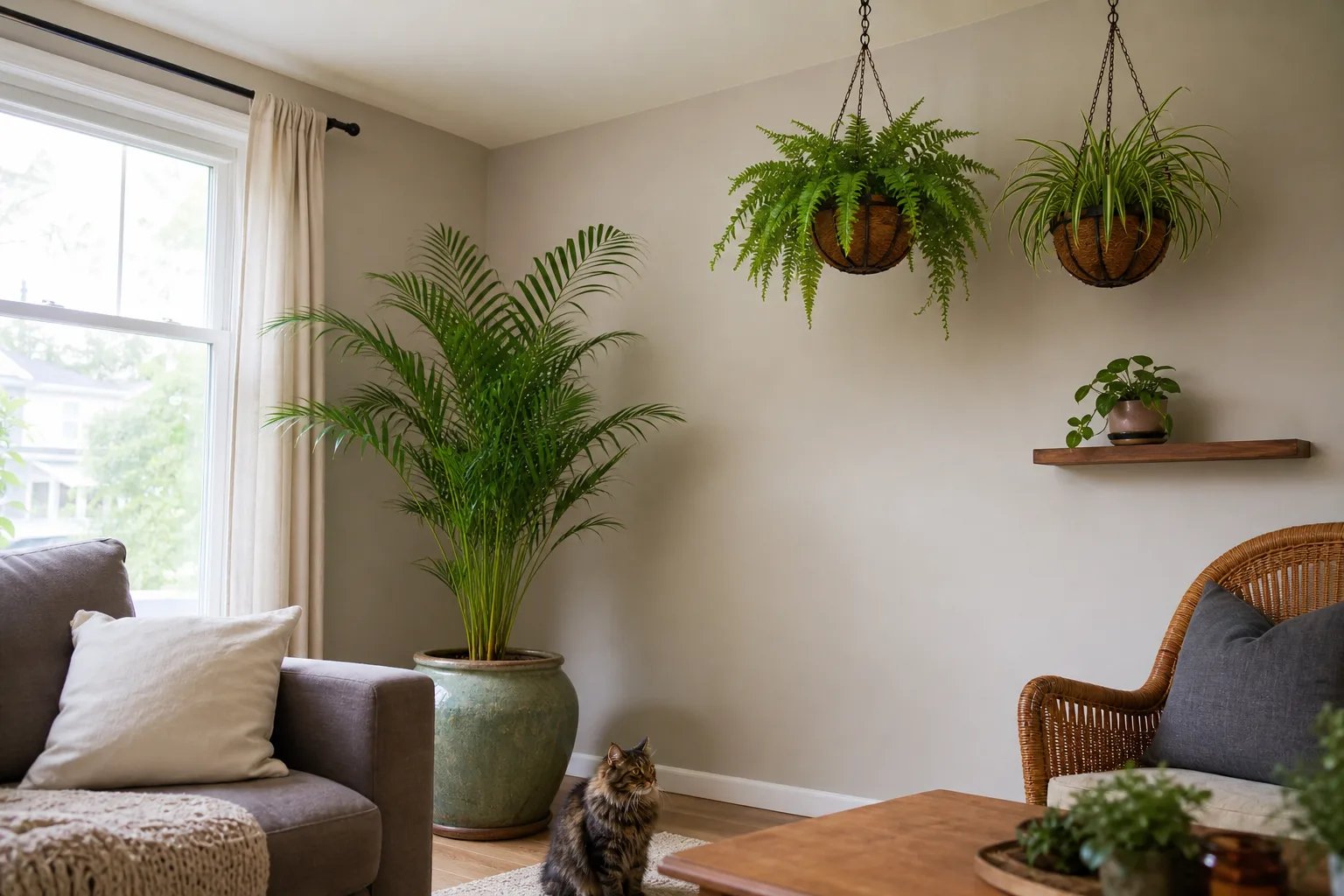
Start by watching how your cat moves through the room. A shelf above a sofa, cabinet, radiator, or bookcase may be reachable even if it looks high from the floor. Move the orchid away from launch points and dangling curtains, and choose a stable surface that cannot tip when a cat lands nearby.
Orchid growers also point out that a knocked pot can damage the plant even when the cat is not poisoned. BB Orchids’ practical guidance favors stable placement as a way to reduce those accidents; a heavier outer pot can help, but it should not block drainage or create a top-heavy stack. Check that the inner nursery pot is secure and empty the cachepot after watering so the cat cannot drink from stagnant runoff.
Choose a barrier a cat cannot bypass
For a persistent chewer, a closed room is more dependable than a high shelf, provided that room still has suitable light and temperature. A latched, ventilated plant cabinet can work if it does not overheat in direct sun and the orchid still receives bright indirect light. The door or barrier must actually stay closed; an open decorative cabinet is just another perch.
If you use a shelf, remove nearby furniture that acts as a step, secure the shelf to the wall, and keep the pot far enough from the edge that a paw cannot hook it down. Hanging baskets can keep foliage out of reach, but dangling cords may become play targets and the pot still needs a secure hook. Re-check the setup after moving furniture or when a kitten grows into a better jumper.
No height is universally “cat-proof.” Some cats never approach plants; others climb or leap onto surfaces that owners thought were inaccessible. Make the decision from your cat’s demonstrated reach and persistence, then use a physical barrier or a separate room if you cannot reliably supervise access.
Make the plant less interesting without risky deterrents
Do not rely on citrus peels, essential-oil sprays, bitter products, or a water bottle as the main safety plan. These methods may fail, can introduce their own irritants or hazards, and do not change the plant’s species or treatment history. A closed door or well-secured barrier is easier to verify than a scent-based promise.
Give the cat a legal alternative: schedule short interactive play, rotate toys, use a puzzle feeder, and place pet-intended cat grass where the cat can reach it. Reward the cat for choosing the alternative or settling elsewhere, and calmly interrupt access to the orchid. If the cat returns as soon as you leave, assume the training is not a complete barrier and change the room setup.
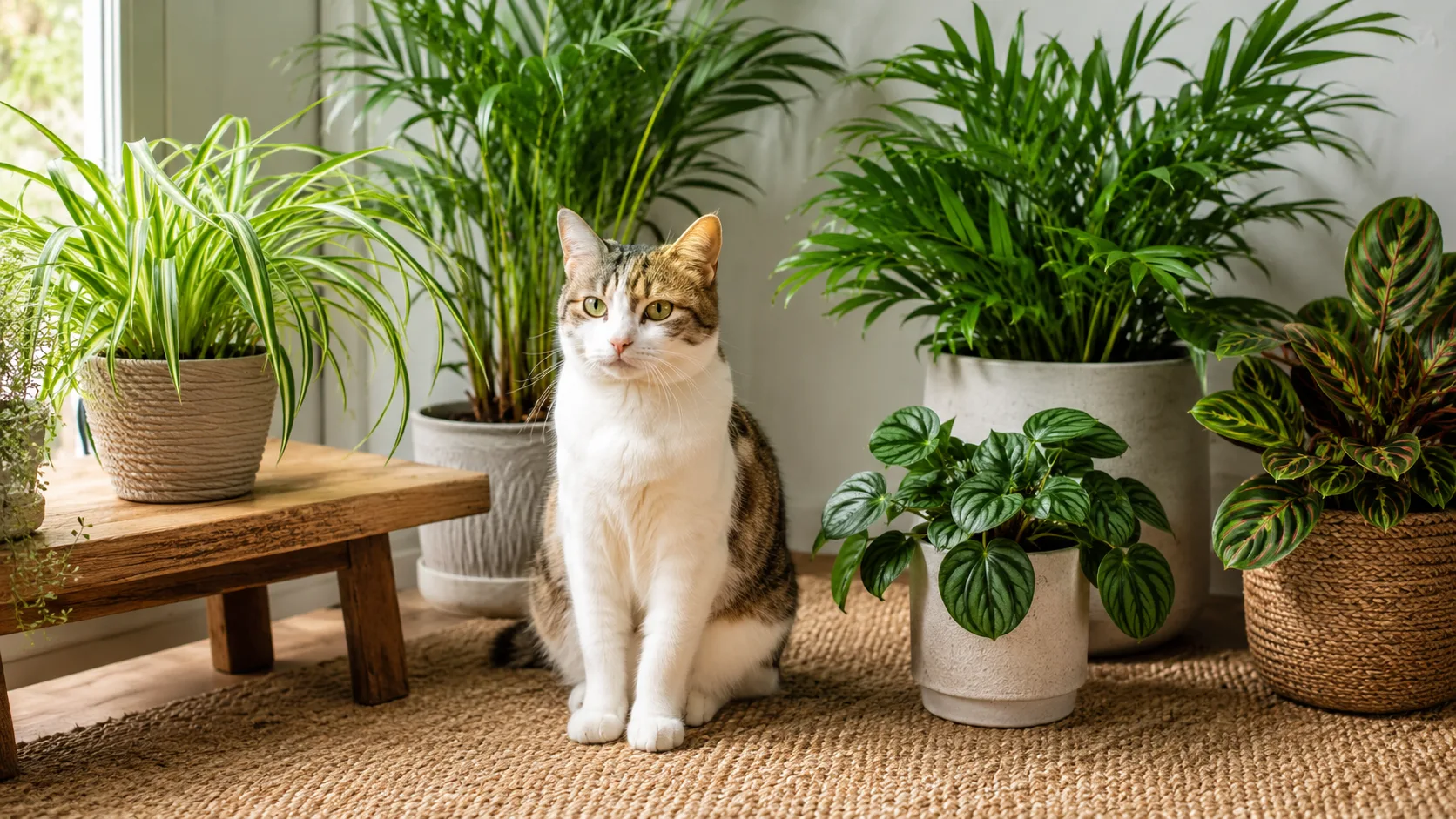
For a wider selection of plants and placement ideas, see our guide to pet-safe houseplants. Verify each plant by its botanical name before adding it to a home with a persistent chewer; “pet-safe” does not mean that any plant should be eaten in quantity.
When to keep the orchid out of a cat home
If your cat chews every leafy plant, knocks pots from shelves, or has unsupervised access to the orchid’s only bright window, keeping the plant in a room the cat cannot enter may be the most realistic choice. If you cannot make that room secure or keep an unknown nursery treatment away from the cat, give the orchid to a friend or choose a different decoration. A non-toxic listing can lower concern about one kind of exposure, but it cannot make a repeatedly accessible plant risk-free.
The same cautious approach makes sense for a newly adopted kitten, a cat with a history of pica, or a home where children may move the plant or leave fertilizer within reach. Ask the plant seller for the botanical name and treatment details before buying if you know your cat samples greenery. Prevention is easiest when the light, barrier, and product storage all work together from the start.
Conclusion
The familiar moth orchid, Phalaenopsis, is listed as non-toxic to cats, so a small nibble from a known, untreated plant is not the same emergency as chewing a true lily. Still, plant material can upset the stomach, other orchid species may not have the same listing, and fertilizers or pesticides create a separate exposure question.
Identify the plant, remove access, save any product labels, and call a veterinarian or poison-control service when the species, amount, treatment, or symptoms are uncertain. To prevent another bite, use a stable, physically protected bright spot and give a plant-curious cat safer activities and greenery.



