6 Best Potting Soils for Flowers and Vegetables
Compare six potting mixes for flowers and vegetables, see what each is suited for, and learn how to choose a mix that drains well without drying too fast.
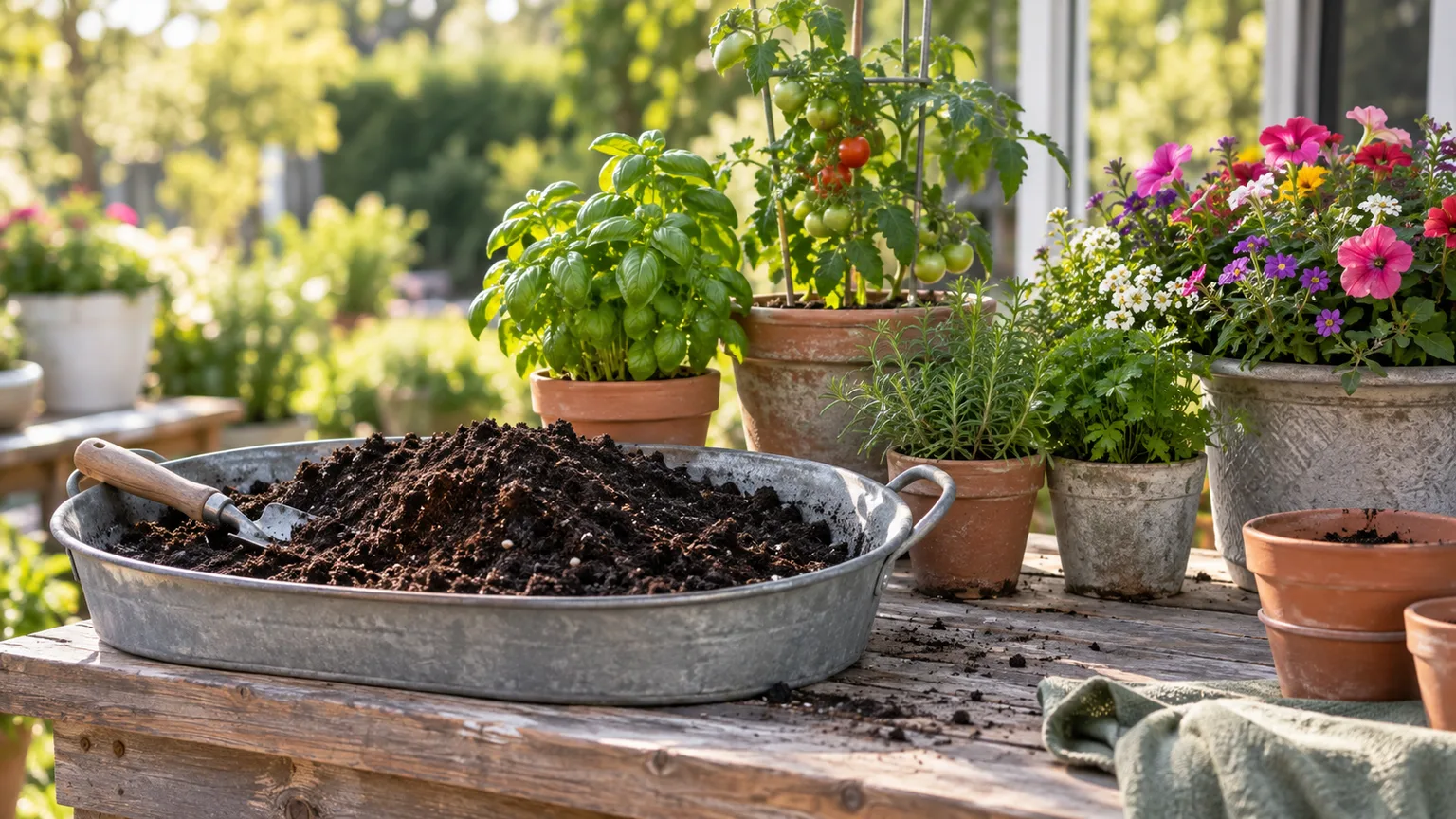
The best potting soil for flowers and vegetables is not necessarily the richest-looking bag or the one with the longest ingredient list. In a container, roots need a medium that holds enough water to bridge the time between irrigation, yet leaves air-filled pores after excess water drains. A useful mix also gives you a clear plan for feeding, because nutrients in a fresh bag may be limited or already included.
These six options have different ingredient profiles and intended uses. This is a research-based shortlist, not a side-by-side growing trial: I compared published product descriptions and directions with container-growing guidance from Penn State Extension, the Royal Horticultural Society, and Fine Gardening. Check the current bag label before buying; formulations, bag sizes, availability, and feeding claims can change.
What makes a potting mix work in a container
Container roots live in a restricted volume. Unlike an in-ground bed, a pot cannot draw moisture from surrounding soil, and its lower drainage holes are the only exit for surplus water. Penn State Extension recommends a soilless medium for container vegetables rather than straight garden soil, and notes that common ingredients include peat, bark, perlite, vermiculite, and coir. The RHS likewise emphasizes choosing compost for the plant and container, while recognizing that pots need more frequent watering and feeding than garden beds.
That is why a potting mix is a balancing act, not a recipe with one magic ingredient. Fine Gardening’s soil-science overview describes the goal as a medium with both drainage and moisture retention, with pore space for roots. If a mix dries into a hard block, roots struggle to explore it; if it stays saturated, oxygen becomes scarce and roots can decline. A good starting mix should feel springy and loose when damp, not muddy or dusty.
Six potting mixes for flowers and vegetables
The options below are useful starting points, not a universal ranking. Choose based on what you grow, how often you can water, whether the mix includes fertilizer, and whether you want a conventional, organic-labeled, or more amendable base. Product pages describe manufacturer or seller claims; those descriptions are not independent performance tests.
FoxFarm Happy Frog Potting Soil
FoxFarm Happy Frog Potting Soil is a container-oriented blend that the manufacturer describes as containing aged forest products, earthworm castings, bat guano, and a beneficial-microbe component. It is a reasonable candidate for gardeners who want a ready-to-use mix with organic matter and amendments already blended in, especially for ornamental containers and established edible plants. Read the current package for its full ingredient statement and feeding directions rather than assuming that an amended mix supplies everything a heavy-feeding crop needs.
The trade-off is that a biologically active, compost-rich blend can be more than a tiny seedling or a low-nutrient-sensitive plant needs, depending on the formulation and how it is used. For seeds, follow the packet’s planting guidance; many gardeners start seedlings in a finer, lower-nutrient seed-starting medium. For large outdoor pots, check drainage holes and monitor moisture after planting. A mix cannot compensate for a pot without drainage or for watering that leaves the root zone continually saturated.
Burpee Premium Organic Potting Mix
Burpee Premium Organic Potting Mix is marketed for vegetables, herbs, and flowers in containers and raised beds. Its listing describes coconut coir and an included plant-food charge intended to feed for up to three months; it also carries an organic-input claim on the product page. These details make it a convenient option if you want a packaged mix with a stated initial feeding window rather than a plain base that you plan to amend yourself.
Treat “up to three months” as a label claim, not a promise that every crop and climate will need no further nutrition for that period. A fruiting tomato in a small, frequently watered pot may use resources differently from a compact annual flower in a large container. During research, the product page displayed a notification/waitlist message, so availability may vary; check a current retailer and inspect the bag for the exact formulation, certification language, and directions before purchasing.
Dr. Earth Pot of Gold
Dr. Earth Pot of Gold is described by the retailer as an all-purpose mix for indoor and outdoor containers, with composted ingredients and beneficial microbes. The listing also describes it as suitable for flowers, vegetables, and herbs. If you want one general-purpose bag for mixed patio pots, this is a candidate to compare with the other amended blends, particularly when the current label’s listed ingredients align with your preferences.
This product information comes from a retailer listing, not a direct manufacturer page, and that listing showed the item as out of stock when checked. Do not assume the same stock status elsewhere or treat the seller’s summary as a laboratory evaluation. Before using any compost-rich mix for seedlings or salt-sensitive plants, check the bag directions and consider starting delicate seedlings in a purpose-made seed-starting medium. For containers that dry very quickly, you may need to adjust irrigation rather than add a dense amendment that could reduce aeration.
Espoma Organic Potting Mix
Espoma Organic Potting Mix is intended for indoor and outdoor containers. Espoma lists ingredients and amendments such as earthworm castings, feather meal, alfalfa meal, kelp meal, yucca extract, and Myco-tone. That profile may appeal to gardeners looking for an organic-labeled mix with a range of plant-derived and mineral amendments for flowers, herbs, and vegetables in pots.
The manufacturer’s directions call for feeding at least monthly during the growing season, beginning two weeks after planting. That is an important reminder: an organic label or long ingredient list does not mean “no additional fertilizer all season.” Follow the current package rate and plant response, and avoid stacking extra fertilizer at planting simply because a crop like tomato is known to be hungry. If leaves are pale or growth stalls, check light, root health, watering, and temperature before assuming the mix needs more food.
Roots Organics Original Potting Soil
Roots Organics Original Potting Soil is listed by the retailer Grow Organic as a blend with coconut coir, perlite, pumice, composted forest materials, worm castings, and other amendments. A blend that includes both coarse aeration ingredients and organic matter can suit gardeners seeking a more open-feeling medium for containers, including larger patio plants. Its listed components also give the buyer more to evaluate than a vague “all-purpose” label.
Because this ingredient summary is from a retailer, confirm it against the current product bag and directions; formulas can change. An airy mix can drain quickly in a small pot, a hot location, or a fabric grow bag, so the advantage comes with a watering trade-off. If you garden in a hot, dry climate or cannot check containers often, choose a larger pot, group containers to reduce exposure, and monitor the root zone rather than adding fine garden soil to slow drainage.
Coast of Maine Bar Harbor Blend
Coast of Maine Bar Harbor Blend is a container-oriented option the company recommends for flowers, vegetables, herbs, and container gardens. Its published ingredient list includes peat, composted manure, perlite, aged bark, and amendments derived from kelp and marine materials. The manufacturer also publishes a guaranteed analysis, which lets you compare the product’s stated nutrient profile with other mixes instead of guessing from the front of the bag.
This blend may be worth considering for outdoor containers when you want composted organic matter plus ingredients that help maintain structure. Its peat content also matters if you are specifically shopping for a peat-free product; check the current label because names and formulations can differ by region. As with any amended mix, use the package’s directions and do not add a full extra dose of fertilizer automatically. A large pot of flowering annuals and a fruiting vegetable may need different follow-up feeding.
How to choose a mix for your plants
Start with the growing setup, not the marketing adjectives. A 5-gallon grow bag exposed to summer sun has a different water pattern from a deep glazed pot on a shaded porch. A short list on the bag—intended crops, ingredient base, fertilizer statement, pH information if provided, and directions—helps you compare products in a way that “premium” or “performance” alone cannot.
Read the ingredient list and fertilizer statement
Peat and coir can hold water while keeping a relatively light structure; coir is derived from coconut husk, while peat comes from sphagnum bogs. Composted bark and forest products add structure and organic matter, but their particle size and degree of decomposition affect how a mix behaves. Perlite and pumice are coarse mineral components commonly used to increase air space; vermiculite can hold both water and nutrients. Compost and castings contribute organic matter and nutrients, but they are not interchangeable with a complete fertilizer program.
Look for the actual feed window, nutrient analysis, and crop instructions, not just “feeds plants” on a package front. Products may include starter fertilizer, slow-release granules, or organic amendments with different release patterns. If the label says to begin feeding after a certain interval, use that as your baseline and watch the plant. Avoid adding multiple concentrated amendments at planting: more nutrients do not necessarily mean faster or healthier growth, and the exact risk depends on product rate, crop, and watering.
Balance drainage with moisture retention
When damp, a workable mix should clump lightly when squeezed but break apart with a small touch. Water should wet the root ball rather than race down a dry channel and leave the center dusty. On the other hand, the mix should not remain waterlogged for days in a container with drainage. A handful test cannot replace observing the pot, but it is a useful first screen when comparing bags at the store.
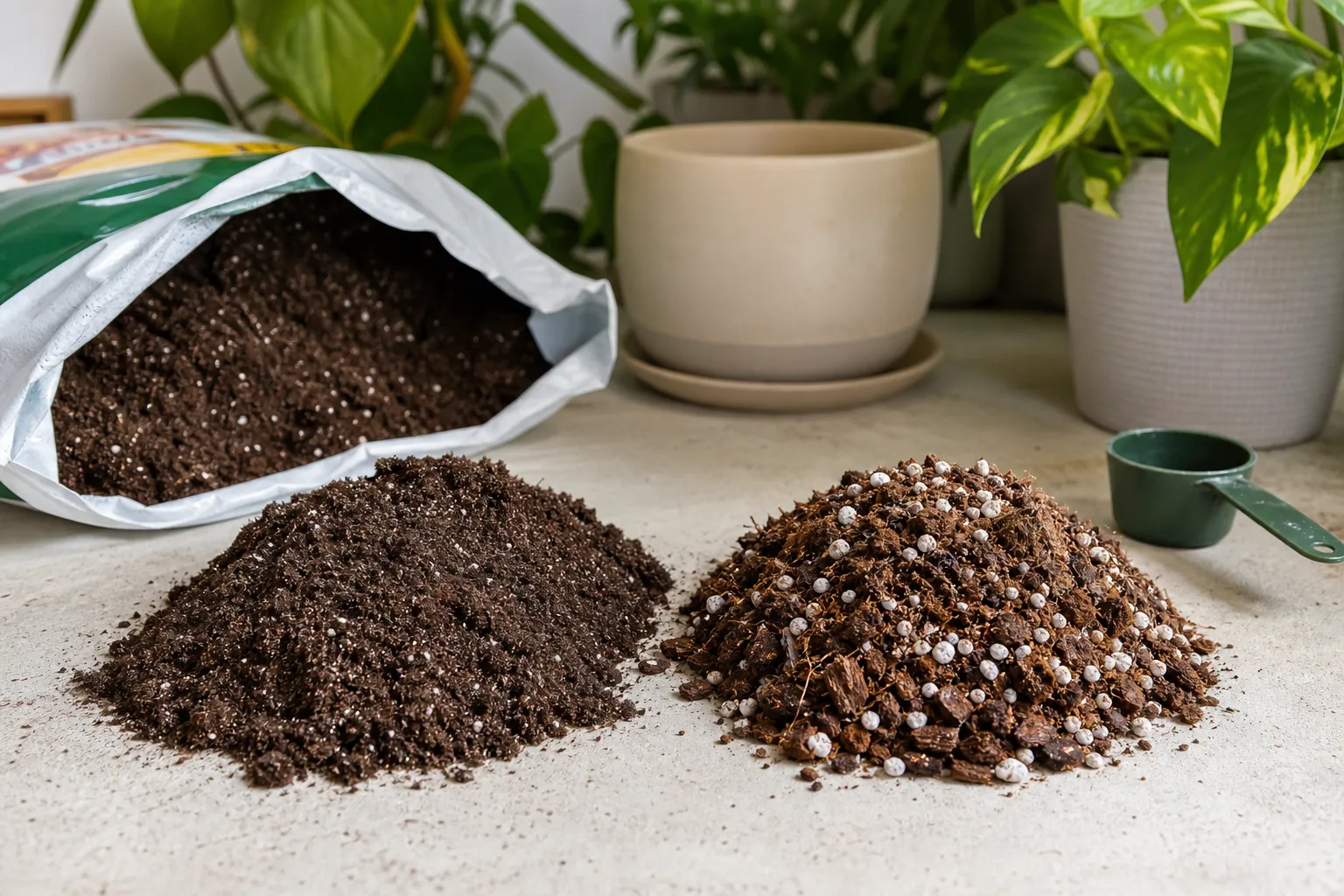
Do not “fix” a heavy mix by pouring in an arbitrary amount of sand; fine sand can fill pores instead of improving them. If a mix feels dense, blend in a measured coarse aeration component such as perlite or pumice, or choose a better-structured container mix. If it dries too quickly, first review pot size, sun, wind, and watering frequency. Coir or compost may change water retention, but an amendment should not erase the air spaces roots need.
Match the mix to flowers, vegetables, and container size
Most common annual flowers, herbs, and container vegetables can grow in a general-purpose container mix with drainage and a suitable feeding plan. That shared baseline is why one bag can work for a mixed patio garden. Still, the crop and pot size change what “suitable” means. Tomatoes and other fruiting vegetables need enough root volume, consistent moisture, and nutrition through a long season; small pots make all three harder to manage.
For a large tomato, pepper, or eggplant, prioritize a deep container with drainage and enough volume for the mature plant, then use a mix that stays evenly moist without becoming dense. For basil and many compact herbs, a general container mix can work, but avoid keeping the pot perpetually wet. For petunias or other flowering annuals, match the fertilizer plan to the product directions and the plant’s growth stage. Succulents and many Mediterranean herbs often need a faster-draining medium than a moisture-retentive vegetable blend.
In grow bags, expect the sides to lose water as well as the surface, so irrigation may need to be more frequent than in a glazed pot. Large containers dry more slowly than small ones, and the RHS notes that container plants generally need more watering and feeding than plants in the ground. Check moisture a finger depth or two below the surface rather than watering by the calendar. If the upper layer is dry but the root zone remains damp, wait; if the pot is light and dry throughout, water slowly until excess drains.
Potting mix vs. garden soil and raised-bed mix
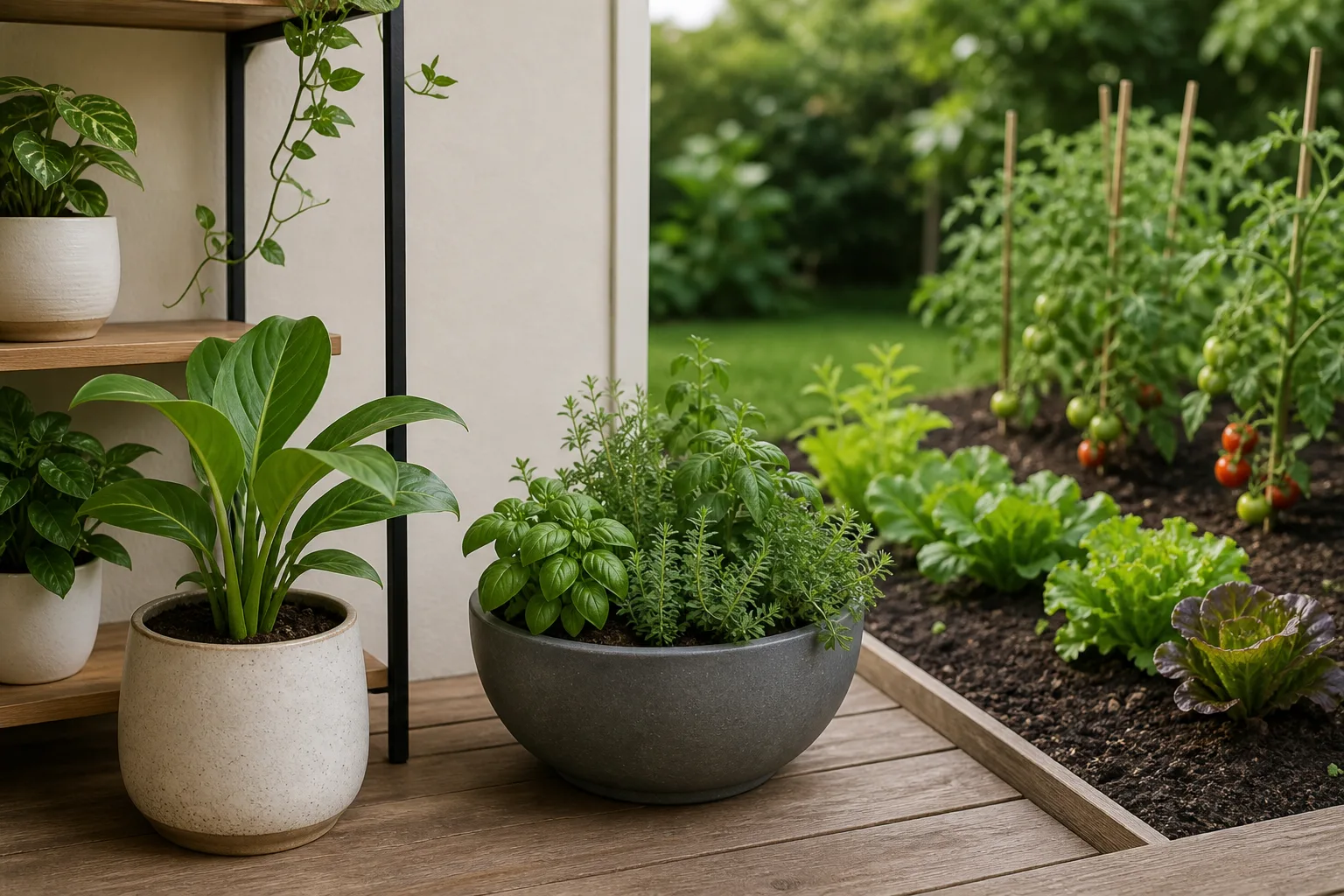
“Potting soil” is a common shelf term, even when the package contains no mineral soil. Many potting products are soilless blends intended to stay relatively light and porous in a confined container. Garden soil comes from the ground; in a pot it can compact, settle, and drain poorly. Penn State Extension’s container vegetable guidance specifically advises against using straight garden soil in container vegetable gardening.
Raised-bed mix is meant to fill a larger, open-sided or ground-connected bed, and may be heavier or more soil-like than a container blend. Some products are labeled for both raised beds and containers, but read the package rather than treating the terms as interchangeable. If you are filling a patio pot, buy a product intended for containers. If you are filling a raised bed, calculate the larger volume and select a product formulated for that use; bags sold as potting mix can become an expensive way to fill a bed.
Prepare a bag and container before planting
Open the bag and check that the mix smells earthy, not sour or rotten, and has no obvious moldy mat or pest infestation. A little surface mold on organic material can occur in moist storage and is not automatically a reason to discard it, but a foul odor, soggy clumps, or visible contamination deserves caution. Loosen compacted material with your hands before filling pots. If a very dry peat-based mix repels water, moisten it gradually in a tub or wheelbarrow and let it absorb before planting.
Use a clean container with unobstructed drainage holes. A layer of gravel at the bottom does not improve drainage; it can leave a saturated zone above the gravel. Fill most of the pot with mix, settle it gently rather than tamping it hard, position the root ball at the appropriate depth, and leave a little headspace for watering. Water thoroughly after planting so the mix settles around roots, then check again as the surface dries.
Avoid these potting-soil mistakes
The most common mistake is using garden soil in a small pot because it seems richer or cheaper. It can compact in a way that makes the root environment less predictable. Another is buying a heavily amended blend for every job: delicate seeds, established vegetables, and flowering annuals do not always benefit from identical nutrient levels. Seed-starting mix is usually finer and made for germination; it is not necessarily the best long-term home for a mature plant.
Do not assume that organic means sterile, pesticide-free in every sense, or nutritionally complete. Read certifications and ingredient statements precisely, and follow any handling precautions on the label. Also avoid combining a pre-fertilized mix with multiple extra feeds at planting. More fertilizer is not insurance against poor growth; excessive salts or nutrient imbalance can injure roots, while inadequate light, cold soil, water stress, or a root-bound plant may be the actual problem.
Reusing mix is possible when the prior plant was healthy and the medium has not broken down into a dense, poorly draining mass. Remove old roots and debris, refresh the structure with new container mix or appropriate coarse material, and replenish nutrients according to the new crop and product label. Do not reuse mix from plants with serious root disease, persistent pest problems, or unknown chemical contamination. For edible crops, when in doubt about contamination, replace it rather than risk carrying the problem forward.
Conclusion
For most mixed patio gardens, start with a container-labeled potting mix that is loose, holds moisture without staying soggy, and tells you whether and when to feed. FoxFarm Happy Frog and the Coast of Maine blend publish detailed amended ingredient profiles; Espoma and Burpee provide explicit organic-oriented product descriptions and feeding context; Roots Organics is a more open-textured candidate according to its retailer listing; and Dr. Earth Pot of Gold is another general-purpose option to compare, with retailer availability to verify.
Before you buy, match the bag to your crop, container, and watering routine, then follow the current label rather than relying on broad claims such as “feeds all season.” Keep straight garden soil out of patio pots, ensure drainage holes remain open, and adjust care by checking the moisture and growth of the plant. Those choices will do more for a container’s root zone than chasing a single universally “best” bag.