Is It Too Late to Winterize Rose Bushes?
Learn how late winter protection differs for grafted, own-root, climbing, and potted roses, plus when to stop digging and protect in place.

Quick answer: It may be late, but some protection can still help
It is not automatically too late to winterize rose bushes after the first frost or even after an early freeze. If the soil is still workable, you can protect the crown and, on a grafted rose, cover the bud union with a mound of clean soil or compost. If the ground has frozen solid, stop trying to dig or bend the plant; add loose insulation over the root zone and protect exposed canes from wind instead.
That distinction matters because “winterizing” is not one task. A mound placed before the ground freezes can shield vulnerable roots and a graft union from repeated temperature swings. Once the soil is hard, the same digging may tear roots or break brittle canes, and no late cover can undo tissue already killed by cold.
So judge the garden, not the date on a generic calendar. A mild-weather rose in a sheltered bed may need little help, while a potted hybrid tea, a newly planted grafted rose, or a climber exposed to winter wind may still benefit from careful protection.
Check the soil before you pick a method
Push a trowel into the bed several inches from the crown, not through the rose’s roots. If the soil crumbles and moves without force, you can still bring in material to mound around the base. If the top layer is frozen but the soil beneath is soft, work gently and avoid chopping through a frozen crust beside the plant.
When a spade will not enter the soil, or the root zone is frozen into a solid mass, treat that as the cutoff for digging, tipping, and burying canes. You can still lay straw, evergreen branches, or another airy insulating layer over the root area and secure it against wind. That is a lower-impact late-season step, not a substitute for a properly timed mound in a severe climate.
Snow can insulate when it stays in place, but it is unreliable if wind exposes the bed. Do not scrape it away from the crown; add loose protection over it if needed, without disturbing the plant.
Read the rose’s dormancy and hardiness
A light frost is not a universal signal to wrap every rose. Some roses keep leaves after a brief frost, while others have already stopped active growth. Look for sustained cool weather, canes that have hardened, and leaves changing color or dropping; these are better signs that the plant is moving into dormancy than a single cold night.
Identify the rose if you can. A plant tag, nursery receipt, or old garden record may tell you whether it is a cold-hardy shrub, a hybrid tea, a climbing rose, or a standard with its graft above the ground. The cultivar’s hardiness and your local winter lows matter more than a broad zone label alone, especially in an exposed yard or a spot that loses snow cover.
If you cannot identify it, insulate the roots, cover a visible graft union, and tie only canes that can be gathered without cracking. A breathable windbreak is safer than forcing rigid canes into a trench.
What winter protection can still change
Winter protection is mainly about moderating the rose’s exposure to cold, wind, and repeated freezing and thawing. The University of Wisconsin–Madison Extension explains that winter mulch is generally meant to buffer those temperature swings, rather than keep the ground from freezing altogether. A stable cold is easier for a dormant plant to tolerate than a cycle of warm days and sharp drops that repeatedly thaws and refreezes the soil.
Prioritize roots and any cold-sensitive graft union. Covering the whole bush is not automatically helpful: it can trap heat and moisture, while a loose breathable layer moderates exposure. Late protection may reduce future stress, but cannot reverse dead canes or guarantee survival.
If the ground is workable, protect the crown
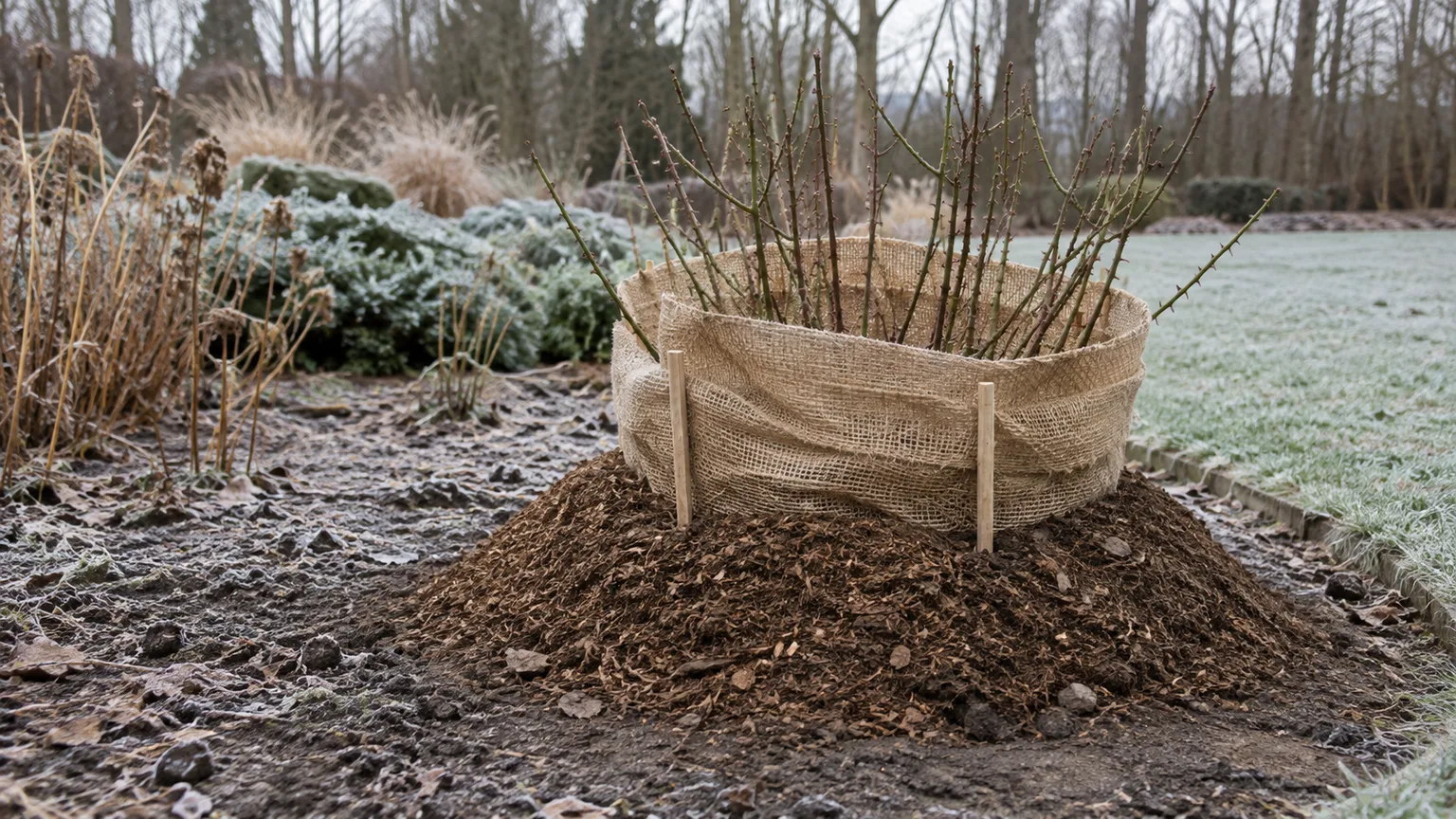
First remove fallen leaves and obviously diseased debris from the base. This is a targeted cleanup, not a reason to strip every healthy leaf or prune the rose hard. Then bring in clean soil, compost, or a suitable potting mix from elsewhere in the garden and mound it around the crown; do not scrape soil away from the plant to build the mound, because that can expose roots and leave a water-holding hollow.
For a grafted rose, cover the graft union. Cold-climate recommendations differ in mound depth, so let the union’s position and local severity guide the height rather than treating one measurement as universal. Penn State Extension describes about a foot of well-draining material over a near-ground bud union; Gardener’s Path describes an eight-to-ten-inch mound. These are examples for cold conditions, not prescriptions for every region.
If the hard frost has passed but soil remains diggable, add the mound now. Follow with loose straw, evergreen boughs, or bark once the ground is cold. University of Wisconsin–Madison Extension recommends timing winter mulch after dormancy and as soil begins freezing; rose-specific methods may mound the crown earlier, so treat the mound and top layer as separate steps.
If the soil is frozen, add surface protection
When the ground will not yield, do not force in a shovel to recreate a fall mound. Lay a loose layer of straw, evergreen boughs, or coarse mulch over the root zone and crown, then anchor it with a light cage, branches, or landscape pins that do not pierce the root ball. Keep the material fluffy enough for air to move through it and avoid pressing wet leaves tightly against the canes.
If the rose is exposed to drying wind, tie long or loose canes together gently with soft twine and use burlap as a windbreak. Burlap is meant to slow wind and help hold insulation in place; it should not be cinched tightly around every cane or sealed with plastic. If the canes are already frozen stiff, leave them where they are rather than trying to remove a trellis or lay them into a trench.
For an exposed grafted rose, a mesh collar can hold loose mulch around the base without digging near roots. Keep wet leaves from matting; if a collar is impractical, a few secured evergreen branches are a modest, low-risk step.
Grafted shrub roses need graft-union coverage
Many modern hybrid teas, floribundas, and grandifloras are grafted: the flowering canes grow from a rootstock, and the swollen bud union is often close to the soil line. That junction can be more vulnerable than the roots of a well-established hardy shrub rose, so it is the place to protect first when the soil is still workable. A mound over the union also reduces the chance that alternating warm and cold spells expose it.
After the ground freezes, insulate the crown from above; use loose material in a collar if wind removes it.
Penn State Extension recommends covering the bud union in cold conditions. Match the amount to hardiness and exposure rather than wrapping every shrub.
Own-root and hardy shrub roses need less intervention
An own-root rose has no graft union to bury, which removes one vulnerable point but does not make the plant immune to cold. Its roots and lower canes can still suffer in a severe winter, particularly if the rose was planted recently, grows in a windy spot, or is a variety near the edge of its hardiness range.
For an established, cold-hardy shrub rose in a sheltered bed, avoid elaborate late-season handling. Keep the root zone covered with a modest, airy mulch layer once the ground is cold, and leave healthy canes in place unless they are broken or likely to whip in the wind. A plant that has lived through several local winters with little damage may need only the same basic care this year.
Give new plantings more attention because their roots are not established: mound if soil allows, or surface-insulate if frozen. Wait until spring for major structural cuts.
Climbing roses and standards need cane-specific protection
Wind can break climbing and rambling canes even when roots survive. Lowering flexible canes into a trench is a cold-climate technique best done while soil is soft. Do not pull a mature climber from its support in midwinter; frozen canes can snap at the base or tie points.
For a climber that must stay on a trellis, loosely tie the canes so they move less, then shield the exposed side with breathable burlap or another fabric that does not trap condensation. Focus the root zone first, because saving every upper cane is less important than keeping the plant’s crown and root system alive. Check ties after windstorms so they do not cut into the stems.
A standard or tree rose has its graft high on a trunk, not at soil level. A small mound cannot protect that exposed union, so wrap the trunk and graft area with breathable material and protect the roots separately. Penn State Extension describes laying a standard down while soil is workable; after a freeze, do not uproot or bend it.
Potted roses are the late-season priority
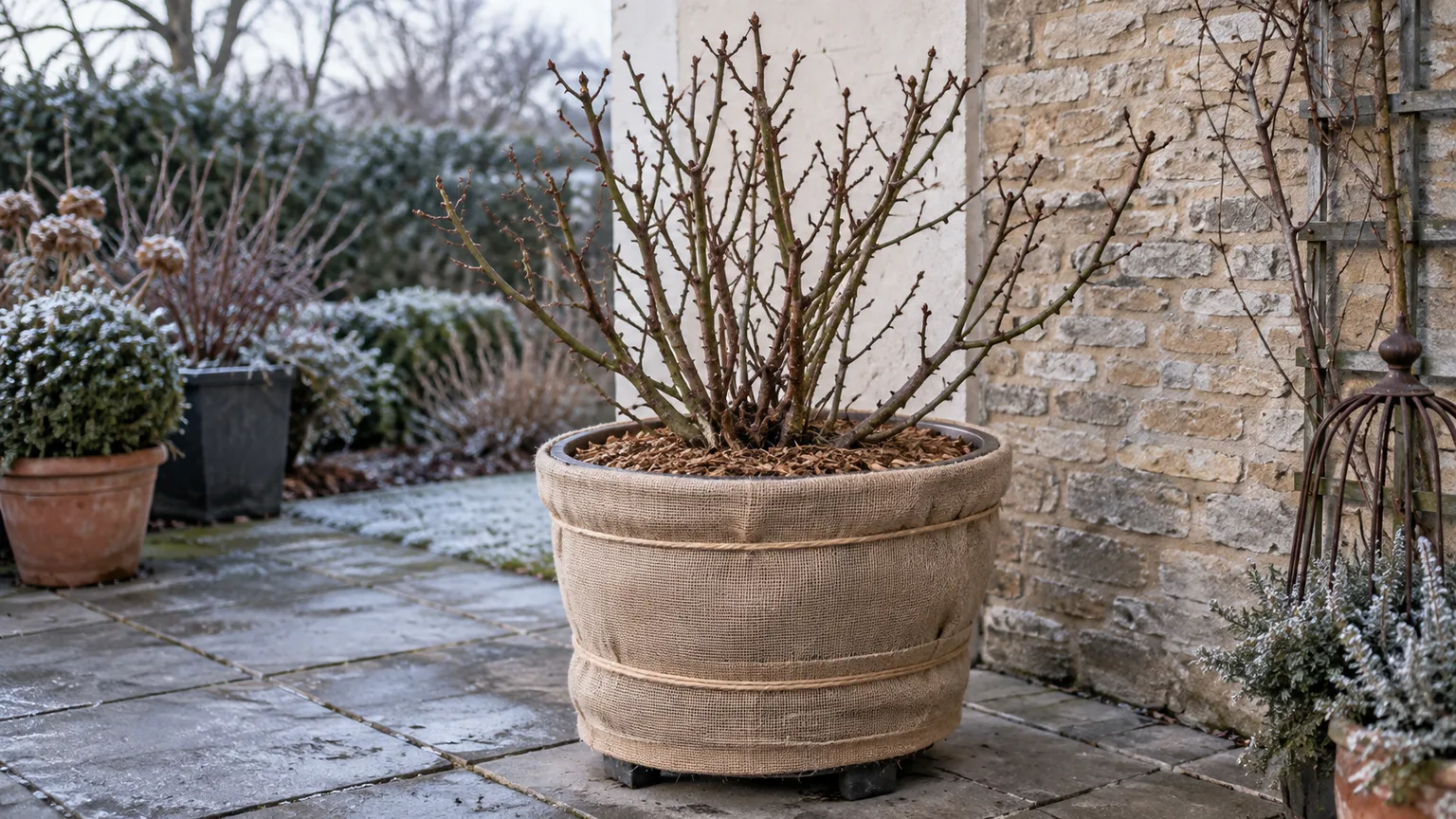
Roots in a pot are exposed to cold on the sides as well as from above, so a container rose can freeze faster than one planted in the ground. Gardeningetc makes this distinction in its practical winterizing guide. Prioritize a potted rose over an established shrub in a sheltered bed when a freeze is imminent.
If the rose is dormant and the pot can be moved safely, place it in an unheated garage or shed that stays cold rather than a warm living room, which can interrupt dormancy and start weak growth. Check every few weeks so the soil does not dry completely, but do not keep it wet.
If you cannot move it, place the pot beside a sheltered wall, insulate the container with breathable materials, and cover the crown with loose mulch. Keep drainage open. Bury a small pot only while the soil is workable and the rose is dormant.
If a hard freeze is forecast tonight
Use the next hour on the parts that are easiest to protect without digging. Move a manageable potted rose into an unheated sheltered space; add loose mulch over a bare crown; and secure a breathable cover over canes that are exposed to strong wind. If the rose is still leafy and actively growing, do not try to prune it into dormancy overnight.
Do not water frozen soil or soak the plant just before temperatures drop. If the soil is dry and still absorbs water, a normal deep watering before the ground freezes can help prevent winter drought stress; Penn State Extension advises watering thoroughly late in the season. If the ground is frozen, wait for a thaw rather than pouring water over an icy root zone.
A temporary frost cloth can reduce wind and radiant cooling, but secure it loosely to the ground and remove or vent it when temperatures moderate. Thin plastic touching the canes can hold moisture against stems, flap in wind, and warm quickly in sun.
What to avoid after a late start
Skip hard pruning done only to make the rose easier to cover. Shortening healthy canes does not make the root system more winter-hardy, and fresh cuts or stimulated growth are unhelpful when the plant should be resting. Remove only a cane that is broken, diseased, or creating an immediate hazard; save shaping for the right pruning season for that rose.
Do not excavate soil from around the crown to build a mound, dig a trench beside frozen roots, or bend frozen canes. Gardener’s Path cautions gardeners to bring in soil rather than pull it from beside the rose when hilling; the hollow left behind can disturb roots and collect water. If the soil is frozen, switch to surface insulation instead.
Avoid thick mats of wet leaves, compost packed against the canes, airtight plastic, and a cover that traps warmth during sunny days. Wisconsin Extension warns that leaves can mat and smother plants when used as winter mulch. Use clean, loose, breathable material and let the purpose be insulation and steadier temperatures, not turning the rose into a warm, damp bundle.
Clean up carefully without stripping protection
Sanitation is useful, but timing and scope matter. Remove fallen diseased leaves and spent plant debris from around the rose so infected material is not left beneath it; do not rake away a natural snow blanket or pull apart an insulating layer that is already keeping the root zone stable. If a covering needs adjustment, lift it gently from the outer edge and replace it without exposing the crown for long.
Late fertilizer is not a rescue treatment. Nitrogen can encourage soft growth at the wrong time, and extra feeding cannot repair frost injury. Penn State Extension recommends stopping regular fertilization before winter so new growth has time to harden; at this point, leave fertilizer until the rose resumes active growth in spring and follow a schedule suited to your local climate.
If animal browsing is a concern, a loose wire barrier around the plant can keep rabbits from chewing canes without sealing the rose inside a plastic sleeve. Check that the cage does not rub or constrict the stems, and make sure the mulch remains loose. This is especially worthwhile where snow makes low canes easy for rabbits to reach.
If winter damage has already begun
A blackened or shriveled cane tip is not proof that the entire rose is lost. Cold injury may affect only the exposed upper growth, while the crown and roots remain alive. Keep protection in place through the coldest stretch, and avoid cutting the plant back repeatedly every time another cane looks worse.
Wait until late winter or early spring, when buds begin to swell and the worst cold has passed, before judging how far the damage extends. If you need to check a cane, lightly scratch a tiny patch of bark: green tissue beneath the surface suggests it is still alive; dry brown tissue farther down may indicate dieback. Prune damaged wood back to living tissue at the appropriate time, using clean, sharp tools.
If the graft union or crown was exposed during a severe freeze, keep the area insulated but do not bury it in soggy material. A rose that fails to leaf out may still send up shoots from the rootstock, especially if it was grafted; those shoots may not produce the same flowers as the named variety. Give the plant time to show where growth is coming from before deciding whether to replace it.
When and how to remove protection in spring
Do not remove every layer on the first warm afternoon. A mild spell can be followed by another freeze, and the soil may remain frozen even after the air feels pleasant. Watch local forecasts and wait until severe cold is less likely; in Pennsylvania, Penn State Extension suggests beginning removal when early-spring lows are no longer expected below 20°F, but that is a regional reference point rather than a universal rule for every climate.
Uncover gradually. Pull back the outer straw, boughs, or leaves first, then let the mound thaw before removing it from around the crown. If a lower layer is frozen in place, leave it until it loosens instead of levering it off and tearing new growth or roots. Keep a breathable cover nearby in case a late cold snap returns.
Once the protection is off, inspect the canes and crown, prune only dead or damaged wood, and spread usable clean mulch back over the bed without piling it against stems. Resume watering and feeding as the rose begins active growth and the soil drains normally. A slow reveal is easier on the plant than switching from a deep winter cover to bare canes in one day.
Conclusion
If the soil is still workable, winterize the rose now by protecting its crown and covering the graft union when it has one. If the ground is frozen, stop digging and use loose surface insulation, a breathable windbreak, or shelter for a container rose instead.
The best late-season choice depends on dormancy, rose type, exposure, and how much cold has already occurred. You cannot reverse damage that is already done, but you can still reduce further stress—and avoid turning a missed fall chore into broken canes or disturbed roots.