20 Low-Maintenance Perennials for Shade Gardens
Compare 20 low-maintenance perennials for shade by light, moisture, spread, and bloom season, then match dependable choices to dry tree roots or moist beds.
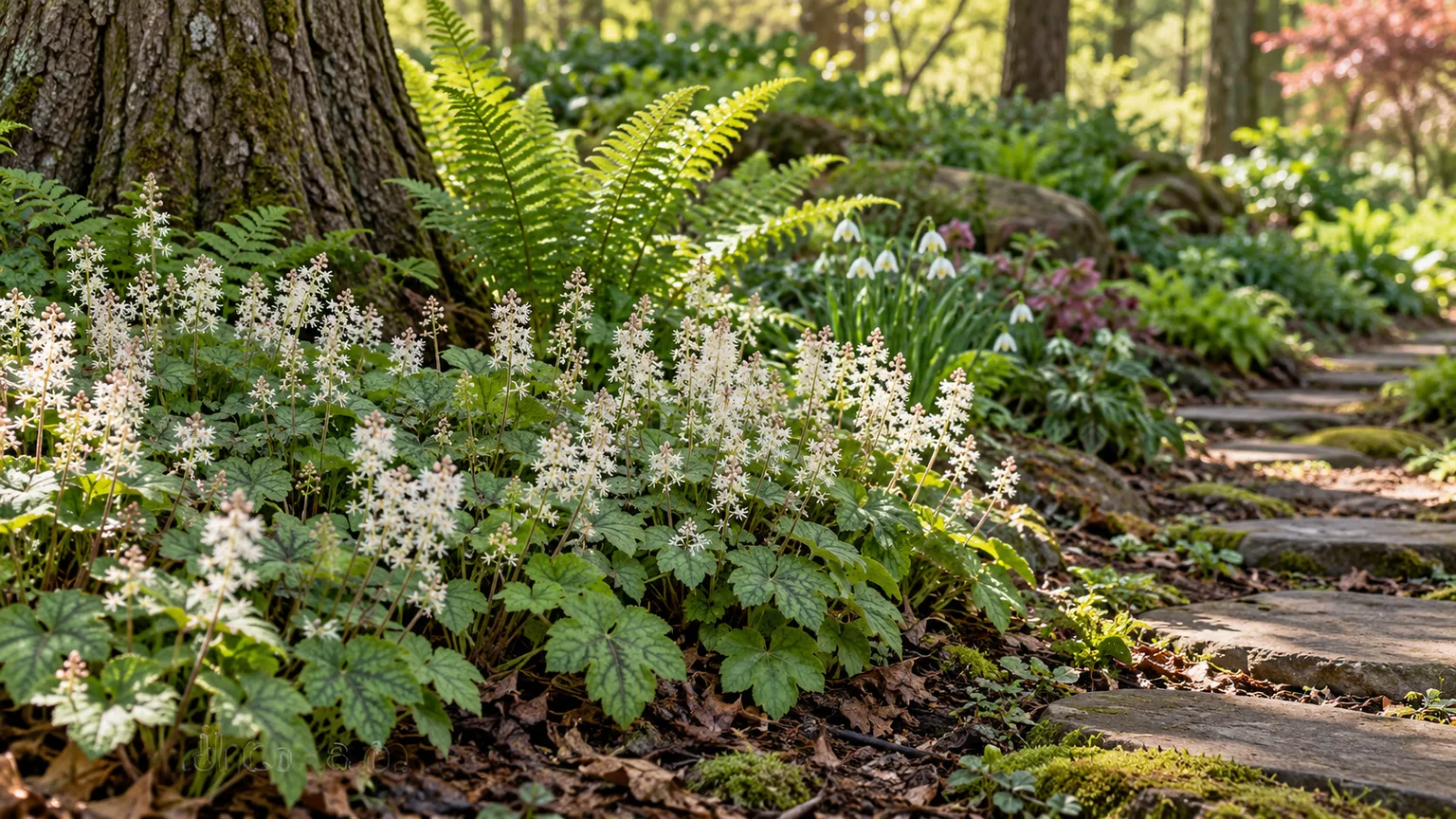
The easiest shade garden is built around the conditions that make the site difficult. A bed beneath a mature maple may be dry because the canopy intercepts rain and the roots compete for moisture; a north-facing border can stay cool and damp; a shaded foundation bed may be dry at the surface but waterlogged after roof runoff. Those places all look “shady,” yet they reward different plants. The RHS guide to shade planting likewise emphasizes choosing plants for the specific kind of shade.
Use the 20 choices below as a shortlist, not a shopping list. Start with the quick table, then choose a few plants that share the same moisture needs and mature size. A well-matched group usually needs less rescue watering, dividing, and replacing than a bed assembled around flower color alone.
Before You Plant, Separate Three Shade Problems
Shade is not a single light setting. It describes how much direct and filtered light reaches foliage, while soil moisture and root competition are separate variables. A plant can thrive in deep shade with damp soil and fail in a bright, dry spot under a tree; another can tolerate low light but rot in winter-wet clay.
Measure Light and Overhead Cover
Watch the bed at several points during the day before buying plants. Note direct sun, bright reflected light, and moving patches beneath deciduous branches; repeat the observation in leaf-on conditions if you can. NC State Extension’s hosta profile describes practical categories ranging from dappled sunlight to deep shade, but labels on nursery tags still vary, so the actual exposure matters more than the word “shade.” Hosta cultivars with gold or lighter foliage often accept more light than blue-leaved types, while hot afternoon sun can scorch broad leaves.
“Full shade” does not mean a site receives no usable light. It usually signals little or no direct sun, but a bright open north side, dense evergreen canopy, and dark gap between buildings do not provide the same conditions. If a spot is extremely dim, prioritize foliage texture and plants known to tolerate deep shade; do not expect heavy flowering from every perennial there.
Diagnose Moisture and Root Competition
Dry shade is often a water problem disguised as a light problem. Tree leaves can intercept rain, established roots draw water from the same soil, and the bed may be difficult to irrigate without soaking trunks or washing soil over roots. Penn State Extension’s underplanting-trees guide discusses those root-competition constraints. Test the soil several inches down after a rainless week rather than judging only the dry mulch surface. If it is powdery beneath the surface, choose dry-shade plants and plan deliberate establishment watering.
Moist shade has a different boundary: soil should stay evenly damp without remaining saturated. Many woodland flowers enjoy humus-rich moisture, but winter water standing around a crown can rot plants that otherwise tolerate shade. The RHS guide to shade gardening is useful for sites under trees, while Gardening Know How’s astilbe guide makes the complementary point that moisture-demanding plants such as astilbe should not be assigned to a dry root zone. Treat those as two separate planting palettes.
At-a-Glance: 20 Shade Perennials by Site Fit
| Perennial | Best starting site | Main trade-off |
|---|---|---|
| Hosta | Bright to deep shade; evenly moist soil | Slugs, deer, and pet-ingestion risk |
| Coral bells | Bright shade with good drainage | Crown may suffer in soggy or freeze-thaw soil |
| Japanese painted fern | Filtered light; humus-rich moisture | Not a dependable dry-shade fern |
| Christmas fern | Woodland shade; established, well-drained soil | Evergreen fronds need room and may look tired by spring |
| Japanese forest grass | Bright shade to part shade; consistent moisture | Slow to fill and can scorch in hot afternoon sun |
| Hellebores | Shade with winter drainage | Slow establishment; toxic if eaten |
| Bleeding heart | Cool, moist spring shade | Foliage often goes dormant in summer |
| Wild columbine | Dappled or partial shade | Short-lived clumps may reseed unevenly |
| Virginia bluebells | Moist spring woodland soil | Goes dormant after flowering |
| Woodland phlox | Dappled shade and humus | Flowers best with some spring light |
| Solomon’s seal | Woodland shade, average to moist soil | Slow to establish and spread |
| Siberian bugloss | Cool, moist shade | Large leaves can wilt in dry heat |
| Foamflower | Moist woodland edge to full shade | Needs establishment moisture to knit together |
| Barrenwort | Dry shade beneath trees | Flowers and foliage vary by species and cultivar |
| Pennsylvania sedge | Dry to average shade under trees | Not a fast, durable lawn for heavy foot traffic |
| Astilbe | Moist, part to full shade | Dry soil quickly reduces vigor |
| Yellow corydalis | Well-drained shade with summer moisture | Self-seeds readily and is toxic to horses |
| Wild geranium | Dappled shade with average soil | Can go quiet after its spring show |
| Bunchberry | Cool, acidic, consistently moist shade | Poor fit for hot, dry regions |
| Hardy primrose | Cool, damp, humus-rich shade | Heat and drought tolerance vary by species |
Hardiness also varies by species, cultivar, and local winter conditions. Check the plant label against your current USDA hardiness zone and use regional native-plant references when supporting local wildlife is a priority.
Foliage Plants That Carry a Shade Bed
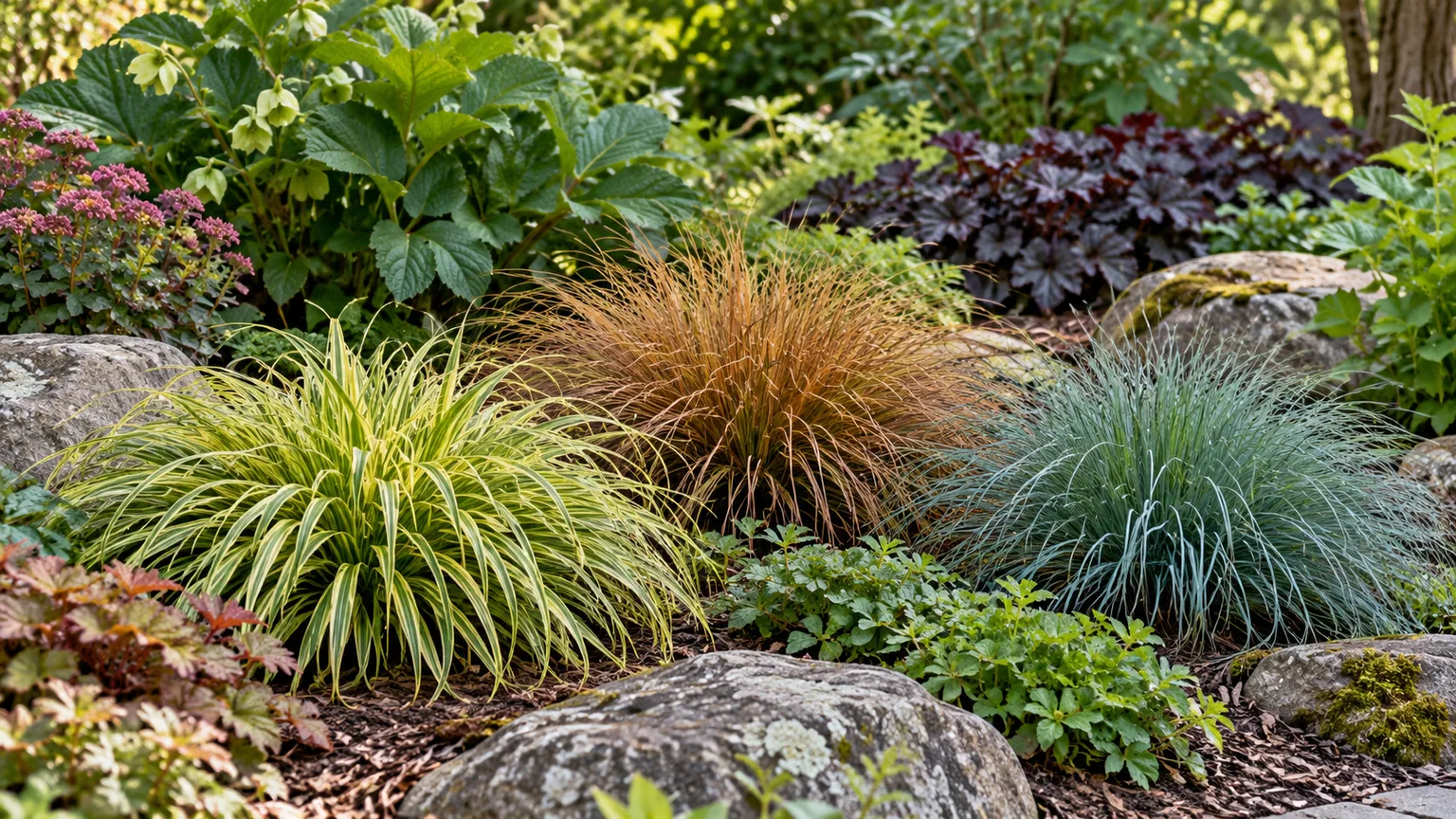
Foliage is the dependable structure in a shade border: flowers may last a few weeks, but leaves can carry the composition for months. Repeat leaf shapes and colors in small groups, and let one or two plants supply the seasonal bloom rather than expecting every plant to flower at once.
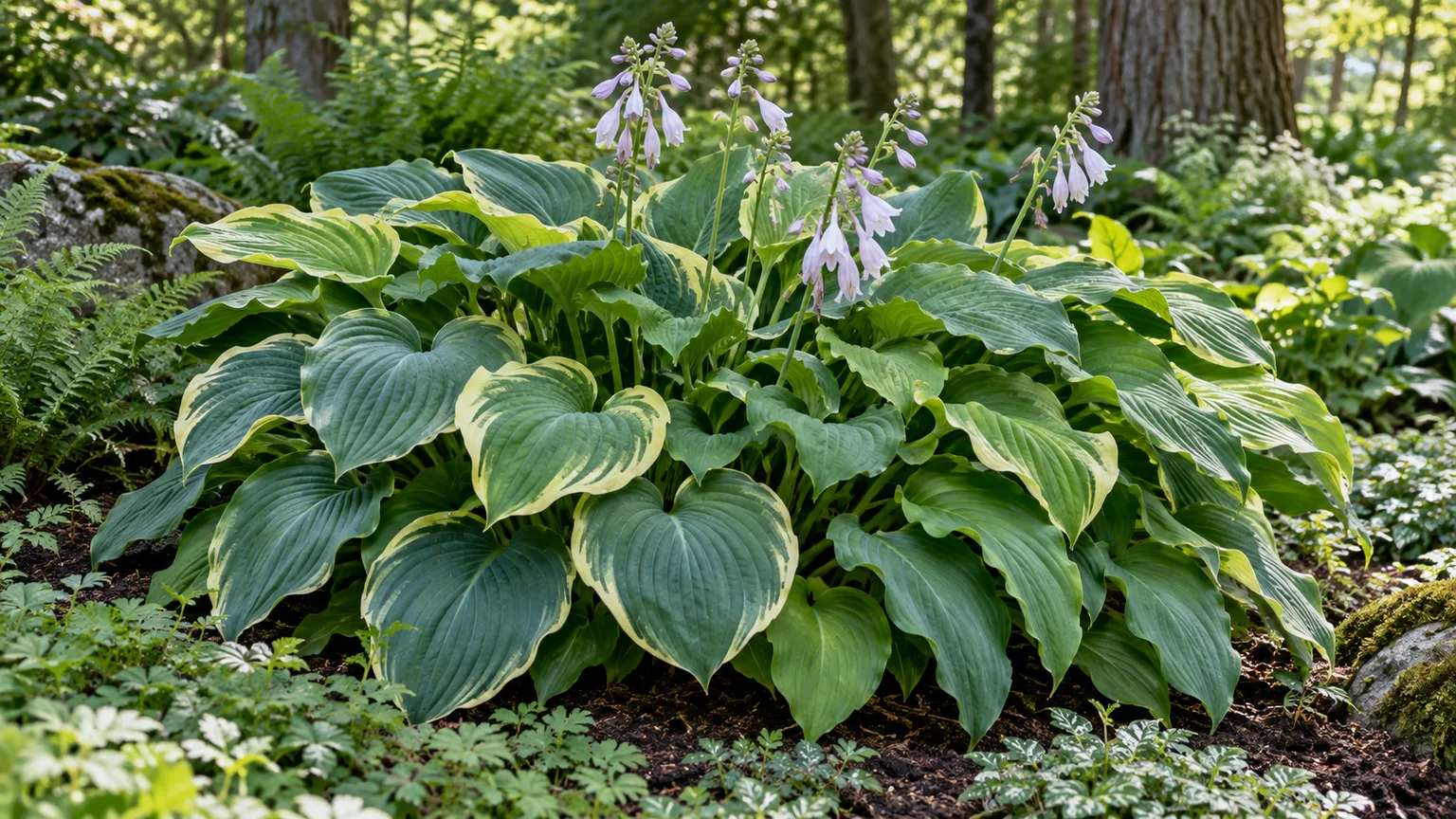
1. Hosta (Hosta spp.). Hostas are an easy starting point where the soil stays reasonably moist and the bed has bright or dappled shade. Their range of leaf size and color makes it possible to repeat a calm green mound or use a gold cultivar as a focal point. The NC State Extension profile notes that hostas vary greatly in form and light tolerance; cultivar choice is the useful decision, not simply “hosta or no hosta.” They struggle in dry competition beneath large trees, and slugs, deer, and voles can turn a supposedly easy clump into a recurring problem. Hostas can also be harmful to dogs and cats if eaten, so avoid them where pets routinely chew plants.
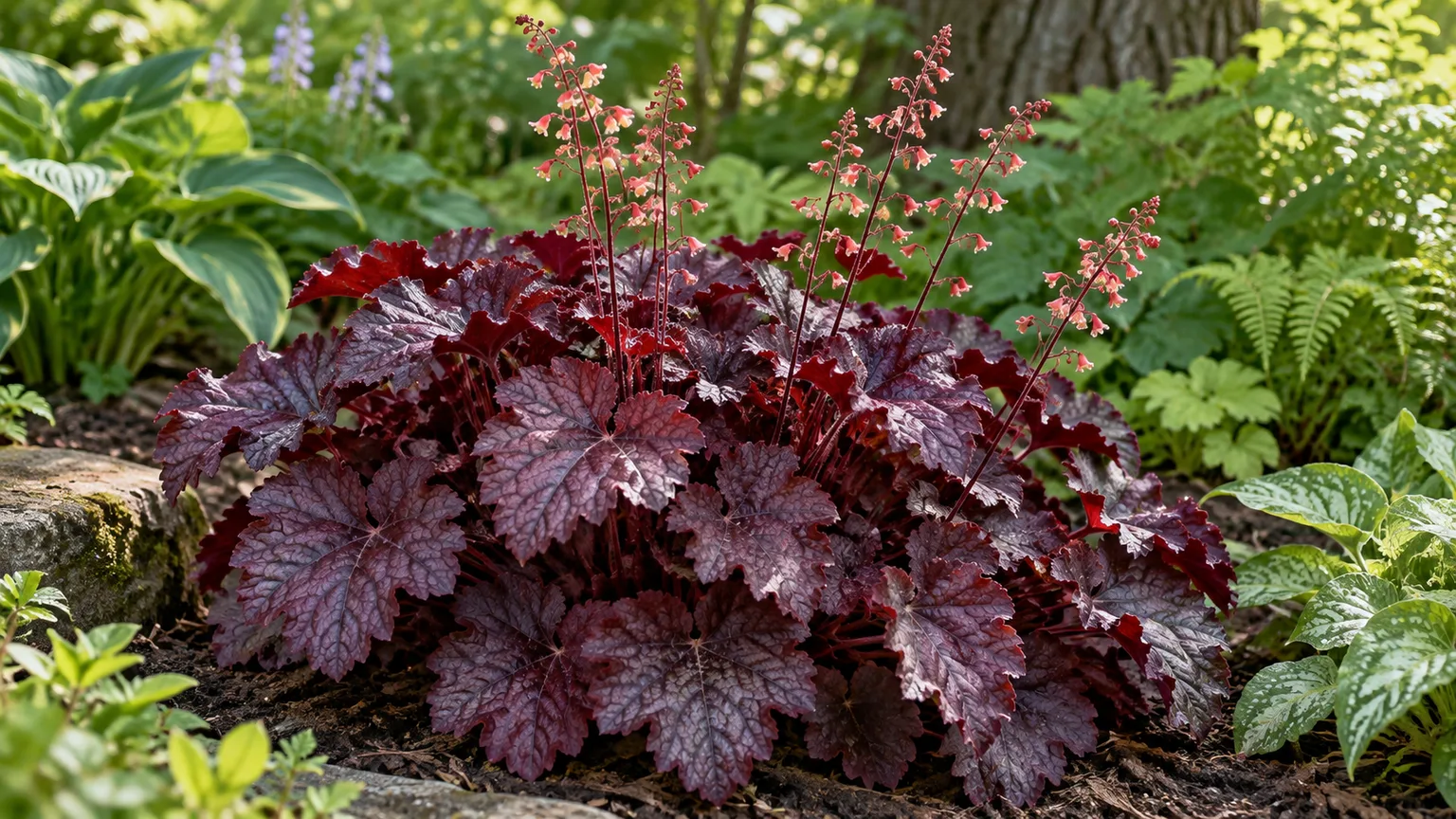
2. Coral bells (Heuchera spp.). Choose coral bells for long-lasting leaf color—amber, silver, purple, or green—rather than for their small airy flower spikes. They do best in bright shade or gentle morning sun, with soil that drains after rain. Deep shade can dull some foliage colors, and wet crowns are a greater risk than a missed feeding. In climates with repeated freezing and thawing, a crown can heave upward; check it in early spring and reset it if roots are exposed. This is a useful front-edge plant where you want foliage contrast without a tall mound.
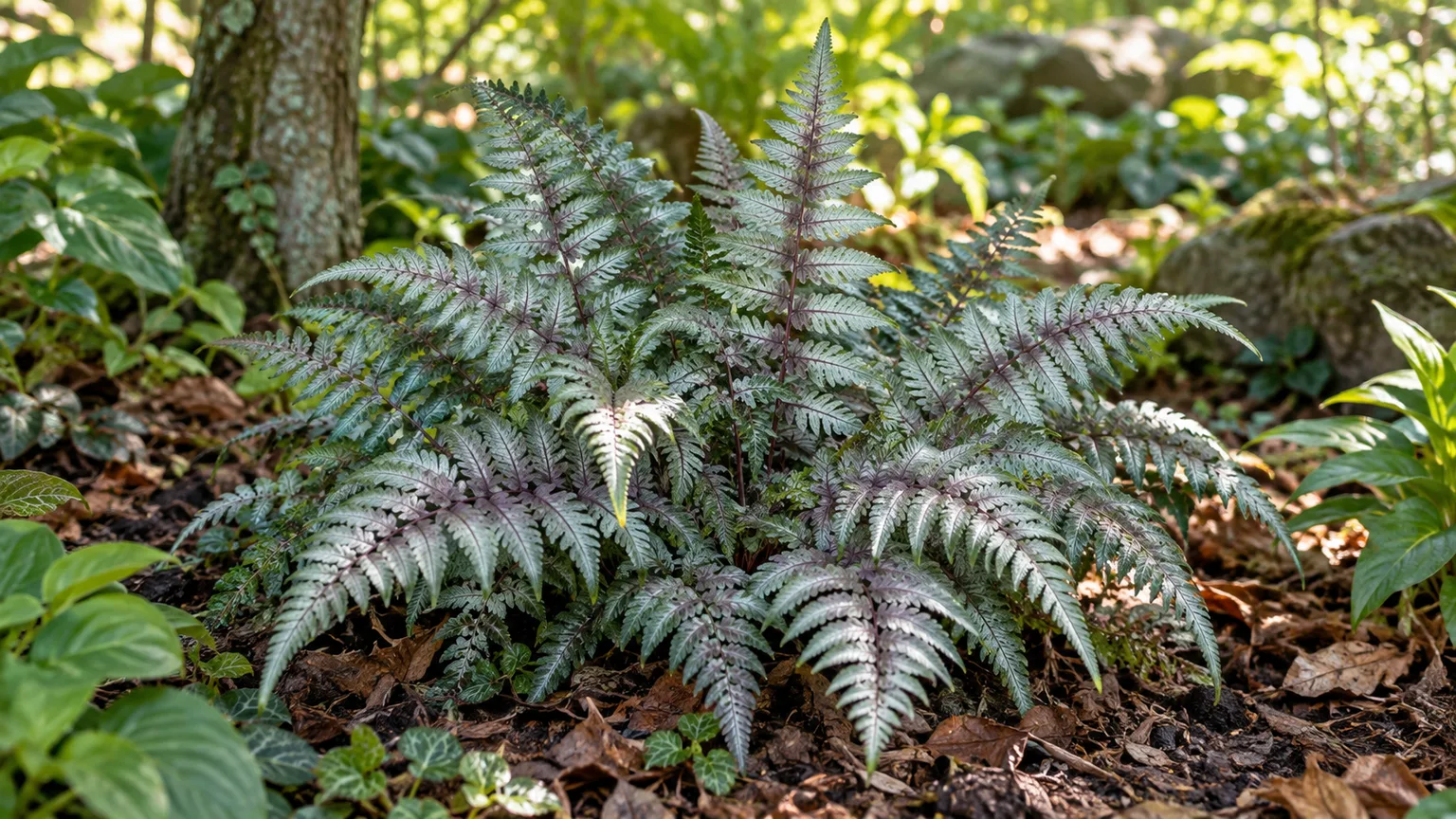
3. Japanese painted fern (Athyrium niponicum). Its silver-gray fronds with burgundy stems brighten filtered shade without asking for deadheading. Give it humus-rich soil that does not dry hard in summer; it is a better choice beside a path or in a watered woodland border than beneath thirsty tree roots. Clumps expand gradually, so you can place it between hostas or spring flowers without constant edging. Cut old fronds only when new growth appears or when they have collapsed; leaving them through winter can protect the crown in colder gardens.
4. Christmas fern (Polystichum acrostichoides). This evergreen eastern North American fern holds its leathery fronds through winter and suits a naturalistic layer under deciduous trees. It prefers woodland soil but, once established, can cope with drier shade better than ferns that need consistently damp ground. It forms a clump rather than racing across the bed, so maintenance is mostly removing damaged fronds in spring. Avoid burying the crown under thick mulch, and do not expect it to cover a large bare slope quickly.
5. Japanese forest grass (Hakonechloa macra). This slow-spreading ornamental grass makes a soft, arching edge along a shady path or around stones. Golden cultivars brighten light shade; green forms read more quietly. It performs best with consistent moisture and protection from hot afternoon sun, so do not treat it as a drought-proof solution for dry shade. Its gradual growth is an advantage in a small bed because it rarely needs aggressive containment, though patience is required before a new plant becomes a full mound.
Spring-Blooming Woodland Perennials
Spring bloomers take advantage of the brighter window before deciduous trees leaf out. The best low-work planting pairs them with later foliage plants so the bed does not look empty when an early perennial rests. Let leaves yellow naturally when a plant is storing energy for next season; cutting green foliage early can weaken the next display.
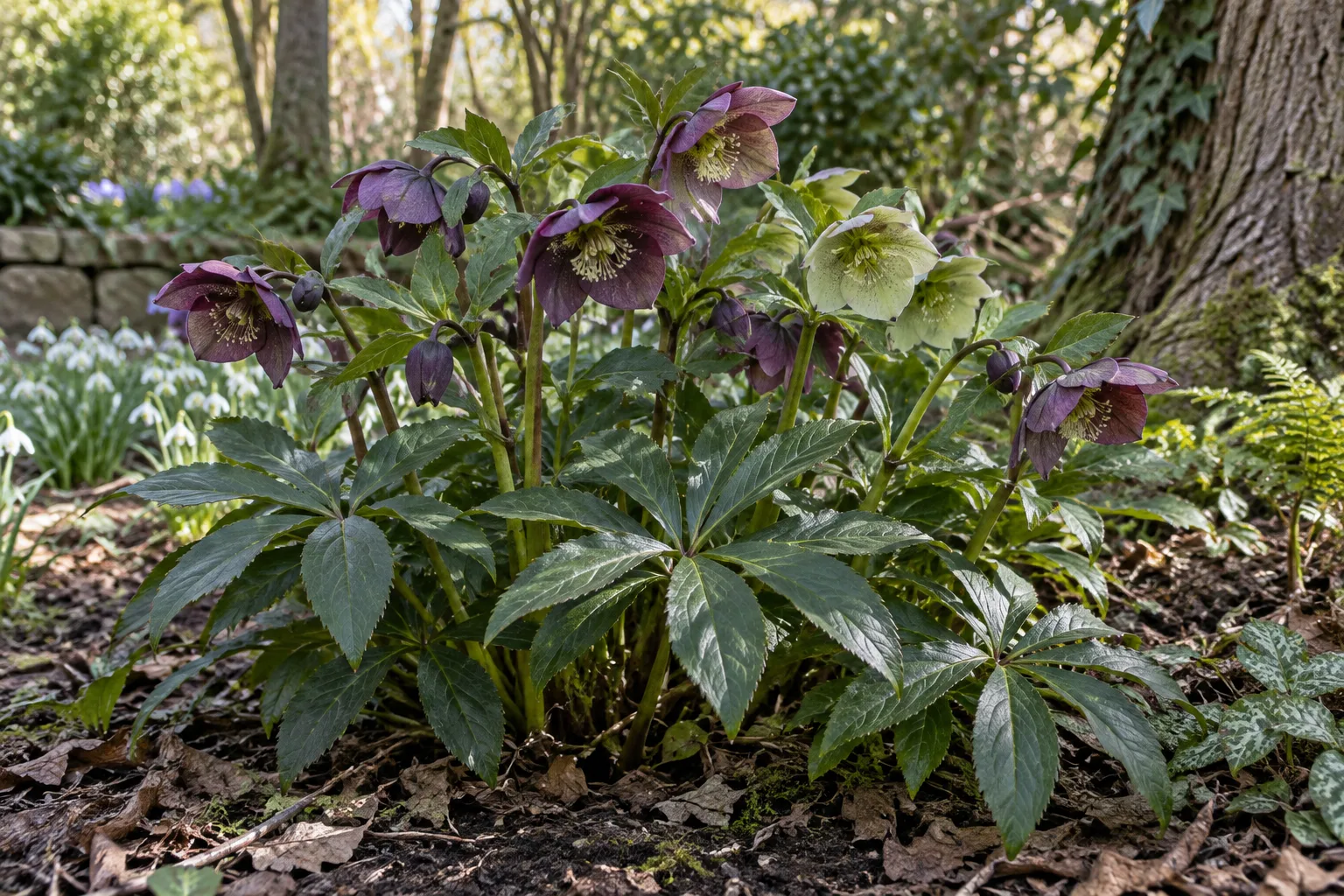
6. Hellebores (Helleborus hybrids). Hellebores bring early flowers and substantial, often evergreen leaves to a shaded border. Give them shade with reliable drainage: cool, winter-wet soil around the crown can be more damaging than a dry summer once the plant is established. They grow slowly at first and reward a permanent spot rather than frequent division or relocation. Flower color and hardiness differ among hybrids, so check the named cultivar. Keep them away from children and pets who may chew garden plants; hellebores are poisonous if ingested.
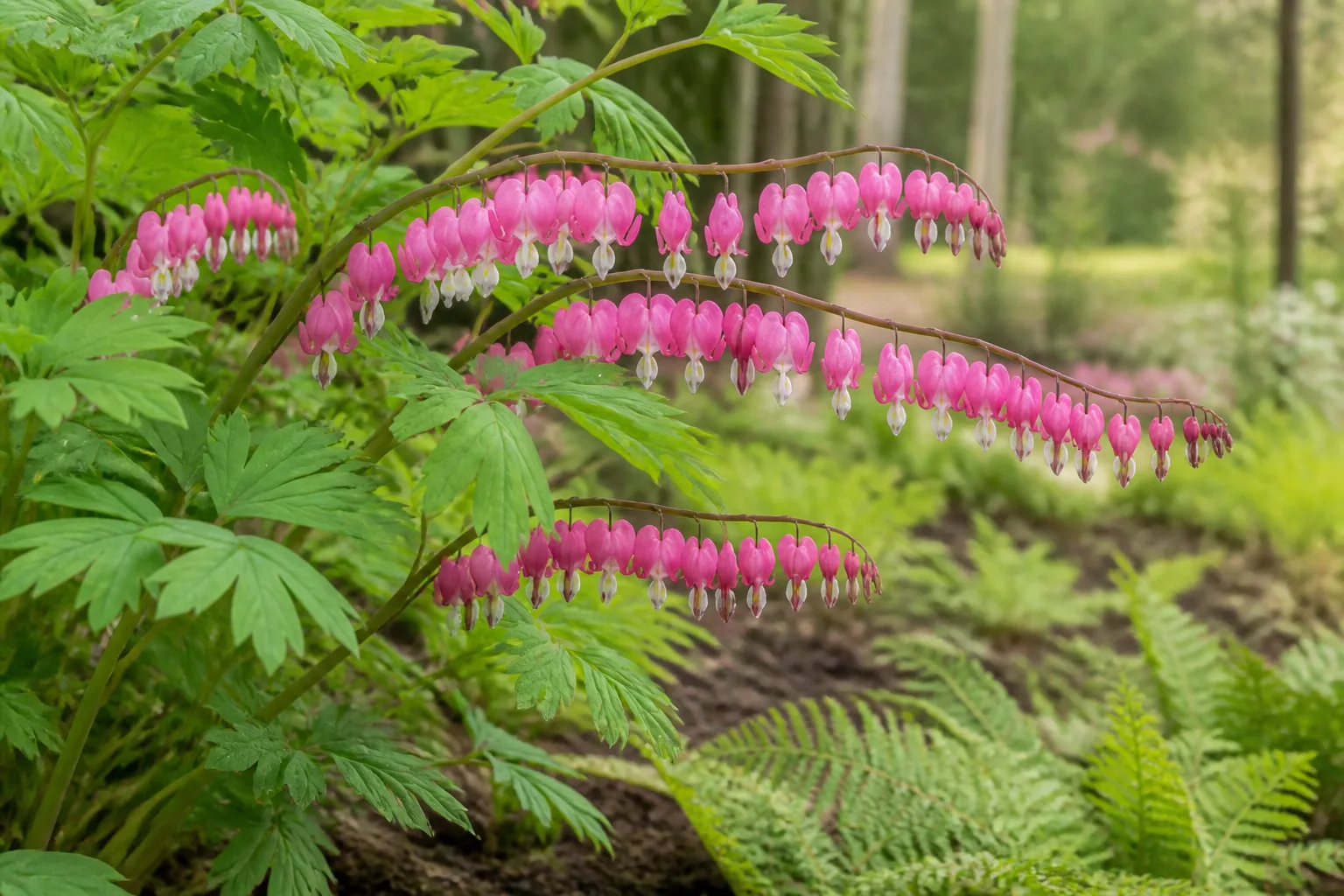
7. Bleeding heart (Lamprocapnos spectabilis). The familiar arching stems and heart-shaped spring flowers are a strong fit for cool, moist shade. Penn State Extension recommends organic-rich, well-drained soil and notes that common bleeding heart may recede as summer heat arrives; that is dormancy, not necessarily failure. Plant a hosta, fern, or heuchera nearby to cover the open space later. Penn State Extension also warns in its bleeding-heart profile that all parts are mildly toxic to people, cats, and dogs and may irritate skin, so wear gloves when dividing it and keep it out of reach of nibbling pets.
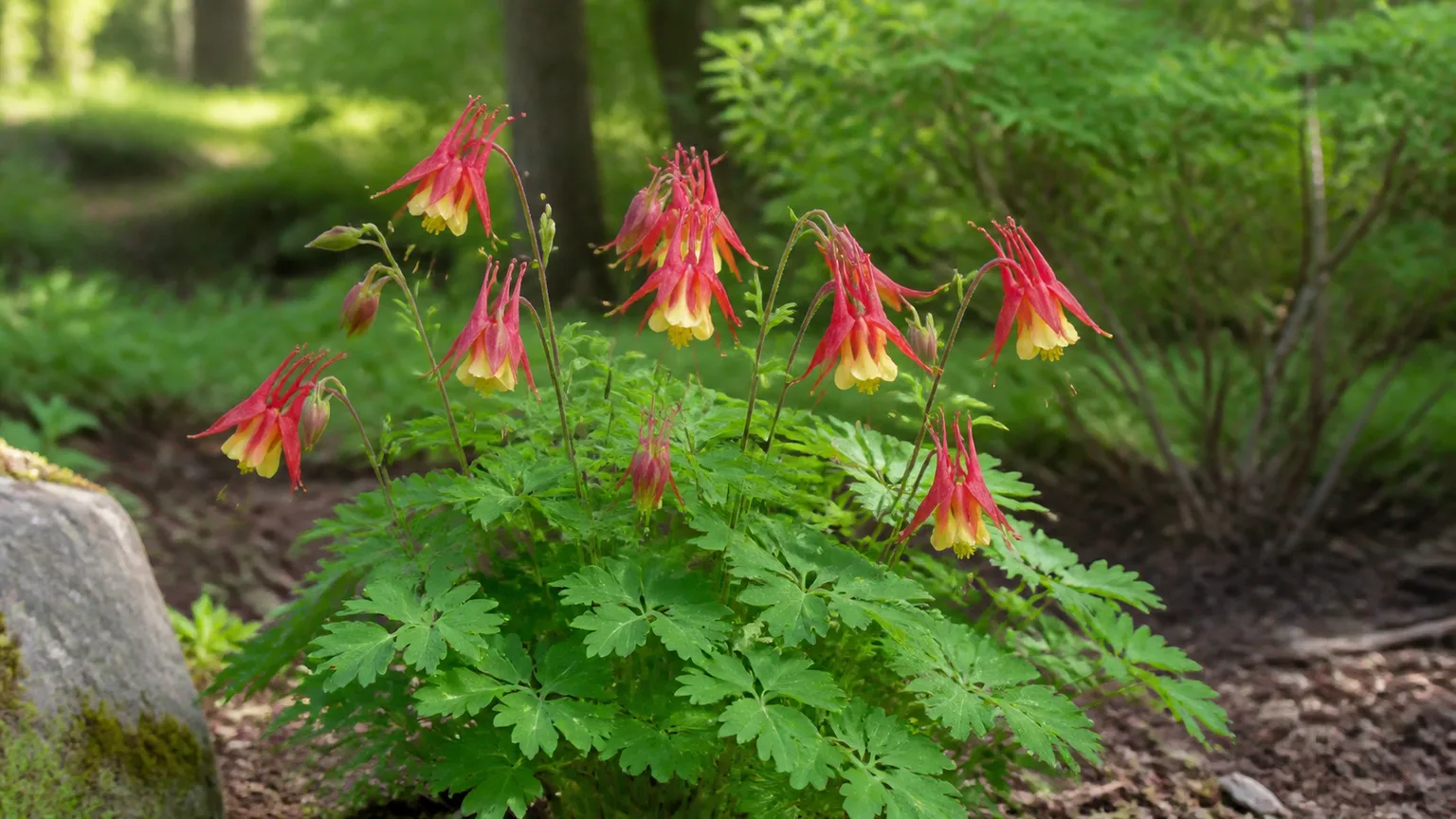
8. Wild columbine (Aquilegia canadensis). Wild columbine adds nodding red-and-yellow flowers in spring and can bring hummingbirds to a dappled bed. It tolerates more sun in cooler regions than in hot climates, where afternoon shade helps it last. Individual plants can be short-lived, but seedlings often appear nearby; this is helpful in a naturalistic garden and less helpful in a tightly formal border. Leave some seed heads if you want new plants, or clip them before seed dispersal when you want the original spacing to remain stable.
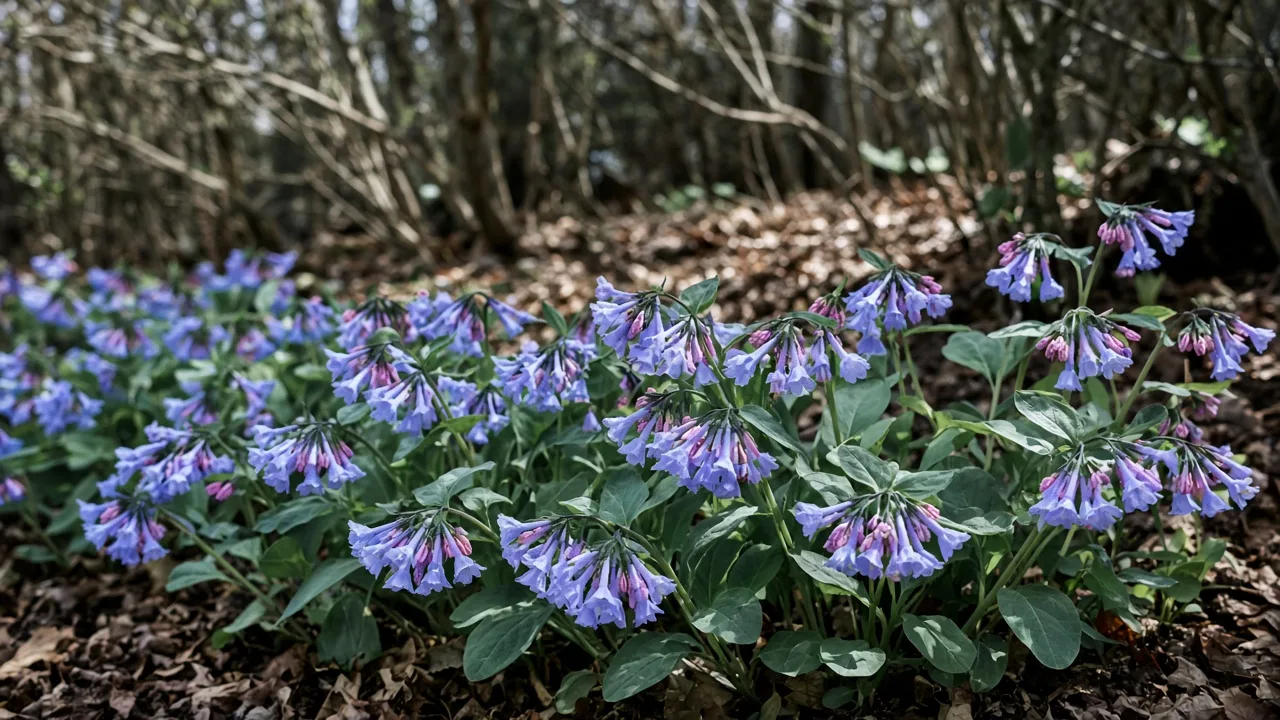
9. Virginia bluebells (Mertensia virginica). This native woodland perennial produces clusters of pink buds that open blue in spring. It fits moist, humus-rich soil under deciduous trees, especially where spring light reaches the ground. After flowering, its foliage yellows and disappears as the plant goes dormant, so mark its location and let later plants cover the gap. It is not an all-season groundcover, and it is a poor choice for a dry foundation bed that receives little summer water.
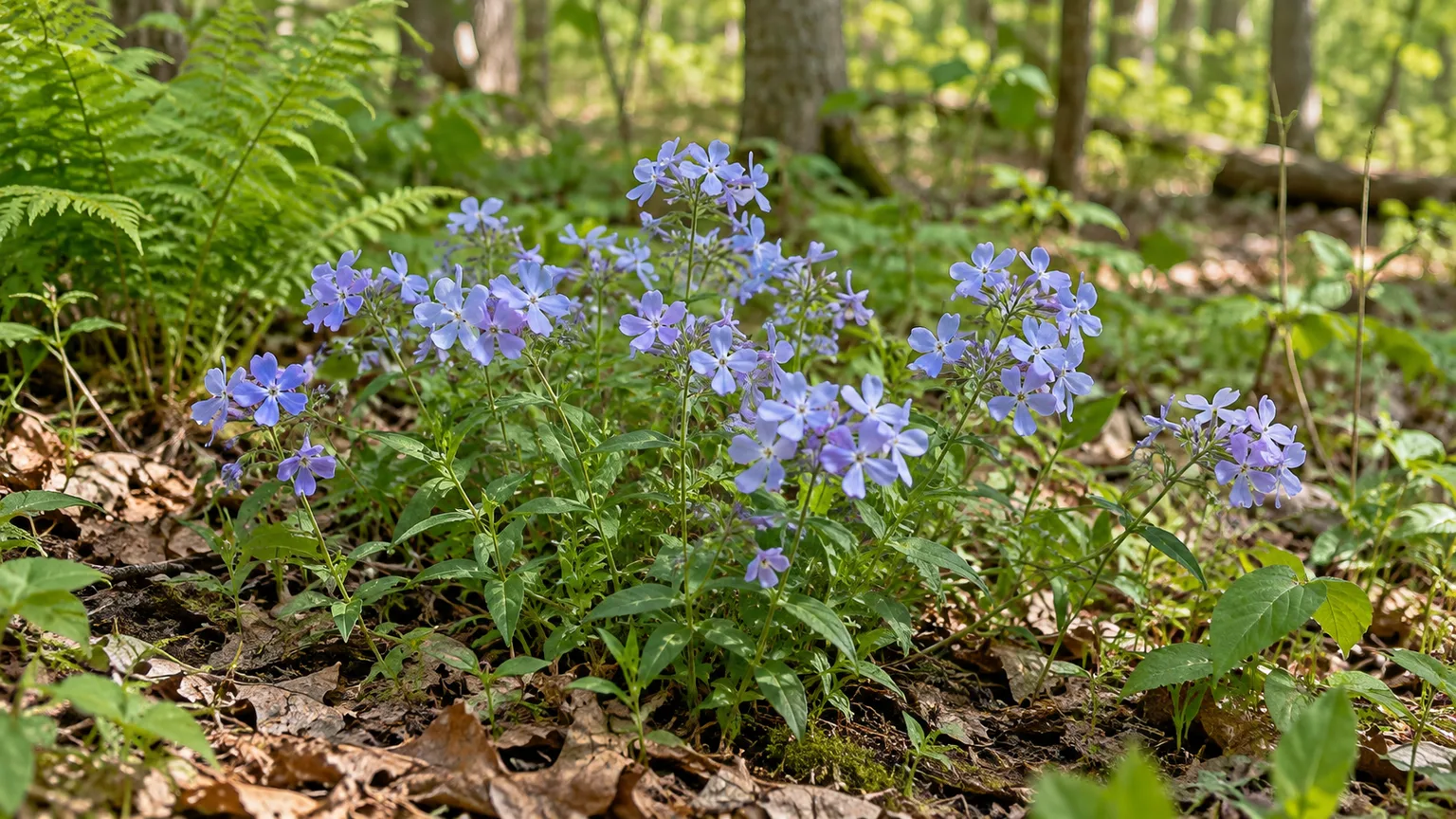
10. Woodland phlox (Phlox divaricata). Woodland phlox makes a low, spreading patch of fragrant spring flowers in light shade. It can soften the front of a woodland bed and support pollinators without the rigid look of a clipped groundcover. It prefers organic soil and some spring light; dense, dark shade may produce more foliage than flowers. Keep it out of beds where you expect a crisp edge unless you are willing to trim runners or let the patch mingle with nearby plants.
Groundcovers for the Middle and Front
Groundcovers reduce exposed soil and visually connect larger plants, but “spreading” covers a wide range—from a clump that inches outward to a runner that can cross a path. Decide how much space a plant may claim before planting it. Native, regionally appropriate groundcovers are often the easiest long-term choice because they fit local conditions and wildlife better than a fast-growing imported mat.
11. Solomon’s seal (Polygonatum biflorum). This graceful woodland perennial sends arching stems with paired leaves and small hanging flowers through spring. It fills space slowly by rhizomes, which makes it useful in a bed where you want a calm, deliberate spread rather than instant coverage. Give it humus-rich shade and room to mature; repeated digging around it is unnecessary and can damage the rhizomes. Its fall color adds a final season of interest before the stems die back.
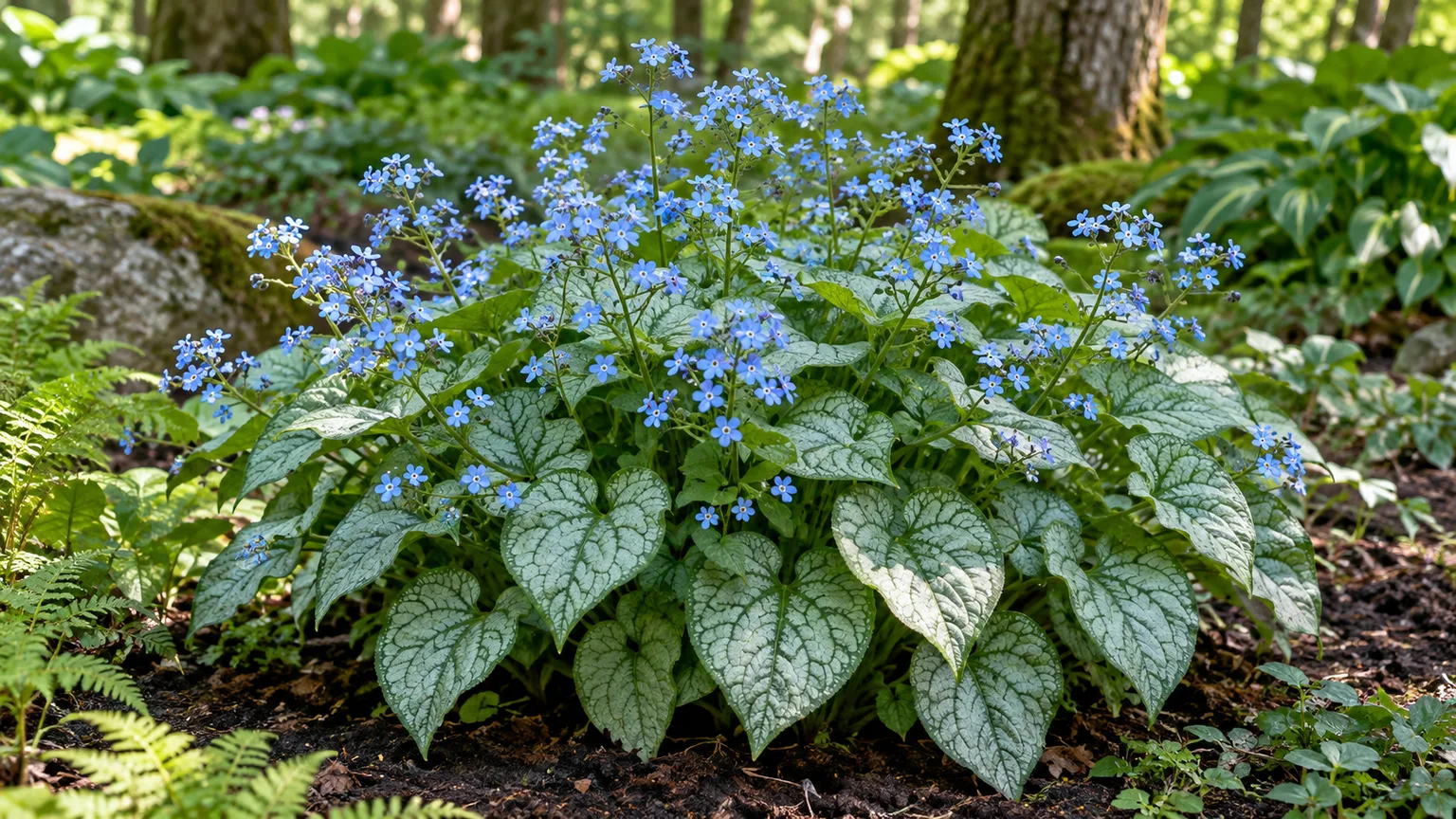
12. Siberian bugloss (Brunnera macrophylla). Brunnera pairs small blue spring flowers with broad, often silver-marked leaves that remain attractive after bloom. It is most dependable in cool, moist shade; if summer soil dries repeatedly, leaves may wilt or scorch. Silver-leaved cultivars can lift a dark border, but still need enough ambient light to show their pattern. Use it near hostas and ferns rather than in a hot, dry tree root zone.
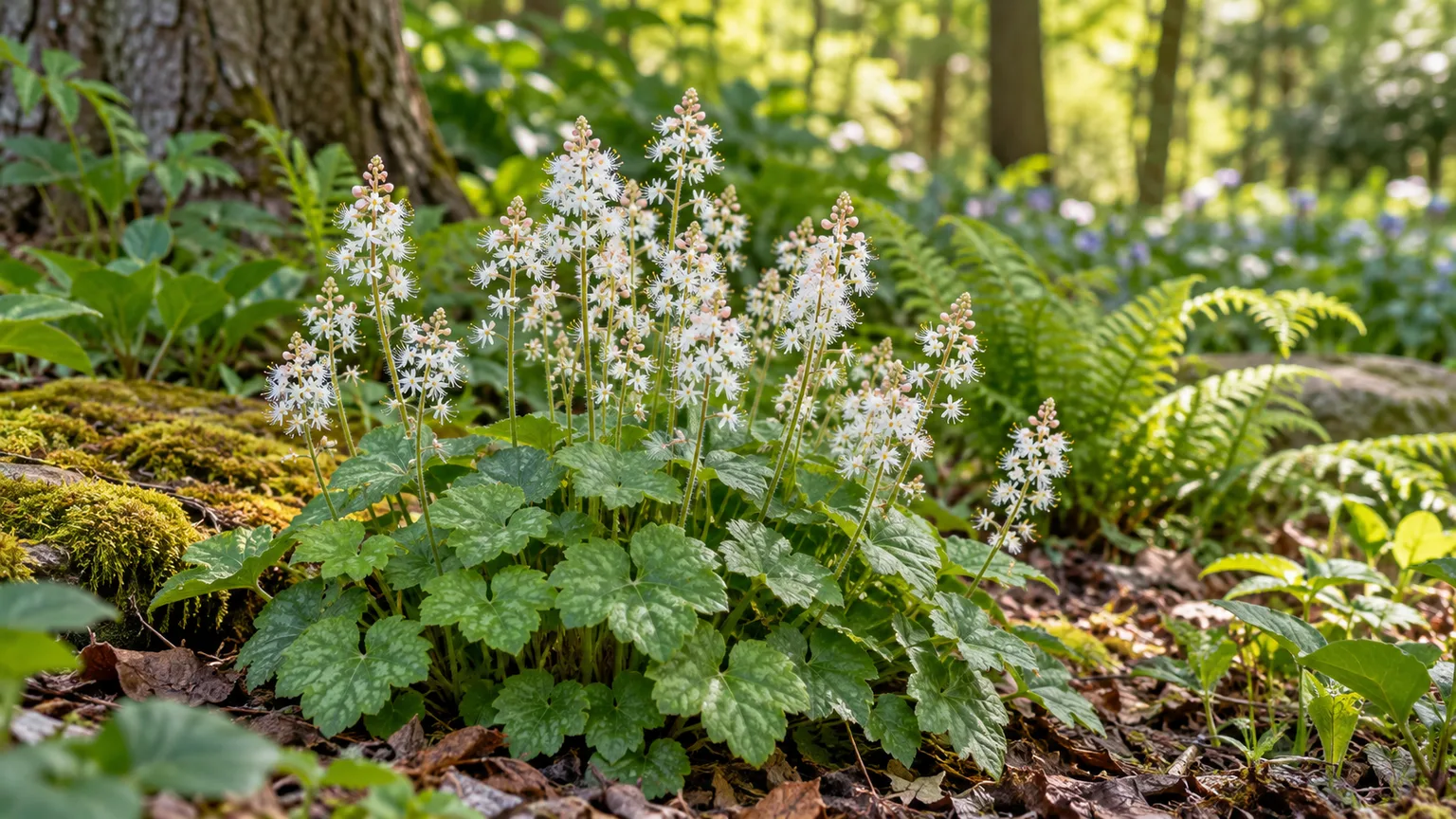
13. Foamflower (Tiarella cordifolia). A native woodland groundcover, foamflower grows in low clumps and can spread by short runners to knit a bed together. Spring flower spikes rise above attractive lobed leaves, some of which hold color through mild winters. It suits moist, humus-rich shade, not a sun-baked slope or neglected dry strip. Give new plants water through their first summer, then let the colony fill gradually; planting them closer will not make a thirsty site easier to maintain.
14. Barrenwort (Epimedium spp.). Barrenwort is one of the better candidates for dry shade beneath trees once its roots are established. Its small spring flowers hover above heart-shaped leaves, and many types form a slowly expanding ground layer. Species differ in leaf persistence and flower color, so check whether the cultivar is evergreen in your climate. In colder areas, gardeners often cut last year’s leaves just before new growth so flowers are visible; that one seasonal cleanup is the main maintenance task.
15. Pennsylvania sedge (Carex pensylvanica). This fine-textured native sedge is a useful alternative to lawn beneath trees where grass struggles. It tolerates shade and dry soil after establishment, spreads more slowly than many aggressive groundcovers, and needs little mowing in a naturalistic planting. It is still a sedge, not a turfgrass substitute for regular play or foot traffic. Plant it as an understory matrix around stepping stones, then keep the high-traffic route open rather than expecting the plants to absorb repeated trampling.
Longer-Season Color and Habitat Plants
Some shade perennials bloom later or keep a bed colorful after spring ephemerals fade. Their care needs vary more than their “shade plant” label suggests, so moisture matching matters especially here.
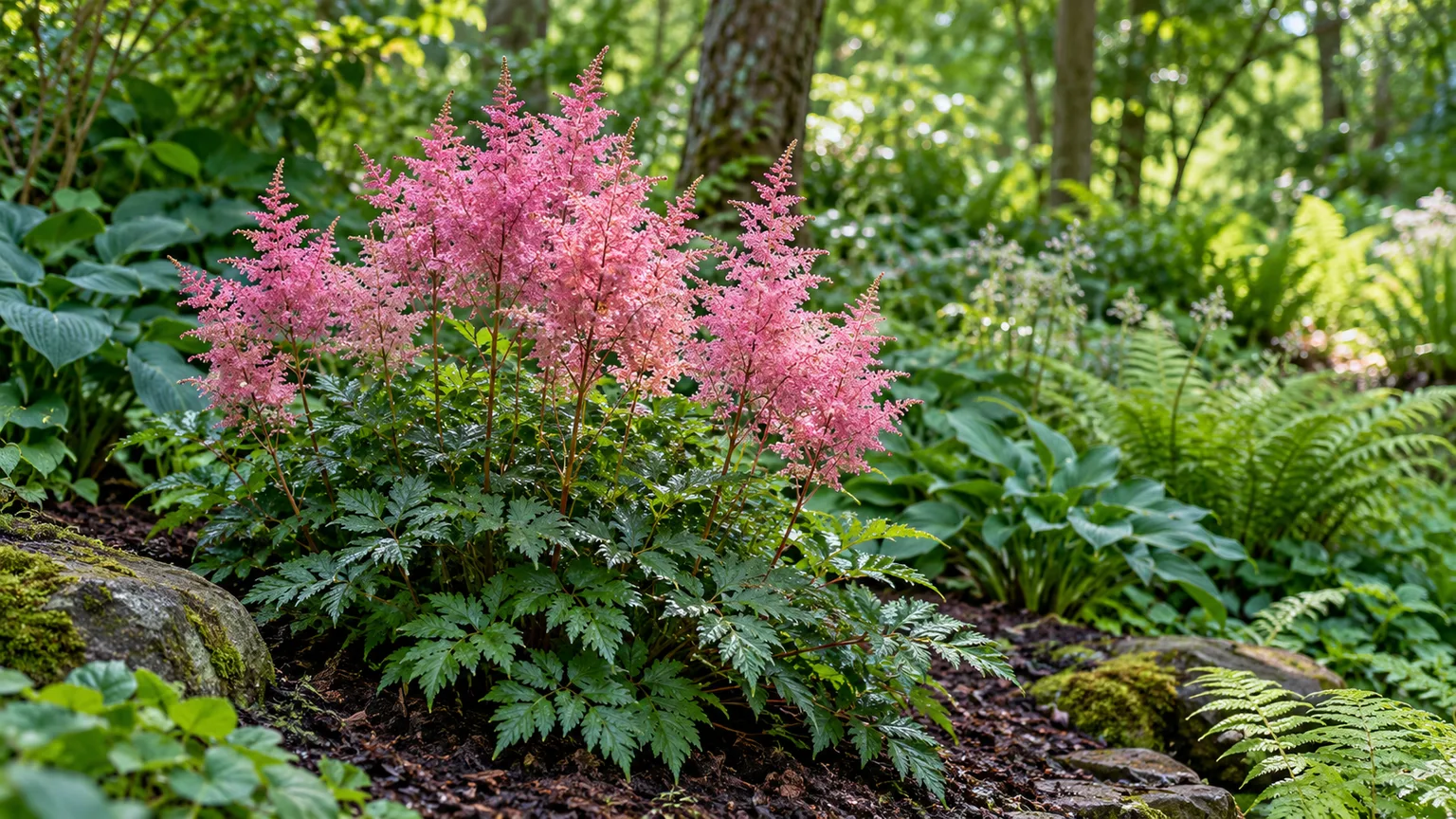
16. Astilbe (Astilbe spp.). Astilbe produces upright plumes in pink, white, red, or lavender above fernlike leaves. It is a reliable choice for part shade with consistently moist soil, and the dried flower heads can remain attractive after the fresh color fades. It is not a low-water perennial: dry shade under a large tree can make it brown or flower poorly. Gardening Know How’s astilbe guide calls out moisture as essential for astilbe, which is a useful reminder to reserve it for a spot you can water during dry spells.
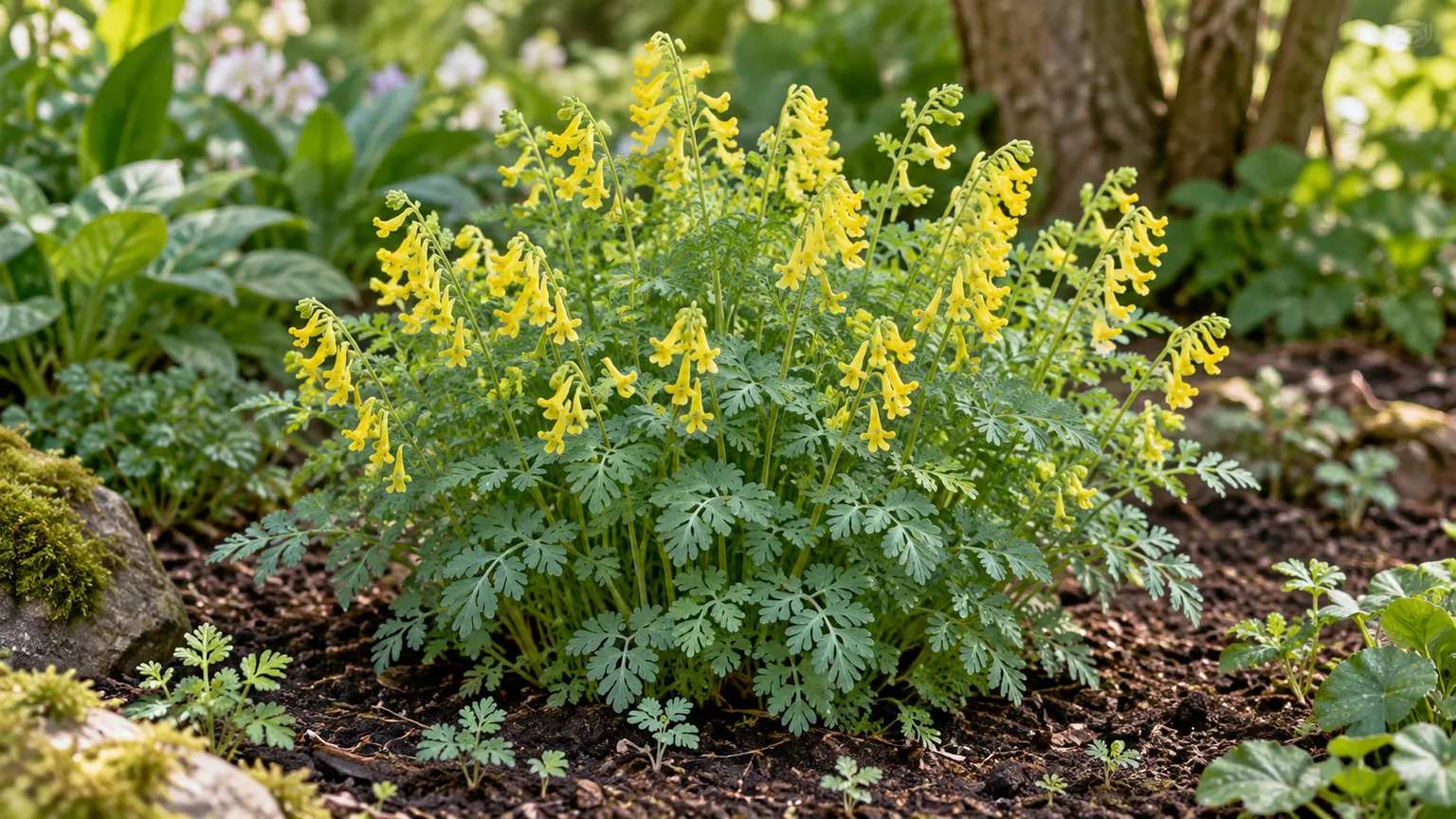
17. Yellow corydalis (Corydalis lutea). Yellow corydalis offers blue-green, finely cut foliage and a long run of yellow flowers from late spring into fall in suitable conditions. Wisconsin Horticulture describes yellow corydalis as tolerant of shade and a range of soils, but notes that it can self-seed prolifically and may die back in hot drought. Put it where a few seedlings are welcome, not beside a path where every volunteer becomes a chore. The same extension profile warns that it is toxic to horses; keep it away from pastures.
18. Wild geranium (Geranium maculatum). Wild geranium forms a loose clump of lobed leaves and spring flowers in dappled shade. It is a good native choice across much of eastern North America, especially in a woodland edge or under deciduous trees where soil is not bone-dry all summer. It can self-sow in favorable sites, but seedlings are easy to relocate while small. The foliage may look tired later in summer, so combine it with evergreen ferns or sedges if you want year-round ground coverage.
19. Bunchberry (Cornus canadensis). Bunchberry is a low native dogwood relative for cool, northern woodland gardens. Its white bracts appear in late spring, followed by red berries, but it depends on conditions that many suburban shade beds do not provide: cool roots, acidic organic soil, and steady moisture. Choose it for a site that already resembles a forest floor, not as a universal dry-shade solution. It can be exceptionally easy in the right climate and frustratingly short-lived outside it.
20. Hardy primroses (Primula spp.). Primroses can bring concentrated spring color to cool, damp shade, but the genus includes species with different hardiness and moisture needs. Choose a species suited to your region and plant it where soil stays evenly moist without becoming stagnant. Some types self-seed, and many dislike drying heat, so they are better beside a shaded stream, courtyard, or irrigated woodland bed than under competing tree roots. Read the botanical name on the label; “primrose” alone is not a complete care description.
Design by Microclimate, Not by Shopping Cart
A mixed shade bed works best when plants are grouped by water needs first and bloom color second. Use a repeat of two or three leaf textures, then add a few seasonal flowers. In a short listicle, the temptation is to mix every appealing plant; in a real garden, that creates extra work because some plants are drying out while others sit too wet.
A Dry-Root Zone Under a Mature Tree
Use Pennsylvania sedge or barrenwort as the slower ground layer, then repeat Christmas fern or a carefully chosen hosta only where supplemental water can reach the root zone. Add hellebores in a well-drained pocket and Japanese forest grass where filtered light is brighter and soil does not bake dry. Avoid putting astilbe, Virginia bluebells, or Brunnera at the driest edge just because they tolerate shade; shade does not supply water.
When planting, work around major roots instead of cutting them to create a uniform border. Plant in small openings, use smaller nursery containers where the root network is dense, and water each root ball slowly. If an area remains too dry, a few containers or a mulched path may be lower work than trying to force a dense planting beneath a thirsty canopy.
A Moist Woodland Edge
A cool, damp but well-drained edge can support foamflower, woodland phlox, Virginia bluebells, Brunnera, astilbe, and bleeding heart. Position spring ephemerals among ferns and hostas so later foliage covers their dormant spaces. Keep hellebores and coral bells on a slightly raised or naturally drained part of the border if winter soil stays wet.
Layer by mature height: low sedges and foamflower at the path edge, medium foliage clumps behind them, then taller astilbe or a large fern at the back. Repeat plants in loose groups rather than planting one specimen of every species. Repetition makes the bed read as a composition and makes watering, weeding, and dividing easier to track.
Establish Perennials With Less Follow-Up
Even a well-chosen shade plant needs attention while its roots extend beyond the nursery pot. The first growing season is not the time to test whether a new perennial can survive without water. Once established, suitable species can use rainfall more effectively, but drought tolerance should not be assumed on planting day.
Plant Around Existing Tree Roots
Plant in spring or early fall when conditions are mild and the soil is workable. Dig a hole only as deep as the root ball and two or three times as wide; loosen the outer roots gently if they circle the pot. Do not add a thick layer of soil over established tree roots or trench through the root zone to make a continuous bed. If the ground is compacted, improve the surface with a thin layer of compost rather than heavily tilling around the tree.
Set the crown at the depth indicated on the plant label, water thoroughly, and use mulch to reduce competition from weeds. Keep mulch away from the stems and crowns; a buried crown stays wet longer and invites rot. A simple rain gauge or a finger check at root depth is more useful than watering on a fixed calendar when tree canopies redistribute rainfall.
Water, Mulch, and Cleanup in Year One
Check new plants every few days during warm, dry weather. Water slowly at the soil line when the root ball begins to dry, then check again rather than applying frequent shallow sprinkles. Pay special attention to plants with large leaves and those installed under trees: the bed can look damp while the original potting mix is dry inside. Reduce supplemental water gradually as growth shows that roots have moved into surrounding soil.
Apply a modest organic mulch layer to conserve moisture and suppress weeds, but leave breathing room around crowns. Avoid high-nitrogen fertilizer unless a soil test or plant-specific guidance calls for it; lush growth is not the same as a stable root system. In fall and spring, keep a light hand with cleanup: leave healthy evergreen fronds, remove diseased material, and wait until spring flowers’ leaves yellow before cutting them down.
Mistakes That Turn “Easy” Plants Into Work
The most common mistake is buying for a shade label without checking water needs. Astilbe and bluebells can be excellent in moist shade and poor choices under a drought-prone tree; a plant that handles dry shade may not tolerate a saturated winter crown. A second mistake is planting groundcovers with no containment plan, then fighting them at every edge.
Spreaders, Toxic Plants, and Perennial Lookalikes
Some familiar “easy shade” plants spread aggressively or are invasive in parts of North America. Periwinkle (Vinca minor), lily-of-the-valley (Convallaria majalis), and creeping Jenny (Lysimachia nummularia) can escape their intended beds; check your state or provincial invasive-plant guidance before planting, and prefer a regional native groundcover when possible. Even a non-invasive plant that self-seeds, such as yellow corydalis, needs a spot where volunteers are acceptable.
Check whether a favorite really is a perennial in your climate. Calendula is usually grown as an annual, and common foxglove is generally a biennial or short-lived plant rather than a reliable perennial; foxglove is also poisonous if ingested. Primroses and ferns vary widely by species, so a generic label can conceal different hardiness and moisture requirements. If children or pets chew foliage, verify each plant with a veterinarian or a recognized poison-control reference before adding it to a reachable bed.
The best “low-maintenance” list is therefore local. Use plant names and profiles to narrow choices, then confirm mature size, hardiness, water needs, and spread with a nearby extension service or native-plant organization. That small check is easier than replacing a bed or controlling a groundcover that was never suited to its site.
Conclusion
Choose shade perennials by matching light, soil moisture, and root competition before comparing flower colors. For dry tree-root shade, start with established drought-tolerant choices such as Pennsylvania sedge, barrenwort, or Christmas fern; for cool, damp shade, consider foamflower, woodland phlox, Virginia bluebells, and astilbe where you can keep the soil moist. Add foliage plants to bridge bloom gaps, leave room for mature spread, and give new plants deliberate first-year water. With those decisions made up front, a shade bed can be colorful and durable without pretending that one plant palette fits every dark corner.