How to Grow and Care for Meadow Rue: Complete Guide
Learn how to grow meadow rue, from choosing shade and moisture to watering, staking, pruning, seed starting, and dividing different Thalictrum species.
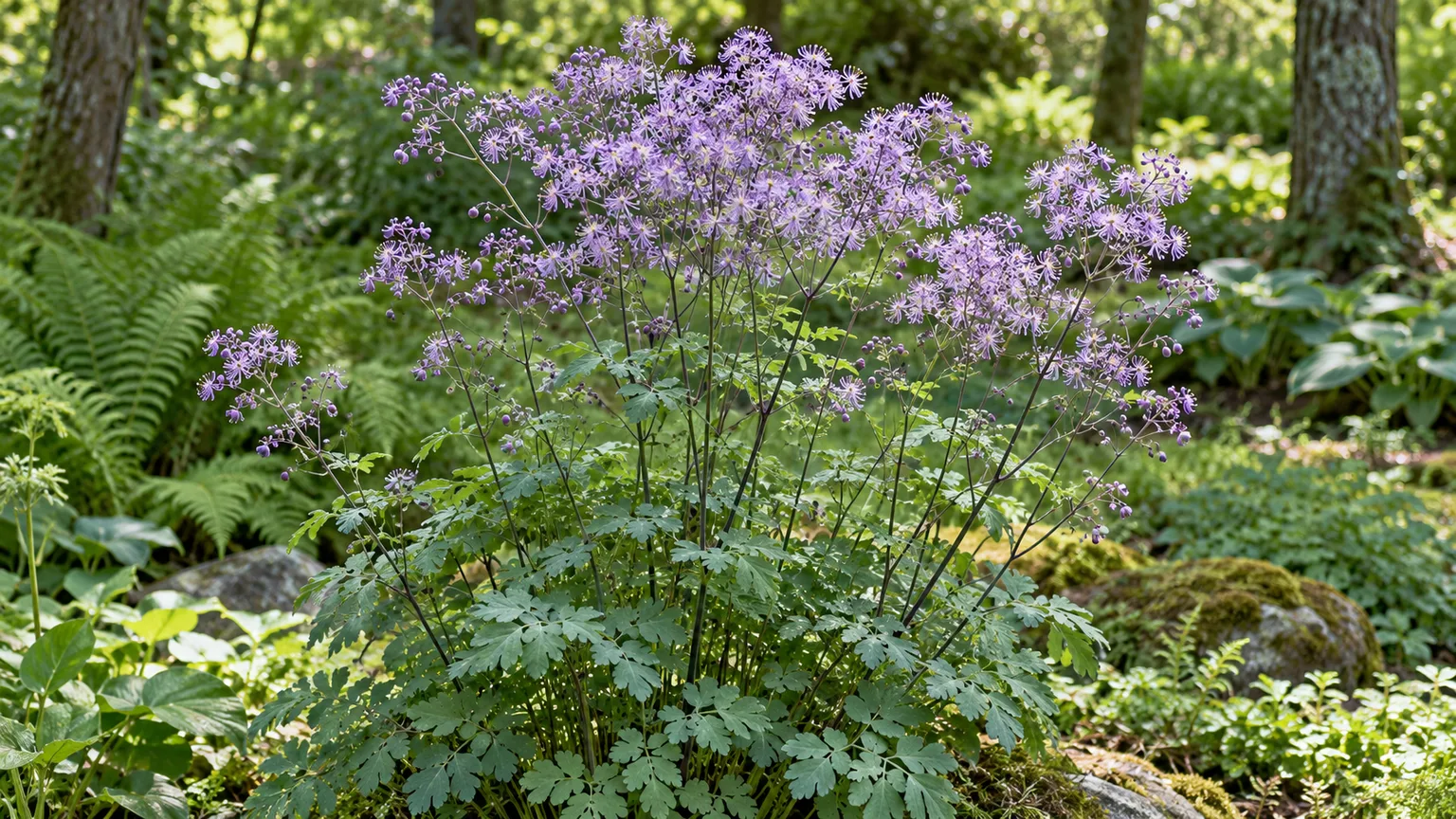
Meadow rue brings a light, almost floating layer of flowers to a garden: slender stems carry clouds of tiny blooms above finely divided foliage. The name covers many species of Thalictrum, however, so a compact plant for a cool rock garden and a tall, late-summer border perennial should not be given exactly the same expectations. Start by choosing a species for your climate and space, then keep its root zone evenly moist, rich in organic matter, and free of persistent winter water.
Quick Care Guide for Meadow Rue
Meadow rue is an herbaceous perennial grown for its airy flower clusters and attractive compound leaves. Most garden forms do best in partial shade and humus-rich soil that stays consistently moist; some tolerate more sun if they receive dependable water. Mature height, bloom time, and spread vary substantially by species and cultivar, so check the plant label before choosing companions or deciding whether it needs support.
- Light: Partial shade is a reliable starting point; give sun-grown plants more consistent moisture.
- Soil: Humus-rich, moisture-retentive soil with drainage suited to the species and local winter conditions.
- Water: Water deeply when the surface soil begins to dry, especially in the first growing season and during hot spells.
- Spacing: Allow room for the plant’s mature height and width, and avoid heavy competition from thirsty tree roots.
- Maintenance: Mulch, remove tired flower stems, and stake tall varieties early if the site is exposed.
- Propagation: Sow fresh seed for species; use division when you need to retain a named cultivar and the plant tolerates disturbance.
For a quick moisture check, push a finger a few centimeters into the soil near the plant. If that layer is dry, water slowly at the base; if it is still damp, wait and check again rather than following a rigid weekly schedule.
What Meadow Rue Is
Thalictrum is a genus in the buttercup family, Ranunculaceae. These deciduous perennials have divided leaves and small flowers arranged in open panicles or racemes; the showy effect often comes from masses of stamens and petal-like sepals rather than large individual petals. Depending on the species, plants may grow from rhizomes or tubers and range from low ground-covering forms to tall border plants.
The shared “meadow rue” name can be misleading. Plants sold under it may flower in spring or summer, have yellow, white, pink, or purple flowers, and reach very different heights. Select by botanical name when possible, especially if you are planning a small space or need to know the plant’s mature size and hardiness.
Meadow rue is not culinary rue, Ruta graveolens. They are unrelated garden plants with different foliage and uses; do not assume that the common name makes Thalictrum edible. Treat meadow rue as an ornamental perennial and use gloves if you are sensitive to plant sap or foliage.
Meadow Rue Types to Consider
Use the botanical name on the label to match the plant to the space. The figures below are useful comparisons, not guarantees: cultivar, climate, soil, and growing conditions can shift final size and flowering dates.
| Type | Typical character | Where it fits |
|---|---|---|
| Chinese meadow rue, T. delavayi | Upright, blue-green divided foliage with lilac-mauve flowers in summer; often around 1–1.5 m tall | A sheltered, partly shaded border where airy late-season flowers can rise above lower plants |
| Yellow meadow rue, T. flavum | Rhizomatous, yellow-flowered perennial; some forms reach roughly 0.9–1.2 m and may spread into a broad clump | A larger moist border or naturalistic planting; check spread and give it room |
| Columbine meadow rue, T. aquilegiifolium | Often an earlier-flowering form with rounded clusters and attractive divided leaves; height varies by selection | A spring-to-early-summer border layer among other perennials |
| T. kiusianum | A very low, compact species compared with the tall border types | A cool, moisture-retentive rock garden or the front of a small shaded bed |
For one concrete size reference, the Royal Horticultural Society’s profile of Chinese meadow rue lists T. delavayi at about 1–1.5 m tall, with lilac-mauve flowers from July into September in its growing context. The Missouri Botanical Garden’s profile of yellow meadow rue describes T. flavum ‘Illuminator’ as about 0.9–1.2 m tall and wide, with yellow flowers from May to July. These profiles illustrate why it is more useful to identify the species than to rely on a generic plant tag saying only “meadow rue.”
Choose a Site With the Right Light
Partial shade is the safest general location, especially where summers are hot or the soil dries quickly. Morning sun with afternoon shade suits many taller species, while dappled light beneath open trees can work if tree roots are not taking most of the available moisture. A few Thalictrum forms bloom well in brighter conditions, but they need soil that does not dry out for long periods.
Deep shade is not automatically better. A site with little direct or bright indirect light may produce weaker stems and fewer flowers, while an exposed, windy position can bend tall flower stalks. Aim for a sheltered place with good air movement and enough light for flowering, then adjust water and support to the species you have.
Before planting near a mature tree or shrub, inspect the root zone. If the ground is densely threaded with woody roots, meadow rue may struggle even when the surface looks moist; choose an open bed or prepare a larger, well-watered planting area instead of trying to keep one small pocket wet.
Prepare Moist, Well-Drained Soil
Meadow rue generally appreciates fertile soil rich in humus. Before planting, loosen the bed and blend in finished compost or leaf mold across the wider root area, rather than creating a small pocket of very rich mix surrounded by compacted soil. Organic matter helps the bed hold moisture more evenly and supports the leafy growth that makes the plant attractive before it flowers.
“Moist” does not mean permanently waterlogged. Many species prefer steady moisture, but cold, saturated soil can damage roots or encourage decline, particularly where winter drainage is poor. If water stands after rain, raise the bed slightly or improve drainage across the planting area; if the soil drains too rapidly, add organic matter and mulch, then monitor it during summer.
Soil pH is usually less important than moisture and structure for garden performance, but species preferences can differ. Follow a reliable plant label or local growing guidance for the named selection, and avoid trying to correct pH without a soil test.
Water by Checking the Root Zone
Keep newly planted meadow rue evenly moist while its roots establish. Water slowly and deeply at the base so moisture reaches below the surface, then allow the upper layer to begin drying before watering again. Shallow, frequent sprinkling wets foliage but may leave the deeper root zone dry.
Once established, many plants can cope with ordinary intervals between rain, but they should not be left to wilt repeatedly in summer. Check the soil during heat, drought, or a windy spell; plants in full sun, raised beds, and containers lose water faster than those in cool partial shade. If the leaves droop in the afternoon, check soil before assuming thirst, because hot weather can cause temporary wilting even when roots are moist.
When the soil is dry several centimeters down, give the bed a thorough soak and recheck the next day. If it is wet and heavy, do not add more water; improve drainage or airflow and look for other causes of yellowing or weak growth. Consistent moisture is the goal, not a permanent wet surface.
Mulch and Feed Lightly
Spread a 5–7 cm layer of compost, leaf mold, or another organic mulch over the root zone in spring, keeping it a few centimeters away from the crown and stems. Mulch slows surface drying, moderates soil temperature, and adds organic matter as it breaks down. Replenish it when it thins, rather than piling fresh material directly against the plant.
In a reasonably fertile bed, meadow rue rarely needs heavy feeding. A thin compost top-dressing in spring is usually enough to maintain soil structure and support growth. Excess high-nitrogen fertilizer can produce lush, soft foliage at the expense of sturdy stems, so avoid routine strong feeding unless a soil test or clear nutrient deficiency indicates a need.
Plant Meadow Rue Without Crowding It
Plant nursery-grown meadow rue in spring or early autumn, when the weather is cool and soil moisture is easier to maintain. In cold-winter areas, spring gives roots more time to settle before freezing weather; in mild climates, early autumn planting can work if the plant has several weeks to establish before the soil cools. Avoid planting into hot, dry ground unless you can water consistently.
- Check the plant’s mature height and spread, then choose a spot with suitable light and room for its roots.
- Water the nursery pot, and prepare a hole about as deep as the root ball and wider than it.
- Slide the plant out gently and loosen only tightly circling roots; do not tear apart a healthy root mass.
- Set the crown at the same depth it grew in the pot, backfill with native soil improved across the bed, and firm lightly.
- Water thoroughly and apply mulch, leaving a small clear ring around the crown.
Space plants according to their expected width, not the size of the small pot they arrive in. Since meadow rue may take a couple of seasons to settle and reach its full presence, resist filling every gap immediately with thirsty neighbors that will compete for moisture.
Adjust Care Through the Seasons
In spring, remove old stems if they were left standing, refresh the mulch, and watch for new shoots before disturbing the crown. This is also the time to install discreet supports for tall varieties, while growth is still short enough to pass through them naturally. Resume watering if rainfall is scant as the leaves expand.
During summer, keep an eye on soil moisture and tie or guide stems only if necessary. Flowering season varies by species: some bloom in late spring or early summer, while Chinese meadow rue is generally a later summer bloomer. Once flowers fade, decide whether to leave seedheads for self-sowing and wildlife interest or cut the stalks for a tidier bed.
In autumn, remove collapsing foliage if it is diseased or untidy, but healthy stems can remain until they die back. In cold regions, a light organic mulch helps protect roots from repeated freeze-thaw cycles; in wet-winter areas, keep mulch loose and avoid trapping excess moisture around the crown. Winter care should follow the hardiness of the exact species and your local conditions.
Keep Tall Stems Upright
Some meadow rues have sturdy stems, while others become tall and airy enough to lean in wind or after heavy rain. The RHS recommends that T. delavayi may need staking, and the Missouri Botanical Garden notes that taller stems of T. flavum ‘Illuminator’ may need support. The need depends on the cultivar, light, moisture, soil fertility, and exposure rather than height alone.
Place a low ring support or several unobtrusive stakes around the clump in spring, before stems become tall. Let growth emerge through the support, and use soft ties loosely if a stem needs guidance. If plants flop every year, move supports earlier next season, reduce excess nitrogen, and check whether shade is so deep that stems are stretching toward light.
Do not wait until a fully flowered stem has collapsed to force it upright; that can crease or snap it. At an exposed site, a sheltered position or shorter cultivar may be a better long-term fix than adding more ties.
Prune After Flowering
Cut flower stems back after they finish if you want a tidy border or want to prevent unwanted seedlings. Use clean pruners and cut each stem near the base without cutting into new foliage at the crown. Some gardeners leave seedheads for texture or collect seed, so the timing depends on whether you value self-sowing and winter structure.
Wait until foliage yellows and dies back before cutting healthy leaves to the ground; those leaves are still supporting the plant while they remain green. In spring, remove old stems before new growth is tall enough to get caught among them. If foliage develops a spreading disease, remove affected material promptly and do not add it to a cool home compost pile.
Propagate Meadow Rue From Seed
Seed is a practical way to raise species plants when fresh seed is available, but it takes patience. Some Thalictrum seeds germinate better after a cold period, and seedlings may take several seasons to reach flowering size. Seed-grown plants may not match the parent exactly, especially when the parent is a named cultivar or hybrid.
For best results, sow ripe seed soon after collecting it rather than storing it until it dries out. Fill a small pot with a free-draining seed mix, sow the seed shallowly, cover lightly, label the pot with the species and date, and keep it moist but not waterlogged. Place it in a cold frame or another protected outdoor position where it can experience cool conditions; check periodically for germination as temperatures rise. Follow species-specific instructions when supplied, since dormancy behavior can differ.
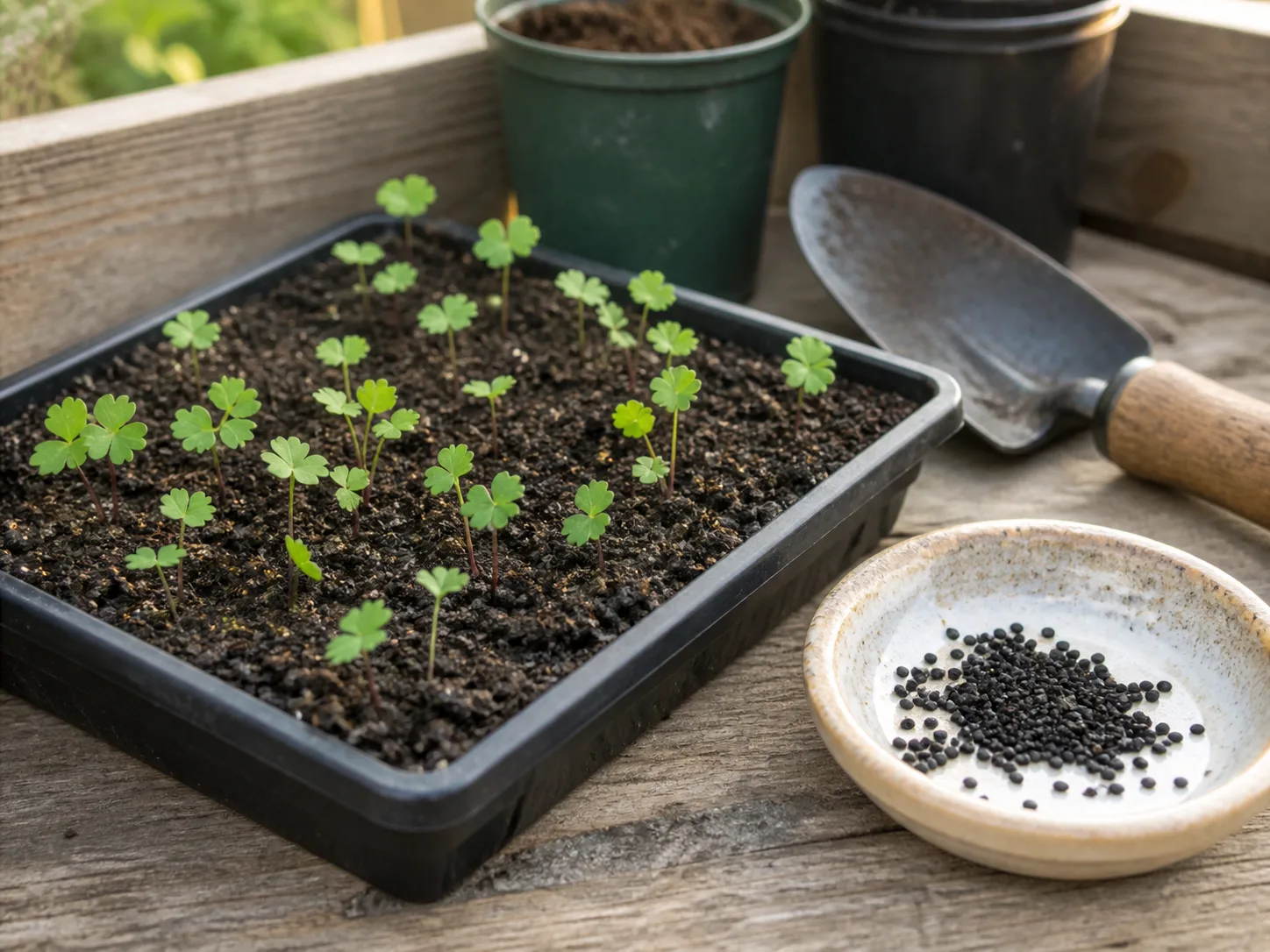
This illustration shows a general seed-starting setup; use the timing and cool-treatment guidance for the meadow rue species you sow.
Keep seedlings in bright, sheltered conditions and pot them on once they have enough growth to handle. Avoid pricking out very young seedlings or letting the small pots dry completely. Plant them into a nursery bed or individual containers to grow on before moving them into the border, and expect that flowering may take more than one growing season.
The RHS propagation notes for Chinese meadow rue recommend sowing in pots in a cold frame when seed is ripe or in early spring. A specialist Thalictrum cultivation guide also stresses sowing fresh seed and giving it a cool period, while noting that named forms may not come true from seed. Treat the seed packet or species profile as the final guide to timing and temperature.
Divide an Established Clump Carefully
Division gives you a plant like the parent, which makes it useful for maintaining a selected cultivar. Timing recommendations differ: the RHS suggests spring division as new growth begins for T. delavayi, while some specialist growing guidance cautions that meadow rue roots can be sensitive and that division may be slower or riskier than sowing. That difference is a reason to divide only when there is a clear purpose, not to split every plant on a calendar.
If a vigorous clump is crowded or you need to preserve a named form, divide in cool weather at the time recommended for that species. Water the plant the day before, lift as much of the root system as practical, and use a clean sharp spade or knife to separate a section with both healthy roots and growing points. Replant divisions immediately at their former depth, water them well, and keep the soil evenly moist until new growth confirms they have settled.
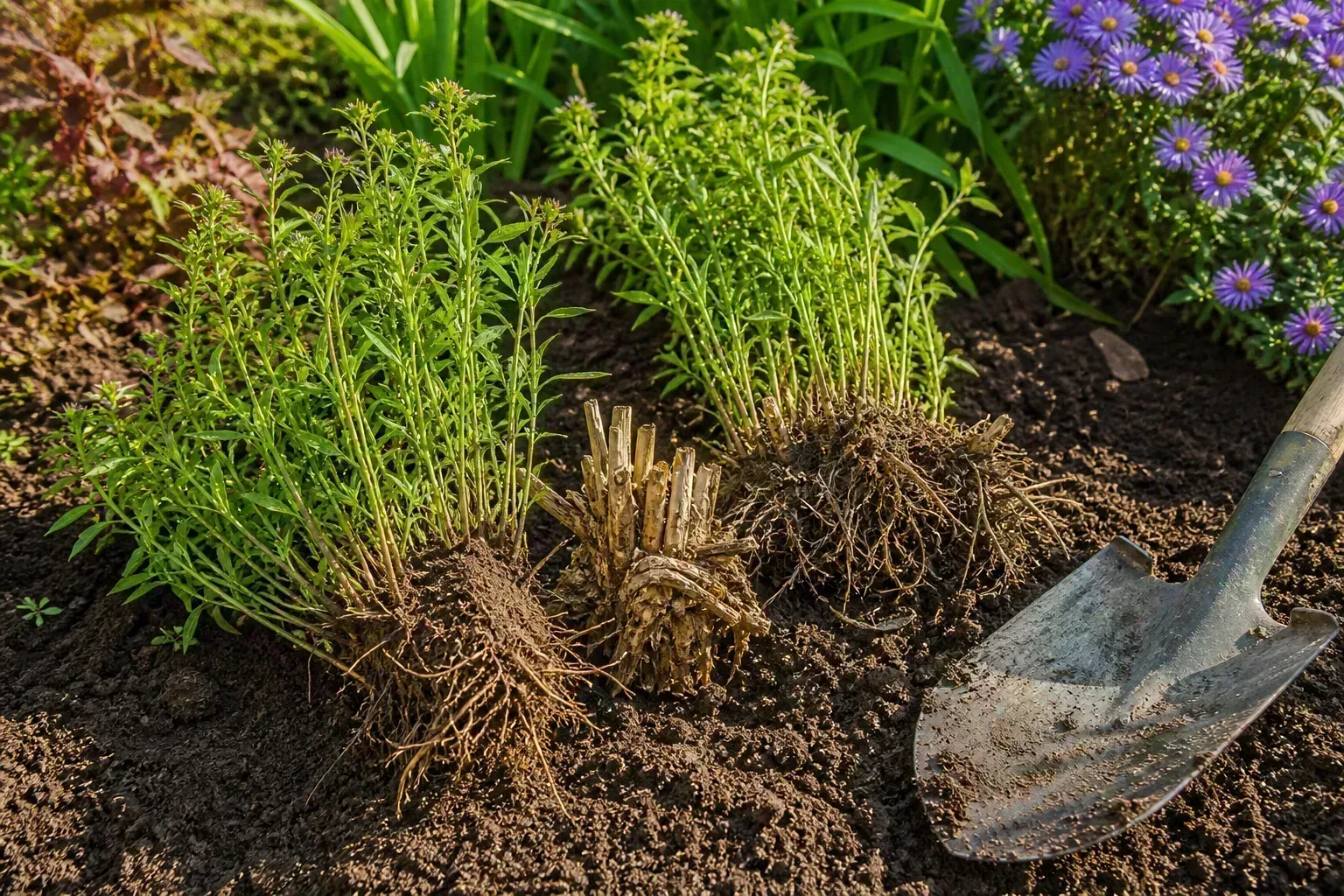
This library image shows division on another perennial; meadow rue roots can be sensitive, so lift and separate a clump gently.
If the plant is small, recently planted, or already struggling, leave it undisturbed. Meadow rue can be slow to re-establish after root disturbance, so patience and better growing conditions often serve it better than repeated division. Do not divide a named cultivar if seed-grown offspring need to remain identical; seed is not a reliable way to preserve cultivar characteristics.
Grow Meadow Rue in a Container
Choose a large, stable pot with drainage holes and enough depth for the selected plant’s root system. Compact species are easier container subjects than tall, spreading forms; a mature plant that reaches well over a meter may become top-heavy in a small pot and require frequent watering. Check the botanical name and expected spread before committing to a container.
Use a moisture-retentive but open potting mix, and keep the root ball evenly moist through active growth. A pot in afternoon sun or wind can dry rapidly, so check it more often than a garden bed and water until excess drains from the base. Never let the pot stand in a full saucer of water for extended periods unless the species is specifically suited to bog conditions.
Container roots experience colder and hotter conditions than roots in the ground. Protect the pot in winter where necessary by moving it to a sheltered position or insulating its sides, while preserving drainage. Refresh the top layer of compost in spring; repot or divide only when the plant has outgrown its container and is healthy enough to recover.
Troubleshoot Common Meadow Rue Problems
Meadow rue is not usually a high-maintenance plant, but environmental stress can cause weak growth, sparse flowering, or damaged foliage. Diagnose the site before adding fertilizer or pesticide: several symptoms can begin with the same underlying issue, such as root competition or waterlogged soil.
| Symptom | Likely cause | What to do |
|---|---|---|
| Leaves wilt and soil is dry below the surface | Drought stress, especially in sun, wind, or a container | Water slowly at the base; add mulch and adjust how often you check the root zone |
| Yellowing or collapse while soil stays wet | Poor drainage, prolonged saturation, or root stress | Pause watering, check drainage, and improve the bed rather than adding more water |
| Tall stems lean or flop | Wind, weak light, soft growth, or a naturally tall cultivar | Add early support, shelter the plant, and avoid excess nitrogen |
| Few flowers | Deep shade, young age, drought stress, or species-specific bloom timing | Confirm the plant’s identity, give it brighter filtered light if practical, and stabilize moisture |
| White powdery coating on leaves | Powdery mildew, which is more likely in dry conditions or poor airflow | Remove badly affected material, water soil rather than foliage, and improve spacing and airflow |
| Chewed young leaves | Slugs or snails, particularly during damp weather | Inspect at dusk, clear hiding places, and use locally appropriate controls if damage persists |
Powdery mildew can appear when conditions are dry, even though the plant prefers moist soil; watering the root zone and avoiding crowding helps reduce stress. The Missouri Botanical Garden also lists occasional rust, leaf spot, and smut on yellow meadow rue, along with slugs and snails. Remove badly affected foliage, avoid overhead irrigation late in the day, and seek local extension guidance if a disease spreads or you cannot identify it confidently.
Handle Meadow Rue With Care
The RHS notes that contact with T. delavayi foliage may irritate skin and recommends gloves and other protective equipment when handling it. Sensitivity varies, so use gloves when planting, pruning, or dividing, and wash your hands and tools afterward. Avoid rubbing your eyes while working with the foliage.
Keep the plant labeled and do not eat it. Meadow rue’s common name can be confused with culinary or medicinal plants, but a common name is not evidence of safe use. If a person or pet chews an unknown garden plant and develops symptoms, contact a qualified medical or veterinary professional and provide the plant’s botanical name if you know it.
Use Meadow Rue in a Garden Design
Meadow rue’s fine foliage and see-through flowers can soften the boundary between bold-leaved plants and more delicate perennials. Place taller species behind or among plants that tolerate the same moisture and light, leaving enough space for their stems to sway without disappearing into dense growth. The flower clouds can rise above lower companions while allowing a view through the border.
Pair the species to the garden’s scale: a low form can edge a cool, moisture-retentive planting, while taller forms work in the middle or back of a border. Mix flower times for a longer season, and combine airy Thalictrum with plants whose leaves provide contrast, such as broad-leaved hostas or bold ferns in suitable shade. A garden-design feature on meadow rue highlights how its fine leaves and open flowers can add height without creating a solid visual screen.
Because the flowers and stems can be delicate, avoid planting tall varieties where they will be continually buffeted or crowded by vigorous neighbors. A sheltered site, planned support, and compatible moisture needs will do more for the look of a planting than trying to correct flopping after it happens.
Conclusion
Meadow rue grows best when its species and site are matched: most garden forms appreciate partial shade, humus-rich soil, and steady moisture, while some can take more sun if their roots do not dry out. Identify the botanical name, allow for mature size, and account for wind and tree-root competition before planting. Once established, a spring mulch, occasional deep watering in dry spells, timely support for tall stems, and sensible post-bloom cleanup are usually enough.
Choose seed when you want to raise species plants and can wait; reserve division for a healthy clump when you need to retain a named cultivar. With the right location and patient care, the finely cut foliage and light flower panicles can provide structure and movement across several seasons.



