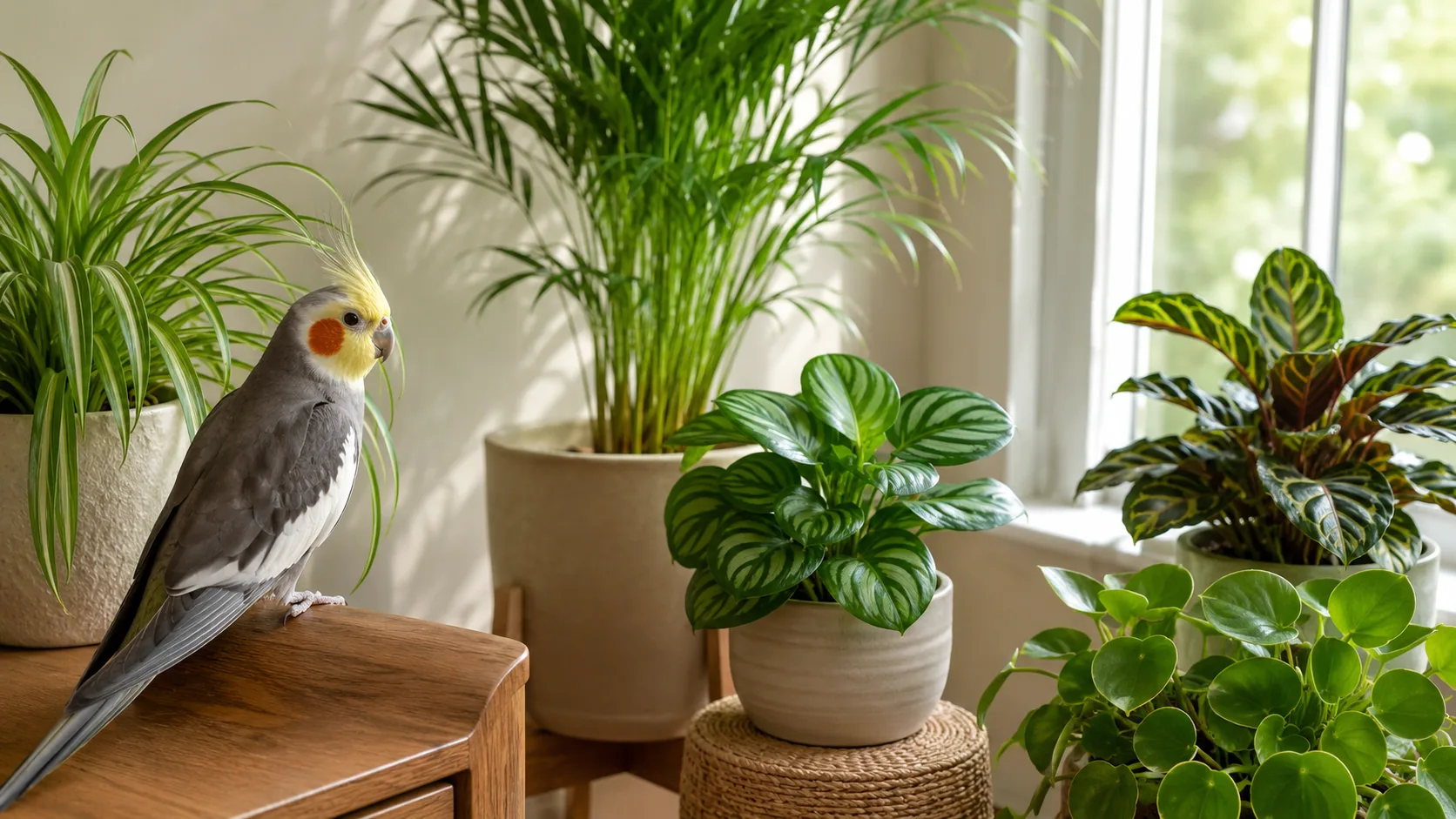
A bird-safer houseplant should do more than appear on a non-toxic list. It should fit your room’s light, survive your watering habits, and stay manageable when a curious parrot, cockatiel, or finch shares the same airspace. The best pick is rarely the trendiest foliage online—it is the plant you can keep far enough from the cage that beak access stays unlikely, even when the ASPCA profile is favorable.
This guide compares eight ornamentals with verified ASPCA non-toxic listings, a comparison table focused on cageside placement risk, and links to full species care. For plants to avoid, see Plants Toxic to Birds. For cat and dog homes, see Best Pet-Safe Indoor Plants.
The eight bird-safer houseplants featured here are spider plant, parlor palm, areca palm, prayer plant, calathea, ponytail palm, Boston fern, and bird’s nest fern. Each has an individual ASPCA non-toxic listing for cats and dogs—the strongest public toxicology anchor available for these ornamentals. ASPCA does not publish bird-specific listings for every species; we treat verified non-toxic ornamental profiles as a conservative baseline and still require distance from cages.
Non-Toxic Does Not Mean Safe to Eat
When the ASPCA classifies a plant as non-toxic, it means the plant is not expected to cause the classic severe poisoning profile associated with known toxic houseplants in the species ASPCA tests most thoroughly (cats and dogs). It does not mean foliage is bird food.
Birds that chew houseplants—even non-toxic ones—can still develop digestive upset, crop irritation, or stress from pesticide residues on nursery foliage. Potting mix, perlite, and fertilizer granules create hazards separate from the plant’s toxicity listing.
Treat bird-safe as lower consequence if a small nibble happens at a distance from the cage, not as permission to let your bird shred a houseplant.
Call your avian veterinarian promptly if your bird shows repeated vomiting or regurgitation, lethargy, changes in droppings, difficulty breathing, or if you cannot identify the plant eaten. For general poison guidance, ASPCA Animal Poison Control is available at 888-426-4435 (fee may apply).
Editor note (cageside distance): In typical companion-bird homes, a plant placed within one wingspan of a play stand gets sampled within days—not because the bird needs greens, but because beak exploration is normal behavior. Moving the pot across the room reduces risk more than swapping between two ASPCA non-toxic species at the same distance.
Quick Pick: Best Bird-Safer Plant for Your Situation
For the most forgiving starter, choose spider plant—widely available, adaptable, and ASPCA-listed non-toxic. Keep spiderettes away from play stands.
For soft height in a bright room away from the cage, choose areca palm or parlor palm.
For sculptural form with a clear ASPCA record, choose ponytail palm (Beaucarnea recurvata)—not a true palm, but listed non-toxic by the ASPCA.
For patterned foliage in a humid room, choose prayer plant or calathea—both ASPCA non-toxic, both humidity-sensitive.
For bathroom humidity with disciplined watering, choose Boston fern or bird’s nest fern.
How to Choose a Bird-Safer Houseplant
Judge each plant against ASPCA verification, light, care difficulty, and cageside distance.
Verify the Exact Plant
“Fern” on a nursery tag is not enough. Asparagus fern is toxic and not a true fern. Bird’s nest fern (Asplenium nidus) differs from Boston fern. Check botanical names and cross-reference the ASPCA database.
Keep Distance From Cages and Play Stands
Bird-safe classification addresses toxicity, not access. Even non-toxic plants sprayed at the grower, dusted with perlite, or fertilized heavily become risky when shredded beside a cage. Aim for a full room width between cage and plant when possible.
Avoid Chemicals Near Bird Areas
Leaf shine, systemic pesticides, and scented fertilizers do not belong in bird rooms. Rinse new nursery plants and quarantine them for a week before placing in shared airspace.
Match Light Before Placement
Stressed plants drop leaves—and dropped leaves attract foraging. Choose parlor palm for dimmer rooms; choose areca palm or ferns when you have brighter, stable windows.
How We Selected These Eight
We required individual ASPCA non-toxic listings for each featured species, then ranked for nursery availability, indoor adaptability, and practical fit in bird homes where chewing exposure must stay unlikely.
We left out popular toxic ornamentals (oleander-adjacent houseplants, avocado, many bulbs) and species without clear ASPCA profiles. See Plants Toxic to Birds for removals.
Bird-Safer Houseplant Comparison Table
Spider Plant
Best for: first bird-room plant, bright kitchens away from cages.
ASPCA status: Non-toxic (ASPCA spider plant listing)
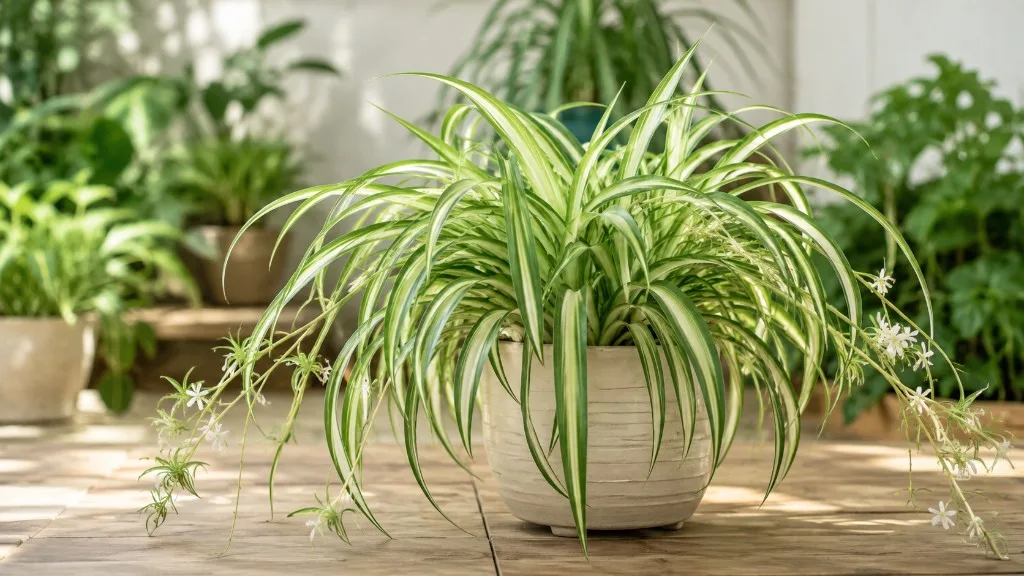
Spider plant (Chlorophytum comosum) is forgiving and clearly documented on the ASPCA list. Dangling spiderettes are bird magnets—keep them away from play stands.
Useful care guides: Spider plant care · Watering · Light · Problems
Parlor Palm
Best for: low-light corners far from the cage.
ASPCA status: Non-toxic (ASPCA parlor palm listing)
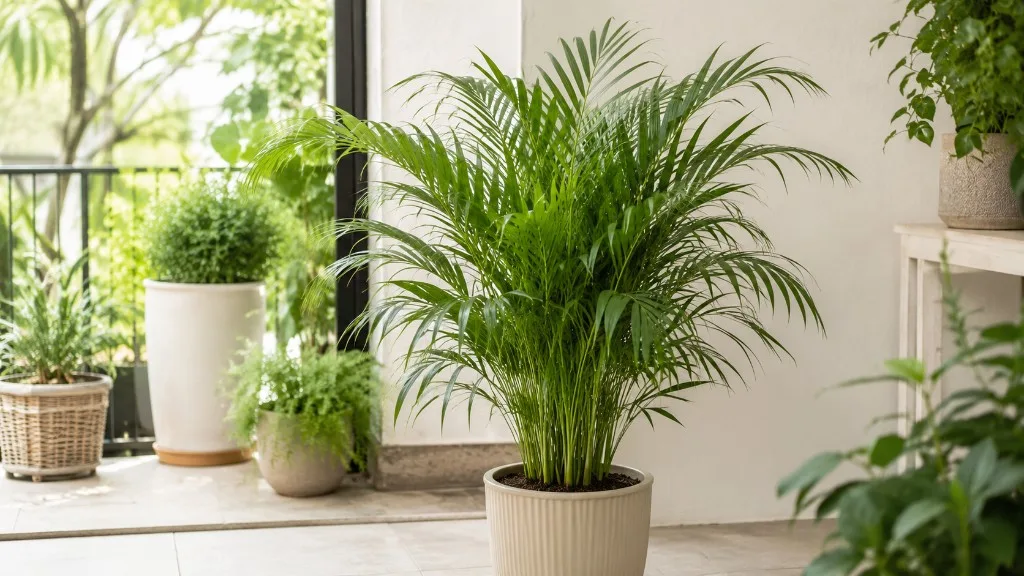
Parlor palm (Chamaedorea elegans) is compact and ASPCA-listed non-toxic. Airy fronds shed slowly—remove fallen leaflets before birds forage.
Useful care guides: Parlor palm care · Watering · Light · Problems
Areca Palm
Best for: bright living rooms with floor space away from flight paths.
ASPCA status: Non-toxic (ASPCA areca palm listing)
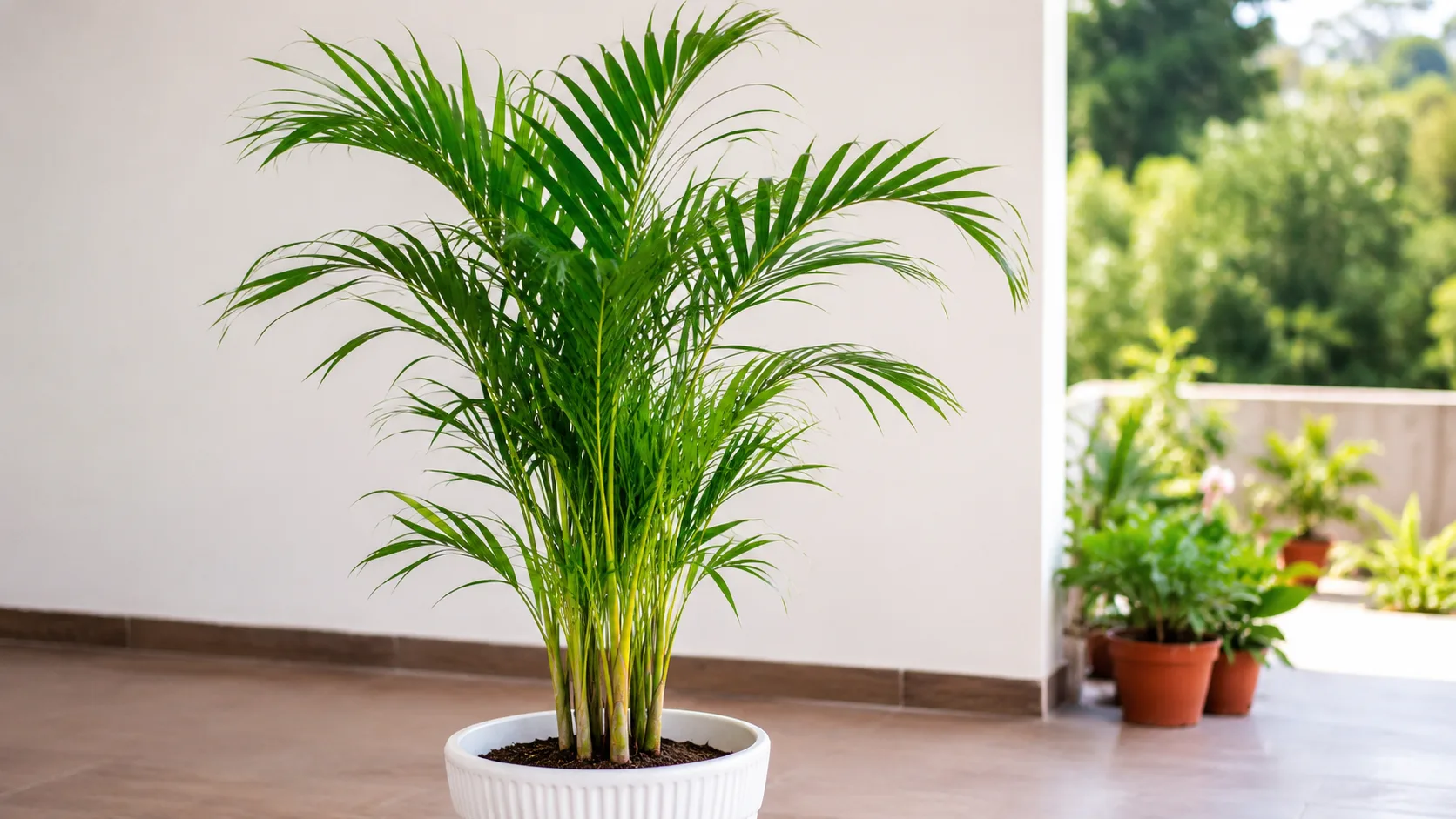
Areca palm (Dypsis lutescens) adds soft height with verified ASPCA non-toxic status. Soft frond tips may attract chewing if the pot sits beside a play gym.
Useful care guides: Areca palm care · Watering · Light · Problems
Prayer Plant
Best for: patterned foliage in humid rooms.
ASPCA status: Non-toxic (ASPCA prayer plant listing)
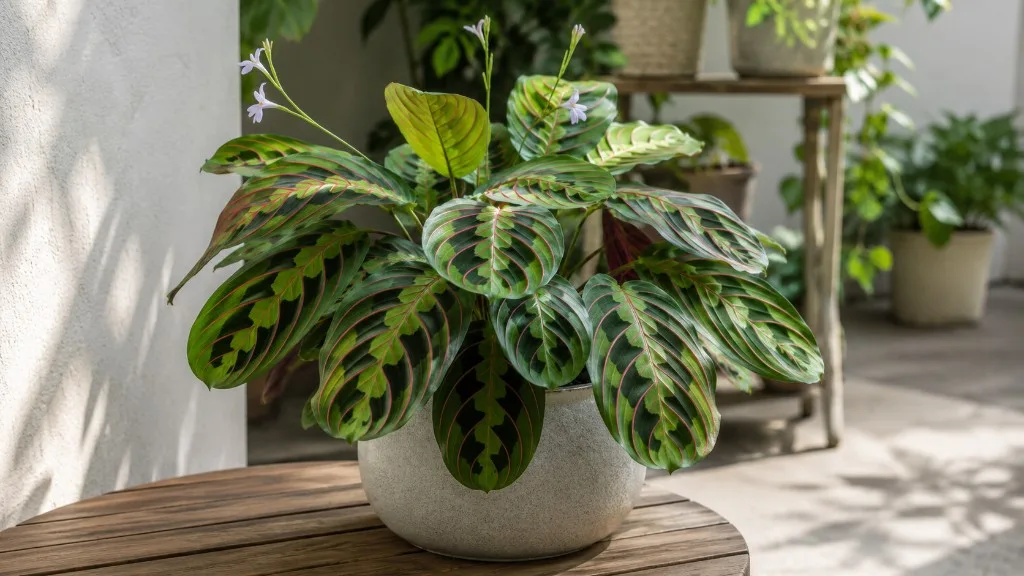
Prayer plant (Maranta leuconeura) offers graphic leaves without the toxicity profile of many trending foliage plants. Needs steady moisture and 50–70% humidity.
Useful care guides: Prayer plant care · Watering · Light · Problems
Calathea
Best for: bold patterned foliage lovers past their first easy plant.
ASPCA status: Non-toxic (ASPCA calathea listing)
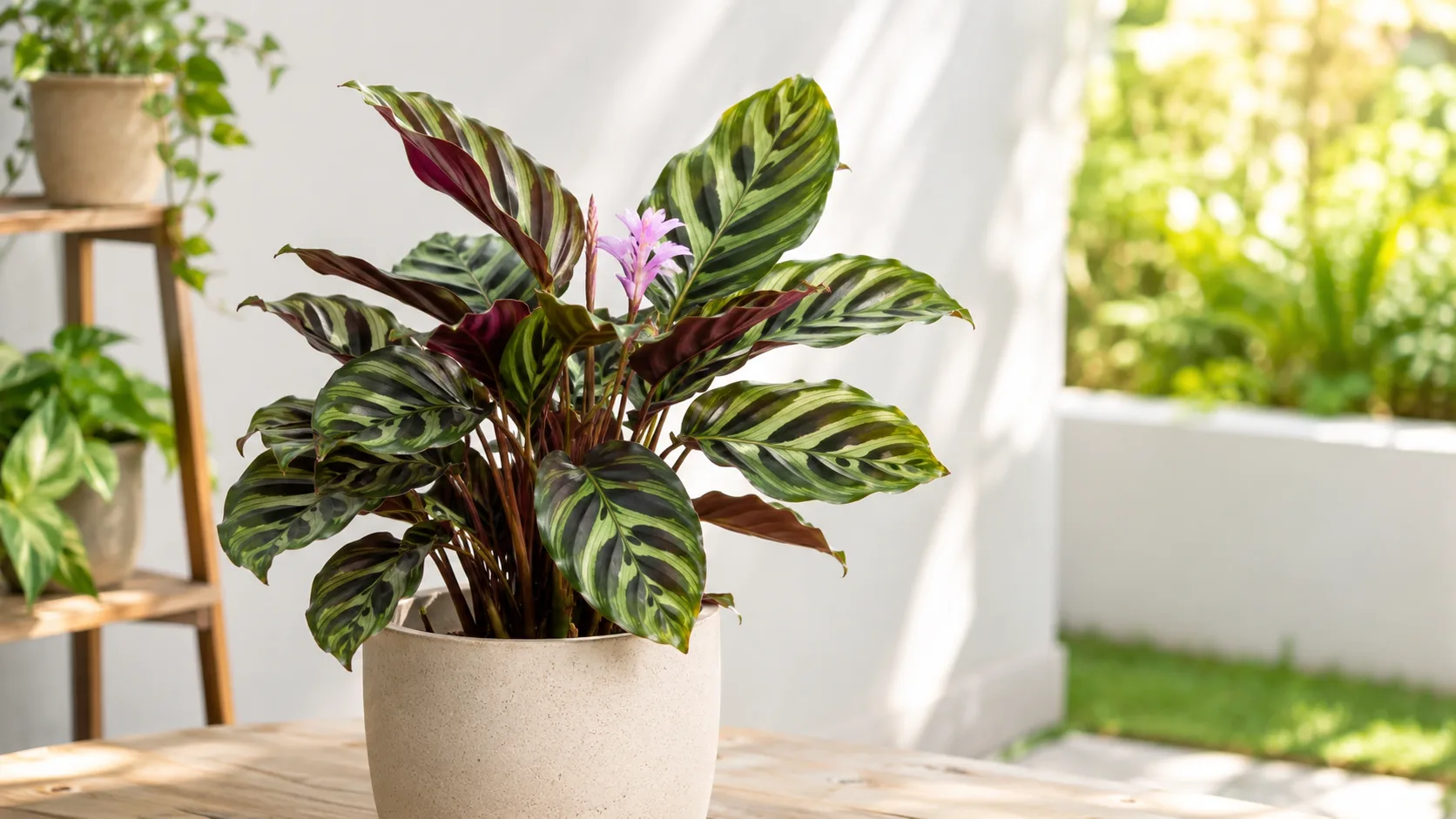
Calathea (Calathea spp.) is one of the few statement foliage plants with ASPCA non-toxic listing. Care is stricter than spider plant—dry air browns leaf edges quickly.
Useful care guides: Calathea care · Watering · Light · Problems
Ponytail Palm
Best for: sculptural accent pots away from cages.
ASPCA status: Non-toxic (ASPCA ponytail palm listing)
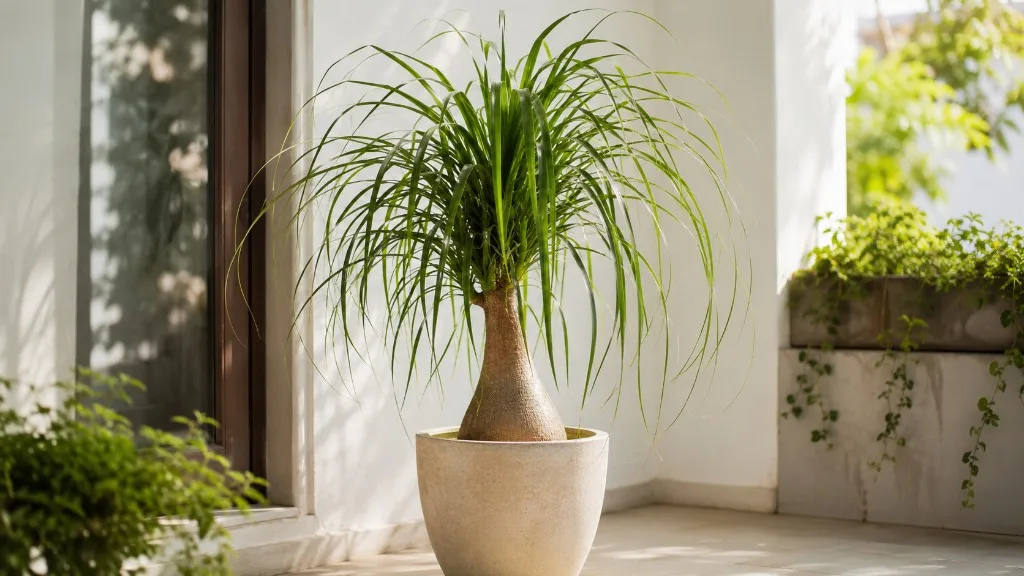
Ponytail palm (Beaucarnea recurvata) is a caudex-forming succulent, not a true palm. ASPCA lists it non-toxic. Stores water in its base—overwatering causes rot.
Useful care guides: Ponytail palm care · Watering · Light · Problems
Boston Fern
Best for: humid bathrooms, hanging baskets away from flight paths.
ASPCA status: Non-toxic (ASPCA Boston fern listing)
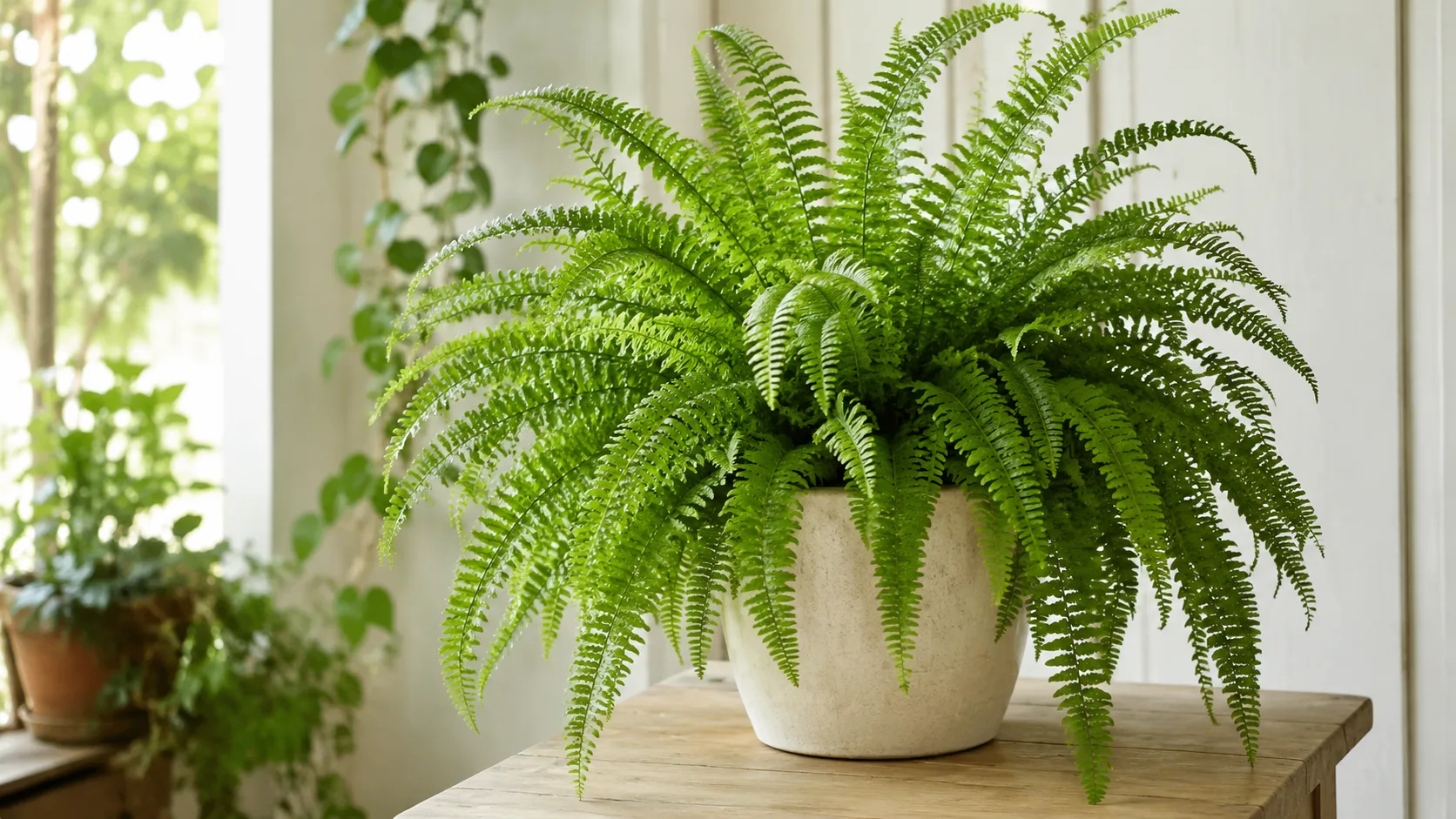
Boston fern (Nephrolepis exaltata) is a classic pet-safe fern per ASPCA. Not to be confused with toxic asparagus fern. Demands steady moisture.
Useful care guides: Boston fern care · Watering · Light · Problems
Bird’s Nest Fern
Best for: crinkled foliage in humid rooms.
ASPCA status: Non-toxic (ASPCA bird’s nest fern listing; verify botanical name at purchase)
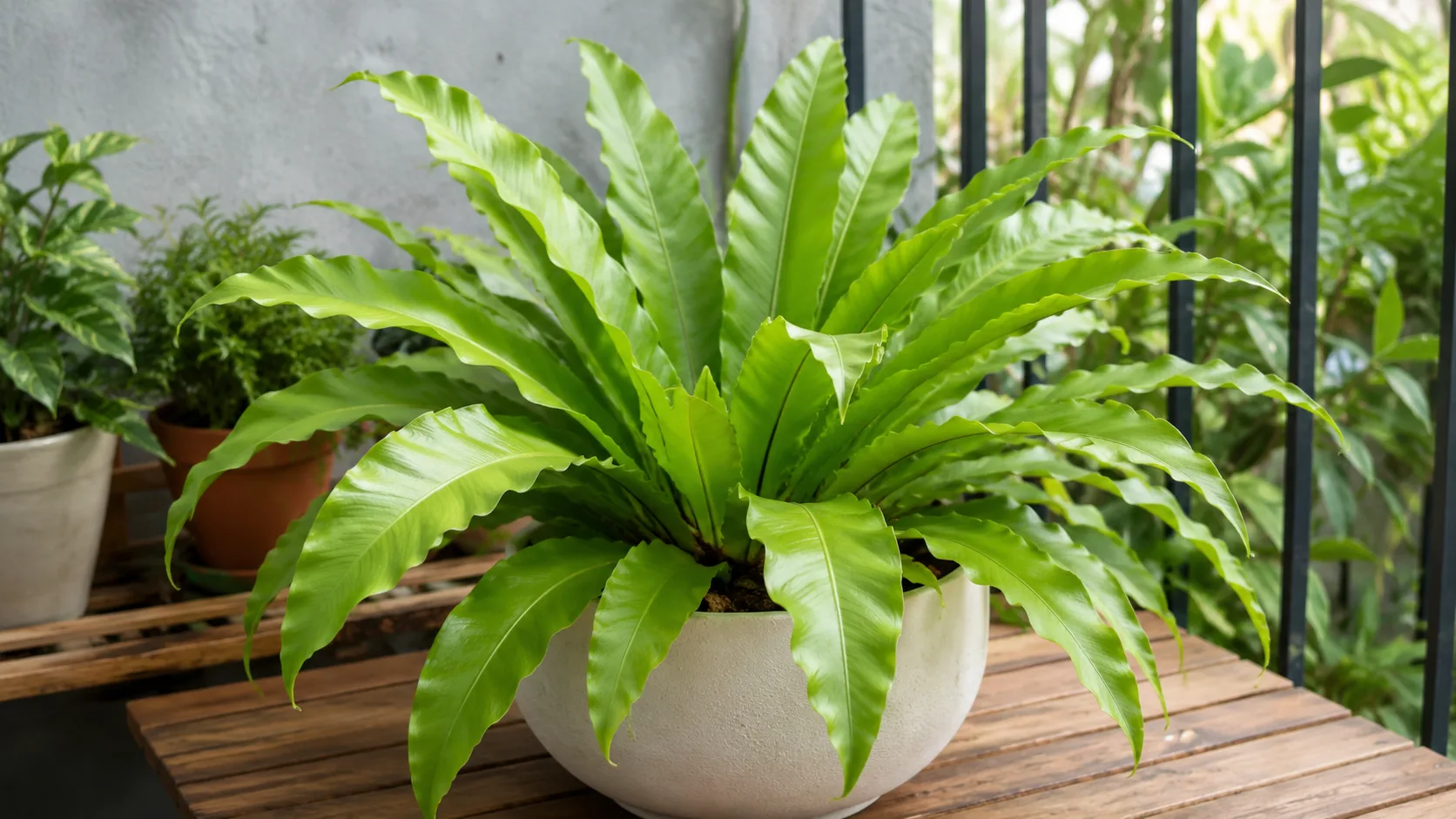
Bird’s nest fern (Asplenium nidus) grows from a central rosette—water the soil, not the crown. ASPCA non-toxic profile supports conservative use away from cages.
Useful care guides: Bird’s nest fern care · Watering · Light · Problems
Common Mistakes in Bird-Safer Plant Homes
Treating non-toxic as edible. ASPCA non-toxic reduces poisoning concern; it does not replace distance from cages.
Placing plants on top of cages. Even safe plants shed leaves and soil into food and water dishes.
Using leaf shine near birds. Chemical residues aerosolize in warm bird rooms.
Confusing asparagus fern with true ferns. Asparagus fern is toxic; Boston and bird’s nest ferns are different species entirely.
Conclusion
The best bird-safer houseplant is one you can keep far from cages and play stands, in light you can maintain, with an ASPCA non-toxic profile you have verified by botanical name. Spider plant, parlor palm, and ponytail palm are the most forgiving starting points. Areca palm, Boston fern, and bird’s nest fern suit brighter, more humid rooms. Prayer plant and calathea reward growers ready to manage humidity.
Call your avian veterinarian or ASPCA Animal Poison Control at 888-426-4435 if ingestion concerns you. For removals, see Plants Toxic to Birds.