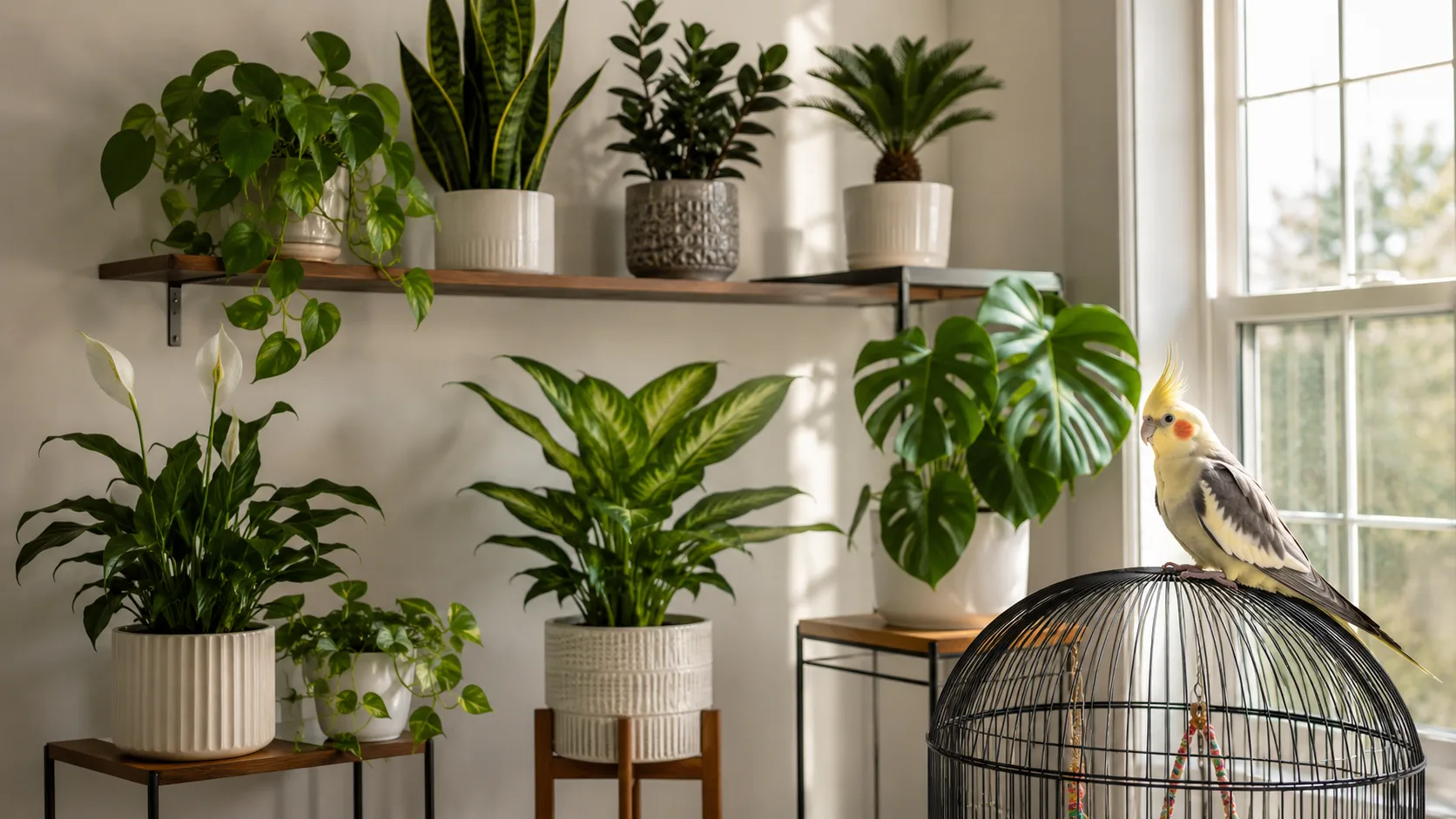
Companion birds chew with precision and speed. A parrot that lands on a curtain rod can reach a pothos stem in seconds; a budgie on a play stand may nibble a peace lily leaf before you cross the room. Avian metabolism makes small ingestions consequential—birds often hide illness until they are critically sick.
This guide prioritizes eight common houseplants toxic to birds that create the most preventable exposures: pothos, philodendron, peace lily, dieffenbachia, ZZ plant, English ivy, dracaena, and anthurium. VCA Animal Hospitals lists many of these genera among plants toxic to pet birds. (VCA - Plants Toxic to Birds) For lower-risk options, see Plants Safer for Birds.
Birds React Differently Than Cats and Dogs
Avian-specific poison lists are smaller than ASPCA’s mammal database, so we cross-check three signals: direct avian toxic-plant references, ASPCA toxic status for cats/dogs in the same genus, and known irritant compounds (oxalates, saponins, cardiac glycosides) that harm multiple species.
Most aroids on this page contain insoluble calcium oxalates. Pet Poison Helpline documents the oral and GI irritation mechanism. (Pet Poison Helpline - Insoluble Oxalates) Birds may not show drooling the way mammals do—watch instead for regurgitation, fluffed posture, reduced appetite, or sudden quietness.
Contact your avian veterinarian immediately if your bird chews any plant on this list. Do not wait for obvious symptoms.
Quick Pick: Remove These First
Remove pothos and philodendron from any room where your bird flies or plays. Trailing aroids are the most common bird-room hazards. (ASPCA golden pothos)
Remove peace lily, dieffenbachia, and anthurium—all Araceae family members with oxalate crystals. VCA specifically flags dieffenbachia and philodendron for birds.
Relocate English ivy and dracaena from windowsills and stands birds use as landing zones.
How to Bird-Proof Plant Placement
Assume Out-of-Cage Access
If your bird has flight time, every reachable surface is in range—curtain rods, door tops, kitchen counters, and plant shelves.
Watch Sprays and Dust
Even non-toxic plants become hazards near birds when treated with leaf shine, pesticides, or systemic nursery chemicals. Toxic plants plus chemical residue compound risk.
Separate Play Stands from Plant Shelves
A play gym beside a plant shelf invites beak testing. Move plants to closed rooms or bird-free zones.
How We Selected These Eight
We prioritized plants with strong avian or cross-species toxicology support, high indoor frequency, and beak-level accessibility. We excluded plants without credible toxicity signals even if they are uncommon indoors.
Toxic Houseplant Comparison Table
Pothos
Exposure risk: Very high—trailing stems at perch height.
Risk basis: ASPCA toxic to cats/dogs; VCA flags aroid family for birds
Typical concerns: Oral irritation, regurgitation, lethargy
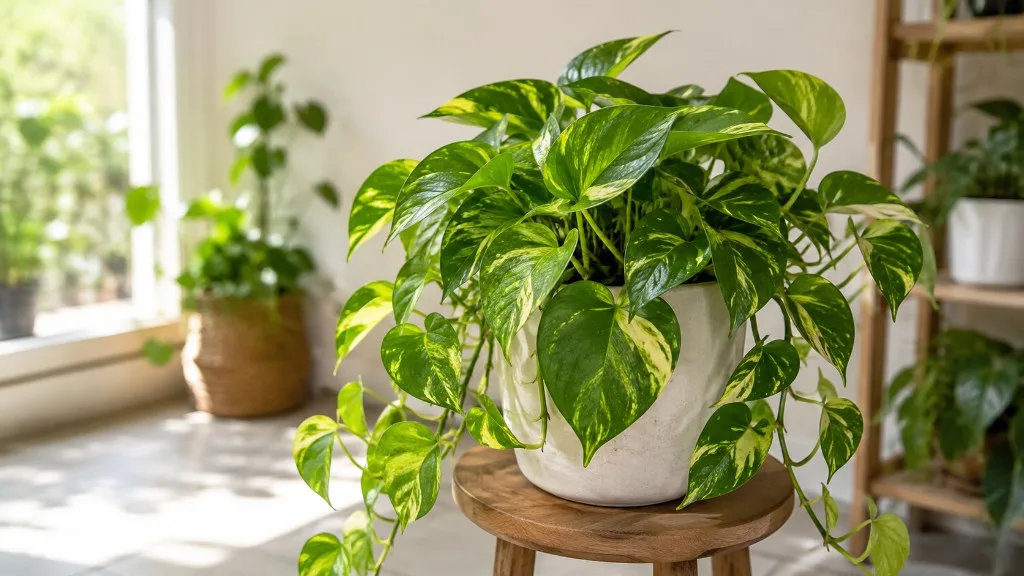
Pothos (Epipremnum aureum) is the default trailing houseplant—and the default bird hazard. Parrots bathe stems; smaller birds chew leaf edges. The ASPCA lists golden pothos toxic; avian references group Araceae as unsafe for pet birds.
Action: Remove from bird rooms entirely. Spider plant is a common lower-risk trailing alternative in bird-safer lists.
Useful references:
Philodendron
Exposure risk: Very high—vines climb toward perches.
Risk basis: ASPCA toxic; VCA lists philodendron for birds
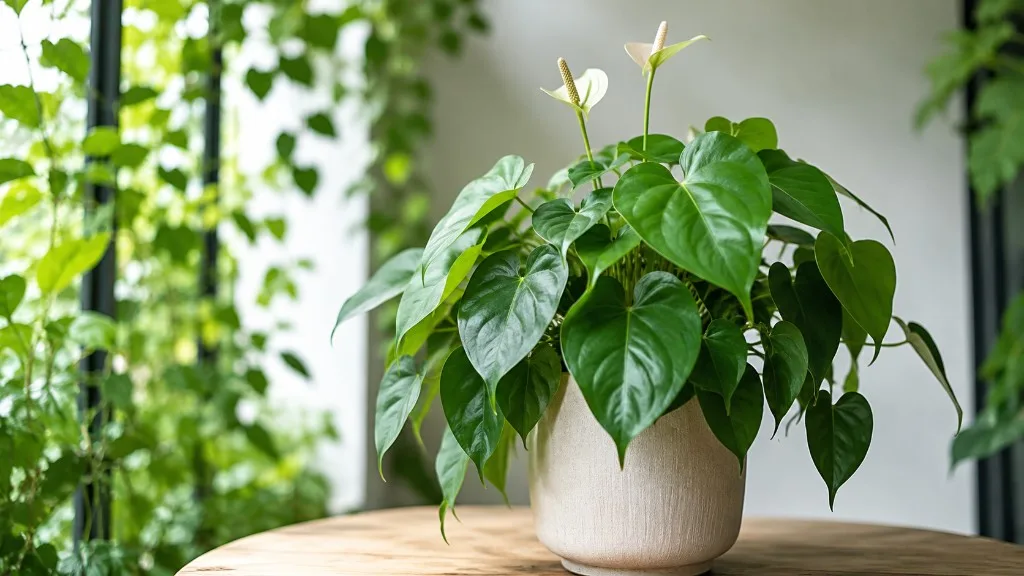
Philodendron (Philodendron spp.) shares pothos’s oxalate profile. Bird owners often keep both because they look similar. Do not confuse with peperomia—similar leaves, safer profile for mammal databases and often used as a bird-room alternative with conservative placement.
Action: Remove from shared spaces.
Useful references:
Peace Lily
Exposure risk: High—compact plants on tables beside play stands.
Risk basis: ASPCA toxic; Araceae oxalates
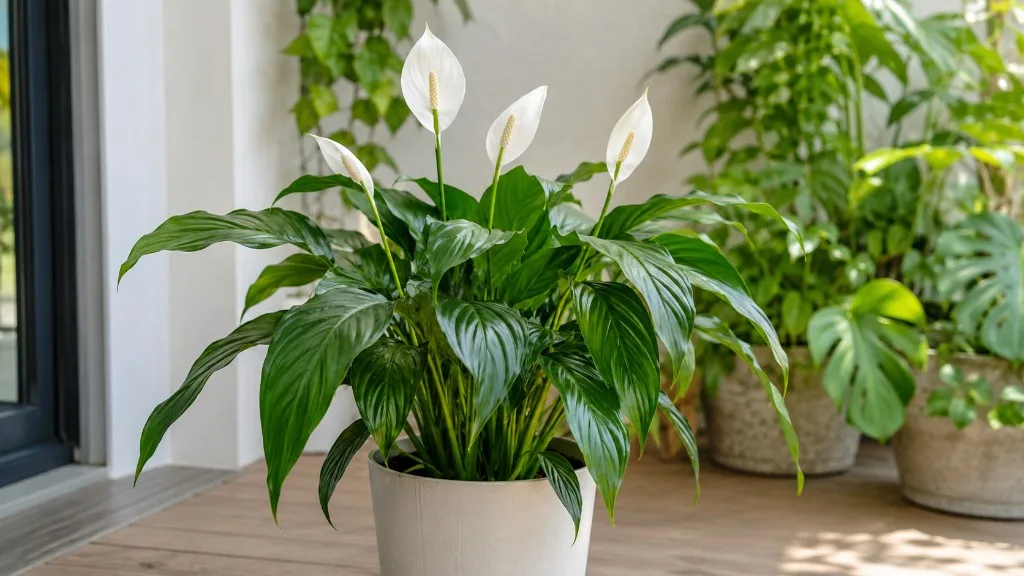
Peace lily (Spathiphyllum spp.) attracts beak investigation because of white spathe flowers. ASPCA toxic to cats and dogs; treat as unsafe for birds in shared rooms.
Action: Replace with parlor palm or move to a bird-free room.
Useful references:
Dieffenbachia
Exposure risk: High—broad leaves are chew targets.
Risk basis: VCA toxic-to-birds list; ASPCA toxic
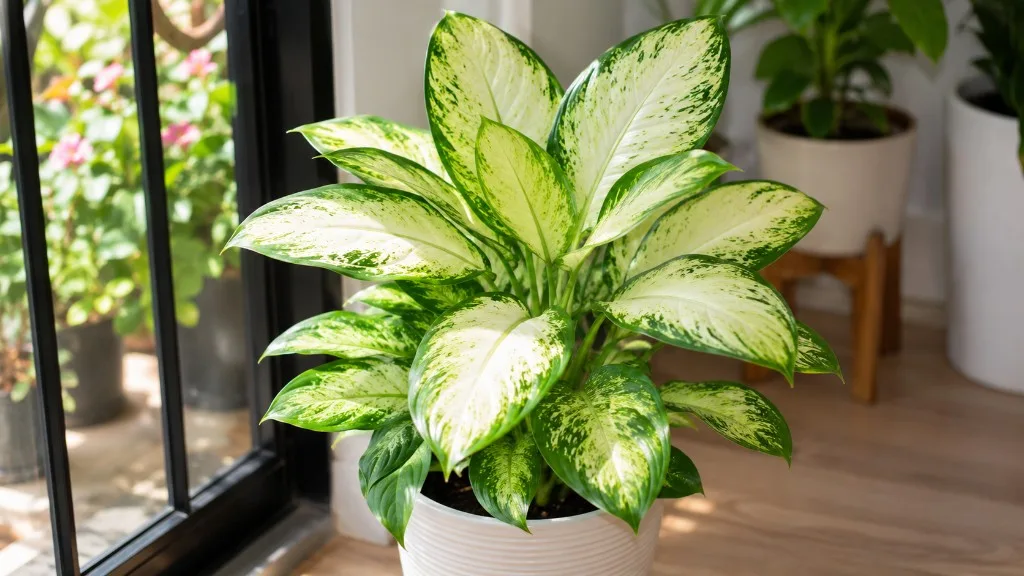
Dieffenbachia (dumb cane) causes severe oral irritation in mammals; VCA lists it among plants toxic to birds. Large leaves invite destructive chewing from parrots even when toxicity is the bigger concern.
Action: Remove from any bird-accessible space.
Useful references:
ZZ Plant
Exposure risk: Medium—side tables and low shelves.
Risk basis: ASPCA toxic; calcium oxalates in all parts
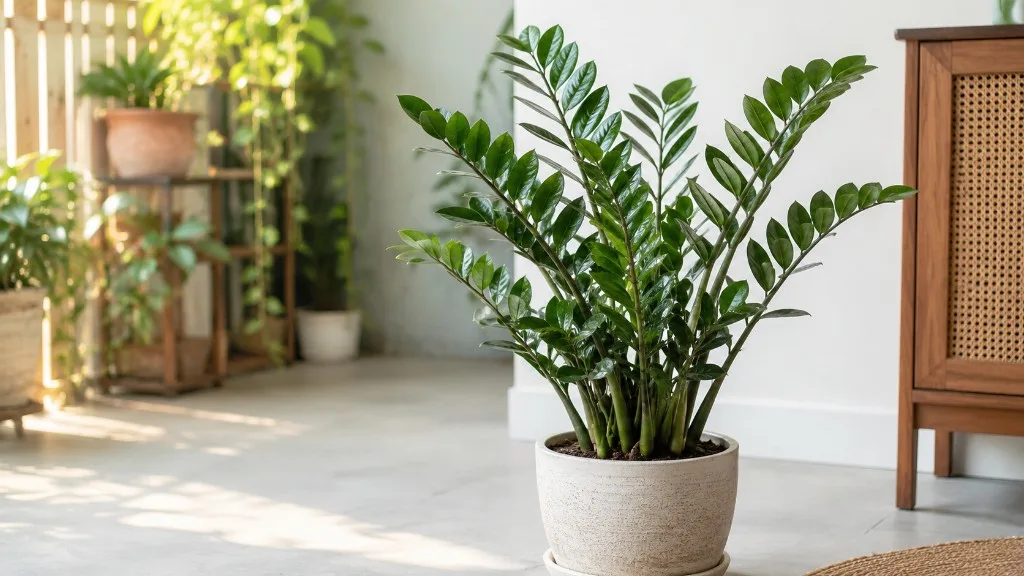
ZZ plant (Zamioculcas zamiifolia) is ASPCA toxic to cats and dogs. Birds that chew woody stems or leaves may ingest oxalate crystals. Keep out of bird rooms.
Action: Swap for cast iron plant in low-light spots outside bird zones.
Useful references:
English Ivy
Exposure risk: High—trailing from windowsills birds use.
Risk basis: ASPCA toxic; triterpenoid saponins
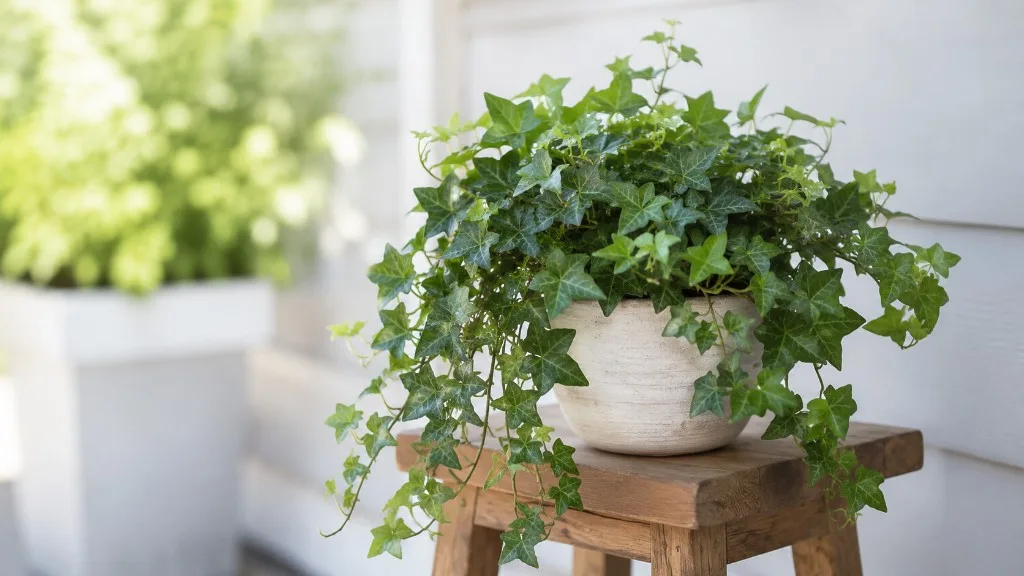
English ivy (Hedera helix) trails beside sunny windows—prime bird landing spots. ASPCA lists it toxic to cats and dogs; saponins affect multiple species.
Action: Replace with Boston fern only in bird-free rooms—ferns still need careful placement and humidity.
Useful references:
Dracaena
Exposure risk: Medium—tall pots beside bird stands.
Risk basis: ASPCA toxic to cats and dogs
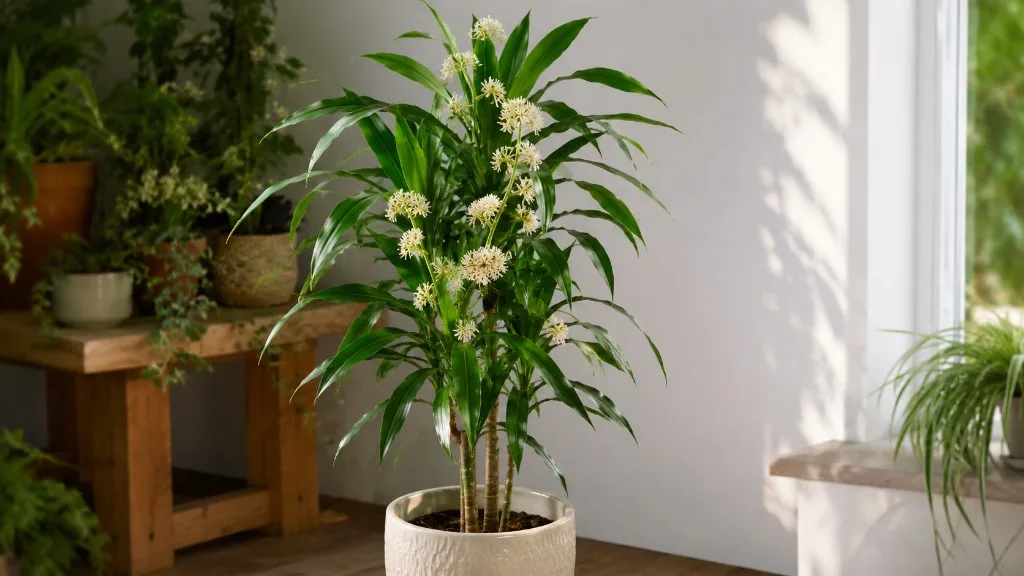
Dracaena (Dracaena spp.) contains saponins that cause vomiting and depression in cats and dogs per ASPCA listings. Treat as unsafe for birds in shared airspace.
Action: Replace with areca palm in bird-free rooms if you need height.
Useful references:
Anthurium
Exposure risk: Medium to high—bright spathes invite chewing.
Risk basis: ASPCA toxic; Araceae oxalates
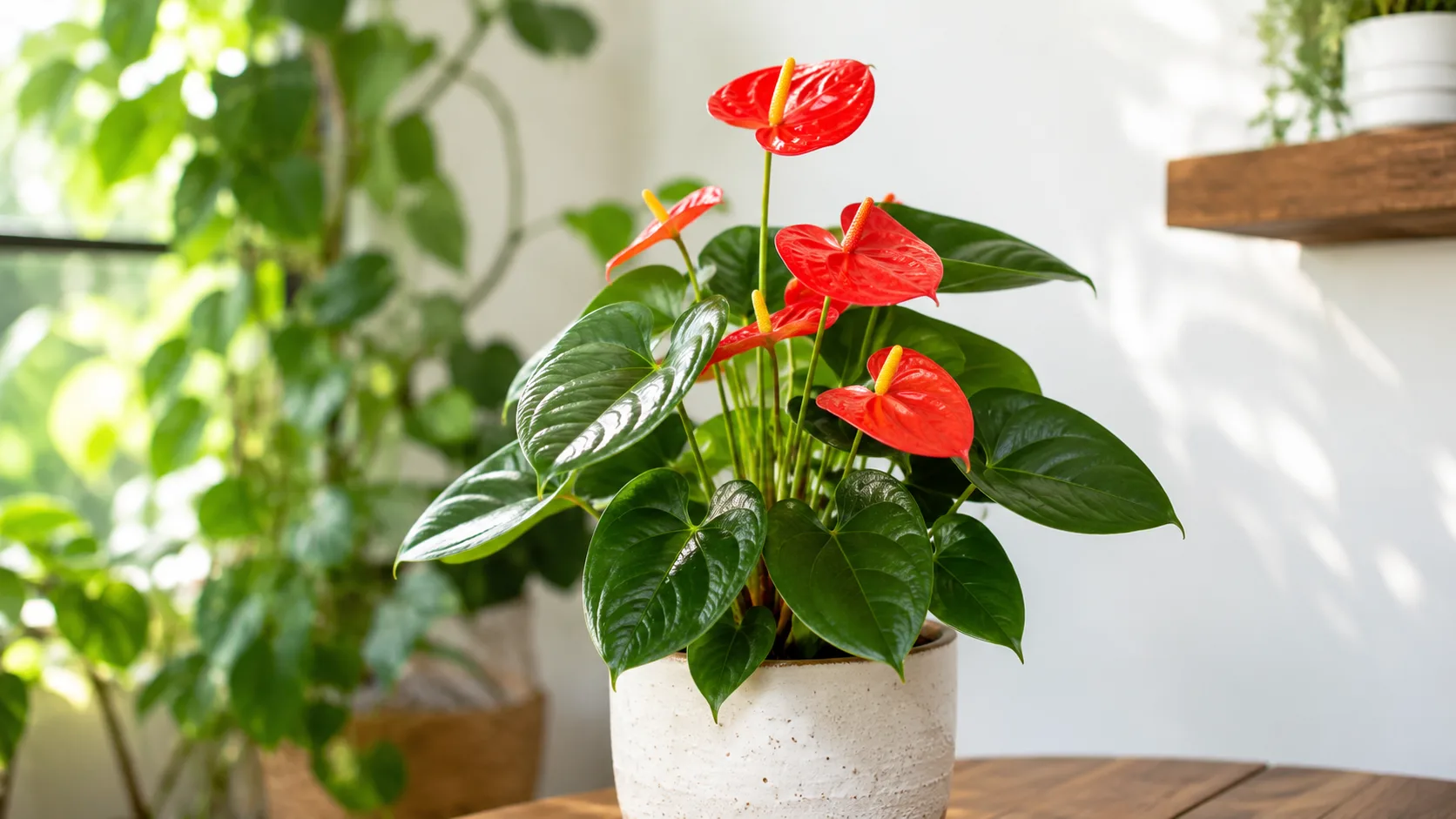
Anthurium (Anthurium spp.) combines colorful spathes with oxalate crystals. ASPCA lists anthurium toxic to cats and dogs. Parrots may strip spathes quickly.
Action: Remove from bird rooms. Prayer plant offers patterned foliage with a more favorable mammal safety profile—still keep any plant away from unrestricted beak access.
Useful references:
Common Mistakes Bird Owners Make
Trusting distance from the cage. Flighted birds close distance instantly.
Assuming mammal non-toxic means bird-safe. Always check avian-specific guidance.
Keeping toxic plants during supervised time only. One unsupervised minute is enough.
Using pesticides near bird zones. Chemical exposure compounds plant toxicity.
Waiting for symptoms when a toxic plant was chewed—birds mask illness.
Conclusion
Remove pothos, philodendron, peace lily, dieffenbachia, ZZ plant, English ivy, dracaena, and anthurium from bird-accessible rooms before debating rare species. VCA and ASPCA cross-checks support treating these common ornamentals as unsafe around companion birds.
For conservative alternatives, see Plants Safer for Birds. If your bird chews any plant on this list, contact your avian veterinarian immediately—do not wait for visible illness.