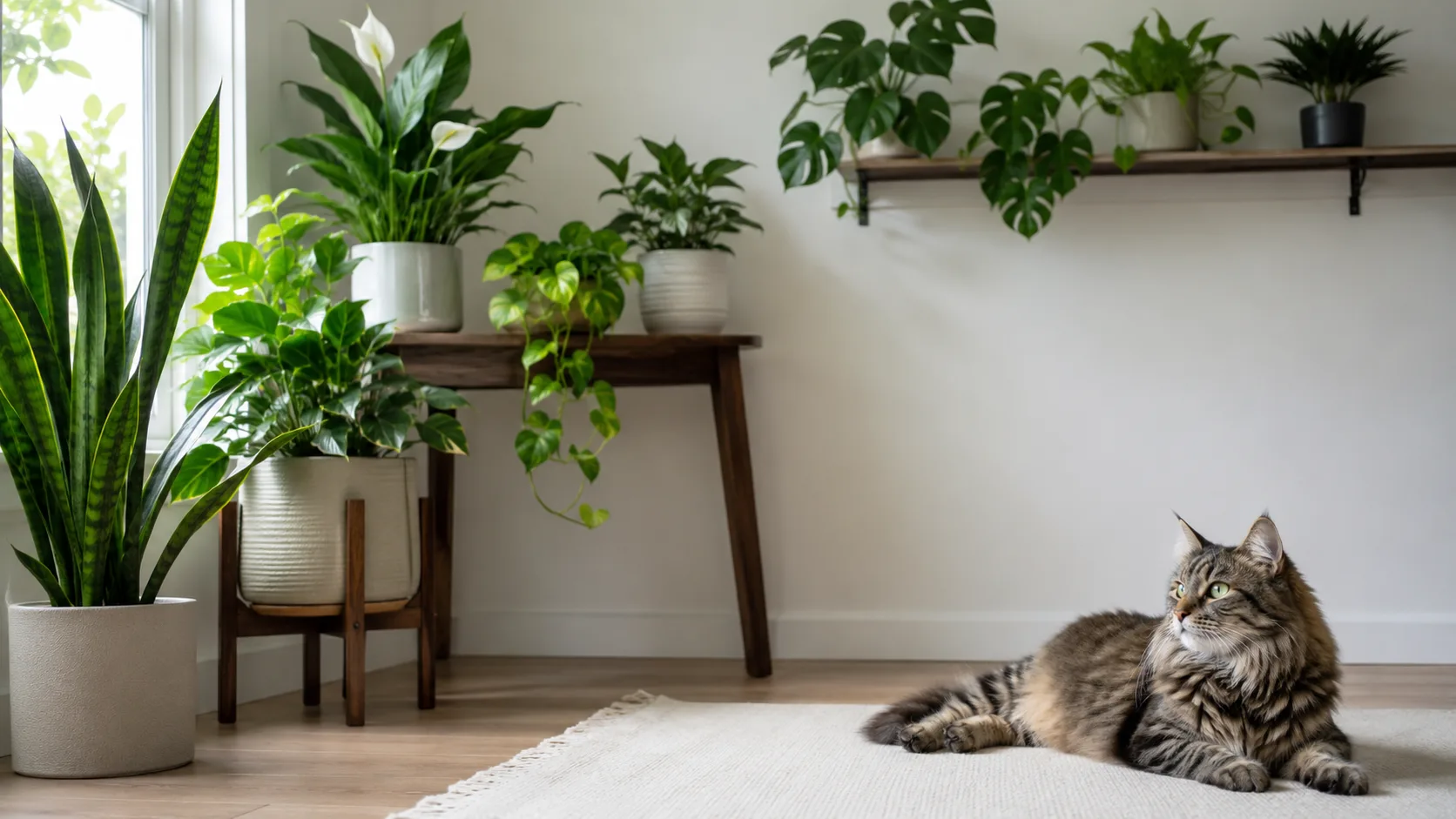
The most dangerous houseplant for a cat is often not the rarest one—it is the pothos on a low shelf, the peace lily beside the litter box, or the philodendron cutting rooting in a water glass. These plants are everywhere in home collections, and cats investigate with their mouths. When a plant is listed toxic by the ASPCA, the practical fix is usually removal or strict isolation—not hoping your cat will lose interest.
This guide prioritizes eight common indoor plants toxic to cats that create the most preventable exposures: pothos, philodendron, peace lily, dieffenbachia, ZZ plant, sago palm, dracaena, and English ivy. For verified safe alternatives, see Indoor Plants Safe for Cats.
Toxic Does Not Always Mean Instant Emergency
Severity varies. Most aroids on this list cause oral irritation, drooling, and vomiting from insoluble calcium oxalate crystals—not the same outcome as sago palm, which can cause liver failure. Pet Poison Helpline explains that oxalate plants typically trigger immediate mouth pain, which sometimes limits how much a cat swallows. (Pet Poison Helpline - Insoluble Oxalates)
That does not make them safe to keep within reach. Repeated chewing, swallowed leaf material, and stress on an already sensitive cat still warrant veterinary contact. Sago palm and large ingestions of any toxic plant are different—treat those as urgent.
Call your veterinarian or ASPCA Animal Poison Control at 888-426-4435 if your cat shows repeated vomiting, difficulty breathing, tremors, marked lethargy, yellow gums, or if you suspect sago palm ingestion. Bring a plant sample or clear photo for identification.
Quick Pick: Remove These First
If you can only address a few plants today, start with pothos and philodendron. They are trailing, within easy reach, and among the most common ASPCA toxic listings in cat homes. (ASPCA golden pothos)
For the highest-severity risk on this page, remove sago palm immediately—even small amounts of any plant part can harm cats. (ASPCA sago palm listing)
For floor-level pots cats bat and chew, remove peace lily, dieffenbachia, and ZZ plant next. All three are upright foliage plants that fit exactly where cats walk.
How to Use This List in a Cat Home
Judge each plant by verified toxicity, reachability, and how often your cat chews foliage—not by how pretty it looks on Instagram.
Verify Botanical Identity
“Pothos” at a nursery may be labeled golden pothos, devil’s ivy, or Epipremnum aureum. Peace lily is not a true lily—but it is still toxic to cats per the ASPCA. Always match the botanical name on the tag to the ASPCA database before assuming a swap is safe.
Assume Cats Will Reach “High” Shelves
Cats jump to refrigerators, curtain rods, and the tops of bookcases. A toxic trailing vine in a hanging basket often still presents dangling stems at cat height. If you cannot guarantee zero access, the plant should leave the home.
Treat Fallen Leaves as Exposures
Pruning waste, dropped yellow leaves, and bouquet stems on the counter all get chewed. Remove debris daily in cat zones.
How We Selected These Eight
We required ASPCA-verified toxic status for cats in LeafyPixels plant records, then ranked by indoor popularity and typical placement (floor pots, trailing vines, windowsills). We excluded plants already covered on niche lists and plants without strong cat-specific verification.
Sago palm ranks high despite lower household frequency because severity outweighs popularity. Dracaena and English ivy follow pothos-tier aroids as common upright or climbing plants cats encounter on sills and side tables.
Toxic Houseplant Comparison Table
Pothos
Exposure risk: High—trailing stems at cat height in most homes.
ASPCA cat status: Toxic (ASPCA golden pothos listing)
Compound: Insoluble calcium oxalates (Araceae family)
Typical signs: Oral pain, excessive drooling, pawing at mouth, vomiting
Why it is common: Forgiving, low light tolerant, sold in every garden center
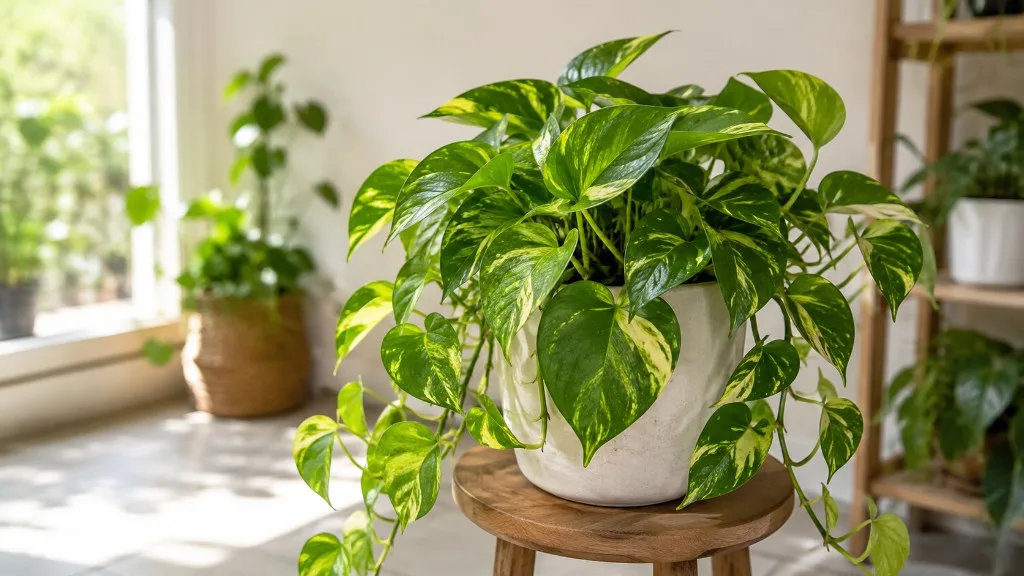
Pothos (Epipremnum aureum)—also sold as devil’s ivy or golden pothos—is the archetypal cat-risk houseplant. It survives neglect, trails beautifully, and lands on low shelves exactly where cats walk. The ASPCA lists it toxic to cats; Pet Poison Helpline groups it with other oxalate aroids that cause immediate oral irritation.
The main mistake is assuming a hanging basket solves the problem. Cats bat trailing stems, and fallen leaves on the floor still get chewed. Gifted cuttings in water glasses are equally dangerous.
Remove or relocate: Entirely out of the home is safest. If a household member insists on keeping it, a closed room with no cat access is the minimum bar—not a high hook in the living room.
Useful references:
Philodendron
Exposure risk: High—heart-leaf and Brasil varieties trail from shelves and climb moss poles.
ASPCA cat status: Toxic (ASPCA philodendron listing)
Compound: Insoluble calcium oxalates
Typical signs: Drooling, oral swelling, vomiting, difficulty swallowing
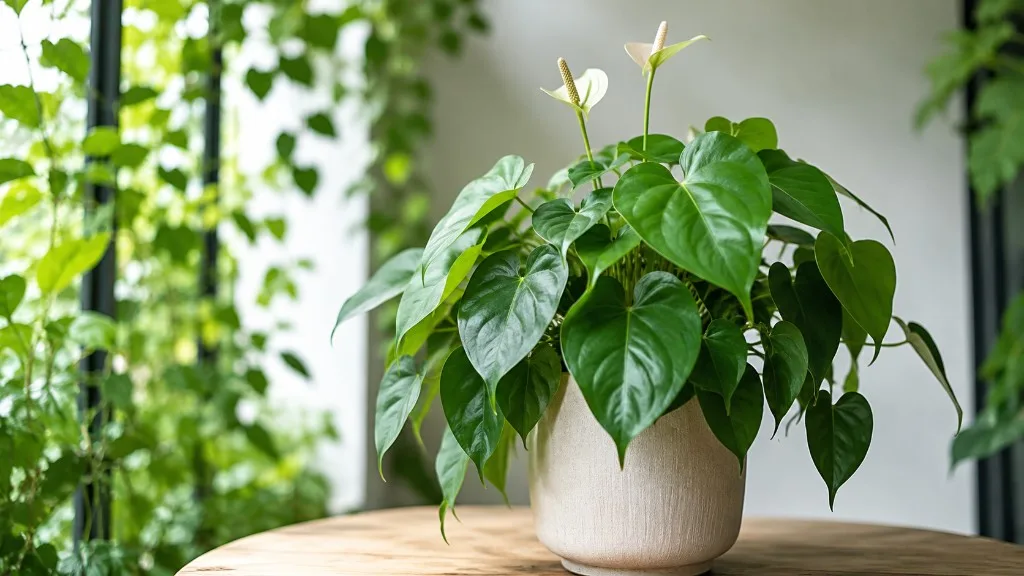
Philodendron (Philodendron spp.) shares the same oxalate mechanism as pothos. Cat owners often own both because they look similar and care alike. That doubles exposure risk in one room.
Verify you are not confusing philodendron with peperomia—similar leaf shapes, opposite safety profiles. Peperomia is ASPCA non-toxic; philodendron is not.
Remove or relocate: Treat like pothos. No shared cat spaces.
Useful references:
Peace Lily
Exposure risk: High—compact floor plant, often placed beside furniture cats rub against.
ASPCA cat status: Toxic (ASPCA peace lily listing)
Compound: Insoluble calcium oxalates
Typical signs: Oral irritation, drooling, vomiting; rarely airway swelling with large ingestion
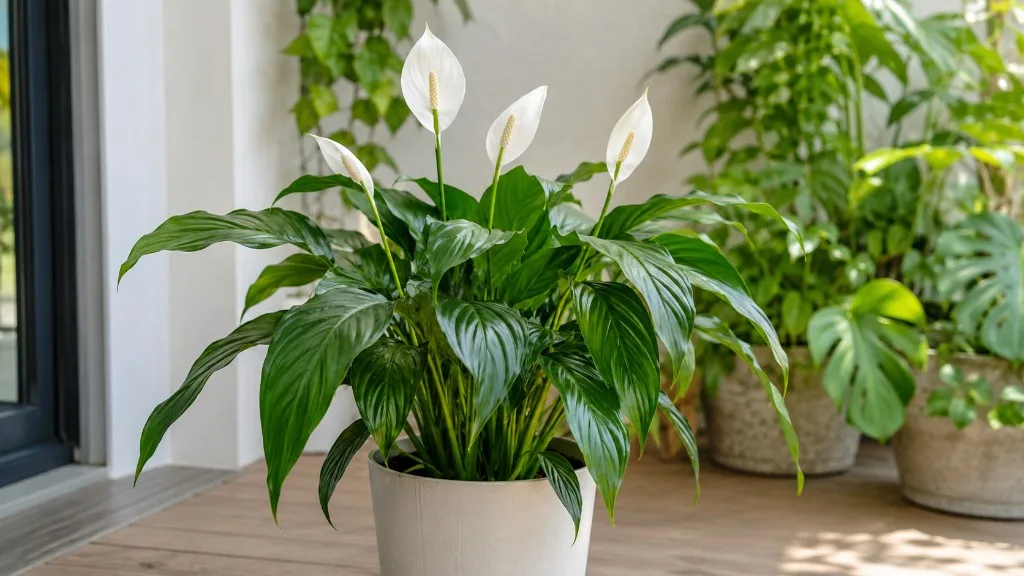
Peace lily (Spathiphyllum spp.) is not a true lily (Liliaceae)—but the ASPCA still classifies it toxic to cats. Its white spathe flowers and forgiving care make it a living-room default, which puts it directly in cat traffic zones.
Do not confuse with parlor palm or cast iron plant for low-light corners—both are ASPCA non-toxic alternatives with similar “green filler” roles.
Remove or relocate: Replace with parlor palm or cast iron plant in the same spot rather than moving peace lily higher.
Useful references:
Dieffenbachia
Exposure risk: Medium to high—large leaves invite batting; sap is irritating.
ASPCA cat status: Toxic (ASPCA dieffenbachia listing)
Compound: Insoluble calcium oxalates; also called dumb cane
Typical signs: Intense oral pain, drooling, swelling; severe cases can affect breathing
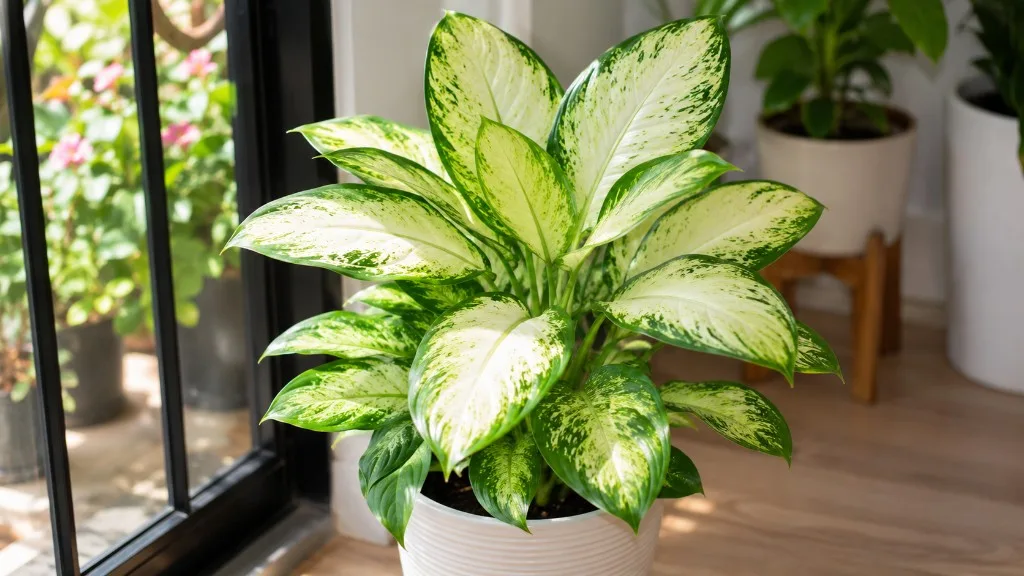
Dieffenbachia (Dieffenbachia spp.)—dumb cane—carries some of the strongest oral irritation in the aroid group. Cats that bite through a leaf may paw at their mouths and refuse food for hours. The ASPCA listing is unambiguous: toxic to cats.
Human caregivers should also avoid skin contact with fresh sap when pruning—it can irritate skin and eyes.
Remove or relocate: Not suitable for any cat-accessible room. Cast iron plant offers large upright foliage without the oxalate load.
Useful references:
ZZ Plant
Exposure risk: Medium—often on floor beside sofas where cats nap.
ASPCA cat status: Toxic (ASPCA ZZ plant listing)
Compound: Insoluble calcium oxalates in all parts
Typical signs: Oral irritation, vomiting, diarrhea
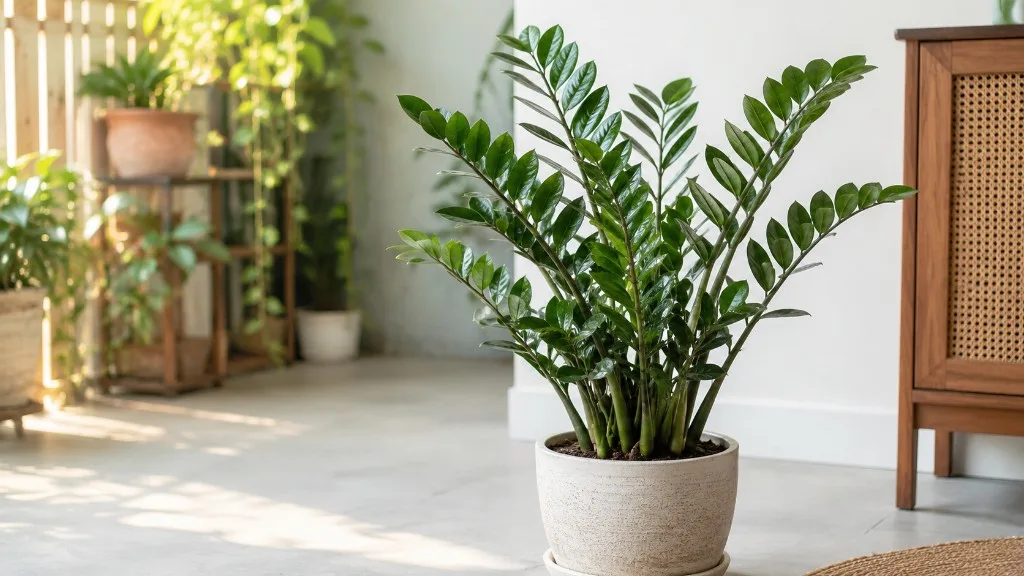
ZZ plant (Zamioculcas zamiifolia) is marketed as indestructible—and cat owners often place indestructible plants where cats can reach them. The ASPCA lists ZZ plant toxic to cats despite its reputation as an office plant.
It tolerates low light like cast iron plant, which is the safer swap for dim corners.
Remove or relocate: Swap for cast iron plant in low-light spots; do not rely on bitterness to deter cats.
Useful references:
Sago Palm
Exposure risk: Medium—often small enough for tables; severity is extreme.
ASPCA cat status: Toxic (ASPCA sago palm listing)
Compound: Cycasin and related toxins in all parts—seeds most concentrated
Typical signs: Vomiting, diarrhea, lethargy, liver failure, seizures, death
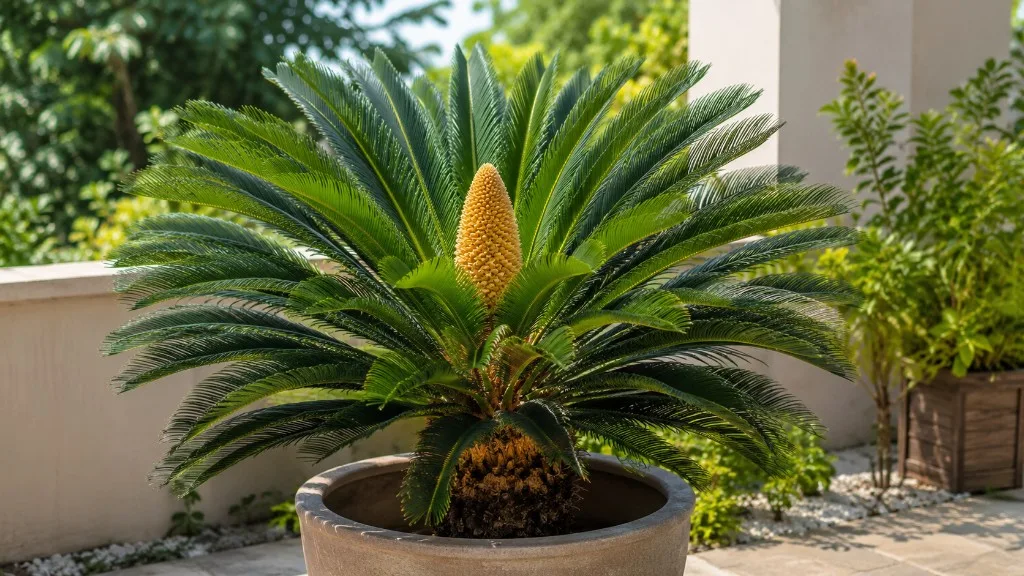
Sago palm (Cycas revoluta) is the most dangerous plant on this list. The ASPCA and Pet Poison Helpline both emphasize that ingestion of any part—especially seeds—can cause severe liver damage in cats. Unlike oxalate aroids, this is not a “wait and see if drooling stops” situation.
Many owners do not realize sago palm is not a true palm. It appears in bonsai sections and minimalist interiors at a scale that feels harmless.
Remove or relocate: Remove from the home entirely if cats are present. No placement is safe enough.
Useful references:
Dracaena
Exposure risk: Medium—tall corn-plant forms on floor beside windows.
ASPCA cat status: Toxic (ASPCA dracaena listing)
Compound: Saponins and other compounds
Typical signs: Vomiting (sometimes with blood), depression, anorexia, dilated pupils in cats
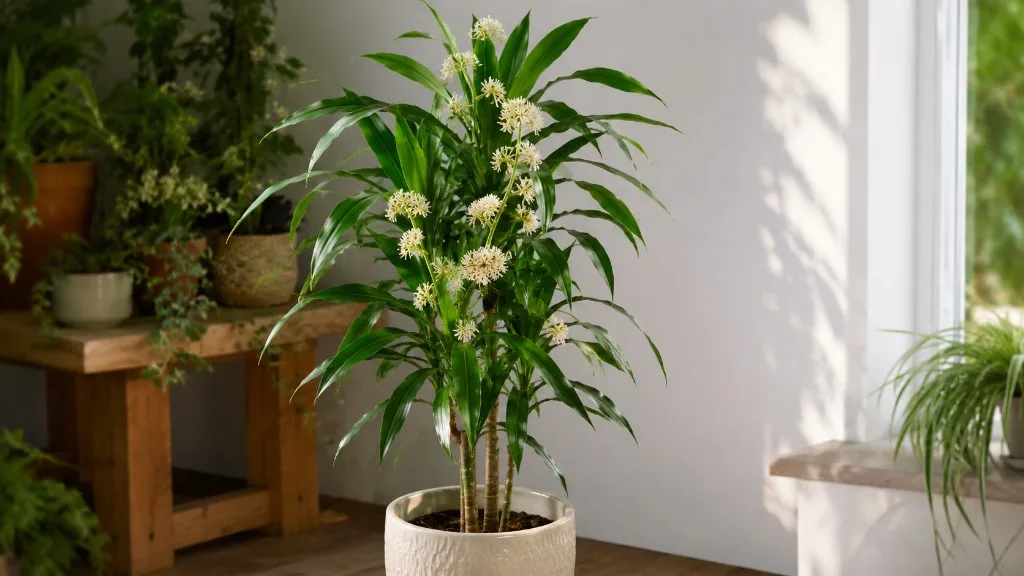
Dracaena (Dracaena spp.)—corn plant, dragon tree—is a staple tall indoor specimen. The ASPCA lists it toxic to cats. It lacks the instant mouth-pain signal of oxalate plants, so cats may swallow more leaf material before owners notice.
For vertical greenery, areca palm and parlor palm are ASPCA non-toxic alternatives—verify the nursery tag says Dypsis or Chamaedorea, not Dracaena.
Remove or relocate: Replace tall dracaena with areca or parlor palm rather than moving dracaena to a “higher” shelf cats still reach.
Useful references:
English Ivy
Exposure risk: High—trailing from sills and baskets at perfect cat height.
ASPCA cat status: Toxic (ASPCA English ivy listing)
Compound: Triterpenoid saponins (foliage and berries)
Typical signs: Drooling, vomiting, abdominal pain, diarrhea
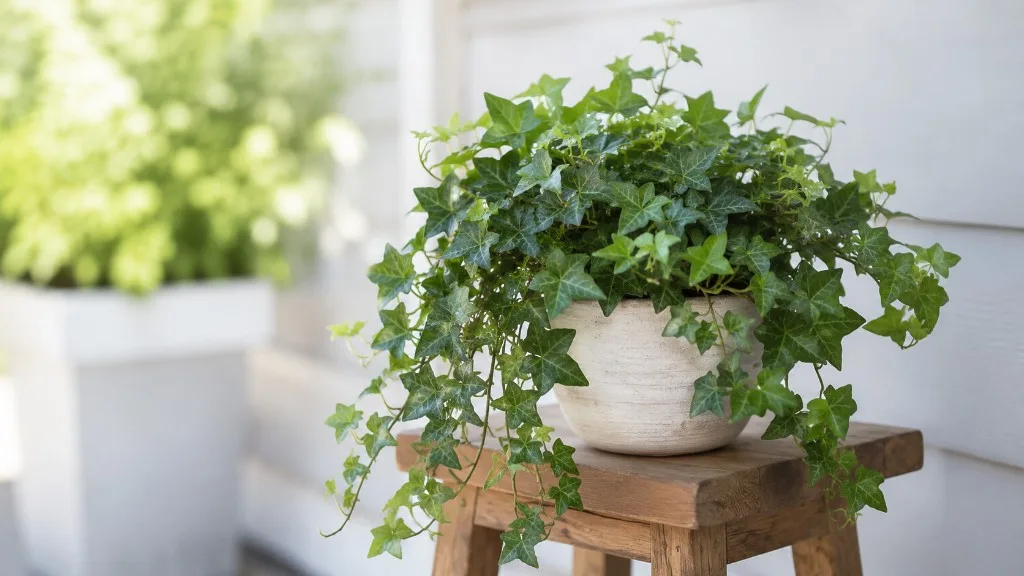
English ivy (Hedera helix) trails from windowsills and outdoor-to-indoor transitions—exactly where cats sunbathe and chew grass-like stems. The ASPCA lists it toxic to cats. Do not confuse with Boston fern, which offers similar soft trailing texture without the saponin load.
Remove or relocate: Especially risky on windowsills and low baskets. Boston fern or spider plant are safer trailing choices—both ASPCA non-toxic to cats.
Useful references:
Common Mistakes Cat Owners Make
Keeping toxic plants “out of reach.” Cats climb. Removal beats shelf height.
Assuming oxalate plants are mild enough to keep. Oral pain is traumatic; repeated exposure stresses cats and owners.
Confusing look-alike safe plants. Peperomia vs philodendron, parlor palm vs sago palm—these naming traps cause preventable exposures.
Ignoring water-propagated cuttings. A pothos stem in a kitchen glass is still toxic.
Waiting too long with sago palm. Any suspected ingestion warrants immediate veterinary or poison-control contact.
Conclusion
The eight plants on this page—pothos, philodendron, peace lily, dieffenbachia, ZZ plant, sago palm, dracaena, and English ivy—account for a large share of preventable cat plant exposures because they are common, reachable, and verified toxic by the ASPCA. Remove or isolate them before debating rare species.
Replace with verified options from Indoor Plants Safe for Cats. If your cat chews any plant on this list, save a sample and call your veterinarian or ASPCA Animal Poison Control at 888-426-4435. Sago palm ingestion is always urgent.