How to Grow Cinnamon Basil from Seed to Summer Harvest
Grow cinnamon basil from seed or transplant with warm-weather timing, container guidance, pruning cuts, harvest cues, and ways to use its leaves and flowers.
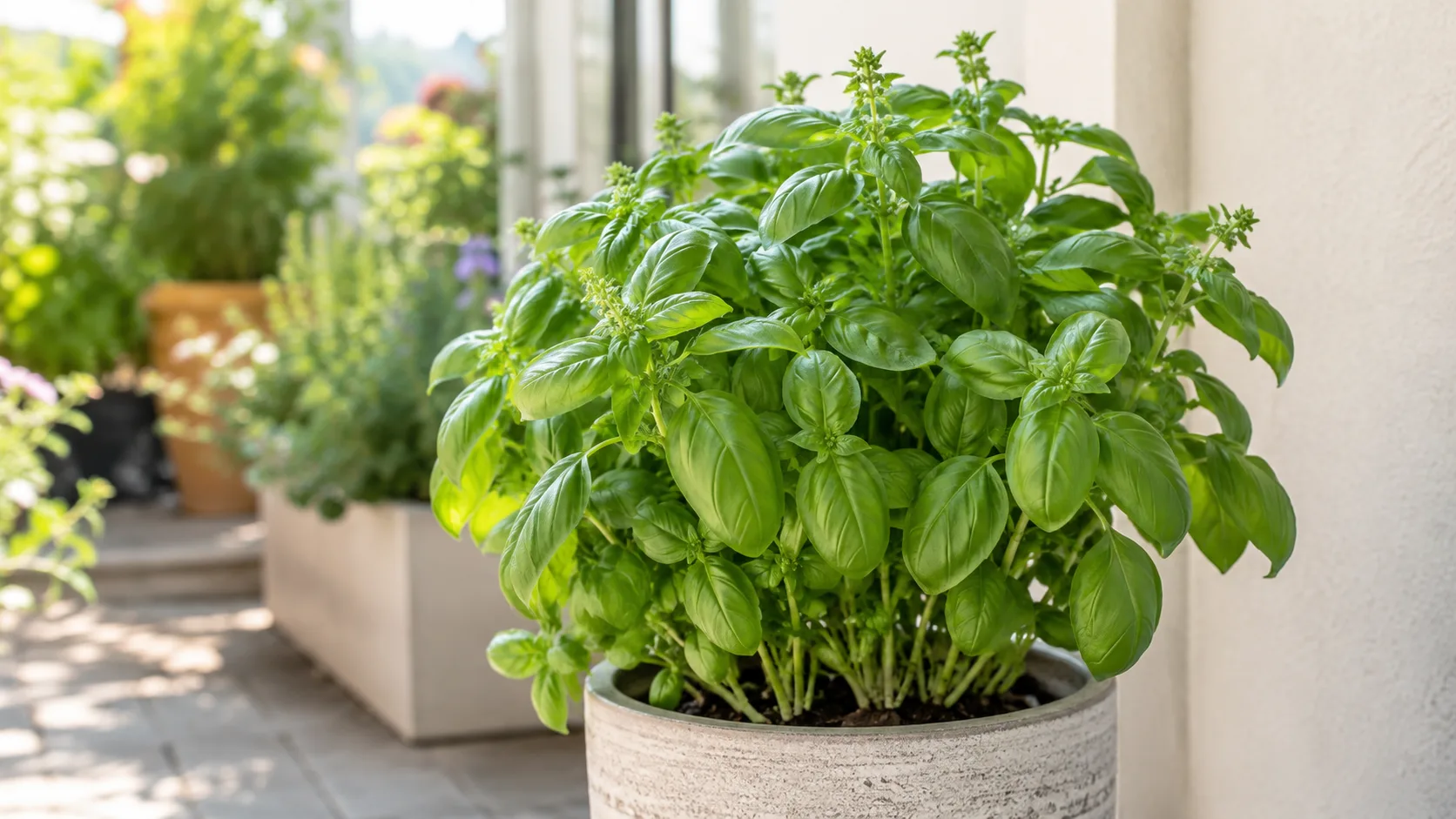
Cinnamon basil is a warm-season sweet basil cultivar grown for aromatic leaves, reddish-purple stems and veins, and pink-purple summer flower spikes. Give it a warm, sunny start, keep the root zone evenly moist rather than soggy, and decide early whether you want a long leafy harvest or a plant that can flower for pollinators and seed. The cultivar’s spicy aroma makes it distinctive, but its basic growing needs are those of tender basil.
The most reliable plan is to start seeds indoors while spring is still cool, then move young plants outside after frost risk has passed and nights are consistently mild. In a hot climate, a little afternoon shade can protect the leaves; in a short-season climate, a pot gives you more control over warmth and shelter. Either way, a regular harvest of stem tips is more useful than a rigid watering or feeding calendar.
What cinnamon basil is and why its name can confuse gardeners
Cinnamon basil is commonly sold as Ocimum basilicum ‘Cinnamon,’ a cultivar of sweet basil in the mint family, Lamiaceae. It is not a cinnamon tree, and its leaves do not substitute for the dried bark spice. The name points to a warm, spicy aroma; the Royal Horticultural Society describes the cultivar as having dark green foliage with reddish-purple veins and pink-purple summer flowers, while Jekka’s herb profile notes its dark stems and aromatic leaves. RHS cultivar profile Jekka’s Cinnamon Basil profile
Plant size varies by seed line and conditions: RHS lists about 10 to 50 centimeters, while Jekka gives 45 centimeters tall by 30 centimeters wide. Treat those figures as estimates; warmth, light, pruning, and pot volume all affect the finished plant. Leave room for airflow and harvest access rather than spacing by a catalog minimum.
Cinnamon basil is usually treated as a tender annual where winters are cool. Some botanical profiles call basil perennial in frost-free climates, but brief survival indoors does not make it a dependable year-round herb. Plan to sow or buy a new plant next warm season; indoor overwintering is an experiment, not a reliable supply plan.
Cinnamon basil vs. Thai basil: scent, leaves, and use
The names can overlap in casual conversation, but cinnamon basil and Thai basil are different choices for the kitchen. Cinnamon basil is the ‘Cinnamon’ cultivar of sweet basil and is prized for its warm, spicy aroma.
Thai basil is usually selected for a more anise-like or licorice-like flavor, so sniff and taste a leaf before you buy if the packet label is vague. Jekka’s herb guide distinguishes cinnamon basil’s spicy character from Thai basil’s anise scent, while RHS lists cinnamon and Thai basil separately among its varieties. Jekka’s basil guide RHS basil-growing guide
Look for green leaves with reddish-purple veining and stems on a cinnamon basil plant, rather than relying on a single color cue. Thai basil often has more conspicuously purple stems and flower spikes, but appearance varies among seed strains and light conditions.
The more dependable distinction is the aroma when you gently rub a leaf between clean fingers. Do not buy a plant based on “Mexican spice basil” alone; compare the botanical cultivar name and description on the label.
In recipes, use cinnamon basil where a warm, clove-like or cinnamon-adjacent note would complement fruit, tea, marinades, stir-fries, or vinegar. It will not make every dish taste like a cinnamon roll, and its intensity varies.
Add a small amount near the end of cooking, taste, and increase gradually. If you need a classic pesto flavor, sweet basil remains the safer starting point; cinnamon basil can make a more aromatic variation.
Choose seed, nursery plant, or supermarket basil
Seeds give you the best chance of finding the named cultivar. Read the full packet label for Ocimum basilicum ‘Cinnamon,’ sowing instructions, and the lot or packed-for date, and keep the packet if you may want to repeat a successful plant.
Cinnamon basil is a named cultivar, so seed saved from nearby basil varieties may not come true if they cross-pollinate. If true-to-type plants matter, buy fresh seed from a supplier that identifies the cultivar or take a cutting from a plant whose aroma and appearance you like.
A young nursery plant is a practical shortcut when the growing season is short. Inspect it for firm stems, evenly colored leaves, fresh growing tips, and no webbing, sticky residue, or dark patches on leaf undersides.
Avoid a pot packed with dozens of thin seedlings unless you are willing to divide it promptly: crowded basil competes for light and water, and foliage that stays wet in a dense clump is harder to keep healthy. The RHS notes that supermarket pots are often crowded and may need prompt division and repotting if you want to grow them on rather than harvest them quickly. RHS basil-growing guide
For a supermarket pot, do not assume the decorative container holds one plant. Tip out the root mass and look for separable seedlings; divide only where roots can part without tearing most of them. If the root ball collapses, stems snap, or plants are already flowering, harvest usable leaves and start a less crowded pot from seed instead.
When to sow or move plants outside
Base planting time on the night forecast and soil warmth, not simply the calendar. Basil is a warm-season crop; UC IPM says basil can be damaged when temperatures fall below 40°F, while RHS advises waiting until nights consistently stay above 10°C (50°F) before outdoor sowing. For transplants, use the more conservative local cue: wait until frost danger is past and nights have settled above roughly 50°F, especially if the plant will sit in an exposed pot. UC IPM basil cultural tips RHS basil-growing guide
In a mild region, you may sow outdoors once the soil is warm and you can keep the seedbed evenly moist. In a cooler climate, direct-sown seedlings may emerge late and spend much of the short summer getting established, so starting indoors usually buys useful growing time. If an unexpected cold night is forecast after planting, move a portable pot under cover or use a breathable garden cover; do not leave tender basil exposed and expect it to recover from frost.
Start seeds indoors for an earlier crop
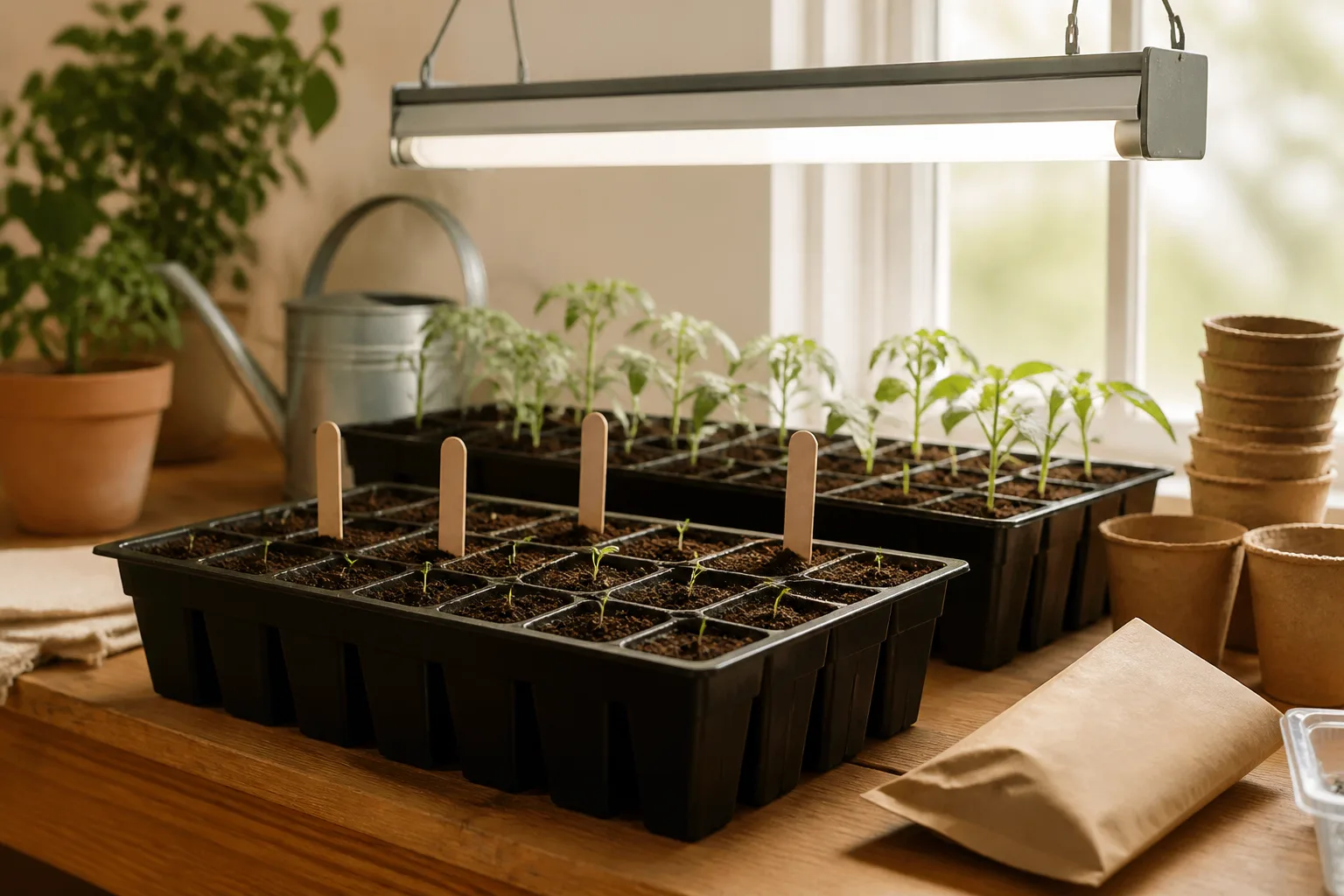
Sow cinnamon basil indoors about four to six weeks before your expected safe outdoor planting window. Use clean cells or small pots with drainage and a fine seed-starting mix.
The Royal Horticultural Society recommends sowing basil on the surface and maintaining about 20°C (68°F) for germination; Jekka’s herb profile similarly calls for gentle bottom heat around 18°C (64°F). Follow the packet if it specifies a different depth, since seed lots and instructions vary. RHS basil-growing guide Jekka’s Cinnamon Basil profile
Keep the mix evenly damp, not waterlogged. A light cover can slow evaporation before emergence, but remove it once seedlings appear so stagnant air does not linger around the stems. Move the tray to the brightest window you have or use a grow light close enough to prevent stretching.
Thin or prick out seedlings when they have several true leaves; handle a seedling by a leaf instead of pinching its fragile stem, then water gently to settle the roots. Gardeners’ World’s basil-sowing instructions also emphasize light seed covering and gentle watering so the seed is not washed out of position. BBC Gardeners’ World Magazine
Harden plants off over about a week: start with a sheltered hour or two outdoors, then increase exposure gradually while bringing them in if nights turn cold. A seedling raised in a warm room can scorch or wilt when suddenly placed in full sun and wind. Transplant only after the root ball holds together and the plant has several sets of healthy leaves; a tiny seedling is easier to stress than a slightly older one.
Give it sun without trapping it in stagnant air
Choose a warm site with at least six hours of direct sun if your summer is moderate. UC IPM describes basil as growing in full sun to partial shade, with four to six hours as a minimum; in very hot regions, light afternoon shade can reduce leaf scorch and water stress. Bright shade all day is not an equivalent substitute for sun: stems may stretch, the plant may stay thin, and leaves take longer to dry after rain or watering. UC IPM basil profile UC IPM basil cultural tips
Airflow matters as much as exposure when summers are humid. Do not squeeze the plant between a wall and a dense tomato canopy, or place several basil stems so tightly together that the center stays damp.
Give leaves room to dry after rain and water at the soil line in the morning when possible. Those small choices reduce leaf wetness, which helps make conditions less favorable for basil downy mildew.
A sunny windowsill can keep a plant growing for a time, but indoor basil needs strong light and airflow. A plant leaning toward the glass or making long gaps between leaf pairs needs more light, not fertilizer. Rotate the pot and add a grow light if natural daylight is weak.
Choose a bed or container that drains
Cinnamon basil prefers soil that stays moist but drains promptly. UC IPM gives a soil pH range of 6.0 to 6.5 for basil and recommends well-amended soil; RHS lists loam and sand for the named cultivar and describes its moisture requirement as well-drained.
A home gardener does not need to chase a precise pH reading if the bed already grows herbs well. The useful check is practical: after watering or rain, the root zone should not remain waterlogged for days. UC IPM basil cultural tips RHS cultivar profile
Before planting in a bed, loosen compacted soil and mix in a modest amount of finished compost if the ground is poor or sandy. Do not dig a rich pocket into heavy clay and assume it will drain; water can collect at the boundary between amended and native soil.
If a spot routinely puddles, use a raised bed or a pot instead. Avoid planting where lawn sprinklers wet the leaves every evening or where runoff flows into the basil row.
For one cinnamon basil plant, choose a pot at least 8 inches wide and deep, with open drainage holes and fresh potting mix. A wider pot buffers moisture and gives the root system more room than a tiny decorative container. In a larger planter, space individual plants about 12 inches apart as a starting point; use more room for a vigorous cultivar or a humid site.
Never place a drainage pot in a saucer that remains full of water. Check the mix before watering because small containers can dry between checks much faster than garden beds.
Water to keep roots evenly moist
Water when the top layer of soil begins to dry and the root zone is still only slightly moist. Push a finger about an inch into the mix; if it feels dry there, water slowly until the whole root ball is damp and excess drains from the bottom.
If it still feels cool and wet, wait and check again later. This soil test works better than a fixed schedule because sun, pot size, wind, humidity, and rainfall change how quickly basil uses water.
A newly transplanted plant needs consistent moisture while roots establish. Once it is growing strongly, a deep watering followed by a short interval for surface drying is usually better than small splashes several times a day.
In a heat wave, a container may need attention daily, while a bed with mulch and moderate weather may need much less. UC IPM advises regular watering and keeping basil soil moist; RHS recommends watering during dry spells and being especially attentive to plants grown in containers or greenhouses. UC IPM basil cultural tips RHS basil-growing guide
Wilting is not always a signal to add water. If the mix is dry, water at the base and recheck later.
If soil is wet and the plant stays limp or lower leaves yellow, pause watering and inspect for brown, mushy roots. In hot midday sun, basil may droop temporarily despite adequate moisture; compare it again in the cool morning before increasing water.
Feed only when the plant needs it
Basil growing in a reasonably fertile bed often needs no extra fertilizer during a short summer season. UC IPM notes that fertilizer or amendments may be unnecessary in well-amended soil, and RHS likewise says ground-grown basil generally does not need feeding. If the plant is pale and slow despite enough warmth, light, and water, first check whether roots are cramped or soggy before assuming it is hungry. UC IPM basil cultural tips RHS basil-growing guide
Container plants have a smaller nutrient reserve. If a healthy plant in fresh mix loses vigor after repeated harvests, use a balanced liquid fertilizer at the label rate. If growth turns soft and leggy or flowers race ahead of leaves, improve light and spacing before adding feed; skip bloom-boosting formulas when you want foliage.
Decide whether to grow for leaves or flowers
Cinnamon basil can serve as a kitchen herb, fragrant ornamental, and seasonal flower source for pollinators. These uses overlap but compete at the shoot tips: pinching keeps a plant leafy, while open flower spikes reduce young growth on those stems. You can grow one pot for picking and let another flower, or leave a few spikes on a larger plant.
Pinch for a branching, leafy plant
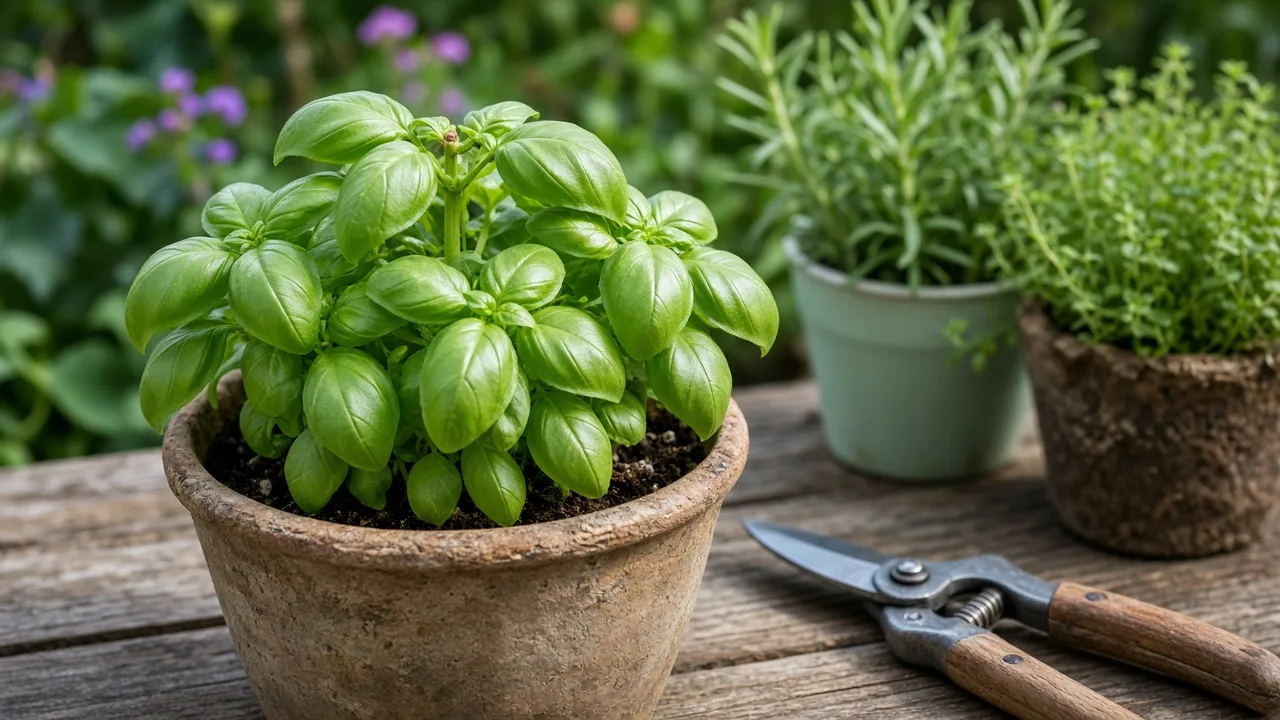
Wait until a young plant is established and has several pairs of true leaves. Follow a stem to a pair of leaves, then pinch or snip the growing tip just above that node.
The two buds beside the remaining leaves can grow into new branches, giving the plant a broader shape and more harvest points. NC State Extension recommends pinching long stem tips and flower buds on basil to encourage branching; Gardeners’ World describes cutting basil tips just above a pair of leaves so new growth emerges there. NC State Extension basil profile BBC Gardeners’ World herb-harvesting guide
Do not cut every stem back to bare wood or remove more than about one-third of a plant’s leafy growth at once. A short, recently transplanted, wilted, or pest-damaged plant needs time to replace leaves before you take another heavy harvest.
Once buds form, either snip each flower spike just above a leaf pair or harvest the entire tender stem tip. Keep the cut clean and above the node; a ragged stub below the node may dry without making a useful branch.
Keep blooms when ornament and pollinators matter
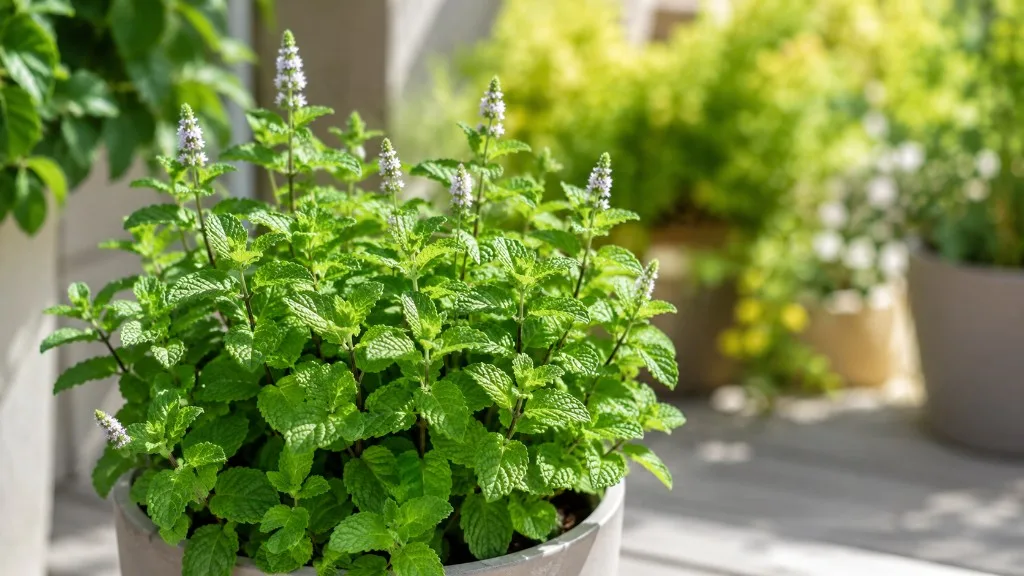
If you want the small pink-purple flowers, leave selected stems alone once their spikes form. Basil flowers provide nectar that attracts bees, and the RHS notes that basil blooms are enjoyed by bees; Jekka’s Cinnamon Basil profile also lists pollinators among its garden uses. A flowering plant still has edible leaves, though the youngest leaves are usually the easiest to use fresh and tender. RHS basil-growing guide Jekka’s Cinnamon Basil profile
A flower spike is not a disease or a sign that you have failed. If you want flowers for a short display but more foliage afterward, let the first spikes open, then cut them back after blooming and see whether the plant has enough warmth and time to branch again. Late in the season, seed formation may be the more useful goal; do not keep stripping every spike if you want to save seed or feed pollinators.
Harvest from stems, not just single leaves
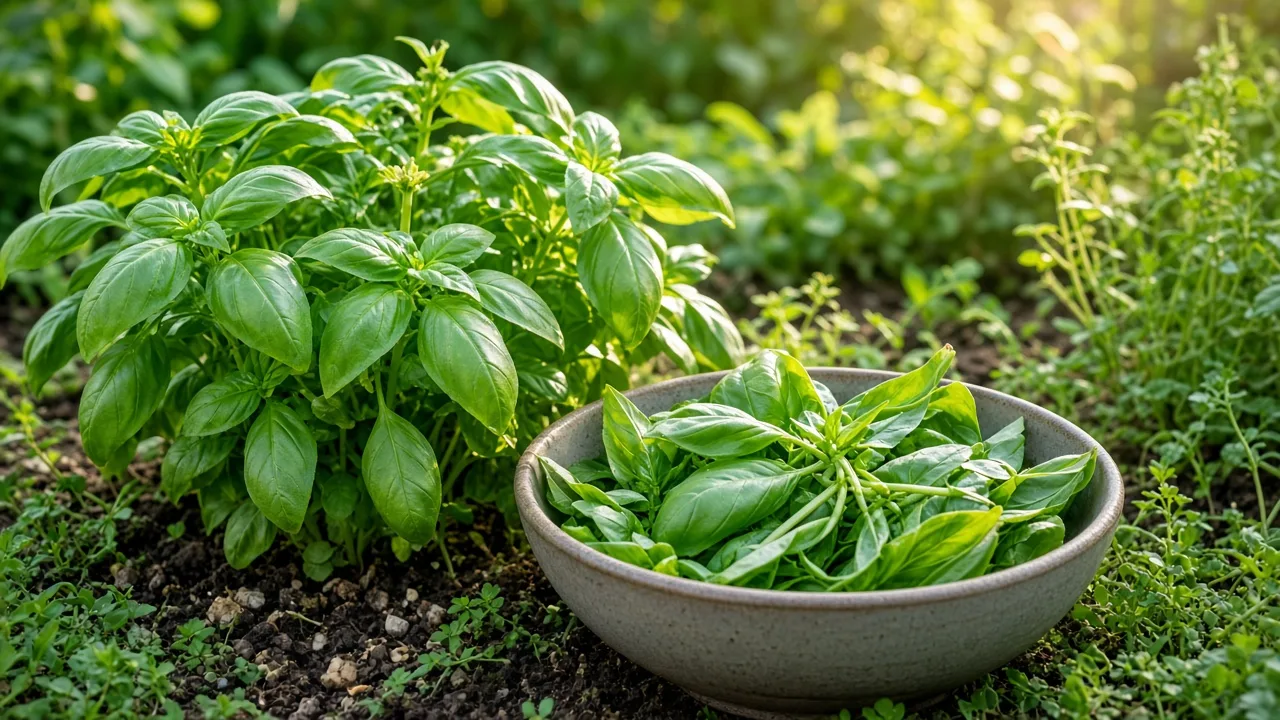
Begin light picking when the plant is established, branching, and has enough foliage to spare. For ongoing harvest, clip the tender tip of a stem just above a healthy pair of leaves rather than repeatedly stripping large leaves from the bottom.
That cut supplies leaves for the kitchen and leaves the node in place to branch. The Royal Horticultural Society and Jekka’s guidance both recommend regular tip harvests to keep basil productive; Jekka advises harvesting before flowering when the strongest leaf flavor is the priority. RHS basil-growing guide Jekka’s Cinnamon Basil profile
Harvest in the morning after dew dries and before afternoon heat. Use clean snips and remove no more than one-third of the leafy growth at once.
For a larger amount, pick from several stems rather than cutting one to its base. Pause heavy picking after transplanting, heat stress, or a major pruning cut.
If flower buds have already opened, keep harvesting healthy leaves. Older leaves may be tougher or stronger in flavor, but flowering does not make basil inedible.
Taste one leaf before using a large quantity, especially if you have not cooked with this cultivar before. When a plant has become sparse, woody at the base, or infected, save any clean tender tips and replace it rather than repeatedly cutting it down to exhausted stems.
Use and store leaves before their aroma fades
Cinnamon basil is most compelling when its aroma can stay distinct. Tear or slice leaves shortly before use, or add them near the end of a cooked dish so heat warms their fragrance without flattening it for a long simmer.
Start with less than you would use of mild sweet basil, taste, and adjust; cultivar strength and personal perception vary. The leaves work naturally in fruit salads, herbal tea, marinades, infused vinegar, quick sauces, and stir-fries where a spicy note can complement rather than dominate.
Use stems soon after harvest. For brief storage, keep them cool rather than in a very cold refrigerator; UC IPM gives 50–68°F as a short-term storage range.
Freeze chopped leaves in small portions or ice cubes for cooked dishes. Dried leaves are convenient but lose some of the fresh aroma that makes cinnamon basil distinctive. UC IPM basil cultural tips
Use flowers sparingly as a garnish; their flavor may be more assertive than the leaves. Rinse harvested material gently and dry it before storage. For a first taste, add a few leaves or petals to a familiar dish before building a recipe around them.
Companion planting: useful neighbors, no pest-control promise
Cinnamon basil can share a sunny bed with tomatoes, peppers, lettuce, or other warm-season crops if each plant gets enough light and room for air movement. As the basil grows, watch the neighbor’s mature size: a tomato that shades it from afternoon light or crowds its leaves can undermine the conditions basil needs. A pot beside a vegetable bed gives you the same convenient picking access without making a companion-planting claim.
The evidence is narrower than the familiar “basil repels pests” slogan. Penn State Extension summarizes research showing that basil near tomatoes can mask them from thrips and reduce hornworm egg-laying, but that does not establish the same effect for cinnamon basil specifically. Treat it as one possible partner in a diverse bed, not a pesticide; scout crops and respond to the pest you actually find. Penn State Extension: Herbs Make Good Plant Partners and Companions
Put basil where it gets light and airflow, and choose neighbors that share those conditions. Leave access to the base for watering and inspection; diagnose pest problems on each crop rather than assuming basil prevented them.
Troubleshoot yellow leaves, mildew, and pests
Start with the pattern, not the color alone. One older lower leaf yellowing after a transplant is different from rapid yellowing across the whole plant.
Check soil moisture, drainage, recent cold nights, pot crowding, and leaf undersides before changing fertilizer or spraying. Basil can be stressed by cold or waterlogged roots; aphids and slugs also occur on basil, and the Royal Horticultural Society lists aphids, slugs, snails, and leafhoppers among possible pests of cinnamon basil. RHS cultivar profile NC State Extension basil profile
If you see clusters of small insects or sticky residue, inspect the growing tips and the undersides of new leaves for aphids. A few insects can often be knocked off with a controlled stream of water; then recheck the plant instead of reaching immediately for a pesticide.
For holes in leaves, look for slugs or chewing insects at dusk and beneath nearby debris. Remove heavily damaged material, keep the bed clear enough to inspect, and follow any product label exactly if you later choose a pesticide labeled for edible basil.
Check leaf undersides for downy mildew
Basil downy mildew can look like a nutrition problem at first: leaves yellow, then brown, while dark gray-purple growth appears on the underside. NC State Extension identifies high humidity and extended leaf moisture as conditions that favor infection and notes that ‘Cinnamon’ showed less severe symptoms than susceptible varieties in one cited study. “Less severe” is not immune; inspect the undersides of leaves, especially after cool, damp weather. NC State Extension: Basil Downy Mildew
Reduce avoidable leaf wetness by watering the soil early in the day, spacing plants for airflow, and avoiding overhead irrigation when possible. If a plant has spreading symptoms and heavy underside growth, remove it from the bed and discard it rather than composting infected foliage in a home pile.
Do not diagnose mildew from yellowing alone; if the pattern is unclear, consult a local extension diagnostic service before applying a treatment. Root rot, by contrast, is more likely when soil remains soggy and roots are dark or mushy.
Save seed and reset the herb bed
To save seed, choose a healthy plant with the scent and appearance you want, then let some flower spikes mature instead of pinching them all. As blooms fade, small seed capsules form along the stalk. Wait until the capsules dry and begin turning brown, then collect them over a paper bag before they shatter.
Label the seed with cultivar name and harvest year, and keep it dry and cool. If other basil cultivars flower nearby, cross-pollination can make the next generation less predictable, so buy fresh cultivar-labeled seed when uniformity matters.
In a cold-winter garden, basil usually finishes when nights cool or frost arrives. Harvest healthy leaves, remove diseased debris, and avoid repeating basil in a wet, disease-prone patch. A vigorous plant can be moved indoors in a warm region, but expect a smaller harvest and inspect for pests.
Conclusion: keep the plant warm and harvest with a purpose
Cinnamon basil is easiest to grow when you treat it as tender basil with a distinctive aroma: start it in warmth, give it sun and drainage, keep moisture steady, and cut stems just above leaf nodes. Use buds and regular tip harvests to keep a plant leafy, or leave selected spikes for flowers, pollinators, and seed. The right balance depends on what you want to pick, not on a rule that every basil plant must be kept from flowering.
If growth stalls, first check for chilly nights, crowding, dry or waterlogged roots, and leaves that stay wet overnight. A pot makes conditions easier to adjust; an established bed can support a larger harvest. Learn the cultivar’s scent, take modest cuts, and let your goal guide the next step.