How Much to Plant Per Person in a Garden?
Find out how much to plant per person for fresh meals, preserving, or a year-round pantry, with practical crop counts and a simple way to tailor them.
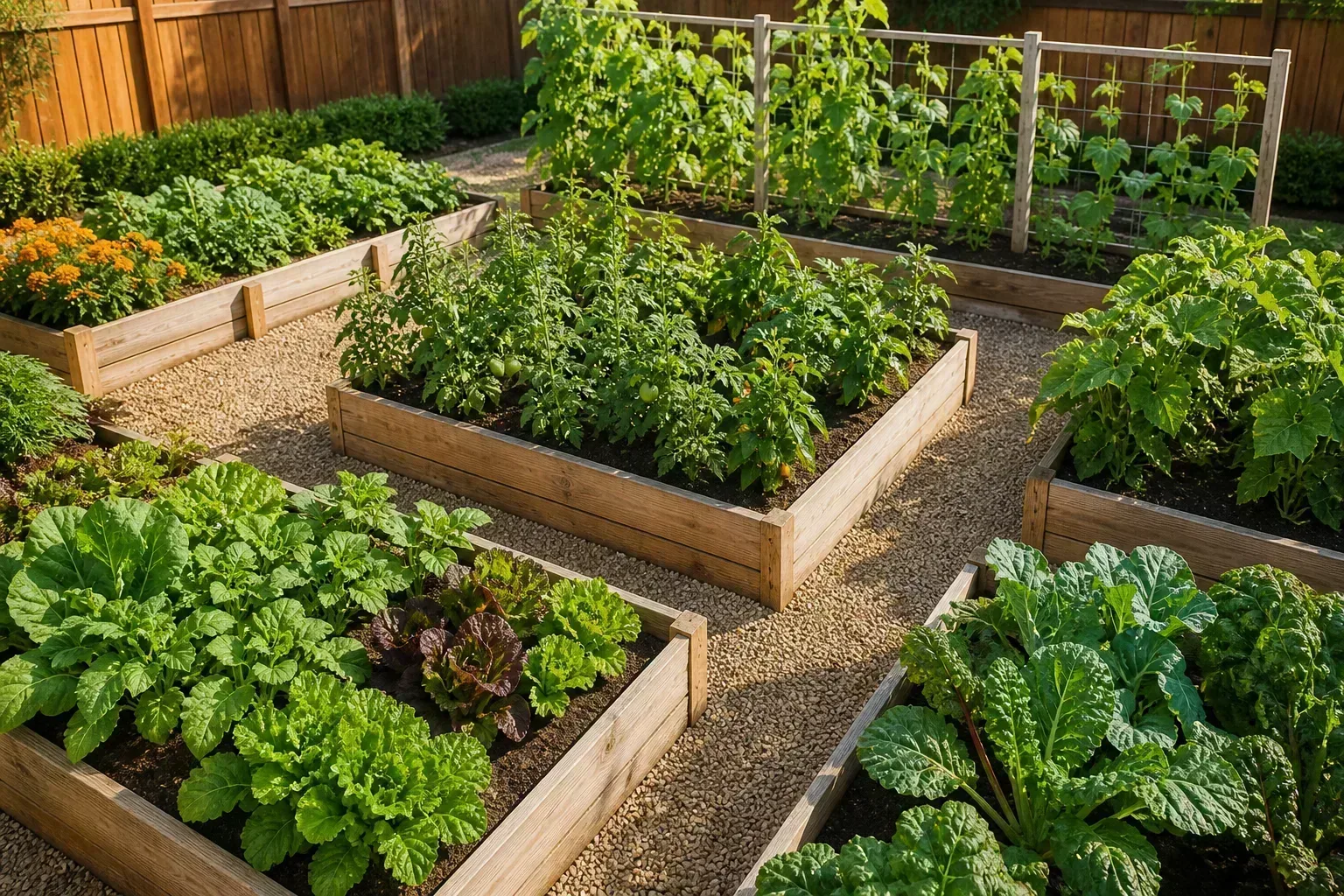
For a garden that supplies fresh vegetables during the main growing season, a useful first draft for one adult is one or two tomato plants, one cucumber vine, one or two peppers, six to ten lettuce plants or a small patch of cut-and-come-again greens, 20 to 30 carrots, and one summer squash plant for every two or three people. Add beans, peas, and other crops your household actually eats. These are starting amounts for fresh meals, not a guarantee of a particular harvest or a year’s supply of produce.
The number changes sharply when you plan to freeze, can, store, or eat garden vegetables all year. A person who wants salad ingredients and ripe tomatoes in summer needs far less space than someone trying to replace a major share of grocery-store potatoes, onions, beans, and other staples. Start with the food you expect to use, then scale each crop to its likely harvest and the length of your season.
The short answer: start with your harvest goal
There is no single plant count that feeds every person. “One plant per person” can mean a summer’s worth of side dishes, a few ripe tomatoes each week, or a stored crop meant to last until next spring. Those are very different targets, so any useful estimate has to say which one it describes.
For regular fresh eating in a typical home garden, use the crop table below as a conservative first-season plan. It assumes you want vegetables to accompany meals during the harvest season, have a sunny growing area, and will harvest crops on time. It does not assume that every adult likes every vegetable, that every seed becomes a healthy plant, or that the garden will provide all produce for twelve months.
Treat the quantities as plants or harvestable spots after thinning, not as a seed-packet order. Direct-sown crops such as carrots and beets need extra seed because germination is imperfect and seedlings are thinned; one surviving carrot makes one root. By contrast, a well-grown cucumber or tomato can supply repeated harvests, so two plants may produce far more than two servings.
Set the goal before you count plants
Fresh meals and stored food need different plans
A fresh-eating garden is planned around a season: how many meals you want to pick for, how many weeks the crop is likely to produce, and whether you can harvest often. One or two tomato vines can be a sensible start for a person who mainly wants fresh fruit for salads and sandwiches. A household that makes sauce, salsa, or canned tomatoes needs to plan from the weight it wants to process, not from a fresh-eating chart.
Storage crops work differently. Potatoes, onions, dry beans, winter squash, and garlic are often grown in a larger block, harvested within a shorter window, and kept for later. GrowVeg’s food-planning guide gives a useful scale check: its estimates for a person’s annual potato supply span 75 to 200 pounds, or roughly 85 plants in 75 to 100 feet of row. That is a pantry crop target, not a modest summer garden. The same guide lists shorter rows for carrots and tomatoes but gives wide harvest ranges, showing why the target and expected yield matter. (GrowVeg Garden Planner)
Area figures also depend on what “enough food” means. A GrowVeg guide cites about 4,000 square feet of growing area per person for a vegetarian year-round food supply, with additional ground for paths and storage, while a compact kitchen garden may be designed to add fresh ingredients rather than replace staple groceries. That estimate is not a universal rule: diet, climate, crop choices, soil, growing method, and available time all change the space required. Don’t treat one square-foot figure as a promise that a certain bed will feed a household for a year.
Use household habits, not a generic family size
Count the people who actually eat from the garden, then ask what “a serving” means at your table. A household that snacks on cherry tomatoes and makes salads every day can use many more tomatoes and greens than a household that prefers cooked vegetables. A child who eats peas straight from the vine may consume a planting before a single bowl reaches the kitchen.
Use receipts, meal plans, or a short food diary instead of trying to remember the whole year. Note the vegetables you buy most often, the approximate quantity, and the number of weeks you want the garden to supply them. If you routinely throw out salad greens or buy only a few tomatoes, a large planting will not save money or time; it will create a harvest you have to give away or compost.
Fresh-eating vegetable quantities per person
The figures below are a starting point for one adult’s fresh meals over a main growing season. They are practical planning ranges, not universal extension recommendations. For a couple or family, multiply the amounts by the number of regular eaters, then adjust for favorite foods and the way each crop produces. If people in the household rarely eat a vegetable, leave it off the plan.
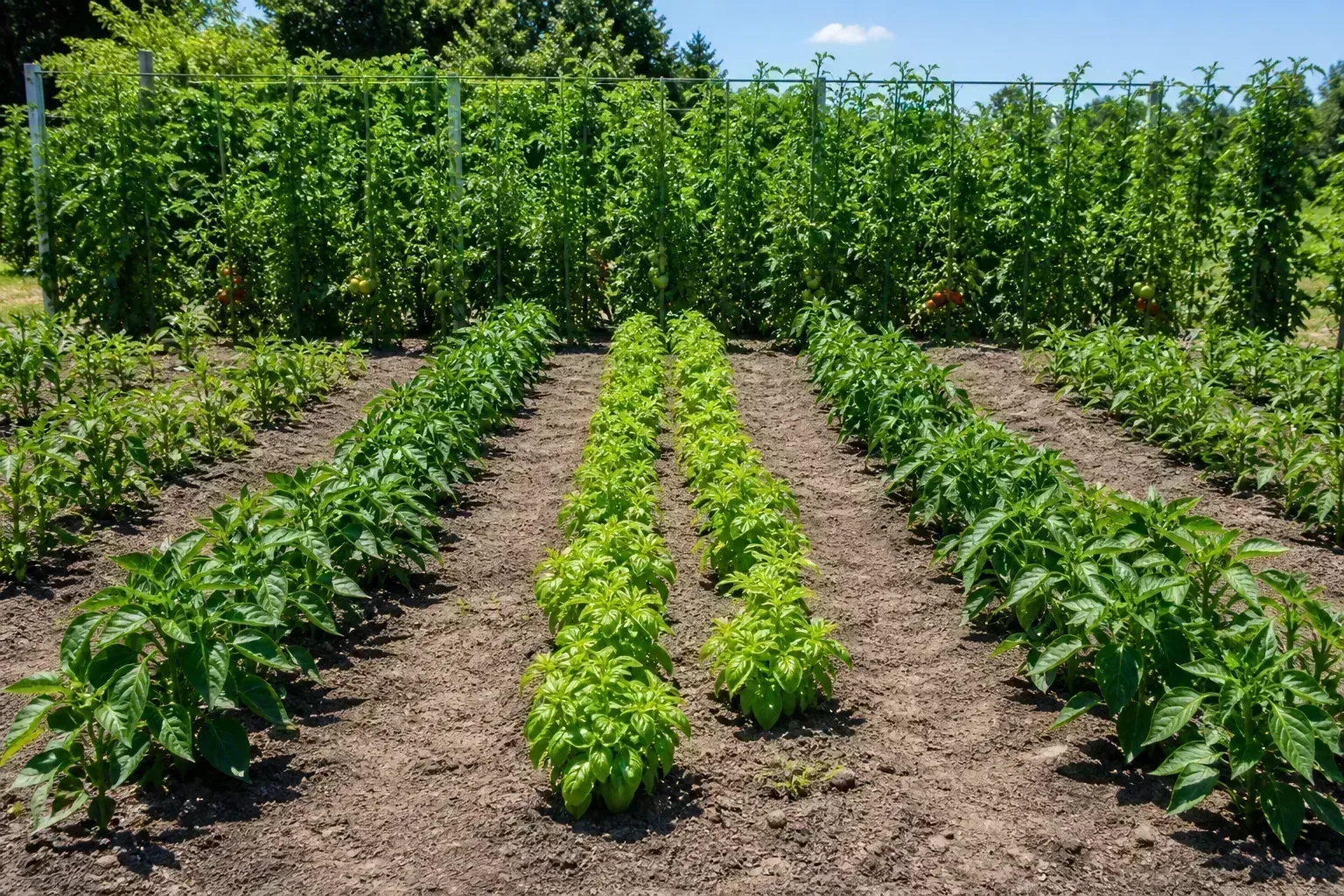
| Crop | Starting amount per person | How to use the estimate |
|---|---|---|
| Slicing tomatoes | 1–2 plants | Start with one for occasional fresh use; add a second for regular salads and sandwiches. Plan extra only if you want to preserve fruit. |
| Cherry tomatoes | 1 plant for 1–2 people | A productive vine can ripen fruit faster than one person can use it; pick often and consider a second variety rather than several identical plants. |
| Cucumbers | 1 vine; 2 for frequent use | Train vining types up a support if space is tight. Add plants for pickling or a cucumber-heavy diet. |
| Peppers | 1–2 plants | Plant more if peppers are a staple or you want a large batch to roast or freeze. |
| Summer squash | 1 plant per 2–3 people | One healthy plant often supplies frequent meals; give sprawling types room or choose a compact variety. |
| Bush beans | 8–12 plants per sowing | Make two or three smaller sowings if you want a longer picking window instead of one large flush. |
| Peas | 6–10 feet of trellised row | Use a longer row for shelling peas or freezing; harvest promptly while pods are tender. |
| Head lettuce | 4–6 plants at a time | Repeat with a new small batch so the heads do not all mature together. |
| Leaf lettuce or spinach | 2–3 square feet | Cut outer leaves or sow a small patch again; heat and day length can shorten the harvest. |
| Kale or collards | 1–2 plants | Pick outer leaves over time. Add more only if cooked greens are a regular meal. |
| Broccoli | 1–2 plants | One main head per plant is a reasonable planning assumption; side shoots may follow, but should not be counted as a second full head. |
| Carrots | 20–30 roots per batch | Sow another short section later if you want roots over a longer period. Thin seedlings to the seed-packet spacing. |
| Beets | 8–12 roots per batch | Eat both roots and young leaves if you like them, then make another small sowing for a later harvest. |
| Potatoes | 5–8 seed pieces for occasional meals | Increase the planting if potatoes are a frequent side dish; a stored annual supply takes considerably more row space. |
| Onions and garlic | 8–12 storage onions and 6–10 garlic cloves | Increase these if you cook with them most days or want a supply that lasts beyond harvest. |
A “plant” is not the same unit for every crop. One tomato vine bears repeatedly, lettuce can be harvested as a whole head or leaf by leaf, carrots are counted as roots, and beans may be measured more usefully by a length of row. For a tiny garden, write the amount in the unit that helps you plan: plants for tomatoes, feet of trellis for peas, square feet for cut greens, and roots or bulbs for storage vegetables.
Fruiting crops and beans
Tomatoes, cucumbers, and peppers occupy space for much of the warm season, but each plant can give several harvests. If you need to make a choice, prioritize the crop that is expensive or especially flavorful when home-grown, or that your household eats often. A trellised cucumber and an indeterminate tomato may use vertical space well, but their leaves still shade nearby crops; do not pack the bed so tightly that air cannot move or fruit becomes difficult to reach.
Squash is the classic crop to plant sparingly. One summer squash plant can produce enough for several meals, especially when fruit is picked while young. Planting four or five vines because the household has four people often creates surplus, not balance. If you love squash, plant a second variety later in the season or share the extra rather than assuming every plant will have a steady yield.
Beans and peas are more manageable when you think in sowings or row length. A small planting every couple of weeks can stretch fresh picking across a season; one large sowing may mature all at once. Pole beans save ground if you provide a sturdy support, while bush beans are easier to fit into a short row and often produce a concentrated crop.
Greens and root crops
Leafy crops are easier to scale by the area you sow and the date you sow it than by a single seasonal plant count. Four to six lettuce heads can make a few salads, but they may all mature during the same week. Cut-and-come-again leaves let you pick small amounts; still, even those patches need re-sowing when plants bolt, become tough, or stop putting out tender growth.
Root crops also reward small, repeated sowings. Utah State University Extension notes that root vegetables mature across a range of roughly 30 to 100 days and recommends sequential plantings about every ten days for a consistent supply. It also lists in-row spacing ranges for carrots, beets, radishes, parsnips, and turnips; use the range for your specific crop and seed packet rather than treating the number of seeds sown as the number of roots you will harvest. (Utah State University Extension: Planting and Spacing)
Plan storage crops separately
A short row of carrots or a few potato plants can be satisfying without supplying a year’s worth. If you want garden vegetables to last through winter, set a weight target for each crop and plan enough space to reach it. The useful question is not “How many potatoes per person?” but “How many pounds does each person use, and how many pounds can my variety and garden reliably produce in this space?”
GrowVeg’s estimates show why storage plans can quickly outgrow a small bed. Its example annual requirements range from 7 to 20 pounds of carrots per person, with about 10 to 20 feet of row listed to grow that quantity; its tomato example lists 15 to 65 pounds and 10 to 15 feet of row, or roughly 6 to 10 plants. These broad ranges reflect different appetites and variable yields, so use them as a scale reference rather than as a fixed requirement. A gardener growing tomatoes for summer salads needs a different amount than someone filling jars. (GrowVeg Garden Planner)
Before planting storage crops, check whether you have space to cure and keep them. A large onion harvest is not useful if the bulbs are damaged or stored in a damp spot; dry beans take time to mature and need dry weather for harvest; and potatoes need proper curing and a cool, dark storage place. If your storage conditions are uncertain, grow a smaller amount that you can use fresh or preserve safely instead of counting on an ideal winter pantry.
Calculate amounts from what you actually eat
Turn meals into a harvest target
Use a short, repeatable calculation. First choose how many weeks you want a crop to supply the kitchen. Next estimate how much you eat in a typical week, then multiply those figures. For example, if you use about half a pound of carrots each week for eight weeks, your target is four pounds of usable carrots for the season. If carrots are only occasional, shorten the number of weeks or reduce the weekly amount.
For a family, add the eaters’ amounts rather than multiplying blindly. One adult may eat tomatoes daily while another avoids them; children may prefer snap peas and cucumbers; a person who travels during summer may miss the peak harvest. The plan should represent the food you expect to cook and eat, not a nutrition chart or an imagined average family.
A flexible garden does not need every crop mapped to an exact ounce. Divide vegetables into three groups: favorites you want to harvest every week, seasonal treats you want a few times, and storage crops you intend to preserve or keep. Put most of your space into the first group. Use small trial quantities for the second and calculate the third from actual consumption.
Convert the target into plants or row length
Once you have a harvest target, divide it by a realistic yield estimate for the crop, variety, and conditions. If you have no harvest record, use a range, not a single optimistic number. Then check the spacing and maturity instructions on the seed packet or a local extension guide, and convert the result into plant positions or feet of row.
Here is a simple example. A person who wants four pounds of carrots for a short season can compare that target with GrowVeg’s estimate of seven to ten pounds per ten-foot row. That works out to roughly four to six feet of row under similar conditions. Since actual harvest depends on germination, spacing, soil, weather, and pests, round the amount to a practical bed section and sow a little more seed than the final number of plants you want. (GrowVeg Garden Planner)
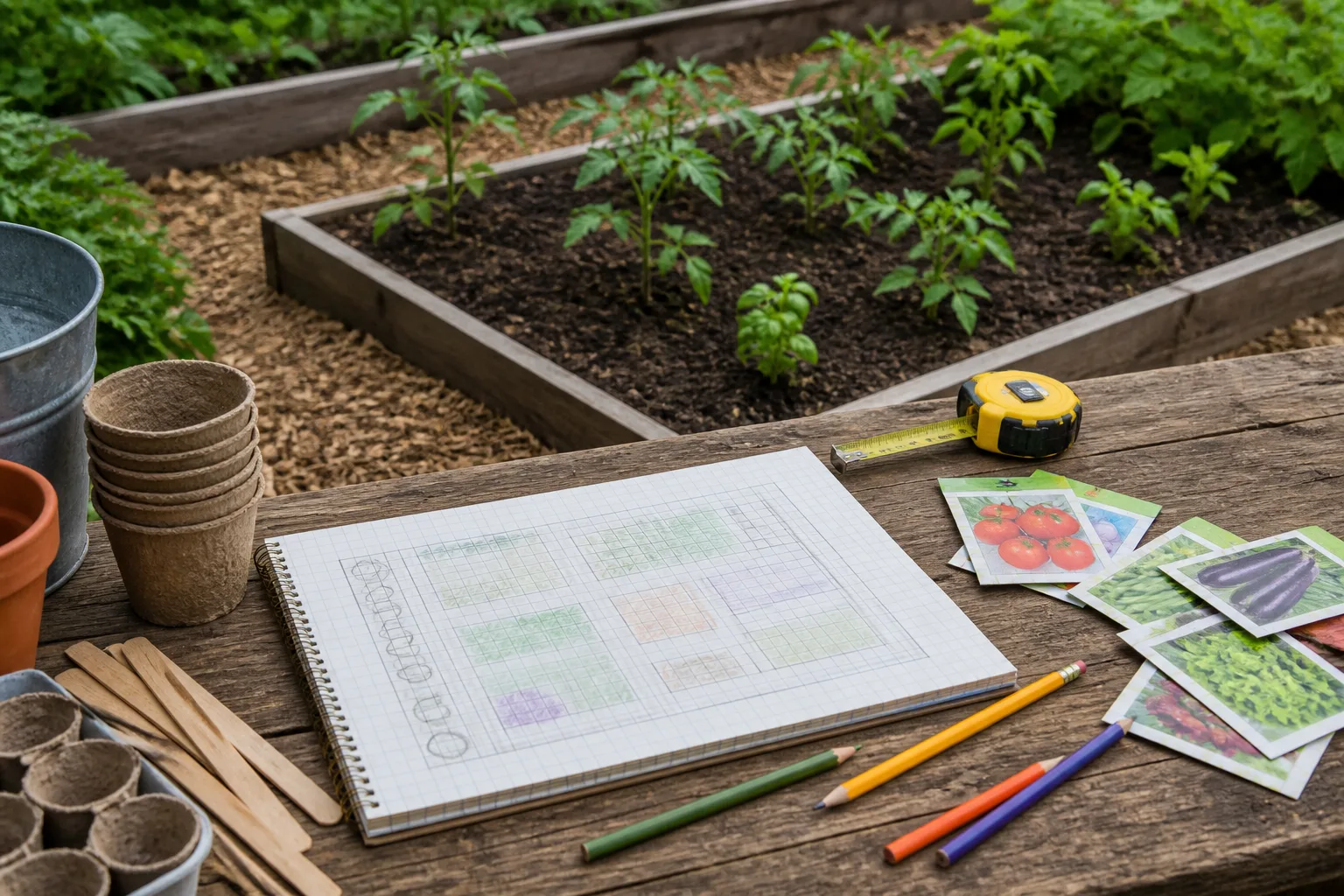
The same method works for tomatoes, beans, or potatoes, but use crop-specific estimates and harvest units. A ten-foot row of tomatoes cannot be compared directly with ten feet of carrots, and one potato plant does not supply the same weight as one pepper plant. If reliable local yield data are unavailable, write down a conservative first target and use the real harvest to make next year’s plan more accurate.
What changes the yield you can expect
Plant numbers are only one part of garden capacity. Season length controls how long a crop has to grow and set fruit; frost dates determine when warm crops can go outside and how long late plantings have before cold; and variety matters because a compact pepper and a spreading indeterminate tomato need different space. Your climate can also shift the calendar substantially, so copy timing from local extension advice rather than a generic national planting date.
Light and access matter as much as the plotted bed area. Fruit-producing crops such as tomatoes, peppers, and cucumbers generally need a sunny position to crop well, while some leafy greens tolerate less direct light. Savvy Gardening’s vegetable-planning guide recommends choosing the site and arranging beds before filling them, and explains how pathways, bed dimensions, crop rotation, and succession sowing affect what can be grown comfortably. Its author, Niki Jabbour, also notes that access to the middle of a bed matters when tending and harvesting; crowding every available square foot can make a garden harder to maintain. (Savvy Gardening: Vegetable Garden Planner)
Spacing changes yield and plant health too. Closer planting may use space efficiently when the crop, soil, water, and airflow support it, but crowding can make leaves stay wet and fruit hard to pick. Follow the recommended spacing for the variety and growing method, especially for crops that need room to branch or produce sizable roots. If you use raised beds, a 4-by-8-foot bed gives 32 square feet of growing surface; paths around it are additional space, not plantable area.
Weather and losses create uncertainty. A late frost can set back tomatoes, summer heat can end lettuce early, and insects or disease may remove a crop altogether. Plan a modest backup for favorite crops, but do not double every quantity “just in case.” A second small sowing, a few extra seedlings to replace failures, and one additional variety are often more useful than a large surplus that matures at the same time.
Make a small garden more productive
A small plot can provide a steady stream of ingredients if you use the calendar as well as the footprint. Fast crops such as radishes and salad greens can follow an earlier crop after it is harvested; a row of peas can give way to a fall planting when its production slows. Savvy Gardening describes cool-, warm-, and cold-season planting as a way to keep beds productive through more of the year, while GrowVeg recommends succession plantings and season extension as methods to increase harvest over time. (Savvy Gardening: Vegetable Garden Planner; GrowVeg Garden Planner)
Use succession sowing and vertical space
Succession planting means starting a new small group while an earlier group is growing or just before its space opens. It is particularly useful for crops that mature quickly or produce for a defined period, such as lettuce, radishes, beets, bush beans, and peas. Keep a calendar of sowing dates and estimated days to maturity; do not plant the next batch if heat or frost will prevent it from finishing.
Trellises can move peas, pole beans, cucumbers, and some tomatoes upward, leaving more ground for short crops such as lettuce or roots. Put the tallest support where it will not shade sun-loving neighbors, and secure it before vines become heavy. Interplanting only works when crops need space at different times or occupy different layers; two plants that both need full sun, airflow, and mature root space are still competitors even if they look small on planting day.
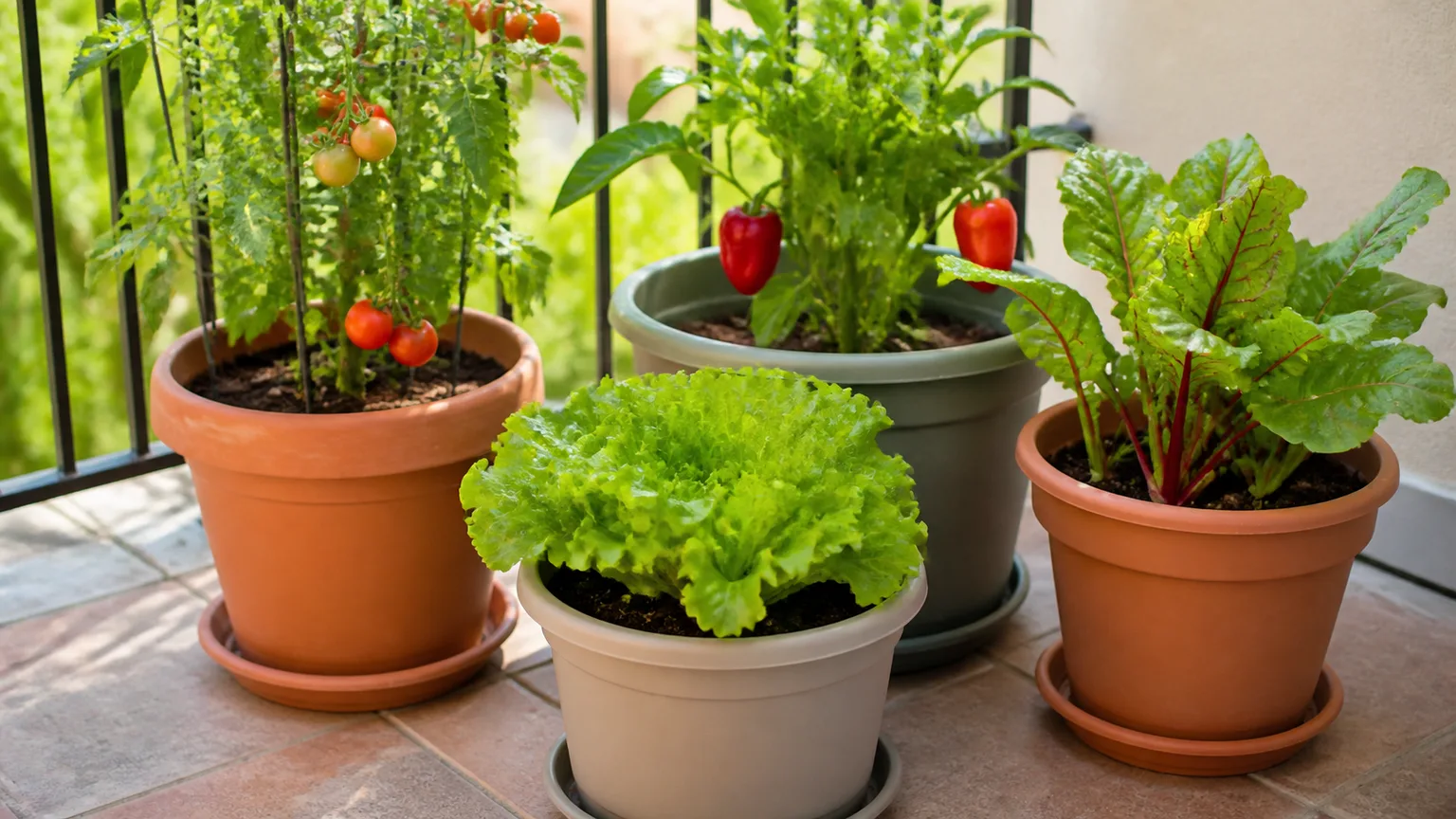
Containers are another way to use a patio or balcony, but each pot is its own small root zone and dries faster than a bed. A large container can support a tomato, pepper, or compact cucumber, while smaller pots suit herbs or greens. Do not count several plants in one pot as an equivalent to several garden-row plants unless the container has enough volume, sun, drainage, and water for all of them.
A practical first-season plan
For a first garden, choose four to six vegetables your household eats often rather than trying to grow every familiar crop. Add one or two plants of a long-producing crop, a short row or patch of greens, a root crop you can sow again, and one experiment. Leave enough room to walk, water, weed, and reach the middle of each bed without stepping on the soil.
A simple two-bed example for a household that wants fresh meals could place tomatoes, peppers, and a supported cucumber in the warmest bed, with basil or a quick crop in open edges if there is adequate light. Use the second bed for lettuce, carrots, beets, beans, or peas according to the season, then replant space as crops finish. This is a framework, not a fixed layout: local frost dates, shade, bed orientation, and crop spacing decide which combinations will work.
During the season, harvest when crops are ready instead of waiting for every plant to peak at once. Pick beans and cucumbers often, cut outer greens before they turn tough, and note which crop supplies more than the household can use. If a crop fails, record whether the cause was poor germination, late planting, heat, water, pests, or insufficient sunlight; each cause suggests a different change for next year.
Common planning mistakes to avoid
The first mistake is using a per-person chart as a shopping list without deciding whether the goal is fresh eating or preservation. A few fruiting plants can be generous in summer but do little for a winter pantry; root and storage crops need a separate area and a suitable place to keep them. Label the target beside each crop so a seasonal tomato planting is not mistaken for a year’s supply.
The second mistake is planting the entire seed packet at once. A packet may contain more seed than a household needs, and direct-sown plants need thinning. Sow a small section, save the rest properly, and plant another section only if the first is being used or the season can still support it.
The third mistake is ignoring maturity timing and harvest effort. A garden can produce a glut because beans, tomatoes, and squash all ripen together, or because there is no time to pick and preserve them. Choose varieties with different maturity dates, spread sowings where practical, and plan around the days you can actually tend the garden.
Finally, do not confuse a high plant count with high yield. Crowded tomatoes, shaded peppers, and tightly packed roots can produce less usable food than fewer, well-spaced plants. Extension guidance from NC State points gardeners to planting calendars and a production chart that distinguishes per-person row lengths for fresh use and preservation; that kind of crop-specific planning is more useful than one blanket number for the whole garden. (NC State Extension: Vegetables)
Conclusion
For fresh meals, start modestly: one or two tomatoes, a cucumber, one or two peppers, a small succession of greens and roots, and a few beans or peas that your household will harvest and eat. Add crops according to the meals you cook, not a generic headcount, and treat each suggested number as a first-season estimate rather than a promise.
If you want to preserve vegetables or supply a pantry through winter, calculate the amount from household use and realistic yield per row; expect storage crops to require much more space. Keep a simple harvest record, note what was wasted or missed, and revise the plan after one season. A garden sized from your own table will usually be more useful than one sized from a universal chart.



