13 Invasive Garden Plants and Better Alternatives
Learn which 13 popular garden plants can become invasive, how they spread, where risk is highest, and what to plant instead in your region.
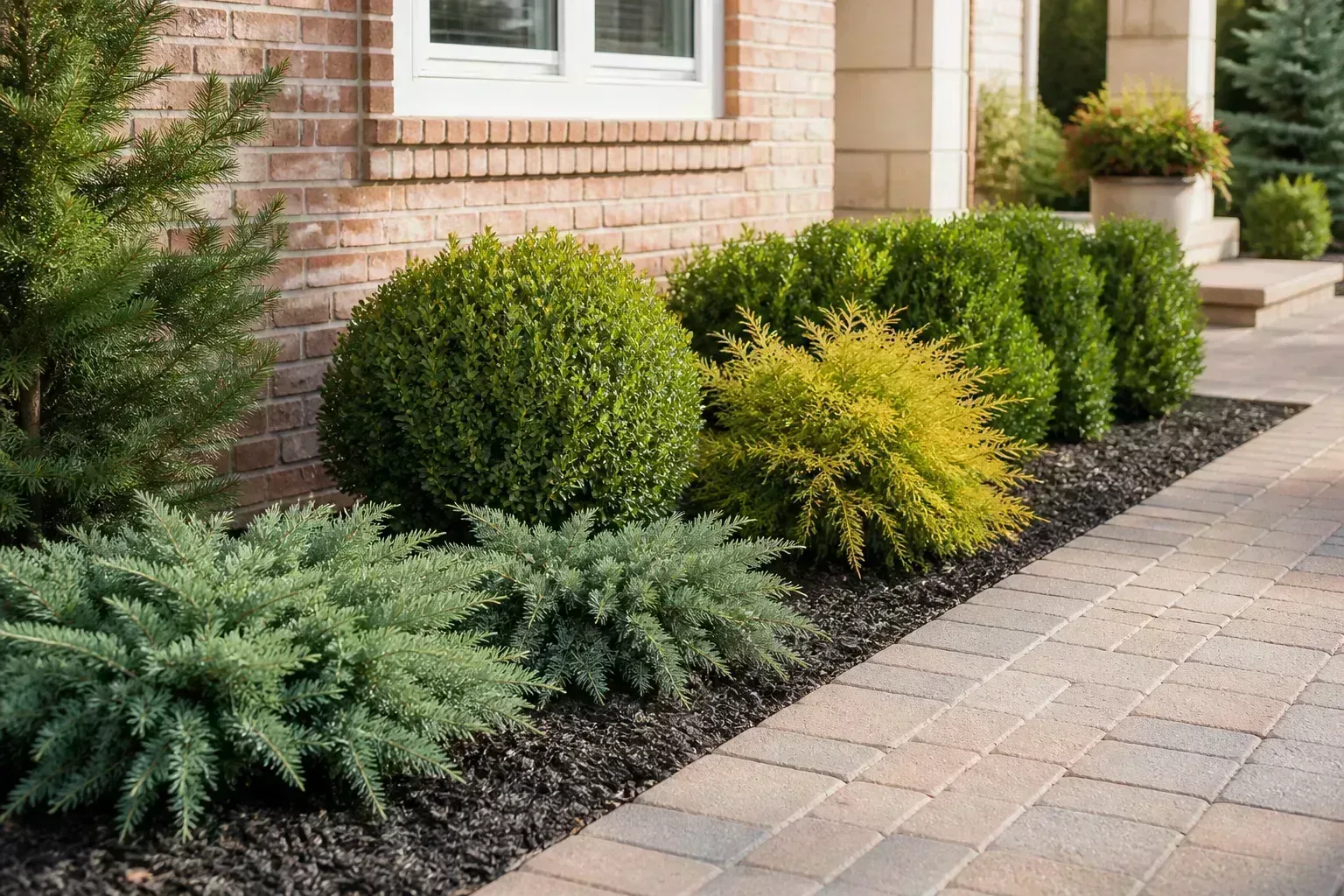
The most troublesome plants in a garden are not always the ugly ones. English ivy can look polished on a brick wall, burning bush can deliver spectacular fall color, and mint can make a small herb bed smell wonderful. The problem starts when a plant’s best garden trait—fast growth, abundant seed, spreading stems, or tolerance of shade—helps it leave the bed and establish somewhere you did not intend.
That does not mean every plant below is invasive in every state, province, or yard. It means each deserves a local check before you buy it, share it, or let it fruit. Use this list to spot the escape route, understand the trade-off, and choose a substitute that performs the same job without creating a long-term maintenance problem.
Before You Buy: Invasive Means Local Risk
In everyday conversation, gardeners often call any vigorous plant “invasive.” In ecological and regulatory use, an invasive plant is a non-native species whose introduction causes, or is likely to cause, environmental, economic, or human-health harm. A plant can be aggressive in a flower bed without meeting that definition, while another may be quiet in one climate and damaging in another. Better Homes & Gardens explains the difference between a weed, an aggressive grower, and an invasive species, a distinction worth keeping when you make a planting decision.
The right first check is not a national listicle. Search your state or province plus “invasive plant list,” “noxious weed list,” or “plant regulatory status,” then compare the exact scientific name on the nursery label. NC State Extension points gardeners to state assessments, USDA plant legal-status records, and local invasive-plant resources because the designation is geographic and can change as agencies learn more. Its invasive-plant resource page is a good model for the kind of local directory to find.
Three questions make the list more useful than a simple “never plant this” warning:
- How does it escape? Seeds, berries, runners, rhizomes, suckers, and climbing stems create different risks.
- What is next door? A contained patio pot is not the same as a wooded lot, stream bank, conservation area, or shared fence.
- What job are you trying to fill? A replacement should match the function—privacy, shade cover, fragrance, fall color, or pollinator support—not just the flower color.
The plants below are grouped by what they do when they get loose. That is the practical pattern to remember when you meet a new plant at a garden center.
Climbing Plants That Root and Smother
Climbers can cover a fence quickly, but they can also climb into trees, shade understory plants, and turn a small escape into a large removal job. Do not judge a vine only by its flowers; check whether its stems root when they touch soil, whether birds spread its fruit, and whether it can climb without support.
English Ivy
English ivy (Hedera helix) is an evergreen vine and a familiar groundcover for shade. In places where it is invasive, juvenile stems creep along the soil and root at contact points, while mature vines climb trees and walls. Once it reaches its adult phase, it can flower and produce berries that help move the plant beyond the original bed. A dense ivy carpet also reduces the light available to native seedlings, and vines on trees add weight and cover to the bark and canopy.
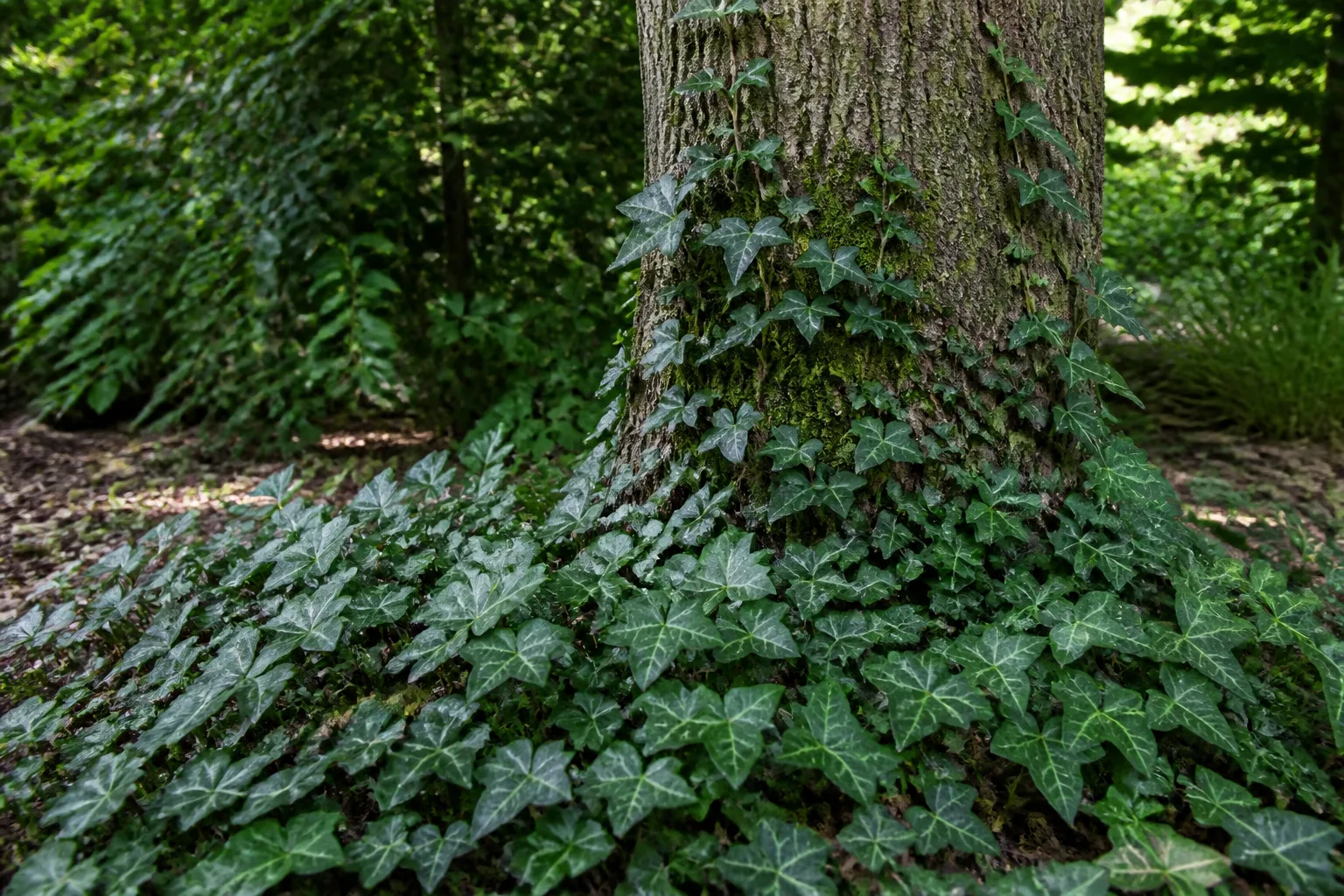
The safest choice is to keep English ivy in a pot or hanging basket where every stem remains visible and no clippings can wash into a natural area. If you want a native-looking climber, ask your local extension office whether Virginia creeper (Parthenocissus quinquefolia) or cross vine (Bignonia capreolata) fits your region and site. Both can be vigorous, so “native” does not mean “no pruning.” For a low flowering carpet, a locally appropriate phlox or another shade-tolerant native groundcover may give you the effect without the evergreen blanket.
Chinese Wisteria
Chinese wisteria (Wisteria sinensis) and Japanese wisteria (Wisteria floribunda) are admired for hanging, fragrant flower clusters, but their woody stems become heavy and persistent. They can wind around trunks and supports, shade vegetation below, and keep resprouting after a hard cut. Asian wisterias are listed as invasive in parts of the United States; the exact status and the behavior of cultivars still need a local check.
American wisteria (Wisteria frutescens) or Kentucky wisteria (Wisteria frutescens var. macrostachya) can provide a similar trained-arbor effect with a less aggressive reputation in their native range. They are not maintenance-free: give any wisteria a strong support, train it while young, and prune it so the vine cannot reach nearby trees. BHG’s comparison of Asian wisteria and native alternatives also notes the trade-off—native flower clusters may be smaller, but the plant is a better fit for many North American landscapes.
Japanese Honeysuckle
Japanese honeysuckle (Lonicera japonica) combines two escape routes: seeds in its dark berries and runners that root at the nodes. It can grow in sun or shade, climb over shrubs, and form a dense layer that blocks desirable plants. Penn State Extension describes it as a non-native, aggressive vine that reproduces by seed and by rooting runners; its species guide also warns that cutting alone can be followed by regrowth.
For a fragrant native vine, look at coral honeysuckle (Lonicera sempervirens) or another honeysuckle native to your area. Pick by region, not by the word “honeysuckle” on the tag: some other non-native honeysuckles are invasive too. Provide a trellis and a pruning boundary for the replacement, and remove berries or spent growth if local guidance recommends it. A plant that supports hummingbirds is still a plant that needs to stay on its support.
Groundcovers and Runners That Ignore Edges
Groundcovers are often sold as the solution to bare soil, erosion, or difficult shade. Their spreading habit is exactly why they can be risky near woodland edges, drainage ditches, wetlands, and neighboring gardens. If a stem can root wherever it touches soil, an edging strip is a maintenance aid—not a permanent containment system.
Mint
Mint (Mentha spp.) is useful, edible, and easy to grow, but that combination makes it a classic garden escapee. Many mints spread through underground rhizomes and vigorous stems; a few plants can become a patch that is hard to separate from nearby perennials. The concern is usually garden takeover rather than an ecological designation in every location, so check your local list before calling it invasive.
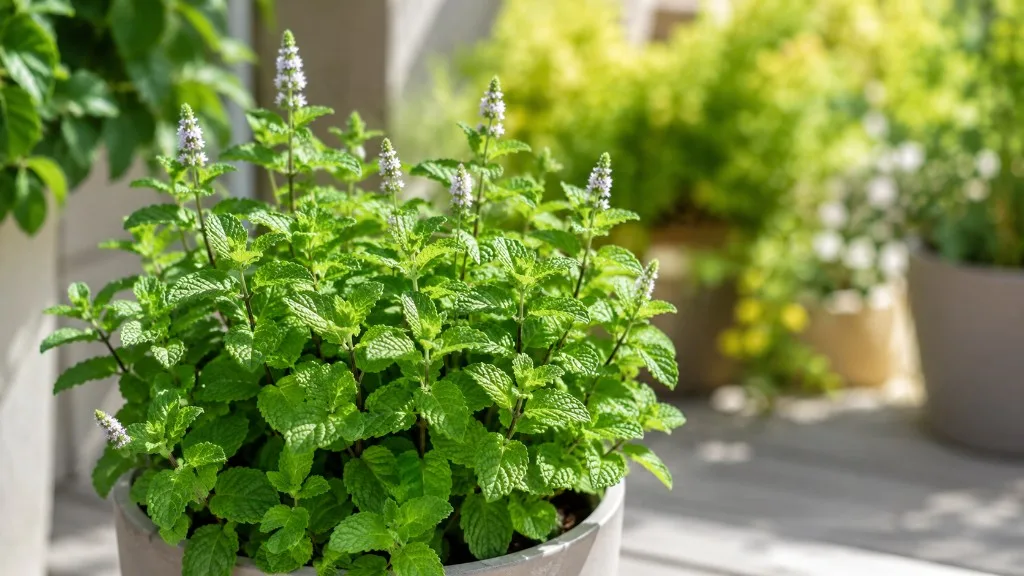
Grow mint in a container with drainage, and keep the pot from sitting directly on soil where roots can exit through the holes. Harvesting does not stop the rhizomes. Divide or repot when roots circle the container, and never toss fresh stems or root fragments into a wild edge or an unmanaged compost pile. If you want a native mint-like pollinator plant, compare wild mint or bee balm (Monarda) with your local native-plant list. Bee balm is not a culinary substitute for every mint, but it can deliver fragrance, flowers, and pollinator value in a managed bed.
Lily of the Valley
Lily of the valley (Convallaria majalis) is valued for white bell-shaped flowers and its ability to fill dry, shady ground. Its underground rhizomes, often called pips, allow it to form a dense colony. In regions where it escapes, that colony can crowd out spring woodland plants before the tree canopy closes. The plant is also poisonous if eaten, so its position matters in homes with young children or curious pets.
For a similar woodland carpet, look at bunchberry (Cornus canadensis) where it is locally native and suited to your soil, or wild ginger (Asarum canadense) for broad foliage and shade coverage. These are not interchangeable in every climate: bunchberry prefers cool, acidic, consistently moist conditions, while wild ginger is a foliage-first groundcover with flowers that are easy to miss. That difference is a useful trade-off. Choose a plant that fits the site instead of trying to force a flower color in the wrong soil.
Orange Daylily
Orange daylily (Hemerocallis fulva) is a durable pass-along plant that survives neglect and spreads into thick clumps. In some regions it is treated as invasive or potentially invasive, particularly where it can move along roadsides, stream corridors, or unmanaged land. A clump in a regularly maintained border may behave differently from one at the edge of a wet meadow, but the risk is still worth checking before you divide and share it.
If you want orange or yellow flowers, compare butterfly weed (Asclepias tuberosa), native coneflowers, or regionally native lilies and perennial hibiscus. Butterfly weed supports monarch caterpillars as well as adult pollinators, but it dislikes wet feet and may take a season to establish. A slower start is often a benefit: the plant is easier to place deliberately and less likely to swallow the bed.
Periwinkle
Common periwinkle (Vinca minor) and large periwinkle (Vinca major) are evergreen groundcovers with blue-purple flowers. They root along trailing stems and can create a continuous mat in shade. In many parts of the eastern and southern United States, periwinkle is a familiar escapee in woods and along old garden sites, where it competes with native vegetation. BHG’s regional alternatives guide also flags both common and large periwinkle as plants that deserve caution.
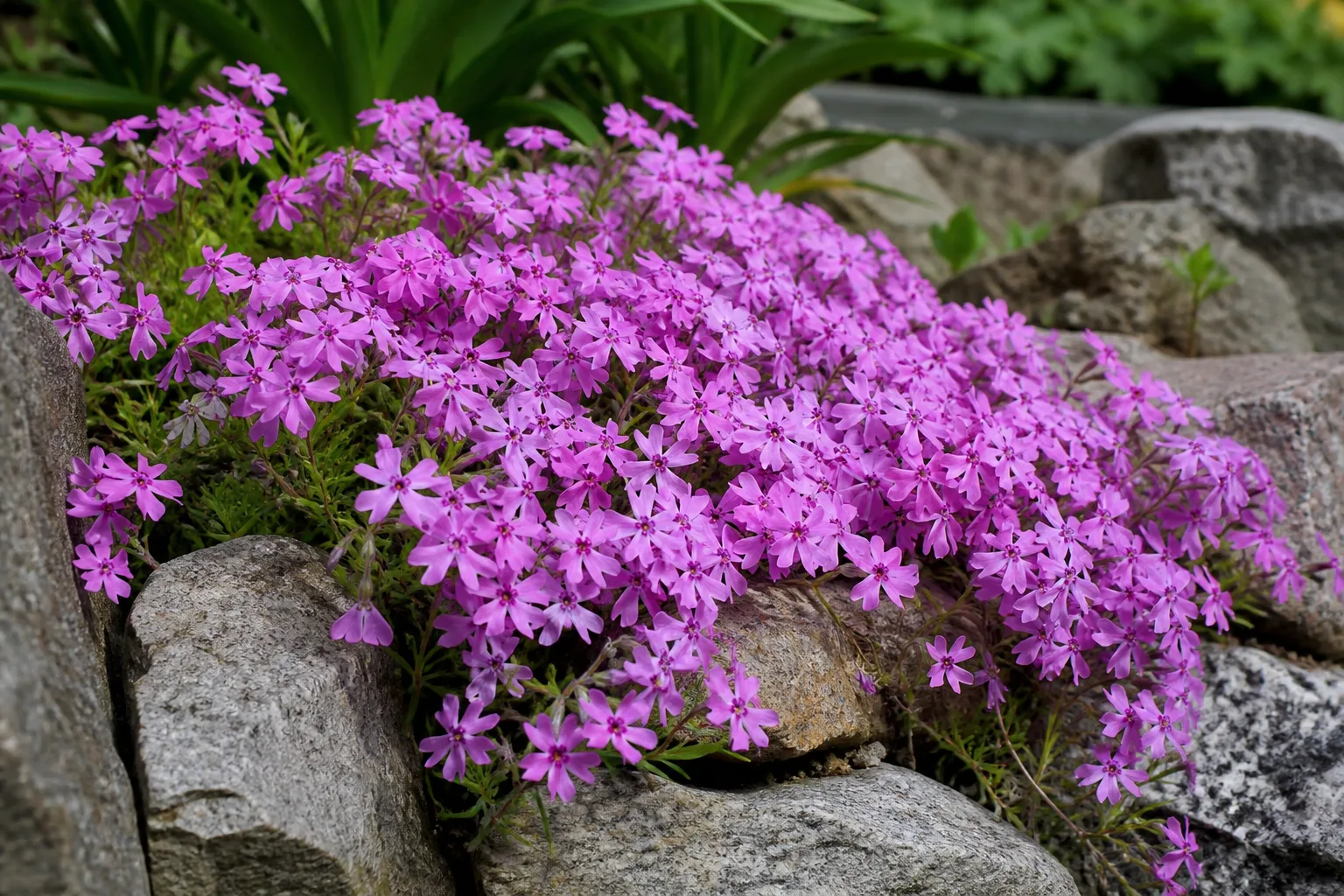
For a native shade groundcover, compare woodland phlox, wild ginger, or Allegheny spurge (Pachysandra procumbens) when any of those match your region. Do not swap in Japanese pachysandra automatically; a similar-looking replacement can carry its own invasive history. Plant the substitute in a small test area first, check its mature spread, and fill the rest of the bed with a mix of compatible species rather than another single-species carpet.
Self-Sowers and Pollinator Plants
A plant that feeds adult butterflies or produces a cloud of tiny flowers may still be a poor ecological choice if it spreads into habitat and offers little value to the insects’ other life stages. Before choosing a pollinator plant, ask whether it supports larvae, whether it is native to your area, and whether it can set viable seed that travels by wind, water, birds, or garden waste.
Butterfly Bush
Butterfly bush (Buddleja davidii) attracts adult butterflies with nectar-rich flower spikes, but it does not host the caterpillars of most North American butterflies. Its small, wind-dispersed seeds can also move beyond a garden, and its invasive status varies by region and cultivar. Some sterile or low-seed cultivars are marketed as safer, but a label claim is not a substitute for checking your local extension guidance.
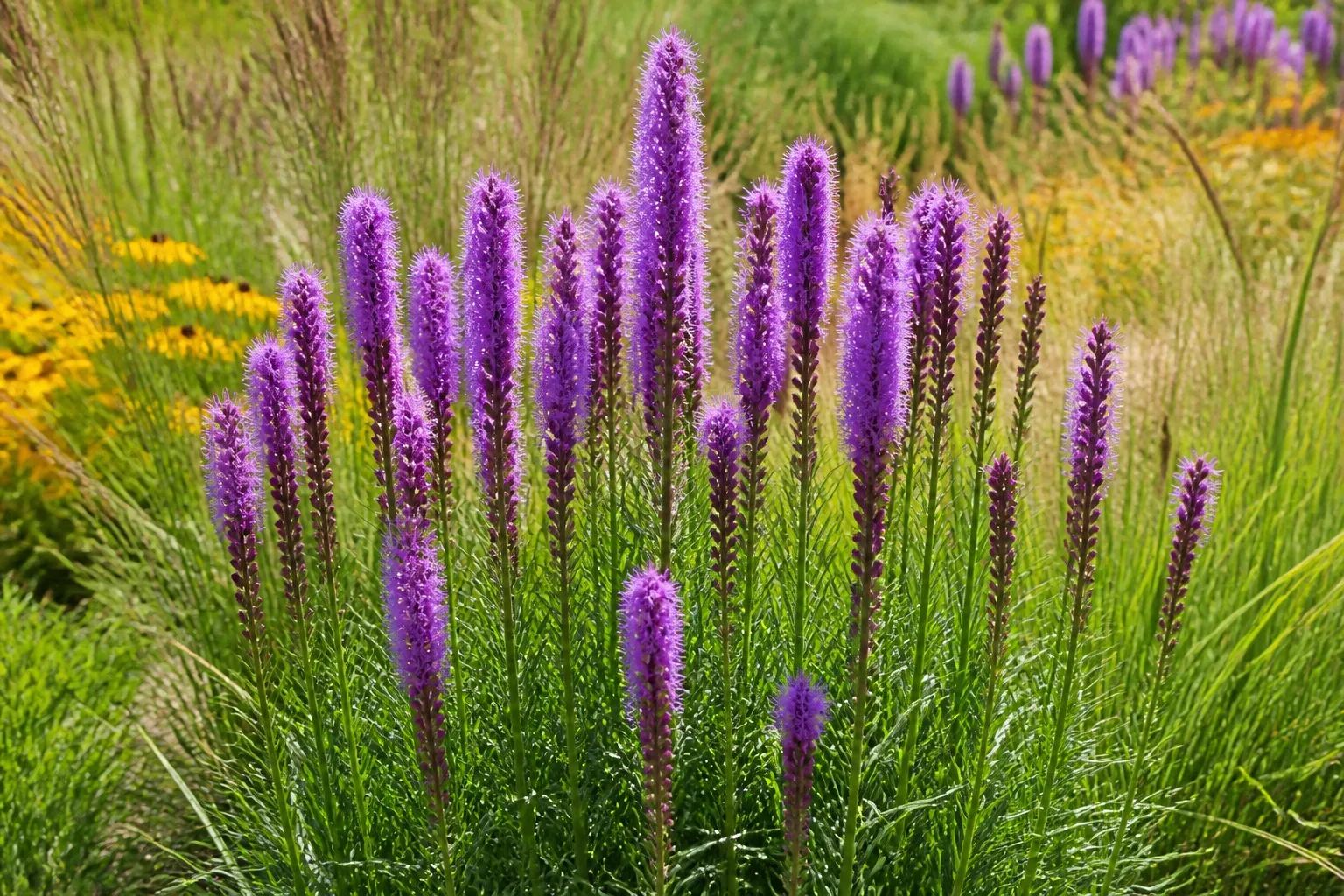
For a pollinator bed, build a sequence instead of relying on one showy shrub. Common milkweed, butterfly weed, asters, goldenrods, and liatris can support different life stages and seasons when they are native or well-adapted locally. Milkweed is not a tidy hedge, and goldenrod is not right for every small border, but their ecological job is broader than supplying nectar to adult butterflies. BHG’s guide to alternatives explains this adult-versus-larva distinction and suggests region-specific substitutes such as California lilac in suitable climates.
Forget-Me-Not and Baby’s Breath
Forget-me-not (Myosotis spp.) earns its place in cottage gardens with tiny blue flowers, but self-sowing can turn a deliberate patch into a repeating annual chore. In a cool, moist garden, seedlings may appear far from the parent plants. It may be acceptable in a contained border where you deadhead before seed matures, but a woodland edge or streamside planting raises the consequences of escape.
Baby’s breath (Gypsophila paniculata) has the opposite visual effect—airy clouds of flowers on wiry stems—but its very light seed can travel in wind. The plant is considered invasive in some western, Great Lakes, and Canadian regions. If you garden in a susceptible area, ask your extension office about regional status and disposal before planting or sharing it.
For a similar small-flower effect, compare Virginia bluebells, false indigo, native asters, sea lavender in a suitable coastal setting, or a locally native stonecrop. None is a perfect visual clone. The better choice depends on whether you need blue spring flowers, a filler for bouquets, drought tolerance, or a low-growing pollinator plant. Deadhead any self-sower before seed ripens if your local guidance allows you to keep it.
Shrubs and Grasses With Long Tails
Woody shrubs and tall grasses are especially easy to underestimate. A shrub can fruit for years before seedlings become obvious, and a grass can hide its spreading rhizomes under mulch. Their mature size also makes removal more expensive than replacing a young perennial.
Golden Bamboo
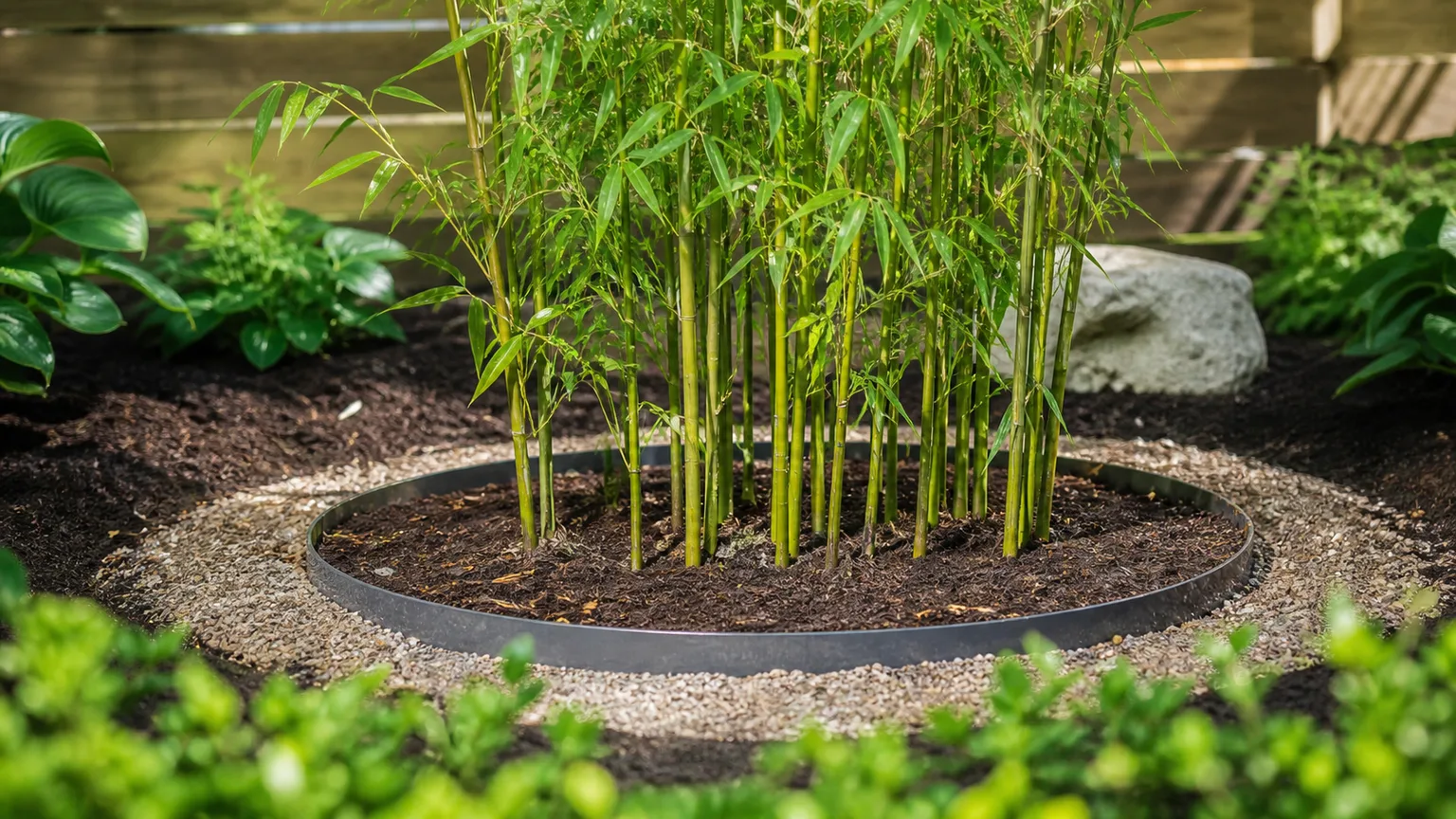
Golden bamboo (Phyllostachys aurea) is a running bamboo, not a clumping ornamental that politely stays in one crown. Its underground rhizomes can move under fences, patios, and beds, then send up new culms several feet from the original stand. In warm, moist conditions, the problem can develop faster than the narrow stems suggest.
If you want bamboo’s vertical screen, first ask whether a clumping species is legal and suitable in your region; “clumping” reduces the escape route but does not erase the need for space and maintenance. A native ornamental grass, a shrub screen, or a mixed hedge may be easier to manage. If bamboo is already established, do not assume cutting once will solve it. NC State Cooperative Extension’s bamboo guidance says mature stands can require repeated control over several seasons and monitoring for years. Never spray above your head, and follow the pesticide label or hire a qualified invasive-plant professional.
Burning Bush and Japanese Barberry
Burning bush (Euonymus alatus) is planted for brilliant red fall foliage and red fruit. Birds and other animals can spread the fruit, and the shrub tolerates enough shade to establish beneath trees. Penn State Extension calls it an invasive landscape shrub and notes that it is regulated in Pennsylvania; the extension profile also lists native viburnums, dogwoods, and red chokeberry as ways to replace the fall-color function.
Japanese barberry (Berberis thunbergii) offers colorful leaves, berries, and a compact hedge shape, but it spreads by seed and by layering where branches contact the ground. Its dense architecture can create a humid refuge used by ticks and small mammals; that association does not mean every barberry plant causes Lyme disease, but it is a reasonable reason to avoid adding dense thorny shrubs beside play areas and paths. Penn State’s current Japanese barberry guide describes both the spread mechanism and the handling risk from sharp spines.
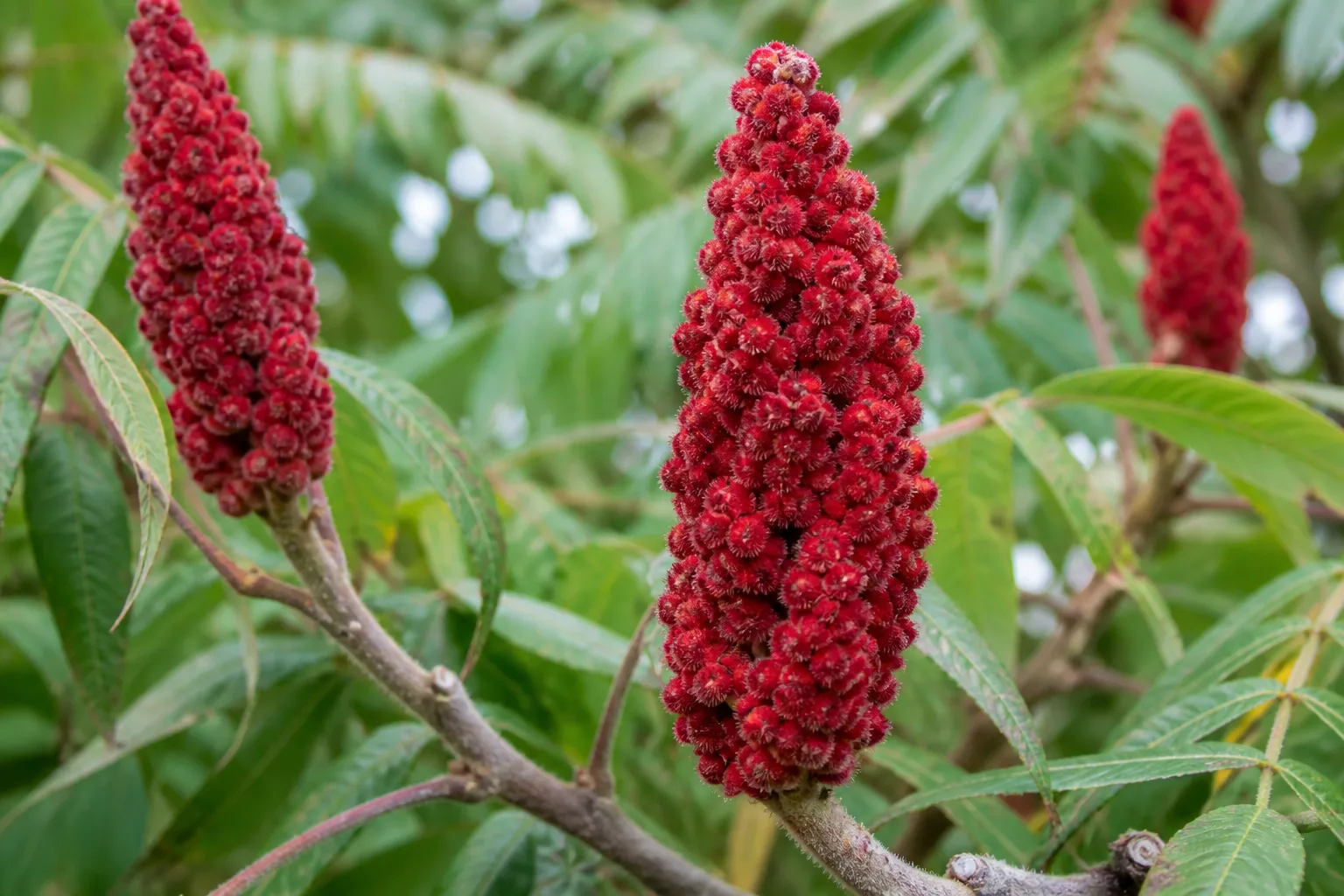
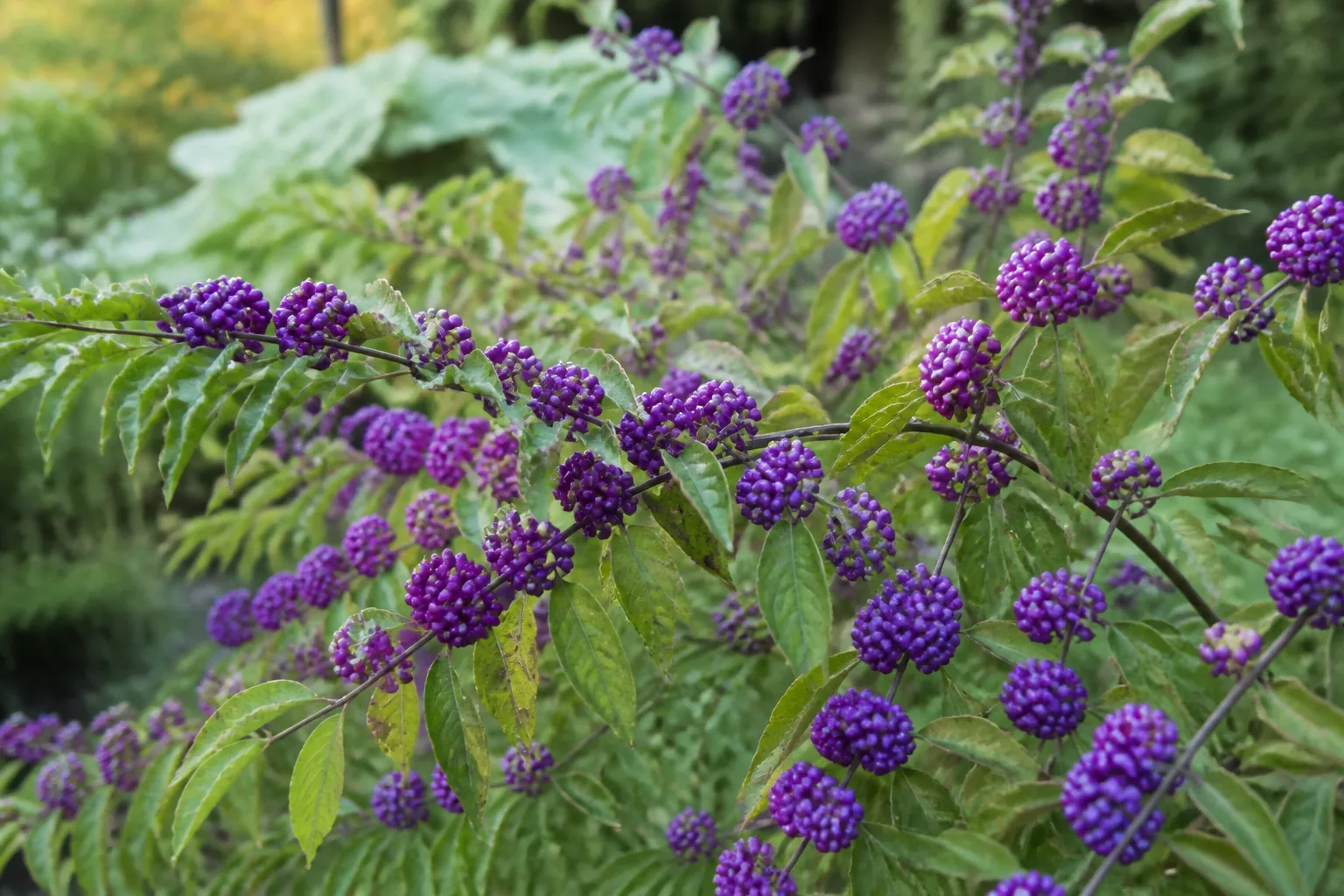
For replacements, compare fothergilla, fragrant sumac, native viburnum, dogwood, winterberry, beautyberry, ninebark, or red chokeberry according to your region and the job. A replacement may be larger, deciduous, or less symmetrical than the plant it replaces. That is not a defect if it supplies flowers, fruit, fall color, and wildlife shelter without creating a dense monoculture.
If You Already Own One: Remove, Contain, Monitor
You do not need to panic or excavate an entire yard because a plant appears on a caution list. Start by identifying the species, checking its local status, and looking for the part that makes it escape: fruit, seed heads, runners, rhizomes, suckers, or vines in nearby trees. Photograph the plant and ask a local extension office if you are uncertain; the wrong identification can lead to the wrong removal method.
If it is still small and local rules allow removal, remove the whole root crown or root system rather than shearing the top and leaving a resprouting stump. For vines on trees, cut the stems at ground level and let the upper growth die back; pulling heavy rooted vines from living bark can damage the tree. For seed-producing shrubs and flowers, remove fruit or seed heads before maturity and bag the material if your local waste rules do not allow it in ordinary compost.
Bamboo and woody invasives often need a sequence, not one dramatic weekend. Cut or dig what you can safely reach, plan for regrowth, revisit the site, and protect desirable plants from nonselective herbicides. Penn State’s invasive-plant guidance and NC State’s bamboo guidance both emphasize follow-up and label compliance. A commercial applicator or local extension specialist is sensible when the infestation is large, near water, on a slope, tangled in trees, or beyond the equipment you can operate safely.
Containment is a valid interim decision when removal cannot happen immediately. Keep runners inside a bottomed container, keep climbing stems off trees, deadhead before seed set, collect berries, and do not move soil or fresh root fragments to another part of the property. Monitor the fence line, compost area, drainage path, and woodland edge—the places where an escape is easiest to miss.
Choose the Replacement by Function, Not Just Looks
The best replacement is not necessarily the plant with the closest flower color. Match the original job first, then confirm the replacement’s mature size, hardiness, moisture, sun, wildlife value, and spread. A useful substitution plan looks like this:
| What you wanted | Better selection question | Replacement direction to investigate |
|---|---|---|
| Evergreen shade cover | Can it stay low without making a solid mat? | Regional native groundcover, woodland phlox, wild ginger |
| A flowering vine | Does it climb on a support without rooting into every surface? | Coral honeysuckle, American wisteria, cross vine |
| Privacy or screening | Will mature width fit, and will birds spread its fruit? | Mixed native hedge, viburnum, serviceberry, dogwood |
| Fall color | Does it offer fruit or shelter as well as foliage? | Fothergilla, sumac, chokeberry, ninebark |
| Pollinator flowers | Does it support larvae as well as adult nectar feeders? | Milkweed, asters, liatris, bee balm, goldenrod |
| A tall architectural screen | Is it clumping or running, and can you inspect its edge? | Native grass, mixed shrub screen, locally approved clumping bamboo |
“Native” is not a magic word. A plant native to one state may be non-native or poorly adapted a few hundred miles away, and a cultivar may differ in mature size or seed production from the straight species. Buy from a nursery that can give you the scientific name, ask how the plant spreads, and cross-check the choice against your local extension or native-plant society. A mixed planting is usually safer and more resilient than replacing one problem monoculture with another.
Conclusion
These 13 plants are not a universal blacklist. They are a reminder to look past the photo on the plant tag and ask how a plant reproduces, where it can travel, and what happens when maintenance slips for a season. English ivy and vines can climb, mint and groundcovers can run, bamboo can send rhizomes under barriers, and fruiting shrubs can recruit birds as seed-dispersal partners.
Before planting, check the exact species against your local invasive and noxious-weed resources. If one is already in your yard, contain reproduction, remove it in stages when appropriate, dispose of plant material responsibly, and monitor for regrowth. Then choose a replacement by function—privacy, shade, fall color, fragrance, or wildlife support—so your garden looks intentional without outsourcing its maintenance to the next property or the nearest natural area.



