19 Types of Bonsai Trees: Choose the Right Species
Find the right bonsai tree species for your home, balcony, or garden with practical notes on light, watering, dormancy, flowers, fruit, and pruning.
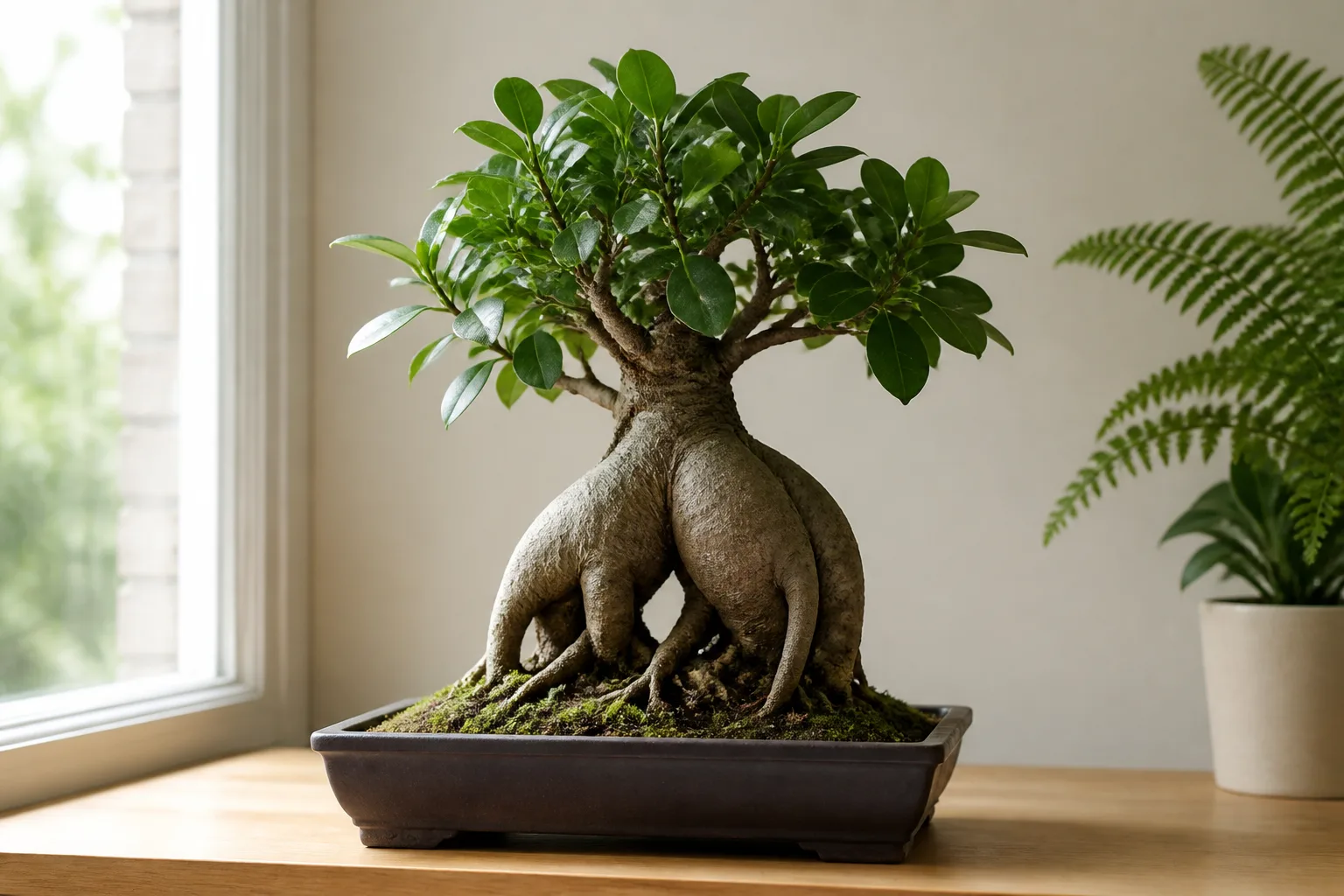
Bonsai is not a special class of naturally miniature trees. It is the long-term cultivation of a woody plant in a container, using pruning, wiring, root work, and careful placement to suggest the character of a full-sized tree. That distinction matters because almost any tree sold as “bonsai” can fail if its seasonal needs do not match your home.
The best choice is therefore not the tree with the smallest leaves or the most dramatic trunk at the nursery. It is the species that fits your light, climate, available outdoor space, and willingness to check a shallow pot. The RHS describes bonsai as a moderate-to-difficult project that needs attention throughout the year, while the Missouri Botanical Garden emphasizes that bonsai plants are ordinary trees and shrubs shaped and container-grown on a miniature scale (RHS bonsai guide; Missouri Botanical Garden).
Bonsai is a method, not a species
A bonsai can be evergreen or deciduous, tropical or temperate, flowering or coniferous. The small size comes from a combination of genetics, pruning, root restriction, and training—not from starving a tree or keeping it permanently root-bound. With enough time and the right care, a bonsai can remain healthy for decades; the USDA’s coverage of the National Bonsai & Penjing Museum includes trees that have been in training for generations (USDA ARS coverage).
That also explains why “indoor bonsai” is a useful retail phrase but not a botanical category. Ficus and dwarf jade can live in a bright home, but a juniper or Japanese maple still needs the outdoor light and seasonal temperature changes its biology expects. A small pot changes how quickly a tree dries out; it does not erase the tree’s need for sun, dormancy, or airflow.
Choose by growing space and daily routine
Start with the place where the bonsai will live, then choose the plant. A bright window, covered balcony, exposed roof terrace, shaded patio, and cold garden bench are five different growing environments even if they are all described as “sunny” in a listing. Wind is especially important on balconies because it dries a shallow pot faster and can snap newly wired branches.
Indoor versus outdoor is the first decision
For a true indoor setup, choose a tropical or semi-tropical species such as ginseng ficus, weeping fig, dwarf jade, or some Chinese elms. Put it in the brightest window available, keep it away from heating and air-conditioning blasts, and consider a grow light if the tree stretches or repeatedly drops leaves. Indoor culture is not low-light culture; the RHS specifically describes indoor bonsai as houseplant-like trees that need high light, stable temperatures, humidity, and regular watering (RHS indoor bonsai guidance).
Temperate trees—including juniper, pine, Japanese maple, flowering cherry, azalea, beech, oak, and most crabapples—belong outdoors for the long term. They need a seasonal cycle, and many need winter dormancy. You can display one indoors briefly, but moving an outdoor bonsai into a warm room every winter is not a substitute for cold protection; it can interrupt the cycle that keeps the tree vigorous.
Use this quick filter before you buy:
| Your situation | Strong first shortlist | Main caution |
|---|---|---|
| Bright indoor window, no freezing outdoor space | Ginseng ficus, weeping fig, dwarf jade | Light is still the limiting factor; a dim room will not work |
| Sunny balcony with wind | Juniper, Chinese elm, pine | Small pots dry fast; protect from extreme wind and frost |
| Sheltered outdoor spot with morning sun | Japanese maple, azalea, flowering cherry | Heat, drying, and incorrect pruning can ruin foliage or flower buds |
| Warm, bright climate | Bougainvillea, pomegranate, crape myrtle | Flowering and fruiting depend on strong light and seasonal timing |
| Cool winter and a long-term project | Pine, cedar, beech, oak, bald cypress | Dormancy, root protection, and slower training require patience |
This space-first method also matches practical balcony advice from Miyagi Bonsai: assess wind, shelter, direct sun, and drying speed before choosing the tree (balcony bonsai species guide).
Four beginner-friendly starting points
“Easy” means forgiving under a particular set of conditions. Ficus is usually the most practical indoor starting point; Chinese elm is adaptable and responsive; dwarf jade tolerates missed waterings better than thirsty deciduous trees; and juniper is a strong outdoor teacher. None is maintenance-free.
Ficus, ginseng ficus, and weeping fig
Ginseng ficus — Ficus microcarpa. The swollen roots and glossy leaves make this the familiar gift-shop bonsai, and the species can handle indoor life better than most trees. Give it the brightest window you have, water when the surface begins to dry, and expect some adjustment after a move. Ginseng ficus tolerates occasional watering errors, but chronic low light is still a slow failure: leaves become sparse, internodes lengthen, and the tree loses its compact silhouette.
Weeping fig — Ficus benjamina. This species makes a convincing miniature tree because it naturally forms a branching canopy and can be pruned back to create finer structure. It is also more likely to shed leaves after a sudden change in light, temperature, or watering. Treat it as a bright, stable houseplant rather than a decoration that can be carried from room to room.
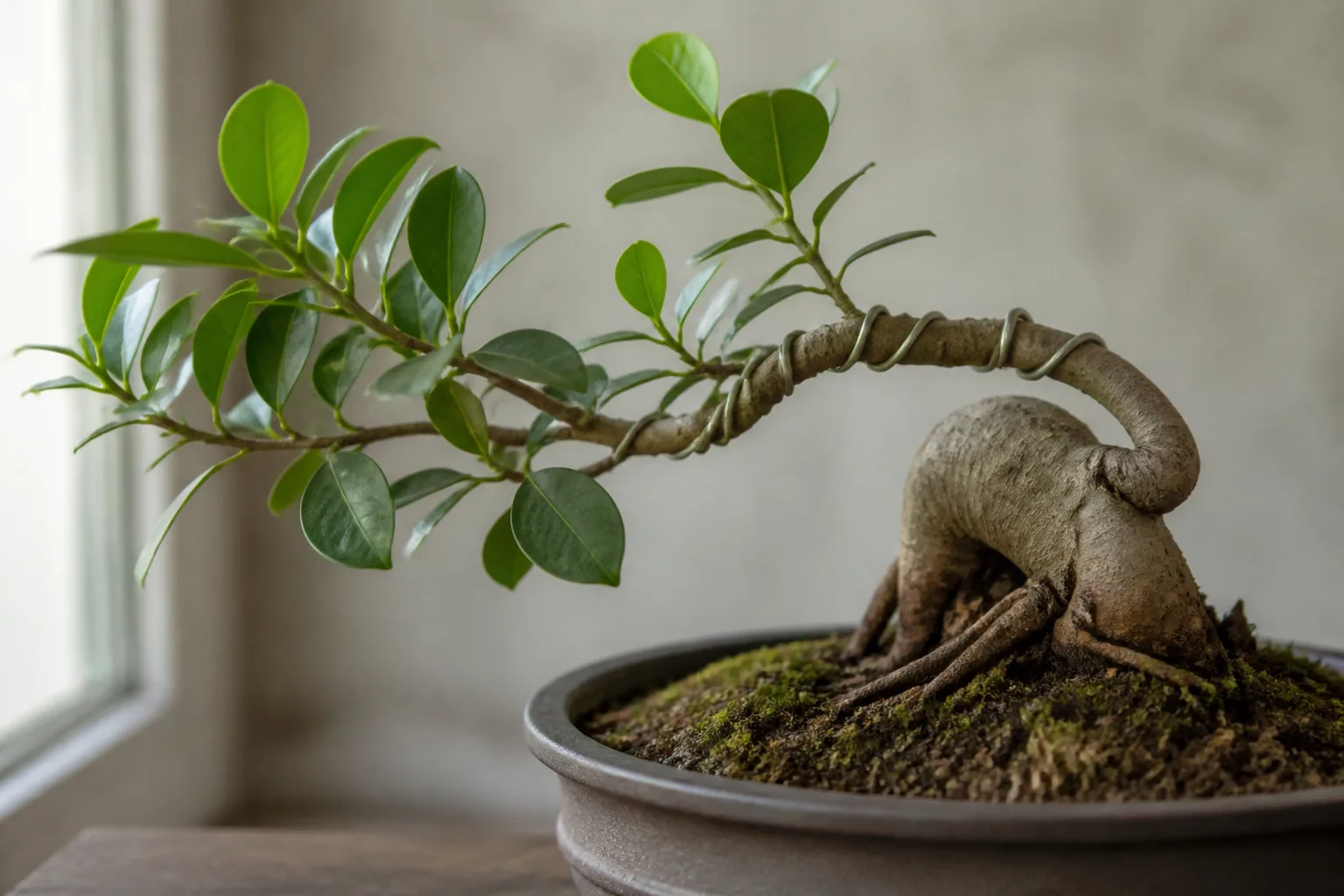
Ficus is a forgiving place to learn how wiring and branch selection change a bonsai’s silhouette, but wire must be checked before it bites into fast-growing bark.
The shared ficus rule: keep the tree warm, bright, and evenly observed. Ficus can spend warm months outdoors if it is acclimated gradually, but it must return inside before cold nights. Specialist ficus guidance also cautions that the popular “ginseng” form may be poorly wired or planted in unsuitable soil when sold cheaply, so inspect the drainage hole, trunk health, and wire marks before choosing a bargain tree (ficus bonsai guide).
Chinese elm, dwarf jade, and juniper
Chinese elm — Ulmus parvifolia. This is one of the best all-purpose bonsai species because it develops small leaves, fine branching, attractive bark, and new growth after pruning. In a temperate climate it is happiest outdoors, though a bright indoor winter can work for a tree already acclimated to that treatment. It dislikes both a prolonged drought and permanently wet soil, so its real advantage is resilience and recoverability, not permission to ignore it.
Dwarf jade — Portulacaria afra. Often confused with the larger-leaved jade plant, dwarf jade has small succulent leaves and flexible stems that thicken into a convincing trunk. It is an excellent choice for a sunny window or frost-free patio because it stores water, but that same adaptation makes overwatering the main risk. Let the mix dry more between thorough waterings than you would for an azalea or maple, and never leave the pot sitting in a saucer of runoff.
Juniper — Juniperus spp. Juniper is a classic outdoor bonsai: evergreen, visually convincing at small scale, and capable of dramatic wiring. It is often called easy because it tolerates strong sun and can be shaped aggressively, but it is not an indoor tree and it does not reliably bud from bare wood. Keep green foliage on every branch you plan to retain, avoid hedge-style shearing, and let the soil become slightly dry before watering thoroughly. Bonsai Empire’s juniper guidance makes the same non-negotiable point: long-term indoor placement fails because the tree needs light, airflow, and seasonal cold (juniper bonsai guide).
Deciduous trees for seasonal color
Deciduous bonsai reward you with a visible yearly rhythm: leaf emergence, summer canopy, autumn color, and a winter view of the branches. That rhythm is also their care calendar. They generally need more frequent observation during active growth than a conifer, and their bare winter appearance is normal rather than a symptom.
Japanese maple, flowering cherry, and azalea
Japanese maple — Acer palmatum. Choose this for hand-shaped leaves, fine ramification, and spring-to-autumn color. It is a beautiful outdoor bonsai for a sheltered position with morning sun, but small pots heat and dry quickly; in hot weather, protect the leaves from harsh afternoon exposure and check moisture daily. Avoid treating leaf scorch as a simple watering problem: wind, reflected heat, damaged roots, and intense sun can combine to brown the margins. The species-specific guidance recommends protection above roughly 85°F (30°C) and warns against letting the soil dry completely (Japanese maple bonsai guide).
Japanese flowering cherry — Prunus serrulata. This is a display tree for someone who wants spring flowers and is willing to accept a narrower styling window. It needs bright outdoor conditions, excellent drainage, and protection from late frost when buds are opening. Do not choose it for a dim apartment or because its flowers look attractive in a one-day display; it is a seasonal outdoor tree with more exacting water and pruning timing than ficus.
Azalea — Rhododendron spp., especially Satsuki types. Azalea bonsai produce an unusually strong flower show and naturally small leaves, but they demand consistently moist, well-drained, acidic media. Use a lime-free mix such as kanuma or another appropriate ericaceous bonsai substrate, and be careful with hard water if your local supply is alkaline. Prune soon after flowering because the next season’s buds develop later; pruning too late can trade next year’s flowers for a tidy outline. Specialist azalea guidance also notes that the fine roots are easy to tear during repotting (azalea bonsai guide).
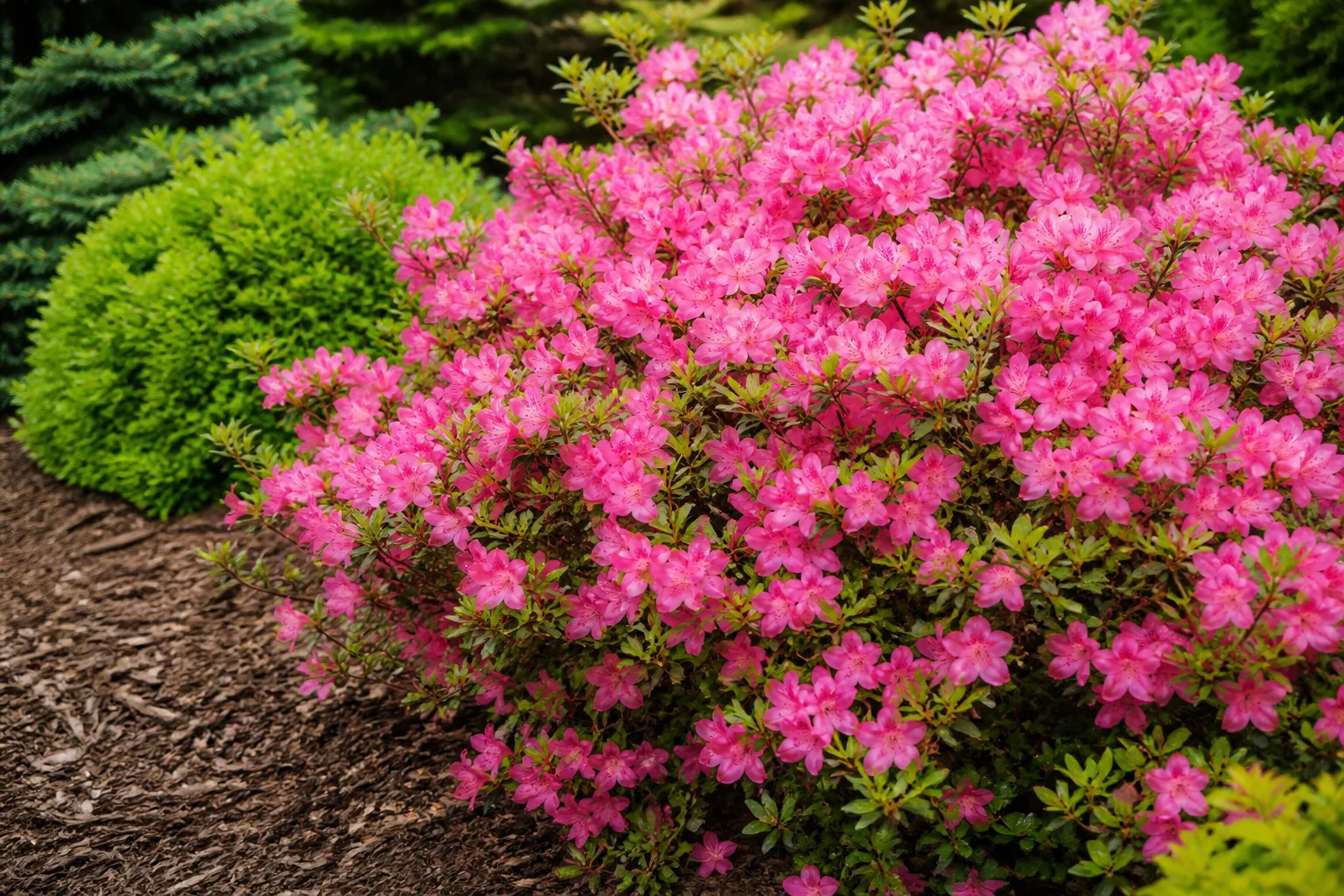
Azalea bonsai are chosen for flowers and fine leaves, but their acidic-soil and moisture requirements make them a precision project rather than a neglect-tolerant one.
Flowering crabapple and European beech
Flowering crabapple — Malus spp. Crabapples combine spring flowers, small fruit, and a sturdy deciduous structure. They belong outdoors and need strong light, regular water during growth, and enough airflow to reduce disease pressure. Choose a cultivar with naturally small fruit and manageable leaves; the fruit is a bonus, not a guarantee, because flowering, pollination, heat, and tree strength all affect the crop.
European beech — Fagus sylvatica. Beech is prized for smooth gray bark, broad leaves that can reduce under bonsai culture, and a beautiful winter framework. It is better suited to a grower who already understands outdoor dormancy, root work, and protection from drying wind. The tree may look calm and slow, but a shallow pot in an exposed position can lose moisture faster than its winter silhouette suggests.
Conifers and rugged long-term projects
Conifers give bonsai its enduring structure: needles, weathered bark, and silhouettes that remain legible after deciduous trees drop their leaves. They are often sold as beginner trees because they are hardy, but hardy does not mean indoor or indestructible. The most important conifer skill is knowing where live foliage remains before you cut.
Pine, cedar, fir, bald cypress, boxwood, and white oak
Pine — Pinus spp. Japanese black pine, Japanese white pine, Scots pine, and mugo pine are common choices. Pine rewards patient growers with strong bark and a classic silhouette, but it has species-specific candle management and a slower feedback loop than ficus or elm. Keep it outdoors in full light, learn the timing for your species, and resist the urge to remove every long shoot at once. Pine bonsai care references group watering, pruning, and repotting around active growth and the tree’s seasonal cycle (pine bonsai guide).
Cedar — Cedrus spp. Cedar offers rough bark and short needle clusters that can look ancient at a small scale. It is a better choice for an experienced grower because older branches can be difficult to bend and container culture is less forgiving. Give it direct light, an airy mix, and careful wiring while branches are still flexible.
Fir — Abies spp.; Douglas fir is Pseudotsuga menziesii. Fir and Douglas fir offer dense, proportionate foliage and flexible young branches. They dislike the two extremes that small pots create: prolonged drought and saturated roots. Choose a cool outdoor location with good airflow, and expect acclimation after moving nursery material into a shallow container.
Bald cypress — Taxodium distichum. Bald cypress is a deciduous conifer with reddish bark and soft foliage that turns warm before dropping. It likes abundant light and consistently available moisture during active growth, making it unlike a dry-loving juniper or dwarf jade. This is a compelling choice for a warm, humid climate or a grower who can monitor water closely; letting a small pot become bone-dry is a serious setback.
Dwarf boxwood — Buxus spp. Boxwood has small, glossy leaves and responds well to repeated clipping, so it can become a tidy formal bonsai or a dense shrub-like composition. It is an outdoor plant in most climates and needs drainage, airflow, and inspection for pests. Choose it when you enjoy detail work and regular maintenance rather than a fast, dramatic trunk.
White oak — Quercus alba. Oak brings rugged bark, lobed leaves, and a powerful old-tree character, but the large species eventually outgrows the proportions many beginners want. It is a long-term outdoor project with strong light and seasonal dormancy. Pick it for trunk development and patience, not for quick results in a shallow decorative pot.
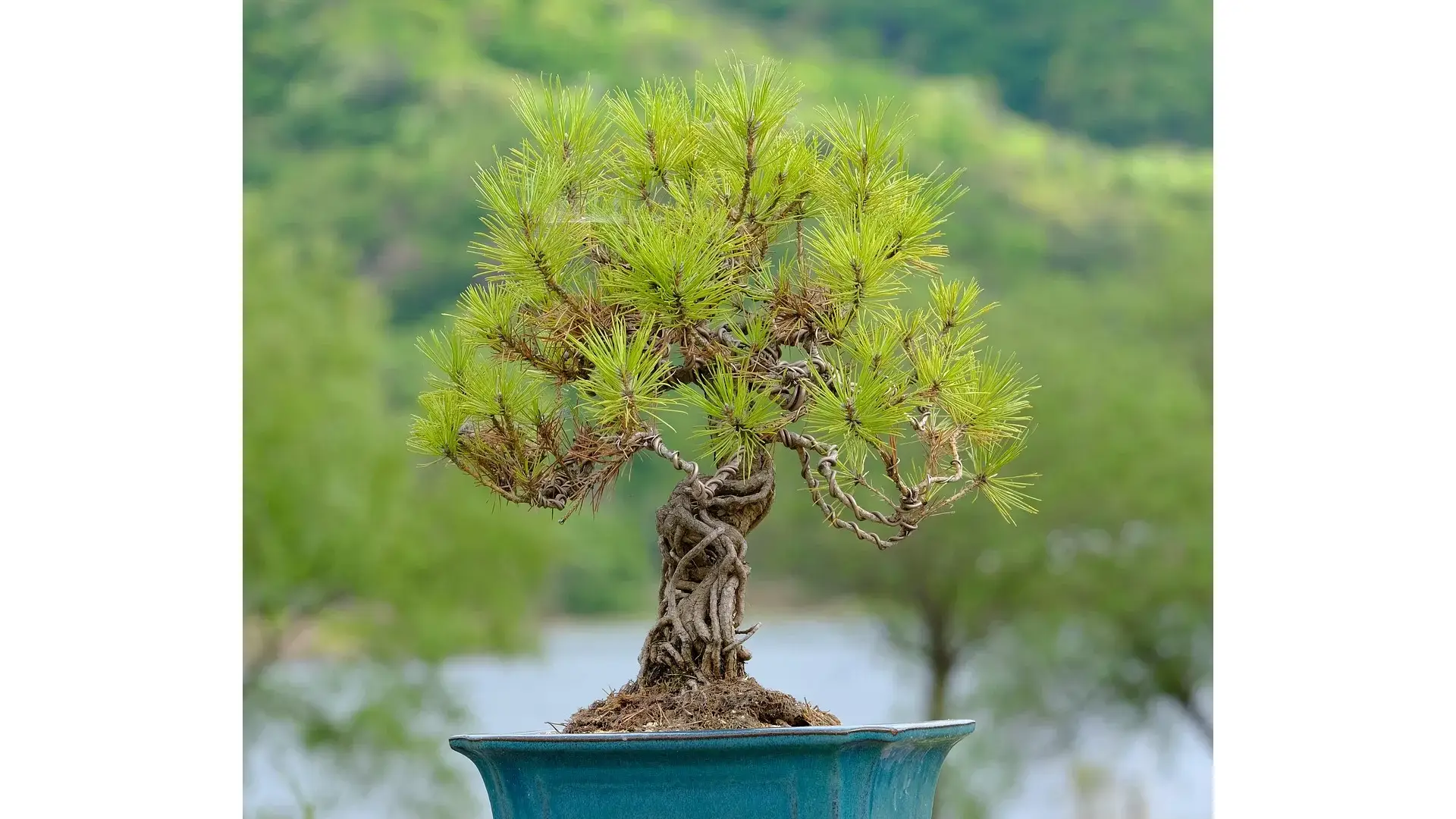
Conifers such as pine are outdoor projects: the visual payoff comes from light, seasonal growth, and years of structural decisions, not from indoor display alone.
Flowering and fruiting bonsai for warm climates
Flowering and fruiting bonsai are especially satisfying because the tree announces when your light and timing are working. They also expose weak care quickly. Flowers and fruit cost the plant energy, and a tiny root system cannot support a heavy crop if the tree is already stressed, recently repotted, or short of sun.
Pomegranate, bougainvillea, and crape myrtle
Pomegranate — Punica granatum. Pomegranate has small leaves, textured bark, orange-red flowers, and the possibility of miniature fruit, making it one of the most characterful choices for a warm, bright patio. It prefers strong light and regular watering during growth, but it should not remain waterlogged. In a cool climate, protect it from frost and give it a winter plan rather than hoping a warm living room will provide the right balance of light and dormancy.
Bougainvillea — Bougainvillea spp. This woody tropical or subtropical plant can make a spectacular flowering bonsai with strong sun, heat, and careful pruning. What look like flowers are colorful bracts around the small true flowers, and bloom can suffer if light is weak or pruning removes the wrong growth. Keep it frost-free, let the mix dry somewhat between waterings, and use gloves when handling thorny branches.
Crape myrtle — Lagerstroemia spp. Crape myrtle offers exfoliating bark, a deciduous habit, and summer flowers in shades from white to pink, red, and purple. It is a strong outdoor choice in warm regions, but a cold-winter grower needs a protected dormant setup. Prune with the tree’s flowering cycle in mind: a heavy cut at the wrong time can remove the shoots that would have carried flowers.
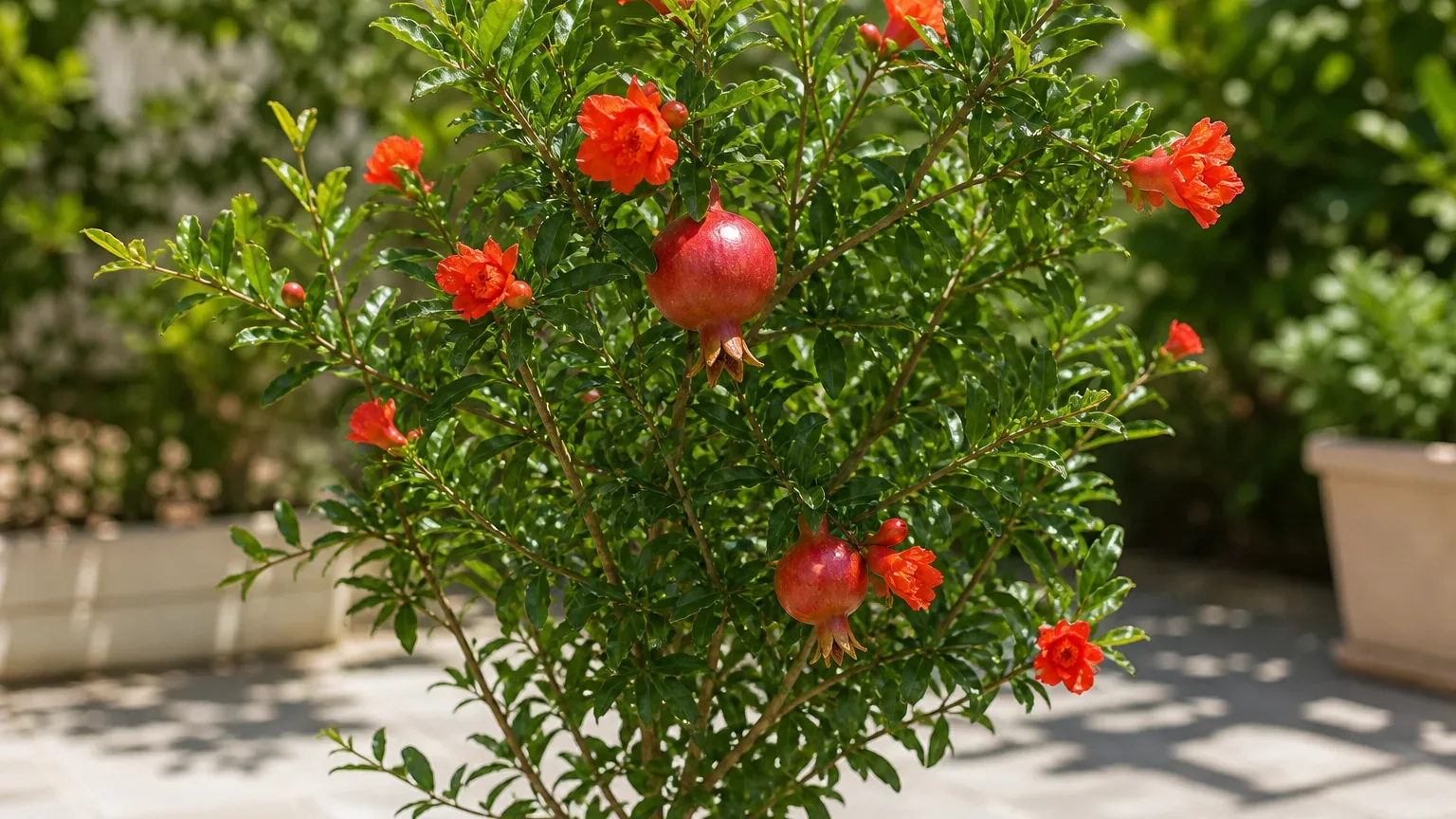
Pomegranate bonsai can flower and fruit, but the tree needs enough sun and root health to pay the energy cost; a crop should never be forced on a weak or recently repotted tree.
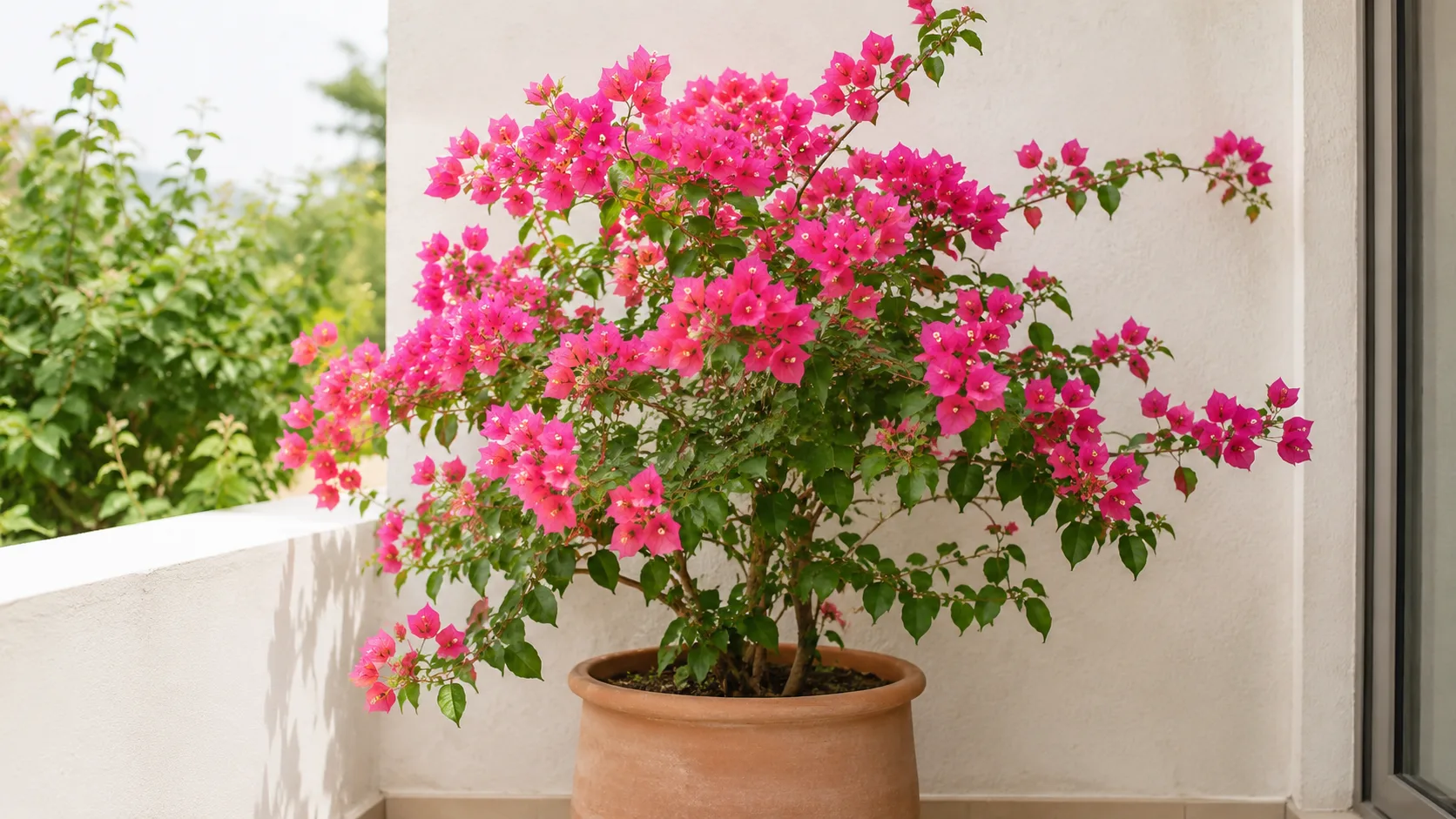
Bougainvillea is a flowering-bonsai choice for hot, bright conditions—not a low-light indoor tree moved outside only when it is time to bloom.
European beech — Fagus sylvatica. Beech sits at the edge of this group because its appeal is ornamental rather than floral: smooth bark, seasonal leaves, and a strong winter outline. It is worth repeating here because it is often chosen for its refined appearance and then underestimated. In a shallow pot it needs a protected outdoor position, consistent moisture, and a grower willing to let the tree mature slowly.
Care rules that apply to every species
The exact schedule varies, but the sequence is consistent: choose the right placement, watch the root-zone moisture, feed during active growth, prune with the species’ budding pattern in mind, and repot before the root system becomes a solid, airless mass. Bonsai care is less about memorizing a weekly calendar than learning what the tree and pot are telling you.
Water, soil, roots, and repotting
Water by observation. Feel or inspect the surface, consider the weather and the tree’s growth stage, then water thoroughly until the whole root ball is wet and excess drains from the holes. A shallow container may need water daily—or more than once on a hot, windy day—but a cool, shaded tree may need much less. The RHS notes that bonsai compost can dry rapidly in warm or windy conditions and recommends checking throughout the year, not just in summer (RHS watering and feeding guidance).
Use an open, stable bonsai substrate that holds enough moisture for the species while leaving air around the roots. A common mineral mix uses akadama, pumice, and lava rock; other mixes can work if they drain freely and do not collapse into a dense mud. Acid-loving azalea is the important exception: its root zone needs an appropriately acidic, lime-free medium rather than a generic alkaline mix.
Repot when roots circle densely, water runs straight through without wetting the root ball, the mix has broken down, or growth has stalled for reasons you cannot explain. Young, vigorous trees often need attention more frequently than old trees, but the best timing is species- and climate-dependent. After root work, water well and give the tree a sheltered recovery period; do not combine aggressive root pruning, heavy branch removal, and a sudden location change unless you have a clear reason.
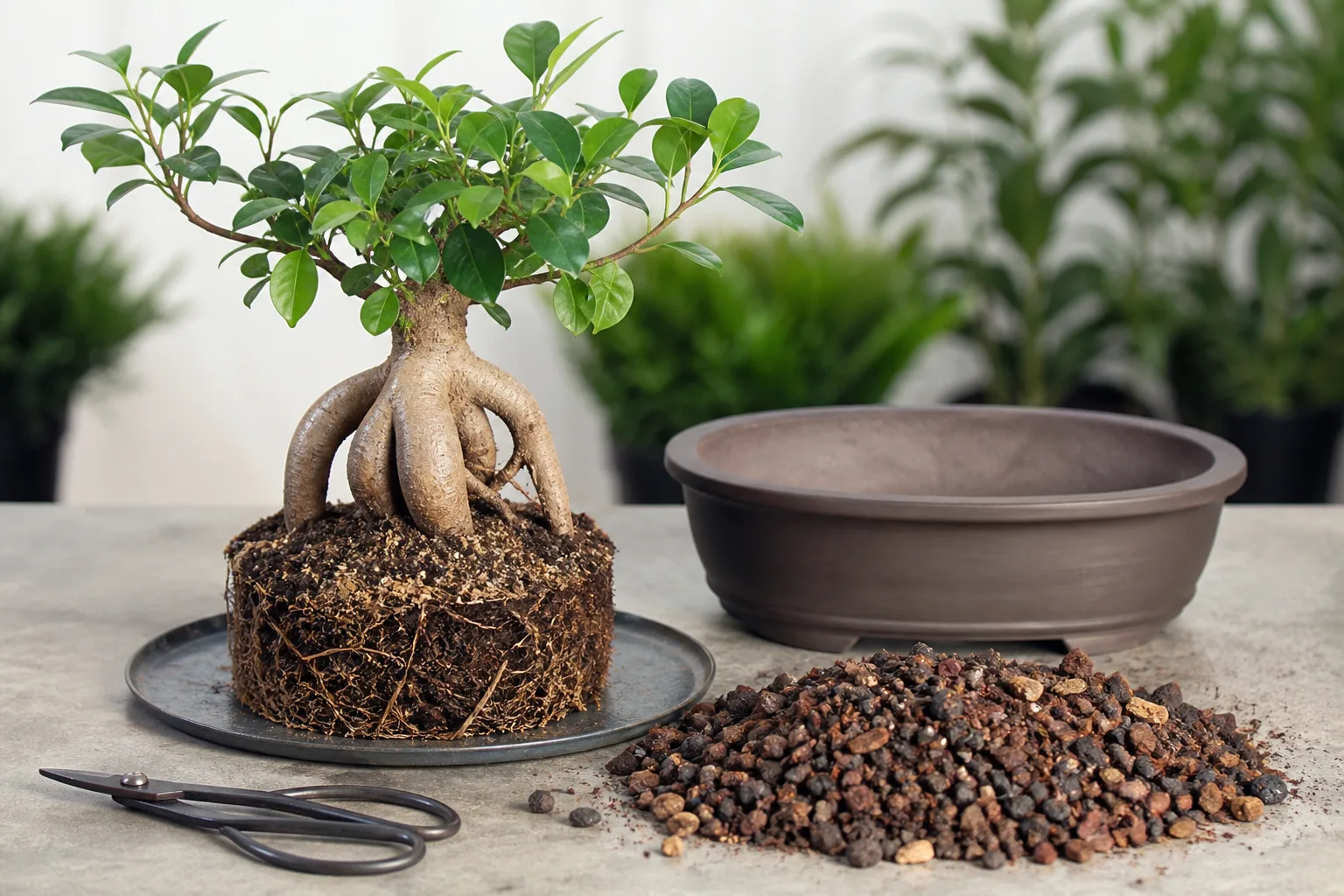
Repotting is a root-health operation, not simply a move into a prettier pot: the goal is a fine, functional root system with room for air and water.
Pruning, wiring, light, and winter
Separate structural pruning from maintenance pruning. Structural pruning removes or shortens major branches to establish the design; maintenance pruning keeps new shoots within that design. Do not apply the same rule to every species: ficus can bud from older wood, juniper may not recover from bare branches, azalea flowers on growth formed after its bloom, and pine uses candles rather than broadleaf shoot tips. The RHS likewise emphasizes that pruning timing is specific to the tree, with maples, pines, deciduous trees, and evergreen conifers each needing different treatment (RHS pruning guidance).
Wire young, flexible branches and inspect them frequently. As the branch thickens, wire can cut into bark and leave a permanent scar; as it dries, brittle wood can snap even when the wire looks loose. Good wiring supports a branch’s movement and spacing; it should not be used to force a weak or unhealthy tree into a finished shape.
Give outdoor species full light unless heat, wind, or leaf scorch calls for temporary shelter. Give indoor species the brightest stable light available and rotate only gradually. In winter, protect roots from extreme cold without turning a temperate tree into a warm-room houseplant; a sheltered cold frame, unheated garage, or insulated outdoor position may be more appropriate than a heated living room.
Common mistakes that kill promising bonsai
- Buying the room, not the tree. A juniper looks perfect on a coffee table but will decline indoors. Choose the species from the final growing location, not the display location at the store.
- Watering on a fixed calendar. Daily watering can drown a shaded tree, while every-three-days watering can kill a maple on a hot balcony. Check the mix, pot, weather, and species together.
- Using ordinary garden soil. Garden soil compacts in a shallow pot and blocks air from the roots. Use a known, well-draining bonsai substrate instead.
- Shearing every species like a hedge. Juniper, pine, maple, azalea, and ficus respond differently to cuts. Preserve living foliage and learn where that plant makes new buds before removing a branch.
- Repotting because the pot looks small. The shallow pot is part of the culture, not a sign that the tree needs a large upgrade. Repot for root and substrate health, then return to a proportionate container.
- Forcing flowers or fruit. A weak tree cannot safely carry a crop. Improve light, roots, and vigor first; treat blooms and fruit as evidence of good culture, not a required decoration.
- Ignoring winter. Temperate bonsai need a winter plan, whether that means protection from severe freezes, wind shelter, or simply leaving the tree outdoors. Tropical bonsai need the opposite: warmth and bright light.
- Leaving wire on too long. Check wired branches every few days during active growth. Removing wire before it scars is part of training, not an optional finishing step.
Conclusion
The right bonsai species is the one whose biology fits your life. Choose ficus, weeping fig, or dwarf jade for a genuinely bright indoor space; choose Chinese elm or juniper when you have outdoor access and want a forgiving training partner; choose maple, azalea, pine, flowering trees, or fruiting species when you are ready to follow seasonal timing instead of improvising.
Before buying, write down three facts: your brightest growing spot, your coldest winter condition, and how often you can check a shallow pot. Then pick the species whose care requirements agree with those facts. That single decision does more for a bonsai’s future than the shape of the first branch or the color of the first pot.



