Zevo Flying Insect Trap Review for Kitchens
Before you buy the $20 Zevo starter kit, read how it compares to vinegar traps, liquid lures, and source removal for fruit flies and gnats.
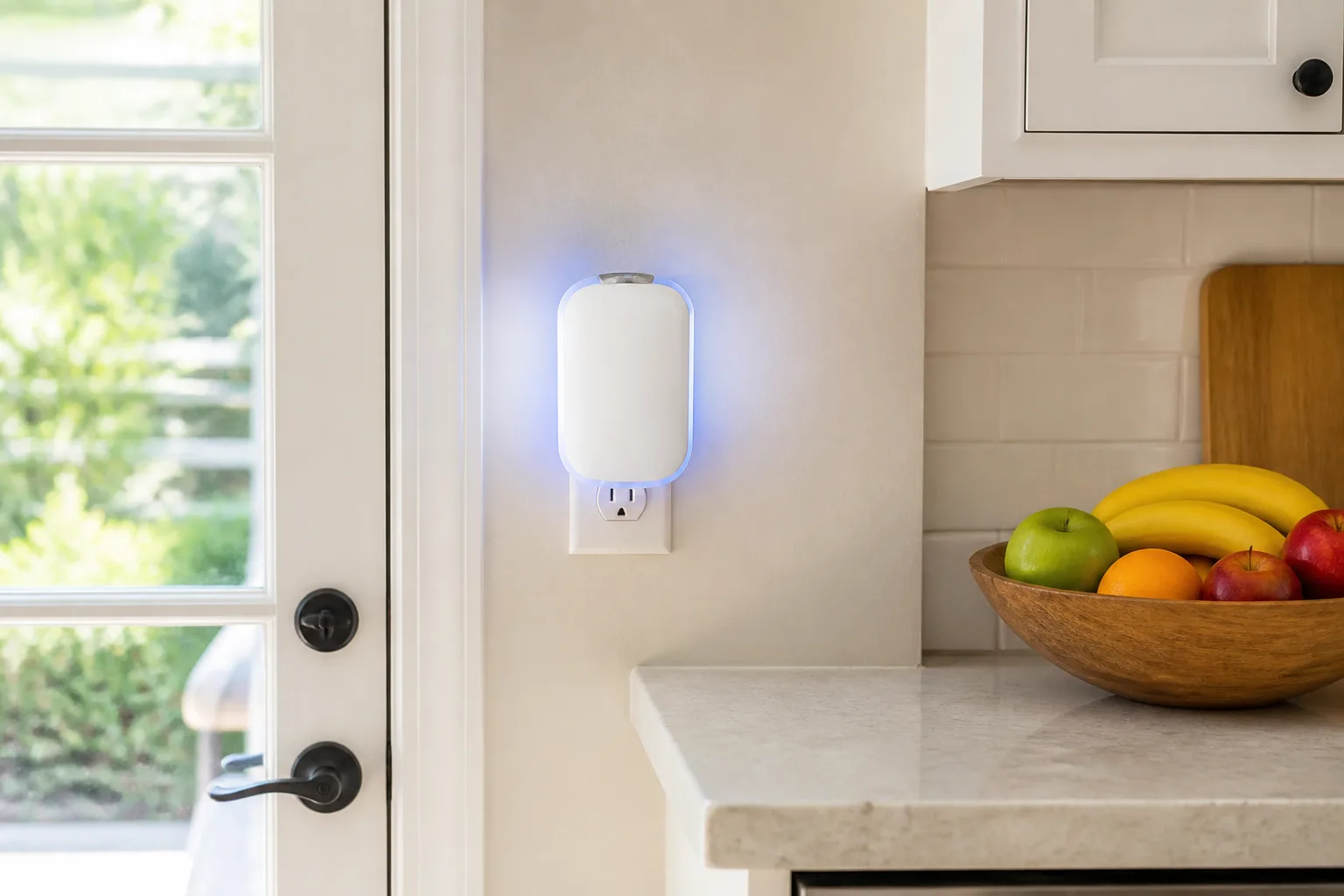
A bowl of tomatoes on the counter turned into a cloud of tiny flies by Thursday. I had tried the vinegar-and-dish-soap jar, swatted house flies at dusk, and still found insects circling the compost bin every morning. The Zevo Flying Insect Trap was the first tool that felt low-effort enough to leave running while I fixed the messier parts of the problem—and after more than a year plugged in near my kitchen doorway, it is still part of my routine. It did not magically make the kitchen “bug-free” on day one, but it changed how I manage flying insects: quiet, always on, and without spraying chemicals where I chop food.
That outcome only makes sense if you treat Zevo as adult fly control, not a full extermination system. The University of Wisconsin–Madison Extension is blunt on fruit flies: the only way to completely stop them is to find and eliminate breeding sites in fermenting food, drains, and hidden residue. A plug-in trap catches adults that are already flying; it does not clean the bin seam where eggs are hatching. Once I paired Zevo with that cleanup mindset, the kitchen stayed calmer than it had in seasons past.
What the Zevo Trap Actually Does (and What It Does Not Do)
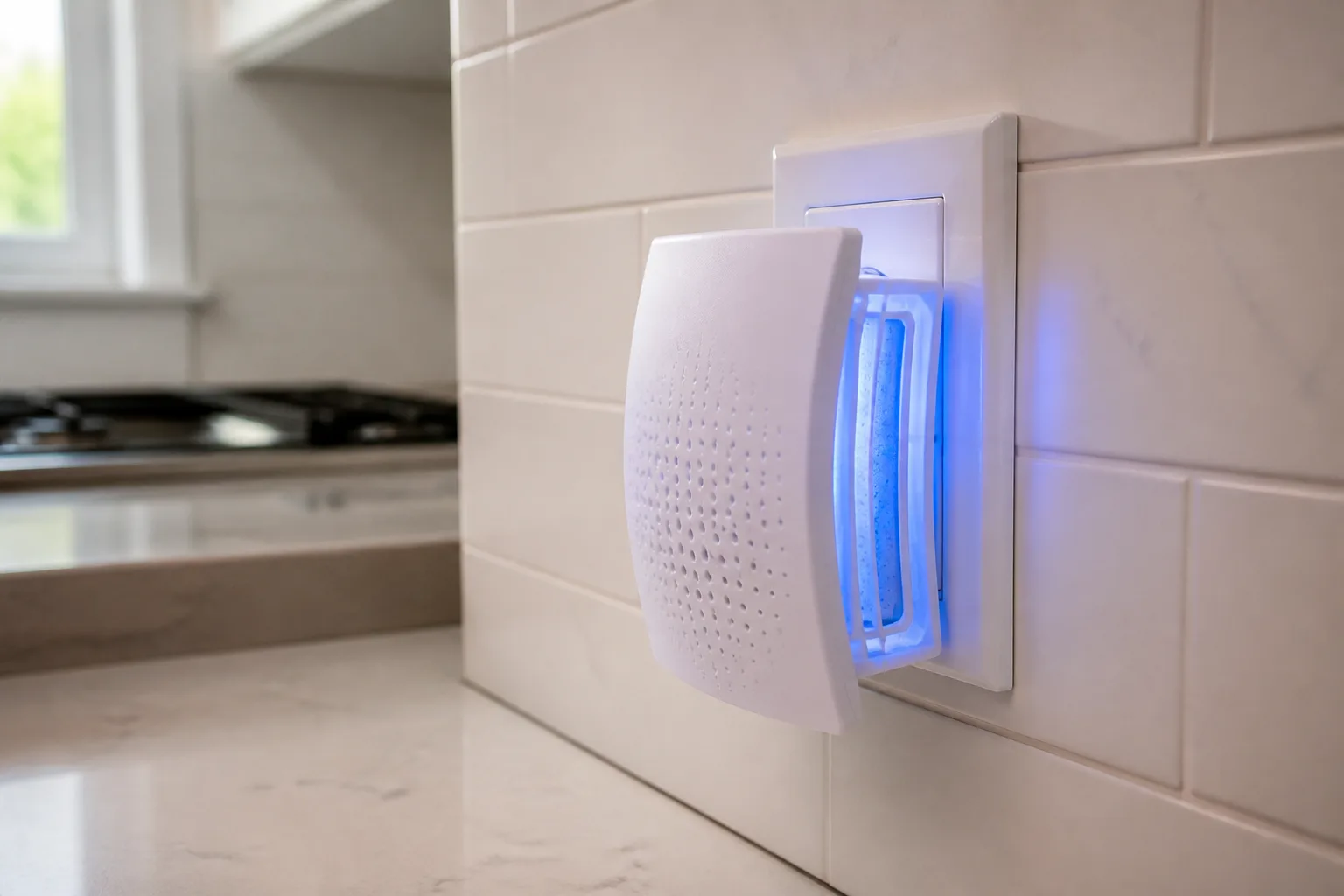
The Zevo Flying Insect Trap is a plug-in base plus a disposable adhesive cartridge. According to Zevo’s product guidance, the base emits optimized blue and UV light around the clock. Flying insects move toward the glow, enter the cartridge from behind, and stick to a glue pad that faces the wall—not the room. There is no zapping, no mist, and no odor. You dispose of the whole cartridge when it fills up.
What it does well is remove adult house flies, fruit flies, and gnats that are already airborne in the kitchen, pantry, mudroom, or bathroom. What it cannot do is dry out wet potting mix, scrub drain slime, or refrigerate your produce. If you are fighting fungus gnats from houseplants or drain flies from a sink, you may still need the steps in our fungus gnat guide or a drain-focused approach from our homemade gnat trap breakdown before any light trap will feel effective.
Blue and UV Light Plus a Hidden Adhesive Cartridge
The design detail that sold me is the curved shield. Competitor sticky traps and old-school fly ribbons leave dead insects in plain sight; Zevo hides the catch behind the white cartridge shell. Setup is intentionally hands-off: peel the protective film off the refill, slide the cartridge into the base until it clicks, and plug the unit into a standard 120V outlet. Replacement cartridges use a pull tab so you never touch the glue or the insects when you toss a full card.
Zevo also added a six-week blinking reminder on newer bases. When the blue light starts pulsing, it is not broken—it is prompting you to lift the cartridge and decide whether the glue pad still has open space. Reset the timer by lifting the cartridge or unplugging briefly; if you inspect more often than every six weeks, the blink may never appear.
Why Flying Insects Took Over My Kitchen First
Kitchen flies feel sudden, but they are usually the end of a longer story. Fruit flies (Drosophila) breed in fermenting fruit, spilled juice, beer or wine residue, recycling bottles, and the gunk under a stove drip pan. UW Extension notes the full life cycle can finish in eight to ten days indoors, which is why a few flies on Monday can become a room full by the next weekend if a breeding site stays hidden.
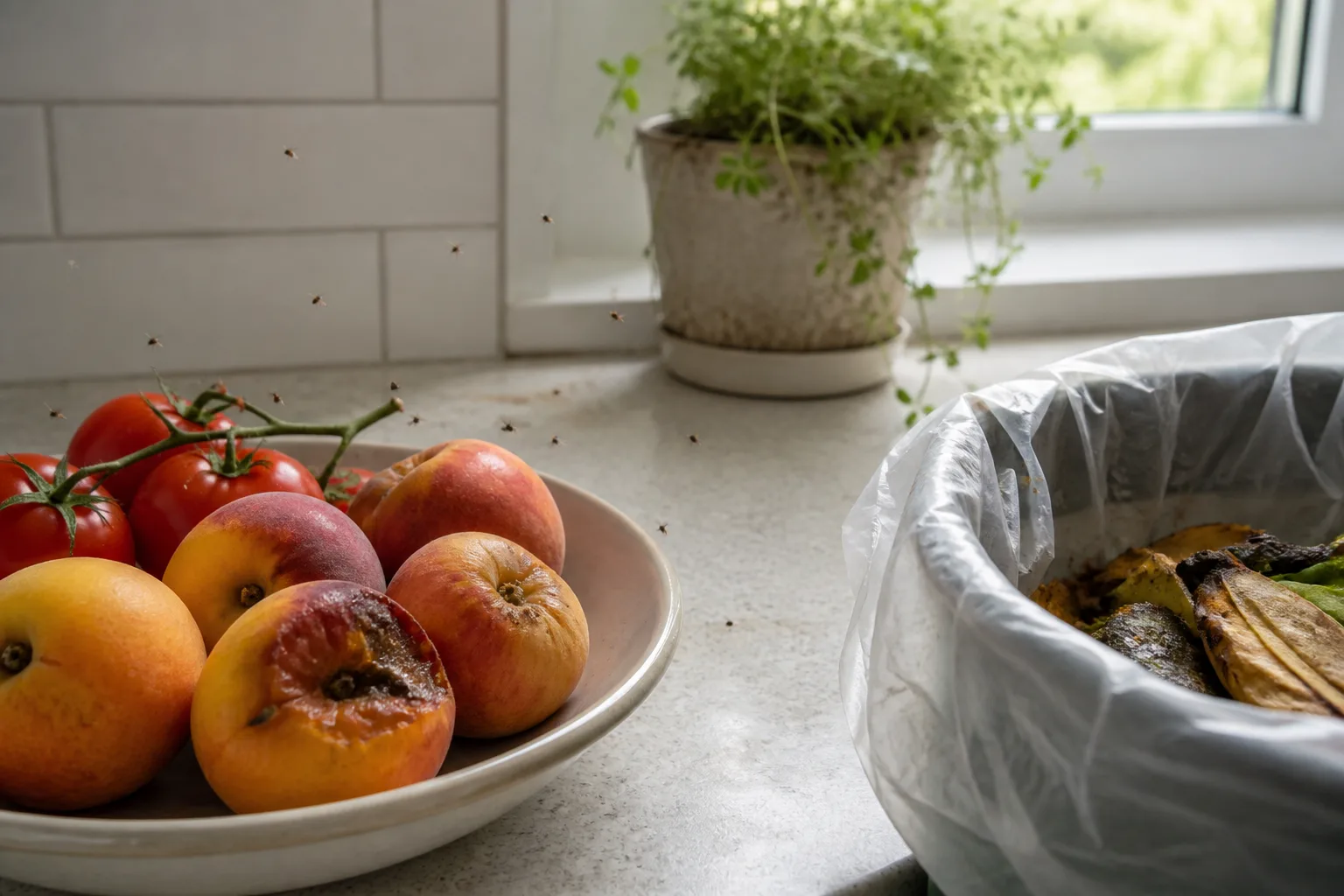
My outbreak followed a familiar pattern: farmers market peaches, a sticky recycling bin, and a sponge that never fully dried. House flies entered through a screen gap when trash day piled bags by the back door. Gnats from a overwatered herb pot added confusion—I was swatting “fruit flies” that were not fruit flies at all.
Fruit Flies, Gnats, and House Flies Are Not the Same Pest
Misidentification is the fastest way to buy the wrong trap. Use this quick field guide before you spend money:
| What you see | Likely pest | What feeds the problem | Trap that helps first |
|---|---|---|---|
| Tan flies with red eyes around fruit or wine | Fruit fly | Fermenting produce, spills, recycling | Zevo near counter plus liquid lure like TERRO (see our best fruit fly traps roundup) |
| Slender dark flies lifting from soil | Fungus gnat | Damp potting mix | Yellow sticky card at soil line; fix watering |
| Fuzzy gray flies on bathroom walls | Drain fly | Organic film inside drains | Mechanical drain cleaning, not light alone |
| Larger buzzing flies at windows | House fly | Trash, pet waste, entry gaps | Zevo near doors; improve sanitation and screens |
Zevo’s label targets house flies, fruit flies, and gnats. It can catch occasional mosquitoes or other small fliers that wander toward the light, but it is not a mosquito yard solution. Drain flies and heavy fungus-gnat infestations need habitat fixes; otherwise you will blame the trap for an identification miss.
Unboxing and Setting Up the Zevo Starter Kit
The starter kit includes one plug-in base and one full-size refill cartridge (look for the purple lock icon on compatible refills—compact refills do not fit every base revision). Retail pricing typically lands around $20 at big-box and online sellers for the starter; refill twin-packs and four- or six-cartridge bundles lower the per-card cost if you know you will run traps year-round.
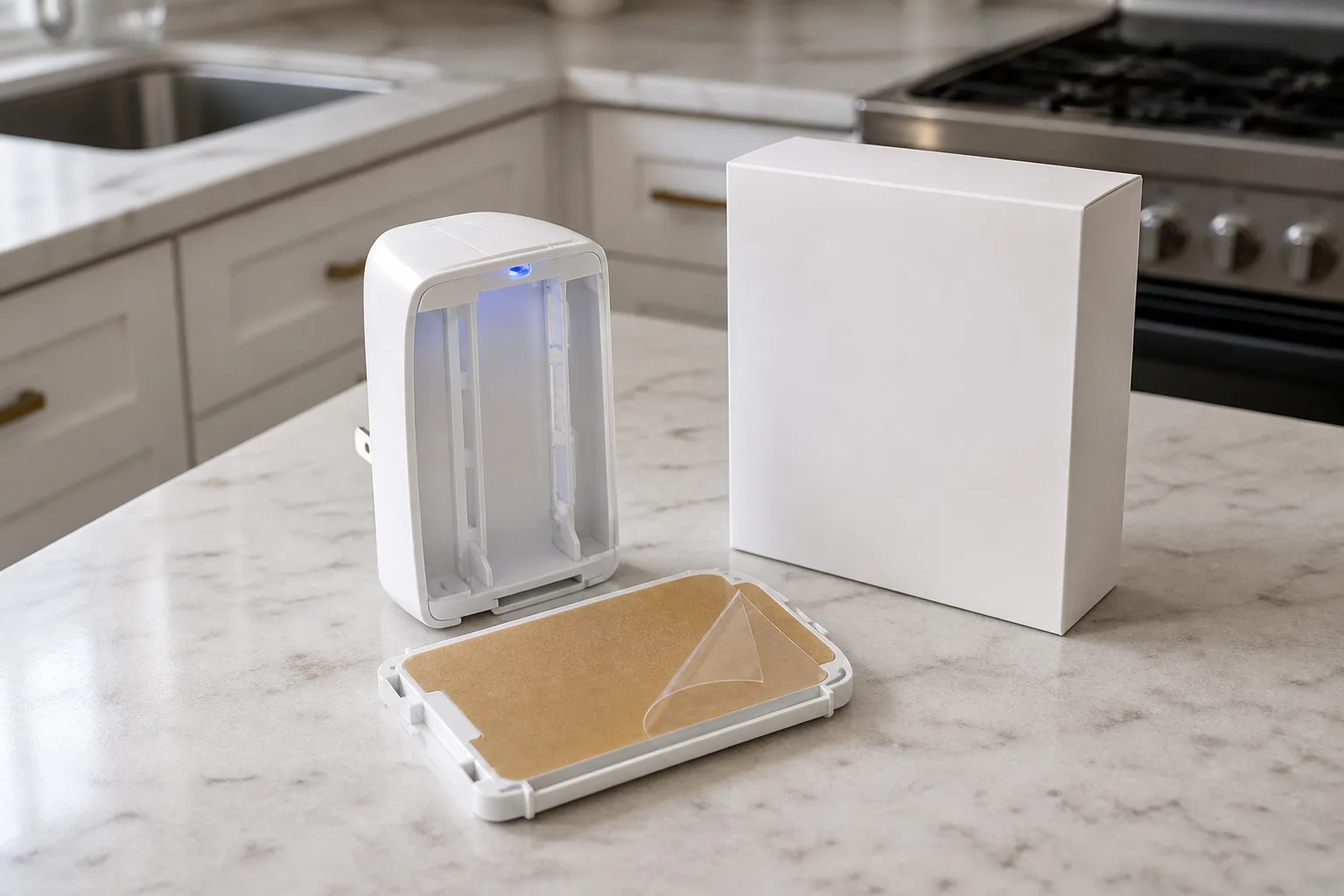
Allow five minutes for first setup. Choose an outlet you can leave occupied; the trap is designed for continuous duty, not occasional vacation use.
Cartridge Installation Without Touching the Glue
- Remove the cartridge from its packaging and peel the clear film off the adhesive face (the sticky side faces the wall when installed).
- Align the cartridge with the base rails and slide it upward until you feel a click.
- Plug the unit into the outlet with the cartridge opening facing the room and the glue pad facing the wall.
- Wait 24 hours before judging performance—Zevo guarantees a first catch within 24 hours when placement is correct, but heavy infestations may need parallel cleaning.
Keep spare cartridges sealed until use. Dust on the glue reduces stickiness, and a cartridge left open on the counter picks up lint fast.
Where to Plug In the Trap for Best Results
Placement is the entire game. Zevo’s FAQ states a rule worth memorizing: if you cannot see the trap, insects cannot either. That means mid-wall outlets in the kitchen, not behind the refrigerator, inside a cabinet cavity, or tucked behind a door swing.
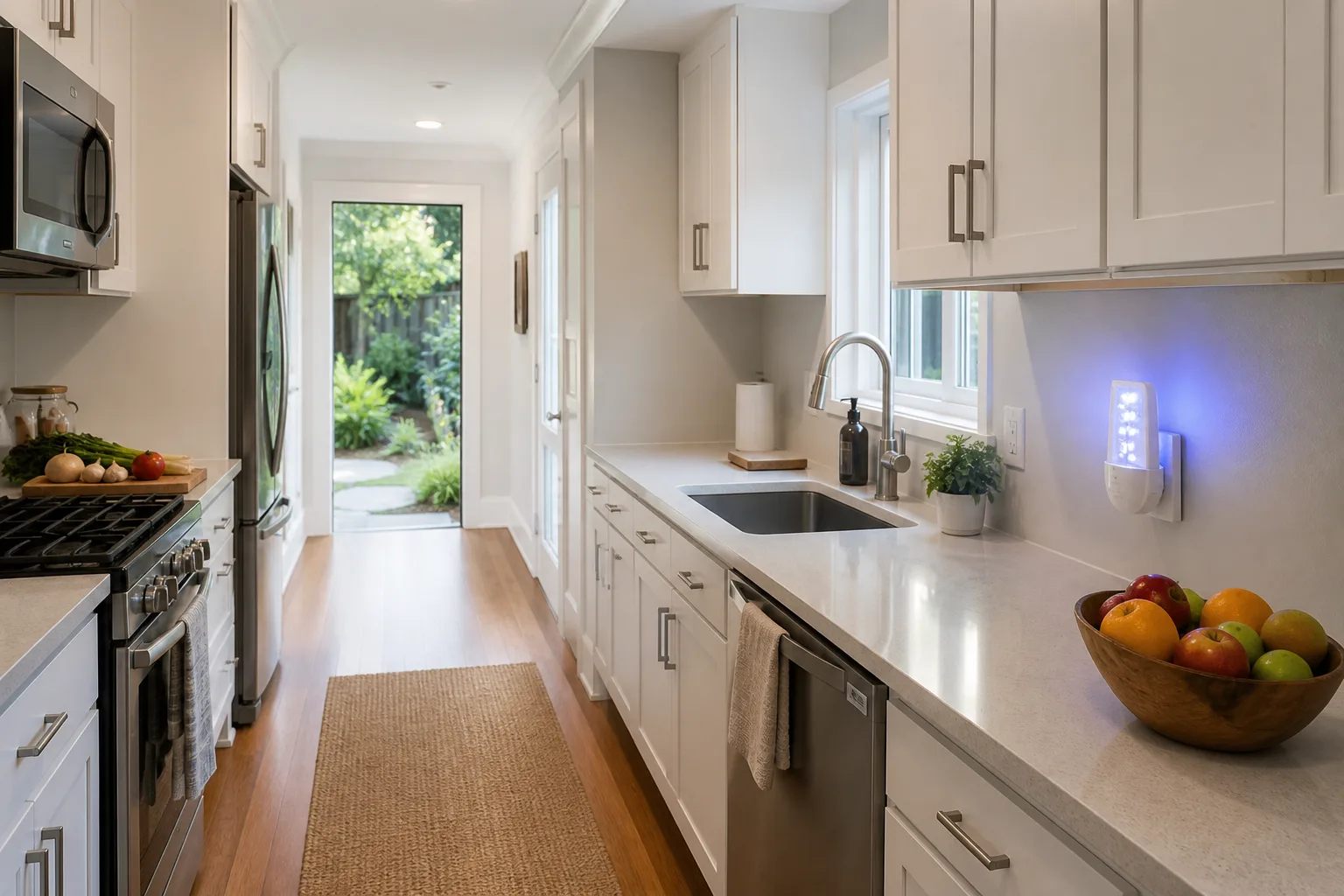
My best results came from:
- An outlet between the back door and the fruit bowl, where flies entered and landed
- A second unit opposite the first in a long galley kitchen during peak summer
- A hallway outlet near the bathroom when drain flies were misidentified as gnats (helpful for monitoring, not a drain cure)
Aim for open sight lines from where flies hover. Height matters less than visibility, but eye-level outlets near counters beat floor plugs blocked by trash cans.
Outlets and Rooms to Avoid
Do not use Zevo in uncovered outdoor locations or anywhere water can splash the plug—patios, uncovered porches, and wet garages are out. Indoors, keep the trap away from competing light sources that win the insect’s attention: bright TV screens, monitor walls, and sunny windows directly beside the outlet.
Also skip outlets buried behind furniture, thick curtains, or deep corners that force flies to navigate a maze. For larger rooms, Zevo recommends two or more traps rather than one hidden unit. If your kitchen has only one usable outlet, prioritize the wall opposite the main entry door instead of hiding the trap behind that door.
Real-World Performance After One Year
My experience falls between the glowing reviews and the skeptical homestead tests you will see online—and that spread is useful data.
For house flies during a late-summer invasion, Zevo worked faster than I expected. Overnight, the first cartridge held a handful of flies; within a week, combined with trash discipline and screen repair, nightly swatting stopped being a chore. Consumer testers reporting similar relief on heavy house-fly infestations align with that pattern: continuous light trapping plus sanitation beats swatters alone.
For steady-state kitchen duty, the trap catches the stragglers I would never bother to hunt—one or two fruit flies near the compost pail, occasional gnats when I overwater basil, random midges in winter when I bring firewood through the mudroom. The kitchen feels bug-free because adults disappear before they land on my cutting board, even though I still inspect cartridges and drains monthly.
What Caught Fast vs. What Took Weeks
House flies and wandering gnats hit the glue within hours to days when the trap sat in their flight path. Heavy fruit-fly outbreaks were slower. Independent testers comparing Zevo side-by-side with vinegar traps during peak fermentation season often report liquid lures catching far more fruit flies per day when the source is still active on the counter. My approach now is hybrid: Zevo stays plugged for passive control, and I run a vinegar bowl for three to five days when produce peaks or I bring in garden tomatoes.
Cartridge life varied more than the “replace every two months” sticker suggests. In winter, one card lasted four to six months with only a few insects. In August, the same kitchen filled a cartridge in three weeks because house flies and fruit flies overlapped. I inspect monthly and swap when the pad is crowded or dust-coated, not when the calendar says so.
Zevo vs. DIY Vinegar Traps and Liquid Lures
The honest comparison is not “Zevo wins” or “vinegar wins.” They solve different jobs.
| Factor | Zevo plug-in trap | Vinegar + dish soap bowl | TERRO-style liquid lure |
|---|---|---|---|
| Mechanism | Light attraction to glue | Fermentation bait + surface tension | Liquid food attractant |
| Visibility of dead insects | Hidden behind cartridge | Visible in bowl | Visible in trap dome |
| Daily maintenance | None until full | Refresh bait every few days | Replace lure per label |
| Best when | Ongoing passive control near doors | Active fruit-fly bloom on counter | Fruit flies clustered at food |
| Weak when | Competing bright lights; wrong pest ID | You forget to empty the bowl | Drain or soil pests are the real source |
| Rough cost | ~$20 starter + refills | Pennies | Low per trap, recurring refills |
If you want one set-and-forget device and hate looking at floating fly bodies, Zevo is the better living-with-it choice. If you need maximum fruit-fly kill during a produce explosion, start with sanitation plus a liquid or vinegar trap, then keep Zevo running to catch re-entry. Our best fruit fly traps guide walks through six mechanisms if you want a full shopping list.
Ongoing Costs: Refills, Subscribe-and-Save, and Waste
Budget beyond the starter kit. Refill cartridges are disposable plastic and glue; most municipal recycling programs will not take them, so factor environmental cost if that matters to you.
Typical pricing (varies by retailer):
- Starter kit (base + one cartridge): about $18–$22
- Twin refill packs: often $10–$14
- Four- or six-packs: better per-cartridge value for multi-trap homes
Amazon’s Subscribe & Save and similar auto-ship options make sense if you run two kitchens or a trap in a garage mudroom year-round. I subscribe only for summer months when cartridges fill faster.
Energy draw is small—comparable to a night-light—but it is 24/7 electricity versus a vinegar bowl that costs nothing to idle. The trade is convenience and a cleaner sightline, not the cheapest possible kill rate per fly.
Pet, Kid, and Food-Area Safety
Zevo markets the trap as no chemical spray and suitable near food prep when used as directed. The electrical base should be treated like any plug-in appliance: keep out of reach of children and curious pets, and do not let cats bat at the glowing cartridge.
When used as directed, adhesive traps avoid airborne pesticides. That does not mean the glue is food-safe—do not place the unit where a dog can lick the cartridge. My cat inspects the blue glow but rarely touches it; mounting height on a kitchen outlet above counter level helped.
If a pet contacts the glue, follow adhesive-removal guidance from your veterinarian; vegetable oil can soften many household glues, but let a professional decide rather than guessing.
When the Trap Is Not Enough on Its Own
The trap transformed my kitchen only after I accepted a boring truth: trapping adults without removing breeding material is a treadmill. UW Extension lists detective work as the real fix—overripe produce, recycling residue, mop buckets, refrigerator drip pans, and forgotten potatoes under the sink.
Treat Zevo as one layer in integrated pest management. Our indoor IPM guide applies the same sequence here: identify the pest, remove the source, monitor with traps, then escalate only if needed.
Source Removal Checklist That Actually Stops Breeding
Run this checklist the same day you plug in Zevo:
- Refrigerate or freeze ripe fruit; compost goes out or into a sealed bin
- Rinse beer, wine, and soda containers bound for recycling
- Scrub garbage and compost bin seams; dry the bottom of the can
- Pull the stove and fridge forward if you suspect hidden spills
- Replace over-wet dish sponges and empty sink strainers
- For plants, let the top inch of soil dry and set a yellow sticky monitor at the pot rim
- For drains, scrub biofilm with a brush—not bleach alone—and fix slow leaks
If flies rebound within a week after a deep clean, you missed a site. Split the kitchen into zones and inspect one zone per day until catches on the glue card drop to near zero.
Troubleshooting a Trap That Catches Nothing
A silent trap is usually placement, competition, or wrong pest—not a defective unit.
Work through these fixes in order:
- Move it to an open outlet where you can see the blue glow from across the room.
- Relocate away from TVs, monitors, and sunny windows that outshine the trap.
- Add a second trap on the opposite wall if the room is large or L-shaped.
- Confirm the pest—drain flies may ignore light while hanging on tile near the sink.
- Remove competing food so fermentation lures are not pulling flies away from the light.
- Replace an old cartridge if the glue is dusty or packed with insects.
- Contact manufacturer support if multiple fresh cartridges in ideal placement still catch zero insects while you visibly have house flies or fruit flies.
During my first week, moving the trap 18 inches left off a bright window ledge tripled overnight catches. Details matter more than brand loyalty.
Who Should Buy the Zevo—and Who Should Skip It
Buy Zevo if you want quiet, continuous control of flying insects in kitchens and entry areas, you dislike visible dead bugs, you have accessible outlets with clear sight lines, and you are already willing to clean breeding sites.
Skip or delay Zevo if your problem is clearly drain flies or fungus gnats from soil without counter fruit; a light trap will disappoint until habitat fixes land. Skip as your only tool during a massive fruit-fly bloom if you need fast knockdown—pair with vinegar or TERRO first. Skip if your kitchen has no safe outlet placement away from pets and toddlers.
For me, the $20 starter kit was worthwhile because it reduced daily mental load: no bowls to knock over, no spray residue on herbs, and a visible blink reminding me to check the cartridge before guests arrive. It did not replace trash night, screen repair, or the occasional vinegar bowl—but it made the kitchen feel reliably calm in a way swatting never did.
Conclusion
The Zevo Flying Insect Trap earned a permanent outlet in my kitchen because it handles the ongoing adult fly traffic that sanitation alone never fully prevents. It is not a one-click “bug-free” miracle, and it is not always the fastest fruit-fly killer during peak produce season. Used with correct placement, monthly cartridge checks, and the breeding-site cleanup extension services emphasize, it is one of the lowest-effort tools I have tested for house flies, fruit flies, and gnats indoors.
If you are still deciding, start by naming the insect, cleaning its source, and choosing whether you need passive light trapping (Zevo) or active bait trapping (liquid or vinegar). Many kitchens—including mine—end up using both for a week, then keeping Zevo plugged long after the bowls disappear.



