Dracaena Janet Craig Care and Growing Guide
Learn Dracaena Janet Craig care without a fixed watering schedule. Use soil, pot weight, light, and leaf symptoms to keep this slow grower healthy.
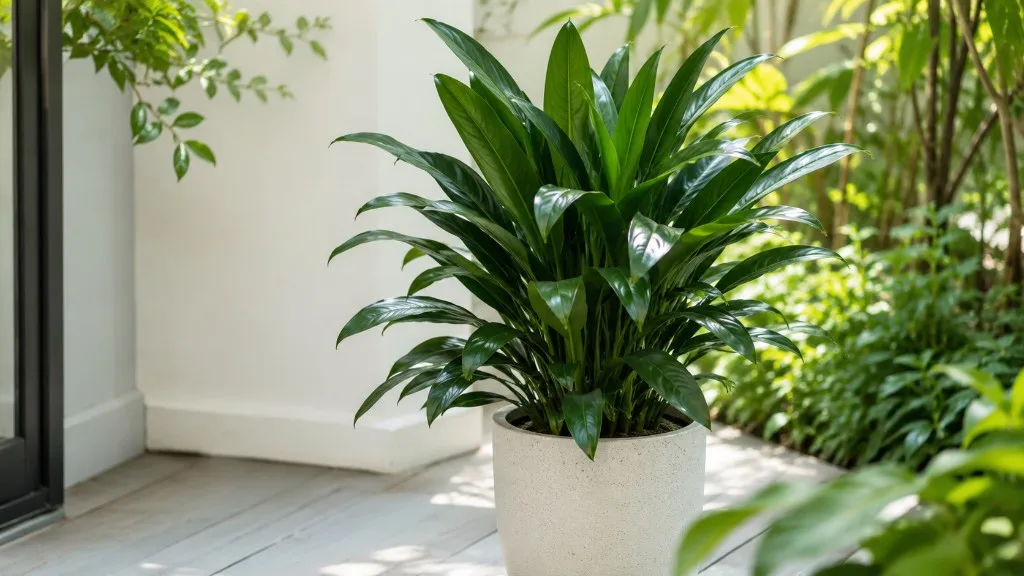
Dracaena Janet Craig succeeds indoors because it grows slowly, tolerates imperfect light, and does not demand constant attention. Its tolerance has limits, though. Most failures come from treating “easy care” as permission to keep the roots wet, place the plant in darkness, or add more fertilizer whenever growth slows.
The reliable approach is to respond to the plant’s actual environment. Give it filtered light, let the upper root zone dry before watering deeply, keep the potting mix airy, and change only one variable at a time when symptoms appear. That routine produces a sturdier plant than any fixed seven-day or ten-day schedule.
Dracaena Janet Craig Care at a Glance
For healthy Dracaena Janet Craig care, use these baseline rules:
- Place it in bright to moderate indirect light; it tolerates lower light but grows more slowly there.
- Water when the top 2 inches of mix feel dry and the pot feels noticeably lighter, then drain the pot completely.
- Use a loose indoor potting mix in a container with an open drainage hole.
- Keep it warm and away from cold drafts, heating vents, and hot glass.
- Feed modestly during active growth, never as a treatment for a stressed plant.
- Prune a healthy cane at the height where you want new shoots to form below the cut.
NC State Extension describes the plant as a slow-growing cultivar of Dracaena fragrans that performs in filtered light and is sensitive to fluoride and accumulated salts. The practical implication is simple: its foliage is forgiving of moderate light, but its roots and leaf tips are less forgiving of chronic wetness and mineral buildup. NC State’s Janet Craig profile is a useful reference for the cultivar’s form and common problems.
Know Which Janet Craig Plant You Have
Janet Craig is commonly sold under several labels, including Dracaena fragrans ‘Compacta’, Dracaena deremensis ‘Janet Craig’, and simply “compact dracaena.” Current horticultural treatments place it within Dracaena fragrans. The cultivar has dense rosettes of short, glossy, dark green leaves with lightly wavy margins, held on compact stems.
This identification matters because a generic corn plant can develop longer leaves and a more open, cane-like silhouette. NC State gives ‘Compacta’ a typical height of about 3 to 6 feet, although age, pruning, container size, and indoor light all affect its final form. A seller’s claim that every Janet Craig will reach 10 feet indoors should not dictate your pot size or placement.
You may also encounter “Janet Craig Compacta,” which emphasizes the tight, slow-growing form, and larger floor plants assembled from several canes at staggered heights. The individual canes follow the same care rules. A multi-cane pot, however, dries less predictably because the root mass, pot volume, and canopy density differ from those of a single young plant.
Give Janet Craig Useful Light, Not Just “Low Light”
Janet Craig can remain presentable in lower light than many houseplants, but low-light tolerant does not mean no-light. Photosynthesis still requires usable light, and a dim corner far from a window may support little more than slow decline. Bright to moderate filtered light gives the best balance of dense foliage, steady growth, and reduced scorch risk.
An east-facing window is often straightforward. Near a bright south- or west-facing window, use a sheer curtain or move the plant back far enough that hard midday or afternoon sun does not strike the leaves. Direct summer sun can bleach or scorch patches, while heat trapped against glass can damage tissue even when the room itself feels comfortable.
The RHS dracaena growing guide recommends bright indirect light and protection from intense summer sun. It also notes that woody dracaenas are warm-growing tropical plants. This supports a better placement rule than a compass direction alone: choose a spot with a broad view of the sky, soft shadows for much of the day, and no prolonged hot sun on the foliage.
How to Read the Plant’s Light Response
Judge the location over several weeks, not one afternoon. In insufficient light, new leaves may emerge narrower, internodes can open up, the crown may lean strongly toward the window, and the potting mix stays wet for unusually long periods. Slow growth by itself is not proof of a problem because Janet Craig is naturally slow, especially in winter.
Too much direct light produces a different pattern: pale, bleached, tan, or crisp patches on the side facing the window. Move the plant out of direct sun but do not cut away every marked leaf immediately; damaged tissue will not turn green again, yet the remaining green area still contributes energy. Rotate the pot a quarter turn every week or two only if the plant is actively leaning, not as a substitute for adequate light.
If the room has no window, use a full-spectrum grow light on a timer rather than calling the space “low light.” Start with the manufacturer’s distance recommendation and watch for bleaching or stretching. Artificial light quality and fixture strength vary too much for one universal distance.
Water by Root-Zone Conditions, Not the Calendar
Watering every seven days can be too frequent in a cool, dim room and too slow for a root-bound plant in bright summer light. The pot’s size, mix, root density, season, airflow, and temperature all change the drying rate. Check conditions, then water thoroughly enough to wet the root ball and allow excess water to leave the drainage hole.
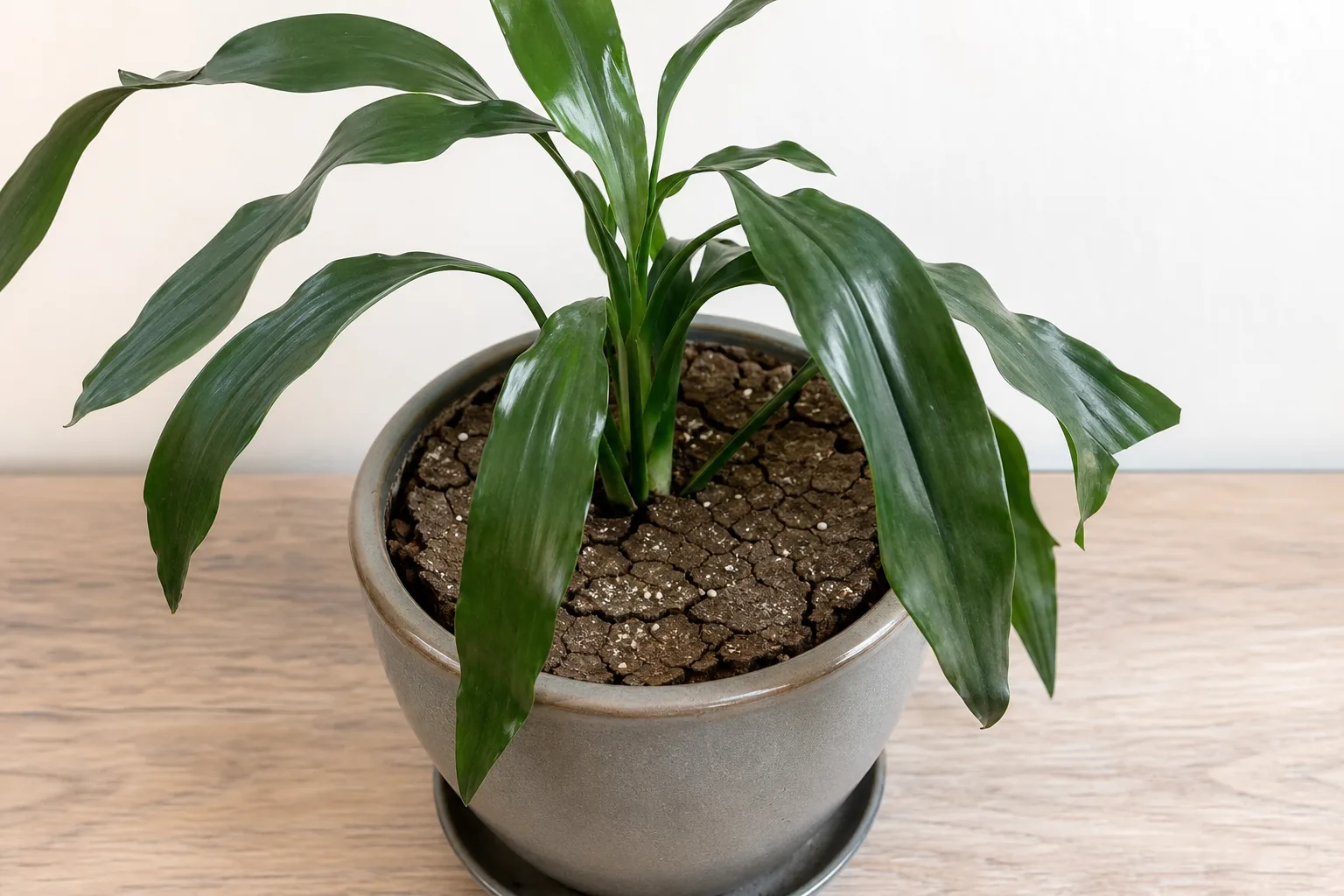
Avoid keeping the mix saturated and never let the pot sit in a cachepot full of runoff. Constant saturation excludes oxygen from the root zone and raises the risk of root decay. At the other extreme, repeated severe drought can leave tips crisp and cause lower leaves to yellow, so “let it dry” should not become “forget it for a month.”
Water quality matters when browning persists despite good root care. Both NC State Extension and the RHS flag dracaena sensitivity to fluoride or accumulated salts. Rainwater or an appropriate filtered source can help where tap water is problematic; avoid softened water because sodium from many softening systems can add to salt stress.
A Three-Signal Watering Check
Use three observations together before watering:
- Moisture depth: Push a finger or wooden skewer about 2 inches into the mix. The surface can look dry while the root zone remains wet.
- Pot weight: Lift the pot after a thorough watering, then again as it dries. A noticeable weight change becomes a more useful reference than a date on the calendar.
- Recent conditions: Extend the interval after cloudy weeks, winter slowdown, or a move to lower light. Recheck sooner during warm, brighter periods when active roots use water faster.
When the upper layer is dry, the pot is lighter, and the recent environment supports drying, water slowly across the surface. Empty the saucer after drainage finishes. If water races down the pot wall while the center remains dry, apply it in two passes several minutes apart or soak the nursery pot briefly, then let it drain completely.
Choose Soil and a Pot That Protect the Roots
Janet Craig needs a mix that holds some moisture but retains air after watering. A quality indoor potting mix amended with coarse bark or another stable, chunky component usually works better than dense garden soil. The exact recipe matters less than the result: water should enter evenly, drain freely, and leave the mix springy rather than muddy.
Choose a pot with at least one unobstructed drainage hole. Decorative planters without drainage can be used as outer cachepots only if the plant remains in a draining inner pot and runoff is emptied. A disproportionately large container stays wet around a small root ball; the RHS specifically cautions that overpotting can keep compost wet long enough to encourage root rot.
Repot for evidence, not because a calendar says two years have passed. Good triggers include roots circling densely, roots emerging from drainage holes, the plant lifting from the pot, water passing through a collapsed mix without wetting it, or the root ball drying much faster than before. Move up only one pot size, preserve healthy firm roots, and avoid burying the canes deeper than they were growing.
Do not repot a stable plant merely because growth is slow. Janet Craig is naturally unhurried, and repotting creates temporary root disturbance. If the mix is still open, water penetrates evenly, and roots have room, top-dress lightly or leave the plant alone.
Keep Temperature and Humidity Steady
Normal comfortable indoor temperatures suit Janet Craig. NC State reports best growth around 70–80°F and advises keeping corn plants above 50°F when possible, while the RHS recommends a consistently warm 65–86°F range. In an ordinary home, stability matters more than chasing the upper end of either range.
Keep the plant away from winter doors, air-conditioning blasts, hot radiators, and heating vents. A chilled plant in wet soil is especially vulnerable because water use slows while the root zone stays saturated. If you move it outdoors for summer, wait for reliably warm nights, use full shade or filtered light, and acclimate it gradually before bringing it back indoors.
Average household humidity is often adequate, but heated winter air can contribute to brown tips. A room humidifier provides a measurable, sustained change; grouping plants can make a small local difference. Frequent misting wets the leaf briefly but does not reliably correct chronically dry room air, so it should not be the main humidity strategy.
Feed Lightly and Keep the Leaves Working
Feed only a healthy, actively growing plant. Use a balanced houseplant fertilizer at a diluted label rate during spring and summer, then reduce or stop when growth slows in fall and winter. The RHS warns that overfeeding can damage roots, and Janet Craig’s slow growth means it has little need for aggressive fertilizing.
Never fertilize dry soil, a freshly stressed root system, or a plant showing a soft cane and persistently wet mix. More nutrients cannot compensate for low light or damaged roots. If a white crust forms on the soil or pot rim, pause feeding, check water quality, and flush the mix thoroughly with suitable water if the drainage is sound.
Dust blocks light from reaching the leaf surface and can hide early pests. Wipe both sides of the leaves with a soft damp cloth while supporting each leaf. Skip commercial leaf-shine products; clean foliage already has a natural gloss, and residue can make inspection harder.
Prune Janet Craig to Control Height and Create Branches
Pruning does more than remove damaged leaves. A healthy cane cut below the crown usually activates one or more dormant buds below the cut, producing new shoots and a branched silhouette. Make the cut at the height where you want that branching to begin, preferably during spring or early summer when warmth and light support recovery.
Use a clean, sharp blade and cut straight across a firm cane. Save the leafy top for propagation. Do not repeatedly shorten a cane that is soft, blackened, or hollow; first determine whether rot is advancing and retain only firm, clean tissue.
Remove a fully yellow lower leaf by cutting it close to the cane or gently peeling it away when it releases easily. A gradual loss of the oldest bottom leaves is part of forming a cane. Sudden yellowing across several levels of the plant is not normal aging and calls for a root-zone check.
Propagate Janet Craig From Stem Cuttings
Janet Craig can be propagated from a leafy top cutting or sections of healthy cane. Cut a firm stem with at least one viable node, keeping track of which end was originally up; an upside-down cane section will not behave as intended. Remove leaves that would sit in water or buried mix, and let heavy sap moisture dry briefly before setting the cutting to root.
Provide warm conditions and bright indirect light. Keep a potting-medium cutting lightly moist but airy, never saturated. Rooting can take weeks or longer, and the absence of immediate top growth does not mean failure if the cane remains firm and the medium smells fresh.
The RHS propagation guidance favors warm summer conditions and notes that bottom heat improves results for stem cuttings. A heat mat is optional in a warm room, but cold windowsills and wet mix are a poor combination. Avoid fertilizing until roots are established and new growth shows the cutting has resumed active growth.
Water Rooting Versus Potting-Mix Rooting
Water rooting lets you see root development and is easy for a leafy top cutting. Keep only the bare stem submerged, change cloudy water, and pot the cutting when it has several developing roots rather than waiting for a dense mass adapted entirely to water. Transition gently into a small draining pot and keep the mix slightly more even for the first few weeks.
Potting-mix rooting avoids the water-to-soil transition. Insert the correct end into a small pot of airy medium, firm it enough to hold the cutting upright, and cover loosely only if the room is very dry. Vent any cover regularly because stagnant humidity around a wet cane encourages decay.
For long bare canes, horizontal sections can sometimes root with a node facing upward, but this method is slower and less intuitive. A leafy top plus the pruned parent plant gives most home growers two opportunities: the top can root while the original cane produces shoots below the cut.
Prevent and Control Common Pests
Inspect the leaf bases, crown, cane crevices, and undersides every time you clean the plant. Mealybugs look like white cottony clusters; scale appears as attached brown or tan bumps; spider mites may cause fine stippling and webbing; thrips can leave silvery scarring, black specks, and distorted new growth. NC State specifically lists mealybugs and thrips among the plant’s concerns.
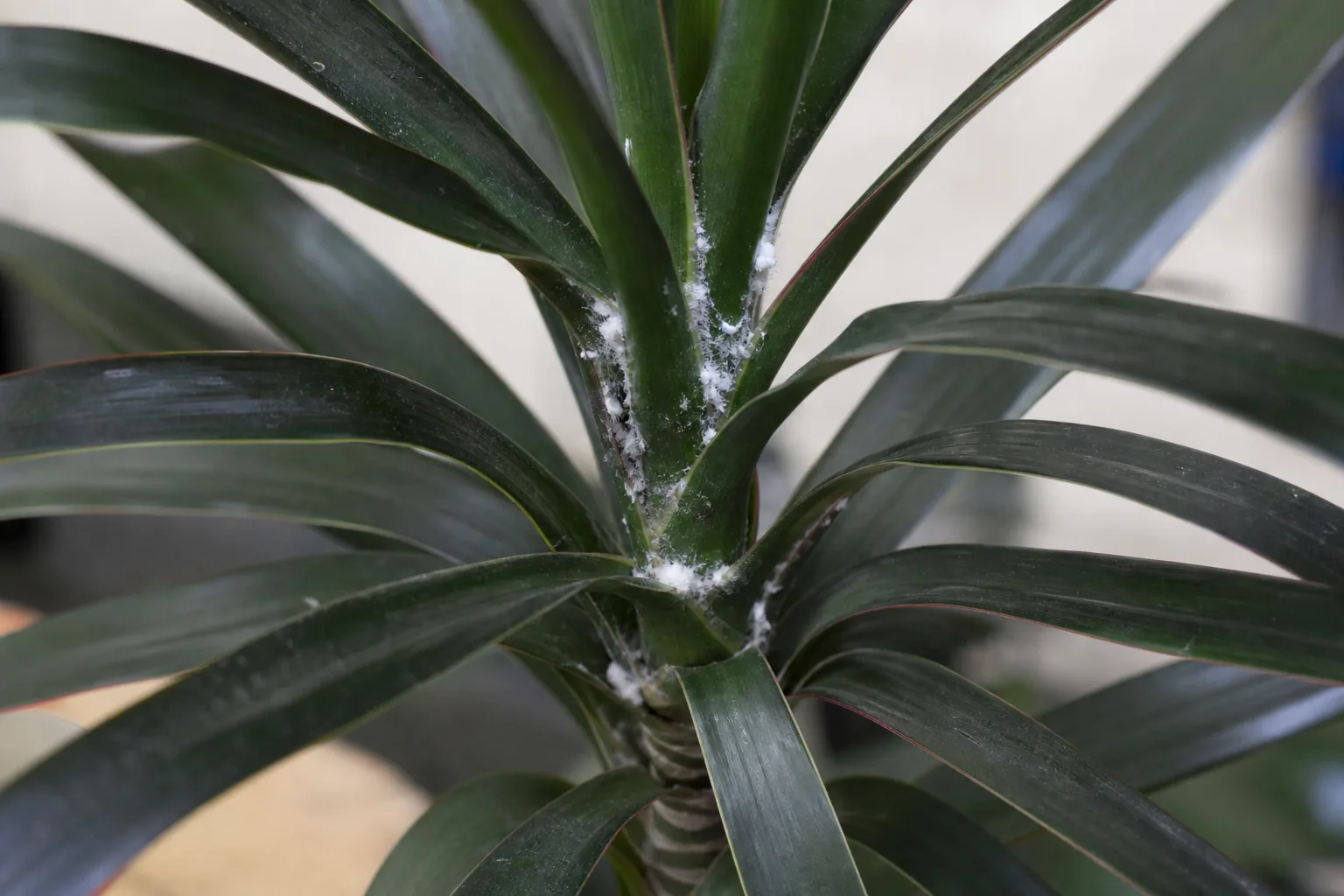
Isolate a newly purchased or infested plant from the rest of your collection. For a light infestation, remove visible pests with a damp swab or cloth and rinse the foliage, then repeat inspections because eggs and hidden insects survive one cleaning. Horticultural soap can help when the product is labeled for indoor plants and the target pest; test a small area and follow the label rather than improvising a strong homemade mixture.
Pests flourish when dusty leaves and dense crowns are rarely examined. They are not proof that the plant needs fertilizer. Treat the pest, improve inspection and airflow, and correct severe environmental stress without combining multiple harsh interventions on the same day.
Diagnose Brown Tips, Yellow Leaves, and Soft Canes
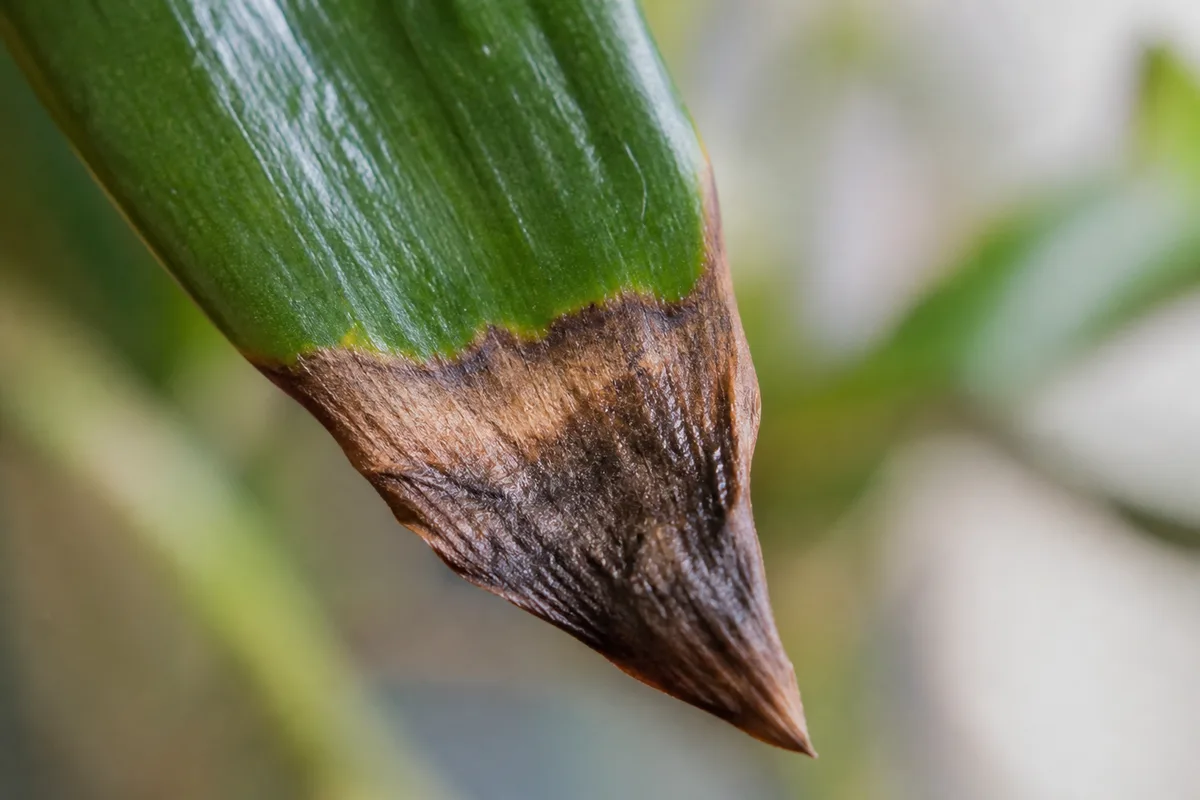
One symptom can have several causes, so begin with the pattern and the root zone. Brown tips alone often indicate mineral accumulation, dry air, uneven watering, or root stress. Bleached patches on the window side suggest direct sun, while crisp margins near a heater point toward hot, dry airflow.
Yellow lower leaves can be normal when they appear one at a time on an otherwise firm, growing plant. Several yellow leaves combined with wet soil, a sour smell, or a softening cane point toward excess moisture and root decline. Pale narrow new growth and a pot that stays wet for weeks suggest insufficient light may be contributing to the watering problem.
Damaged brown tissue will not recover. After correcting the cause, trim only the dead edge with clean scissors, following the natural leaf shape and leaving a narrow brown margin so you do not cut into living tissue. The success measure is healthy new growth and no expansion of damage, not the repair of old scars.
Use the Symptom Pattern to Choose the First Fix
| Symptom pattern | Most likely checks | First action |
|---|---|---|
| Dry brown tips; roots firm; mix dries normally | Water quality, salt crust, heated air, repeated drought | Pause fertilizer, improve humidity if very low, and use rainwater or appropriate filtered water |
| Yellow leaves plus wet mix and soft dark roots | Overwatering, blocked drainage, oversized pot | Unpot, remove rotten roots, repot in fresh airy mix, and water less often |
| Pale or tan patches facing a bright window | Direct sun or heat against glass | Move back or filter the light; leave useful green tissue in place |
| Fine stippling, webbing, sticky residue, cottony clusters, or bumps | Spider mites, scale, mealybugs, or thrips | Isolate, identify the pest closely, clean, and apply a labeled treatment if needed |
| One oldest lower leaf yellows while the crown is healthy | Normal aging | Remove it when mostly yellow; do not change the whole routine |
| New leaves become narrow and growth leans strongly | Light too low | Move gradually to brighter indirect light and reassess watering frequency |
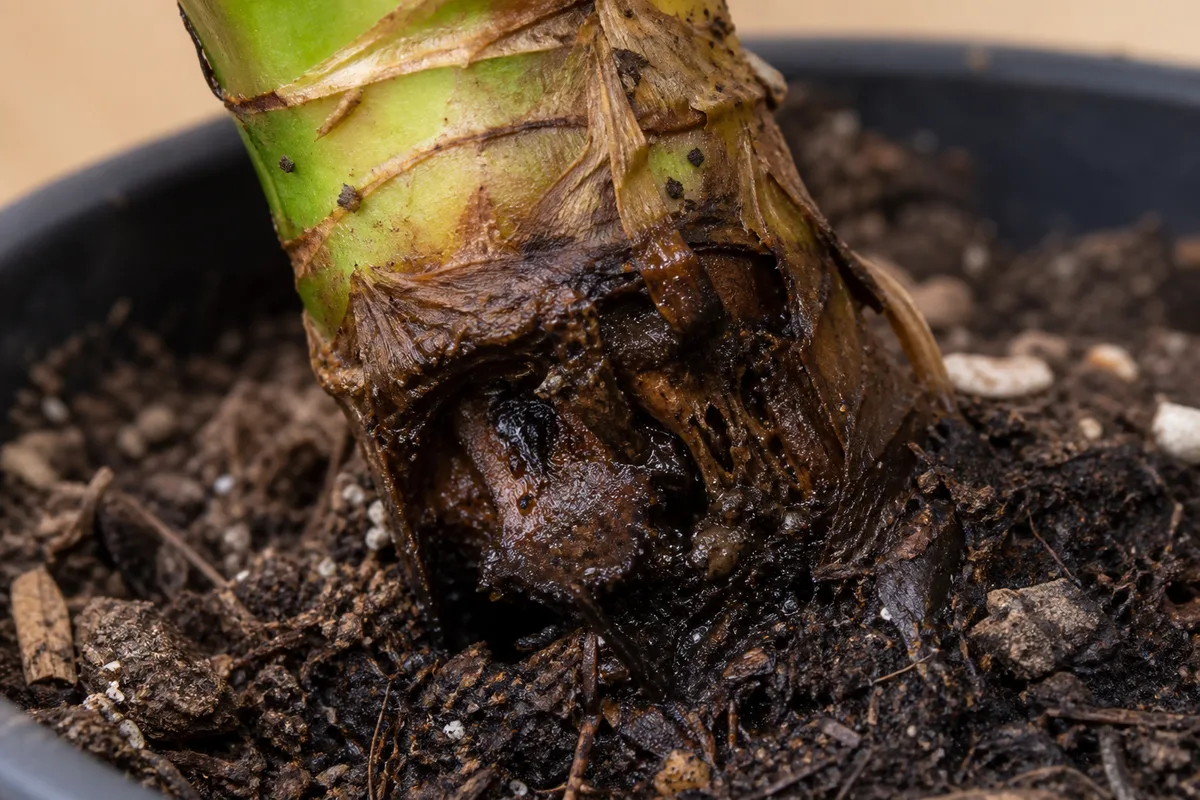
Change one main variable, then observe. If you simultaneously repot, fertilize, move the plant, prune it, and apply pesticide, any improvement or decline becomes difficult to interpret. A soft cane spreading upward is the exception: act promptly to cut back to firm tissue and address rotten roots.
Understand Indoor Flowers and Normal Aging
Mature Dracaena fragrans can produce strongly scented clusters of pale flowers, but indoor blooming is uncommon and cannot be forced on a schedule. NC State notes that flowers are infrequent and especially noticeable for their powerful nighttime fragrance. Stable care, maturity, and useful light improve the possibility; excess fertilizer is not a dependable trigger.
If a flower stalk appears, enjoy it and remove the spent stalk after blooming. The scent can be intense in a small room, so relocation may be practical, but avoid moving the plant into direct sun or cold solely for the duration of bloom. Flowering may temporarily redirect energy, and a short pause in foliage growth is not automatically a problem.
As the plant ages, lower leaves are shed and a visible cane develops beneath the crown. That is the normal architecture of a woody dracaena. Use pruning when the cane becomes too tall or bare for the space, not because every exposed section signals poor health.
Keep Janet Craig Away From Pets
Dracaena is toxic to cats and dogs. The ASPCA plant database identifies saponins as the toxic principle and lists vomiting, depression, loss of appetite, excessive salivation, and—in cats—dilated pupils among possible signs. Do not place the pot where a climbing cat or chewing dog can reach the leaves or fallen trimmings.
If you suspect ingestion, remove access and contact a veterinarian or animal poison-control service promptly. Do not wait for every listed sign to appear and do not induce vomiting unless a veterinary professional directs you to do so. Keep the plant label or a clear photo available to help identify what was eaten.
Conclusion
The best Dracaena Janet Craig care is observant rather than busy. Give the plant useful indirect light, wait for the upper mix and pot weight to indicate drying, water thoroughly, and protect the root zone from standing water and oversized pots. Those basics prevent more problems than frequent misting, routine repotting, or heavy feeding.
When symptoms appear, read the pattern before acting: check moisture and root firmness, then light, mineral buildup, temperature, humidity, and pests. Prune a healthy cane when you want branching, root the removed top if you want another plant, and keep every part safely away from pets. With stable conditions and restrained care, this compact dracaena can remain dense and architectural for years.