How to Grow and Care for Mandevilla
Mandevilla care guide for pots and patios: soil, temperature, bloom timing, pest fixes, and how to bring vines indoors before frost.
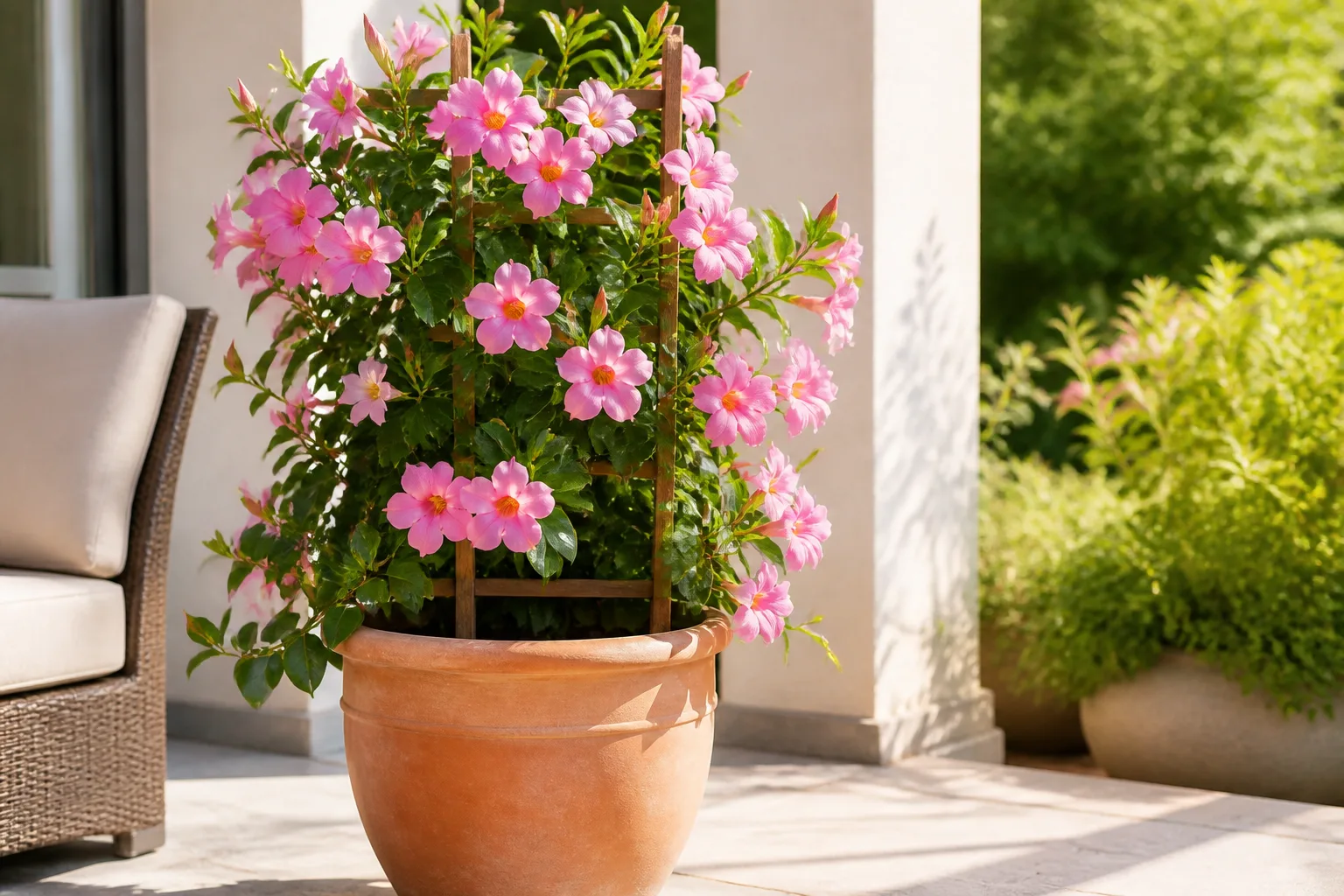
A mandevilla in full bloom looks like someone hung tropical trumpets on a glossy green vine—but the plant fails fast when you treat it like a drought-tough petunia or leave it outside one night too long in autumn. Mandevilla (Mandevilla spp., also sold as rocktrumpet) is a twining tropical vine in the dogbane family (Apocynaceae). In warm climates it behaves as a woody evergreen climber; everywhere else it is usually grown as a container tender perennial you move outdoors for summer and shelter before cold nights return.
The payoff is worth the attention: large fragrant trumpet flowers from late spring through fall, with hummingbirds and butterflies visiting open blooms outdoors. This guide focuses on container culture, because that is how most gardeners north of USDA zone 10 actually keep mandevilla alive—and because a pot lets you chase sun, dodge frost, and fix drainage without replanting the whole yard.
Mandevilla vs Dipladenia: What You’re Actually Buying
Walk into a nursery in May and you will often see pots labeled mandevilla, dipladenia, or both on the same bench. That is not random marketing. Botanists moved many former Dipladenia species into Mandevilla, but the trade still uses “dipladenia” for compact, shrubbier selections and “mandevilla” for longer vining types—even though both may share the same genus name on the tag.
Hardiness, habit, and where each one fits
Vining mandevilla (classic SunParasol Original types, Alice du Pont hybrids) sends out twining stems several feet per season and needs a trellis, obelisk, or large tripod of canes in the pot. Compact dipladenia-style plants branch lower, spill rather than climb aggressively, and suit mixed patio containers or hanging baskets where you want color without managing six feet of stem.
Hardiness is the same either way: mandevilla is reliably root-hardy only in USDA zones 10–11. NC State Extension notes optimal growth around 65–70°F and treats mandevilla as cold-sensitive—bring containers indoors where frost occurs and allow soil to dry somewhat during winter rest (NC State Extension Plant Toolbox). The RHS lists mandevilla as a tender climber that must return indoors before autumn nights drop toward 10–15°C (50–60°F) (RHS Growing Guide).
If your goal is a vertical accent on a porch post, buy a vining type and plan for support on day one. If you want a mounded flowering centerpiece in a 14-inch bowl, choose a compact series and skip the 6-foot trellis—you will fight the plant less all summer.
Quick Care Checklist for Container Mandevilla
Before you adjust anything, confirm the basics match what mandevilla actually is: a warm, bright, moderately thirsty tropical that blooms on new growth and rots in cold, soggy soil.
Give the plant at least six hours of direct sun outdoors on most days, with afternoon shade in the hottest inland climates where leaves scorch. Use a well-drained peat-free or commercial potting mix—never garden soil in a pot—and a container with multiple drainage holes. Water when the top inch of mix feels dry, more often in heat; reduce in winter indoors. Feed from spring through summer with a balanced or phosphorus-forward fertilizer; pause in fall and winter. Provide sturdy support for vining types. Prune in late winter or early spring, not midsummer, because flowers form on new shoots. Move pots indoors before nights stay below 50°F, inspect for pests, and expect a rest period with fewer blooms until warmth returns.
Light and Placement for More Blooms
Mandevilla is not a shade plant. Outdoors, it flowers best in full sun—meaning six to eight hours of direct light on most days. That is also why containers win: you can shift the pot from morning sun on a scorching August patio to a spot with late-day shade if leaf edges bleach or wilt every afternoon.
Full sun outdoors and afternoon protection
Indoors or in a conservatory, the RHS recommends bright but indirect or filtered light rather than blazing south glass, which can overheat roots in a small pot (RHS). NC State adds that mandevilla appreciates afternoon shade in hot, humid climates while still wanting strong overall brightness (NC State).
Use a simple test after you hang or set the pot: if new stems stretch toward the light and produce small leaves with few buds, move closer to sun. If leaves look bleached, crisp at the margins, or wilt daily despite moist soil, add afternoon protection or increase airflow—not more fertilizer.
Soil, Pots, and Drainage That Prevent Root Rot
Mandevilla roots want moist, airy mix, not a wet brick. NC State describes preference for moist, well-drained soil with organic matter; Garden Design suggests a slightly acid to neutral range around pH 6.6–7.8 and stresses that drainage prevents root rot (Garden Design). In containers, that means a labeled all-purpose potting mix for containers, plus a pot that drains freely.
Pot size, repotting, and when not to upsize
Start with a container only slightly larger than the root ball. An oversized pot forces the plant to fill roots before it pours energy into flowers—you may get a lush vine with disappointing bloom the first season. The RHS advises repotting when roots overcrowd the pot, usually every few years in February or early March, stepping up to a container 25–30 cm (10–12 in) wide for long-term plants—not jumping two sizes at once (RHS).
Repot in spring before outdoor move-in: slide the root ball out, trim circling roots lightly, set at the same depth, backfill with fresh mix, and water once to settle. If roots already poke from drainage holes mid-season, you can repot, but expect a short bloom pause while the plant re-establishes.
Watering Mandevilla Without Drowning the Roots
Mandevilla tolerates brief dryness better than many tropicals, but steady bloom requires even moisture—not alternately flooded and bone dry. Outdoors in summer, check containers daily in heat; the RHS notes that pots may need water every day when temperatures climb (RHS).
Water slowly until a little runs from the drainage holes, then stop. Empty saucers within 30 minutes so the root zone is not sitting in runoff. If leaves yellow and curl but the mix is dry, soak the pot in a basin of water for ten minutes so a shrunken root ball rewets—surface splashing often fails on peat-heavy mixes.
Indoors in winter, shift to rest watering: let the top few centimeters dry, then water lightly. NC State suggests allowing soil to dry out somewhat during winter when mandevilla is indoors (NC State). Soggy cold soil is the fastest way to lose stored plants before spring.
Temperature, Humidity, and Outdoor Timing
Think of mandevilla as a 70°F plant that merely tolerates 60°F—and sulks below that. Garden Design recommends 68–90°F for active growth outdoors and damage below 45–50°F (Garden Design). NC State lists 65–70°F as the sweet spot (NC State).
Move pots outdoors only after night temperatures stay above 50°F and frost danger has passed—harden off over a week by increasing outdoor hours gradually, as the RHS advises for tender plants (RHS). Reverse the process in fall before nights hover at 50°F; waiting for the first cold snap often means sudden leaf drop and pest hitchhikers indoors.
Humidity matters, especially indoors with forced-air heat. Mist leaves in active growth, group plants, or set the pot on a pebble tray with water below stone level so evaporation raises humidity without submerging roots. Dry air plus spider mites is a common winter pairing—more on that below.
Fertilizing for Foliage vs Flowers
Feed mandevilla through the growing season, not year-round. A slow-release balanced fertilizer at spring pot-up works for low-maintenance care. For maximum bloom, switch to a phosphorus-rich liquid—tomato or bloom formulas at half label strength every two to three weeks from late spring through summer, as both the RHS and Garden Design recommend (RHS; Garden Design).
If you water heavily in hot dry weather, nutrients leach faster—shorten the interval slightly rather than doubling dose. Stop feeding in fall when you bring plants indoors; fertilizer on a resting vine pushes weak growth that aphids love. Refresh the top 5 cm (2 in) of compost each spring if you are not fully repotting—that slow organic boost helps without forcing an oversized root zone.
Trellis, Support, and Training the Vine
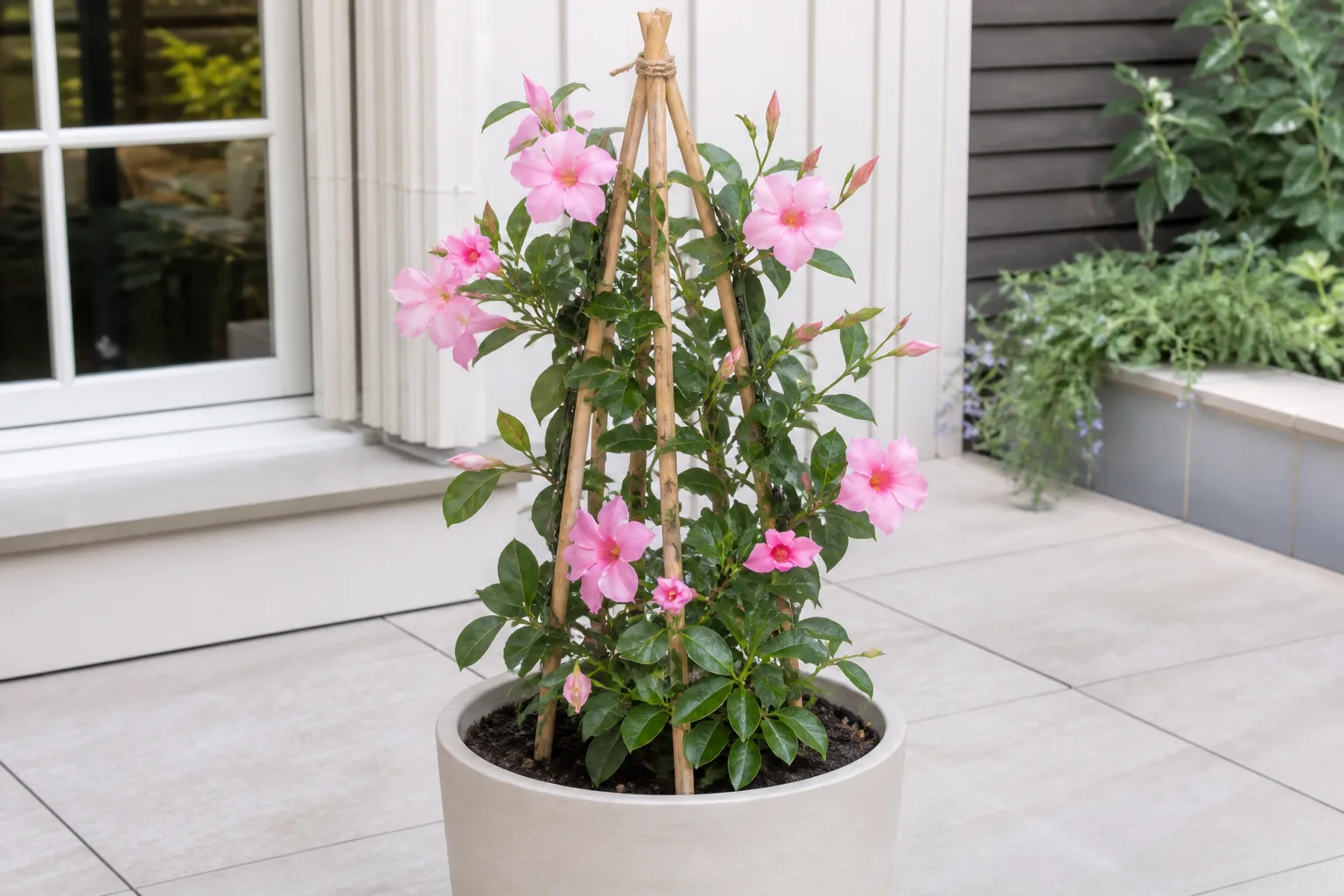
Mandevilla climbs by twining stems, not sticky pads or tendrils. Without support, it cascades and tangles, blooms unevenly, and snaps in wind. Install a trellis, obelisk, or tripod of bamboo canes at planting time—retrofitting support mid-season breaks stems.
Tie main stems loosely with soft plant ties; leave room for stem thickening. Train outward for even coverage rather than stacking all growth on one side. Compact dipladenia types may need only a short hoop or basket hanger; vining SunParasol types outgrow a 3-foot tomato cage by August in warm climates.
If you grow mandevilla in a mixed container, give it its own vertical stake at the back of the pot so it does not smother lower companions. Pollinator value is real outdoors—NC State notes tubular flowers attract hummingbirds and butterflies (NC State).
Pruning Mandevilla at the Right Time
Mandevilla flowers on current-year growth. Prune too late and you remove buds; never prune hard in midsummer unless you are willing to wait for a secondary flush.
The best window is late winter or early spring, before new shoots elongate. Remove dead, damaged, or crossing stems first. On young plants, the RHS suggests selecting three to five strong shoots and cutting overly long leaders back by up to one-third to build a balanced frame (RHS). On established vines, shorten side shoots to a few buds above the permanent framework.
Do not remove more than one-third of live tissue in one session. Pinch soft tips in early spring if you want a bushier pot plant. Wear gloves: milky sap irritates skin (see safety section). Mandevilla blooms are self-cleaning—deadheading is optional, not required for rebloom.
Propagating Mandevilla from Softwood Cuttings
Buying new pots every year adds up. Softwood cuttings in late spring or early summer are the reliable home method—seed is slower and hybrids may not come true.
Take a 4–6 inch cutting below a leaf node from a healthy stem that has bloomed at least one season. Strip leaves from the lower half, dip the cut in rooting hormone, and insert into moist potting mix in a small pot. Cover with a clear bag or place in bright filtered light at 70–75°F. Keep mix evenly moist, not wet; rooting usually takes three to four weeks.
Move rooted cuttings to individual pots, fertilize lightly after new growth appears, and do not expect bloom the first year on small starts. Failures usually trace to cold cuttings, rot from waterlogged mix, or taking wood that is too hard or too soft—if stems bend but snap rather than flex, you are in the right zone.
Overwintering Potted Mandevilla Indoors
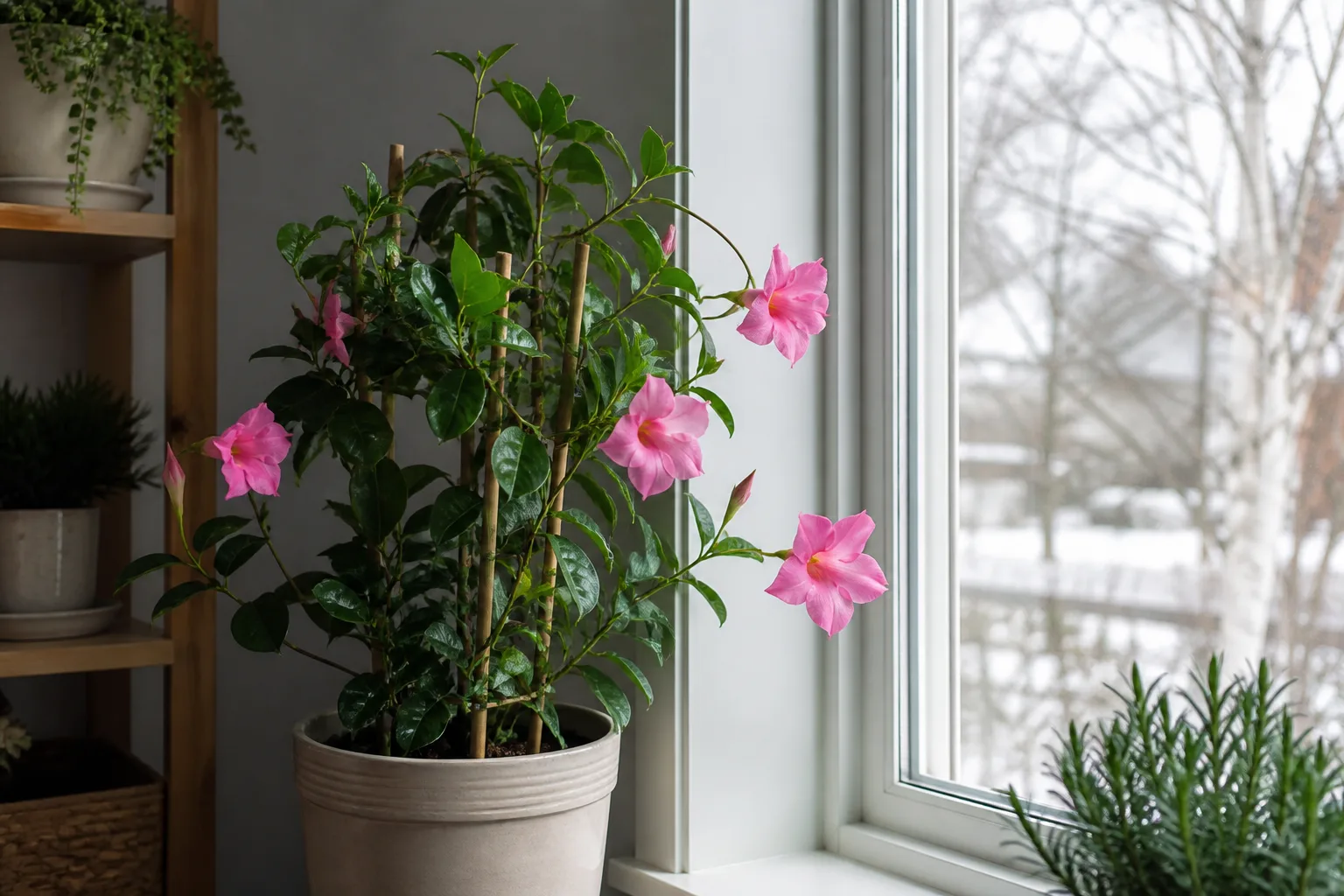
Overwintering is not optional in most of the U.S.—it is the plan. When nights approach 50°F, cut back long vining stems by up to one-third to reduce indoor footprint, inspect leaf undersides and stem joints, and wash foliage if you see webbing or whitefly clouds.
Place the pot in the brightest cool room you have—often an east or west window or a glass door with sheer curtain. Target roughly 60–65°F nights and cooler days if possible; the RHS warns that mandevilla may drop leaves if kept too cold or too dark (RHS). Water sparingly; no fertilizer until you see spring growth.
Expect few or no flowers indoors mid-winter—that is normal rest, not failure. In spring, repot if roots crowded, resume feeding, harden off, and return outdoors when nights stay above 50°F. Skipping pest inspection before move-in is the most common way spider mites colonize an entire houseplant collection by February.
Common Pests and How to Treat Them
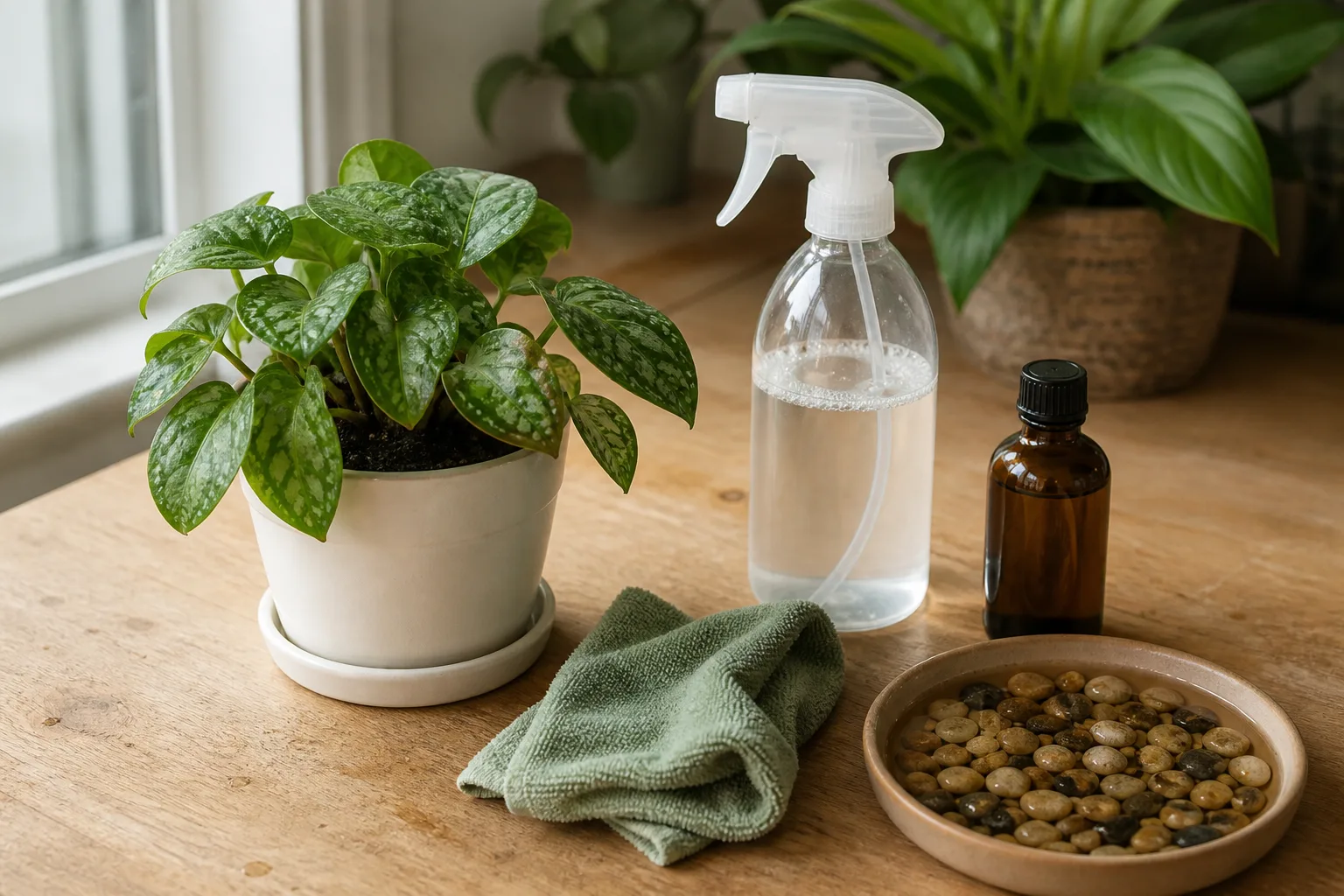
Outdoor mandevilla in good conditions has few serious diseases; NC State lists mites, aphids, thrips, and whitefly as the main insect issues (NC State). Problems spike on overwintered indoor plants and stressed, dusty foliage.
Spider mites show stippled, bleached leaves and fine webbing—often in dry indoor air. Rinse foliage, increase humidity, and apply insecticidal soap or horticultural oil to all leaf surfaces, repeating weekly until clean (NC State twospotted spider mite guidance). Aphids and whitefly cluster on new growth; blast with water outdoors, then soap or oil if they persist. Scale looks like brown bumps on stems—scrape gently and treat oil on a cool day.
Avoid spraying open flowers if bees are active outdoors. Isolate newly purchased mandevilla for two weeks before touching your other plants—big-box tropicals often arrive with whitefly already present.
Troubleshooting Yellow Leaves, Brown Spots, and Poor Bloom
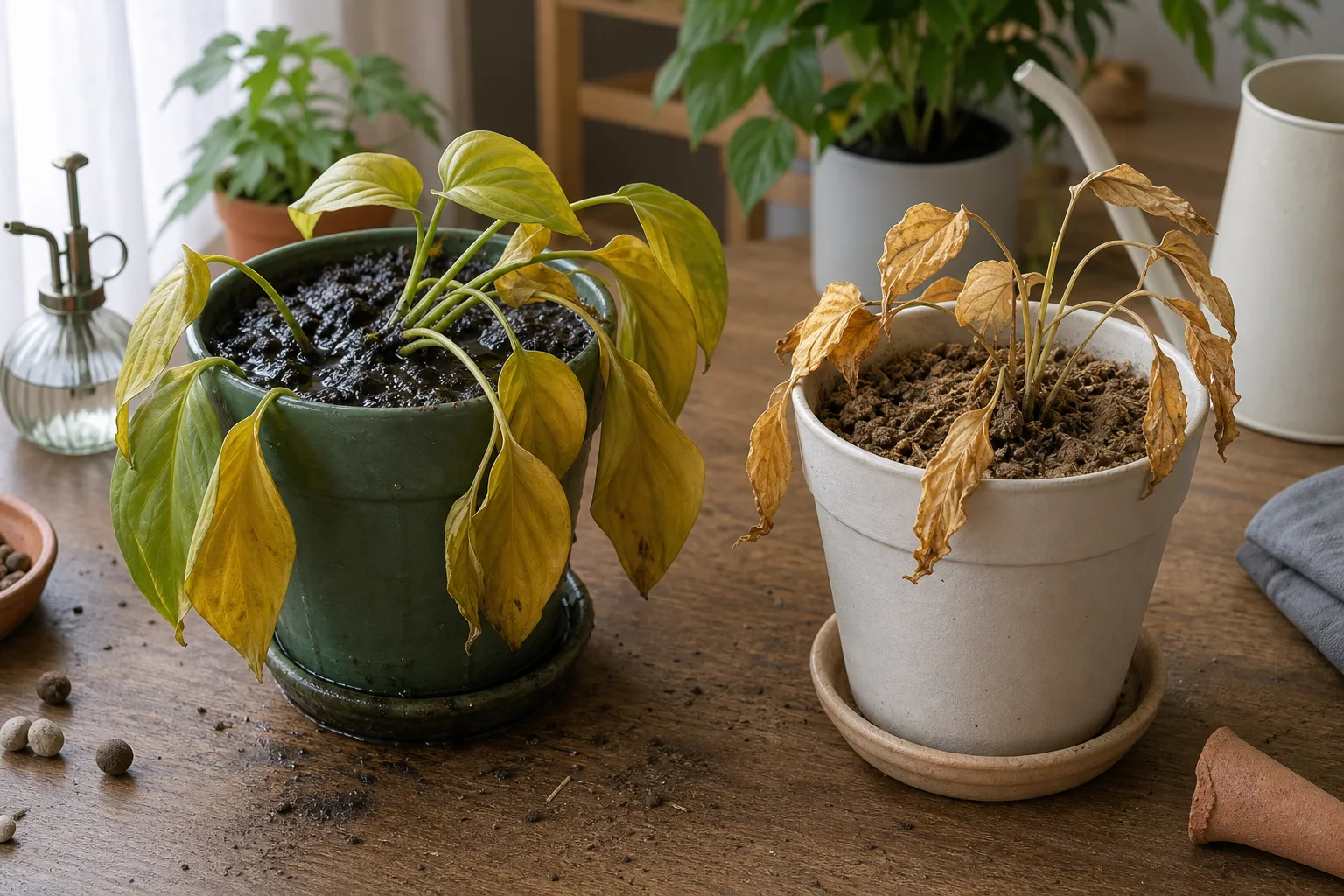
Treat leaf symptoms as patterns, not single causes.
Yellow leaves with dry mix and curled foliage mean underwatering or a hydrophobic root ball. Rewet thoroughly and adjust schedule. Yellow leaves with wet mix and soft stems mean overwatering or poor drainage—stop watering, check holes, and repot into fresh mix if roots smell sour. Sudden yellow drop after a cold night means chill injury; move warmer and do not fertilize until stable.
Brown leaf margins often combine salt buildup, drought, or hot dry wind—leach the pot with plain water once, then shade during peak heat. Brown spots with yellow halos on wet foliage may be anthracnose; remove affected leaves, improve airflow, avoid overhead watering, and use a labeled fungicide only if spots spread despite dryness fixes.
No bloom usually traces to too little light, too large a pot, cold spring temperatures, or late hard pruning. Mandevilla needs warmth in spring to push flowering wood—the RHS links failure to bloom to temperatures too low in spring (RHS). Move to more sun, hold off upsizing the container, and wait until nights stay above 60°F before expecting a flush.
Sap Irritation, Pets, and Safe Handling
Mandevilla sap is milky and irritates skin on contact; wear gloves when pruning, repotting, or taking cuttings. The RHS explicitly warns that sap can irritate skin (RHS). Garden Design lists mandevilla as mildly toxic with sap that can irritate children and pets (Garden Design).
Keep plants out of reach of dogs and cats that chew foliage. If a pet ingests a significant amount, contact your veterinarian or the ASPCA Animal Poison Control Center at (888) 426-4435. This is general safety guidance, not veterinary advice—but mandevilla belongs to a family known for cardiac glycoside–type compounds in related species, so chewing is not harmless.
Conclusion
Mandevilla rewards gardeners who treat it as a movable tropical vine, not a set-and-forget annual. Choose the right form—vining mandevilla vs compact dipladenia—for your container, give it sun, support, and steady summer moisture, then bring it indoors early with a realistic rest plan. Prune in spring, feed for bloom not foliage in summer, and read yellow leaves as a watering or temperature signal before reaching for more products. Do that, and the same pot can carry trumpet flowers from one warm season to the next.



