Cherry Tomato Fertilizer Guide for Pots and Beds
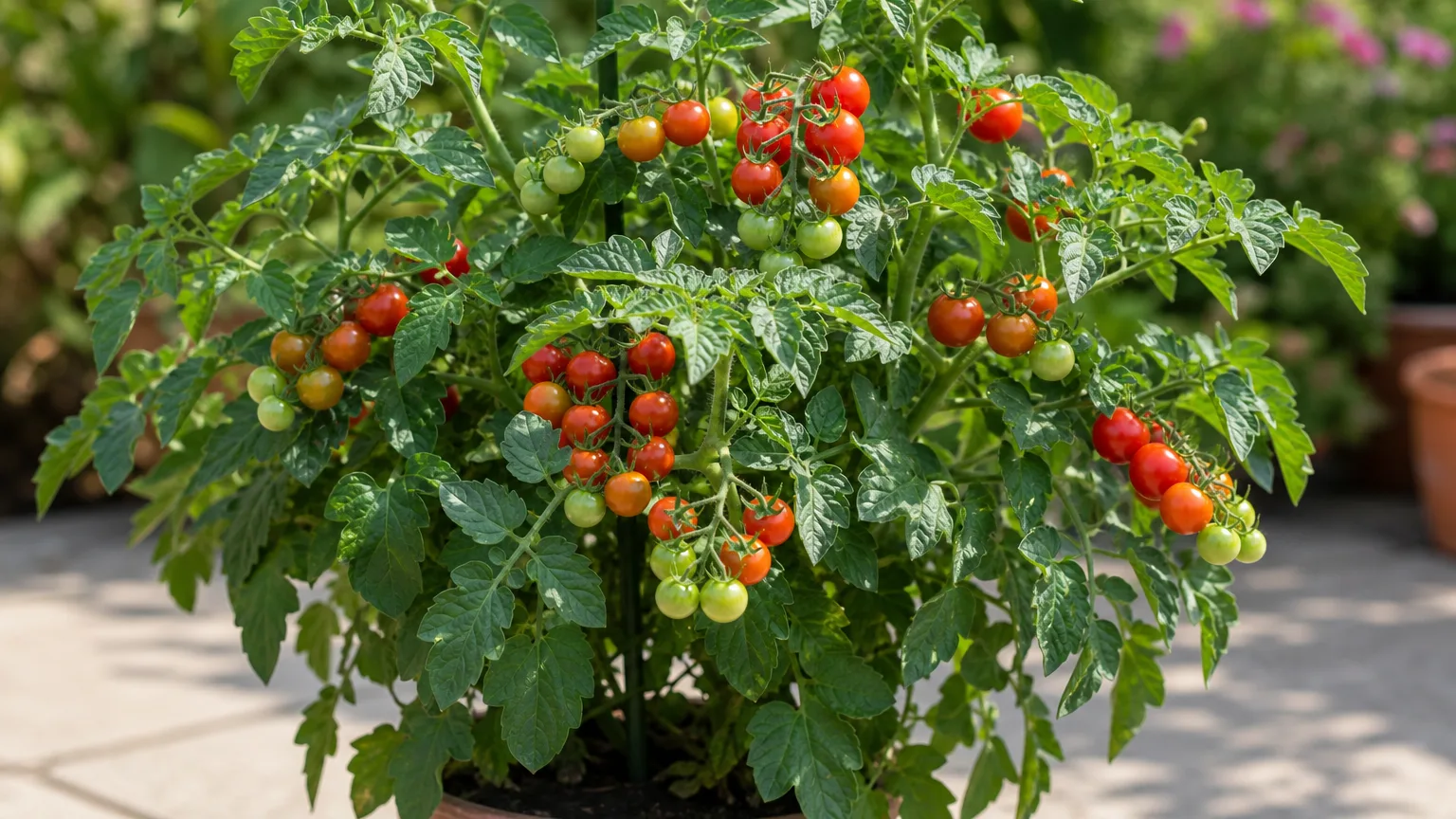
Cherry Tomato Fertilizer Guide for Pots and Beds
Cherry Tomato Fertilizer Guide for Pots and Beds
Cherry tomatoes can grow vigorously and still be poorly fed—or be overfed precisely because that vigorous growth looks healthy. The useful question is not “Which fertilizer makes the biggest plant?” It is “What does this root zone need at this growth stage without pushing foliage at the expense of flowers and fruit?”
Cherry describes fruit size, not one plant habit. A compact determinate cultivar may set most of its crop in a short window, while an indeterminate cherry tomato can keep extending and flowering for months. That difference changes total nutrient demand, but it does not justify feeding either plant on autopilot.
The short answer: feed by stage, not by habit
Start with fertile, freely drained soil or fresh container mix, then let the plant’s stage, the product label, and the root zone determine the next application. A young transplant needs establishment more than repeated feeding; a flowering plant needs balanced nutrition without excessive nitrogen; a long-cropping container plant needs smaller, label-directed replenishment because its roots cannot explore beyond the pot.
Avoid choosing fertilizer from a homemade teaspoon recipe or a universal weekly calendar. Formulations have different nutrient concentrations and release patterns, so the same spoonful can deliver very different amounts. The USDA’s nutrient-management framework emphasizes the right source, rate, time, and place; for a home cherry tomato, the product label is the practical rate reference, while stage and plant response determine timing.
Decide what the root zone already contains
A bagged mix may already contain starter nutrients or controlled-release fertilizer. Compost, manure, previous fertilizer, and native soil fertility can also contribute nutrients. Count all of them before adding another product, because “organic” inputs still add nutrients and are not automatically safe to stack.
Check light, drainage, and moisture before diagnosing a fertilizer need. A cherry tomato in deep shade, saturated soil, or a root-bound pot cannot be made productive by increasing feed. Correct the limiting condition first, using the Cherry Tomato light guide, watering guide, or repotting guide as appropriate.
Garden beds: let a soil test set the baseline
For an in-ground plant, a laboratory soil test is more useful than guessing from leaf colour. A soil analysis measures plant-available nutrients and pH and can produce crop-specific lime and fertilizer recommendations, as Penn State Extension explains. This matters in beds amended repeatedly with compost or manure, where adding a “balanced” fertilizer may supply phosphorus or potassium the soil already has.
Sample before planting when possible, or between crops if the tomato is already growing. Utah State University notes that testing can identify both nutrient shortages and excess nutrients or salts. If no local test is accessible, use conservative label directions for vegetables rather than inventing a precise home dose, then judge the next application from growth and flowering.
Containers: read the potting mix and fertilizer labels together
Container roots occupy a small, managed volume. Frequent watering can carry mobile nutrients out of drainage holes, while repeated feeding can also concentrate soluble salts as water evaporates. Those two processes are why a pot needs observation rather than the same schedule as a garden bed.
Read the potting-mix bag for “feeds up to” or controlled-release language, then read the fertilizer label’s container instructions. Do not apply a liquid feed on top of a fresh pre-fertilized mix merely because the plant has been potted. For more on root volume and drainage, use the Cherry Tomato soil guide before changing the fertilizer.
A stage-aware feeding plan
Nutrient demand changes as tomato roots, stems, flowers, and fruit develop. California’s tomato nutrient guidance shows that nitrogen uptake is not evenly distributed across the season and rises substantially after fruit set, although its field-crop figures are not a home-garden dose chart. Use that stage-dependent uptake pattern as a reason to reassess, not as permission to apply a large dose.
Seedlings: avoid forcing tender growth
If seedlings are in a commercial seed-starting mix, follow that product’s nutrient guidance and begin only after true leaves are growing and the roots are functioning. Seedlings in a mix that already contains fertilizer may need no additional feed before transplanting. Pale growth caused by cool, wet roots or inadequate light will not improve safely through stronger fertilizer.
Choose a complete product labelled for seedlings or vegetables if feeding is actually needed, and use its seedling rate. Hardening off, strong light, and even moisture should produce a compact plant; rapid, soft, dark-green extension is a reason to pause rather than increase nitrogen.
After transplanting: wait for active establishment
Transplanting disturbs roots, and a plant may pause while it re-establishes. Water it in, protect it from abrupt heat or wind, and wait for clear new growth before beginning routine feeding unless the transplant product or soil-test recommendation says otherwise. Penn State’s tomato guidance combines fertile, well-drained soil with restraint, warning that more fertilizer or high nitrogen can delay flowering and fruiting.
A starter product is optional, not a cure for transplant shock. Never put concentrated granules against the stem or into direct contact with bare roots. If the plant remains wilted in moist soil, inspect drainage and root condition instead of adding nutrients.
Flowering and first fruit set: reassess nitrogen
At flowering, look at the whole plant. A sturdy, moderately green tomato that is opening flowers does not need a sudden fertilizer surge simply because buds appeared. A huge, dark-green canopy with long spaces between flower clusters points toward excessive nitrogen, weak light, or both; adding a bloom product before correcting those conditions compounds the problem.
Choose a complete vegetable or tomato fertilizer whose label supports flowering and fruiting crops. Do not assume the product with the largest phosphorus number is automatically best: a soil test may show sufficient phosphorus already. The best product is one that supplies what is missing without delivering unnecessary nutrients.
Harvest period: maintain, do not chase every yellow leaf
An indeterminate cherry tomato in a large pot may keep flowering and ripening fruit long enough to use up nutrients supplied by the mix. Continue at the label’s container rate only while the plant is actively growing, the mix drains freely, and there are no salt-injury signs. A determinate plant nearing the end of its concentrated crop is unlikely to be rejuvenated by heavier feeding.
Older lower leaves can yellow as a heavily loaded plant ages, but yellowing is not a diagnosis by itself. Check moisture, roots, pests, disease, weather, and overall growth. Fertilizer should maintain a functioning crop, not postpone the natural end of a plant’s season.
Choose fertilizer by what the plant and soil need
N-P-K numbers state the guaranteed proportions of nitrogen, available phosphate, and soluble potash; they do not tell you that one ratio suits every cherry tomato. Nitrogen supports vegetative growth, while phosphorus, potassium, and micronutrients participate in many plant processes. A complete product labelled for fruiting vegetables is a reasonable default when no specific deficiency has been established, but the label and soil or mix context still control use.
Compost improves a bed’s organic matter and may contribute nutrients, yet its composition varies. Treat it as part of the nutrient budget, not as an invisible extra. USDA guidance notes that nutrient planning is specific to the crop, land, and changing conditions, which is why a fixed home recipe cannot account for every compost, monsoon, pot size, or cultivar.
How to feed cherry tomatoes in garden beds
Base pre-plant fertilizer and later side-dressing on a local soil-test recommendation whenever available. Place side-dressed fertilizer in the root zone at the distance specified on the label, keep it off wet foliage and the stem, and water it in if the label directs. Never heap fertilizer at the planting hole as an insurance policy.
In a bed with rich composted soil and strong, balanced growth, the correct next application may be none. In a low-fertility bed, a label-directed side-dress as fruit begins to develop may be appropriate. Clemson Extension’s tomato guidance links healthy production with organic matter and appropriate fertility, while also treating crop disorders as a combination of soil, water, and nutrient management, not a fertilizer-only problem.
How to feed cherry tomatoes in containers
First confirm that the pot is large enough for the cultivar and that water exits freely. Apply only to moist mix unless the product label explicitly says otherwise; concentrated fertilizer in a dry root zone raises injury risk. Keep liquid-feed concentration and frequency within the exact container directions for that product rather than converting an in-ground rate by guesswork.
Record each application on the pot tag or your phone. This simple habit prevents different carers from double-feeding and makes a pattern visible if leaf edges scorch. If water runs straight down a gap at the pot wall, re-wet the mix evenly before feeding so the solution does not travel through one narrow channel.
Adjust feeding for Indian heat, rain, and long seasons
In hot pre-monsoon weather, a container may need frequent watering, but frequent watering does not mean fertilizer belongs in every watering can. Feed only a hydrated, actively growing plant. Pause when the root ball is very dry, the plant is heat-wilted, or drainage has slowed; stabilize moisture first.
During prolonged monsoon rain, nutrients may leach from freely drained pots, yet saturated roots also lose function and can mimic deficiency. Move a portable pot out of relentless rain if practical, clear blocked drainage, and wait for aeration and new growth before resuming. In warm frost-free areas where indeterminate plants crop longer, extend label-directed maintenance only while the plant remains healthy and productive rather than treating the calendar as proof of need.
Recognize overfeeding and fertilizer-salt injury
Excess nitrogen often produces lush foliage and delayed flowering or fruiting, a response documented in Penn State’s tomato guidance. Soluble-salt injury can appear as browned leaf tips or margins, stalled growth, or wilting even though the mix is moist. A white crust on the mix or pot rim supports the salt diagnosis but is not required.
Stop feeding first. Confirm that drainage is open, then leach a container with plain water only if the plant is not waterlogged and the pot can drain completely; otherwise replace damaged or salt-loaded mix when root condition permits. Do not “balance” too much fertilizer with another fertilizer, and do not fertilize a severely wilted plant.
Separate true deficiency from root and watering trouble
Nitrogen shortage commonly begins as general paling on older leaves, but poor roots can create a similar pattern by limiting uptake. Interveinal yellowing, distorted new growth, and leaf-edge scorch can have several causes, including pH, salts, root injury, disease, and nutrient imbalance. A visual symptom narrows the investigation; it rarely proves the missing element.
Check whether growth is actually slow, whether new leaves are affected, and whether the root zone stays wet or dries too rapidly. Soil testing can guide bed corrections, and a pot with exhausted or collapsed mix may need repotting more than a stronger feed. Avoid foliar or soil “deficiency cures” until the diagnosis has credible support.
Troubleshoot leaves, flowers, and fruit before feeding
When foliage is dark and abundant but flower clusters are sparse, pause nitrogen, improve light if needed, and reassess the whole schedule. When flowers drop during extreme heat, fertilizer will not correct temperature stress. When fruit develops blossom-end rot, stabilize root-zone moisture; repeated drought and saturation disrupt calcium movement even where calcium exists in the soil.
When growth is pale and slow, inspect roots and drainage, compare old leaves with new ones, and review every input already used. When leaf margins burn soon after feeding, stop, irrigate appropriately, and look for salt accumulation. This order prevents a second fertilizer application from worsening the original problem.
When to use this page vs other Cherry Tomato guides
Use this page to decide whether, when, and how to supply nutrients. Use the watering guide for dry-down checks and irrigation consistency, the soil guide for pH and mix structure, and the light guide when leafy growth or poor flowering may be caused by shade.
For a crowded or exhausted root ball, use the repotting guide. For starting replacement plants, consult the propagation guide. The Cherry Tomato overview connects cultivar habit, support, watering, and feeding across the full crop.
Related Cherry Tomato guides
Build feeding around the rest of the plant, not as a separate chore. Begin at the Cherry Tomato care hub to confirm whether the cultivar is determinate, indeterminate, dwarf, or patio type, then match root volume, support, light, and crop duration to that habit.
If fertilizer decisions keep changing because the pot dries in hours, address container size and mix before increasing frequency. If the plant has heavy foliage but few flowers, review light and nitrogen together. These cross-checks are more reliable than treating every symptom as hunger.
Conclusion
The safest cherry tomato fertilizer plan is staged and conditional: establish roots first, reassess at flowering and fruit set, maintain long-cropping plants without chasing every yellow leaf, and stop when stress or salt injury appears. Beds benefit from soil-test direction; containers require label-aware replenishment, good drainage, and a written application record.
No single NPK ratio or home-measured dose fits every product, pot, soil, climate, and cultivar. Feed what the plant can use, when the roots can use it, and let balanced growth and steady fruiting—not the size of the fertilizer scoop—show whether the plan is working.