Cherry Tomato Watering Guide for Pots and Beds
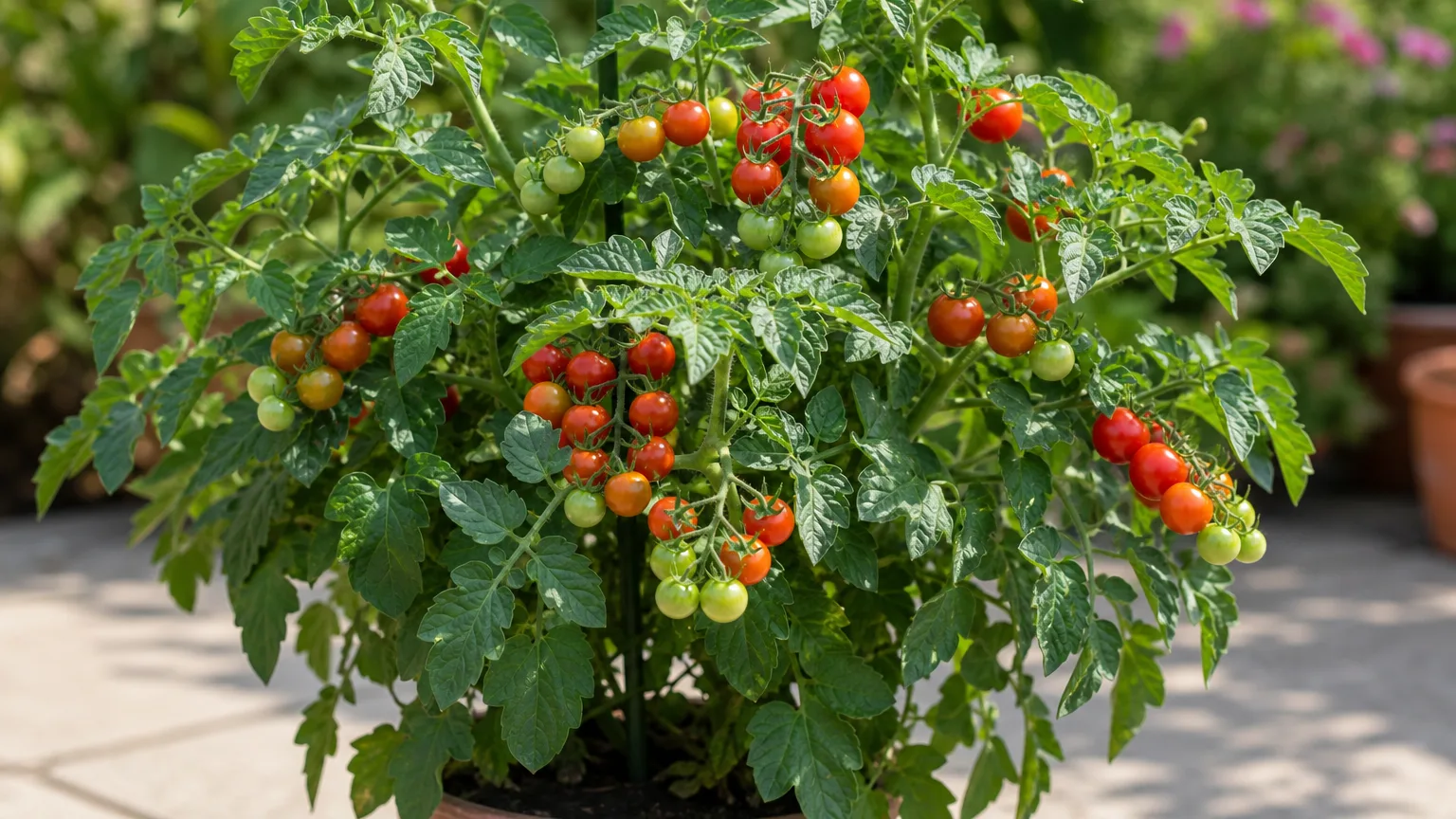
Cherry Tomato Watering Guide for Pots and Beds
Cherry Tomato Watering Guide for Pots and Beds
Cherry tomatoes need a consistently moist, freely drained root zone, especially while flowers are setting and fruit is expanding. That does not mean keeping the mix wet all day. It means watering thoroughly when the upper layer begins to dry, then allowing excess water to leave rather than alternating between severe drought and saturation.
The plant label still matters. “Cherry” describes fruit size, not root demand or plant architecture: a dwarf patio cultivar in a moderate pot uses water differently from an indeterminate vine carrying dozens of fruit clusters. NC State Extension nevertheless gives the useful common baseline for Solanum lycopersicum: keep soil consistently watered to reduce blossom-end rot and splitting.
The quick answer
Check the soil every day in hot weather, but water only when the upper 2–3 cm feels dry and the mix below it is no longer wet. Apply water slowly over the root area until the bed is wetted deeply or water exits a container’s drainage holes. Empty the saucer, and check again rather than assuming tomorrow’s weather will match today’s.
In a bed, this may mean one or two deep irrigations in a dry week; University of Georgia Extension uses about 1–2 inches of total water per week as a broad field-garden starting point. A container can need water much more often because its root zone is smaller, warmer, and exposed on all sides. Frequency is therefore an observation, not a prescription.
When to water cherry tomatoes
Water when the surface has begun to dry but moisture remains lower in the active root zone. For an established plant, do not wait for the entire pot or bed to become dust-dry during flowering and fruiting. Conversely, a dark, cool, sticky mix does not need another drink just because the leaves droop at midday.
Morning is the easiest time to make a sound decision. You can assess whether a heat-wilted plant recovered overnight, water before the hottest hours, and leave wet stems or splashed leaves time to dry. Apply water at soil level; extension guidance recommends drip irrigation or a soaker hose because these methods place moisture near roots while limiting leaf wetness.
Use three checks instead of a calendar
Push a finger 2–3 cm into the mix. If that layer is dry and the soil below feels only faintly moist, irrigation is reasonable; if it feels cool and adheres to your finger, wait. For a deep container, insert a dry wooden skewer farther down and check whether it emerges dark and damp.
Then lift or tilt the pot. A container that is much lighter than it was after the previous irrigation is approaching its dry point, while a heavy pot with a dry-looking crust can still hold considerable water below. Finally, look at the plant early in the morning. Leaves that remain limp after a cool night plus dry soil support an underwatering diagnosis; temporary afternoon wilting alone does not.
How to water deeply without waterlogging
Direct a gentle stream over the root area, pausing if water runs off compacted soil. In a bed, wet the root zone rather than sprinkling only the surface; UGA’s warm-climate guidance recommends enough water to moisten soil about 15–20 cm deep. Deep irrigation encourages roots to occupy more soil, while frequent surface sips leave the lower root zone dry.
Keep water off foliage when practical, especially in humid or rainy periods. A narrow-spout can, drip line, or soaker hose reduces splash and delivers water where the plant can use it. Add a 5–7 cm organic mulch to beds after the soil has warmed; UGA Extension notes that mulch conserves moisture and reduces weed growth, smoothing the change between irrigations.
Watering cherry tomatoes in containers
Use a container with unobstructed drainage holes and enough volume for the cultivar. NC State lists a minimum five-gallon container for tomatoes, but vigorous indeterminate cherry cultivars are easier to keep evenly moist in a larger pot. A small black nursery pot in full sun can pass from moist to severely dry within hours, while an oversized pot filled with dense mix can remain saturated.
Water slowly across the whole surface until runoff appears, then let the pot drain fully. Do not leave it standing in a water-filled saucer. If water races down the wall and exits immediately while the middle stays dry, the mix has become hydrophobic: apply water in two or three slow passes several minutes apart, or briefly bottom-soak the pot and then drain it completely.
Daily checking is appropriate in hot weather; automatic daily watering is not. A large fruiting vine may genuinely require one full morning irrigation each day during a hot, windy spell, and a small pot may require a second late-afternoon check. The test is whether the root zone has dried to the trigger point—not whether 24 hours have passed.
Summer heat and hot-wind adjustments
Heat increases water loss from both foliage and containers, while hot wind accelerates drying further. Check pots early each morning and again late in the day during a heatwave. If a plant repeatedly runs dry before evening, first add mulch, shield the container wall from direct afternoon sun, and consider moving the plant to a larger container rather than relying on repeated shallow sips.
Do not diagnose from midday wilt alone. Tomato leaves may droop temporarily when roots cannot replace water as fast as leaves lose it, even while soil remains moist. Recheck after sunset or at dawn; if the plant has recovered and the soil is still damp, more water could deprive roots of oxygen.
Keep a healthy leaf canopy around developing fruit. Penn State reports that hot, sun-exposed fruit can be more cracking-prone and recommends maintaining leaf cover rather than over-pruning. In extreme afternoon heat, temporary shade cloth can moderate stress without turning a full-sun crop into a shade plant.
Monsoon and prolonged-rain adjustments
Treat rain as irrigation. After substantial monsoon rain, push a skewer or finger below the surface before adding any water. Containers under an open sky often need no supplemental irrigation for several days, while pots under a roof overhang may still dry because little rain reaches the mix.
Drainage becomes the priority during repeated storms. Raise pots on feet so holes remain open, remove saucers, and prevent roof runoff from pouring into one container. In beds, do not irrigate by habit when the root zone is already wet; divert standing water and avoid compacting saturated soil by walking around the plant.
Monsoon rain after a dry interval can cause a sudden moisture surge. University of Delaware Extension notes that tomato cracking is most common after heavy rain or irregular irrigation, and that a split can run the length of a cherry tomato. You cannot remove rain from an open bed, but mulch, even pre-rain watering during a dry spell, prompt harvest of colouring fruit, and a rain shelter where practical can reduce the size of the swing.
Water needs during flowering and fruiting
Moisture consistency matters most from flowering through harvest because roots must support leaf growth, fruit expansion, and calcium transport at the same time. Letting the plant repeatedly wilt hard, then flooding it, creates a more disruptive cycle than keeping the root zone within a moderate band.
This does not justify permanent saturation. Roots require oxygen, and water demand can fall when clouds, humidity, or disease reduce transpiration. Check more often as fruit load increases, but let the soil test decide whether each check becomes an irrigation.
Determinate cherry tomatoes may carry a concentrated fruit load and show a sharp peak in demand. Indeterminate vines can maintain a high demand over a longer season. In either case, avoid making a major change in irrigation volume just as a large cluster begins to colour.
Fruit cracking: what watering can and cannot prevent
Cracking occurs when the fruit interior expands faster than the skin can accommodate. Rapid water uptake after dry soil is a major trigger, but it is not the only one: cultivar genetics, ripeness, fruit temperature, crop load, rain entering near the stem scar, and pruning decisions can all affect risk. A peer-reviewed review in HortTechnology describes fruit cracking as a complex disorder, so “never overwater” is too simple an explanation.
Aim for even moisture before the rain or irrigation event, not drought followed by a rescue soak. Penn State recommends consistent, uniform soil moisture, drip irrigation, and mulch to reduce rapid wet–dry changes. When heavy rain is forecast, harvest cherry tomatoes that have begun to colour if they are already prone to splitting.
Once a fruit has split, watering cannot close it. Harvest promptly. A shallow, fresh crack may still leave usable fruit if it is clean and shows no mold, rot, or insect entry, but deep or contaminated cracks should be discarded. Choose a less crack-prone cultivar next season if uniform watering and timely harvest do not solve repeated losses.
Blossom-end rot: the calcium and moisture nuance
Blossom-end rot appears first as a pale or water-soaked area at the blossom end, later becoming dark, sunken, and leathery. It means the developing fruit did not receive enough calcium at the required time. It does not automatically mean the soil lacks calcium.
Variable water availability can disrupt calcium uptake and movement into fruit. The University of Minnesota identifies blossom-end rot as common when water levels vary because of irrigation or drought followed by rain. The first response is therefore to stabilize root-zone moisture and inspect drainage, not to keep the soil wetter.
Check soil pH and calcium only if the problem persists or a soil test gives a reason. UGA Extension notes that foliar calcium products often work poorly because calcium is not readily moved to the fruit area where it is needed. Also avoid root damage and excessive nitrogen, both of which can interfere with a plant’s ability to supply developing fruit.
Remove badly affected fruit; it will not repair itself. New fruit can develop normally after moisture conditions stabilize, so blossom-end rot on the first cluster does not mean the plant is lost.
Signs a cherry tomato is too dry
Persistent early-morning wilt, curled or dull foliage, dry mix pulling from a pot wall, and a very light container indicate a dry root zone. Flowers may abort under severe stress, and growth may pause. Fruit splitting can appear later if the dry plant then receives a large influx of water.
Rehydrate a dry bed slowly and deeply. For a container, use several slow passes so shrunken mix absorbs water rather than shedding it down the sides. Resume checks at shorter intervals; do not compensate with a permanently wet pot.
Signs the root zone is staying too wet
Wet soil plus wilting is a warning, not a request for more water. Other signs include yellowing lower leaves beyond normal ageing, stalled growth, sour-smelling mix, algae on the surface, and a pot that stays heavy for days. Roots in chronically saturated mix may become brown and soft instead of pale and firm.
Stop watering and correct the drainage problem first. Empty the saucer, clear blocked holes, move the container out of direct rain, and let excess moisture leave. If the mix remains saturated or the plant declines, use the Cherry Tomato soil guide to assess whether the medium is too dense and the Cherry Tomato repotting guide if root inspection is necessary.
A practical troubleshooting sequence
Start with the soil, not the symptom. Check moisture 2–3 cm down, test deeper in a container, and compare pot weight. Then account for the last 48 hours: irrigation, rainfall, wind, heat, cloud cover, and whether the plant recovered overnight.
If the root zone is dry, water deeply and shorten the check interval. If it is wet, withhold water and improve drainage. If moisture is reasonable but leaves remain wilted, inspect stems, roots, pests, and disease rather than forcing a watering diagnosis.
For cracked fruit, stabilize moisture and harvest colouring fruit before heavy rain. For blossom-end rot, stabilize moisture, avoid excessive feeding, and use a soil test before adding calcium. These two disorders overlap with irrigation problems, but neither is proof that simply adding more water will help.
When to use this page vs other Cherry Tomato guides
Use this guide to decide when and how to irrigate, adjust for containers, heat, and monsoon, and interpret moisture-linked fruit disorders. Start with the Cherry Tomato overview if you need cultivar habit, support, and whole-plant context.
Use the Cherry Tomato light guide when the position is shaded or afternoon sun is causing stress. Use the Cherry Tomato soil guide when water drains too fast, stands for too long, or the pH and mix need attention. Feeding questions belong in the Cherry Tomato fertilizer guide, particularly when excess nitrogen or calcium products are being considered.
Related Cherry Tomato guides
- Cherry Tomato overview — cultivar habit, mature size, and complete care context.
- Cherry Tomato light — sun exposure, heat stress, and shade decisions.
- Cherry Tomato soil — drainage, moisture retention, pH, and container mixes.
- Cherry Tomato fertilizer — feeding during flowering and fruiting without excess nitrogen.
- Cherry Tomato repotting — final container size and root-zone correction.
- Cherry Tomato propagation — seed and cutting aftercare.
Conclusion
Successful cherry tomato watering is a controlled middle path: do not let fruiting plants repeatedly wilt hard, and do not keep roots saturated. Check the upper 2–3 cm, confirm conditions deeper in the pot or bed, water the full root zone, and let surplus water drain. Containers need closer observation in heat; monsoon rain usually means less irrigation and more attention to drainage.
Keep moisture changes gradual through flowering, fruit expansion, and ripening. That reduces one major trigger for fruit cracking and supports calcium delivery to developing fruit, although cultivar, temperature, nutrition, and root health still matter. When symptoms appear, test the soil first, correct the actual moisture condition, and avoid turning a cracking or blossom-end-rot problem into chronic overwatering.