Overwatering on Cherry Tomato: Causes, Checks & Fixes
Quick answer
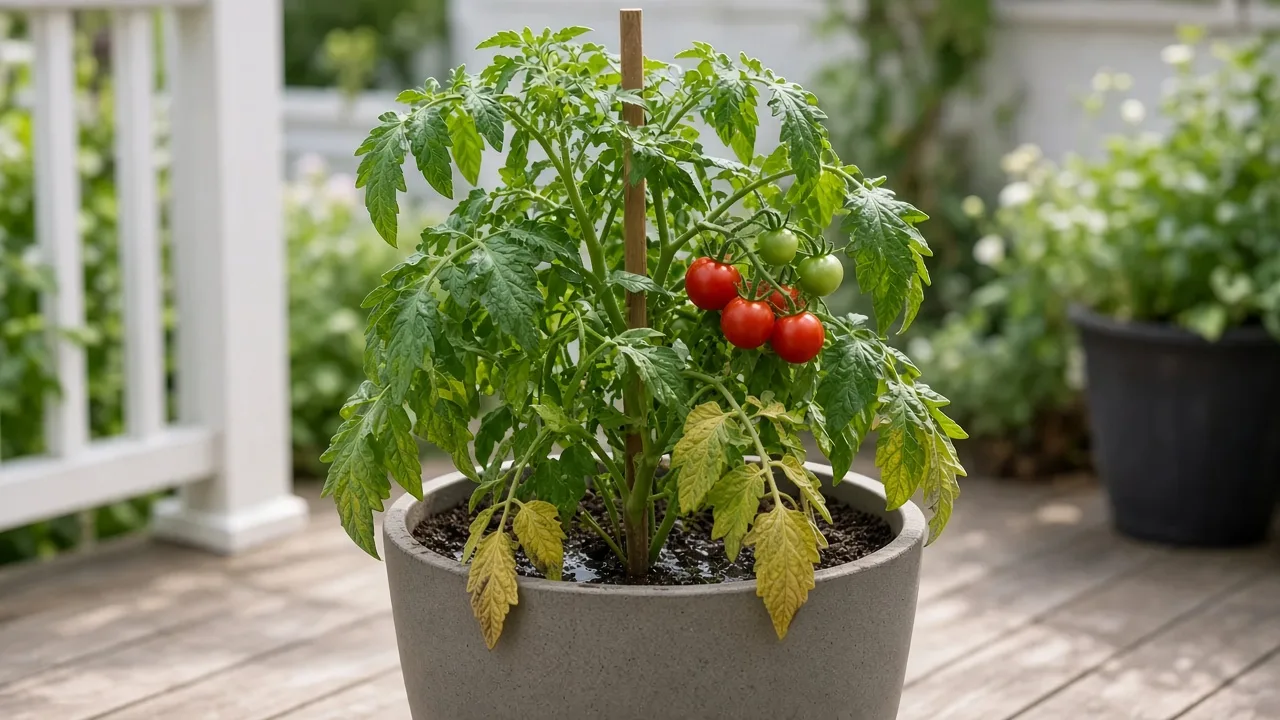
Overwatering on cherry tomato usually means the root zone stayed saturated while the vine was still transpiring heavily in sun—common in small patio pots, rainy weeks, or saucers left full. First step: press your finger 2–3 cm into the soil; if it feels cool and clinging while lower leaves yellow, stop watering, empty the saucer, and let the upper layer dry before the next deep soak.
Overwatering on Cherry Tomato: Causes, Checks & Fixes
This guide covers overwatering on Cherry Tomato. See also the general Overwatering guide, watering, and light pages for this plant.
Overwatering on Cherry Tomato: Causes, Checks & Fixes
Quick answer
Cherry tomato (Solanum lycopersicum var. cerasiforme) is a full-sun, heavy-drinking fruiting crop—but “thirsty” does not mean “keep the mix soggy.” Overwatering here usually means roots sat in oxygen-poor, saturated mix while leaves still transpired in heat, especially in small patio pots loaded with ripening trusses.
First step: press your finger 2–3 cm into the soil beside the stem. If that layer stays cool and clinging for many days, lower leaves are yellowing, and the pot feels heavy, stop watering, empty any saucer, and wait until the top 2–3 cm begins to dry before the next slow soak at the base. Do not spray foliage, feed, or repot on day one.
For how chronic wet mix damages roots in general, see our overwatering hub. On cherry tomato, the tell is wet mix plus yellow lower leaves on a fruiting vine—not dry soil with a light pot.
Species hub: Cherry Tomato overview.
What overwatering looks like on cherry tomato
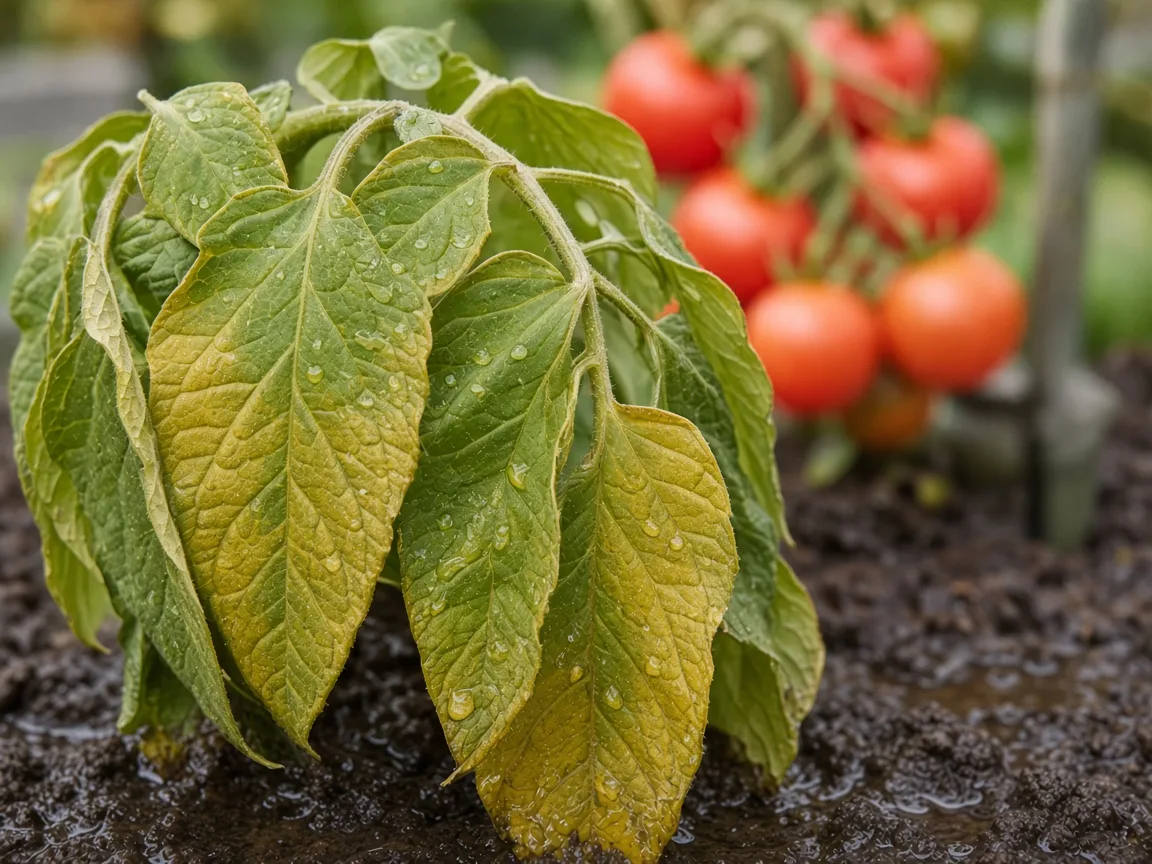
Symptoms on cherry tomato—compare with healthy tissue on the same plant.
Overwatering on cherry tomato shows up on compound leaves and fruiting stems, not as a single houseplant blade.
Typical patterns:
- Yellowing from the bottom up — Oldest lower leaflets turn yellow while the growing tip may still look green for a while
- Limp foliage on wet soil — Leaves hang or feel soft while the top 2–3 cm stays damp; unlike midday heat slump that firms up by evening on otherwise moist mix
- Heavy, waterlogged pot — Container does not lighten between “waterings”; water may pool on the surface or sit in a saucer
- Soft stem at the soil line — The base of the main stem feels mushy or dark where it meets saturated mix—overlap with root rot
- Slow new growth — Flowers or tiny fruit stall while roots struggle; see slow growth when the whole vine stalls
- Fungus gnats or mold on the surface — Wet organic mix attracts fungus gnats and mold on soil on greenhouse benches and balconies
Healthy cherry foliage is deep green and slightly hairy. Overwatered vines often keep green upper leaves while lower tiers yellow and drop, a pattern that differs from uniform nutrient wash across the whole plant.
Why cherry tomato gets overwatered
Tomatoes need consistently moist, well-drained soil—that phrase trips growers into watering before the upper layer dries. Cherry cultivars on patios amplify the risk.
Patio pots and cherry truss load
Container cherry tomatoes dry quickly in afternoon sun—then growers overcorrect with daily shallow sprinkles that never dry the core but keep the bottom sodden. A five-gallon pot with a vigorous indeterminate cherry can need daily deep watering in heat when the top 2–3 cm is dry, yet the same pot can be overwatered if you add water while the finger test still feels wet. Fruiting trusses increase transpiration; saturated roots cannot keep pace, so drooping leaves appear on wet mix.
UF/IFAS Gardening Solutions recommends about one to two inches of water per week with heavier soakings preferred over frequent light sprinkles—light misting on a cherry vine in a pot is a common overwatering setup.
Saucers, cachepots, and self-watering confusion
Balcony growers often leave filled saucers “so the plant does not dry out.” Tomato roots need air as much as water; standing water re-saturates the bottom root ball. Self-watering reservoirs help only when the wicking zone matches tomato demand—during cool, cloudy weeks the reservoir can keep mix too wet for cherry roots while leaves yellow.
Rainy weeks and dense potting mix
Weeks of rain on uncovered patios mimic chronic overwatering even if you stopped hand watering. Heavy, peat-rich mix in a too-small pot for an indeterminate cherry compacts and holds water at the base while the surface looks merely damp. Compare with the soil guide for loam, compost, and perlite ratios that drain after a deep soak.
Cool weather and dormant roots
In cool spring soil, cherry tomato roots absorb water slowly. Watering on a calendar while nights stay chilly keeps mix wet without matching uptake—seedlings yellow and stall. Harden off transplants and match drinks to the finger test, as in the watering guide.
Determinate vs indeterminate recovery stakes
Determinate patio cherries ripen a shorter crop on bushier frames; chronic wet mix during the main flush can yellow the whole lower canopy at once. Indeterminate vines keep extending—overwatering may yellow only the lowest leaves while upper trusses still set fruit, masking root stress until a heat wave hits. Read cultivar habit on the overview before you interpret yellow leaves.
Cherry fruit signals after wet roots
Overwatering is a root problem first, but cherry growers often notice fruit before lower leaves.
Blossom-end rot on small fruit
Blossom-end rot is a fruit disorder from disrupted calcium delivery—not a leaf disease. NC State links it to extremes in soil moisture, including too wet periods. Saturated roots move calcium poorly; green cherries develop a sunken brown patch on the blossom end while you may also see yellow lower leaves. Spraying calcium without fixing wet mix rarely helps.
Cracking after a wet-dry swing
Cracked cherry fruit often follows irregular irrigation—including overwatering that damages roots, then a heavy soak when you panic. Skin cannot expand evenly. Steady moisture from the watering guide prevents both cracking and the overwatering rebound cycle.
How to confirm overwatering
Work through these checks in order:
- Moisture at 2–3 cm — Cool, clinging soil for many days after your last drink confirms excess water, not drought.
- Pot weight and drainage — Lift the container; heavy with water dripping from the bottom seconds after watering suggests poor dry-down. Confirm holes are open.
- Leaf pattern — Yellow lower leaflets with limp texture on wet mix fit overwatering; dry, crispy edges on a light pot point to underwatering.
- Stem base — Soft, dark tissue at the soil line warrants an unpot check for mushy roots—see root rot.
- Time and weather — Several rainy days plus hand watering? Overwatering may be environmental, not a “heavy hand” alone.
- Pests on wet mix — Small flies on the surface strengthen the wet-soil diagnosis—cross-check fungus gnats.
If soil is dry 2–3 cm down and the pot is light, do not use this page—soak deeply per the underwatering guide instead.
First fix for cherry tomato
If the top 2–3 cm is wet and the saucer holds water, stop watering now and empty the saucer.
That single pause lets oxygen return to the root zone before you change anything else. Wait until the upper 2–3 cm begins to feel dry—often several days in cool weather, sometimes one to two days in hot fruiting weather—then water slowly at the soil line until a little drains from the bottom and discard saucer water.
Do not fertilize, prune heavily, or spray fungicides until you know whether roots are firm after a dry-down cycle.
Step-by-step recovery
After the first pause, match the path to severity:
Mild chronic wet mix (firm stems, light yellowing)
- Resume the finger-test rhythm from the watering guide—water when the upper 2–3 cm dries, not on a fixed calendar.
- Mulch the surface to even out moisture swings that also trigger blossom-end rot.
- Morning irrigation at the base keeps leaflets drier than evening sprinkling on crowded vines.
Compacted or peat-heavy mix in a small pot
- If dry-down takes more than a week while stems stay firm, aerate the surface gently with a fork, then monitor—avoid deep cultivation that severs tomato roots.
- Plan a move into a larger container with fresh, draining mix per repotting if the root ball smells musty but still has white tips.
Mushy roots or sour smell
- Unpot, rinse away soggy mix, and trim soft, brown roots with clean pruners.
- Repot into fresh mix with perlite or coarse material; stake the vine and hold fertilizer until new growth looks normal—details overlap root rot.
- Discard collapsed mature plants in shared beds to limit soilborne pathogens Epic Gardening notes on tomato root rot.
Fungus gnats and surface mold
- Let the top 2–3 cm dry between drinks; gnats need constant surface moisture.
- Address mold on soil and gnats together—they share the same wet habitat.
Cosmetic leaf cleanup
- Remove fully yellow lower leaves to improve airflow around fruit clusters.
- Do not strip the entire lower canopy on hot patios—some leaf cover shades developing cherries.
Recovery timeline
Stabilization often takes three to ten days once watering pauses and saucers stay empty—new wilt on wet mix should stop spreading.
Visible recovery is firm stems at the base and new compound leaves without fresh yellowing, often within one to two weeks in warm summer growth.
Old yellow leaves do not re-green. Judge success by clean new foliage and steady flowering, not by bottom leaves turning green again.
Worsening signs: stems soften after dry-down, one-sided collapse, or sour roots—escalate to root-rot salvage or replacement.
Lookalike symptoms
| What you see | Soil / context | Likely cause | Where to go |
|---|---|---|---|
| Yellow lower leaves, wet 2–3 cm, heavy pot | Saturated | Overwatering | This page |
| Crispy edges, dry 2–3 cm, light pot | Dry | Underwatering | Underwatering |
| Afternoon limp, moist soil, perks by evening | Hot sun | Heat droop | Drooping leaves |
| One-sided wilt, vascular streaks | Variable | Fusarium wilt | Wilting |
| Sunken patch on fruit bottom | Moisture swings | Blossom-end rot | Watering |
| Round spots with yellow halos | Wet foliage | Leaf diseases | Problems hub |
| Brown leaflet tips on moist mix | Wet roots | Tip burn from poor uptake | Brown tips |
Uniform yellow leaves across the vine may also tie to nitrogen or other stresses—see yellow leaves when colour change is not bottom-up on wet mix.
What not to do
Do not keep watering because leaves look limp—on wet mix, more water suffocates roots further (Epic Gardening on wet-soil wilt).
Avoid heavy nitrogen feed to “green up” yellow leaves; NC State notes excess nitrogen can produce lush foliage with relatively little fruit while roots are still stressed.
Do not leave pots in filled saucers after recovery soaks.
Skip calcium sprays alone for blossom-end rot without stabilizing moisture (NC State blossom-end rot).
Do not overhead water late in the day on disease-prone vines; base irrigation supports both recovery and light exposure goals.
How to prevent overwatering next season
- Check 2–3 cm daily during fruiting heat; water deeply only when that layer begins to dry.
- Use containers with drainage holes sized to cultivar habit—minimum about five gallons for many patio cherries (NC State Plant Toolbox).
- Mulch beds and containers; NC State home garden guidance recommends soaking 6–8 inches deep at roughly weekly intervals in ground beds—adjust upward for hot pots, but never while the finger test says wet.
- Empty saucers after every drink; elevate pots on feet if drainage holes sit flush on concrete.
- Match potting mix to drainage needs on the soil guide.
- Scout weekly for gnats and yellow lowers while fixes are easy—browse the problems hub.
When to worry
Escalate if stems collapse at the soil line, roots are brown and mushy, or wilting intensifies after you have dried the top 2–3 cm for several days.
Young transplants with partial root damage may recover after trim-and-repot; mature waterlogged vines with no firm roots are often better replaced than nursed through peak harvest.
If circular leaf spots spread with yellow halos, switch to disease management—not more dry-down alone.
Can you still eat cherries from an overwatered plant?
Ripe cherries from a vine recovering from mild overwatering are still the edible crop if fruit is firm, fully coloured, and free of rot or spray residues.
Discard fruit with active rot, mold, or blossom-end rot pockets you cannot trim away. Do not eat from plants treated with pesticides until the label safe-harvest interval passes.
Keep foliage away from pets—tomato leaves and stems contain toxic alkaloids; the ripe fruit is the human crop. See the overview for pet safety notes.
When to use this page vs other Cherry Tomato guides
- Cherry tomato watering guide — Routine moisture checks and split-fruit prevention before assuming chronic wet mix.
- Underwatering on cherry tomato — Dry soil, light pots, and crispy leaflet edges.
- Root rot on cherry tomato — Mushy roots and stem collapse after prolonged saturation.
- Drooping leaves — Separates heat slump, truss weight, and wet-soil limpness.
- Cherry tomato problems hub — Browse all common issues on this crop.
Related Cherry Tomato guides
- Cherry tomato overview
- Cherry tomato watering
- Cherry tomato light
- Cherry tomato soil
- Cherry tomato fertilizer
- Cherry tomato repotting
- Yellow leaves on cherry tomato
- Brown tips on cherry tomato
- Fungus gnats on cherry tomato
- Cherry tomato problems
Conclusion
Overwatering on cherry tomato is a root-oxygen and drainage problem on a fast fruiting vine—not a reason to keep pouring water because leaves look tired. Confirm wet mix at 2–3 cm, pause irrigation, empty saucers, then return to deep base watering only when that layer dries. Watch for blossom-end rot and cracking as fruit tells you moisture swung too far. Lower yellow leaves may not re-green, but firm stems and clean new compound leaves mean you corrected the right stressor before peak harvest.
Reviewed by LeafyPixels Review Board · Claims validated against extension and botanical sources · See methodology in page metadata