Brown Tips on Cherry Tomato: Causes, Checks & Fixes
Quick answer
Brown tips on cherry tomato leaflets usually mean margins dried out before roots resupplied water—common on fruiting patio pots in hot sun, after uneven watering, or when fertilizer salts build up. First step: press your finger 2–3 cm into the soil; if it is dry and the pot is light, soak the root zone until water drains freely.
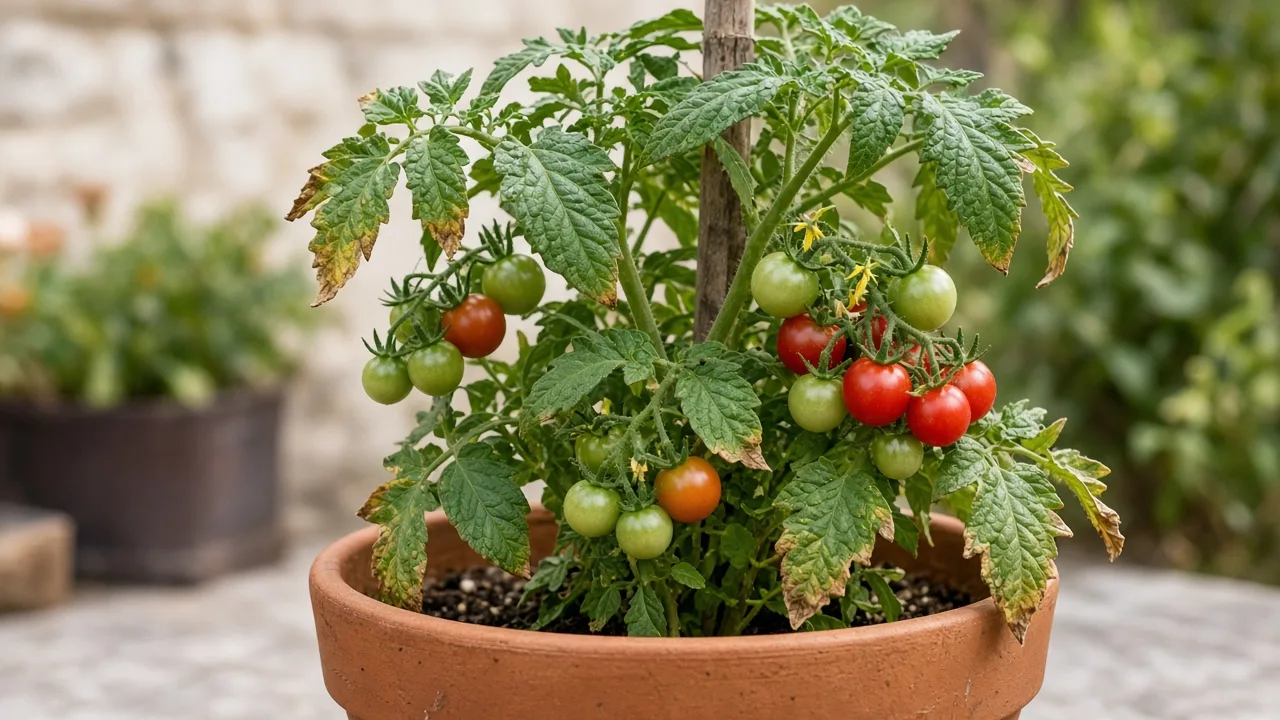
Brown Tips on Cherry Tomato: Causes, Checks & Fixes
This guide covers brown tips on Cherry Tomato. See also the general Brown Tips guide, watering, and light pages for this plant.
Brown Tips on Cherry Tomato: Causes, Checks & Fixes
Quick answer
Brown tips on cherry tomato (Solanum lycopersicum var. cerasiforme) leaflets almost always mean leaf margins dried out faster than roots could resupply water. Cherry describes fruit size, not water demand: a dwarf determinate on a patio and a tall indeterminate in a grow bag both transpire heavily in full sun while setting dozens of small fruit, so the farthest point on each serrated leaflet scorches first.
First step: press your finger 2–3 cm into the soil beside the stem. If it feels dry and the container is noticeably lighter, water slowly at the base until water exits the drainage holes and empty any saucer. Do not spray foliage, repot, or feed until you know whether the mix was dry, heat scorched the canopy, salts built up after feeding, or a disease mimic is involved.
For how tip and margin burn works on plants in general, see our brown tips hub. On cherry tomato, the diagnostic fork is compound-leaf pattern plus fruit load in a warm pot—crispy tan leaflet points on an otherwise green vine in hot weather, not purple-gray fuzz or round leaf spots.
What brown tips look like on cherry tomato
Cherry tomato leaves are compound: a central rachis carries five to nine oval leaflets with toothed margins. Tip burn shows on individual leaflets, not as one solid houseplant blade.
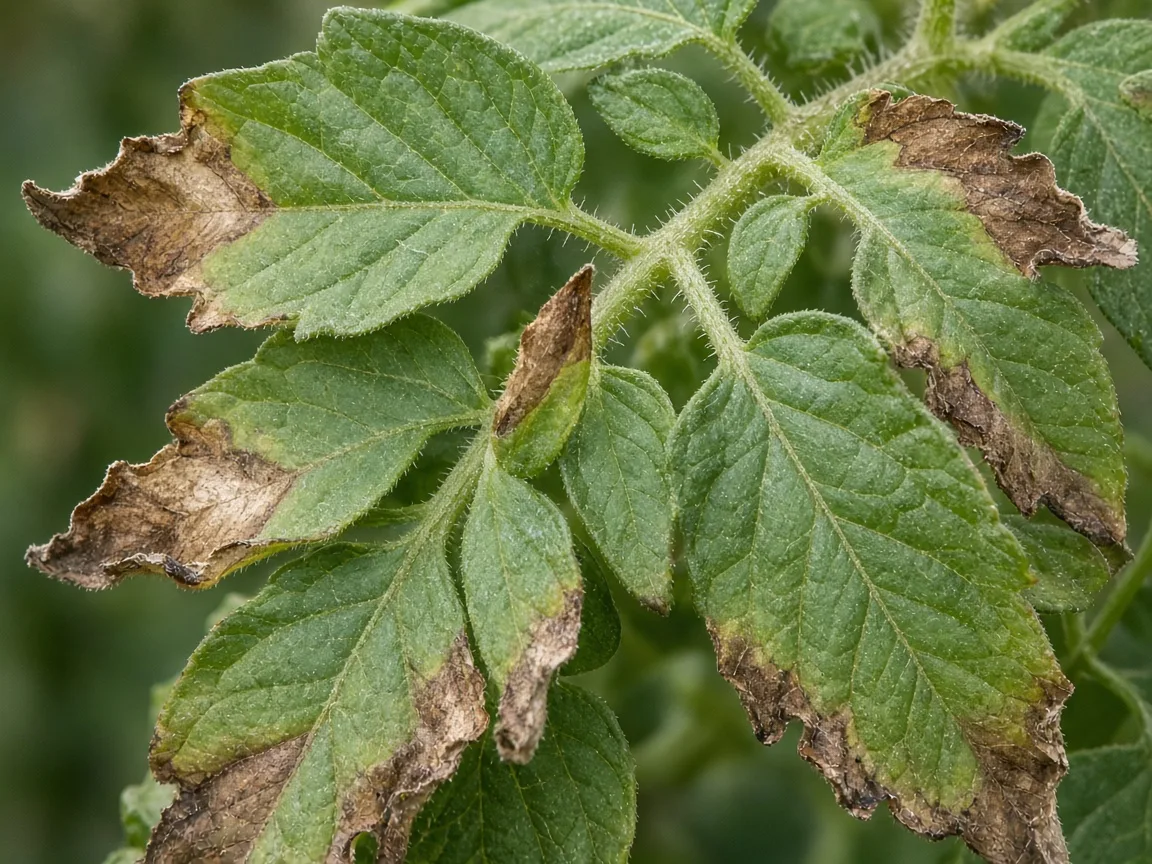
Brown leaflet tips on cherry tomato—compare crispy margins with green tissue on the same leaf.
Typical patterns:
- Dry tan-to-brown bands at the leaflet tip or along the serrated edge, while the midrib area stays green
- Crispy, papery texture when you pinch the edge—not soft, water-soaked tissue
- Damage often on older leaves lower on the vine and the sun-exposed side of the plant first
- Midday leaf roll or wilt that improves after a deep drink when drought triggered the burn
Healthy cherry tomato foliage is deep green, slightly hairy, and strongly scented when crushed. Tip burn leaves most of each leaflet green while the margin dies back in a narrow band.
Not simple tip burn: Circular brown spots with yellow halos on many leaves suggest fungal leaf-spot diseases—not clean margin necrosis alone. See the cherry tomato problems hub if spots spread. Fine yellow stippling with webbing on undersides is spider mites. A sunken black patch on the bottom of a fruit is blossom-end rot on the tomato, not a leaflet problem—though the same moisture swings may have stressed both.
Why cherry tomato gets brown tips
Tomatoes are full-sun, heavy-drinking fruiting vines. NC State Extension notes that tomatoes need consistently moist, well-drained soil to limit blossom-end rot and fruit cracking from uneven moisture. Container cherry tomatoes dry faster than in-ground plants because the root zone is small, warm, and exposed on all sides—exactly where margin burn appears during a heat wave.
Drought and boom-bust watering
Underwatering and irregular irrigation are the most common causes. A fruiting cherry vine may need water daily in hot, windy weather when the upper 2–3 cm dries, then go longer in cloudy rain. Letting the root ball shrink away from the pot sides, then flooding after midday wilt, stresses roots and desiccates leaflet tips before lower tissue yellows. Our underwatering guide covers wilt-plus-crisp patterns; the watering guide documents the finger-test rhythm.
Editorial grower guidance on fruiting tomatoes links repeated dry spells to brown leaf tips and more serious blossom-end rot on fruit when plants are allowed to wilt (Nags Hall Gardener). Cherry cultivars carrying many clusters use water aggressively—lower leaflets often show edges first.
Heat, wind, and reflected sun on patios
Heat scorch and wind desiccation brown leaflet margins even when soil is moderately moist. Dark nursery pots on west-facing rails, greenhouse glazing, or reflected heat off walls can cook leaf edges before roots catch up. Colorado State University Extension describes marginal leaf burn when plants cannot take up water fast enough under heat stress—dehydration starts at the tip or side of each leaflet.
Indeterminate cherry vines with long leaf canopies lose moisture fastest on outer, sun-facing leaflets. Determinate patio types in small pots can show the same scorch on the top of a bushy plant after a sudden move from a dim windowsill to all-day terrace sun.
Fertilizer salt burn in containers
Excess fertilizer salts in a patio pot burn margins from the root zone outward. Colorado State Extension links overapplication and concentrated salts to marginal leaf burns on container plants. White crust on the soil rim after repeated liquid feed, or brown tips that appeared while mix stayed moist, fits salt injury—common when growers chase fruit set with heavy nitrogen feeds. See the cherry tomato fertilizer guide for half-strength schedules; NC State warns that too much nitrogen can produce lush foliage with relatively little fruit.
Root stress from wet mix
Overwatering can also present as brown edges when roots lose function in saturated, oxygen-poor mix. The pot stays heavy, lower leaves may yellow, and margins brown because water cannot reach leaflet tips efficiently—overlap with overwatering and root rot when stems soften at the soil line.
Lookalikes tied to cherry tomato culture
Blossom-end rot is a fruit disorder from disrupted calcium delivery during development, often when moisture swings—even when soil calcium is adequate (NC State blossom-end rot). It does not re-green leaflet tips, but the same dry-wet cycle may brown leaflet edges during heavy cropping. Penn State Extension ties irregular irrigation to cracking fruit—another signal that moisture rhythm, not tip trimming, is the fix.
How to confirm the cause
Work through these checks in order:
- Soil moisture at 2–3 cm — Dry with a light pot strongly suggests drought tip burn. Wet deep down with soft stems points to overwatering, not thirst.
- Recovery test — If dry, soak once at the base. Turgor returning within a few hours confirms underwatering; persistent wilt on wet mix means inspect roots.
- Heat and exposure — Did tips brown after a heat wave, wind event, or a move to a sunnier patio? Are damaged leaflets on the south or west side?
- Salt clues — Recent fertilizer, white crust, or brown tips on moist mix fit salt burn.
- Fruit and cluster load — Heavy cherry set on a small pot increases daily water demand; tip burn on lower leaves during peak fruiting often tracks missed drinks.
- Pest and disease scan — Hold leaflets to the light. Speckling plus webbing is spider mites. Round spots with halos are fungal leaf diseases, not environmental margins alone.
If only oldest lower leaflets have narrow brown tips and new growth at the growing tip is clean, you may be seeing normal aging on a heavily picked vine—not an active crisis.
First fix for cherry tomato
If the top 2–3 cm of mix is dry, water deeply at the soil line now.
Apply water slowly around the stem, not over the foliage, until it drains from the bottom. Wait ten minutes and water once more if the root ball was shrunken. Empty the saucer. That single correction fixes most cherry tomato tip burn on patios and balconies.
Do not repot, sidedress fertilizer, or spray fungicides on day one. Stacking treatments on a plant that simply dried out adds stress without diagnosis.
Step-by-step recovery
After the first soak—or if soil was already moist—match the path to your checks:
Drought and uneven moisture
- Follow the steady rhythm in the watering guide: water when the upper 2–3 cm dries, which may mean daily irrigation during hot fruiting weather in a five-gallon pot.
- Mulch the soil surface in beds or top-dress containers to slow evaporation; never leave pots standing in filled saucers.
- Bottom-water for fifteen to twenty minutes if water channels down dry pot sides without wetting the core.
Heat and sun scorch
- Relocate containers out of the hottest afternoon rays during heat waves, or use light shade cloth on exposed terraces.
- Water early on hot days; fruiting cherry vines in sun use water faster than shaded siblings.
- Harden off transplants over seven to ten days before leaving them in all-day outdoor sun—see the light guide.
Salt and fertilizer burn
- Stop feeding until new leaves look healthy for two weeks.
- Flush the pot: run clean water through until it drains freely, repeat two to three times, and discard saucer water each time (Colorado State leaf scorch).
- Resume half-strength fruiting-vegetable feed per label directions only after growth stabilizes.
Wind and draft damage
- Move pots out of constant wind tunnels between buildings; stake indeterminate vines so whipping stems do not increase transpiration loss.
- Trim only fully dead leaflet tissue after conditions improve.
Cosmetic cleanup
- Snip browned leaflet tips with clean pruners if they bother you, or remove entire affected leaves if more than half the leaflet is dead.
- On indeterminate types, removing a few scorched lower leaves also improves airflow—balance that against the need for leaf cover to shade fruit in intense sun (Penn State on cracking and canopy).
Recovery timeline
Stabilization often takes two to seven days once watering, shade, or flush matches the cause—midday wilt should ease and tip browning should stop spreading.
Visible recovery is new compound leaves and shoot tips without fresh scorch. Expect that within one to two weeks in warm active growth; slower in cool spring weather.
Old brown edges never heal. Judge success by clean new foliage, not by old leaflet tips turning green.
Worsening signs: margins creep down entire leaflets, new leaves brown as they expand, stems soften at the base on wet mix, or circular leaf spots multiply—those warrant disease or root inspection, not another shallow drink.
Lookalike symptoms
| What you see | Soil / context | Likely cause | Where to go |
|---|---|---|---|
| Crispy tan leaflet edges, dry top 2–3 cm, light pot | Dry | Underwatering | Underwatering |
| Brown tips, white crust, recent feeding | Moist | Salt / fertilizer burn | Fertilizer |
| Brown on sun-facing leaflets after hot day | May be moist | Heat scorch | Light |
| Yellow lower leaves, wet soil, soft stem base | Wet | Overwatering / root stress | Overwatering |
| Sunken black patch on fruit bottom | Variable moisture | Blossom-end rot (fruit) | Watering |
| Round brown spots with yellow halos | Often wet foliage | Leaf spot diseases | NC State tomato diseases |
| Stippling, fine webbing on undersides | Often dry air | Spider mites | Spider mites |
Yellow leaves with stress can overlap—see yellow leaves on cherry tomato when colour change accompanies tip burn.
What not to do
Do not water on a calendar without checking the pot—a fruiting cherry tomato in afternoon sun may need daily drinks while the same cultivar in partial shade needs half as often.
Avoid heavy nitrogen feed to green up browned tips; lush foliage with little fruit is a known tomato response to excess nitrogen (NC State).
Do not overhead water late in the day if fungal leaf spots are spreading; environmental tip burn does not require fungicide, but wet foliage overnight favors disease on crowded vines.
Skip assuming blossom-end rot spray will fix leaflet tips without stabilizing root-zone moisture first.
Do not confuse tip burn with root rot and withhold water when stems are soft and soil is soggy.
How to prevent brown tips next time
- Check soil daily during hot fruiting weather; container cherry tomatoes dry faster than in-ground plants.
- Mulch beds and containers to even out moisture swings that also crack cherry fruit (Penn State cracking).
- Use morning irrigation at the base so leaflets stay dry and roots absorb water before midday heat.
- Feed at moderate strength on a fruiting schedule; flush salts periodically in small patio pots.
- Match pot size to habit—a vigorous indeterminate cherry in a too-small container will show margin burn every heat wave.
- Install stakes or cages at planting so late-season root disturbance does not coincide with peak water demand.
When to worry
Escalate if brown margins engulf whole leaflets within days, new leaves brown as they unfurl, or stems soften while soil stays wet—inspect for root rot rather than trimming tips.
Persistent tip burn on every new leaflet after flushing and shade adjustment suggests chronic salt load, an undersized pot, or repeated wilting during heavy fruit set—repot into a larger container with fresh mix or plan a timely restart next season.
If leaflet spots are circular and spreading with yellow halos, switch to disease management—not the drought-first path on this page.
Can you still eat cherry tomatoes with brown leaflet tips?
Cherry tomato is a food crop. Lightly browned, crispy leaflet edges do not automatically make the fruit unsafe if plants were grown without pesticides and tomatoes are firm, uncracked, and free of mold or rot on the skin.
Discard fruit from plants recently treated with pesticides until the label safe-harvest interval passes. Do not eat tomatoes from vines showing rapid collapse, stem cankers, or heavy disease pressure on fruit.
When in doubt, harvest clean, fully coloured cherries from healthy clusters higher on the vine and compost heavily damaged lower leaves. Regular picking is normal care—see the cherry tomato overview for harvest rhythm.
When to use this page vs other Cherry Tomato guides
- Cherry tomato watering guide — Use for routine moisture checks and split-fruit prevention before assuming brown tips is the main issue.
- Cherry tomato problems hub — Browse all common issues on this species.
- Underwatering on cherry tomato — Use when the pot is light and soil is dry, not when moist soil pairs with salt crust.
- Overwatering on cherry tomato — Use when yellow lower leaves and wet mix accompany margin browning.
- Low humidity on cherry tomato — Secondary when winter indoor air crisps edges while soil stays moist.
Related Cherry Tomato guides
- Cherry tomato overview
- Cherry tomato watering
- Cherry tomato light
- Cherry tomato soil
- Cherry tomato fertilizer
- Underwatering on cherry tomato
- Overwatering on cherry tomato
- Yellow leaves on cherry tomato
- Cherry tomato problems
Conclusion
Brown tips on cherry tomato leaflets are a water-balance and environment warning on a fast fruiting vine—not a random blemish. Confirm whether mix was dry, afternoon sun was harsh, salts built up after feeding, or disease spots mimic margin burn—then soak, shade, or flush in that order. Old leaflet tips stay brown, but clean new compound leaves within a week or two mean you fixed the right problem. Keep patio pots evenly moist during fruiting, irrigate at the base, feed moderately, and size the container to the vine so tip burn stays cosmetic.
Reviewed by LeafyPixels Review Board · Claims validated against extension and botanical sources · See methodology in page metadata