Cherry Tomato Root Rot: Patio Pot Rescue Steps
Quick answer
First, stop watering and empty any saucer or cachepot so the root zone can drain. If the upper 2–3 cm stays soggy while lower leaves yellow or the plant wilts in cool weather, gently tip the pot and inspect roots—firm white roots mean correct overwatering; brown mushy roots with a sour smell confirm rot.
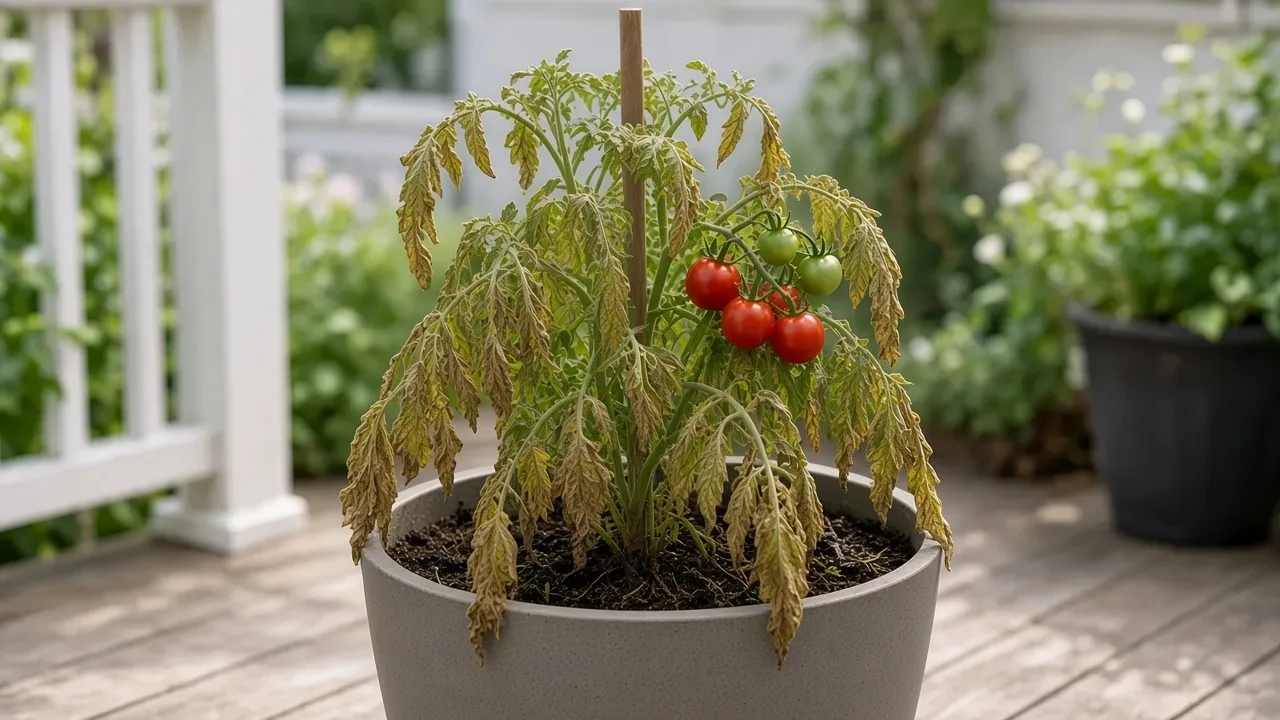
Root Rot on Cherry Tomato: Causes, Checks & Fixes
This guide covers root rot on Cherry Tomato. See also the general Root Rot guide, watering, and light pages for this plant.
Root Rot on Cherry Tomato: Causes, Checks & Fixes
Quick answer
Cherry tomato root rot is root failure from chronically wet, low-oxygen soil—sometimes with Phytophthora or Pythium in the mix—not every yellow lower leaf or midday wilt. Small-fruited tomatoes still need steady moisture while flowering and fruiting, which pushes balcony growers toward daily watering in summer. When a saucer holds runoff, rain stacks on an automatic timer, or a patio pot lacks airflow, that habit can leave roots saturated for days.
For how chronic wet mix damages roots in general, see our root rot guide. On cherry tomatoes, the warning pattern is wilting on heavy wet soil, yellowing lowers, stalled fruit set, sour smell at the drain hole, and brown mushy roots when you tip the plant out—not blossom-end scarring on otherwise firm stems.
First step: stop all irrigation and empty saucers or cachepots. Let excess water drain, then check whether the upper 2–3 cm has begun to dry before the next drink. If the mix stays soggy and the plant keeps wilting, inspect roots the same day—do not fertilize, prune heavily, or move into a larger wet pot first.
When to use this page vs other cherry tomato guides
| What you see | Read next |
|---|---|
| Heavy wet pot, mushy roots, sour smell (this page) | Stay here for inspection and salvage limits |
| Wet mix but roots still mostly firm | Overwatering on cherry tomato — dry-down may be enough |
| Dry, light pot, crispy leaf edges | Underwatering |
| Midday wilt that recovers overnight on a drying pot | Wilting or heat stress |
| Lower yellow only, firm stem, neutral smell | Yellow leaves |
| Dark leathery scar on fruit bottom, firm roots | Watering guide — blossom-end issues, not root rot |
| Flies on wet surface, firm stems | Fungus gnats or mold on soil |
Browse overlapping symptoms on the cherry tomato problems hub when more than one pattern fits.
What root rot looks like on cherry tomatoes
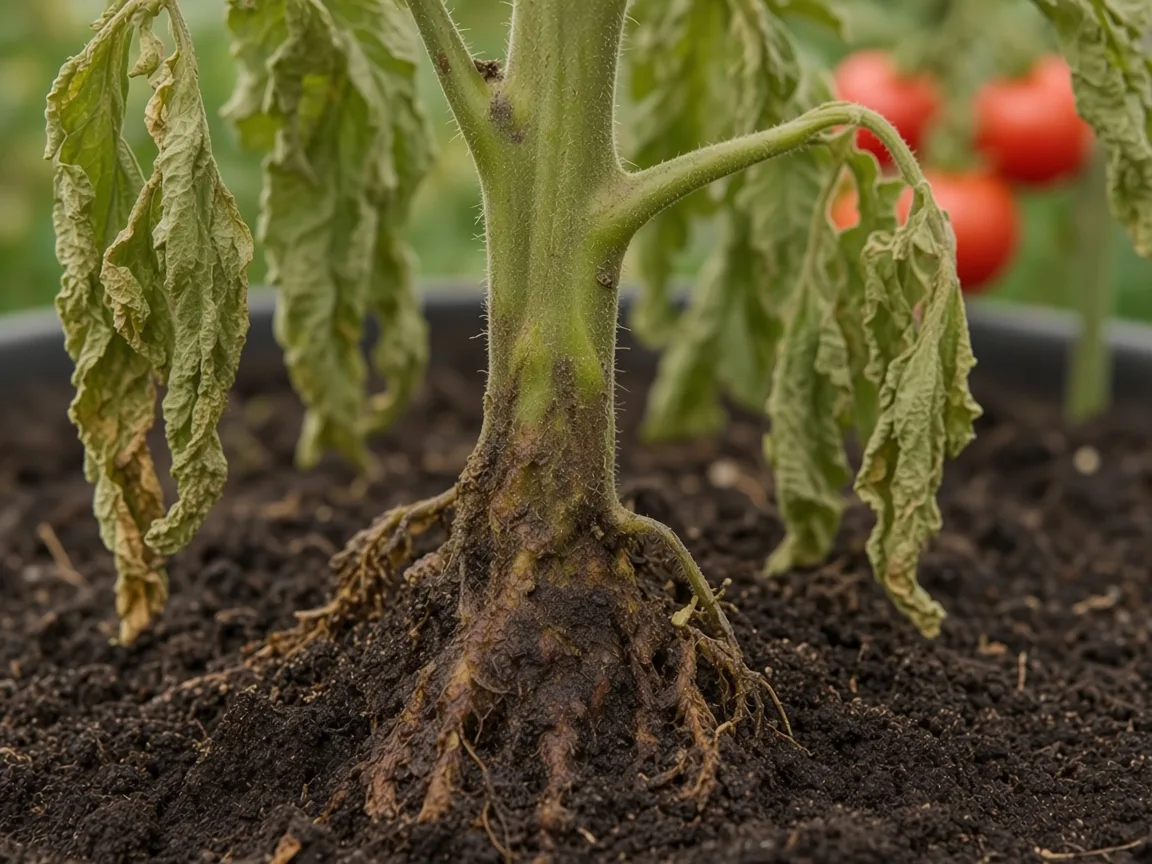
Symptoms on cherry tomato—compare with healthy tissue on the same plant.
Cherry tomato cultivars share the same root system as larger slicing types; fruit size does not change how roots respond to drowning. A vigorous indeterminate vine may still push new tips while lower roots fail, which hides the problem until fruit clusters stall. A compact determinate patio plant has less canopy reserve—wilting and yellow lowers often show up faster on the same wet mix.
Early canopy clues
- Yellowing lower leaves while the top 2–3 cm feels wet for many days
- Wilting at midday on a heavy container, especially in warm weather when Phytophthora-infected plants may wilt or die in hot conditions even though the soil is wet
- Slow or stalled flowering after a rainy week or saucer flooding
- Sour or musty smell when you lift the pot or tilt it toward the drain hole
- Fungus gnats over constantly wet surface mix
- Fruit clusters resting on wet soil or mulch developing tan spots with concentric rings—buckeye rot on fruit touching the ground while roots are also struggling
What you find on the roots
Tip the plant partway out of the pot rather than yanking the stem. Healthy tomato roots are firm and pale. Rot shows as brown, soft, or hollow roots that may slough their outer layer. Pythium in wet soils often produces brown decaying roots and stunted growth before the whole plant collapses. You do not need to name the pathogen in a home garden; describe texture, color, and smell instead.
Lower leaves that have turned fully yellow will not return to deep green. Judge recovery by new shoot growth, resumed flowering, and firm roots—not old leaf color.
Patio pots, saucers, and rainy-week traps
Cherry tomatoes are popular in containers because the fruit ripens quickly on a balcony or patio. Containers also concentrate risk: a single blocked drain hole, a water-filled saucer, or roof runoff into the pot can keep the root zone saturated after one storm.
Roots need oxygen in the pore spaces between soil particles. When water fills those spaces, roots can decline simply from lack of oxygen even before a disease organism appears. That is why draining the pot comes before any rescue surgery.
Practical container checks:
- Confirm drainage holes are open; roots and debris plug them more often than growers expect.
- Never leave the pot standing in a full saucer after irrigation or rain; empty it within an hour.
- Raise pots slightly on feet or a rack so the base is not sealed to a concrete slab.
- During monsoon weeks, pause scheduled watering until a finger test shows the upper 2–3 cm has dried—see the cherry tomato watering guide.
Determinate vs indeterminate: salvage expectations differ
Cherry describes fruit size, not plant architecture. A determinate cherry cultivar sets most of its crop on a bushier frame and finishes sooner. An indeterminate cherry keeps extending vines and setting fruit until weather or disease stops it—read the label on the cherry tomato overview before choosing rescue effort.
| Habit | What root rot means for recovery |
|---|---|
| Determinate patio cherry | Less time to regrow roots before the crop window closes; replace if most roots are mush late in season |
| Indeterminate cherry vine | More nodes may survive if the lower root ball is trimmed and the stem is replanted deeply; still depends on firm stem tissue above the rot line |
Do not remove determinate shoots hoping to “restart” the plant the way you might on a vine tomato. On determinates, removing healthy shoots can remove future fruit clusters. Focus on drainage correction and root trimming only where tissue is clearly dead.
Confirm the diagnosis before repotting
Work through evidence in order:
- Soil moisture at 2–3 cm depth — wet and cool with wilt means roots, not drought.
- Pot weight — unusually heavy days after the last watering suggests poor drainage or a plugged hole.
- Stem base — firm green stem with only lower leaf yellowing may still be early overwatering; dark, soft tissue at the soil line is advanced.
- Root texture — pinch a few exposed roots through gloves; mush confirms rot, firm pale roots do not.
- Fruit pattern — greasy stem lesions or ground-contact fruit spots point toward Phytophthora-related problems in wet conditions.
Blossom-end rot (leathery dark patch on the blossom end) is tied to calcium uptake and irregular moisture—not slimy roots. Do not treat it as root rot. Heat wilt on a drying pot is also a different path; the wilting guide helps separate heat from rot wilt.
Greenhouse or high-tunnel growers who crop tomatoes continuously should know that black dot root rot and other soil pathogens can build when tomatoes repeat in the same protected soil under stress, as described in University of Delaware crop updates. Home patio growers rarely see that exact pattern unless they reuse infected mix.
First fix: drain the root zone, then inspect once
After you stop watering and empty saucers, wait only long enough to see whether water drains freely—hours, not days of neglect in extreme heat. If the mix remains waterlogged and the plant still wilts:
- Tip the root ball out supporting the stem base with your hand.
- Shake away loose mix and look at root color and firmness.
- If more than half the root system is firm, move to conservative trimming below—not a full discard.
- If most roots are mush and the stem base is soft, bag the plant and mix; salvage is unlikely.
Do not apply fertilizer to force growth; NC State notes tomatoes need consistent moisture but cannot use nutrients when roots are dead. Stabilize roots first.
Step-by-step salvage when firm roots remain
When inspection shows decay on the edges but a solid core of healthy roots:
- Trim only soft, brown, or hollow roots with clean pruners. Leave firm pale roots intact.
- Discard the old mix—do not blend it into compost used for nightshades.
- Repot into fresh, well-drained mix sized to the remaining root mass, following the soil guide. Set the plant slightly higher if the old stem base was buried too deep.
- Water once lightly to settle mix, then let the upper 2–3 cm dry before the next irrigation.
- Reinstall stakes or cages from the pruning and support guidance without wounding the stem.
Avoid stacking a fungicide drench, heavy prune, and full feed on the same day. UC IPM emphasizes cultural drainage as the primary management approach for Phytophthora root rot in tomato production.
Recovery timeline and when to replace the plant
Mild cases may show firmer new top growth within one to two weeks after drainage improves and only a small root section was trimmed. Flowering may pause briefly while roots regrow—that is normal.
Replace the plant instead of repeated rescue when:
- The stem base collapses or turns black and soft
- New wilt spreads daily on mix that is finally drying
- Nearly all roots slough on a second inspection
- A determinate patio plant is already past mid-season with little fruit left to justify weeks of regrowth
Cherry tomatoes are often grown as a seasonal crop; starting a clean seedling in fresh mix can be more reliable than saving a rootless stump.
Prevent root rot on the next cherry tomato
- Water on soil moisture, not habit—especially when fruit loads increase water demand.
- Use pots with drainage and a mix that holds moisture without staying soggy in the center; see repotting for final container size.
- Mulch beds to even out moisture, but keep fruit clusters off wet soil and pull mulch back from the stem in very wet weather.
- Rotate containers and raised beds away from spots where a tomato died from root rot; pathogens can persist in debris.
- Wash tools used on infected roots before trimming healthy plants.
Return to the fertilizer guide only after new growth looks stable and roots are clearly taking up water again.
Related cherry tomato guides
Use this page when direct inspection finds soft, brown, or foul-smelling roots on wet mix. Route elsewhere when roots are firm:
| Evidence | Guide |
|---|---|
| Wet mix, firm roots | Overwatering |
| Dry pot, wilt | Underwatering or wilting |
| Yellow lowers only | Yellow leaves |
| Stable plant, routine moisture | Watering or overview |