Spider Mites on Cherry Tomato: Stippling & Webbing Fixes
Quick answer
Spider mites on cherry tomato show as pale stippling on upper leaves and fine webbing on vine tips and trusses, often when patio pots dry out in summer heat. First step: isolate the plant from other nightshades and rinse every leaf underside with a firm stream of water in early morning so foliage dries the same day.
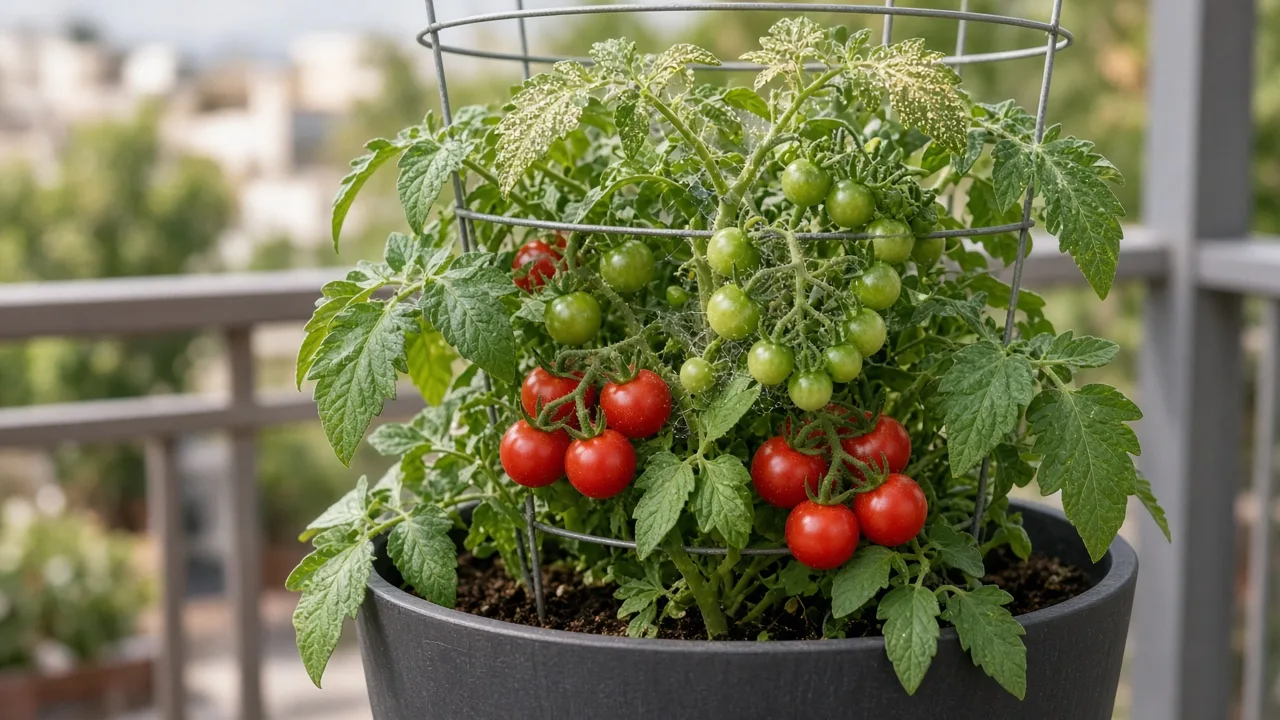
Spider Mites on Cherry Tomato: Causes, Checks & Fixes
This guide covers spider mites on Cherry Tomato. See also the general Spider Mites guide, watering, and light pages for this plant.
Spider Mites on Cherry Tomato: Causes, Checks & Fixes
Quick answer
Pale sandpaper speckles on your cherry tomato’s upper leaves—but the upper 2–3 cm of mix is moist and lower foliage still looks deep green? That pattern often means spider mites, not underwatering alone. Fast-growing cherry vines push tender new blades at stem tips and swelling trusses exactly where twospotted spider mites colonize in hot, dusty weather.
For how mites behave on many crops in general, see our spider mites guide. On cherry tomato, damage usually climbs the cage from the newest growth and flower clusters—not from yellowing lower leaves on wet soil, which more often signals watering or root trouble.
First step: move the pot away from pepper, eggplant, or other tomato neighbors and rinse every leaf underside with a firm stream of water in early morning so foliage dries in full sun per your light setup before midday heat. Hold each stem while you spray from below so you reach truss backs without knocking off green fruit.
When to use this page vs other Cherry Tomato guides
- Cherry tomato watering — Whole-plant wilt with dry, light pots and no stippling or webbing.
- Yellow leaves on cherry tomato — Bottom-up yellowing on older leaves without fine silk at vine tips.
- Aphids on cherry tomato — Soft pear-shaped colonies and sticky honeydew on new shoots, not stippling with webbing.
- Wilting on cherry tomato — Collapse that recovers within hours after deep watering at the soil line.
- Cherry tomato problems hub — Browse all common issues on this crop.
Why cherry tomato gets spider mites
Hot, dry microclimates on patios favor mites. Spider mites reproduce rapidly in warm weather and prefer dusty, water-stressed conditions. Cherry tomatoes in black nursery pots on concrete balconies heat up faster than in-ground vines. When you check soil daily in summer but skip foliage, the root zone may stay moist while leaf undersides bake dry—classic setup for a mite flare.
Constant new growth is feeding territory. Indeterminate cherry cultivars keep extending stems and setting trusses until frost. Each new leaf pair and flower cluster offers soft tissue mites pierce before webbing is obvious on top. Determinate bush cherries concentrate damage on the upper cluster zone once extension slows—scout that crown weekly.
Drought-stressed vines are more vulnerable. Water-stressed plants suffer worse mite damage. Irregular watering that swings from dry edges to heavy soaking—common when fruit splits are feared—stresses roots and leaves at once. Align with steady moisture in the soil guide and mulch container rims so you are not fighting mites on a vine already weakened by underwatering.
Nightshade neighbors share pests. Twospotted spider mites walk between pots on a shared terrace within days. A stippled cherry beside a clean-looking patio tomato may still share a mite population on cage wires or touching leaves—treat and rinse the whole Solanaceae group on the same schedule.
Broad-spectrum sprays can backfire. Certain insecticides kill mite predators and trigger outbreaks. If you recently sprayed for hornworms or beetles and stippling appeared a week later, suspect mites before assuming a new disease.
What spider mites look like on cherry tomato
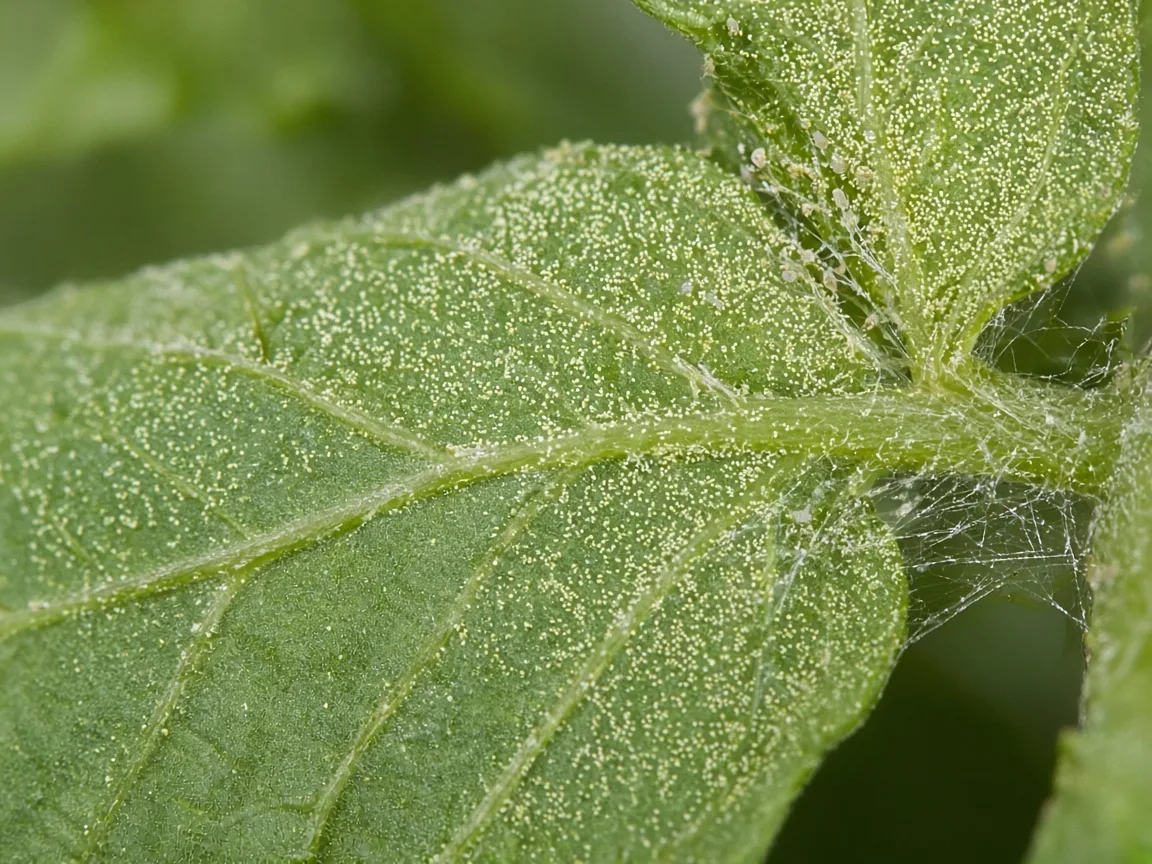
Pale stippling and fine silk on a cherry tomato leaf underside—compare with healthy green tissue on the same vine.
- Tiny yellow or white stippling dots on upper leaf surfaces, often on the newest expansion leaves above open flowers
- Leaves turn dull, bronze, or lightly yellow while neighboring blades on the same truss still look green
- Fine silk webbing at leaf bases, stem creases where side shoots emerge, or between a truss and the cage wire
- Lower leaves may yellow and drop while the vine tip still pushes flowers—unlike uniform overwatering yellowing from wet mix
- Fruit already sizing on a truss rarely shows direct mite scars; damage is mostly foliar until leaves fall and expose cherries to sun
The tap test: Hold white paper under a suspect leaf and strike the foliage sharply. Wait a few seconds. Mites fall as pinhead specks that crawl—often pale with two dark spots on twospotted species. Red or orange fast movers may be predatory mites; plant-feeding mites usually look greenish when crushed.
Cherry tomato leaves are thinner than sweet pepper blades but show stippling clearly once you inspect truss backs and the top 30–60 cm of each vine. Webbing on a single node above a swelling cluster can mean an early colony; sheets of silk across multiple stems mean the population is established.
Unlike aphids on cherry tomato, you will not see pear-shaped insects or sticky honeydew. Unlike mealybugs, patches are not cottony white. Unlike early blight, spots are fine speckles without brown rings and yellow halos on single leaves. Unlike low humidity stress alone, you will find crawling mites or webbing on undersides.
Scouting cages, trusses, and patio pots
Walk the plant twice weekly during peak summer growth. Start at the highest tied point on indeterminate vines—where the next truss will form—and work down one node at a time. On determinate cherries, focus on the upper cluster before the plant stops extending.
Lift every leaf on the top two trusses and check the crease where side shoots emerge. Container plants on railings often show mites on the sun-facing leaf backs first. If leaves touch a neighbor’s foliage, assume both pots need rinsing even if only one looks stippled.
Dust on leaf undersides from balcony construction or dry wind encourages mite buildup. Rinse pathways and pot rims when dust is visible, not only the tomatoes themselves.
How to confirm the cause
- Stippling pattern — Feeding first appears as light dots on leaves, often on upper surfaces of the newest cherry foliage.
- Underside scan — Colonies and eggs sit on leaf backs; use a 10× hand lens if specks are hard to see.
- Tap test — Confirm crawling mites on white paper; dust alone does not move.
- Webbing check — Silk at nodes distinguishes spider mites from thrips scarring or viral mottle.
- Moisture cross-check — If mix is soggy and lower leaves yellow evenly, weigh overwatering or root rot before treating for mites.
- Neighbor survey — Inspect every tomato and pepper on the terrace; shared infestations need a group response.
Lookalike symptoms to rule out
Thrips leave silvery scars and distorted young fruit skin. Powdery mildew shows white fungal patches on tops, not crawling specks underneath. Heat wilt in afternoon sun recovers after evening watering without stippling. Nutrient burn from heavy feed shows margin browning on moist soil—see the fertilizer guide if tips browned after feeding, not after a heat wave.
First fix for cherry tomato
Rinse mites off with water. Forceful spraying of leaf undersides dislodges mites, breaks webbing, and preserves predatory mites and lady beetles already on the vine. Work in early morning so plants dry the same day—critical on sun-exposed patios. Repeat every two to three days for at least two weeks; dry conditions let mites complete generations quickly.
Direct most water at the soil line when you finish so you stay aligned with deep watering habits without leaving wet foliage overnight. Hold stems while you spray so trusses do not snap.
If stippling spreads after three thorough rinses, apply insecticidal soap or horticultural oil labeled for vegetables, covering undersides completely. Spray in early morning or evening—not when temperatures exceed 90°F or when the vine is drought-stressed. Oils and soaps must contact mites to kill them, so dense webbing may need a water rinse first; soap is marginally effective where webbing blocks penetration. Repeat every five to seven days for two to three cycles. Observe label harvest intervals before picking treated trusses; rinse fruit before eating.
Do not repot, hard-prune, or pour extra fertilizer on the same day you start treatment. Do not reach for broad-spectrum insecticides first—they often worsen mite rebounds.
Recovery on fruiting cherry vines
Stippled leaves will not fully green up again. Expect clean new truss foliage within two to four weeks when rinsing or soap cycles stay consistent during active summer growth. Cherries already sizing on lightly damaged trusses remain edible after washing; judge the plant by whether the next clusters set fruit on unstippled leaves.
Severe defoliation on young transplants may warrant removing the plant before mites walk to the rest of the collection. Mature vines with deep roots usually survive if treatment starts before webbing blankets the cage.
What not to do
- Do not increase watering because top leaves look dull—check undersides for stippling and silk first.
- Do not apply oil or soap at midday on sun-exposed patio plants; wet foliage in harsh direct sun can scorch leaves and stress fruit.
- Do not use homemade dish soap mixes; labeled products are formulated to contact mites without burning tomato foliage.
- Do not ignore drought stress while spraying—adequate watering limits mite importance on heat-stressed cherries.
- Do not treat only one pot when several nightshades share a railing—mites will reinfest from neighbors within days.
- Do not spray when bees are actively visiting open flowers on every truss; target shaded undersides and stems, or rinse mechanically during bloom if sprays are a concern.
How to prevent spider mites next time
Quarantine every new cherry tomato seedling for two weeks before grouping it with peppers or tomatoes. Scout undersides twice weekly from transplant through peak harvest. Space pots so leaves do not bridge between plants. Keep vines evenly moist—not bone dry between waterings—using the watering rhythm that matches fruiting demand.
Reduce dust on balconies, and avoid unnecessary broad-spectrum sprays that wipe out natural enemies. When heat waves arrive, a preventive morning rinse on leaf backs can knock early colonizers before webbing forms—especially on indeterminate tips you tied upward last week.
When to worry
Escalate when webbing covers most of the vine after three full treatment cycles, when new transplants lose leaves faster than they regrow, or when stippling reaches every Solanaceae pot on the terrace. Chronic feeding during peak flowering can reduce fruit set and sunburn cherries if upper cover falls.
Spider mites alone rarely kill a mature cherry tomato with a deep root system, but they can stall a season’s harvest on patio containers that overheat daily.
Conclusion
Spider mites on cherry tomato target sun-exposed leaf undersides and the softest new growth at vine tips and trusses—not soggy lower leaves alone. Confirm stippling, webbing, and crawling specks on a tap test; rinse undersides with water first. Follow with labeled soap or oil if needed, treat neighboring nightshades together, and judge recovery by clean new truss leaves and steady fruit set—not by repairing bronzed blades that already hardened.
Related Cherry Tomato guides
- Cherry tomato overview
- Cherry tomato watering
- Cherry tomato light
- Cherry tomato soil
- Cherry tomato fertilizer
- Aphids on cherry tomato
- Mealybugs on cherry tomato
- Cherry tomato problems
Related tool
Use the Pest Identifier Tool to narrow causes for spider mites on this plant before changing multiple variables at once.