Aphids on Cherry Tomato: Causes, Checks & Fixes
Quick answer
Aphids on cherry tomato cluster on soft new shoots, flower clusters, and leaf undersides, leaving sticky honeydew that can attract ants and sooty mold. First step: knock colonies off with a firm stream of water aimed at stem tips and leaf backs in early morning so foliage dries before midday sun.
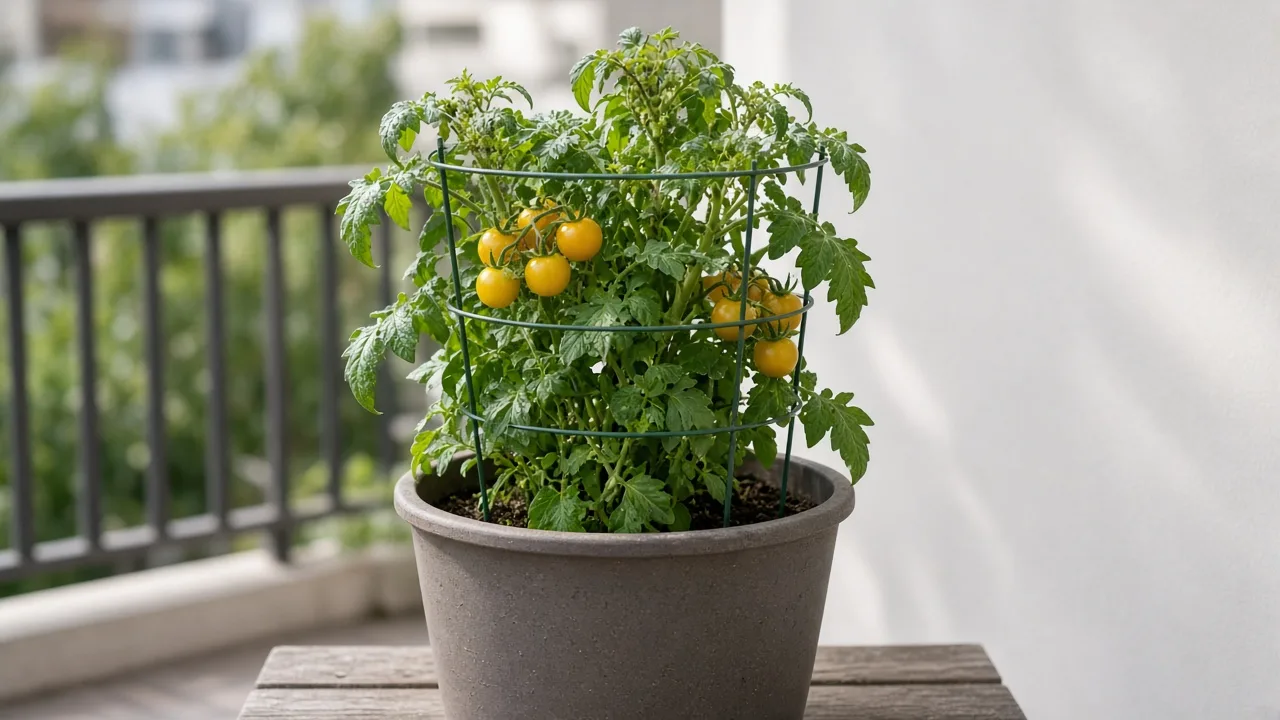
Aphids on Cherry Tomato: Causes, Checks & Fixes
This guide covers aphids on Cherry Tomato. See also the general Aphids guide, watering, and light pages for this plant.
Aphids on Cherry Tomato: Causes, Checks & Fixes
Quick answer
Aphids on cherry tomato cluster on soft new vine tips, swelling flower trusses, and young leaf undersides, leaving sticky honeydew that can attract ants and black sooty mold. Indeterminate cherry cultivars keep producing tender shoots all season, so aphids always have fresh feeding sites unless you scout often.
For how aphids behave on garden plants in general, see our aphids guide. On cherry tomato, the decisive check is visible pear-shaped insects and stickiness on the newest growth at the top of each stem—not yellowing lower leaves alone, which often point to watering or nutrition issues instead.
First step: knock colonies off with a firm stream of water aimed at stem tips and leaf undersides in early morning so foliage dries in full sun per your light setup before the hottest part of the day. Hold the stem with one hand and spray from below to reach the backs of upper leaves without blasting ripening fruit.
When to use this page vs other Cherry Tomato guides
- Cherry tomato watering — Use when wilt affects the whole plant evenly and soil is dry or soggy, with no insects on new tips.
- Yellow leaves on cherry tomato — Lower-leaf yellowing without sticky new growth or visible colonies.
- Spider mites on cherry tomato — Fine stippling and webbing in hot dry air, not soft-bodied clusters.
- Wilting on cherry tomato — Midday wilt that recovers after deep watering, without honeydew on trusses.
- Cherry tomato problems hub — Browse all common issues on this crop.
Why cherry tomato gets aphids
New vine tips and flower trusses are the buffet. Cherry tomato is a fast-growing solanaceous crop that pushes constant soft tissue at stem tips and developing flower clusters—exactly where aphids feed on new growth. Vigorous indeterminate cultivars on a tall cage can outgrow a small infestation on lower leaves while colonies explode on the top third of the plant you rarely inspect.
Several aphid species target tomatoes. Green peach aphid, melon aphid, and potato aphid all occur on solanaceous vegetables. Potato aphids are often larger and pink or green, while green peach aphids are slender and yellow-green. All can colonize cherry tomato leaves and stems; identification matters less for the first rinse than confirming live sap feeders on tender tissue.
Warm weather speeds reproduction. Aphids multiply quickly when temperatures sit in the range tomatoes prefer for flowering and fruit set. Patio containers and greenhouse benches heat up faster than in-ground beds, so a few aphids on a transplant can coat trusses within a week if ants protect the colony.
Excess nitrogen softens shoots. High nitrogen fertility encourages aphid reproduction. Cherry tomatoes need steady feeding during fruiting, but heavy nitrogen pushes lush leaves with little fruit. That soft growth is easier for aphids to pierce than firm, moderately fed vines—cross-check your fertilizer routine if outbreaks follow every feed.
Viruses ride in early. The green peach aphid can transmit viruses such as alfalfa mosaic virus to young tomato plants. Feeding may look mild, yet mosaic, fern-leaf, or stunted new growth after aphid activity is a different problem than cosmetic honeydew—treat virus-suspect plants as a priority and remove them from the collection if distortion spreads.
What aphids look like on cherry tomato
- Small pear-shaped insects—green, yellow, pink, or black—clustered on stem tips, flower pedicels, and young leaf undersides
- Colonies tucked under the first truss and along the newest side shoots you plan to prune later
- Shiny honeydew on upper leaf surfaces or on cage wires where drips land
- Ants traveling up stakes toward the top of the plant
- Curling or yellowing of the newest leaves while older fruiting leaves stay mostly green
- Black sooty mold on sticky leaves if honeydew persists
- White cast skins on leaf tops after molting
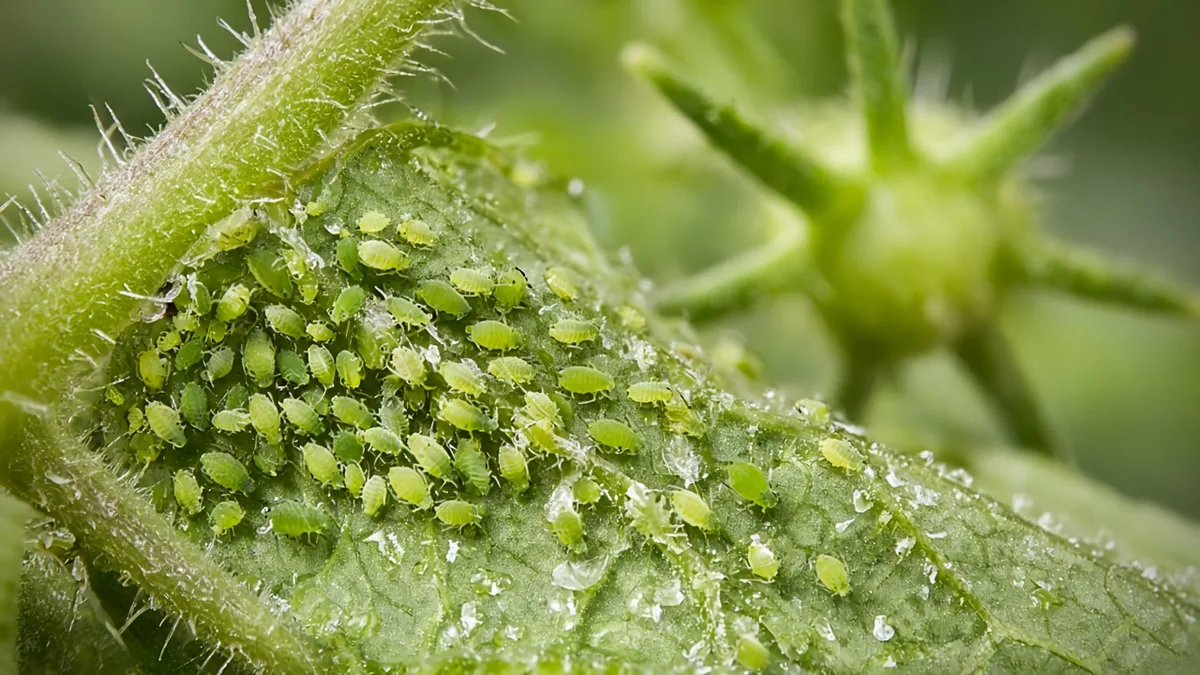
Aphid colonies on cherry tomato — compare with healthy tissue on the same stem.
Unlike mealybugs on cherry tomato, aphids are not cottony white. Unlike hornworm damage, leaves are not stripped to veins. Unlike fungus gnats, the insects sit on foliage, not flying from wet soil. Unlike drought stress from underwatering, damage concentrates on soft new tips with visible insects or stickiness present.
Scouting indeterminate tips and patio cages
Walk the plant at least twice weekly during rapid growth. Start at the highest point of each stem—where the next truss will form—and work down one node at a time. On determinate cherry cultivars, focus on the upper cluster zone before the plant stops extending. On indeterminate vines, the tip you tied last week is already a new feeding site.
Lift leaves on the top two trusses and check the stem crease where side shoots emerge. Container plants on balconies often show ants on the pot rim before you spot aphids above. If neighbors grow peppers or ornamentals, winged aphids can land on your cherry tomato from downwind—planting upwind from infested sources reduces migration when you have layout control.
How to confirm the cause
- Tip and truss scan — Inspect swelling flower clusters and the top 30 cm of each stem. Aphids often colonize new growth in large groups.
- Underside check — Colonies hide on the backs of young leaves pressed against stems or under the first open flowers.
- Honeydew test — Wipe a glossy upper leaf; if stickiness returns within a day, sap feeders are still active above.
- Ant trail follow — Ants protect aphids from predators; trails on cage legs usually lead to colonies at the growing tip.
- Shake test — Gently shake a stem. Aphids stay clustered; whiteflies would fly off in a small cloud.
- Watering cross-check — Confirm soil is not waterlogged. Overwatering on cherry tomato yellows lower leaves more evenly; aphid damage stays on tender new tissue with insects present.
Lookalike symptoms to rule out
Thrips leave silvery scars on leaves and distorted fruit skin. Spider mites cause fine stippling and webbing in hot, dry air—common on stressed container tomatoes. Leaf miners make winding tunnels inside leaves, not external clusters. Early blight and septoria show brown spots with yellow halos on older foliage, not moving insects on tips.
First fix for cherry tomato
Knock colonies off with water. Use a strong stream of water on stem tips, flower trusses, and leaf undersides in early morning so plants dry in sun the same day—WSU recommends washing aphids from tomato plants this way before escalating to sprays. Repeat every two to three days to catch nymphs that hatch between rinses. Direct water at the soil line when you finish so you stay aligned with deep watering habits without leaving foliage wet overnight.
This single step dislodges aphids, washes fresh honeydew before ants arrive, and preserves natural enemies such as lady beetles, lacewings, and parasitic wasps already on the plant.
If colonies remain after two or three rinses, apply insecticidal soap or horticultural oil labeled for vegetables, covering stems and leaf undersides thoroughly. Spray in early morning or evening, not when temperatures exceed 90°F or when the plant is drought-stressed. Avoid treating open flowers heavily if bees are active; target colonies on leaves and stems instead. Repeat every five to seven days for two to three cycles. Insecticidal soaps may need more than one application on dense colonies.
Set sticky traps or ant barriers on cage legs if ants are farming honeydew and blocking biocontrol. Do not repot, hard-prune, or pour extra fertilizer on the same day you start treatment.
Virus risk on young cherry tomato plants
When aphids appear on seedlings or newly set transplants, watch new leaves for mosaic mottling, fern-like distortion, or stunted tips in the weeks after infestation. Green peach aphid is an important virus vector even when wilting from sap loss is minor. Reflective silver mulch around young plants can delay winged aphid colonization for several weeks—useful on patio containers where you can lay mulch before transplanting. Mulch loses effect once foliage covers most of the surface, so combine it with tip scouting through early flowering.
Recovery timeline
Visible aphids should clear within one to two weeks of consistent rinsing or soap treatment. Expect clean new trusses and unsticky tips within three to five weeks during active summer growth. Distorted young leaves will not fully flatten. Flower buds that dropped from heavy feeding are gone for that truss—judge success by the next clean cluster setting fruit.
Sooty mold stops spreading once insects are controlled and can be rinsed off over the following weeks. Ripening cherries on trusses that were briefly infested are still edible after washing fruit and removing any sooty residue from the skin.
What not to do
- Do not increase watering because top leaves curl—check for insects and honeydew on trusses first.
- Do not apply oil or soap at midday on sun-exposed patio plants; wet foliage in harsh direct sun can scorch leaves and stress fruit.
- Do not use homemade dish soap mixes; labeled insecticidal soap is formulated to smother aphids without burning tomato foliage.
- Do not reach for broad-spectrum insecticides first—they kill predators and can make aphid rebounds worse.
- Do not ignore ants—they block lady beetles and lacewings from cleaning up colonies.
- Do not spray imidacloprid or other systemic insecticides on plants in bloom if pollinators visit your balcony garden.
How to prevent aphids next time
Quarantine every new cherry tomato seedling for two weeks before placing it beside other solanaceous crops. Scout stem tips twice weekly from transplant through peak harvest. Use reflective mulch on containers when virus history or neighbor pressure is high. Keep vines moderately fed—follow the soil and fertility guides so growth stays firm rather than overly soft.
Remove crop debris after final harvest and avoid composting virus-suspect vines. Strong airflow between pots reduces humidity pockets where aphids and ants travel along cage wires. Let beneficial insects finish if you already see lady beetles or lacewing larvae working the tips before you spray.
When to worry
Escalate when new growth stays coated in aphids after three full treatment cycles, when virus-like distortion spreads to multiple stems, or when sooty mold covers most leaves and blocks light. Chronic feeding during peak flowering can reduce fruit set even on otherwise healthy vines.
Aphids alone rarely kill a mature cherry tomato with a deep root system, but they can stall a season’s harvest and introduce viruses to replacements you start late in summer.
Conclusion
Aphids on cherry tomato target the softest tissue—new vine tips and flower trusses—not established lower leaves. Confirm clusters, honeydew, or ants at the top of each stem; knock them off with water first. Follow with labeled soap or oil if needed, watch young plants for virus symptoms, and judge recovery by clean new trusses and fruit set—not by fixing leaves that already hardened with damage.
Related Cherry Tomato guides
- Cherry tomato overview
- Cherry tomato watering
- Cherry tomato light
- Cherry tomato soil
- Cherry tomato fertilizer
- Spider mites on cherry tomato
- Mealybugs on cherry tomato
- Cherry tomato problems
Related tool
Use the Pest Identifier Tool to narrow causes for aphids on this plant before changing multiple variables at once.