Cherry Tomato Light Needs: Sun, Heat & Placement
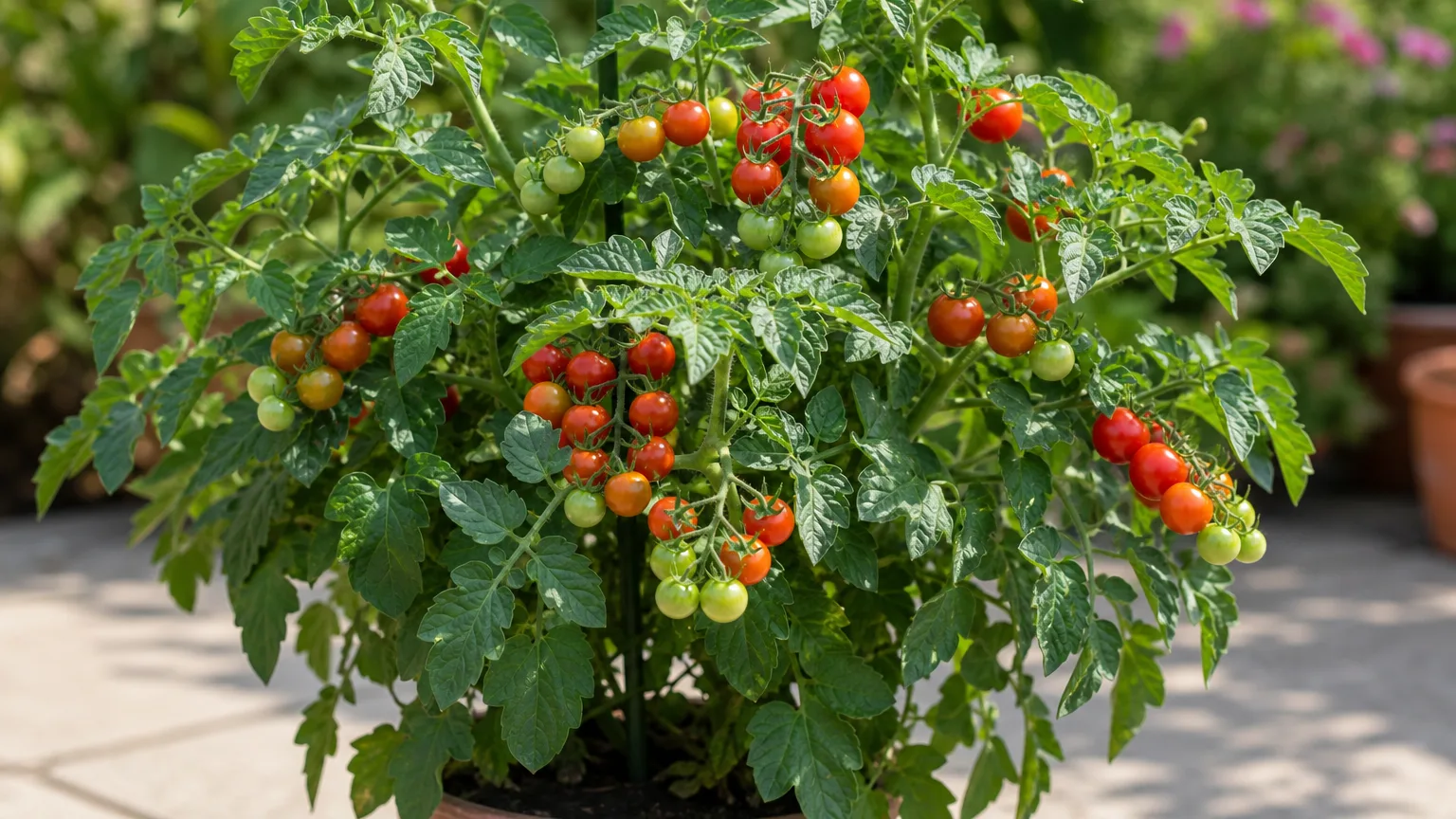
Cherry Tomato Light Needs: Sun, Heat & Placement
Cherry Tomato Light Needs: Sun, Heat & Placement
Cherry tomatoes are outdoor fruiting crops, not low-light houseplants. On an Indian balcony or terrace, the best starting position is the place that receives the longest useful stretch of direct sun without trapping the plant against a scorching wall. Alabama Cooperative Extension gives tomatoes a practical baseline of six to eight hours of full sun, while local buildings, monsoon cloud, balcony roofs, and seasonal sun angles determine whether your plant actually receives it.
The first action is simple: watch the plant’s exact position through one clear day and record when direct sunlight reaches and leaves the foliage. Do not judge from how bright the room looks. If the plant gets only a brief patch of sun, move it toward the open edge, raise it above a solid parapet, or choose a sunnier growing position before trying to correct weak flowering with fertilizer.
The quick answer for a balcony or terrace
Give Cherry Tomato (Solanum lycopersicum var. cerasiforme) at least six hours of direct outdoor sun, with more useful daylight where heat and water can be managed. Penn State Extension also states a minimum of six hours of direct sun for tomatoes. A compact cherry cultivar can fit a pot, but “compact” changes plant size, not the need for enough energy to build leaves, flowers, and fruit.
Morning through midday sun is a particularly useful pattern in hot Indian cities because it supplies strong light before walls and paving reach their highest heat load. An open terrace may provide all-day exposure; a recessed balcony may lose direct sun even when the sky is bright. Treat “full sun” as something to observe at leaf level, not as a label attached to a compass direction.
Why strong light matters from leaves to fruit
Leaves use light to build the carbohydrates that support new stems, roots, flower trusses, and developing tomatoes. The RHS lists Solanum lycopersicum for a full-sun position, reflecting the crop’s high-light growth habit rather than a decorative preference. Under sustained shade, the plant often stretches toward the opening, makes wider gaps between leaves, and devotes limited resources to foliage rather than a heavy crop.
Cherry fruit is smaller than a slicing tomato, but that does not make the plant shade-tolerant. Indeterminate cherry cultivars may keep extending and flowering for a long season, so poor light can produce a tall green vine with disappointing trusses. Determinate and dwarf cultivars stop or slow extension according to their genetics, yet still need a sunny site to perform as fruiting vegetables.
Flowering and fruit set are not the same thing
Strong light supports flowering, but seeing yellow blossoms does not guarantee fruit. A tomato flower must shed viable pollen and complete fertilisation before the ovary develops. Research indexed by PubMed explains that reproductive development, especially anthers and pollen grains, is sensitive to high temperature. This is why a sunny plant can flower and still drop blossoms during a severe hot spell.
Diagnose the whole setting before blaming light. A stretched plant with sparse flowering on a shaded balcony points toward insufficient light; a robust, sunny plant that suddenly drops flowers during hot nights and afternoons may be experiencing heat-related reproductive stress. Excess nitrogen and inconsistent moisture can complicate the picture, so use the Cherry Tomato fertilizer guide and Cherry Tomato watering guide for those separate checks.
How much direct sun cherry tomatoes need
Use six hours as a minimum target, not a promise of a particular yield. The RHS recommends a warm, sunny, sheltered outdoor site and says container tomatoes can be grown outdoors in full sun. Cultivar, temperature, leaf health, root volume, nutrition, and pollination all affect what the plant does with that light.
Count direct rays striking the leaves, not bright ambient daylight beyond the balcony. Broken periods can still add up: two hours after sunrise plus four hours around midday is meaningful direct exposure. Light filtered through dense shade cloth, tinted glass, or a deep roof is weaker, so a plant receiving that filtered light all day may still behave like a shaded tomato.
Direct sun matters more than a bright-looking room
Human eyes adjust quickly to dim rooms, making a window position seem brighter than it is for a crop. Cornell’s tomato guide notes that even a sunny south-facing window can be barely adequate for raising transplants without supplemental light. A mature, flowering Cherry Tomato has a greater canopy and crop demand than a seedling.
An indoor windowsill can maintain a young plant temporarily, but it is rarely equivalent to an open balcony or terrace. Glass reduces and alters incoming light, the plant receives it from one direction, and indoor airflow may be poor. If outdoor space is unavailable, use a capable grow light and realistic expectations rather than describing ordinary room brightness as full sun.
The best balcony and terrace position
Choose the position with the widest view of open sky and the least obstruction from the balcony above, nearby towers, grills, and parapet walls. Put the foliage in the sun, not only the top of the support. On a solid-walled balcony, a sturdy stand can raise a compact pot into useful light, provided the container cannot fall and the mature plant and support remain safe in wind.
Leave breathing room between foliage and a hot wall. Pale walls can increase reflected light; dark stone, glass, and metal can add radiant heat. The right placement gives the canopy strong sun while allowing air movement and keeping the root ball from baking against a surface.
East, south, west, and north exposures
In India, an unobstructed east-facing balcony often gives gentle morning sun and may be a good hot-season compromise. A south-facing position can receive a long sunny window, though the pattern shifts with latitude, season, overhangs, and nearby buildings. Observe rather than assume.
A west-facing balcony can produce well because it receives real direct sun, but late-day wall and floor heat may increase stress in summer. A north-facing or deeply recessed balcony is often the hardest place to fruit tomatoes if direct rays rarely reach the leaves. Compass direction is only a screening tool: a north-east corner with open sky can outperform a south balcony blocked by another tower.
Heat stress is not the same as excess light
Tomatoes need sun, yet their flowers and exposed fruit can be damaged when strong radiation combines with high air and surface temperatures. Cornell notes that poor fruit set can occur when temperatures are too high or too low. The useful response is not to move the plant into permanent deep shade; it is to reduce the harshest heat load while retaining a genuinely sunny daily position.
Keep roots evenly supplied with water, mulch the surface where appropriate, and prevent a black nursery pot from sitting against a sun-heated metal railing. Do not strip healthy leaves merely to “let fruit see the sun.” Foliage shades fruit, and suddenly exposing green tomatoes can increase the chance of pale, damaged patches.
When temporary afternoon shade helps
Temporary light shade can be reasonable during an extreme hot spell, especially on a west-facing balcony or exposed terrace where the plant wilts despite a moist root zone. Position breathable shade above or to the hot side so air still moves, and keep morning light available. Remove or reduce it when conditions moderate instead of leaving the crop under heavy shade for the season.
Shade is a heat-management tool, not a cure for every failed flower. University of Maryland Extension discusses tomato pollination as a process that can be disrupted in protected growing conditions and may need flower vibration and suitable conditions. On a still balcony, gently tapping the support around midday when flowers are dry may help pollen move, but it cannot reverse heat-damaged pollen.
Acclimate seedlings and newly bought plants
A seedling raised under nursery netting or indoor lights can scorch if moved straight into an exposed terrace position. The RHS recommends hardening off tender plants gradually so leaves adjust to stronger sun, wind, and outdoor temperature changes. Existing pale or papery damage will not become green again, but new growth can be healthy after a careful transition.
Start in bright shelter with gentle morning sun, then increase the sunny period in stages while watching the newest leaves. Move the plant back temporarily if it develops widespread bleaching or severe wilt that does not ease after the hottest period. There is no need to promise an exact acclimation schedule: cloud cover, nursery conditions, season, and the intensity of the final terrace all change the pace.
Signs a cherry tomato needs more light
The clearest low-light pattern is long, weak growth with wide gaps between leaves as stems reach toward the opening. New leaves may be smaller, stems may lean, and flower trusses may be sparse. Flowers that do appear can coexist with poor fruiting, but light is more likely to be the main constraint when the entire plant is stretched and the site receives little direct sun.
Act on placement before feeding. Move the pot to stronger light gradually, rotate it only to keep access and support manageable, and reassess new growth rather than old stretched stems. If soil remains wet for unusually long in shade, adjust watering to the slower drying rate rather than watering on the schedule used for a sunny terrace.
Signs the exposure is too harsh
Too-fast exposure changes can leave bleached tan or whitish patches on the sun-facing leaves. Fruit may develop pale, papery areas where it lost leaf cover, while a container beside a hot wall may wilt hard every afternoon even when morning moisture was adequate. Check soil moisture and root-zone heat before concluding that sunlight alone is the problem.
Normal midday leaf droop can recover as the air cools. Persistent wilt, crisping, flower drop, and hot dry mix call for action: water correctly, shield the container, preserve healthy foliage, and add temporary afternoon protection if the setting is extreme. For root-zone decisions, follow the Cherry Tomato soil guide rather than adding water-retentive material blindly.
Can grow lights replace outdoor sun?
Artificial light can raise sturdy seedlings and can support a tomato where outdoor sun is unavailable, but a small decorative bulb is not enough for a mature fruiting canopy. Use a horticultural fixture designed for high-light edible crops, cover the full canopy, and follow its tested hanging-distance and safety instructions. As the indeterminate plant grows, keeping all leaves close enough to the fixture becomes increasingly difficult.
Treat a grow light as supplemental when a balcony gets a few sunny hours, or choose a compact dwarf cultivar for a fully artificial setup. Watch plant response rather than quoting an unsupported universal wattage or lux target. If stems stretch toward the fixture and new flower trusses weaken, either improve coverage or move the crop outdoors.
A seasonal placement checklist for India
Before each major seasonal change, observe the sun path again. Winter sun may enter a balcony that is shaded in summer, while monsoon clouds and a roof overhang can sharply reduce useful direct light. A terrace that is excellent in mild weather may need temporary protection during the hottest dry-season afternoons.
Check four things together: direct-sun duration, new stem compactness, flower retention, and how quickly the pot dries. Change one major variable at a time where possible. That makes it easier to tell whether moving the plant helped, and it prevents a cascade of simultaneous shade, watering, and fertilizer changes.
When to use this page vs other Cherry Tomato guides
Use this page to decide where the plant should stand, whether the balcony receives enough sun, and how to handle heat or acclimation. Start with the Cherry Tomato overview if you are still choosing a cultivar or container. Use the watering guide when wilt or slow drying is the central symptom, and the fertilizer guide when foliage is vigorous but feeding history is uncertain.
Light problems can resemble root or nutrient trouble. If placement is already sunny but growth remains weak, inspect drainage and root conditions with the Cherry Tomato repotting guide. Do not use stronger sun as a substitute for healthy roots.
Related Cherry Tomato guides
- Cherry Tomato watering — match irrigation to sun, wind, container size, and fruit development.
- Cherry Tomato soil — build a root zone that drains while holding useful moisture in a sunny pot.
- Cherry Tomato fertilizer — avoid trying to feed a shaded or heat-stressed plant into fruiting.
- Cherry Tomato pruning — preserve useful leaf cover and prune according to cultivar habit.
- Cherry Tomato repotting — correct an undersized or unstable container before the canopy becomes large.
Conclusion
Cherry Tomato needs a genuinely sunny outdoor position: aim for at least six hours of direct light, then refine the placement for your cultivar, balcony geometry, and season. Keep morning and midday light strong, use temporary afternoon protection only when heat load warrants it, and acclimate nursery-grown plants before exposing them to an open terrace.
Read the newest growth and flowers rather than chasing a fixed formula. Compact stems and regular trusses suggest that light is doing its job; stretching calls for a sunnier position, while sudden bleaching after a move calls for slower acclimation. When a well-lit plant flowers but does not set fruit during severe heat, investigate temperature, moisture, and pollination instead of pushing it into deeper permanent shade.