Cherry Tomato Pruning: What to Cut and Keep
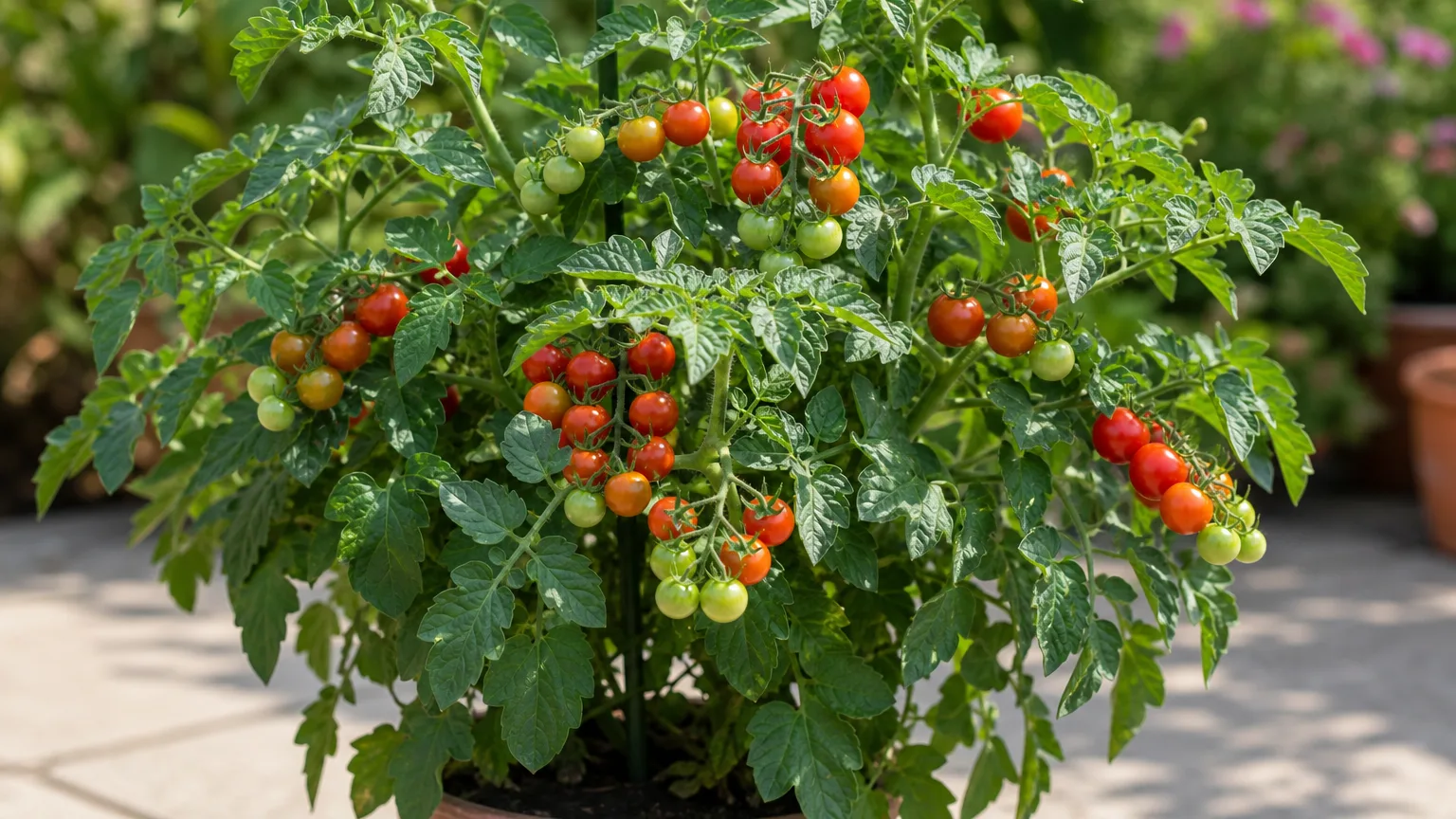
Cherry Tomato Pruning: Determinate vs Indeterminate Cuts
Cherry Tomato Pruning: Determinate vs Indeterminate Cuts
First, identify one leaf that is touching the soil or is fully dead or diseased, and remove only that leaf. If there is no such leaf, pause before cutting healthy growth. The next decision depends on whether your cherry tomato is determinate (a bush that stops extending after a set number of flower clusters) or indeterminate (a vine that keeps extending and flowering). Cherry fruit size does not tell you which habit you have, so check the seed packet, nursery label, or cultivar description before touching a sucker.
Reviewed by LeafyPixels Review Board · Author: sai-ananth
Quick answer
Cherry tomato (Solanum lycopersicum var. cerasiforme) does not have one universal pruning method. Determinate cherry tomatoes generally need cleanup, support, and little or no sucker removal because their shoots stop at flower clusters and contribute to a concentrated harvest. Indeterminate cherry tomatoes may be selectively pruned when they are trained vertically and space or airflow is limited, but they can also fruit without routine sucker removal if a cage supports the wider plant.
The Wisconsin Horticulture Division of Extension draws the core line clearly: determinate plants reach a set size, while indeterminate plants continue growing through the season, and its training system reserves sucker pruning for indeterminate tomatoes. That distinction matters more than the word “cherry.” Use the Cherry Tomato overview to match the plant’s support and care to its cultivar before deciding how many stems to keep.
Decide by growth habit, not fruit size
Determinate and dwarf cherry tomatoes
A determinate plant forms a bush with a finite number of growing points. Each side shoot you call a sucker can become a flowering, fruit-bearing stem, so stripping those shoots by default can remove part of the crop the plant was built to carry. Leave healthy suckers in place unless a lower one is crowding the soil, damaged, or preventing you from tying the plant safely.
There is a limited production-style exception, not a rule for every patio plant. Purdue University Extension describes removing lower suckers on staked determinate tomatoes around first bloom while preserving the strong sucker immediately below the first flower cluster; it also warns that excessive sucker pruning can reduce yield. A home grower using a roomy cage usually has no reason to copy an intensive stake-and-weave system.
Dwarf and patio cultivars may be determinate or may carry a compact indeterminate habit. Treat the actual label as decisive. Never assume a small pot or short current height means the plant should be de-suckered.
Indeterminate cherry tomatoes
An indeterminate cherry tomato keeps producing new stem length and flower clusters until heat, cold, disease, or the end of the crop stops it. On a tall stake or string, selective sucker removal can keep the plant to one, two, or three manageable leaders. In a broad cage or trellis, more leaders can remain because the support can spread their weight.
A sucker is the leafy shoot emerging from the axil, the angle between a leaf petiole and a stem. It is not a useless parasite: if retained, it becomes another stem with leaves and flower clusters. Prune one only when you have a reason—such as keeping a vertical training plan, opening a congested center, or preventing an unsupported stem from collapsing—not because every sucker is “bad.”
When to prune cherry tomatoes
Use growth stage and weather rather than a fixed month. Begin optional training only when the first flower cluster is visible, the plant is established on its support, and you can distinguish the main stem, leaf petioles, and axillary shoots. In warm Indian and similar climates, that stage may arrive in different months depending on sowing time and elevation.
Choose a dry morning after dew has lifted. Small wounds dry faster in dry conditions; Purdue advises sunny-morning pruning because large, slow-drying wounds are more exposed to infection. Postpone healthy-tissue cuts during a heat wave, after severe wilting, immediately after transplanting, or while the root zone is waterlogged. Stabilize Cherry Tomato watering before reducing a stressed canopy.
Dead or clearly diseased material is different from routine shaping. Remove it when found, preferably while foliage is dry, and bag suspect tissue rather than dropping it under the plant.
What to inspect before the first cut
Trace each stem from the soil upward before pruning. A true leaf ends in multiple leaflets; a flower truss carries buds or fruit; a sucker has its own growing tip in the leaf axil. Cutting a flower truss by mistake removes the crop directly.
Check these four points:
- Cultivar habit: determinate, indeterminate, semi-determinate, or dwarf.
- Support: a compact cage, broad cage, tall stake, string, or trellis. Tomato plants need support, and Penn State Extension recommends taller structures for indeterminate than determinate plants.
- Leaf health: look above and below lower leaves for spots, yellowing, water-soaked patches, or collapse.
- Current stress: do not make optional cuts while the plant is persistently wilted, nutrient-stressed, newly transplanted, or losing leaves rapidly.
Long internodes and a plant leaning hard toward light are reasons to correct Cherry Tomato light, not reasons to strip more foliage. Pruning cannot make a shaded tomato compact while its new growth continues reaching for sun.
Tools and clean cutting
Pinch a very small, soft sucker sideways with clean fingers. Use sharp scissors or bypass pruners for a shoot that no longer snaps easily; do not tear it downward and peel the main stem. Clean blades before starting and between plants. Iowa State University Extension recommends sanitizing pruning shears to avoid carrying disease between cuts, while Wisconsin specifies at least 30 seconds of contact with rubbing alcohol for tomato tools.
Keep one hand behind a fruit truss when cutting in a crowded canopy. This simple guard makes it harder to clip the truss or main leader accidentally.
How to prune step by step
1. Make the cleanup cut
Remove the lowest leaf only if it touches soil, is dead, or shows disease. Cut the leaf petiole close to the stem without nicking the stem. Lower foliage deserves attention because Penn State Extension notes that Septoria leaf spot and early blight commonly begin on the oldest leaves near the ground.
Do not turn this into wholesale defoliation. Leaves power fruit development and shade fruit from intense sun.
2. Choose the permanent leaders
For a determinate or caged dwarf cherry tomato, keep the healthy framework and tie it loosely to its support. Cleanup may be the end of the session.
For an indeterminate plant on a stake or string, keep the main stem and deliberately choose any additional leader. A common two-stem plan retains the vigorous sucker just below the first flower cluster, a placement also described in the Wisconsin tomato pruning guide. Mark or tie the chosen leader before removing anything else so it is not mistaken for unwanted growth later.
3. Remove only competing young suckers
On the trained indeterminate plant, pinch only the small suckers that conflict with your leader plan. Work from the base upward and stop after a few cuts to reassess the canopy. Leave large, flowering side stems unless removing one is necessary for support or disease management; a large cut creates a larger wound and sacrifices fruit already committed to that stem.
Do not remove the leaf beneath a fruit cluster merely because you removed the sucker above that leaf. The leaf and sucker are different organs, and the leaf continues feeding the plant.
4. Keep enough foliage around fruit
Do not remove more than about 20% of the plant’s healthy leaf mass in one session; University of Illinois Extension uses that conservative ceiling while explaining pruning for airflow and support. For a determinate cherry tomato, the practical limit should usually be far lower.
Avoid exposing green fruit suddenly to harsh afternoon sun. Wisconsin advises stopping repeated pruning before harvest so the canopy can protect fruit from sunscald. If fruit is already shaded by leaves, keep that protection through hot weather.
Diseased, yellow, and damaged growth
A fully yellow lower leaf will not turn green again, so remove it at the petiole. For a leaf with a few dry edges but a healthy green blade, keep the useful tissue unless it interferes with inspection. Remove snapped stems cleanly back to an intact junction; do not leave a crushed strip hanging.
Treat spreading spots, water-soaked lesions, or dark stem damage as diagnosis problems rather than ordinary grooming. Prune affected material while dry, disinfect tools between plants, and discard it away from the growing area. Pruning can remove an infection source and improve access, but it does not cure disease already moving through apparently healthy tissue.
Keep leaves off wet soil, allow space around supports, and direct irrigation at the root zone. Penn State recommends avoiding wet foliage and improving air circulation as part of foliar disease management. Pair those measures with the Cherry Tomato soil guide because a dense, waterlogged root zone cannot be corrected by opening the canopy.
What not to cut
Do not cut:
- every sucker on a determinate or unknown cultivar;
- the growing tip of a determinate plant during normal fruit production;
- flower trusses or stems carrying healthy fruit;
- enough leaves to expose clusters abruptly to strong sun;
- large healthy leaders simply to make the plant fit an undersized support;
- wet, disease-suspect foliage and then move to another plant with the same uncleaned blade.
Late-season topping of an indeterminate vine is a climate-specific crop-finishing technique, not routine cherry tomato care. It can make sense before a predictable cold end to the season, but it is less useful where the plant has a long warm fruiting window. Do not top a determinate plant; it already limits its own extension.
Aftercare and signs of recovery
Tie retained leaders loosely after pruning, leaving room for stems to thicken. Water according to soil moisture rather than automatically soaking the pot after a cut. Keep the plant in its established sunny position and delay extra fertilizer as a “recovery treatment”; the Cherry Tomato fertilizer guide is a better basis for feeding than the fact that pruning occurred.
A well-timed small cut should dry at the surface while the remaining leaves stay firm and the leaders continue extending. New axillary growth may appear elsewhere because an indeterminate tomato keeps growing; that is normal, not evidence the first pruning failed. Pause further cuts if leaves remain limp after the heat of the day, wound edges become dark and wet, or the plant stops growing.
Healthy, unwanted suckers from a disease-free indeterminate plant can sometimes be rooted, but this is optional. Follow the Cherry Tomato propagation guide rather than leaving cuttings in water or soil without a plan.
Maintain the plant without over-pruning
Inspect the plant weekly while tying new growth. On a trained indeterminate vine, remove small conflicting suckers while they are easy to pinch; on determinate and cage-grown plants, focus on keeping stems supported and foliage off the soil. Stop when the canopy is open enough to inspect and tie—an airy plant does not need to become a bare plant.
The best result is not the fewest stems. It is a stable, leafy cherry tomato whose support matches its growth habit, whose fruit remains shaded, and whose productive shoots were kept deliberately.
Related Cherry Tomato guides
- Cherry Tomato overview — identify growth habit and whole-plant needs before pruning.
- Cherry Tomato light guide — correct stretched growth without relying on repeated cuts.
- Cherry Tomato watering guide — stabilize moisture before and after canopy work.
- Cherry Tomato soil guide — maintain drainage and root health that pruning cannot fix.
- Cherry Tomato propagation guide — decide whether a healthy removed sucker is worth rooting.