How to Grow and Care for Sungold Tomatoes
Grow Sungold tomatoes in a bed or pot with practical advice on planting dates, trellising, pruning, watering, harvest, and common problems.
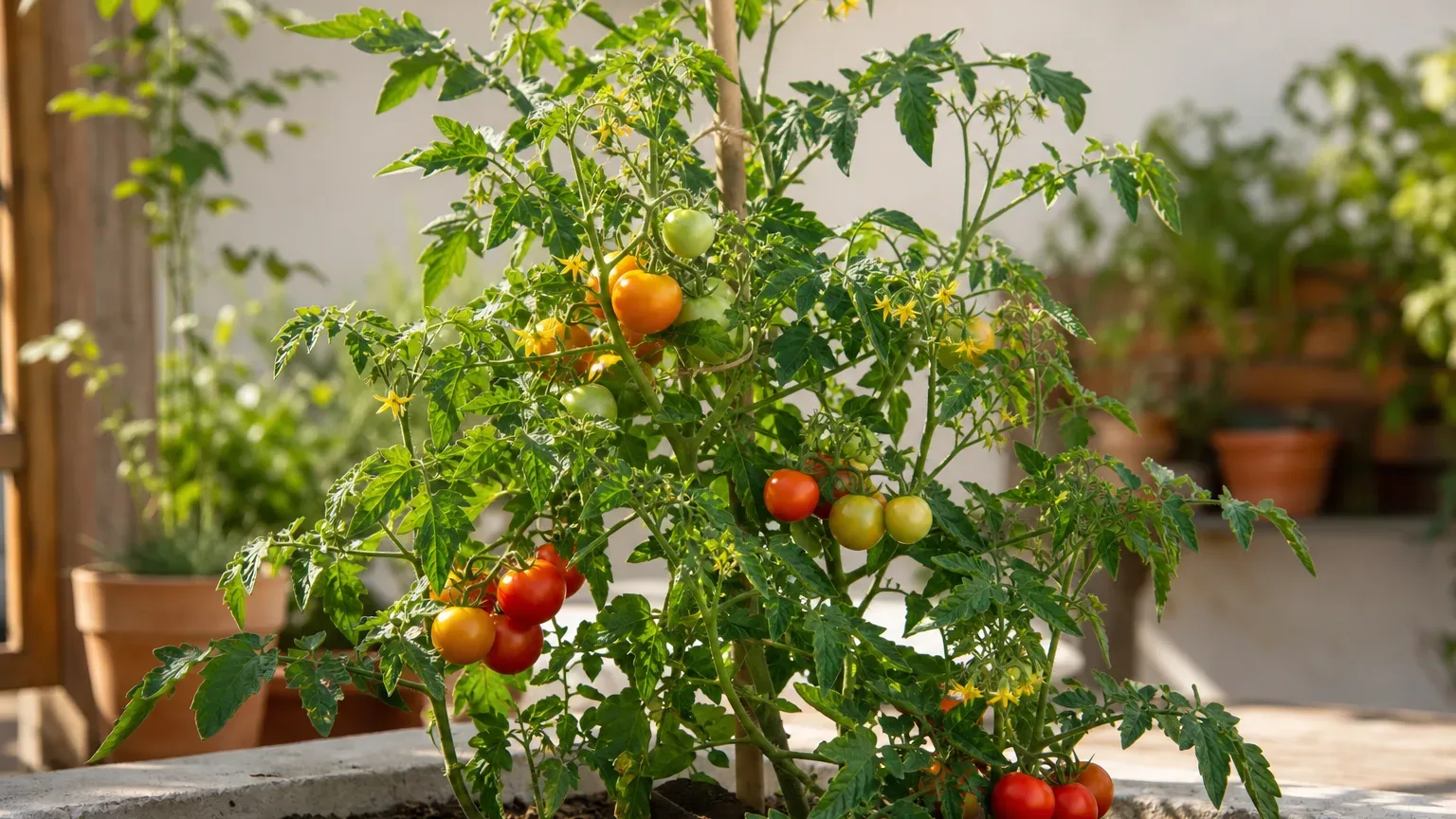
Sungold is an indeterminate cherry tomato that can keep extending its main vine and setting new trusses while conditions stay warm. The plant is vigorous enough to need sturdy support, and its thin-skinned, orange fruit rewards regular picking and steady soil moisture. If you choose the support before planting, keep the root zone evenly moist, and wait for the fruit to turn a deep orange before harvesting, you can enjoy the crop without turning the bed into an unmanageable tangle.
Sungold at a glance
| Growing decision | Practical starting point |
|---|---|
| Growth habit | Indeterminate; provide a tall, sturdy support |
| Site | Full sun, warmth, and free-draining soil |
| Planting window | After frost danger passes and nights have warmed |
| Spacing | Give the vine room for its mature spread and airflow |
| Water | Soak the root zone when it begins to dry; avoid wet-dry swings |
| Harvest cue | Fruit is fully orange, slightly yielding, and releases easily |
Sungold is grown for small golden-orange cherry tomatoes and a long picking season, not for a compact plant. In a North Dakota State University Extension evaluation, gardeners described the vines as vigorous and productive, with fruit starting early and continuing until frost; the gardeners characterized its flavor as sweet with a citrusy, tropical note. Those tasting descriptions are opinions, not a flavor guarantee: sweetness changes with ripeness, weather, and growing conditions. NDSU Extension’s Sungold and SunSugar evaluation is useful precisely because it reports gardeners’ observations rather than pretending every palate will agree.
Sungold is commonly sold as an F1 hybrid; JustSeed lists its Sungold seed as F1. Seed saved from an F1 fruit may germinate, but it is not a dependable way to get the same cultivar and fruit traits next season. Buy fresh seed when consistent Sungold plants are the goal. Days-to-maturity figures vary by seed supplier and usually count from transplanting rather than sowing. Treat the packet’s number as an estimate for a healthy transplant in favorable weather, not a deadline; a cool spring, an undersized root system, or a hot flowering period can push the first ripe cluster later. The plant is a tender warm-season perennial grown as an annual in most gardens, so frost ends the outdoor season.
Pick a sunny site and the right planting window
Choose a spot that receives at least six hours of direct sun, with more sun generally helping a warm-season tomato grow and ripen well. Morning sun is especially useful because it dries dew from foliage early, while an open position gives leaves room to dry after rain. In a hot climate, however, a little late-afternoon shade during a heat wave can reduce stress; do not confuse that temporary relief with growing the plant in shade all season.
Use fertile, well-drained soil rather than a low place that stays soggy after rain. A soil test is more useful than guessing at pH or scattering fertilizer, because it can identify whether lime or a particular nutrient is actually needed. UGA Cooperative Extension describes tomato production as sensitive to soil structure, water management, nutrient balance, and disease pressure; those field-scale concerns translate to a simple home-garden rule: improve drainage and follow a soil-test recommendation instead of feeding by calendar. UGA’s Commercial Tomato Production Handbook provides the underlying production guidance.
Rotate tomatoes away from last year’s tomato bed when space permits, and avoid following other nightshades such as peppers, eggplants, or potatoes. Rotation cannot stop every airborne disease, but it lowers the chance of leaving soil-borne tomato-family problems in the same small patch year after year. If your garden is tight, use a large container with fresh potting mix rather than planting into soil where a sick tomato grew last season.
Choose a warm transplant window
Set seedlings outside only after frost danger has passed and the soil and overnight weather have warmed. A warm afternoon is not enough: cold nights can stall a tomato transplant even when daytime temperatures look inviting. Local extension planting calendars are more useful than a national date because the last frost and spring soil temperature vary widely by region.
Harden indoor-grown plants over about a week to ten days. Begin with a few hours outdoors in a sheltered, shaded spot, then increase their exposure to wind and direct sun gradually; bring them back under cover if nights are cold. A seedling that has been moved straight from a warm windowsill into full sun can scorch, wilt, or pause for days while it adjusts. The RHS tomato growing guide and experienced seed growers likewise treat gradual acclimation, rather than a single “planting day,” as part of the transplant process.
Start seeds without growing leggy seedlings
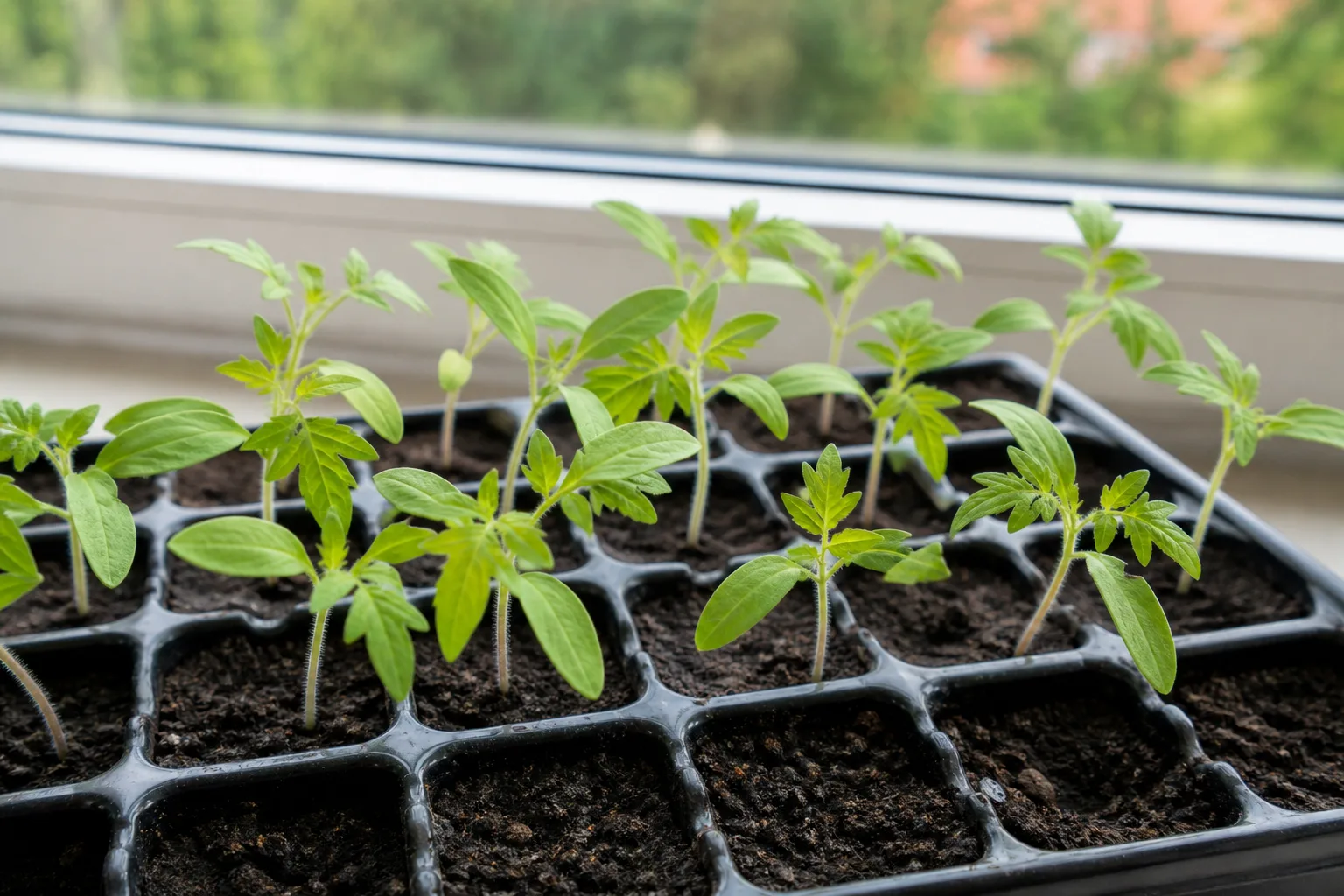
Sow Sungold seeds indoors roughly six to eight weeks before your likely outdoor planting date, adjusting that window for your light and temperature. Sowing much earlier is not an advantage if the seedlings will spend weeks in low-light conditions; lanky stems and crowded roots can make the transplant harder to manage. If the season is already underway, a healthy nursery transplant is often a better choice than rushing a weak seedling outdoors.
Use a clean seed-starting mix in a container with drainage, and keep it evenly damp rather than saturated. Once seedlings emerge, give them the brightest light available or use a grow light close enough to prevent stretching, moving it up as the leaves grow. Turn windowsill trays if light comes from one side, and pot seedlings on when their roots begin to fill their cells instead of leaving them cramped until planting day.
A stocky seedling with several sets of true leaves is easier to establish than a tall, thin one with flowers already forming in a tiny pot. If a young stem has stretched a little, you can bury it deeper when potting up or transplanting, but avoid handling it roughly or burying leaves. JustSeed’s tomato growing guide recommends bright light after germination, gradual hardening off, and setting tall-growing varieties next to support at planting; those steps are more useful than chasing an unnecessarily early start. Read the JustSeed tomato growing guide.
Plant deeply and install support early
Before planting, water the seedling so its root ball holds together. Set the transplant slightly deeper than it sat in its nursery pot, removing any leaves that would be buried; tomato stems can form roots along buried sections, helping anchor the plant. Water the planting hole well, then keep the soil moist while new roots grow into the surrounding bed.
Give each plant room for its expected vine and the air movement around it. A tight, leafy planting may look efficient in May but is difficult to inspect and harvest in midsummer, and foliage that remains wet for long periods creates better conditions for disease. In a row, leave enough space that you can reach the base of each plant to water and check leaves without stepping on the roots.
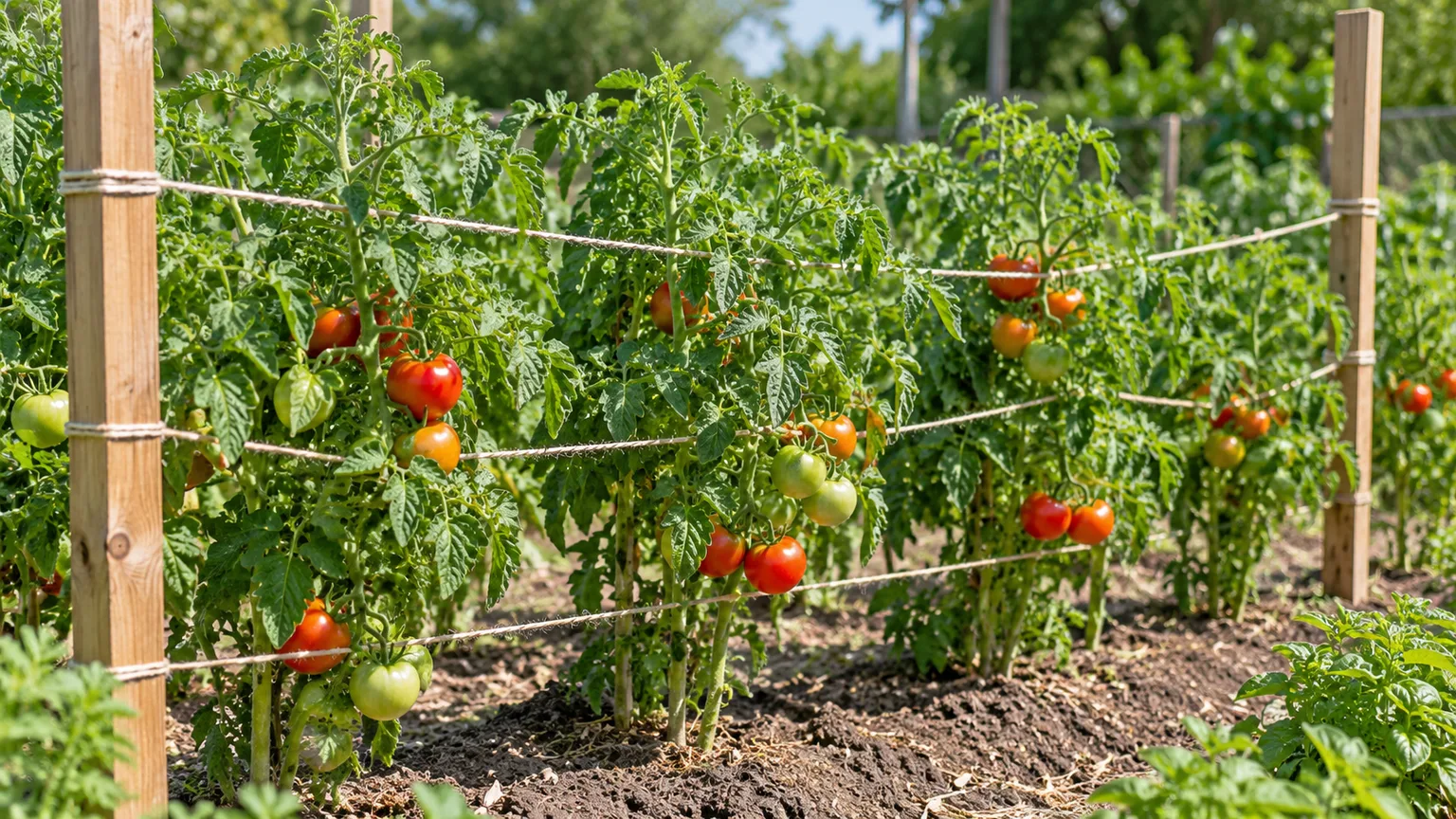
Put the cage, stake, or trellis in place when you transplant. Later, pushing a stake beside an established plant risks damaging roots, and trying to lift a heavy fruiting vine onto a new support can snap stems. Tie the main stem with soft ties in a loose figure eight, leaving room for it to thicken; check the tie as the vine grows rather than cinching it tightly once and forgetting it.
Choose a cage, stake, or trellis
A tall, heavy-duty tomato cage is a good choice if you want to let the plant keep several stems and need hands-free support. A single stake or vertical string works well if you plan to train a limited number of stems and can tie the growth regularly. Lightweight short cages are often too small for a vigorous Sungold vine, which may outgrow them well before the fruit load peaks.
A trellis makes it easier to see clusters and pick fruit, but it needs a strong frame and frequent tying. In a windy garden, anchor the structure before the plant fills out; a mature tomato vine acts like a sail, and wet foliage and fruit add weight. Whatever system you choose, keep the bottom leaves from resting on damp soil and leave openings for airflow rather than wrapping the whole plant into a dense wall.
Prune according to your support system
Sungold is indeterminate, so it continues to grow from its leader and produces side shoots, often called suckers, where leaves meet the main stem. Pruning is a way to shape the plant, not a requirement for producing tomatoes. A cage-grown plant can keep several stems, while a single-string or stake system is easier to manage with one or two leaders.
If you choose to remove suckers, pinch them when they are small and work on dry foliage. Removing a few early side shoots keeps the leader easy to tie and improves access to the fruit; stripping every sucker is unnecessary unless your training method specifically calls for it. Keep enough leaves to shade fruit and feed the plant. Heavy pruning can expose tomatoes to sunscald and reduce the leaf area the vine uses to support ripening.
Remove lower leaves that touch soil or show clear disease symptoms, but do not strip healthy foliage simply to make the plant look tidy. Disinfect pruners between plants when cutting diseased tissue, and avoid pruning when leaves are wet. If the plant is already sprawling, prioritize tying and harvesting access over aggressive late-season cuts that create wounds and expose fruit.
Water evenly through fruit set and ripening
Check the soil rather than watering by a rigid daily schedule. Water deeply at the base when the upper few inches of soil begin to dry, then let excess water drain; the root zone should remain consistently moist, not waterlogged. A layer of clean mulch after the soil has warmed can slow evaporation and reduce the sharp swings between a dry bed and a sudden heavy soak.
The routine changes with the weather and with the growing setup. A plant in a large garden bed may need less frequent irrigation than one in a pot, while a windy, sunny heat wave can dry either one quickly. Check container moisture daily in hot weather and water until a little drains from the bottom, but do not leave the pot sitting in a full saucer. If rain is forecast after a dry spell, give the soil a moderate drink beforehand when it is very dry rather than allowing the plant to swing from drought to saturation.
Direct water to the soil, not over the foliage, and water earlier in the day when possible. This reduces the time leaves stay wet overnight and makes it easier to notice whether the plant is wilting from heat or from dry soil. UGA Cooperative Extension’s irrigation guidance emphasizes maintaining moisture through the active root zone and avoiding saturated soil; it also notes that soil type changes how often irrigation is needed. In practice, a moisture check is more dependable than copying another gardener’s gallons-per-day number.
Why Sungold tomatoes split
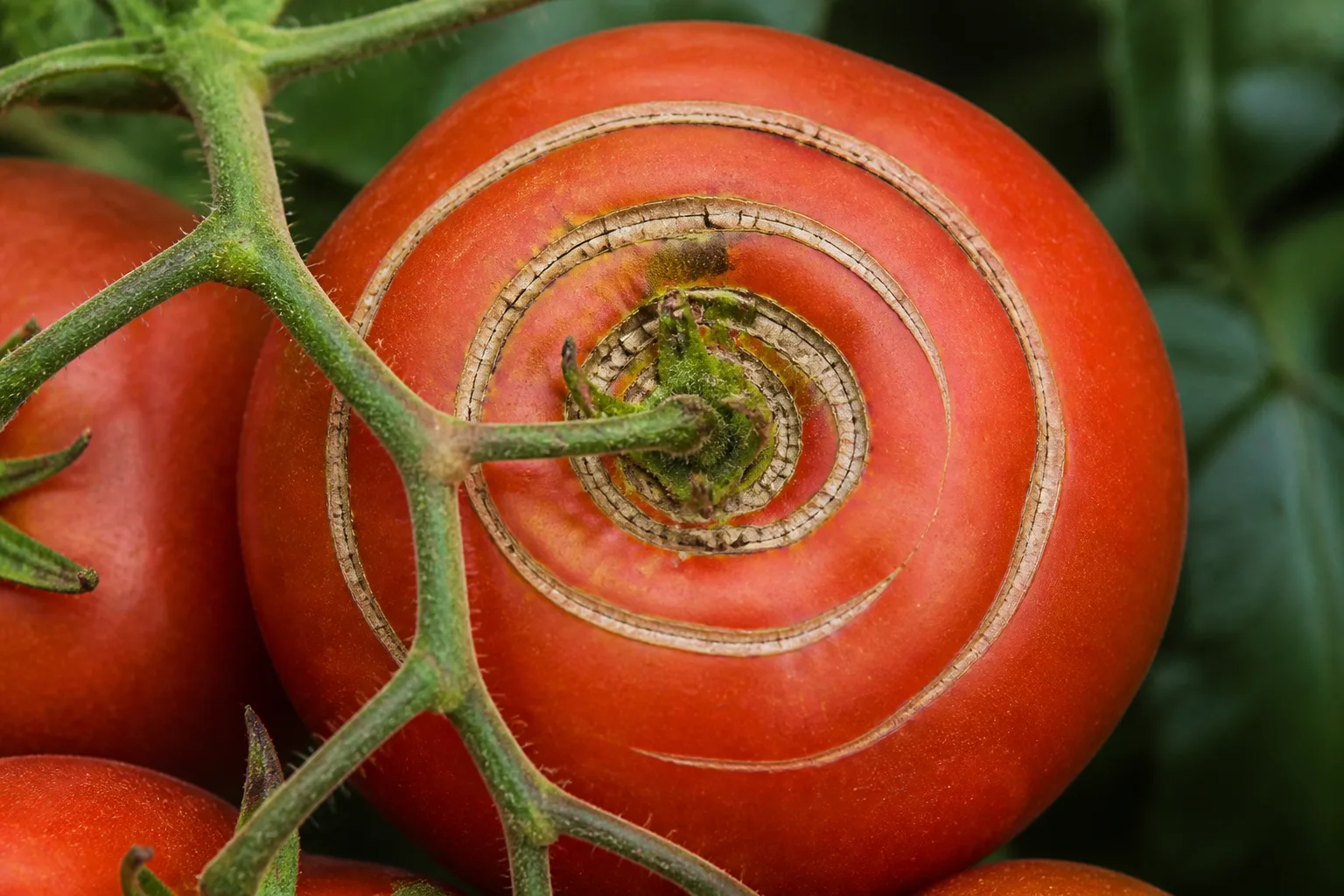
Cracks usually appear when fruit takes up water faster than its skin can expand, often after dry weather is followed by rain or heavy irrigation. Heat and strong sun can add stress, and some varieties are more prone to cracking than others. Sungold is known among growers for splitting more readily than some alternatives, so regular picking and steady moisture matter more than trying to eliminate every crack.
To reduce cracking, keep the root zone from drying deeply, mulch once the ground is warm, and pick ripe fruit frequently before a storm. Do not respond by keeping the soil constantly wet; waterlogged roots can decline and the plant may still develop fruit disorders. A cracked but otherwise sound tomato can be used promptly after cutting away the damaged area, while a fruit that is moldy, foul-smelling, or badly split should be discarded.
Feed for steady fruit production
Start with soil-test results and the label directions for any fertilizer you use. A tomato planted in rich soil may need little additional fertilizer early on, while a container-grown plant has a smaller nutrient reserve and may need regular feeding once fruit begins to form. Follow the product’s rate and interval instead of adding extra “just in case.”
Too much nitrogen can push the plant toward dense leafy growth at the expense of flowers and fruit, especially when the soil already contains enough nutrients. If a plant is very dark green, lush, and producing few blooms, first check light, temperature, and fertilizer history before adding another product. More fertilizer does not correct poor pollination, cold roots, or inconsistent watering.
For pots, use a complete fertilizer labeled for edible crops or tomatoes and feed at the schedule listed on the package. If leaves yellow or growth slows, do not assume it is hunger: wet soil, root restriction, pests, or a disease can produce similar symptoms. A soil test, container drainage check, and inspection of both leaf surfaces usually narrow the cause more reliably than a succession of supplements.
Protect pollination through heat and cool spells
Tomato flowers contain both male and female parts and can set fruit without a second plant, but pollen still needs to move within the flower. Outdoors, wind and the movement of insects and plants generally provide that vibration. In a closed greenhouse or still-air setting, gently tapping a flowering truss or improving ventilation may help pollen release; avoid shaking so hard that flowers or stems are damaged.
Temperature can matter more than the number of bees you see. Extended heat, cool nights, or abrupt shifts can interfere with pollen and lead to flowers dropping before fruit forms. UGA’s tomato production handbook discusses poor fruit set under temperature extremes, including high night temperatures, as an environmental issue rather than a simple fertilizer shortage. During a hot spell, maintain even moisture, ventilate covered spaces, and wait for better conditions before diagnosing a permanent pollination failure.
Harvest Sungold at full orange color
The fruit changes from green through yellow-orange to a saturated orange when ripe; it does not need to turn red. Pick one fruit as a test when the cluster starts to color. A ripe Sungold should feel slightly yielding rather than hard, and it should release with a gentle twist; if the stem needs a hard yank, use clean snips so you do not tear the truss.
Harvest every few days during peak production, and more often in hot weather when fruit softens quickly. Frequent picking reduces the chance that ripe tomatoes split on the vine and encourages you to catch clusters at the flavor stage you prefer. If you like a firmer, tangier tomato, pick as it first turns orange; for a sweeter, softer bite, let it deepen in color but do not leave it until the skin wrinkles.
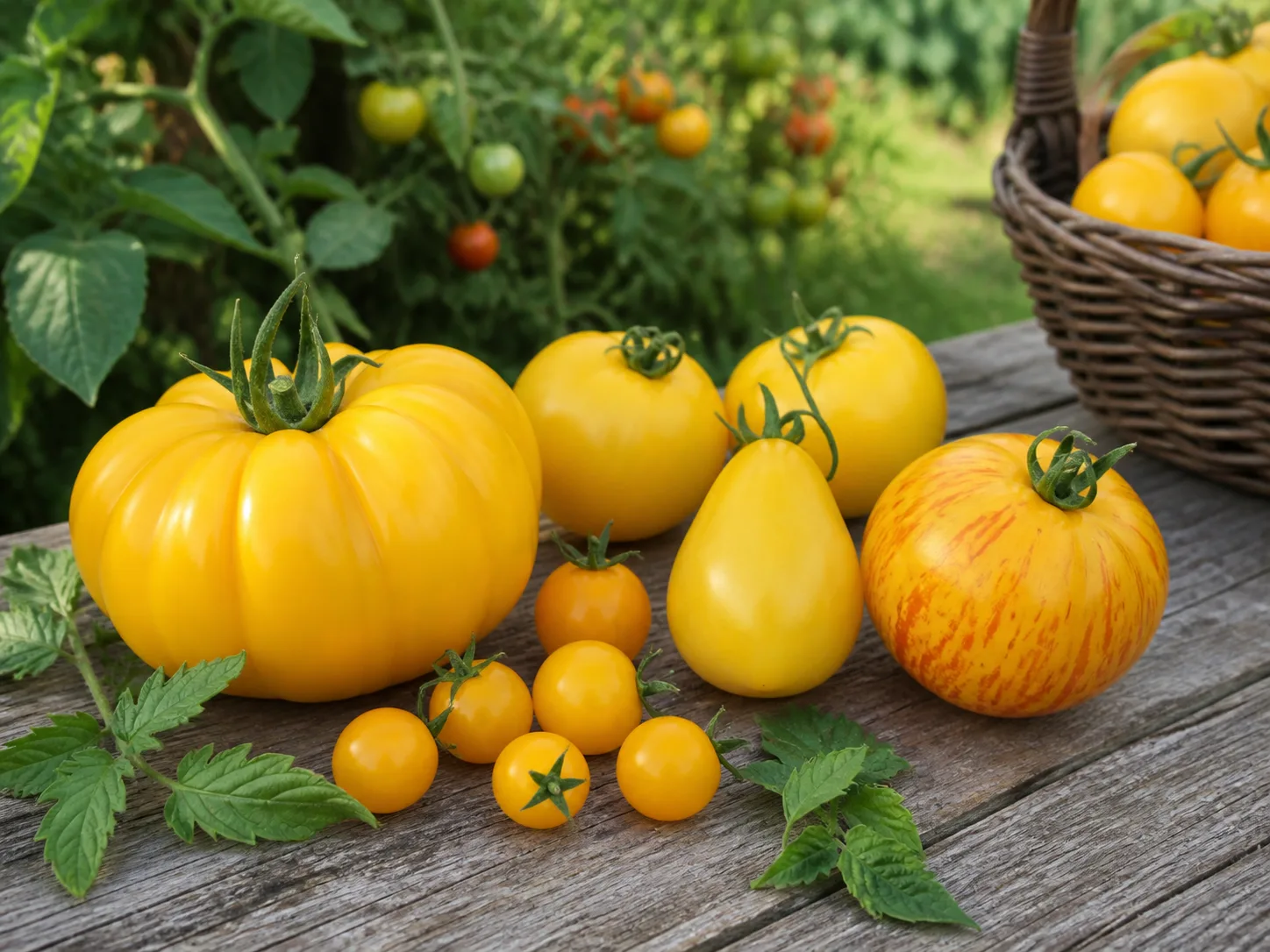
NDSU Extension’s gardeners described Sungold as sweet with a citrus-like note, but the exact balance is subjective and shifts with ripeness and weather. A very early pick can taste sharper, while fruit that remains on the vine too long in intense heat can soften without becoming more flavorful. Use color and feel together rather than relying on a calendar count alone.
Use and store the ripe fruit
Eat ripe cherry tomatoes soon after picking for the best texture, or keep them in a cool, shaded spot for a short time. Refrigeration can dull the aroma and texture of fully ripe tomatoes, so avoid chilling a bowl of fruit unless you need to slow spoilage; bring chilled tomatoes back toward room temperature before eating. Wash fruit under running water shortly before use and remove any split or decaying specimens from the harvest basket.
Sungold’s small size makes it useful for snacking, salads, quick sautés, roasting, and sauces where a sweet, bright tomato flavor suits the dish. Because it is a prolific crop, freeze surplus whole after washing and drying, or roast and freeze it in portions. The fruit’s thin skin is part of its tender eating quality, but it also means it is less suited to long storage or rough handling than a firmer cherry variety.
Grow one Sungold plant in a container
A container works when it is large, stable, and well drained. One Sungold plant in a pot of at least five gallons can produce a crop if you water and feed attentively, but a ten-gallon or larger container is easier to manage through hot weather because it holds more moisture and gives roots more room. Choose a pot with several open drainage holes and use a lightweight potting mix, not dense garden soil.
Place the container where the plant receives full sun and where you can reach it to tie stems and pick fruit. Add the cage or stake before the vine grows tall, and use a heavy container or anchor the support to prevent wind from tipping the plant. A saucer can catch runoff on a patio, but empty it after watering so the roots are not left standing in water.
Container plants can go from adequately watered to wilted quickly on hot, windy days. Check the mix by touch each morning and again later if the weather is extreme; water thoroughly when the top layer is dry, then let the pot drain. If water runs straight through a very dry root ball, water once, wait a few minutes, and water again so the mix has a chance to absorb moisture instead of channeling it down the sides.
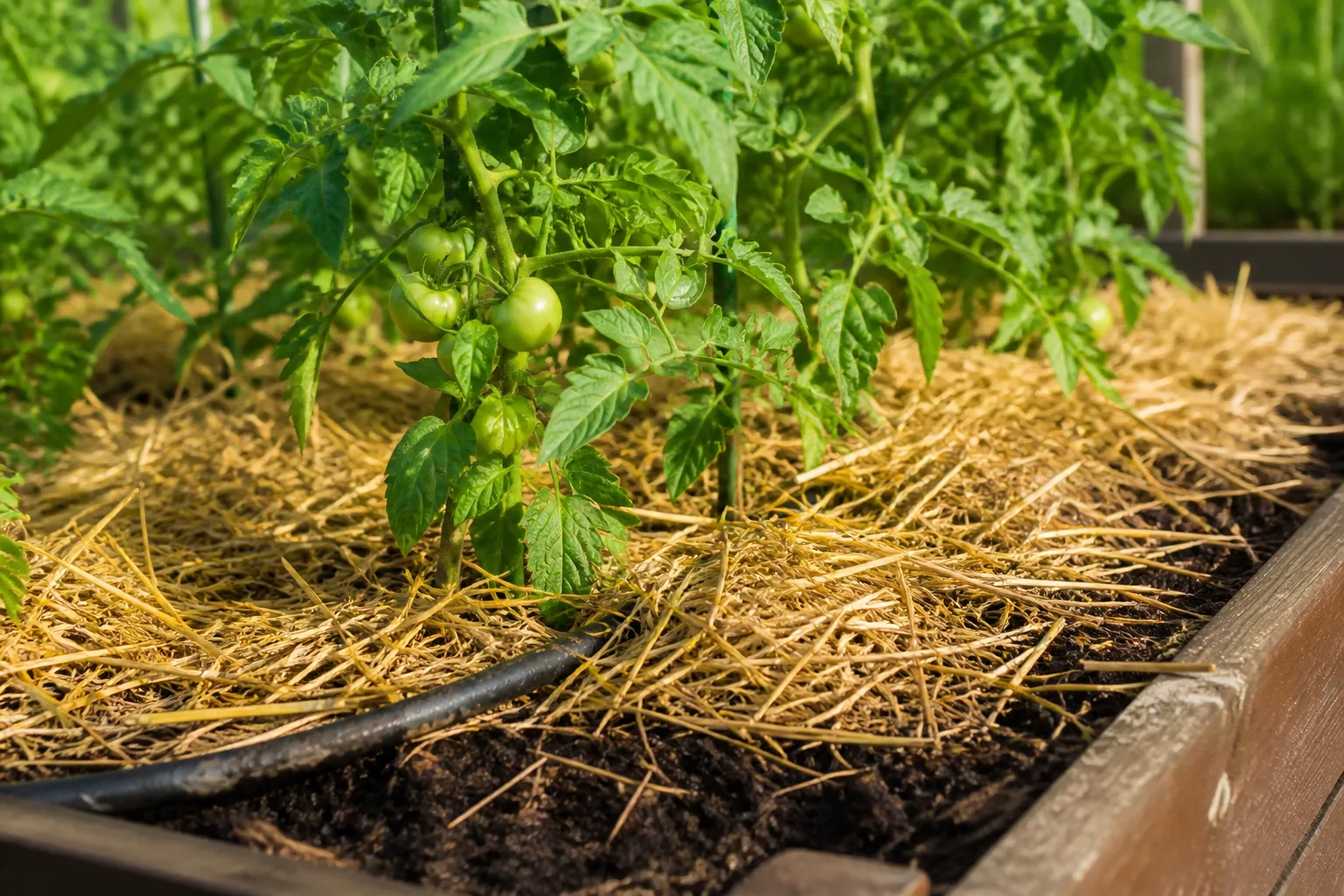
Diagnose common problems before reaching for a spray
Look at the pattern before choosing a fix: Is the symptom on old or new leaves? Are fruits splitting, rotting at the blossom end, or simply slow to color? Has the plant been dry, waterlogged, recently pruned, or exposed to a heat wave? One damaged leaf is not enough evidence to diagnose a disease or nutrient deficiency, and an unnecessary spray can harm beneficial insects without fixing the cause.
A few common patterns point to different first steps. Fruit with cracks at the stem end often follows a rapid change in water availability; sunken dark tissue on the blossom end is a physiological disorder associated with disrupted calcium movement; flowers that fall during a heat spell suggest temperature stress; and a few yellow lower leaves late in the season may be normal aging. Stabilize watering first when the plant has been swinging between dry and wet, then reassess new growth rather than expecting damaged fruit or leaves to recover.
Separate leaf disease, pests, and fruit disorders
Check the undersides of leaves and the stems when you scout. Aphids cluster on tender tips and can often be knocked off a small infestation with a firm stream of water; tomato hornworms are larger and can be removed by hand if you find them. If you use a pesticide, identify the pest first, choose a product labeled for tomatoes and the target pest, and follow its directions exactly; broad, routine spraying is not a substitute for diagnosis.
Dark spots that spread across foliage, stems, or fruit deserve a closer look, especially after prolonged wet weather. Remove badly affected leaves with clean pruners, avoid working through wet plants, and keep foliage from contacting soil. Crop rotation, adequate spacing, mulch, and watering at the base reduce several common disease-favoring conditions, but no single practice makes an indeterminate tomato immune to blight or other pathogens.
Blossom-end rot is not proof that the bed needs a calcium amendment. UGA Cooperative Extension explains that the disorder can arise when water stress disrupts calcium movement into developing fruit, even when calcium exists in the soil. Keep moisture more even and check drainage before adding lime or calcium; test soil first so a well-meant amendment does not create an imbalance. The damaged fruit will not heal, but later fruit may develop normally after conditions stabilize.
Sungold or SunSugar: which fits your garden?
Choose Sungold if you want an early, vigorous, orange cherry tomato with a sweet flavor profile and do not mind harvesting often. Choose SunSugar if cracking is a recurring frustration and you want to compare a related golden cherry tomato with somewhat thicker skin. In NDSU Extension’s small gardener evaluation, participants generally preferred SunSugar’s flavor and reported less cracking, while Sungold plants were described as especially vigorous and productive.
That result is a local group’s tasting and garden observation, not a universal variety trial or promise that SunSugar will outperform Sungold in your climate. Both are indeterminate and need support, and both still benefit from consistent watering. If flavor is the deciding factor, grow one plant of each side by side for a season; taste fully colored fruits from each at the same time of day and note how cracking and yield perform in your own garden.
Conclusion
Sungold is easiest to enjoy when you plan for the vine as well as the fruit. Start with a sunny, well-drained site, wait for warm planting weather, set a sturdy support early, and choose a pruning approach that matches the support instead of stripping the plant by habit.
Keep moisture steady, especially in a container or during a dry spell, and harvest ripe fruit as it turns fully orange. If a problem appears, diagnose the pattern before adding fertilizer or spraying. With those few decisions made early, this vigorous cherry tomato can produce a long succession of sweet, bright fruit without demanding complicated care.



