8 DIY Tomato Trellis Ideas for Any Garden
Compare eight DIY tomato trellis ideas, from a Florida weave to a cattle-panel arch, with materials, fit, and build notes so you can choose the right support.
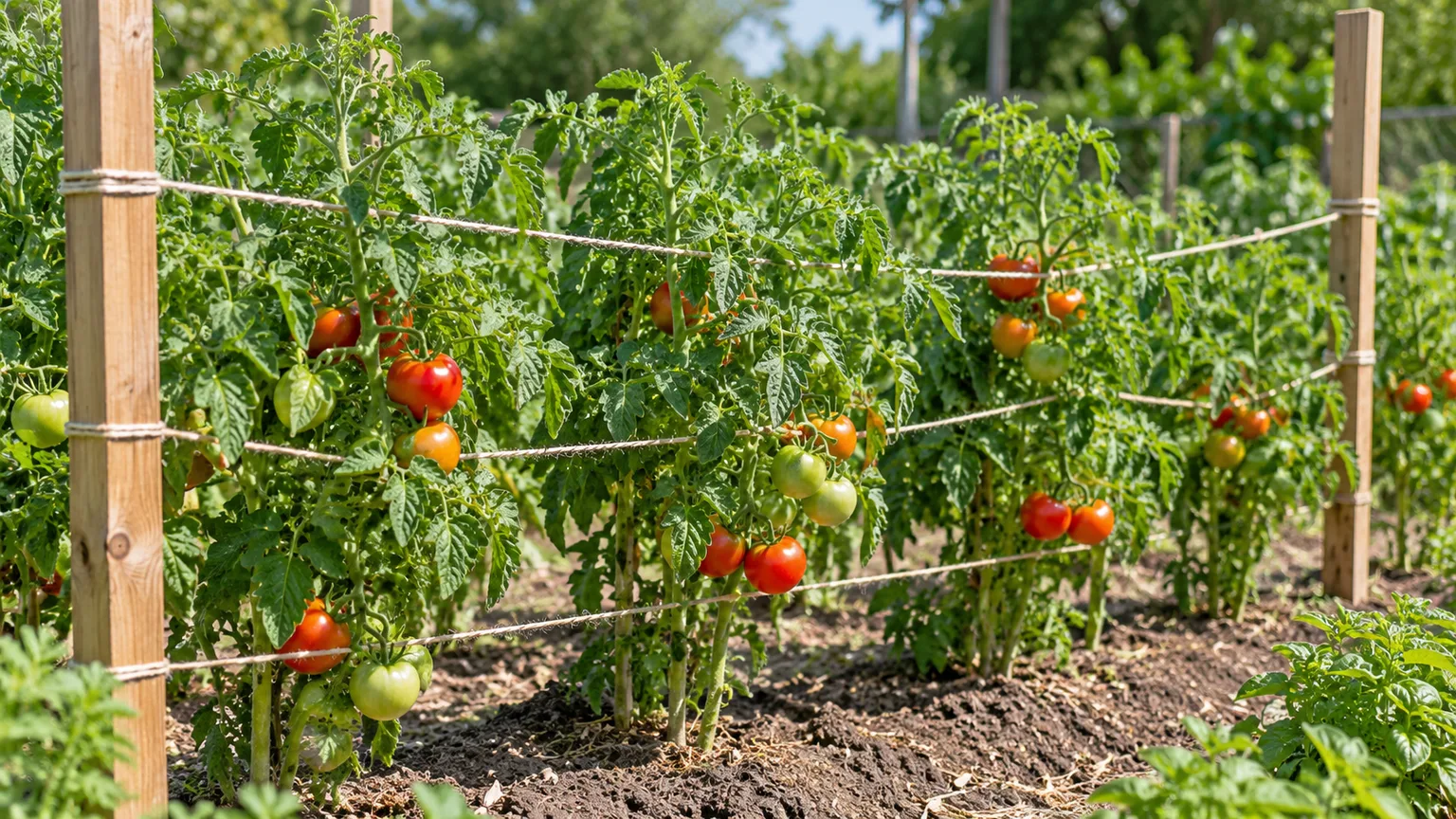
A tomato trellis is useful only if it matches the plant that will fill it. A short determinate tomato can thrive with a modest cage or a single stake, while an indeterminate vine needs a taller, sturdier frame and regular training. The ideas below range from a low-cost row support to a permanent garden feature, with notes on where each one works best and what can go wrong.
Choose a Trellis by Tomato Type and Garden Layout
Before cutting lumber or buying wire, check the tomato label for growth habit, then measure the planting space. The right support depends on how many plants you have, whether they grow in a row or a bed, how often you can tie new growth, and whether you want to store the structure at season’s end.
Determinate and Indeterminate Tomatoes Need Different Capacity
Determinate, or bush, tomatoes stop growing at a more limited size and tend to set much of their fruit in a shorter window. A stout cage, short ladder frame, or stake can be enough, though fruit weight and wind can still topple an unsupported plant. Indeterminate tomatoes keep extending their vines and producing through the season, so they need more vertical room and a frame that will not buckle under a heavy canopy. The University of Georgia Cooperative Extension’s guide to staking and pruning tomatoes notes that tall indeterminate vines need support, while lighter cone cages are better suited to determinate or patio types.
Tomato stems do not cling to a trellis like pea tendrils. You must guide them around a string, clip them to a wire, or secure them loosely to a stake. If you prefer not to prune or tie repeatedly, choose a cage with large openings that can cradle several branches rather than a single-string system that assumes one trained leader.
Measure the Bed and Plan Access Before Cutting
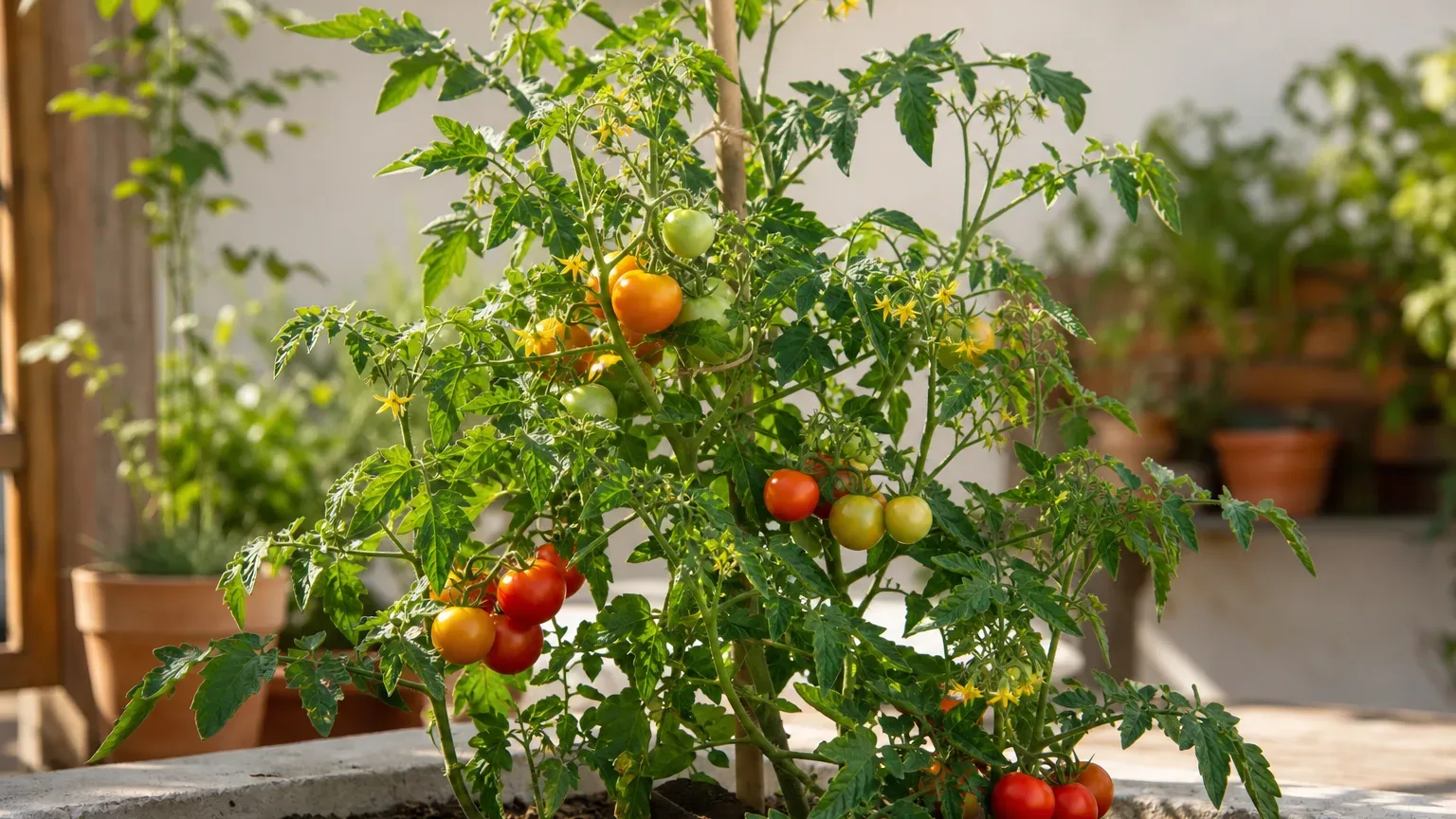
A trellis should leave enough room to reach fruit from both sides or from a clear path. A flat panel saves a narrow bed, an arch needs two parallel beds or a walkway, and a row weave works best when you can reach along both faces of the planting. Leave space to water at the soil line and to inspect lower leaves; an attractive frame that blocks routine care becomes a burden once the plants fill it.
Think about wind and mature plant weight, not just the empty structure. Wet foliage and fruit can pull on twine and crossbars, and a light frame can turn into a sail. Set posts firmly, brace broad frames, and avoid fastening a trellis to a fence unless that fence is itself built to take the added load.
Eight DIY Tomato Trellis Ideas
The options below are not interchangeable. Start with a row system if you are planting several tomatoes together; use individual supports when you want to move or rotate plants independently. For indeterminate tomatoes, favor a frame you can extend or retrain rather than a flimsy cage that looks adequate only while the plant is small.
1. Florida Weave for a Row of Tomatoes
A Florida weave uses upright posts and horizontal twine to hold several plants in a row. Drive sturdy stakes at both ends and at intervals along the row, then tie twine to an end post, weave it alternately in front of and behind the stems, and secure it tightly to the next post. Repeat on the opposite side of the row so each plant sits between two strands. Add another level as the stems grow.
This is one of the quickest low-cost builds for a small or medium row because each tier supports more than one plant. Metal T-posts are durable; sound wood posts also work when they are thick enough and planted securely. The University of Georgia Cooperative Extension describes placing posts at the row ends and between every third or fourth plant, then weaving durable string around each middle post for extra hold. The Savvy Gardening overview of tomato supports also describes adding fresh twine as plants grow.
Choose this method when you can make a row and will check it regularly. The twine needs retightening if it sags, and a sprawling plant may need more than one stem supported. Do not wait until heavy branches are already leaning: weaving strands around mature stems can snap leaves or trap fruit clusters.
2. Vertical String Trellis for Trained Vines
For a tidy row of indeterminate tomatoes, build a rigid top rail between well-anchored posts and hang one length of weather-resistant twine above each plant. Tie or anchor each line near the plant’s base, then gently wind the main stem around it as the vine lengthens; clips can help hold a stem that resists wrapping. A second crossbar can stabilize a long span, but the whole structure must carry the load rather than relying on a thin garden stake.
Vertical strings use little horizontal space and make it easy to see the main stem and emerging suckers. In Fine Gardening’s account of a freestanding tomato trellis, the gardener favored a string framework because it made training and pruning more manageable than tying each vine to an individual stake. That is the key trade-off: the frame is efficient, but the plants need repeated attention.
This is a poor match for someone who wants to leave a plant to sprawl. A single line will not hold several heavy branches unless you add more lines or prune to a few stems. Secure the top rail before planting, since reaching over a mature canopy to add overhead support is awkward and risks breaking vines.
3. Bamboo A-Frame for a Compact Garden
An A-frame turns a bundle of bamboo poles into a freestanding support. Make two matching pairs of poles, lean each pair into an A, lash the joints firmly, and connect the two frames with a ridge pole. Add horizontal crosspieces or twine between the sloping sides so stems can be clipped or loosely tied as they climb. Set the legs into the soil or anchor them to bed corners so the frame cannot slide outward.
The triangle is useful in a small garden because it braces itself and can support plants on either side. You can store the poles dry after harvest, replace individual pieces when they split, and add twine where a branch needs help. A bamboo tripod over one plant is a simpler version: tie three poles together near the top and wrap a few horizontal rings around them.
Bamboo is light, so a tall A-frame can sway in gusts if the legs are not anchored. Inspect lashings as the season progresses, particularly after wind or heavy rain. This design works best for determinate plants or moderately vigorous vines; for a large indeterminate variety, add more cross-bracing or choose a sturdier frame.
4. Wire-Grid Panel for Upright, Easy-to-Reach Growth
Attach a rigid welded-wire or livestock-fencing panel to two or more posts to make a flat grid. Choose a mesh opening wide enough to reach through for harvesting and pruning; a dense mesh can be strong but frustrating once the plant is mature. Train stems through the openings while they are young, then use soft ties where the plant needs extra support.
A grid is a good fit along the back of a raised bed or against a sturdy fence, and it keeps a row visually organized without a large arch. The University of Georgia Cooperative Extension describes galvanized livestock fencing with four- to six-inch squares as a durable cage material because the larger openings make harvesting easier. For a flat panel, the same principle applies: openings should balance stem support with access to fruit.
Use a panel that is rigid enough to stay upright under a full vine, and cover or fold back sharp cut ends. Do not assume a lightweight decorative lattice can carry mature tomato plants; many are designed for light climbers and can warp or pull loose under a heavy crop.
5. Cattle-Panel Arch for a Two-Bed Walkway
A cattle-panel arch can span a path between two raised beds, turning the support into a garden entrance or tunnel. Secure the panel’s lower edges to substantial posts at the outer edges of the beds, bend it over the path, and anchor both sides before planting. Train tomato stems to the lower sides of the panel rather than letting every vine crowd the crown of the arch.
The arch makes excellent use of vertical space and offers access from both beds, but it is not a one-person, no-tools project. The panel is springy and awkward to handle, so get help during installation and wear sturdy gloves while positioning it. Do not build an arch over a narrow path that you need to use with a cart or basket; the foliage can close in and make harvesting uncomfortable.
This is a better choice for gardeners who want a permanent-looking structure and have two adjacent beds. A single bed can use the same panel as a curved tunnel if the sides are anchored securely, but a flat grid or A-frame is easier to fit and maintain in a narrow space.
6. Heavy-Duty Wire Cage for One Large Plant
A sturdy homemade cage can be made by bending livestock fencing or concrete reinforcement wire into a cylinder and fastening the ends together. The University of Georgia Cooperative Extension recommends a cage at least three feet in diameter so branches have room to spread, with four- to six-inch openings for easier harvest access. Add stakes or ground anchors if the cage rocks when pushed; a wide cage can still tip when a top-heavy plant catches the wind.
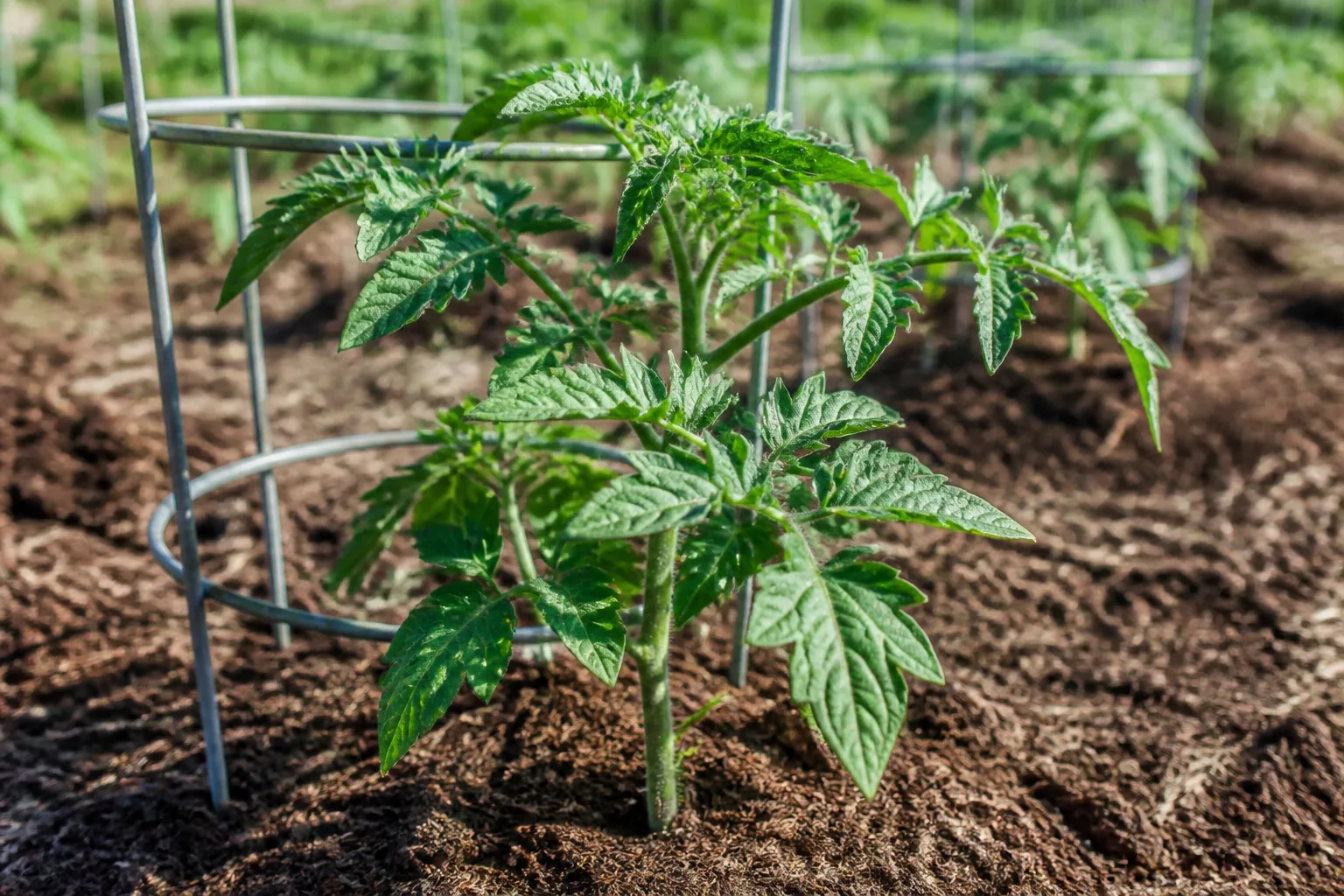
A cage suits gardeners who want several stems to grow without constant tying. Guide branches back inside the frame as needed, and harvest through the larger openings. This approach is especially useful for determinate plants and vigorous cherry tomatoes that would outgrow a lightweight cone cage, though a tall indeterminate tomato may eventually need a taller frame or added upper support.
Cut wire carefully and cover exposed ends so they cannot snag clothing or scratch hands. Avoid narrow cells that force you to pull fruit through the mesh, and do not choose a cage only by its empty height: it needs enough diameter to hold the plant’s spreading branches as well.
7. Wooden Ladder Trellis for a Decorative Bed
Build two narrow ladder-like panels from weather-resistant slats, hinge them at the top, and open them into an A shape over one or two plants. Add crossbars at regular intervals, then tie stems to the bars or run twine from rung to rung. A single freestanding ladder panel can also work along a bed edge when its feet are braced and anchored.
This gives a neat architectural outline and can be painted or stained to suit the garden, but the finish is secondary to the joints and legs. Use sound lumber, rust-resistant screws, and diagonal bracing so the frame does not rack from side to side. Keep the lower rungs accessible for early ties and leave enough space between the two sides to reach in and harvest.
A lightweight decorative ladder is not automatically a tomato support. Thin craft dowels and loose joints can bend once branches and fruit accumulate. If you want a reusable piece, build it with the same care you would use for a small outdoor frame and store it dry after the season.
8. Branch Tripod for a Low-Cost, Rustic Support
Three sturdy branches can form a tripod around one plant. Choose straight poles with enough thickness to resist bending, cross them near the top, and lash them with strong garden twine or reusable cord. Add a few horizontal loops or a loose spiral of twine to guide branches as they grow. If you have longer poles, place one tripod at each end of a row and run twine between them for a rustic variation on a string trellis.
This option uses pruned branches or other salvaged materials and takes little construction time. It can look at home in a cottage-style bed, but it is best for a compact determinate plant or a young vine rather than a very large indeterminate tomato. Branches vary in strength, so test the frame before adding a plant and replace any pole that splits, softens, or loosens in the soil.
Do not lash thin sticks together and expect them to hold a mature vine through a storm. A branch tripod is attractive when it is sized generously; if the available wood is flimsy, use a stronger cage or metal support and save the branches for lighter crops.
Choose Materials That Hold Up Outdoors
The support should last as long as the tomato needs it. Untreated bamboo, softwood, and natural twine are inexpensive and easy to replace, while metal posts, galvanized fencing, and well-braced lumber are better for a structure you plan to reuse. For wood, use naturally durable stock or an outdoor-rated finish, and allow treated materials to dry before planting around them.
For a single stake, the University of Georgia Cooperative Extension advises driving it six to twelve inches into the ground, depending on soil, and tying the plant after it reaches roughly ten to twelve inches tall. That instruction is for an individual stake, not a universal depth for every trellis: wider frames and wind-exposed sites need their own anchoring plan. If the soil is loose, the bed is elevated, or gusts are common, add cross-braces or ground anchors instead of simply choosing a taller post.
A practical home trellis is often five to seven feet tall above ground, but plant variety, season length, and training style matter more than a single number. Leave enough height to support the main growth and allow for tie-offs; if you cannot safely reach the top, design the system so vines can be lowered, redirected, or topped without leaving unsupported weight. A trellis that is lower but sturdy and reachable is more useful than a tall frame you cannot maintain.
Install the Frame Early and Train Stems as They Grow
Build and anchor the support before transplanting tomatoes whenever possible. Driving a post beside an established plant can injure roots, and fitting a wide frame through dense foliage is harder than setting it in an empty bed. Position each stem where it has room to grow and where you can reach it from at least one side.
Start guiding the main stem while it is flexible. For a string system, wind the stem gently around the line or secure it with clips; for a grid, direct young growth through an opening; for a weave, add strands before branches lean far outward. Check the structure after storms and after heavy fruit set, then tighten sagging twine or brace any post that moves.
Use Loose Ties and Check Them Often
Use soft plant ties, strips of fabric, or tomato clips that hold a stem without cutting into it. If you tie by hand, make a loose figure eight: one loop around the support and one around the stem, with a little room for growth. Place ties below a strong leaf node or branch junction rather than pulling a thin flowering stem against the frame.
Check ties about once a week during fast growth and whenever the weather turns windy. Loosen or move anything that starts to pinch, and add a new support point before a heavy cluster bends a branch. The Fine Gardening trellis example illustrates why a planned string route can make repeated training simpler than tying every branch separately.
Keep the Structure Accessible Through the Season
Support helps lift foliage and fruit off the soil and makes it easier to see leaves, pests, and ripening tomatoes. It can improve access for harvest and allow air to move between plants, but it cannot guarantee that disease will not occur. Leave enough spacing for the variety and the local climate, water at soil level when practical, and remove diseased plant material rather than leaving it beneath the trellis.
Prune to match the support, not because every tomato must be trained the same way. Indeterminate plants on a vertical string are often easier to manage with a limited number of stems, while a cage or tripod can hold more branches with less pruning. Determinate varieties generally need lighter pruning; removing too much foliage can expose fruit to direct sun and reduce the plant’s ability to support a full crop. The University of Georgia Cooperative Extension recommends removing lower growth that will touch soil, while cautioning gardeners not to remove too much foliage.
At the end of the season, remove vines before taking down a reusable frame. Brush soil and plant debris from metal and wood, let the structure dry, and store bamboo and twine out of standing water. Replace worn string before next spring rather than trusting a brittle line to hold a new crop.
Avoid the Build Mistakes That Cause Trellises to Fail
The most common failure is building for a seedling instead of a mature plant. A thin stake, narrow cage, or decorative trellis may look stable in May and buckle when branches, wet leaves, and fruit fill it. Choose a frame by the heaviest plant it will support, then anchor it before the bed is crowded.
A second mistake is treating height as the whole design. The frame also needs width, bracing, access for hands, and a plan for tying stems. If fruit is trapped behind wire or the center of the bed cannot be reached, harvesting becomes frustrating even if the structure remains upright.
Tight ties and overpruning can damage plants just as surely as weak hardware. Keep ties loose enough to allow stem growth, and do not strip foliage simply to make a plant look tidy. If an indeterminate vine outgrows its intended line, add another support point, redirect it, or remove a few selected suckers; do not yank the main stem down to force it into place.
Finally, do not use a trellis as a substitute for routine plant care. Support reduces sprawling and improves access, but it does not correct poor spacing, inconsistent watering, or a disease already established on leaves. Inspect the plant and the frame together so a problem with one is not mistaken for a problem with the other.
Conclusion
For a row of tomatoes, a Florida weave is an economical place to start; for tall indeterminate plants, a braced string frame or strong wire panel offers more room to train; for one compact plant, a wide anchored cage is simpler. Bamboo A-frames, ladder structures, and branch tripods add a garden-design element when their joints and anchors are strong enough for mature vines.
Choose a structure you can reach, install it before the plant fills the bed, and add support as growth develops. The best DIY tomato trellis is the one that fits the variety, the space, and the amount of tying you are willing to do all season.



