Calathea Beauty Star Care: Light, Water, and Growth
Learn Calathea Beauty Star care with practical guidance on indirect light, watering by soil moisture, humidity, soil, repotting, division, and leaf problems.
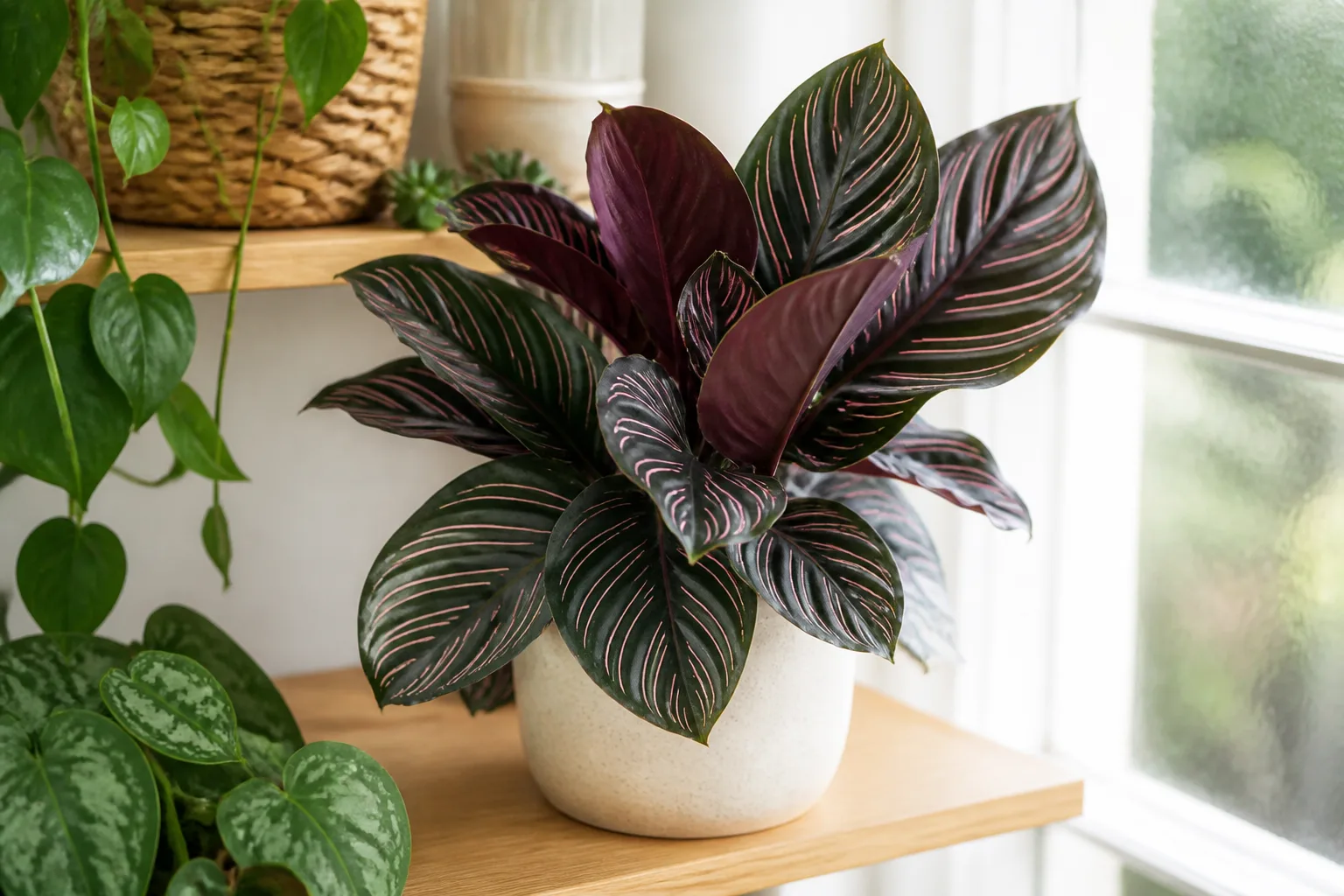
The Beauty Star calathea is grown for its narrow, oval leaves, fine pink or cream pinstripes, and deep purple undersides. The plant is usually sold as Calathea ornata ‘Beauty Star’; newer references may place many familiar calatheas in the genus Goeppertia. Whatever name is on the pot, the care goal is the same: give it filtered light, keep the root zone lightly moist rather than soggy, and avoid sudden swings in temperature or watering.
This is a tropical foliage plant, not a plant that needs constant attention. It does best when you check the soil before watering and adjust for the room it is actually growing in. A plant beside a bright east-facing window in summer will use water faster than the same plant in a cool, dim corner in January. That difference matters more than a weekly schedule.
Calathea Beauty Star Care at a Glance
For healthy Calathea Beauty Star care, use bright indirect light, a loose mix that holds some moisture but drains freely, and a pot with drainage holes. Keep the plant warm and away from drafts, let only the top layer of mix begin to dry between thorough waterings, and feed modestly while new growth is appearing. The RHS recommends warm, humid conditions and filtered light for calatheas, and its Calathea ornata profile calls for a steady temperature of at least 16°C (about 61°F). (RHS Calathea growing guide; RHS Calathea ornata profile)
| Care factor | Practical target |
|---|---|
| Light | Bright, filtered or indirect light; no harsh midday sun |
| Water | Water thoroughly when the surface layer has started to dry; drain the pot |
| Soil | Moisture-retentive, airy potting mix |
| Temperature | Stable indoor warmth; avoid cold drafts and heater or AC blasts |
| Humidity | Higher humidity helps, but solve dry air without keeping the mix waterlogged |
| Feeding | Diluted balanced fertilizer during active spring and summer growth |
| Repotting | When roots fill the container or the mix has broken down, not automatically every year |
| Propagation | Division of an established clump |
The table is a starting point, not a set of rigid thresholds. Leaf response, pot weight, drainage, and how quickly the mix dries tell you when to adjust.
What makes Beauty Star different?
‘Beauty Star’ is a cultivated form of Calathea ornata, known in plant shops as the pinstripe calathea. The RHS describes C. ornata as a clumping evergreen with broad oval leaves, pale pinkish-white bands, and purple coloring beneath; the exact amount and shade of striping varies with the cultivar and with leaf age. Many newer references use Goeppertia for species formerly grouped in Calathea, so labels may not be consistent. (RHS Calathea ornata profile; Epic Gardening’s Calathea guide)
The leaves change position as light shifts from day to night. That daily movement, often called nyctinasty, is normal for prayer plants and is not a sign that the plant is wilting. A sudden curl that remains through the day is different: it can point to dry mix, dry air, cold exposure, or root stress, so check the growing conditions before changing several things at once.
Calathea ornata is also more compact indoors than its tropical origin might suggest, but mature size depends on the plant’s age, light, pot, and growing conditions. Treat it as a leafy clump that slowly fills its container rather than a fast-growing plant that needs regular hard pruning. If a seller’s “Beauty Star” has plain green leaves or a very different pattern, compare the botanical label and the plant itself instead of relying on the common name alone.
Choose bright, indirect light
Place Beauty Star where it receives plenty of daylight without strong direct sun hitting the leaves for hours. An east-facing window is often an easy starting point; in the Northern Hemisphere, a bright north-facing window can work, while a south- or west-facing window usually needs a sheer curtain or a position set back from the glass. In the Southern Hemisphere, the sun-facing direction reverses, so use the leaf response rather than the compass alone. The RHS likewise recommends a bright spot out of direct sun and notes that weak light can cause poor, weak growth. (RHS Calathea growing guide)
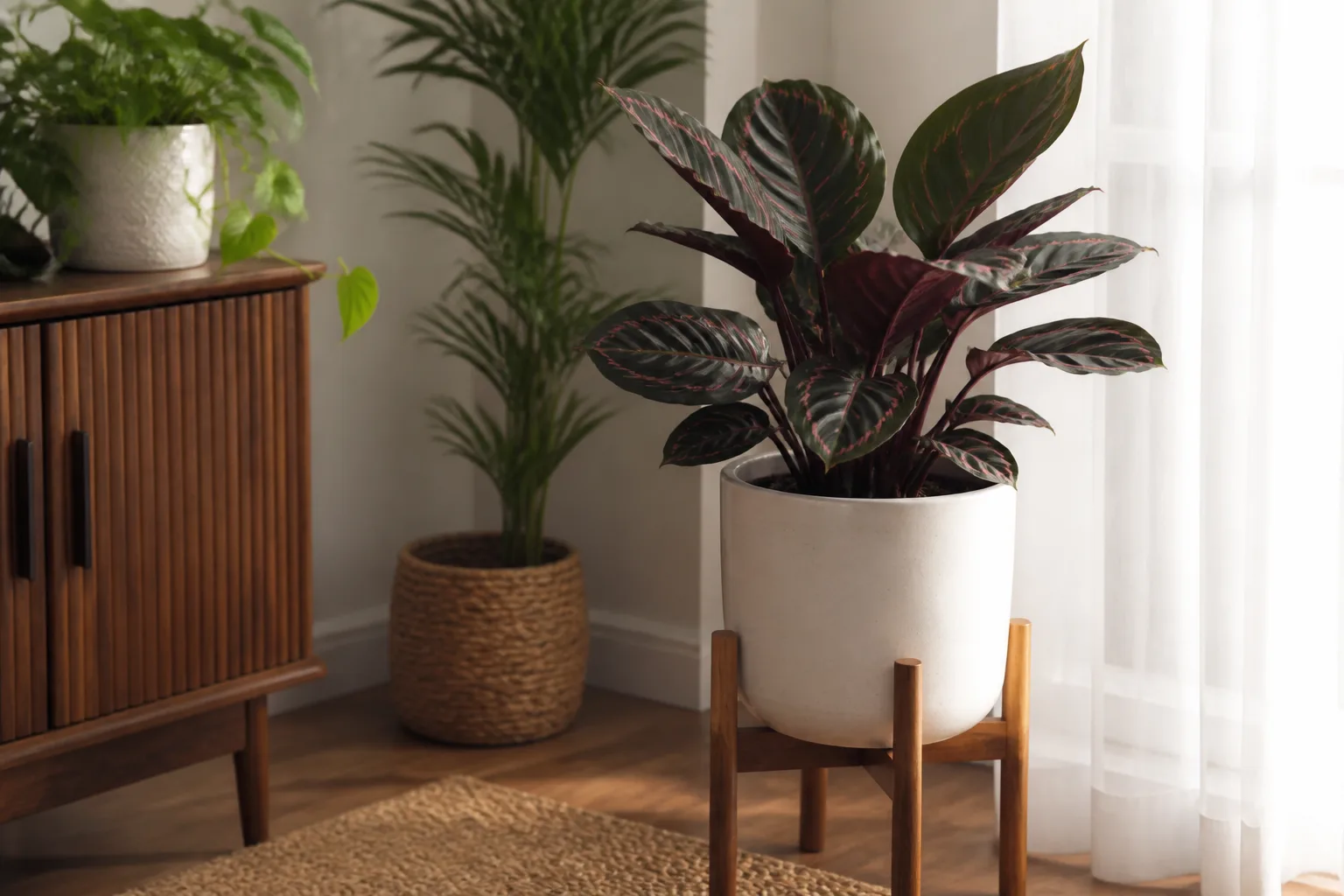
Strong sun can bleach the center of a leaf or leave dry, pale patches where light strikes. Too little light tends to show up more slowly: the plant leans toward the window, makes fewer new leaves, or loses some of the contrast that makes the stripes stand out. Do not move it from deep shade straight into direct sun to correct a lack of growth; increase light gradually over a week or two. If you move the plant outdoors in warm weather, start it in sheltered shade and bring it back inside before nights approach 16°C (61°F), the RHS minimum guidance for calatheas.
Light also changes water use. A Beauty Star in a brighter spot may dry faster and grow more actively, while one in a dark room can stay wet for too long. If the mix remains damp for many days, check whether the plant needs a brighter location before assuming it needs a different watering calendar.
Water when the upper soil begins to dry
Beauty Star likes steady moisture during active growth, but its roots still need air. Water when the surface layer of potting mix has begun to dry, then soak the entire root ball until water runs from the drainage holes. Let the pot drain fully and empty the cachepot or saucer. The RHS advises keeping the compost evenly moist through spring and summer, then allowing the surface to dry before watering again in fall and winter; Epic Gardening similarly recommends checking the top inch or two rather than following a fixed schedule. (RHS Calathea growing guide; Epic Gardening watering guide)
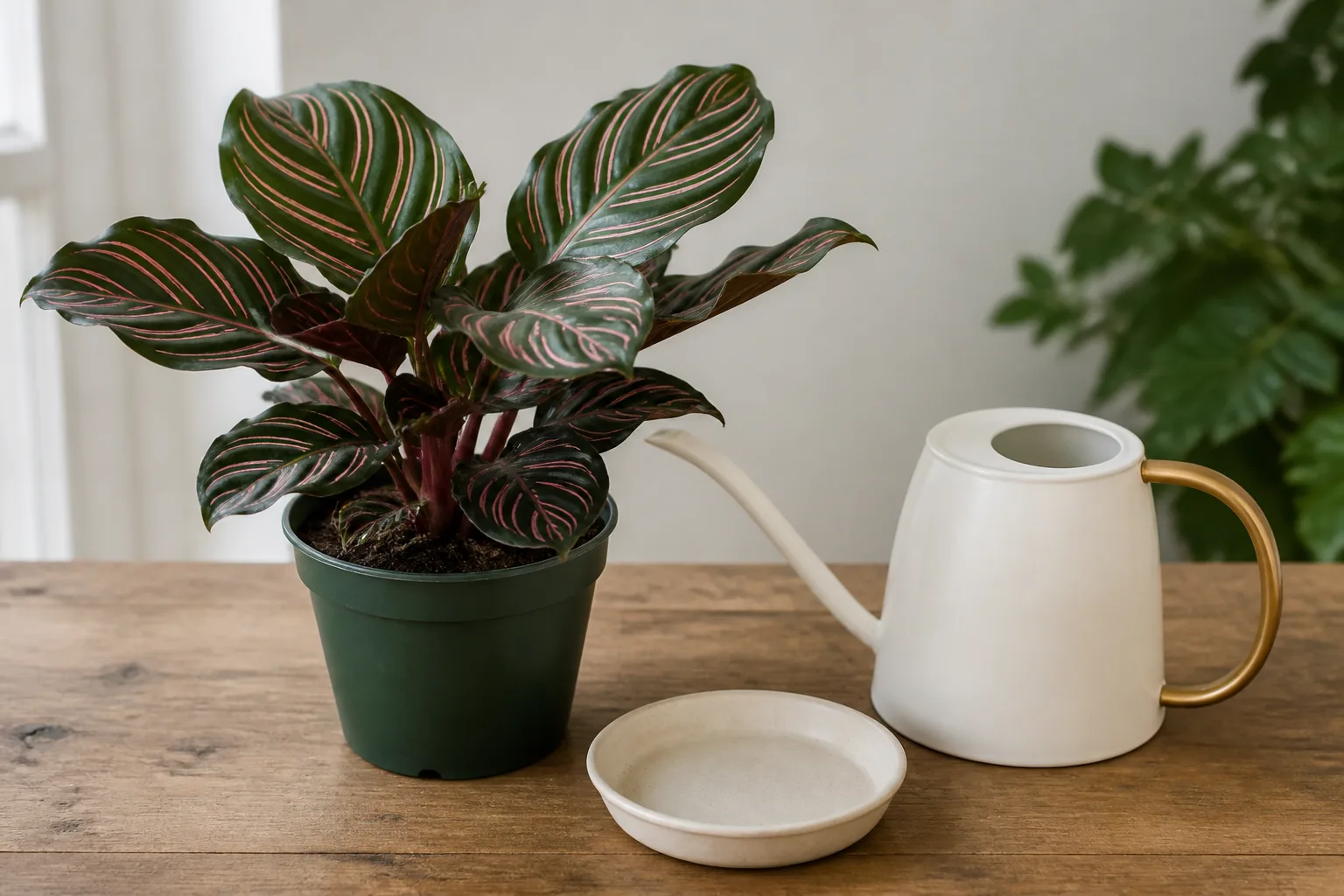
Water at the soil line where practical, rather than regularly leaving water pooled in the crown or on the leaves. A little water on foliage is not automatically harmful, but persistently wet leaves in a cool room with poor airflow can stay marked or develop spots. Avoid watering in small sips every day; that can wet only the top while leaving the center of the root ball dry, or keep the lower mix constantly saturated.
Do not let the plant sit in runoff. A decorative outer pot can hide water even when the surface looks dry, so lift the nursery pot out after watering and check the bottom before returning it. If the soil stays wet much longer than expected, pause and assess drainage, pot size, light, and temperature instead of watering again because a leaf drooped.
A practical watering check
Use three cues together: touch the mix, lift the pot, and look at the plant. If the top half-inch to inch is just beginning to dry and the pot feels lighter than it did after watering, water thoroughly. If the mix is still cool and damp and the pot is heavy, wait and check again in a day or two. A wooden skewer inserted near the root ball can help when the surface is misleading.
The exact interval will shift with season and setup. A small plant in a porous terracotta pot may need water sooner than a large plant in plastic; a dense mix dries more slowly than an airy one. Instead of writing “every Sunday” on a care tag, note how many days your own pot usually takes to reach the just-drying stage, then continue checking because the interval changes as light and temperature change.
Water quality is worth testing when brown tips keep appearing despite steady moisture and sensible humidity. Calatheas can be sensitive to minerals or fluoride in some tap water, and Gardening Know How specifically notes fluoride-related leaf damage for peacock calatheas, another member of this group. If your water is hard or heavily treated, try rainwater, distilled water, or a suitable low-mineral filtered option for several weeks and watch new growth; old brown tissue will not turn green again. Letting tap water stand may reduce some chlorine, but it does not remove dissolved minerals or fluoride. (Gardening Know How; Epic Gardening watering guide)
Use a moisture-retentive but airy mix
The right soil holds water long enough for the fine roots to use it, then releases the excess and leaves air spaces behind. A quality peat-free houseplant mix amended with perlite or pumice and a little fine orchid bark is a practical starting point. For a simple batch, mix about two parts potting mix with one part perlite or pumice; add a smaller amount of fine bark if your mix packs down quickly. The exact recipe matters less than the result: damp after watering, crumbly rather than sticky, and able to drain.
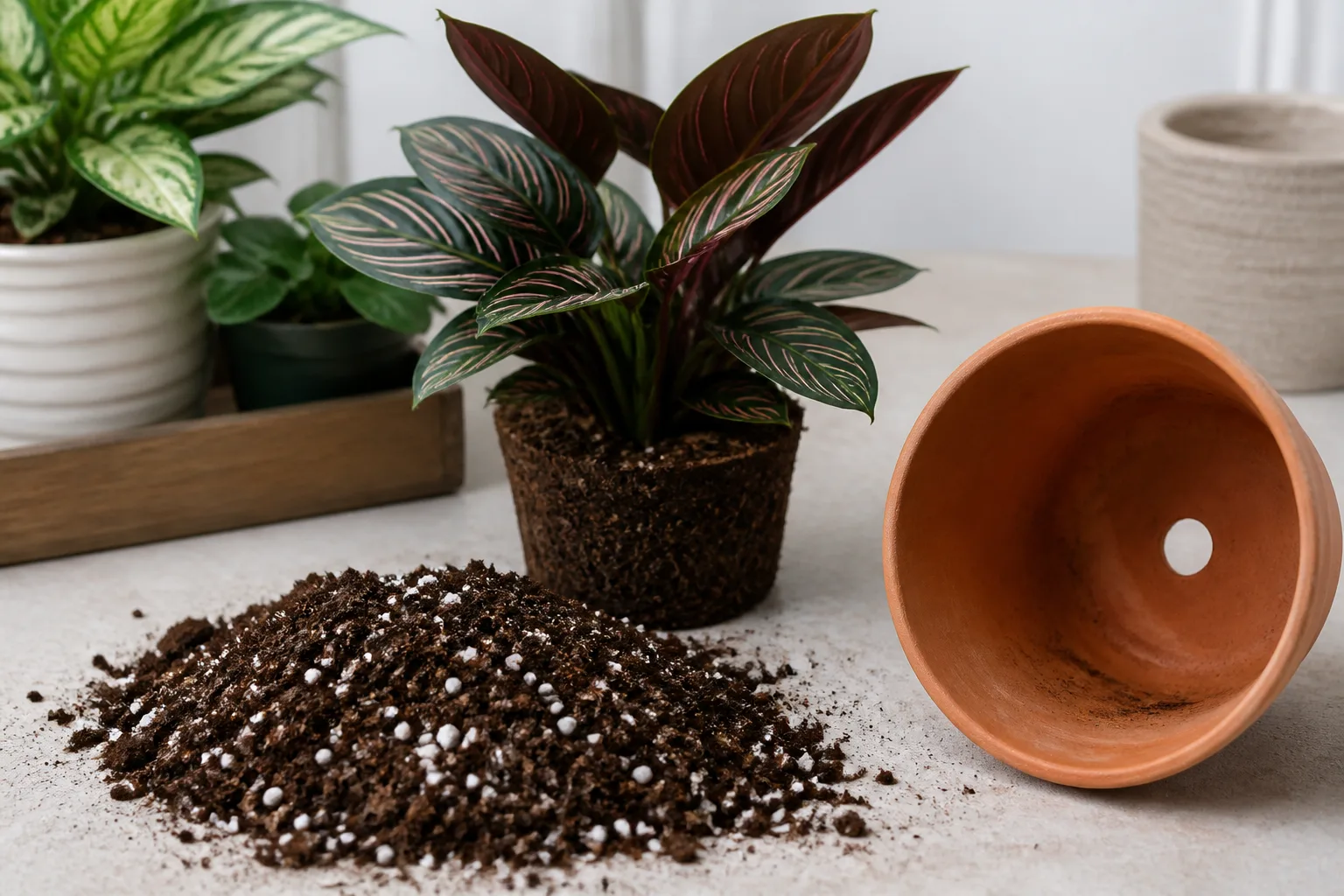
Avoid garden soil, a sealed decorative pot, and a dense mix that stays saturated for days. A drainage hole is essential because it gives extra water an exit; a gravel layer inside a pot does not substitute for a hole and can leave the root zone wetter. If the mix pulls away from the pot or water runs straight down the sides, it may have dried too far or become hydrophobic. Rehydrate it slowly and evenly, then return to checking moisture before it dries completely.
You do not need to chase an “alkaline” soil pH for this plant. RHS lists Calathea ornata for acid, neutral, or alkaline soil types, which is a broad tolerance rather than an instruction to adjust potting mix. For a container plant, a stable, well-draining structure is a more useful target than adding lime or a pH product without a soil test. (RHS Calathea ornata profile)
Give it stable warmth and useful humidity
Beauty Star prefers the steady warmth of a lived-in room. Keep it away from cold windows in winter, exterior doors that open into cold air, air-conditioning vents, and radiators that blow hot dry air across the foliage. The RHS recommends a stable temperature of 16–21°C (61–70°F) for calatheas and cautions against drafts and temperature swings; ordinary indoor warmth above that range can work if the other conditions are steady. (RHS Calathea growing guide)
Humidity matters because thin tropical leaves lose water to dry air faster. Higher humidity can help prevent edges from crisping, especially when the plant sits near heating or cooling equipment, but humidity is not a reason to keep wet soil. If you have a hygrometer, use it to find out whether the air is actually dry before buying equipment. A plant that browns only on the window-facing side may be reacting to sun or a cold pane rather than the room’s average humidity.
Humidifier, grouping, or pebble tray?
A room humidifier is the most reliable way to raise humidity around several plants; clean and run it according to its instructions, and keep air moving gently so the space does not become stagnant. Grouping plants can create a slightly more humid pocket, although the effect depends on the room and the number of plants. A bathroom can be suitable if it has enough natural or supplemental light and does not swing cold after showers.
Misting gives a brief film of water on a leaf, not a lasting change in room humidity. It is optional and should not be treated as the fix for crispy edges. A pebble tray can create a small moist zone near the foliage, but the plant pot must sit above the waterline, and the tray cannot compensate for an arid room. If the plant continues to show new crispy growth, a humidifier or a move away from a vent is a more dependable experiment than repeated misting.
Feed lightly during active growth
Feed only when the plant is actively making leaves, usually during spring and summer in a bright home. Use a balanced liquid houseplant fertilizer at half the label strength once a month, or follow a milder product’s instructions if it is formulated for foliage plants. The RHS advises monthly feeding through the growing season and no feeding in autumn or winter; a plant that has just been repotted in fresh mix may not need additional fertilizer right away. (RHS Calathea growing guide)
More fertilizer does not correct low light, root rot, or a plant that has stopped growing. Excess salts can contribute to brown margins or a crust on the soil, so pause feeding if symptoms worsen after each dose. If the pot drains freely and roots look healthy, an occasional thorough watering that flushes through the mix can help move accumulated salts out; always discard the runoff.
Repot when roots or mix tell you to
Calathea Beauty Star does not need a new pot just because a year has passed. Repot when roots circle densely around the root ball, emerge from several drainage holes, or the plant dries unusually fast despite normal conditions. A mix that has compacted and will not drain or rewet evenly is another reason to refresh it. The RHS recommends repotting calatheas every few years once the clump fills its container and advises choosing a pot only one or two sizes larger to avoid overpotting. (RHS Calathea growing guide)
Spring or early summer is the gentlest time because the plant can resume growth soon after the move. Slide the root ball out, loosen only the outer roots that are tightly circling, and remove any dark, mushy roots with clean scissors. Set the plant at its old depth in fresh mix and a pot with drainage holes. Water it in, let the pot drain, and keep it in the same bright indirect spot while it settles.
Do not combine an unnecessary repot with division, major pruning, and a location change. Each change asks the plant to adjust. If the current pot drains well and roots still have room, leave it in place and correct the care issue first.
Divide a healthy clump to propagate
The dependable way to propagate Calathea Beauty Star is to divide an established clump. A single leaf or leaf cutting will not make a new plant because a leaf without a growing section and roots has no way to form a complete clump. Wait until the parent plant has several healthy shoots and enough roots to support more than one section. The RHS recommends dividing calathea clumps in spring and keeping the new divisions warm, humid, and moist until they resume growth. (RHS Calathea growing guide; Epic Gardening Calathea guide)
Prepare small pots with drainage holes, fresh potting mix, and a clean knife or shears. Water the parent plant the day before if its mix is dry; slightly moist roots are easier to handle than brittle ones. At repotting time, ease the root ball from the pot and look for natural clusters of stems connected by their own roots or rhizome.
- Gently tease apart a natural section with several leaves and a generous set of roots. Use a clean blade only when the clump will not separate by hand.
- Pot each division at the same depth it was growing before. Do not bury the leaf stalk bases or leave most roots exposed.
- Press mix lightly around the roots so the plant stands upright, but do not compact it into a solid block.
- Water enough to settle the mix, then let excess drain completely.
- Keep the divisions warm in bright indirect light. Maintain even moisture, but do not seal them into a wet, airtight bag.
- Wait for new growth before resuming light fertilizer; a pause in growth after division is normal.
A division with too few roots may wilt or stall while it tries to recover, so do not chase a high number of new plants. If the parent is already dropping leaves, has mushy roots, or has recently suffered a pest outbreak, stabilize it first and postpone propagation. The goal is a viable new clump, not a rushed cut.
Prune damaged leaves without reshaping the plant
Routine pruning is minimal. Remove a leaf that is fully yellow, badly damaged, or mostly brown by cutting its stalk close to the soil with clean shears. If just the tip is brown, you can trim along the leaf’s natural outline for appearance, leaving a narrow brown margin rather than cutting into healthy green tissue. The RHS notes that calatheas do not need regular pruning beyond faded leaves or dead stems. (RHS Calathea growing guide)
Do not strip several partly green leaves because one new leaf is coming in. Every green leaf still contributes energy. Beauty Star does not need shaping into a ball, and cutting healthy striped leaves will not force the plant to produce brighter color. If multiple leaves are deteriorating, solve the root, water, light, or humidity problem before trimming.
Inspect for pests before treating
Spider mites are a common dry-air pest on indoor calatheas. Look for fine webbing, tiny pale speckles, and stippled leaves, especially on the undersides and where leaves meet their stalks. Mealybugs look like white cottony flecks; scale can resemble small brown bumps; fungus gnats are tiny flies that often appear when the top of the mix stays wet. The RHS identifies red spider mites and mealybugs among calathea problems, and Epic Gardening also lists mites, aphids, mealybugs, and scale as pests to watch for. (RHS Calathea growing guide; Epic Gardening Calathea guide)
Isolate a plant with suspected pests and inspect nearby plants before treating the whole collection. Wipe or rinse foliage, including leaf undersides, and repeat inspections because a single rinse will not catch every egg or hidden insect. If you use an insecticidal soap or another control, choose a product labeled for indoor ornamentals, follow its directions, and test a small leaf area first; patterned leaves can show damage from treatments. For fungus gnats, let the surface dry a little more between waterings and correct the wet mix instead of treating the adult flies alone.
Troubleshoot leaf changes by pattern
One brown tip or an old yellow leaf is not enough to diagnose a plant. Look at which leaves are affected, whether the change appears on the sun-facing side, how the soil feels, and whether the problem began after a move, fertilizer dose, or repot. Then change one likely cause and watch the next leaves; damaged tissue will not recover, so judge success by new growth rather than the old margins.
Brown tips and margins
Brown tips can come from dry air, inconsistent moisture, mineral-heavy water, fertilizer salts, or root damage. Check that the pot is draining, the soil is not bone dry or waterlogged, and the plant is not directly in a heater or AC stream. If those basics are sound, try lower-mineral water for several weeks and track whether new leaves emerge with cleaner edges. RHS guidance lists low humidity as a common cause of calathea tip and edge browning; practical sources also flag water quality, which is why a single brown edge should not be blamed on one factor automatically. (RHS Calathea growing guide; Gardening Know How)
If the damage stops at the tip and the rest of the leaf remains firm, trim only the dry edge if you dislike the appearance. If browning spreads across several leaves or the plant wilts, inspect the roots and potting mix before increasing humidity. Wet soil plus brown edges can signal a root problem, not a request for more water.
Pale, faded, or scorched leaves
If the stripes look washed out across most of the plant, the plant may be getting too much direct light or too little light to sustain strong new growth. Sun scorch tends to appear as bleached or dry patches on the side facing a window, while dim-light decline develops slowly with sparse growth and less contrast. Move the plant into filtered light and allow it to adjust gradually; do not move it into a dark room simply to avoid sunburn.
A leaf that is already bleached will not regain its old pattern, so watch the next leaf. If new leaves are healthy but a few older ones are fading, gradual aging may be part of the picture. Check that the plant is not simultaneously staying wet for a long time, since low light can slow water use and increase root stress.
Yellowing, drooping, or curling
A single lower leaf turning yellow can be natural aging. Several yellow leaves at once, especially with wet soil, suggest overwatering, compacted mix, or a pot that is too large; stop adding water and inspect drainage. If the mix smells sour or the roots are brown and mushy, remove damaged roots and repot into fresh airy mix rather than trying to dry the existing root ball in place.
Drooping is a symptom, not a watering instruction. A light pot with dry soil often perks up after a thorough drink and full drainage; a heavy pot with wet mix may be suffering from root stress and will deteriorate if watered again. Curling that persists during the day can reflect dryness, low humidity, cold drafts, or direct sun, so check those conditions one by one. Calatheas also fold leaves overnight as part of their normal daily movement, which should not be mistaken for persistent stress. (RHS Calathea growing guide; Epic Gardening watering guide)
Pet safety and placement
The ASPCA lists Calathea species as non-toxic to cats and dogs. Its entry is at the genus level, so keep the plant label if you need to verify an exact identification; common names are not always used consistently in houseplant shops. “Non-toxic” does not mean a plant is food, so place it where curious pets are less likely to chew leaves or dig in the potting mix. (ASPCA Calathea listing)
Conclusion
Calathea Beauty Star is most reliable when its conditions stay steady: bright indirect light, evenly moist but airy soil, complete drainage, and warm air away from drafts. Water by checking the mix rather than following a calendar, and adjust the interval when the seasons or room conditions change.
If the leaves brown, fade, curl, or droop, use the pattern and soil condition to choose your first check. Change one factor at a time, give new growth time to respond, and repot or divide only when the roots and plant condition justify it. That calm, observation-first routine protects both the roots and the striped foliage that make Beauty Star worth growing.



