How to Grow and Care for Bridal Veil Plant Like a Pro
Grow a bridal veil plant in filtered light with moist, airy soil. Learn watering cues, pruning, propagation, repotting, bloom tips, and pet safety at home.
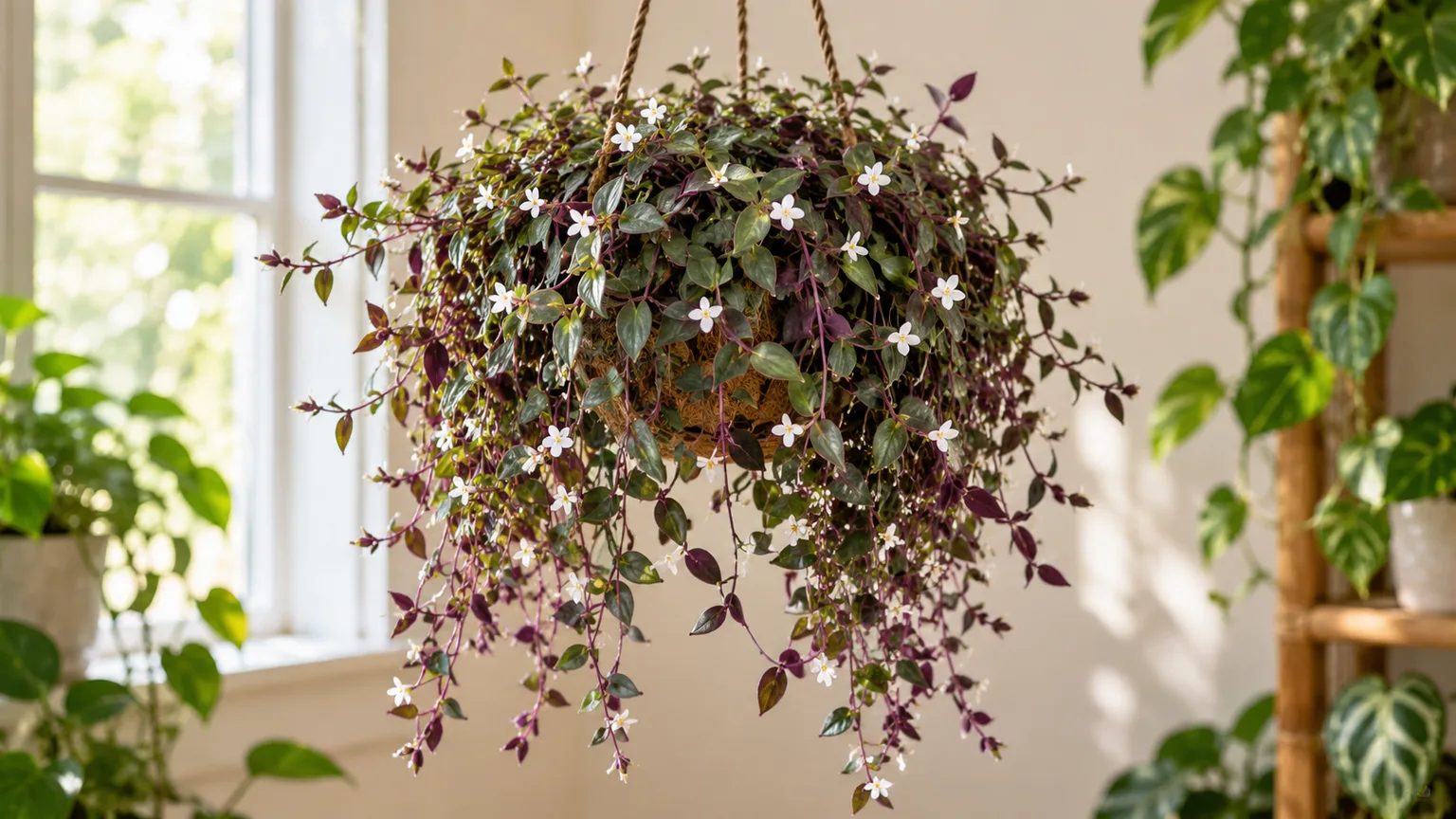
A bridal veil plant earns its name with narrow, cascading stems, small green leaves with purple undersides, and a cloud of tiny white flowers. Its roots are less forgiving than its fine appearance suggests: the plant wants steady moisture, but a pot that stays wet can quickly turn into a root problem.
The reliable approach is simple. Give it bright filtered light, a free-draining pot with an open hole, and water when the mix is beginning to dry rather than following a rigid weekly schedule. Prune the longest stems while the plant is growing, and you can use those healthy trimmings to make the basket look fuller.
Bridal Veil Plant Care at a Glance
| Care factor | Practical starting point |
|---|---|
| Light | Bright, filtered or indirect light; avoid harsh midday sun |
| Water | Check the top inch or two of mix; water when it is starting to dry, then let excess drain |
| Soil | Moisture-retentive but loose, with drainage holes at the bottom of the pot |
| Temperature | Keep it warm and protect it from cold drafts and frost; avoid temperatures below 50°F |
| Feeding | Use a balanced houseplant fertilizer sparingly during active spring and summer growth |
| Pruning | Pinch or shorten long stems above a leaf node to encourage branching |
| Outdoors | Best treated as a warm-climate perennial; bring container plants in before cold weather |
This is a tropical, trailing houseplant rather than a drought-tolerant succulent. North Carolina Extension describes it as a cascading perennial that prefers filtered light and moist, well-drained soil, and identifies USDA hardiness zones 9b through 11b for outdoor growing. Those zone ratings matter for plants in the ground; a pot outdoors can chill much faster than garden soil, so move it inside before nights get cold.
Which Plant Is Called Bridal Veil?
In houseplant shops, “bridal veil” or “Tahitian bridal veil” usually refers to Gibasis pellucida, a member of the spiderwort family, Commelinaceae. Look for fine purple stems, small pointed oval leaves that are green above and often purple below, and white flowers with three petals. Kew’s Plants of the World Online accepts Gibasis pellucida as the species name, while North Carolina Extension’s plant profile lists several older names used for it.
Common names can refer to unrelated plants, and plant labels may retain old taxonomy. The ASPCA’s Tahitian bridal veil entry, for example, files its listing under Tradescantia multiflora. If a tag just says “bridal veil,” compare its leaves and flowers with the traits above before relying on a care or toxicity page; when you cannot confirm the identity, treat it as potentially toxic around pets and keep it out of reach.
Choose Indoor or Outdoor Growing
Most people grow bridal veil in a hanging basket, tabletop pot, or elevated planter where the stems can trail without being crushed. It can also grow outside in warm, frost-free areas as a groundcover or container plant, but its delicate shoots are better suited to a sheltered border or patio than a path with foot traffic. North Carolina Extension lists it for hanging baskets and containers and notes its use as a groundcover in tropical climates.
In cooler climates, treat it as a seasonal patio plant: let it enjoy a shaded outdoor spot during warm weather, then bring it back inside before temperatures approach 50°F. Transition it gradually over several days, first placing it in full shade and then in brighter filtered light. A sudden change from a dim room to hot outdoor sun can brown the leaves even when the plant is well watered.
Give It Bright, Filtered Light
A bright room with indirect light is a good home for bridal veil. An east-facing window or a position a few feet back from a brighter window often works; if sun falls directly on the plant for hours, soften it with a sheer curtain or move the pot. North Carolina Extension notes that direct sun can brown the leaf tops, while Savvy Gardening’s bridal veil guide describes bright indirect light as the condition that supports compact, colorful growth.
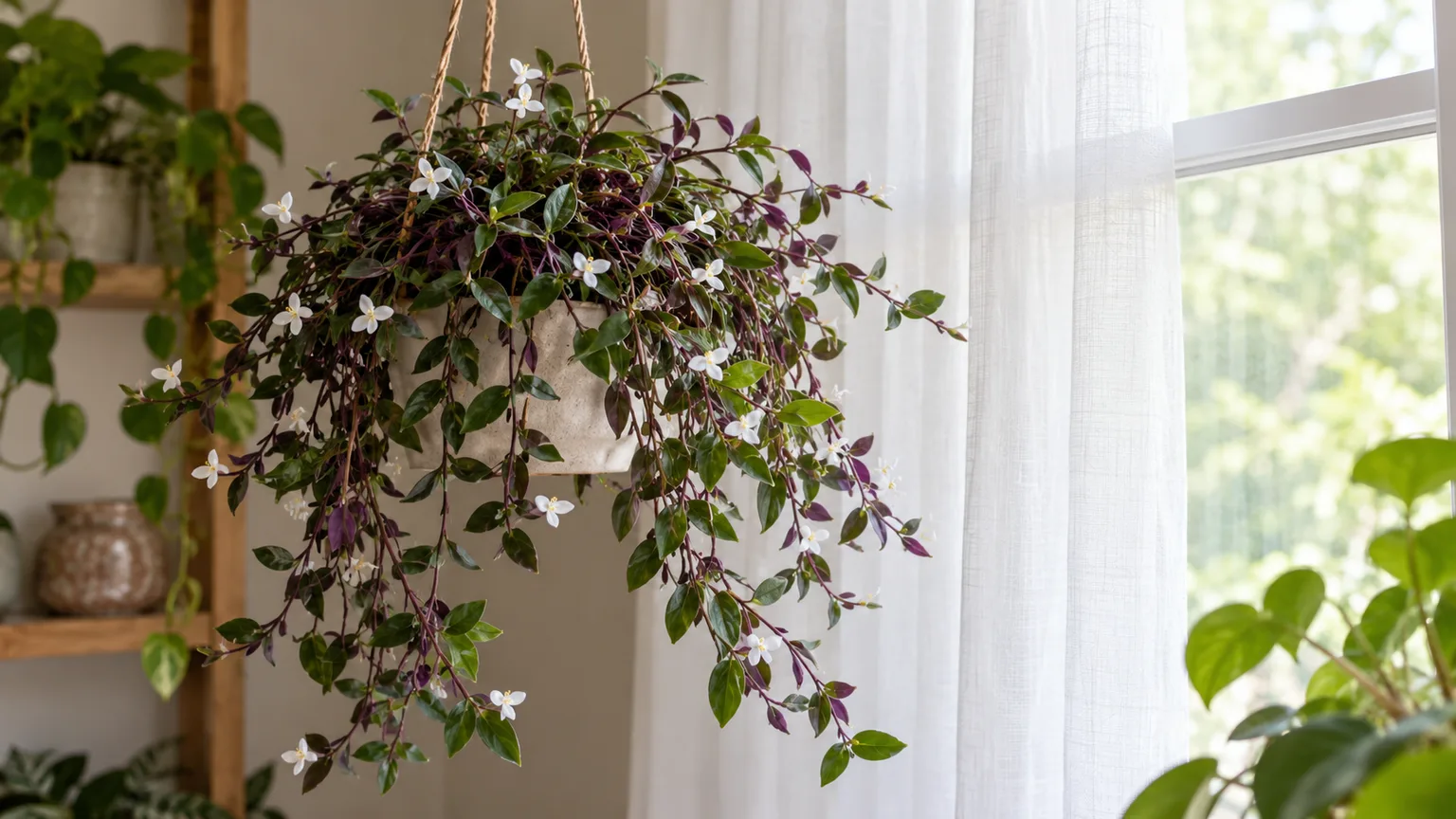
Use the plant’s shape as a light meter. Long gaps between leaves, thin stretched stems, one-sided growth, or dropping leaves usually point to too little usable light; scorched, brown patches on the window-facing side suggest too much direct sun. Rotate the basket now and then for even growth, but avoid repeatedly moving it from one extreme to another while it adjusts.
More light can help a bridal veil bloom, but “more” does not mean baking it in afternoon sun. If the plant is lush but flowers are scarce, first move it closer to a bright window or provide a grow light for a consistent day length; keep the foliage out of intense direct rays. If the leaves are already bleaching or browning, increase distance from the window before changing anything else.
Keep Soil Moist, Not Waterlogged
Do not water by weekday. Check the potting mix with a finger or wooden skewer, especially below the dry surface: if the upper inch or two is dry and the mix is only faintly moist lower down, water; if it is still wet or cool several inches deep, wait. In a small hanging basket near a warm window, the mix can dry faster than in a larger pot in a cooler room, so the same plant may need different intervals in different seasons.
When it is time, water slowly over the soil until a little drains from the bottom. Empty the saucer or outer cachepot after several minutes so roots are not left standing in runoff. Savvy Gardening recommends checking the top inch or two and watering less often during winter; the useful takeaway is to respond to the mix and the plant’s growth, not copy a fixed weekly count.
During active spring and summer growth, the plant may use water more quickly. In winter, short days and cool rooms slow growth, so a mix that was drying in a few days may take much longer; check more often than you water. Do not compensate for dry indoor air by keeping the soil constantly wet. Moist air around leaves and wet roots are different conditions, and the latter can deprive roots of oxygen.
Use a Loose, Draining Potting Mix
Choose a general indoor potting mix that holds some moisture but does not pack into a dense, soggy block. If your mix stays wet for many days, blend in perlite or fine bark to open its structure; if it dries almost immediately, add a moisture-retentive component such as coir or use a less porous pot. The goal is an even balance: enough air around fine roots while the root ball stays lightly moist between waterings.
The container needs at least one unobstructed drainage hole. A decorative cachepot is fine if you keep the plant in a nursery pot inside it and pour off collected water after watering. Do not add gravel to the bottom of a pot as a substitute for drainage; a blocked hole or heavy mix remains a problem even if there is a layer of stones underneath.
Choose Warmth and Humidity That Fit
Keep the plant in a warm, stable room, away from cold exterior doors, air-conditioning blasts, and heating vents. North Carolina Extension advises that temperatures should not fall below 50°F; a comfortable indoor range around 55–75°F gives the plant a buffer from chilling without requiring tropical heat. If a window is cold at night, set the hanging basket back from the glass.
Ordinary household humidity is often adequate when the plant is otherwise healthy, but hot, very dry air can stress it. If leaf edges crisp while the soil moisture is appropriate, move it away from a radiator or use a room humidifier; grouping plants can also soften the immediate microclimate. Misting adds only a brief film of water and does not fix dry air, while frequently wet foliage can leave the plant looking spotted or encourage disease in poor airflow.
Fertilize Lightly During Active Growth
A recently repotted plant or one growing in fresh potting mix may not need extra fertilizer right away. If growth is active but pale or slow despite suitable light, warmth, and moisture, use a balanced liquid houseplant fertilizer according to its label during spring and summer. A diluted application every four to six weeks is a cautious starting point; skip feeding when growth slows in winter.
More fertilizer will not make a plant bloom on demand. Excess salts can damage fine roots and create brown leaf edges, while too much nitrogen can push soft foliage at the expense of a balanced shape. Savvy Gardening recommends modest feeding during active growth; whichever product you choose, follow the label and stop if the plant shows stress after feeding.
Prune for a Fuller, Flowering Basket
Bridal veil often looks its best when it branches rather than sending a few long stems over the pot rim. During active growth, pinch or trim stem tips just above a leaf node—the joint where a leaf attaches. New shoots can develop at nearby nodes, which helps fill open spots and keeps the plant in proportion to its container.
Use clean, sharp scissors and remove dead or badly damaged stems at their base. Avoid stripping the plant back all at once, especially when it is weak or in low light; a severe cut removes leaves the plant needs to recover. Small trims through spring and summer are easier to recover from and give you fresh material for propagation.
If flowering is the priority, avoid frequent heavy shaping while buds are forming. You can remove spent flowers and untidy stems, but a plant that is constantly cut back may need time to rebuild enough growth to bloom. North Carolina Extension notes that pinching encourages density and flower production, and Savvy Gardening also recommends trimming long stems to prompt a bushier form.
Propagate with Stem Cuttings
Stem cuttings are the straightforward way to make another bridal veil plant or fill a thin patch in an existing basket. Choose a healthy, actively growing stem and make each cutting long enough to include at least one leaf node; a leaf by itself will not produce a new stem-and-root system. North Carolina Extension and Savvy Gardening both describe propagation from cuttings rooted in water or moist soil.
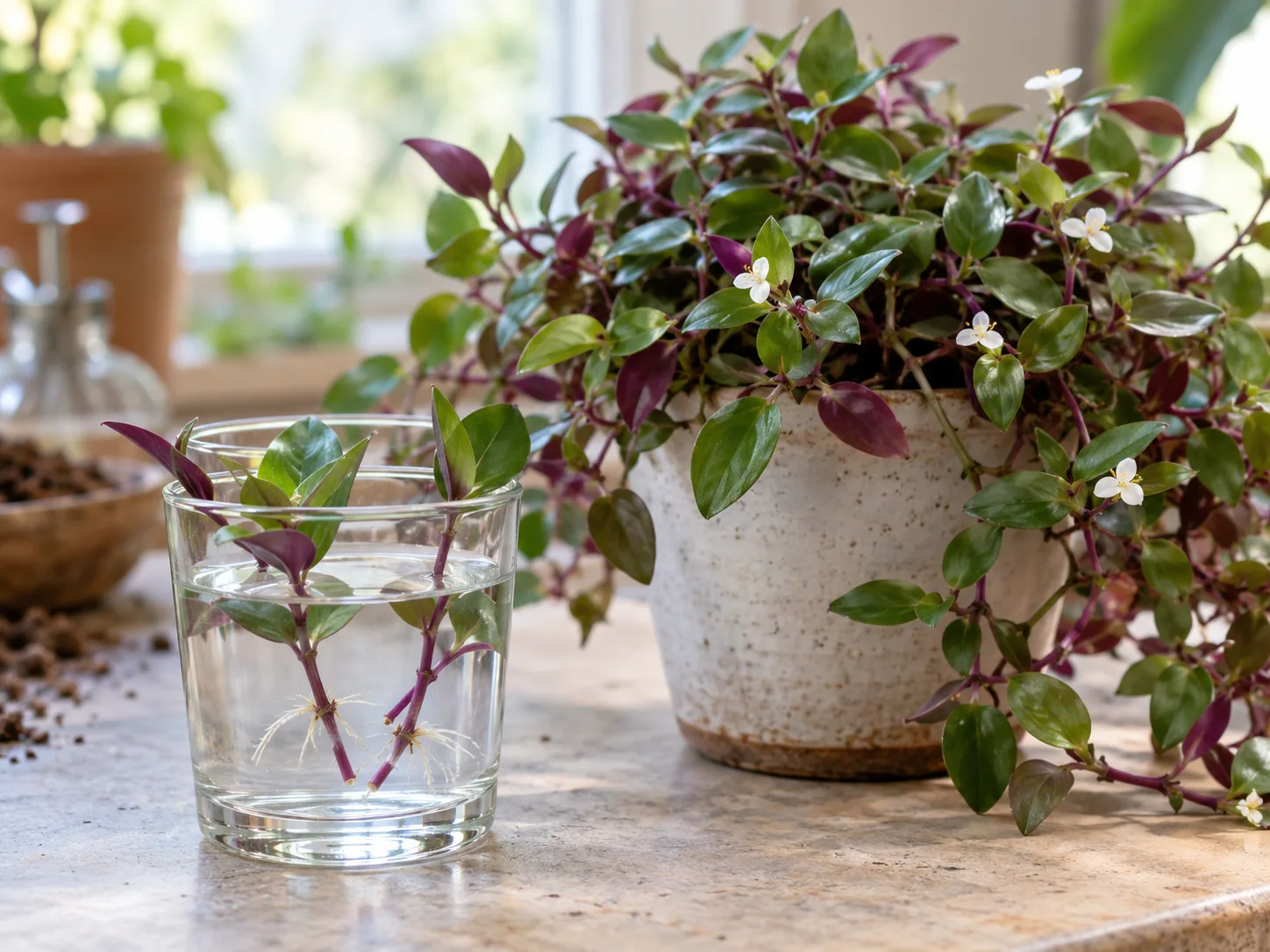
To root a cutting in water, remove the lowest leaves, place the bare node under clean room-temperature water, and keep the remaining foliage above the surface. Set the glass in bright indirect light and refresh the water about weekly; once a small network of roots has formed, pot the cutting into lightly moist mix and keep it out of harsh sun while it settles. If you prefer to skip the water stage, place several node-bearing cuttings directly into damp potting mix and keep the medium evenly moist, never saturated.
For a fuller basket, insert multiple rooted cuttings around the edge of the same pot rather than waiting for one long vine to cover bare soil. Keep the new starts in the same warm, bright conditions as the parent and avoid fertilizing until you see fresh growth. If the cuttings turn mushy, check that leaves were not submerged and that the rooting medium is not staying waterlogged; if they wrinkle and dry, the air or medium may be too dry.
Repot Only When Roots Need Room
Repot when roots are circling tightly, growing from the drainage holes, or the plant dries unusually fast despite a reasonable watering routine. If the root ball still holds together and the plant is growing well, there is no need to move it just because a year has passed. Savvy Gardening recommends a container with drainage and a light mix containing perlite; the same conditions help reduce waterlogging in the new pot.
When repotting, choose a container only one size larger and set the plant at the same soil level it had before. A dramatically oversized pot leaves a large volume of mix wet around a small root system, increasing the time roots sit in damp soil. Water once to settle the mix, let it drain, then wait until the surface begins to dry before watering again; hold fertilizer until the plant resumes active growth.
Encourage More White Flowers
Bridal veil produces small white flowers as it grows, with the outdoor bloom season commonly spanning spring through fall in suitable climates. A houseplant may flower at different times indoors because light, temperature, and active growth do not follow a single local garden calendar. The plant’s decorative effect comes from many small flowers among the fine trailing foliage, not from one large flush that lasts a set number of days.
For more blooms, start with strong filtered light and stable moisture. A plant living in a dim corner may keep growing but produce fewer flowers; a plant stressed by dry roots, cold, or waterlogged soil may also pause. Once the basics are steady, trim lightly to encourage side shoots and feed modestly only if the plant is actively growing in older mix.
Avoid trying to force flowers with extra fertilizer or by moving the basket into direct sun. Neither will correct low light, damaged roots, or a cold draft, and both can make the plant less healthy. If it is growing new leaves but not flowering, adjust light gradually and give the new growth time to mature before expecting buds.
Diagnose Common Problems
Many bridal veil problems begin with a mismatch between water, light, and the potting mix. Look at the whole plant and feel the soil before changing care: a yellow leaf alone cannot tell you whether roots are too wet or too dry. The table below helps narrow the first check; after that, change one condition and watch new growth rather than trying several remedies at once.
| What you see | Check first | Next step |
|---|---|---|
| Yellow leaves with wet mix | Drainage and standing water | Empty the cachepot; let the mix begin to dry; inspect roots if the decline continues |
| Brown patches on the window side | Direct sun | Filter the light or move the plant back from the glass |
| Crispy edges and dry mix | Root-ball dryness, heat, or drafts | Water thoroughly and move away from hot or cold air blasts |
| Bare, stretched stems | Light level and pruning history | Increase filtered light gradually; pinch healthy tips during active growth |
| Sticky residue or fine webbing | Leaf undersides and stem joints | Isolate the plant and inspect for pests |
Yellowing Leaves and Soggy Mix
If several leaves yellow while the potting mix remains wet, check for poor drainage before adding water or fertilizer. A plant can wilt even in wet soil when damaged roots cannot absorb moisture, so limp leaves do not automatically mean thirst. Tip the plant gently from its pot if the decline is spreading; healthy roots are firm, while damaged roots are soft or dark and may smell unpleasant.
If only a few older leaves yellow and the rest of the plant is growing normally, remove those leaves and monitor it. If roots are mostly firm, improve drainage, empty the cachepot, and allow the upper mix to dry somewhat before watering again. When many roots are soft, trim only the damaged parts with clean scissors, repot in fresh airy mix, and take healthy stem cuttings as insurance; a badly rotted root system may not recover.
Brown Tips or Crisp Leaves
First separate dry-root symptoms from sun scorch. A pot that feels light with mix dry well below the surface needs a thorough drink; brown, bleached patches facing a hot window point more strongly to excessive direct sun. If the soil is moist and the browning is limited to leaf tips, also check for drafts, heater air, and fertilizer buildup before increasing watering.
Correct the condition rather than cutting off every marked leaf. Move the plant away from harsh midday rays or hot vents, adjust watering only if the root ball is actually dry, and flush the mix with plain water if you suspect accumulated fertilizer salts and the pot drains freely. Trim damaged tips for appearance, but keep as much healthy leaf surface as possible.
Sparse Stems, Leaf Drop, or Few Flowers
Sparse growth usually needs more usable light, not more water. Move the plant closer to a bright window in stages, or add a grow light if the room is consistently dim; rotate the pot so one side does not monopolize the light. Once it is growing well, shorten the longest healthy vines to encourage branching and tuck rooted cuttings back into open areas.
If leaves drop soon after a move, consider the change itself: a sudden jump in sun, cold air from a door, or a large shift in watering can all trigger stress. Return the plant to a stable filtered-light location, check the root zone, and wait for new growth before pruning hard or feeding. It may take a full growing period for a thin plant to look dense again.
Aphids, Mealybugs, and Spider Mites
Inspect the undersides of leaves, new growth, and stem joints when you see speckling, sticky residue, cottony clusters, or fine webbing. Aphids often gather on tender tips, mealybugs look like small white cottony patches, and spider mites are easier to suspect when leaves are stippled and webbing appears in a dry environment. North Carolina Extension notes that heat and dryness can make this plant more susceptible to aphids; catching pests early is easier than treating a large, crowded basket.
Isolate an infested plant, rinse or wipe the affected stems, and repeat the inspection over the next several days. If you use an insecticidal soap, confirm that it is labeled for indoor plants and the target pest, test a small area first, and follow its label exactly; delicate leaves can be sensitive to sprays. Do not rely on a single treatment if pests return, since eggs and hidden insects may survive an initial cleanup.
Is Bridal Veil Plant Toxic to Pets?
Yes. ASPCA lists Tahitian bridal veil as toxic to cats and dogs and reports possible mild gastrointestinal signs and dermatitis; North Carolina Extension also flags pet toxicity and contact dermatitis. Because common names and taxonomic labels vary, keep the plant where animals cannot chew or brush against it, and wash skin after handling if irritation occurs.
If a pet bites the plant, remove any remaining plant material from its mouth if you can do so safely and contact a veterinarian or animal poison-control service for advice. Do not wait for symptoms or try a home remedy. The ASPCA listing provides U.S. poison-control contact information; outside the United States, call a local veterinarian or animal poison service.
Conclusion
A bridal veil plant stays attractive when its roots receive air as well as water. Place it in bright filtered light, use a loose mix and a pot that drains, then water only after the top layer begins to dry; in winter, expect the mix to stay wet longer as growth slows.
Prune long stems during active growth, reuse healthy cuttings to fill the basket, and repot only when the roots show they need space. Keep it away from cold drafts and direct hot sun, and keep pets from contacting or chewing it. Those few measured choices give Gibasis pellucida the conditions it needs to carry its trailing foliage and delicate flowers.



