Raised Garden Bed Depth: How Deep to Build
Learn how deep a raised garden bed should be by crop, surface type, and budget—with depth tables, fill math, and mistakes that waste soil.
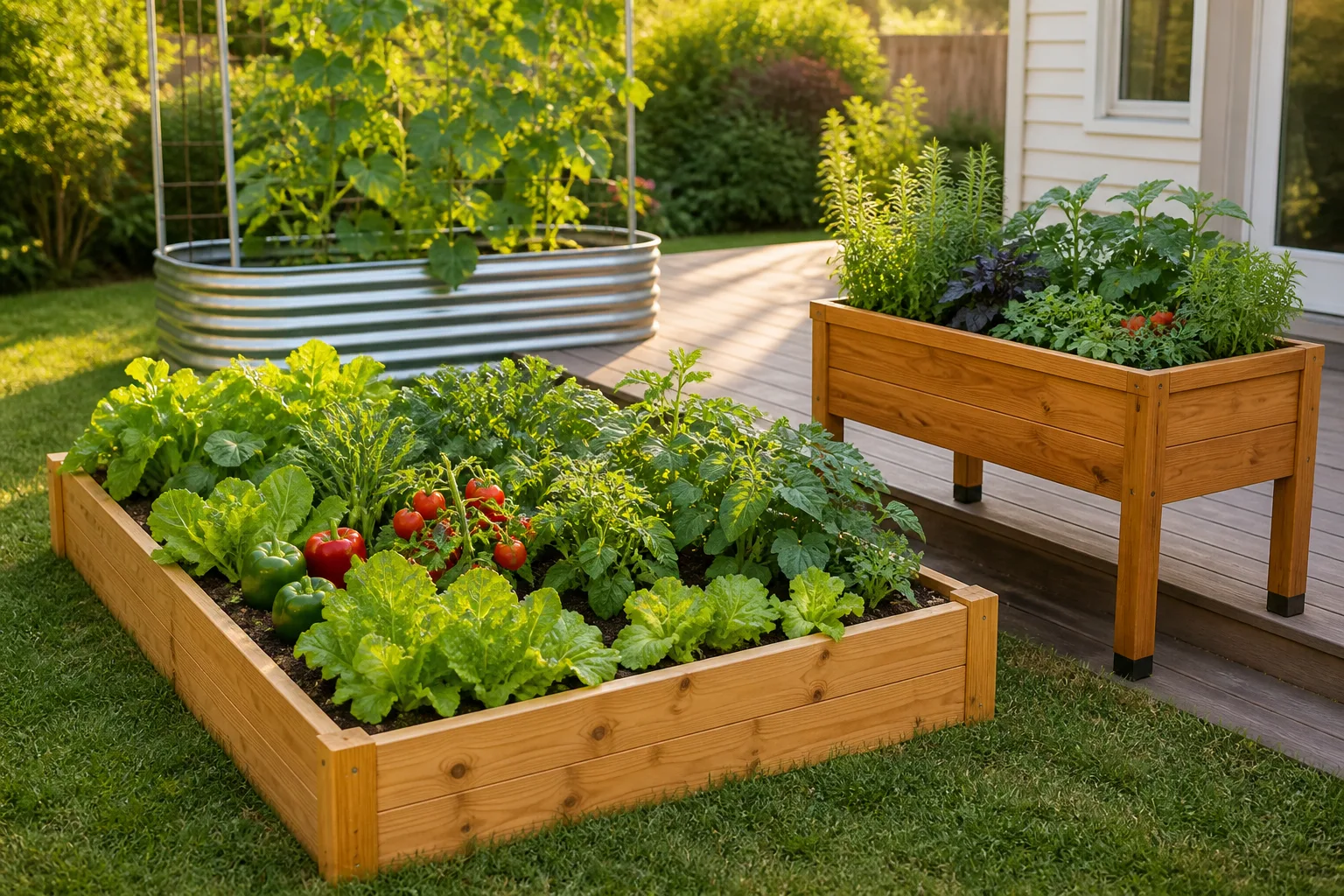
A raised garden bed that is too shallow starves roots. One that is deeper than your crops need burns cash on soil you will never use. Raised garden bed depth is really two questions folded together: how much quality soil roots can reach this season, and how high the frame should sit so you can work comfortably. Answer the first for plant health; answer the second for your knees and your wallet.
The Short Answer: Match Depth to Roots, Not Photos
For most backyard vegetables and flowers in an open-bottom bed on native soil, 10 to 12 inches of good planting mix above loosened ground is enough for a strong season. Leafy greens and herbs often manage with 6 to 8 inches. Carrots, peppers, bush beans, and determinate tomatoes want 10 to 14 inches. Indeterminate tomatoes, melons, asparagus, and other deep-rooted crops are happier with 14 to 18 inches of usable soil—or more if the bed sits on concrete, decking, or compacted fill with no root escape downward.
There is no universal “20-inch rule.” That number appears because some guides add frame height, native soil below, and amended fill together. Double-digging native soil to roughly 24 inches before framing a shallow box can work—but only when that lower soil is actually loose, weed-free, and draining. If you are not improving the ground beneath the bed, the soil inside the frame must carry the full depth requirement on its own.
Soil Depth vs Frame Height: What You Are Actually Measuring
The lumber aisle measures board width (a stacked pair of 2×6s is about 11 inches tall). Plant roots measure unrestricted soil volume. Kits and photos measure exterior height, which may include legs, reservoirs, or decorative caps that roots never touch. Before you order boards, separate three numbers:
Frame height — outside dimension of the walls (or tank rim).
Fill height — soil and compost you will actually add this year.
Effective root zone — fill height plus any usable, improved native soil directly below an open-bottom bed.
Getting these mixed up is how gardeners buy a “24-inch tall” elevated planter and discover only 10 inches of real root room above a water reservoir.
Effective Root Zone Depth
The effective root zone is the vertical column of soil roots can penetrate without hitting a barrier—compaction, plastic liner, false bottom, or perched water from a thick gravel layer. University of Minnesota Extension groups raised-bed success around soil quality and adequate root room, not around a magic exterior height. Measure what roots see, not what neighbors admire.
In elevated planters with sub-irrigation trays, read the manual for planting depth above the reservoir, not overall product height. Our best raised garden beds breakdown calls this out because compact patio models often hide the limitation in marketing photos.
When Native Soil Below Counts
Open-bottom beds on soil behave like a raised planting zone on top of the yard. If you remove sod, loosen 6 to 8 inches of native ground, and amend with compost, carrot and tomato roots can explore below the wooden rim. That is why a modest 8- to 12-inch frame can outperform a shallow box sitting on untouched, compacted clay.
Native soil only counts when it is improved and draining. Skipping site prep and stacking soil on hardpan gives you a perched water problem: water sits where fine raised-bed mix meets dense native soil. Fork or broadfork the footprint, blend compost into the top few inches, and slope the site slightly if water pools after rain. On concrete, pavers, or a deck, there is no below-bed escape—roots must live entirely inside the container, so build full horticultural depth in the box and engineer drainage out the bottom.
The Three-Step Depth Calculator
Use this sequence before cutting wood or clicking “add to cart” on a kit.
Step 1 — List your deepest crop this year and next. If you might rotate in carrots, potatoes, or indeterminate tomatoes within two seasons, size for the deeper crop now. Rebuilding walls because you fell in love with paste tomatoes is expensive.
Step 2 — Classify the surface. Open soil (counts partial depth below), hardscape (needs full in-box depth), or deck (needs full depth and load planning). School of Traditional Skills’ raised-bed guidance notes that beds on contaminated or rocky ground need 12 to 15 inches minimum inside the frame because roots cannot rely on what is underneath.
Step 3 — Price cubic feet before lumber. Multiply inside length × width × planned fill depth in feet. A 4×8-foot bed filled 12 inches deep holds 32 cubic feet—about 1.2 cubic yards. Bagged mix at $6–$8 per cubic foot turns that into a $190–$250 fill line item regardless of a “cheap” frame. If the frame will be taller than 16 inches, plan organic filler in the lower third so premium mix stays in the root zone. Our things to fill a raised garden bed guide walks through safe layering.
| Inside footprint | Fill depth | Cubic feet | Approx. cubic yards |
|---|---|---|---|
| 4×4 ft | 12 in (1 ft) | 16 | 0.6 |
| 4×8 ft | 12 in | 32 | 1.2 |
| 4×8 ft | 18 in | 48 | 1.8 |
| 3×6 ft | 24 in (2 ft) | 36 | 1.3 |
Add 10–15% extra for settling, especially when the lower half uses logs or straw.
Crop-by-Crop Depth Guide
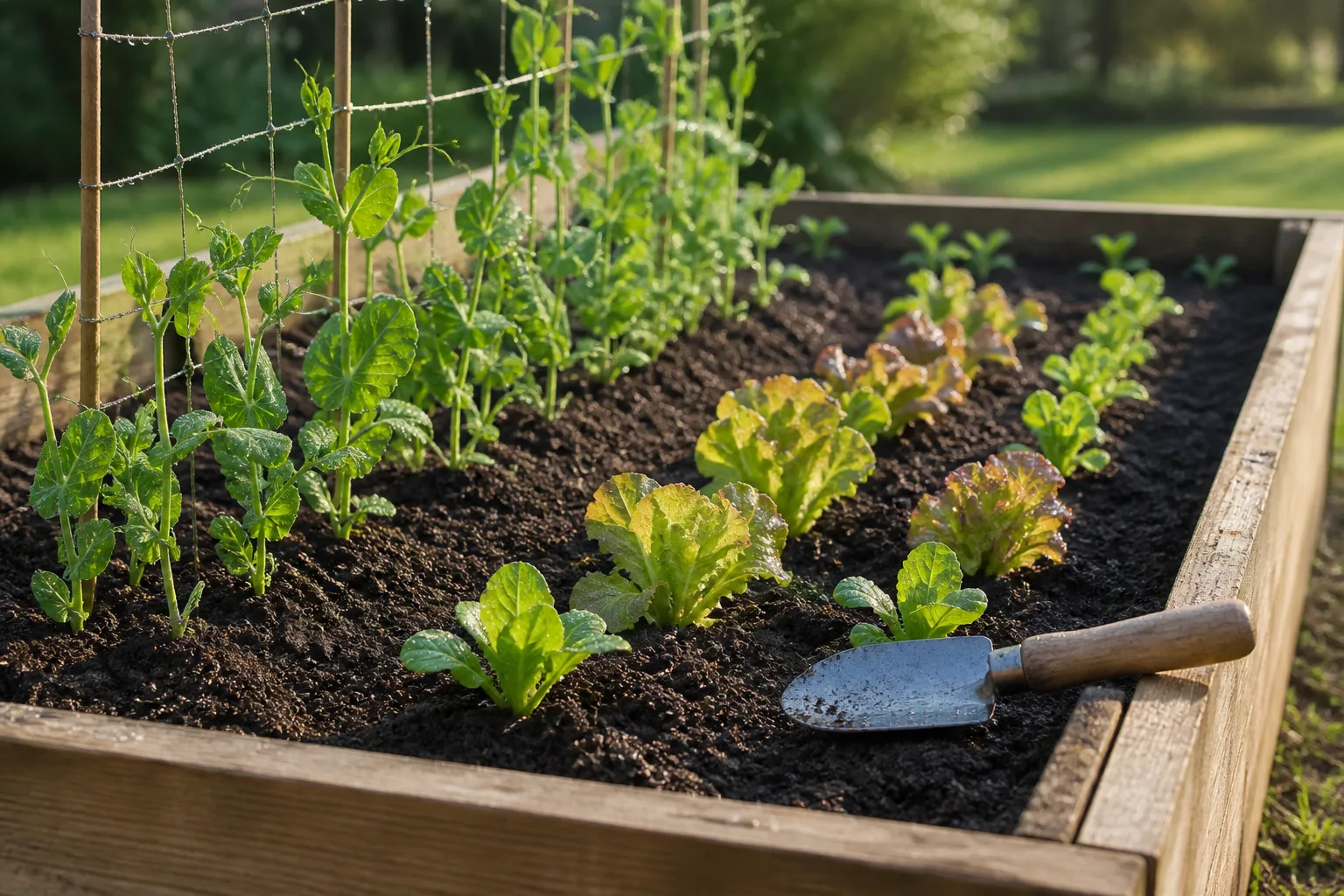
Depth targets below are minimum useful soil in the root zone—fill inside the frame, or fill plus reliably loosened soil directly below on open-bottom beds. When in doubt, go deeper; shallow beds limit rotation more than they save money long term.
Shallow Beds (6–10 Inches of Good Soil)
These crops concentrate roots in the upper soil profile and tolerate less volume when mix quality is high:
- Lettuce, spinach, arugula, mesclun — 6–8 inches
- Radishes, green onions, chives, cilantro, basil — 6–8 inches
- Strawberries (annual production) — 8–10 inches
- Bush beans and shallow herbs — 8–10 inches
A single 2×6 board (roughly 5.5 inches) plus amended native soil below can support a salad garden on open ground. On hardscape, aim for at least 8 inches of mix inside the frame.
Medium Beds (10–14 Inches)
The workhorse range for mixed backyard beds:
- Peppers, bush beans, peas, kale, chard, beets — 10–12 inches
- Bush cucumbers and zucchini, eggplant, broccoli — 12–14 inches
- Carrots and parsnips (if soil is loose, stone-free) — 12–14 inches
- Determinate tomatoes and compact potatoes — 12–14 inches plus hilling for tubers
University of Wisconsin Extension treats raised beds as intensive small-space systems where planned depth and access matter together—this 10- to 14-inch band is where most household vegetable gardens land.
Deep Beds (14–24 Inches or More)
Reserve deeper soil caps for crops that send roots down aggressively or for beds that cannot tap native soil:
- Indeterminate tomatoes, melons, winter squash, pumpkins — 14–18 inches minimum; 18–24 on hardscape
- Asparagus, artichoke, rhubarb (perennial beds) — 18–24 inches
- Sweet potatoes and long carrots on concrete — 18–24 inches of loose mix
- Corn and full-size sunflowers in raised settings — often better in-ground; if raised, treat as deep-bed crops
Sweet corn and towering sunflowers need lateral space as much as depth—our vegetable garden layout guide explains why depth alone will not fix overcrowding.
How the Surface Under Your Bed Changes Depth
The same wooden frame performs differently depending on what it sits on.
Open lawn or garden soil: You may subtract 4 to 8 inches from the fill you need if you prep the footprint (sod removal, loosening, compost). Roots explore below the rim. Watch drainage at the interface; amending only the box while ignoring hardpan below creates a bathtub effect.
Gravel patio or compacted fill: Treat like shallow hardscape. Roots will not find usable volume underneath. Build full crop depth inside the frame and ensure water exits through bottom holes or open joints—not into a puddle under the bed.
Concrete or rooftop: Container rules apply. Plan 12 to 18 inches minimum for general vegetables, more for deep crops. Drill drainage, use feet to lift the base off standing water, and confirm structural load on decks before filling. RHS guidance on growing vegetables in containers stresses matching medium and container size to crop needs—the same logic governs raised beds on impervious surfaces.
Contaminated or rocky soil: Do not count on native ground. Line if needed, fill to full depth with clean mix, and test if heavy metals or lead are plausible on older urban lots.
Frame Height for Accessibility and Comfort
Ergonomic height and horticultural depth are related but not identical. A 30-inch-tall box that uses half its volume for logs and a 12-inch soil cap may be perfect for your back while still meeting tomato root needs. Conversely, a 6-inch mounded bed may grow great lettuce and wreck your spine.
Working height targets:
- 6–12 inches above grade — economical; more bending
- 18–24 inches — comfortable standing work for many adults
- 24 inches with access on both sides — common wheelchair-friendly target cited in accessible-garden planning; width matters as much as height
If you raise the frame purely for comfort, you still owe the crop a full soil cap—you cannot replace planting mix with filler in the root zone. Tall ergonomic beds are soil-volume projects. Budget them accordingly or build stepped widths so one deep section handles carrots while a shallower adjacent bed handles greens.
Length, Width, and Bracing for Taller Frames
Depth is vertical; reach is horizontal. Keep beds no wider than 4 feet so you can tend the center from one side without stepping on soil. Length is flexible—run beds along a fence until you run out of lumber or sunlight.
Taller and longer beds push outward on boards. Above 18 to 24 inches of fill, especially on beds longer than 6 to 8 feet, add cross-bracing or stake 4×4 posts at corners and mid-spans. Soil weighs roughly 75–100 pounds per cubic foot when moist; a 4×8×2-foot bed can hold more than a ton. Cross-ties every 4 feet and use exterior-grade screws, not finishing nails. Drill weep holes near the base on enclosed sides if water ever pools against a wall.
Fill Tall Beds Without Wasting Premium Soil
Frames taller than 16 to 18 inches rarely need premium raised-bed mix from bottom to top. The economical pattern:
- Bottom third to half: dead untreated logs, branches, or coarse wood chips (hügelkultur-style), with gaps closed by smaller brush
- Middle: leaf mold, straw, or aged wood chips—not fresh sawdust in the root zone
- Top 10 to 18 inches: stable planting mix and finished compost—the soil cap roots actually use
Never mix a thick layer of fresh wood into the seedbed; decomposition temporarily ties up nitrogen and causes uneven settling. Water each layer as you build, let the bed settle a week when possible, then top up before planting. Tall beds are why our inexpensive raised garden bed ideas guide insists on pricing fill before lumber—a beautiful 24-inch cedar box on a pallet of bagged soil is not a budget project.
Raised Beds vs In-Ground Gardening
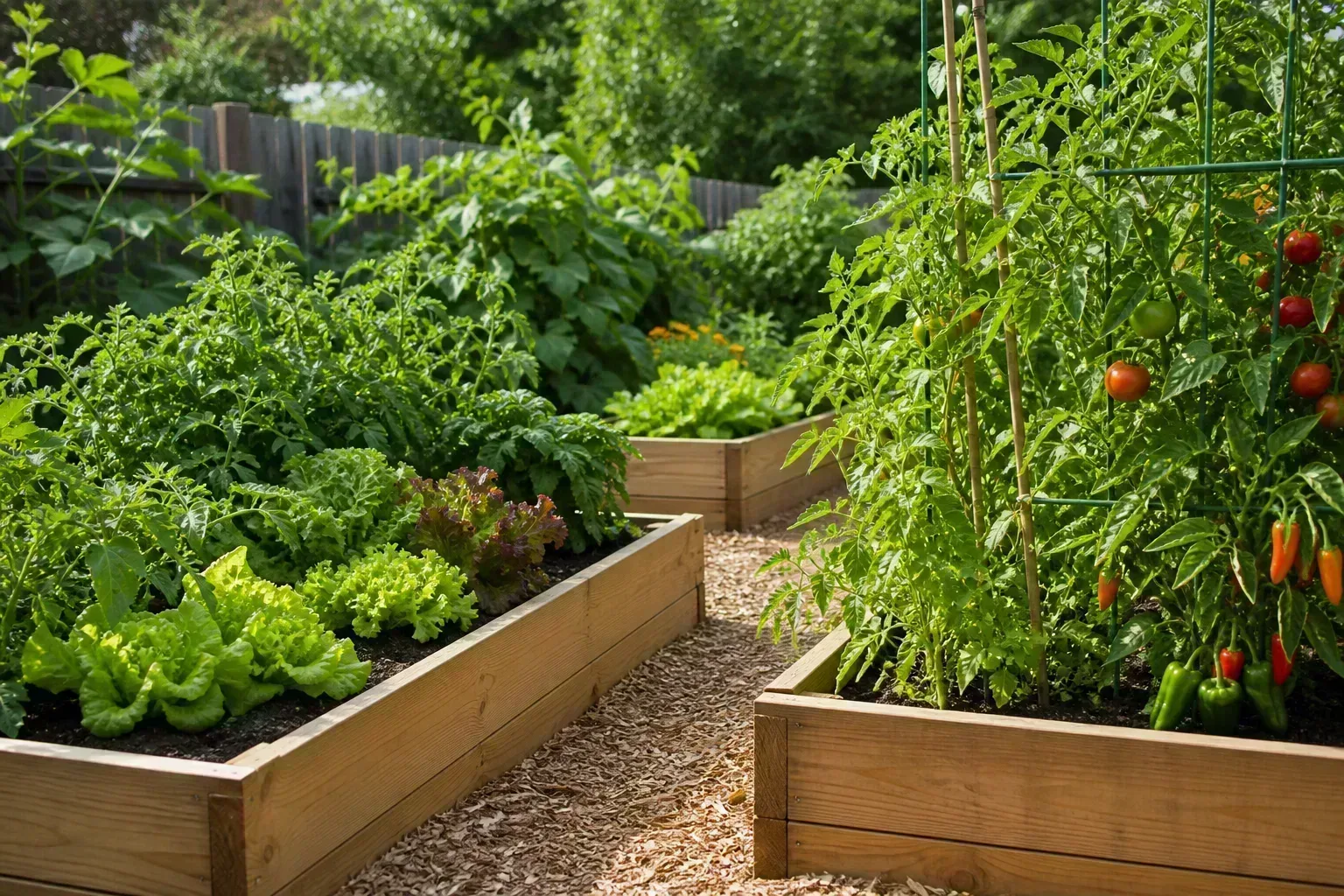
Raised beds shine when native soil is heavy, rocky, or poorly drained and you want controlled depth of good mix where roots live. They warm and dry faster in spring, which speeds planting in cold climates but increases watering in heat.
In-ground plots win when you already have deep, loamy soil and need unlimited vertical root run for orchard crops or large perennials. Depth decisions matter less there—amendment and rotation matter more.
Neither choice is morally superior. If you are building raised beds because Pinterest said so, but your yard is deep loam, you may be paying to solve a problem you do not have. If you are planting on red clay that cracks in August, a 12-inch raised zone with compost is often the cheapest way to buy root-friendly structure.
Bottom Layers: What Helps Drainage and What Hurts
What belongs at the bottom depends on bed type.
Open-bottom beds on soil: Remove sod; optionally lay single-layer cardboard to smother weeds for a season (remove tape, skip glossy print). Fork the soil beneath. Do not install a thick gravel layer under fine soil expecting “better drainage”—that interface often creates a perched water table that keeps roots wet.
Tall beds with organic filler: Logs and branches belong below the root zone, not mixed into it. See our fill guide for species to avoid (black walnut, fresh conifer heartwood in the planting layer).
Stock tanks and enclosed bases: Drill ½-inch holes along the low side, set on gravel so holes stay open, and use quality mix—not heavy garden soil alone, which compacts in shallow metal tanks.
Plastic liners: Full liners on open-bottom beds can trap water against sidewalls. If you must line (contamination, treated wood concern), puncture drainage paths and never seal the bottom on native soil.
For the planting layer itself, use a raised-bed or garden mix enriched with compost, not straight topsoil or pure peat. Our best soil for vegetable gardens guide explains texture targets: loose, water-holding, but not brick-like when dry.
Depth Mistakes That Stall Growth
Building to a meme depth instead of a crop list. Twenty inches of mix for lettuce alone is wasted money. Six inches for carrots on concrete is wasted seed.
Counting board height as soil depth. Stacked 2×10s are not 10 inches of roots if the bottom third is logs.
Ignoring settling in year one. Organic filler shrinks. Plan a top-dress of compost each spring for three years.
Skipping site prep on open bottoms. A pretty box on hardpan is still hardpan for roots.
Making beds too wide to reach. Depth does not help if you compact the center walking on it.
No bracing on tall, long runs. Bowed boards spill soil and snap screws mid-season.
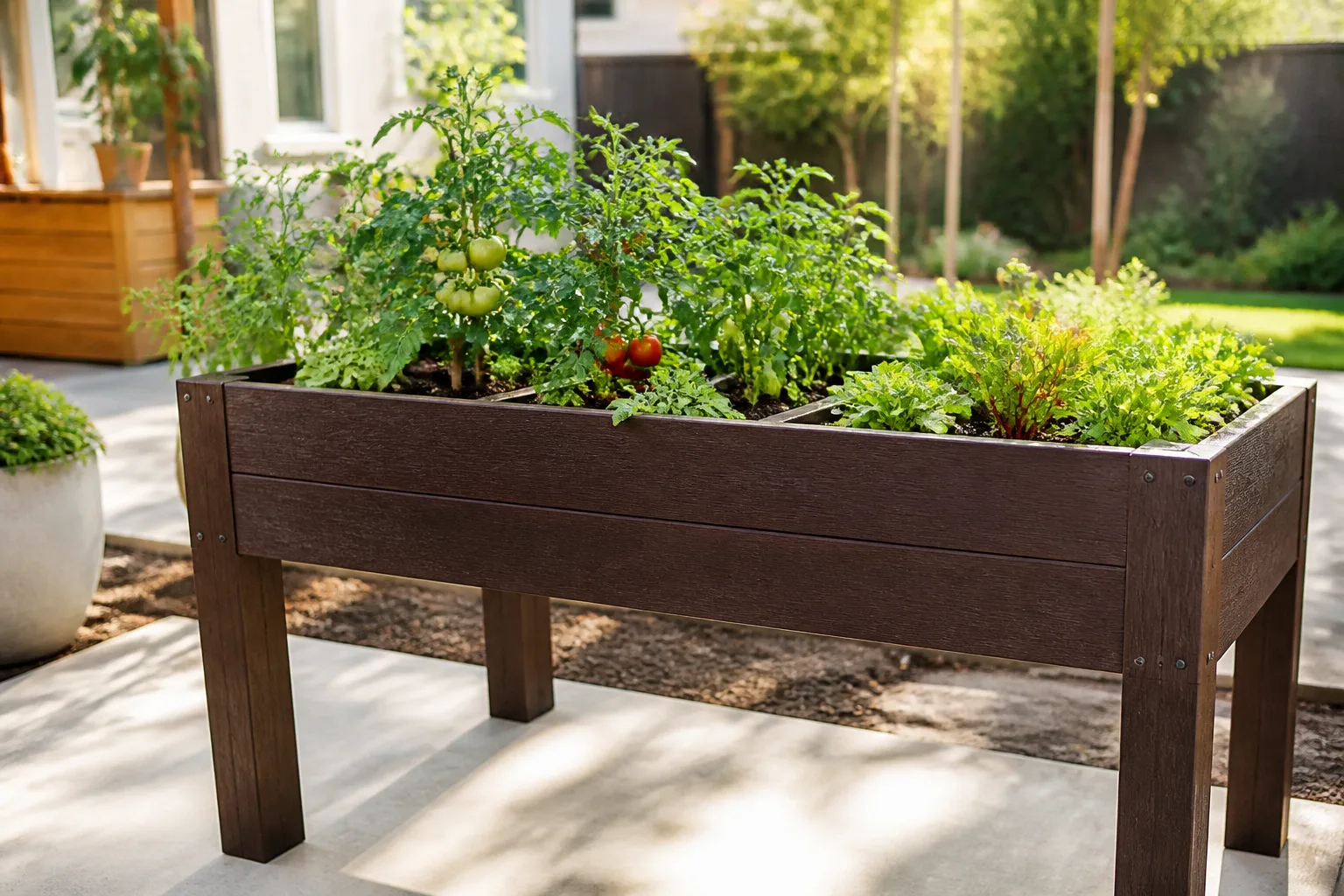
Planting deep crops in shallow elevated planters. Cherry tomatoes in a 8-inch reservoir planter will survive; paste tomatoes will not.
Conclusion
How deep a raised garden bed should be depends on what you grow, what sits under the frame, and how high you need the rim for comfortable work—not on a single number copied from a photo. Start with your deepest crop, classify your surface, and run the cubic-foot math before you buy wood. Most mixed vegetable beds land at 10 to 14 inches of quality soil in the effective root zone; shallow greens need less, tomatoes and carrots on hardscape need more, and tall ergonomic frames can use organic filler below as long as the soil cap stays deep enough for roots.
Measure twice, fill once, and build the depth you will actually use for the next two seasons—not the depth that looked good in someone else’s yard.



